Project Elly: Cured? Not entirely, no

Suspicion for Elly the 2CV’s misfire was being laid at the condenser by me, and at the pointed ends of the coil(s) by others. I certainly didn’t consider either of my coils likely to be reliable. I think one is off the Dyane I owned last year and certainly ancient. I suspect my only good coil went with the Dyane when it was sold…

But, I was eager to get Elly at least back onto points-assisted ignition, as that’d be a good baseline. So, I grabbed my broken Velleman unit and drove a few miles to my mate Dave’s house.

A successful drive! Hoorah!

A successful drive! Hoorah!

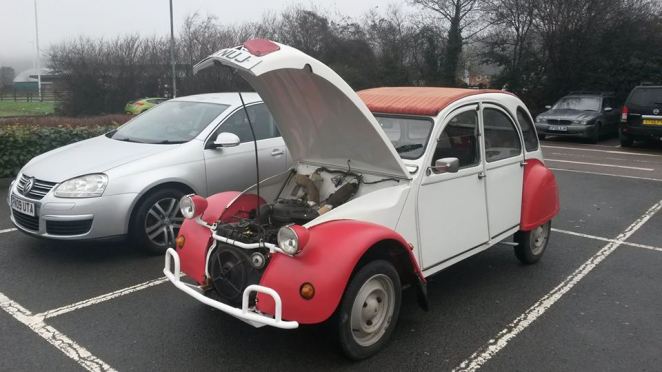
She made it with just one misfire, though she didn’t feel entirely happy. Still, as far as recent journeys go, this one was pretty good! That’s Dave’s 306 in the background. He’s currently doing a rear axle swap. He has not been lucky with the weather…

Dave got his multimeter out instead, and quickly diagnosed a faulty transistor. I’m not surprised. I suspect I got a connection wrong at some point, which it didn’t like. Dave’s a handy person to know though, because, not only is he good with electronics, but he also employs Velleman units on various of his motor vehicles – including an Austin A35 van and a Freight-Rover camper. One of his many units was raided for a transistor. It was soldered into place, and I returned home a happy chappy. I owe Dave a beer. That’s a cheap fix, and certainly much cheaper than the £135 I’d have to pay for a full electronic ignition.

I went straight to the garage when I got home, and quickly set about fitting the kit. This involved making up some new sections of wire. I didn’t want to cut off existing connections, because it’s always handy to be able to go back to basic points and condenser if required. It didn’t take long to fit, and I thought I might as well carry out a rather late service while I was at it. I didn’t want to do it before now, as I wanted  the old oil to circulate properly before I dropped it out.

While it was draining, I removed the cooling fan so I could disconnect the condenser. I was happy to discover that I could slot in a screwdriver to do this without having to remove the points box that it bolts to. That means I didn’t have to disturb the ignition timing. The fan was refitted, and then I discovered that I didn’t have any engine oil of the correct grade, so had a hasty trip into town in the ZX before the shops shut. Charlies sells Comma 10w40 semi-synth for £12.49 for five litres. That’d do nicely.
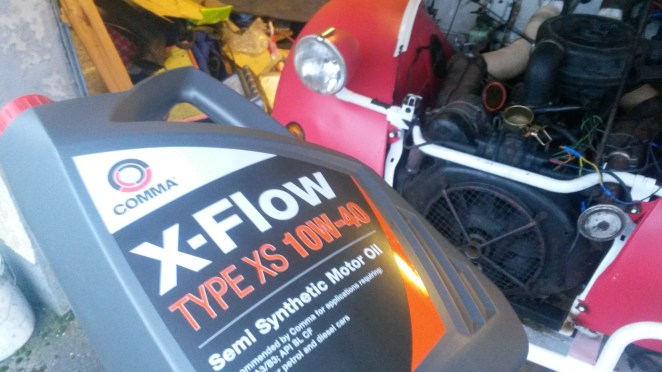
This'll probably be ok.

This’ll probably be ok.

Once back home, I put on a new oil filter, new air filter (the old one had been choked by engine oil thanks to the old breather – now replaced) and fitted new spark plugs. She fired very merrily into life, just like how I remember – almost running before you’ve hit the starter. I jumped in to go for a test drive, but only one headlamp was working. I’d disturbed the wiring earlier, so had a bit of fault-finding to do. Then, I noticed that the wipers were rather slow. Yup, I’d forgotten to hook the alternator belt onto the fan when refitting it. DOH!

So, back off with the fan grille and the fan, hook the belt on and refit everything. Now I could finally have a test drive! She went very nicely indeed. I was very happy.

Yay! A successful test drive! Sort of...

Yay! A successful test drive! Sort of…

My joy was short lived. On the way home, the wipers went all slow again. With no tools, I could only push gently on home, but I knew what had happened. The fan must have fallen off. I obviously hadn’t tightened up the bolt sufficiently in all that frantic rushing. There’s a lesson here somewhere…

I gently pushed on, glad of the new 20mph speed limit in parts of the village, and turned the engine off entirely as soon as I was able. That’s the good thing about a 2CV. You don’t need a running engine to power things like steering and brakes. No problem!

Sure enough, the fan was not rotating. I refitted it, making sure it was actually tight this time, and then she wouldn’t restart. I assumed she was too hot, but there was not so much as a splutter. A quick check suggested there was indeed a spark at the plugs, but no joy.

An unhappy, and hot 2CV.

An unhappy, and hot 2CV.

Usually, if you try and start a 2CV and it doesn’t fire, you see petrol seep out of the bottom of the carburettor (it’s designed to do this, but can alarm people!). I could see nothing. I suspected a bit of vapour lock going on, so left her to cool down a bit longer. Then, she did fire into life at last! Phew.

The she started chugging like she had done during the MOT, so I changed the coil again. All is now well, but it’s very obvious that a new coil will have to be purchased. I’ll be on the phone to ECAS 2CV Parts in the morning, to order a resin-filled one. These look exactly the same, but the resin should do a better job of keeping it cool than the old oil-filled items.

Maybe then I’ll have a reliable 2CV again! We’re definitely getting there. For now, this project will go a bit quiet. There’s an MG GS arriving next week for review, and an issue of Classic Jaguar to get nailed together. Do let me know your thoughts on progress so far though – leave a comment below and don’t forget to Follow the HubNut blog if you like. Then you’ll get an alert every time I post something new. I’m reviewing my use of Facebook at the moment, so HubNut is the one place you’ll definitely get the latest news! Thanks, as ever, for your support.
Project Elly: Spluttering encore

This morning, I got up surprisingly early (for a Saturday) and headed back to the garage once more. I’d left Elly in a state of undress the night before (this line is especially for Sean Lyon) having utterly failed to get the ignition timing to behave as it should. Setting it bang on the manufacturers mark resulted in an engine that would not start.

I recalled having issues with this points box in the Dyane, so I removed it, grabbed Elly’s original points box, and fitted a new condenser to it, then reinstalled it. The ignition timing was reset as per the mark, and she fired very sweetly into life. Result!

Now that she’s road legal, I was able to indulge in a test drive. Certainly, on the four miles to the nearest petrol station, she felt like a car transformed. She was pulling much more cleanly than yesterday, with no hint of misfiring or spluttering. 18 litres of unleaded were poured into the tank, her first fill for almost two years, and I set off to do a full lap of the A44 and A4120 back home.

As we excited the excitingly-named Lovesgrove roundabout, I detected a misfire. Just the once, but definitely there. This was joined by further misfires as we snaked our way towards Aberystwyth. At Llanbadarn Fawr, things got pretty nasty. As I went to pull away at a mini roundabout, she began firing on one cylinder, threatening to conk out (in a manner that suggested she would not then restart). This felt familiar! Somehow, I coaxed her through the pair of mini roundabouts, and across the Morrisons roundabout. I headed into the car park to find a quiet spot to investigate.

Here we go again...

Here we go again…

I did have a spare coil with me, so I fitted that. All initially seemed well. Problem solved? At first, she seemed fine, but within a mile, a gentle misfire had crept back in. As we began the climb up the A4120, she began to miss more and more, occasionally backfiring for good measure. Backfiring? Ok. That made it feel more like condenser failure, as did the fact that it was far worse at lower engine speeds. I kept the revs up and struggled on, pausing in Pisgah to let things cool down.

She did make it back home, but conked out as soon as I pulled up. Left alone for a while, she was then fine and has been returned to the garage. Now, I’m pondering my next move. £165 on a new 123 electronic ignition unit and a resin-filled coil would probably improve things no end, but I also wonder about reviving my Velleman points-assisted ignition. I’ve got a press car coming on test next week, so there’s no rush to get Elly fixed. I am keen to get to the bottom of this quandary though. The good news is that, when not misfiring, she feels really good to drive. It is so nice to be back behind the wheel of this much-loved car. Thanks to all who made this possible. I just wish we could have a finer celebration of the fact that Elly is back! There will be opportunities this year – she’ll be at the NEC Restoration Show in March, and the Coventry Motofest in June. Fun times, they are a-coming!

Project Elly: The Finale! Sort of…

On Wednesday 4th January 2017, a major milestone was achieved. Elly the 2CV was finished! Well, close enough. It was the point that I declared her ready to face an MOT – which was duly booked, for the 6th, or today in other words.

Elly begins her third iteration. She's like Doctor Who.

Elly begins her third generation. She’s like Doctor Who.

The offside rear wing was sourced from my friend Joey, and is a proper, steel one. I will repaint it to match the front wing at some point. Honest. Also, Elly currently lacks the Dolly side stripes. I have some arty plans for those. Bear with me. All very fitting in a way, because, nine years ago, Elly’s first regeneration had been completed, and we drove her to Aberystwyth as part of the celebrations, also lacking side stripes. So, she is used to marking her rebirth on the scenic streets of Ceredigion.

15th January 2006, and a reborn Elly gets touched by a randy stranger.

15th January 2006, and a reborn Elly gets touched by a randy stranger.

Odd to think that the above photo was taken in the car park of what is now our local supermarket! Obviously, we had no idea that we’d be living here four and a half years later.

Anyway, I obviously woke up this morning full of excitement. That excitement took a battering, due to the combined efforts of the Welsh weather (very, very Welsh today, ie wet) and Elly having a battery low on charge. It hasn’t yet been charged for long enough to be entirely healthy. I’m hoping it recovers… I roped in my tiny jump back, and life was restored. To the MOT centre!

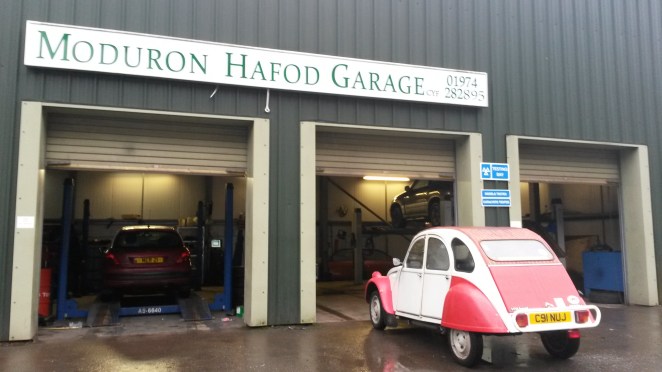
The drive there was joyous, even in the rain. Water poured down the dashboard (perhaps I should have used sealant on the vent flap) just like old times. I was glad I chose to wear waterproof boots. Crazy lean angles were acheived, and the brakes given a hard time to scrub them up ready for the brake rollers. There was the delicious smell of hot engine parts covered in greasy fingerprints. Yum. However, the MOT station was reached with no trouble.

Eep! Almost time!

Eep! Almost time!

I had to wait a bit, which did nothing to my nerves, while a Suzuki had an oil change. With that done, it was Elly’s turn. She started nicely, and I was waved onto the ramp. The tester logged her details onto the computer, checked the seats and seatbelt security, started the engine (again, first time) and checked the operation of various lamps. I was pleased that every single one behaved. As he got out to carry out further checks, she began to sound like she was bogging down. I gave the throttle a blip, which killed the engine entirely. Oh well. You don’t need the engine running to check the underside. I risked headlamps with no engine long enough to adjust the headlamps on while I had access to a beam pattern thingy machine.

Play was detected in both kingpins, which is pretty much standard fare. There’s always play, but it wasn’t alarming, so they became advisory items.

The test begins, the engine fails...

The test begins, the engine fails…

With the ramp checks complete, the lads pushed me outside where I was able to bump start the reluctant engine. It just wasn’t going to go on the key. She fired into life and was able to perform the brake tests to the required standard, but then she conked out before the emissions test. Out she was pushed again! I brought her back in, the probe went up the exhaust, a pass was achieved, and then she conked out yet again. Jeepers.

I paid, received my lovely new certificate (a joy to behold), pushed her back outside myself, bump started her myself (there’s a handy hill outside the test centre) and drove back home, slightly nervously. The air cleaner blew out on the steep hill back to my village. I could see it was going to be one of those days. I pulled over, screwed it back in and continued.

As I reached my village, I decided that maybe a full tank of fresh fuel was a good idea. So, instead of turning left towards my house, I turned right. She conked out immediately. I was starting to think that she’d become too fond of her cosy garage! This ‘driving in the rain and then being poked at’ business clearly wasn’t on.

Happily, I was pointing downhill, so I let the speed build up and attempted a bump start. She merrily trundled down the hill, in gear, with no firing at all. Ok. This was becoming an issue. Eventually, just before I ran out of gravity, she caught. Hoorah! I decided to spin the car around in a handy junction and limp home. That manoeuvre was not completed. Drat.

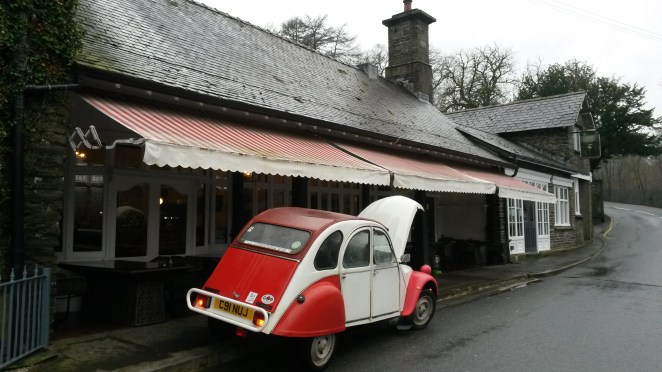
Elly chooses a pleasant place to stop at least.

Elly chooses a pleasant place to stop at least.

This wasn’t going to plan at all, so I called home. Rachel kindly agreed to try and find a spare coil in the messy world of my garage and bring it down to the hotel, which is about quarter of a mile from our house. She turned up at the same time as some German tourists, who were most curious. One leaned over to watch me fit the new coil. This did the trick. Ignition! We closed the bonnet, tried not to run over any tourists and drove home.

So, Elly is now sat back in the garage once more. I have a few theories about what is wrong.

  1. The ignition timing may not be spot on. I retarded it by a tooth, as I thought that’s what I’d historically had to do to avoid pinking (modern fuels burn hotter and pinking can be an issue). Thinking about it, that was the Dyane that had the pinking issue, as it has higher compression pistons and hasn’t been rejetted for modern fuels. I’m pretty sure Elly has actually. My fail. She’s too retarded.
  2. Coils. Old coils overheat and stop generating a good spark. I’ve have three coils of mixed age and condition, and I know nothing about any of them! One failed during pre-test preparations, so maybe I should actually buy a good one.
  3. Spark plugs. These weren’t changed as I didn’t think I had any. As it happens, I do! I found them last night but didn’t have time to fit them before the test.

However, having got home at last, I then had to dash out to a business meeting. That took up three hours of my afternoon, and I was shattered after a lengthy drive home in the dark and the rain (at least I was in the Honda, so my feet stayed dry). The thought of getting up tomorrow, servicing the 2CV and then driving it to Yorkshire (only to drive even further north on Sunday before then driving back home) does not fill me with joyous anticipation.

Which means I’ve abandoned my plan to take part in Raid Tan Hill, organised by 2CVGB local group Les Hiboux. It’s nine years since Elly last did this event, and I did think it’d be a nice way to celebrate her return to the road. It still would be, if I had confidence in Elly’s reliability. I don’t though, so I think I’ll stay at home, treat her to a full service (I’ve found my oil filters as well!) and perhaps have a less-pressured trip out locally instead. I can drive where I like in my 2CV now she’s road legal again! There are other ways to celebrate this wonderful achievement, so stay tuned!

A soggy, road-legal Elly awaits some much-needed fettling.

A soggy, road-legal Elly awaits some much-needed fettling.


Where’s the progress? ZX vs Qashqai

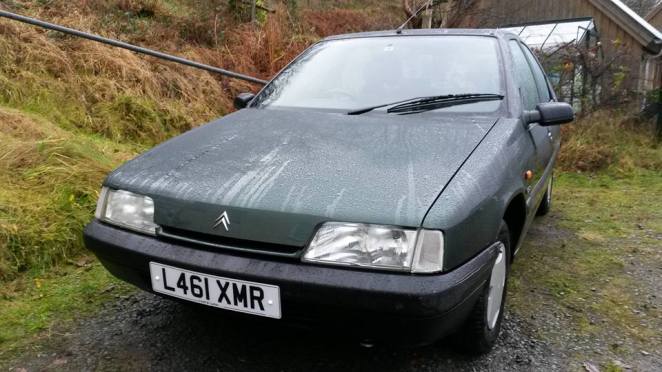
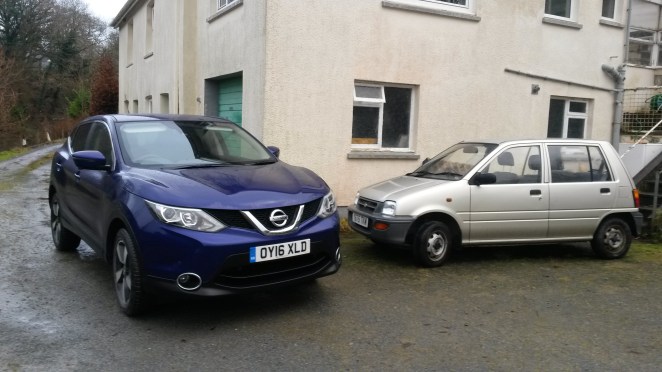
Two vehicles landed on my driveway in December. One of them cost me just £4 (though its total non-raffle price was £120). The other was a loaned car with a brand new value of over £24,000. One is a Citroen ZX diesel, that’s over 20 years old, has covered over 112,000 miles and has a 71bhp non-turbo engine. The other was brand new Nissan Qashqai N-Connecta 1.5dCi with a 108bhp turbocharged engine. One has a kerb weight of 1035kg. The other has a kerb weight of 1365kg. One of them has about six buttons on the entire dashboard. One has more than that on the steering wheel alone. Here’s the thing though. Strip away with glitz and baffling gadgets and does the Qashqai actually deliver a better driving experience than the leggy Citroen? No, I’m not sure it does.

A fine looking motor.

Yes, we’ve pitted a £120 Citroen against a £24,000 Nissan.

This was proved to me when, halfway through the Qashqai test, I jumped into the ZX for a drive on the fast, flowing A roads of mid-Wales – where I’m fortunate enough to live. Both cars have had a fair degree of ingenuity in order to make them handle well. The ZX has passive rear wheel steering, courtesy of compliant bushes, that make it grip surprisingly well, even on skinny Chinese ditchfinders.

The Nissan has Active Trace Control and traction control. The former brakes the inside wheel if it detects you’re getting a bit hoony, to encourage the car to track around the corner rather than understeer into the scenery. Traction control ensures wheelspin is avoided when you gun it.

Here’s the thing though. Both cars have enough grip to corner very well indeed, regardless of the technology employed. To get the Nissan’s tech to cut in, you have to drive in a particularly unsociable manner. Ignore all this, and the truth is that both cars have slightly numb steering, but then both turn in eagerly, and go where you point them. Both cars are pleasant to drive quickly and both feel like your nerve will ask you to slow down before the grip vanishes.

20161221_141401

Better than the ZX, in some ways, but certainly not all.

Yet, the Citroen does all this while keeping the ride composed, something the Nissan cannot match. It’s not bad, but there is an endless jiggly sensation on some surfaces that is entirely absent on the same roads in the ZX. I reckon the 18″ wheels can’t help with this. The Citroen wears 13″ wheels with plenty of sidewall. The tyre is an important part of the suspension – sadly, this seems to have been forgotten by modern manufacturers and buyers. A Tesla Model S on 22″ wheels, with sports suspension, is absolutely terrible.

The Nissan arguably has the advantage in braking, with extra force applied if you do an emergency stop, backed up by anti-lock braking. It’ll even apply the brakes for you if it detects you’re about to hit something. I did get one warning (a parked car I fully intended to go around), but it never applie the brakes when I didn’t want it to. I’ll let it have that, even though I don’t mind non-ABS braking. It has the edge in safety as well, though I was glad not to put this to the test. There are more airbags than the Citroen has head restraints. Visibility is pretty bloody awful though, as is the modern way. A posts are hugely chunky, waistlines have risen up and you really do need the neat parking camera to slot the Qashqai into a space. With the ZX, a huge glazing area makes it a doddle to see out, even if the single windscreen wiper does leave an annoying unswept area in the top corners of the windscreen. You have to (shock horror!) operate that wiper yourself, whereas the Qashqai has automatic control of its pair of wipers. That’s a real boon in Wales, where rain conditions can change on a regular basis – not that they always responded as well as I’d hoped. Sometimes, I had to manually intervene, which is more annoying than just operating the wipers yourself.

In terms of space, the Qashqai does possess a very nice driving position, but both cars lack a rest for the clutch foot. The rear seat in the Nissan is also quite firm. The Citroen has softer seats, even if they aren’t overly supportive. The ZX also has a much lighter interior, thanks to its sunroof – standard equipment in 1994. The Qashqai can be specified with a panoramic roof, but it’ll cost you £595. I reckon it’s worth it.

When it comes to performance, obviously the Qashqai walks it. It’s not actually that brisk, and some may prefer the 136PS option for a bit more overtaking grunt, but it’ll leave the ZX for dead. With no turbocharger, you have to gently wind the Citroen up to a cruising speed, and maintaining pace uphill can be tricky. You have to use that excellent handling to allow you to maintain momentum – it’s rather like a 2CV in that regard. So, your foot tends to be mashed into the carpet in a way it just isn’t in the Nissan.

The Qashqai is also more peaceful (though not by a huge amount) at motorway speed, with its engine turning over at 2000rpm rather than 3100. That makes quite a difference, even if the ZX still manages to seem refined and fairly quiet at these speeds.

But, I can’t escape the fundamental problem that the Qashqai does not do the basic concept of driving any more competently than the Citroen. In fact, it’s worse in some areas. Yes, it is a good car, and you wouldn’t be disappointed if you bought one, but does it (or any of its rivals) really justify the price tag? I’m not sure it does. Where is the progress? The Qashqai feels like a car of the 1990s, but loaded with tech – much of it simply unnecessary.

In terms of economy, it’s not very far ahead of the ZX at all (50-55mpg seems a reasonable expectation from either), though I will concede you get usefully more performance. But does it leave the ZX feeling like a disappointment after I’ve driven a Qashqai? No, emphatically not. I also like the fact that the ZX can be fixed with a few tools and a bit of know how. I know this, because I’ve already had to fix bits – that can be an issue with a 23-year old car that you hopefully won’t get with a brand new one. Therefore, most people will consider the extra £24,000 well worth paying perhaps.

I can’t blame people for wanting that security, but I think I can blame manufacturers for being a bit lazy. Where has the development been in the past 20 years? Sure, engines have more power, but they also have terrifying complexity and have become something the enthusiast daren’t go near, while arguably deliverying little advantage over the cars of two decades ago. What will a Qashqai be like to own in 24 years’ time? Horrendous I imagine.

This is why I’ve drifted away from brand new vehicles. My interest just isn’t there. Except for electric vehicles. These interest me because they DO move the game along. Significantly. There IS exciting new technology at work here. You DO get a driving experience which feels markedly different to anything with a conventional engine. There is huge excitement here, and I feel it every time I jump aboard a vehicle with an electric motor.

I’m afraid that otherwise, I’ll still to my cheap old bangers thank you very much.

20161221_143149

My personal choice? Bangers, not Qash.

Tested: Nissan Qashqai

You may be surprised to learn that the Nissan Qashqai is one of the most successful British cars ever built. Over a half a million of them (across two generations since 2006) have been sold worldwide, with the vast majority coming out of Nissan’s Washington plant, near Sunderland.

I was certainly surprised, so I thought I’d see what is so appealing about this crossover SUV thing. Proving that the Talbot Matra Rancho was truly ahead of its time, this is a car with a bit of a 4×4 look about it, but it only has two-wheel drive. That now seems to be the way of the world, with Land Rover Freelanders and Range Rover Evoques now available with only half-driven wheels.

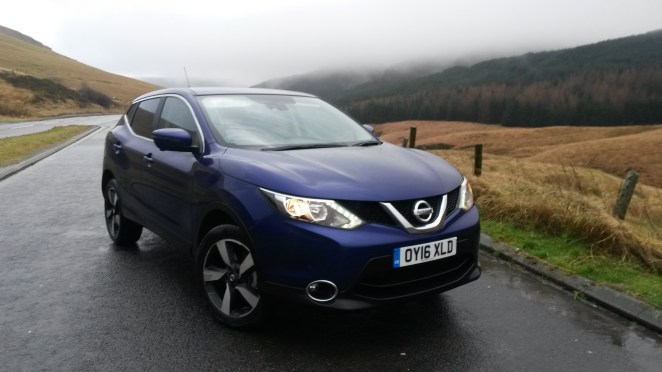
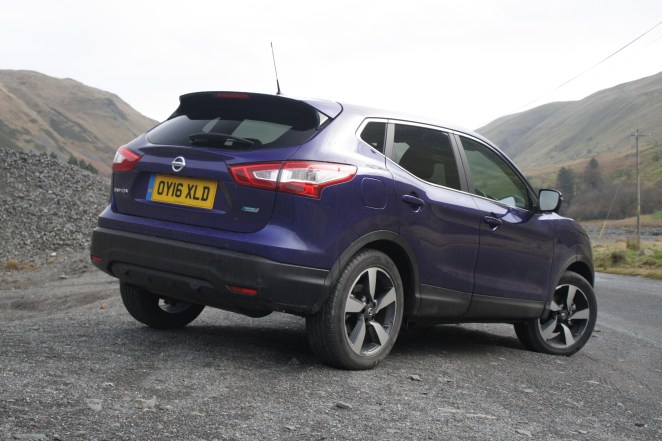
One of the most successful British-built cars - the Nissan Qashqai.

One of the most successful British-built cars – the Nissan Qashqai.

That makes sense really, as there’s little point carrying around the extra weight of a four-wheel drive system you will probably never use. Now, people will also say there’s no point having the raised ground clearance and poorer aerodynamics of a 4×4-alike either, and that’s a fair comment. For plenty though, the more upright driving position, raised view over traffic and those chunky looks more than make up for it. You can specify a four-wheel drive version, but the vast majority will be two-wheel drive.

The car tested is the Nissan Qashqai N-Connecta 1.5dCi 110PS. The retail price is £24,660 as tested, which includes £550 for the rather fetching Ink Blue metallic paint. The spec list is lengthy, including a 7″ touch screen with ‘Around View’ parking monitor – a Grand Theft Auto view of the car, which is very handy given the curvy shape of the car – 18″ alloy wheels, a Smart Vision pack (speed limit sign recognition, high beam assist and other goodies), chassis control (various electronic driving aids) and all the usual stuff you’d expect – keyless remote central locking, electric windows and power steering (which has two settings).

Chunky SUV styling but this model, as most, is only FWD.

Chunky SUV styling but this model, as most, is only FWD.

The initial testing was done on local roads, which was rather frustrating in some ways. This car has so many electronic goodies that you can’t possibly experiment while driving on Welsh roads. In some ways, it could be considered a distraction, though the speed limit reminder is a good idea. It actually ‘sees’ the signs, and puts a reminder on the dash. This only got caught out once, when the windscreen was still misted up slightly and clearly the car couldn’t see a 20mph sign. Fortunately, the driver could.

I had a play with various electronic driver aids, but ended up turning most of them off. The main beam assist is particularly annoying, as I found it would often refuse to put the main beams on when I needed them. It seemed to deem them unnecessary at 30mph, and would dip them for buildings or strong reflections from puddles or walls. Sure, it was fairly good at dipping when a car approached, but only when that car was in full view. Here in the countryside, we generally try to dip BEFORE a car appears. It isn’t good enough to do that. I turned the Auto feature off.

Interior styling is pleasant, some controls a bit fiddly.

Interior styling is pleasant, some controls a bit fiddly.

I also turned the Lane Departure Warning off, because it’d bleep continuously as I drove on small Welsh roads. Perhaps it didn’t like my racing lines. The parking sensors bleeped continuously on my driveway too, scared by blades of grass and the proximity of the walls and vegetation – things that don’t overly threaten a 3.5 ton minibus that I sometimes bring down this track.

I soon set the steering to Sport mode, which gave less assistance in the bends. It isn’t a vast difference though, but it felt better. I also tried putting the driver aids to the test. Active Trace Control brakes the inside wheels on a turn when you’re pushing on a bit. It has to be said, you really do have to push on a bit to get this to activate. I suspect most people will not. There’s Active Ride too, which subtly applies the brakes to reduce body movement over crests. There’s quite a few of these in Wales, though I doubt most folk would notice the system kicking in. The ride isn’t bad some of the time, but pretty dreadful at others. It can get a bit jiggly, probably not helped by the entirely unnecessary 18″ wheels.

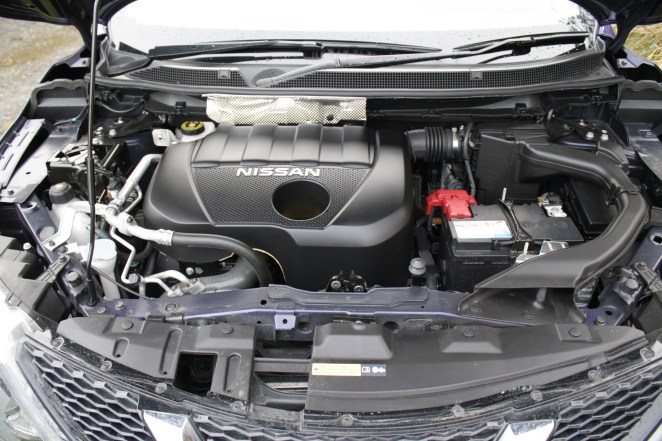
Renault-derived 1.5-litre turbo diesel has great low-down torque.

Renault-derived 1.5-litre turbo diesel has great low-down torque.

Overall though, this is a very pleasant car to drive. The six-speed gearbox feels a touch unnecessary, as the engine has a good spread of torque at lower engine speeds. Let it rev, and you don’t really access much more power. All the torque is below 3000rpm, so its best to stay down there. The driving position is superbly comfortable though, which I tested by covering over 600 miles in two days. The only slight comfort complaint is the lack of a footrest for your left foot.

Other downsides include the big sat nav screen, which is difficult to use on the move ie when changing radio station. That’s entirely down to the ride, which is not smooth enough to allow an easy selection of an option. There is one more big issue. The electronic parking brake. Quite why anyone thought this was a good idea is beyond me. There is absolutely nothing wrong with a nice, simple lever, so I shall assume it was an idea put forward by an interior designer.

Like many such systems, the Nissan requires you to press the brake pedal before it’ll let you release the parking brake. Now, I don’t know how you were taught to drive, but I was taught to balance the clutch and throttle to get the biting point before releasing the parking brake. In the Qashqai, this is quite impossible, so you find yourself having to use all three pedals. Being a diesel, you can actually get the bite point quite comfortably on zero throttle, but hill starts are something else. It does have hill start assist, but this just makes it feel like the brakes are dragging. It’s a pretty woeful technical solution to a problem that shouldn’t bloody exist. In actively encourages you to just not bother with the parking brake at all, which turns you into one of those idiots who keep their foot on the brake pedal at traffic lights. Of course, all this ignores the fact that there are now ECUs, sensors and electric motors which will almost inevitably go wrong at some point. I’m far from a fan, in case you hadn’t noticed.

Boot is a nice size, with extra storage below the floor. Load lip is too high though.

Boot is a nice size, with extra storage below the floor. Load lip is too high though.

This is all rather a distraction from the car itself, which is very impressive. It handles well (even without its electronic assists) and is whisper-quiet at speed. There’s plenty of space for passengers and luggage, with a handy hidden section beneath the boot floor. The rear seat backs fold, though not the base. However, the folded seats sit level with the boot’s false floor. There is a high loading lip though, and this made lifting a Citroen 2CV engine into the boot quite a challenge. Getting it back out wasn’t much fun either. Therefore, I’d suggest the Qashqai isn’t ideal if you plan to move a lot of engines. It is more economical than a 2CV though, delivering an average of 51mpg, and achieving 56 pretty easily on a run. Mind you, that’s some way short of the ridiculous manufacturer claim of 73mpg. Manufacturer figures have about as much truth to them as the tabloid press. Do not believe them.

After a week with the Qashqai, I had to admit that I was impressed. It’s a very good car, and rightly popular – I saw loads and loads of them on my travels, which is hardly surprising given how many have been built. Whether you like it or not, the truth is that this car does appear to deserve its success.

2016: A year in work

Sorry to say that while the world has been falling apart around our ears – celebrity deaths, UK and US votes – I’ve had an absolute blinder of a year.

Right at the end of 2015, I edited my first magazine – German Classics. It was a one-off, but a very enjoyable one to string together. It also paved the way for two more titles, including Retro Japanese magazine. It was a hugely excited me who stood, freezing at Santa Pod way back in February 2016, having assembled a Toyota Supra Mk4 twin turbo, a Honda NSX and a Nissan Skyline  GT-R R34. That said, there was an element of ‘never meet your heroes,’ as these cars revealed a worrying tendency to only display their considerable charms at speeds that are not exactly lawful. Handy that we had a drag strip to play on then.

Naturally, I ensure Retro Japanese isn’t just about the powerful stuff. I have always fully embraced the feeble and perhaps even dull, so there are family favourites spread throughout the pages of this magazine. It has been a steep learning curve, as I didn’t realise gaps in my car knowledge existed to quite the extent that they actually do! It has been thrilling to discover more and more about cars I knew nothing about. In the current issue, we’ve got a very entertaining look at Nissan’s considerable electric car history. I never even knew that Nissan had a considerable electric car history! Turns out the LEAF is just the first one people have heard about.

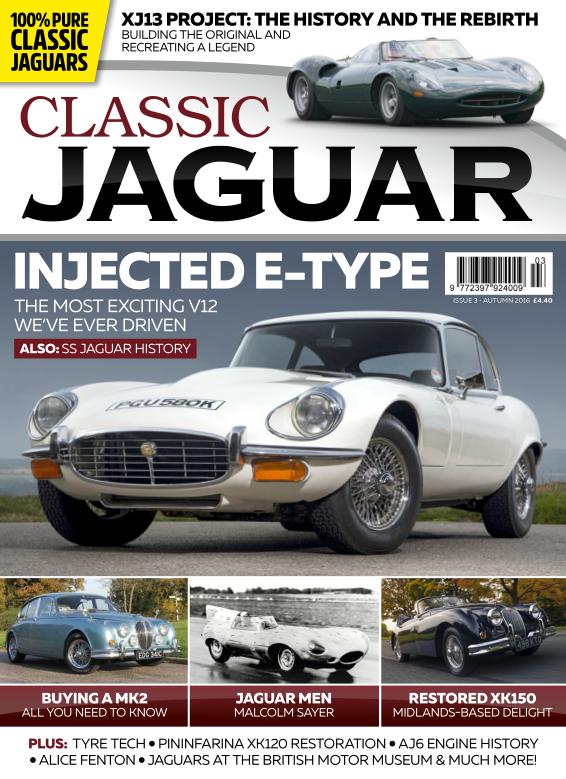
This magazine was then joined by Classic Jaguar, which has also proved utterly fascinating to put together. I’ve always enjoyed the history of Jaguar, how a maker of sidecar bodies in Blackpool became the builder of some of the most iconic cars we have ever seen.

Classic Jaguar - hugely enjoyable to edit.

Classic Jaguar – hugely enjoyable to edit.

Some of the most beautiful cars too. Few companies have won Le Mans several times, with cars that are absolutely joyous to look at. Race cars have a tendency to be ugly and functional, with the possible exception of some Ferraris (certainly not all – I think the 250GTO is actually quite ugly) but Malcolm Sayer managed to design race cars that cut through the air like a knife, but also looked quite, quite beautiful.

The juxtaposition between these two magazines I find exceedingly enjoyable. These are two very different worlds, but also both fascinating ones. While I have my favourites in the world of classic cars, I’ve never been one to get too blinkered. There’s too much of that in the world, so I’ve always embraced as many different makes and models as possible. I try to edit these magazines with that in mind. Feedback suggests that fans of these cars enjoy reading them, but I try to ensure that they’re also very accessible to those who perhaps don’t know these fields quite so well. An interesting car feature is hopefully of interest to people outside these worlds.

Happily, it looks like more of the same is on the agenda for 2017, with some possible new projects on the horizon too. That makes me very happy, because writing feature is fine, and something I very much like to do (I still do plenty for both magazines), but crafting a magazine from cover to cover really is something else. There have been long days and sleepless nights, but every time a new issue lands on my doormat, it feels so worth it.

There are other bonuses too of course. Income levels have risen, which has enabled me to (very nearly) complete the 2CV project. Your contributions made this project possible, but it’s only extra income that has enabled the project’s completion. It has eaten up an awful lot of money! The things we do for our little lumps of steel, glass and rubber eh?

2016: A year in cars

I’ve got a lot to say about 2016, and most of it is good. I shall start, seeing as this is a car blog, by blogging about the cars of 2016. These are the ones I’ve bought and owned myself. Let’s start at the beginning. This is the state of the fleet in January.

Dyane will soon be off to London.

The shambolic Dyane

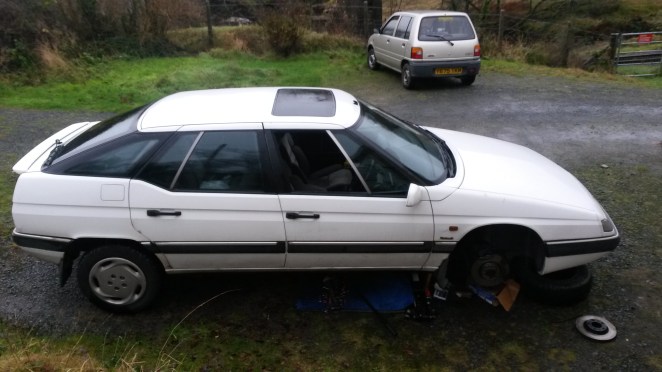
XM fettling frustrated by weather.

XM and Perodua Nippa

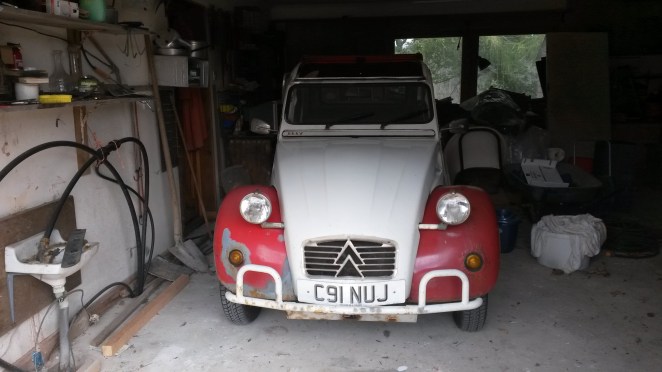
Citroen 2CV dolly

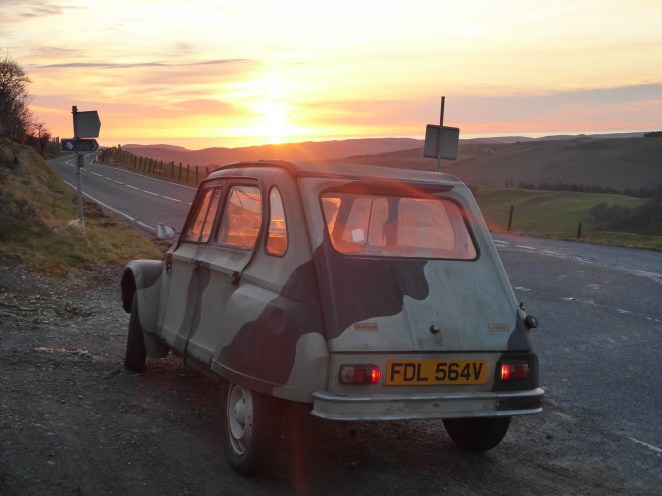
2CV – off the road and very, very rusty.

The XM had been on the fleet over a year, so was doing remarkably well. The Perodua had made it to seven months, and the Dyane had just undergone an engine rebuild. The poor 2CV’s future was uncertain at that point. Before January was out, I’d bought another car.

Prelude black

A temptation too far for my feeble will power.

This Honda Prelude was a marvellous machine. I liked it a great deal, even if the ride was rather firm. It wasn’t very practical though, so it didn’t stay around long – a mere two months in fact.

During that time, the 2CV Crowdfund Project kicked into life, stunning me and causing much excitement. It proved sufficiently distracting that I sold the Dyane and, even more remarkably, the XM in May. I replaced it with a Toyota RAV4, obviously.

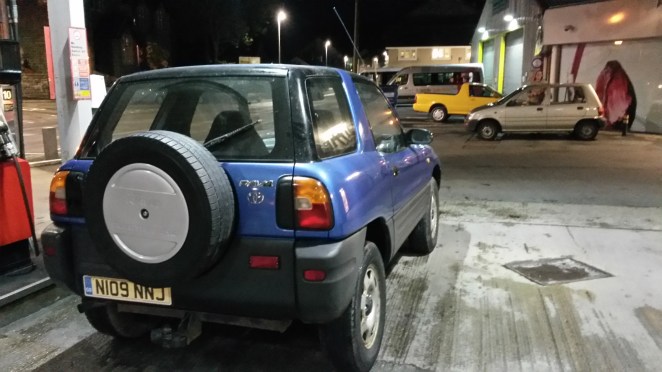
Rav4 rear

The obvious replacement for a Citroen XM.

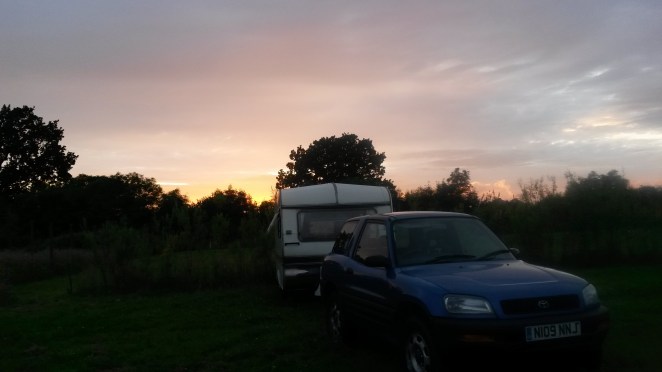
The RAV4 must go down as one of my better buys. It hauled caravan and car trailer, it provided some mild off road antics and, aside from a knackered water pump, it proved unerringly reliable. I liked it far more than I expected. That wasn’t true of the caravan. I didn’t much get on with it, though it proved handy as a staging post over the summer, when I abandoned it in Buckinghamshire for a bit.

On-site. Pretty. Or something.

On-site. Pretty. Or something.

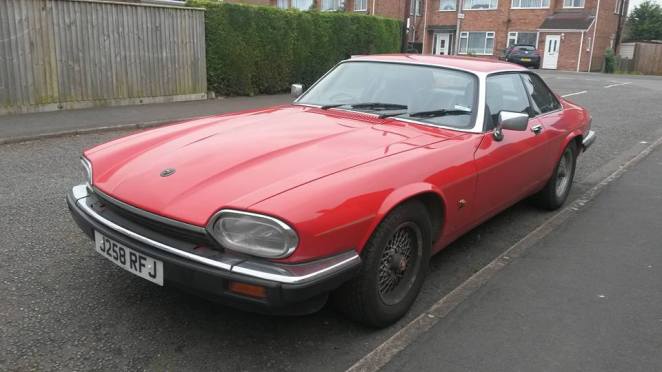
There was a temporary (even more than usual) addition to the fleet in the summer, when a rather pleasant Jaguar XJS came to stay. This was due to me taking on the editorship of a new magazine – Classic Jaguar. That was in addition to Retro Japanese magazine, which was all the excuse I needed to buy lots of Japanese cars. Jaguars are harder to find in my price bracket though, so I simply borrowed one from Kelsey Media.

The latest project car.

I covered 1800 miles in this leggy XJS. Not a bad way to travel.

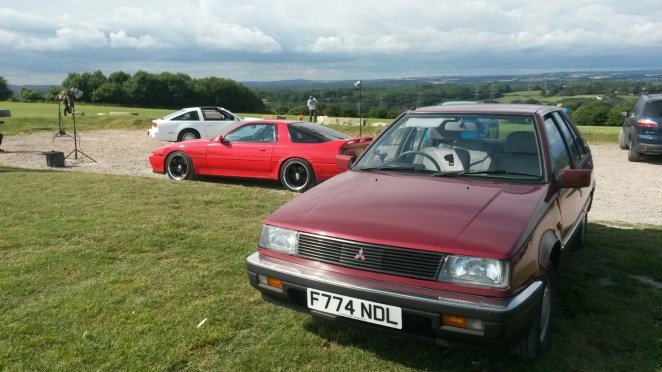
All too soon, the XJS went away. It had really got me in the mood for a luxurious, automatic wafting machine. So I bought a 1987 Mitsubishi Colt 1.5 auto…

Colt hatch

It wasn’t on the fleet long, but it was very busy in that time – the Mitsubishi Colt.

It was quite pleasant, but a little short of gearing. It had a fair dose of luxury – electric windows, central locking, velour interior and hideously light power steering – but wasn’t really what I wanted. Now I was faced with an impending holiday in France. I’d ruled the RAV4 out on comfort grounds – the seats and suspension were far from cossetting. Having already driven 500 miles in one weekend in the Colt, I didn’t really fancy a long trip in that either. I’d sold the perfect car for the trip – the XM – and the 2CV was now in hundreds of bits, spread out around the country. There was only one solution. Buy another car.

This is truly what French holidays are all about!

The perfect car for the Brit abroad.

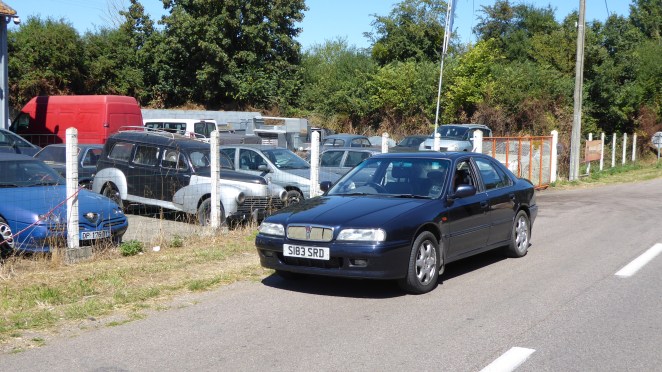
This Rover 600 turbo diesel was a fine steed, though the firm suspension was a disappointment. It needed a touch more waft. It coped marvellously with searing temperatures in France, but failed to handle a classic car event in Cheshire with quite such aplomb. It blew its gearbox to bits. Having suffered the embarrassment of my modern-ish car having to be dragged out of a classic car event on a towing dolly, I then had to watch it get mangled by The AA when it fell off said dolly. Thankfully, The AA were quick to settle – at more than I paid for the car, so all was fairly well.

I then had the difficult job of finding the perfect replacement. I wasn’t expecting it to take the from of a Honda S-MX grey import, but that’s what happened in September. I still really like it too.

Amazingly, I still like this car!

Amazingly, I still like my Honda S-MX

I thought that would be it for 2016, but then I won a Citroen ZX in a raffle. Yet another non-turbo diesel Citroen, but this time with no hydropneumatics. Annoyingly, it drives really, really well, with far more comfort than I expected. Maybe coils and torsion bars aren’t so bad after all.

So, that’s 2016 in a nutshell. The fleet currently comprises the 2CV (still in bits), the Nippa (it has finally reached 30,000 miles!), the S-MX and the ZX. Who knows what will happen in 2017! Keep this blog in your sightline to find out…

Project 2CV: It’s coming together!

EDIT – now with video! Scroll down

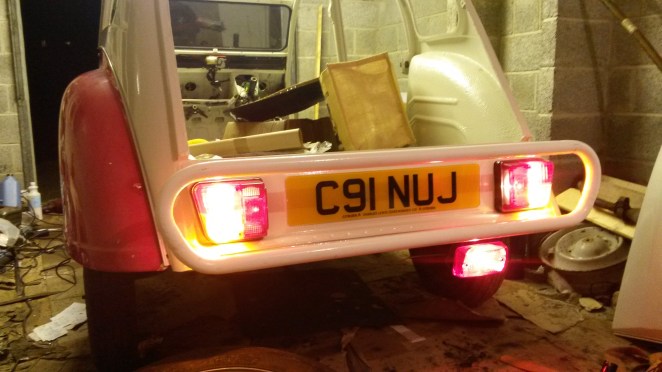
I’ve really been cracking on with the 2CV, thanks to a break in workload for the most part. With the engine absent, there was still plenty to be cracking on with. Electrics for a start. I got the loom fitted, dug out the battery and basked in the glow of a full set of working rear lights. Lovely!

Christmas lights!

Christmas lights!

The fog light will be joined by a reverse light at some point, but that might fall outside the scope of getting the car road legal. Will be handy for reversing on the driveway at night though…

You’ll also note that one rear wing has been fitted. This required drilling for the 5mm set screws that hold the leading edge of the wing in place. I did not enjoy the drilling bit, and unleashed Vactan and Bilt Hamber Dynax UB to try and keep rot from gaining a foothold here. I’ve put the old, glassfibre wings back on for now. Well, glassfibre doesn’t rot does it?

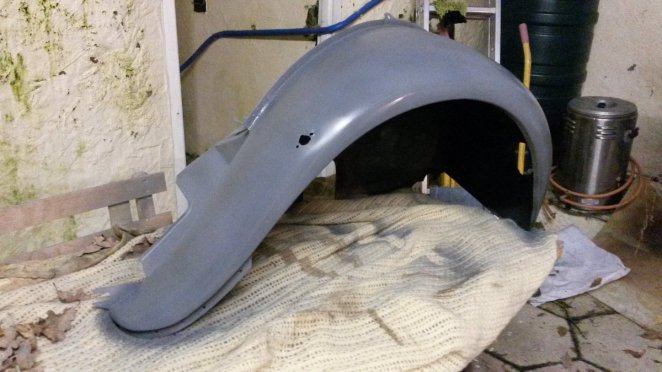
Speaking of wings, the front wings have now had a final topcoat and then a coat of sealer. I’ve received replacement headlamp bowls too, so they’re now undergoing a rattle-can transformation too. Now the wings have dried, I’m really pleased with the final finish. It’s far better than I could have hoped really.

2CV wing

Rattle cans have worked surprisingly well!

Not that everything has been going well. Refitting this brake bracket has proved a nightmare. It supports the brake master cylinder, and also the pedal box. Sadly, the profile doesn’t quite match the aftermarket bulkhead panels, so getting it to bolt down is proving tricky. I’ve opened up the holes a little, as it really isn’t far from fitting, just not close enough!

Annoyingly, this brake bracket won't fit. I hope to defeat it with cunning.

Annoyingly, this brake bracket won’t fit. I hope to defeat it with cunning.

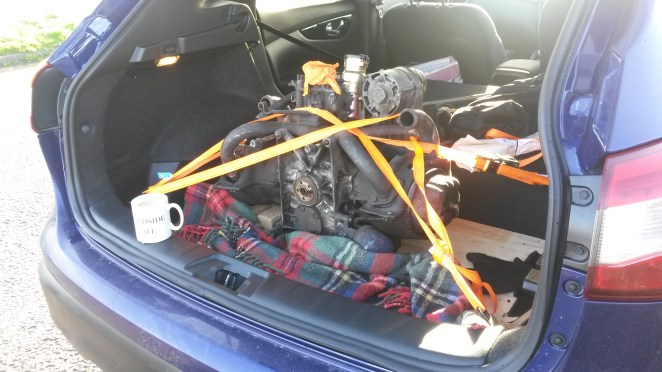
Meanwhile, I’ve finally got the engine back! It proved an ideal way to test a Nissan Qashqai (full review coming soon), with the engine sitting very nicely in the boot, strapped down via the handy lashing points.

The engine on its return journey, aboard a Nissan Qashqai.

The engine on its return journey, aboard a Nissan Qashqai.

After a slight panic, when I realised I didn’t have any flywheel bolts, I managed to order some from ECAS 2CV Parts, just catching them before they finished for Christmas. Annoyingly, I’d been at ECAS buying more bits just the previous day. Oh well! They were able to sling them in an envelope with a speedo cable, that had been out of stock when I was there – another essential ingredient as the old one has fallen to pieces.

That allowed me to refit the flywheel, fit a brand new clutch and, after a second go at aligning the clutch, slot the engine home with the assistance of Rachel (she’s helped me do a few engine swaps now. She’s really quite good at it).

Then I had to refit the fuel system, connect up the engine electrics and I was ready to get the engine running! Only, it wouldn’t run. Pulling a spark plug revealed a lack of spark, so I spent a frustrating afternoon chasing the electricity. I checked and double-checked the wiring to my Vellerman transistorised ignition, even remaking a section of wiring in case that was at fault. I could see that the points were opening, but still no spark. I gave in and pulled the cooling fan off to access the points box. The gap was tight, so I opened it up, but still no spark. Ok. Maybe the Vellerman kit was at fault. Easy to check – I disconnected it and grabbed a spare points box (that handily had a condenser already connected up to it – you don’t use one with the Vellerman kit).

Now my spark plug was sparking away very merrily indeed! Time to make some noise.

I was very pleased with that. Sure, she was spluttering a bit, but then engines do like back pressure. And accurate ignition timing (I’d pretty much guessed). And the correct mixture. And fuel that isn’t months old…

Really coming together now!

Really coming together now!

Which brings us pretty much up to date. I’m still hoping to get her to an MOT station next week (I’ve found one open Wednesday to Friday), but there’s still quite a bit to do. The doors still need building up and fitting, as do the front wings and headlamp bar. Oh, and the bonnet. And the rest of the exhaust system. And the brake master cylinder (which means that sodding bracket, then bleeding the system). Oh, and I need to change most of the wheels. And fit shock absorbers. And the other rear wing. Still plenty to do then! Still, it’s an awful lot less than there was to do. Lovely.

Project 2CV: Paint and progress

I’ve finally had an entire weekend at home, with no magazine deadlines to worry about, no distractions (other than a Nissan Qashqai I’m currently testing – more on that soon) and plenty of work on the 2CV.

Paint has taken up a large part of the past three days. It’s a slow business, even when you do a poor rush job like I am. Friday was spent prepping the front wings, which mostly meant treating any rust, sanding the surface and getting one wing into primer.

First wing in zinc-rich primer.

First wing in zinc-rich primer.

I’ve used a zinc-rich primer, in the hope of keeping that nasty rust stuff at bay. I started with Halfords’ own brand stuff, but it’s very thin, has poor coverage and two tins were gone in no time. I then switched to Plasti-kote’s zinc-rich primer, and this was far better, with a much meatier spray straight from the rattle can.

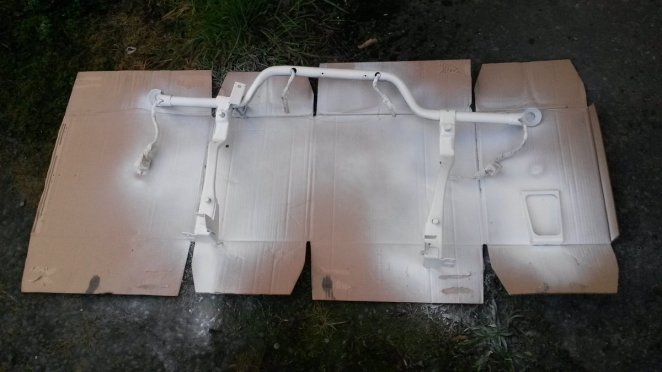
I also put a few coats of primer on the headlamp bar. I have two spare bars, and one was declared not fit for reuse. A kindly friend is sending me a pair of headlamp bowls, as the originals were, unsurprisingly, rotten. Anyway, here’s the bar, complete with a totally inadequate layer of cardboard.

Spray away, over bar and driveway...

Spray away, over bar and driveway…

You may also note in that picture a small, rectangular piece. That’s the surround for the speedometer. I first primered that in white in about 2006, and never got around to putting a top coat on it. Maybe this time! Once I get some. In my confusion on Friday (I’m not very good at shops) I failed to buy any top coat…

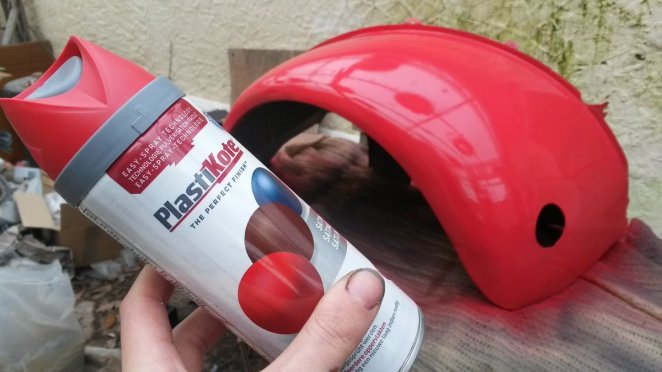
I got some for the front wings though, and today has been about getting that onto the wings. It’s a satin red (I really like satin paint on cars) and slightly pinker than the factory Sunrise Red. It’s Plasti-kote again, and it also went on nicely – if not quite as nicely as the primer.

Using Plasti-kote satin red on the front wings.

Using Plasti-kote satin red on the front wings.

In total, I used about two and a half cans on the front wings. Not all surfaces needed painting I should point out. That was two coats per wing. I was forced to use gentle heat from a hairdryer to encourage drying, as it was hovering around zero last night, and lower than ten degrees centigrade today. Not ideal. Including waiting time, it’s taken three days to get the wings in paint. Bodywork is a slow business, even when you think you’re doing it quickly!

While waiting for the paint to dry, I set about a number of jobs on the 2CV itself. To help me wire up the fusebox, I need the fog light fitted and wired in. It’s one of few things that uses a fuse (the 2CV has an entire four fuses) and hopefully I can now crack on with getting the wiring completed.

I also refitted the rear number plate and adventure bar. I needed some visual progress! That inspired me to then refit one of the rear wings. I’ve been putting that job off as I was struggling to decide which wings to use. I’ve decided to use the glassfibre wings that were on the car pre-rebuild. They’re scruffy, but won’t rust! In time, I’ll paint them to match the fronts, but that’s not a ‘get it legal’ priority. Gosh, the visual difference is amazing though!

Coming together! Hoorah!

Coming together! Hoorah!

It’s amazing what bolting on a few parts can do. From this angle, she looks almost ready to drive away! Mind you, there’s clearly quite a lot still missing. The rearmost side windows are still in Bradford, so I’ll be collecting them (along with a few other things) next week. I’ll also be visiting ECAS 2CV Parts again, as there’s yet more bits to buy – including an exhaust system.

The body is getting much closer to completion though. Obviously, the doors still need fitting, and they still need building up too (no glass currently). The seats need fitting, and the flimsy excuse of a dashboard. That’s a few bolts and screws though. It won’t take long. Nor will the seatbelts, especially as I’ll probably only fit the fronts to get her legal. There are some minor issues to overcome with the rear – the clips that hold the seat in place are mullered (or rather, the rusty remnants of the old bolts are causing them to no longer function).

The engine is still a notable absentee, but plans have changed there. I just don’t have time to wait for it to be rebuilt so, seeing as it was running fine, it can wait. I’m collecting it on Wednesday. It needs a new clutch fitting to it (one of the spring finger bits has snapped off), but hopefully I can have it running by Christmas.

At the moment, the deadline of 8th Jan feels very possible. Let’s see how the next week goes…