Project Budget 4×4: More brake woes

Last time I took the Maverick for a drive, it made such horrible grinding noises that I quickly turned around and came back home, being rather gentle with the middle pedal. It was the unmistakable grind of metal on metal, which surprised me as a sneaky peak at the pads with a wheel off (for a tyre change) had shown plenty of life left.

Very worn pad

Jeepers! Very glad I didn't try driving further with this

Today, I got the wheel off during a service and was horrified at what I found. The inner pad – very difficult to see on a casual inspection – had no pad material left on it at all! No wonder it was noisy. It seems that the common issue of caliper pistons seizing had jammed the inner pad against the disc. What I find surprising is that this binding generate only a small amount of heat – usually if a brake binds severely, the wheel becomes too hot to touch. Another clue that all was not well was the fact that it was pulling to the left under braking. The left-hand brake was clearly doing most of the stopping.

I’ll have to order a replacement caliper as the pistons are very seized. Naturally, the metal pad grinding on disc means that new discs and pads will need fitting too. I’m amazed that this didn’t cause a grinding sound on the test drive, nor the drive home…

New discs and pads are getting on for £60 – not too bad really – but the caliper may be more tricky. Reconditions replacements start at £58 plus delivery, rising up to as much as £100. Due to the budget nature of this project though, I’m going to first see if I can find a good second-hand unit.

Other work has progressed rather better. The oil was disgusting – looking like something you might find in a neglected diesel. That had to be changed, and a new oil filter was also fitted – a right pain due to exceedingly poor access. I also changed the coolant, spurred on by the fact that the coolant in the expansion tank actually froze last night. It has been very cold. I’m not sure this was as serious as it first appears as it looks to me like a one-way expansion tank – so isn’t actually part of the ‘live’ cooling system. I feel better knowing there’s a stronger mix in there now though, and the coolant change seems to have boosted heater output, so I suspect I’ve removed rather a lot of silt from the system.

I also changed the gunked up air filter, but not the spark plugs as I was sent the wrong ones. Therefore, this project is on hold until items arrive. And snow is forecast this weekend…

Project: Budget 4×4. Hiccups

There is always a danger when you buy at the bottom of the market, especially when you do so sight unseen!

Ford Maverick swb

Brake issues strike the Budget 4x4

The Maverick has a brake issue, that wasn’t revealed until long after I’d paid my money and got home. In fact, the problems started when I went and bought some new tyres. Two of the wheelnuts on one rear wheel were missing! I opted to take the spare wheel off the rear door and stash it inside so I could safely make it home. The owner of our local hotel has a Terrano that’s going to be scrapped, so I was able to pinch the nuts. Thanks to the Hafod Hotel! This hotel is also responsible for supplying our wood burning stove. Lovely people. They also have beds and a bar, providing rather more traditional hotel services!

I decided that the poor handbrake needed attention on the Maverick, as it resolutely refused to hold the car on the slope our driveway has as it joins the road. I’m a fully signed up member of the Nissan Owners Club – remember that my Ford is entirely Nissan beyond the badge – and downloaded a useful guide on how to adjust your handbrake. This was delightfully simple to do. You remove the centre console, which is held by four screws (you can leave in situ and get under it, but it’s easier with it out of the way). This enables you to slacken the handbrake cable, so you can easily remove the rear drums. These are self-adjusting (ha!) but the trick is to tweak them up until you can just get the shoes on. All well and good. Pump the footbrake a few times, then check they aren’t binding. While the back end of the truck was safely and securely raised, I decided it’d be fun to put it in gear and really get the rear axle spinning. It’s a good way of checking the brakes work! Sure enough, a slight tug on the handbrake and it stalled. Excellent. the footbrake however did absolutely nothing at all. Hmmm. That’s not right. I repeated my adjustment procedure to make sure I hadn’t got something badly wrong. Nope. Handbrake was working fine and a test drive revealed that it (just about) held it on the steep slope.

So it seems the rear brakes are not working at all when operated by the footbrake. This is a dual circuit system (front/rear) so suspicion is focusing on the master cylinder at the moment, though the clearly-very-seized bleed screw on the top of the rear load compensating valve is a cause for concern. The rear pipes have all been removed, but if there’s air trapped here, the brakes will not work.

Investigations are continuing. Incidentally, the new tyres cost £150 fully inclusive, with another £60 (!) spent on the necessary fluids for a service – including 3-litres of Limited Slip Differential oil for the back axle. Another £15 has been spent on other service items – plugs and filters – bringing total expenditure so far up to £725. Still some room  for whatever brake parts are necessary within my £800 budget.

I’m not too disheartened at this stage. Without a rolling road, it’s nigh on impossible to check whether the rear brakes are working on a car as the fronts do most of the stopping. When you buy cheap, you always run the risk of there being issues – there almost always are. I’ve spent a lot of time crawling around beneath my new purchase and I’m pleased to note that it is very solid. I may need to buy some anti-corrosion products to make sure it stays that way…

Cold comfort

If you’d spent all day leading a 2CV convoy around some of the nicer parts of Wales, you’d probably like nothing more than to curl up on the sofa with a cup of tea, enjoying the heat from a roaring fire. Bliss.

Into the night

Brrr! Sub zero and dark, but work continues into the night

Instead, last night I found myself standing around outside acting as assistant to my mate Mat while he made a brave attempt to cure some of the BX’s many problems. First was an attempt to reseat the hydraulic pressure regulator’s ball bearing, which was possibly to blame for a low tick time – the amount of time between pump runs. A healthy hydraulic Citroen can maintain pressure for at least 30 seconds before the pump needs to cut in and re-pressurise the system. Mine has been cutting in every second or so, despite a new accumulator sphere. This may all sound like gobbledegook, but it’s simpler than it sounds!

As it happens, while we thought there had been some success, it doesn’t seem to have made any difference at all. The power steering is also still intermittent, so suspicion is that it is either a weak pump, or blocked filters in the LHM reservoir. If I’m feeling brave, I may yet nip out and have a go at sorting that out! It’s still very cold outside, if less dark.

Next task was to replace two more glow plugs. I hurriedly changed a pair before it went in for welding work, but ran out of time to change the two trickiest ones. It’s an annoying job as lots of things get in the way. Some plugs can be removed with a socket, but one needs a spanner. Quickly sorted though, and starting is improved.

Then the wiper motor assembly was replaced due to horrific wear in the one fitted. The replacement isn’t perfect, but it is far better. You need good wipers in Wales.

Finally, we tackled the tailgate wiring, as it had not been reconnected following the welding work due to lack of time. The number plates and central locking now work, but eventually we had to concede that warmth and food were a good idea, so the heated rear window and rear wiper will have to wait for another (hopefully warmer!) time.

Today, I’ve been tackling various issues that the 2CV and Peugeot 309 have developed. The latter now has an improved exhaust system while the 2CV has a temporary replacement ignition barrel – courtesy of a Dyane – and a cleaner roof. I’m hoping for another dry day tomorrow so I can water-proof it… You have to get your tinkering in while the weather is dry, by day or night!

BX project – fuel filter

I’ve put off changing the fuel filter on the BX for a few reasons, such as not really enjoying getting diesel all over my hands and the fact that I accidentally ordered the wrong fuel filters to start with…

It needed doing. The engine has felt a little underwhelming, a touch flat. I know 65bhp from a thumping, normally aspirated diesel is never going to exactly push the tyres to their limits, but it felt like it was suffering from fuel starvation. I could tell it wanted to give just a bit more…

Gunky mess

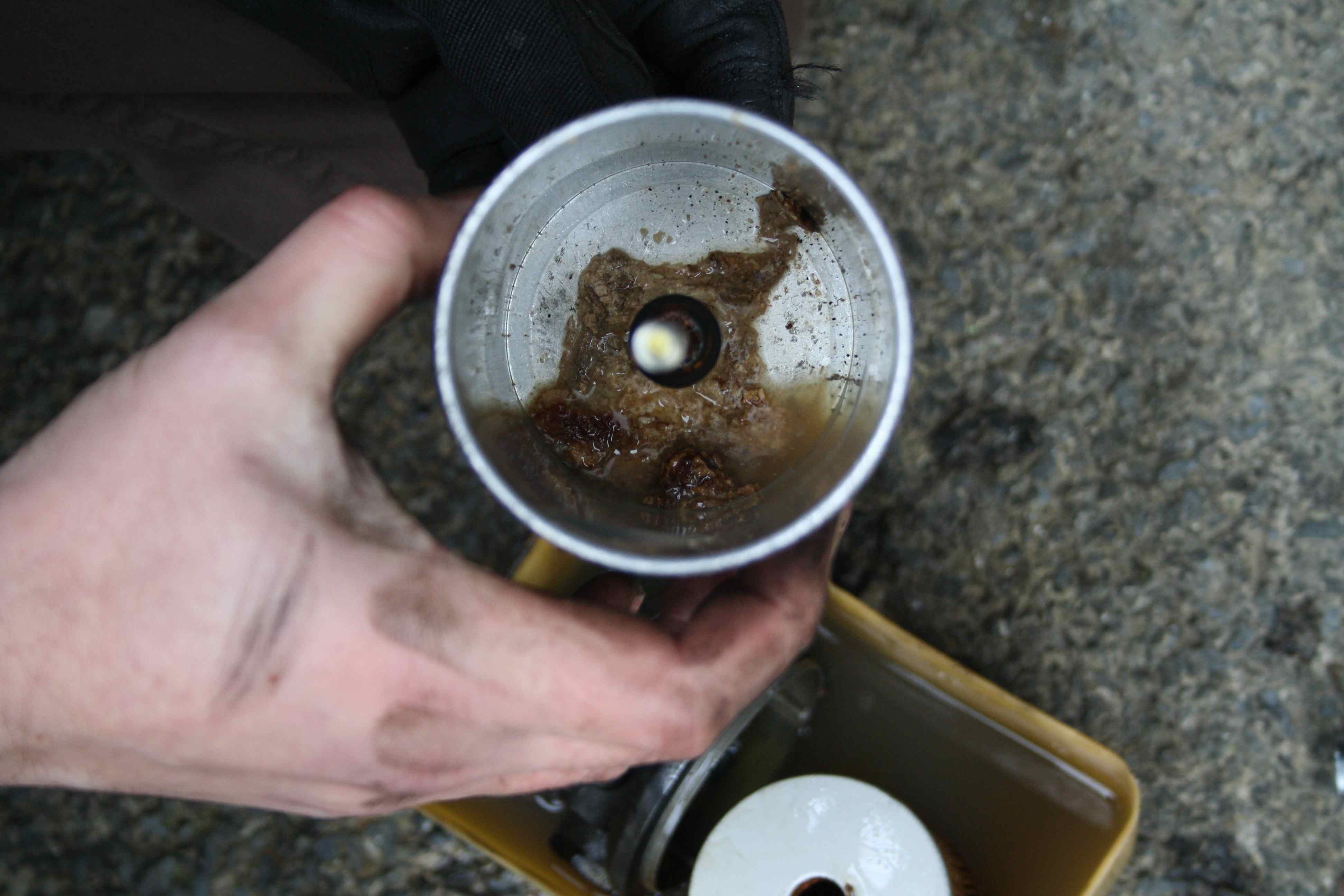
Slimey mess in the BX's fuel filter housing. Yuck!

So, it’s a simple case of disconnecting the hoses to the fuel filter housing (19mm headed bolts), removing the housing itself (two 13mm headed bolts and nuts) and then taking it apart in a suitable container (releasing the 11mm bolt on the bottom of the housing). This last bolt was VERY tight, but I finally defeated it and could pull the housing apart. The filter plopped out, showing obvious signs of gunky debris, with a good layer of slime at the bottom of the housing too. No doubt this built up during the 3 years of inactivity while this car sat in a garage.

With the housing cleared out and a new filter fitted, it was then a case of bleeding the system and taking it for a test drive. There’s a 12mm bleed bolt on the housing so I released this and pumped the prime button until fuel came out. It took a few spluttering attempts before the engine ran, but it did seem a bit more eager.

However, that might have all been in my mind as out on the road, it still felt flat. I decided at this point to give it a slosh of unleaded fuel. These engines have been known to respond well to a touch of petrol mixing with the diesel, so I slopped in 5 litres with a fresh dose of diesel. On the return journey, it did feel a little less hesitant, so hopefully this combination of factors will lead to improved performance. So far, I reckon it’s not even doing 40mpg as I’m having to drive absolutely everywhere with my foot right to the floor! I know I’m a quick driver, but I expect even a normally aspirated BX diesel to feel a little more perky.

I shall see how it performs over the coming weeks, before it goes in for some drastic metalwork surgery later in the month. Hopefully this’ll lead to me being able to use the tailgate again…

Citroen BX Cambelt Change

Changing a timing belt or cambelt was a first time experience for me. I’ve owned and worked on 2CVs for years, but they don’t have timing belts, radiators, water pumps or a transverse-mounted engine. That latter factor makes changing a timing belt on pretty much any modern car a big challenge. The end of the engine is inevitably jammed up against the inner wing making access tricky. This job rates quite highly on the Knuckle-scrape score.

Tight!

It's a poor pic, but it does show how tight the access is! That's the crankshaft pulley just visible

As you can see, there is about an inch of clearance between the end of the engine and the inner wing in the case of the BX. The timing belt runs through the top engine mount though, which means it has to be removed. That allows you to jack the engine up/down to get a little more clearance  – vital if, as in this case, you also need to replace the water pump.

The biggest challenge with this job is undoing the 22mm crankshaft pulley bolt. With a friend using a large stick to hold a knuckle bar onto the bolt, we wedged it in place by using a scaffold tube. Operating the starter motor then undid the bolt. It’s a tricky operation and dangerous if there’s a chance of anything sliding off. Be careful. A cordless impact driver might be a more sensible way to undo it. If you have access to one…

You then lock the engine using a hideously difficult-to-locate hole in the engine to lock the flywheel, and three 8mm bolts locking the camshaft and diesel pump (two bolts here). After that, removing the belt is fairly easy, though slackening the tensioner is very difficult. Access is poor and you can’t actually see the adjuster nut – you have to feel for it. I had to rope in a friend to push against the tensioner spring while I loosened then tightened the adjuster.

Old and new

Quite obvious which one is new!

With the belt off, the water pump could be replaced. This was simply a case of unbolting it and removing it, though you do need to take time to carefully scrape away any remnants of gasket from the engine. The impeller seemed slightly smaller on the new pump but asking around, this wasn’t thought to be a problem. It’s probably just a design change during the life of the vehicle.

The pump was fitted and I could set about getting the new belt on. This is a bit fiddly, but an extra pair of hands from that trusty friend helped again. Make sure you re-fit the crankshaft pulley BEFORE turning the engine over, and also make sure you remove all of the bolts that lock the pulleys and crankshaft in place.

We turned the engine over twice and attempted to refit all of the locking bolts. They all went in, suggesting everything was in the correct place. It was time to start the engine! Aside from a bit of smoke (the glow plugs are not healthy) she started up and ran smoothly. Excellent! We didn’t run her for long as I hadn’t yet added coolant. I was going to fit a new radiator fan switch but instead opted to use a coolant flush on the engine. I’ll change the fan switch when I drop this cleaning coolant later on. As you can see from the water pump picture, the waterways are clearly quite gunked up!

Use height

Using ramps to raise the radiator height

Bleeding the cooling system can be a challenge. The trick is to ensure the heater is on and use ramps to ensure that the radiator is the highest point in the cooling system. This will encourage air towards the radiator. Squeezing the coolant pipes also helps, including the heater pipes. You must be VERY careful doing this on a BX as your arm gets very close to the hydraulic pump belt. Make sure your sleeves are rolled up! By squeezing the pipe and letting air out via the bleed screws on the thermostat and radiator, you should be able to get a nice, toasty heater and remove any air leaks. Do keep an eye on the coolant level at all times, as it will drop as you remove air and release the bleed screws.

With the BX, you have rather a trust in faith as there is no temperature gauge. Where fitted, keep an eye on it during a test drive and hopefully that’s job done!

BX – assessing the cost

A quick trip to my ‘local’ garage saw the somewhat iffy exhaust downpipe replaced on the BX. How pleasant it is to have  car which sounds so very different! £78 well spent, especially as replacing it was a fiddly pain in the backside – how nice it was to pay for someone else to struggle with it! In fact,  I was very glad I hadn’t had a go at the job myself – if it was this much of a struggle for two people with it on a ramp, I wouldn’t have fancied my chances with it sitting on axle stands and me lying on my back underneath. A good decision!

BX and Range Rover

New BX project causes some sacrifice on the fleet

A restoration can be a costly business and indeed, I reckon the total expenditure on the BX (including taxing it and collecting it from Bristol) is somewhere around £700. This is why I’m so glad to have sold the Saab – this project needs funding! The Saab isn’t the only casualty on the fleet though – the Range Rover is also going to have to depart. At least I got in while values are still low. Give it another few years and I doubt there will be such thing as a cheap Range Rover Classic…

To get the BX back to nice condition is going to cost a lot more though, which makes for some tricky decisions. This is one of the rarest cars in the UK, yet I don’t expect that putting it on the market would result in a flurry of interest from people with lots of cash. I reckon that just getting it straight and rust free could take my expenditure up to £1500, but it’ll really need a complete stripdown and rebuild to look anyway decent. That could get very expensive indeed, especially when you consider that a BX topping a grand is rare indeed.

There’s also the small matter of not having endless stocks of cash. My wife and I have chosen a low-income lifestyle and cars do seem a very expensive hobby! It will be interesting to see how this all pans out.


The BX hits the road

With the BX home, I could crack on with the most important jobs. The new radiator was fitted and I managed to free off the reluctant rear seat belts. Other than that, I thought she stood a pretty good chance of passing an MOT, though not being a tester myself, you never know what might be discovered…

As she sat on the ramp and I got my first proper look at the underside, it was pleasing to see how solid she was. There was a touch of softness in the sill – not near anything critical thankfully – but it’s the nearside sill, which has a ruddy great dent in it anyway. It will be replaced at some point. However, the tester spotted what looks like a serious leak from the water pump. I’d spotted this myself at home and had hoped it was something else.

BX is on the road!

It may be battered and bruised, but the BX is now road legal!

That’s not a real biggy – if you’re changing the timing belt, it’s sensible to fit a new water pump at the same time anyway. If the pump seizes, the belt will rip and the valves of the engine will meet the pistons. Bad news indeed. Parts are on order so look forward to a report on how the change went.

Amazingly though, I got my MOT pass! Or rather the car did. Yes, she looks dreadful but as I thought, she’s actually a good, solid car beneath all the dents. As she’d been in regular use before being stored (and stored pretty well) she feels ready to go.

I’m under no illusion that this project is a long way from over. There is considerable expenditure on bodywork to occur at some point, and the to do list remains sizeable. The priority, as ever, is to get her in regular use and hopefully tackle some of the major bodywork projects next year.


Saving the unloved – Citroen BX Mk1

I have always found great joy in the cars that the wider public consider rubbish. I’ve been into Citroen 2CVs since long before they were accepted into the classic car world, and ‘desirable’ is a label that rarely attaches itself to one of my fleet. The reasons are simple – if people don’t like it, then it’ll be cheap. Best of all, a bit of bravery often leads you to discover that these ‘shite’ cars are often far better than anyone ever gives them credit for!

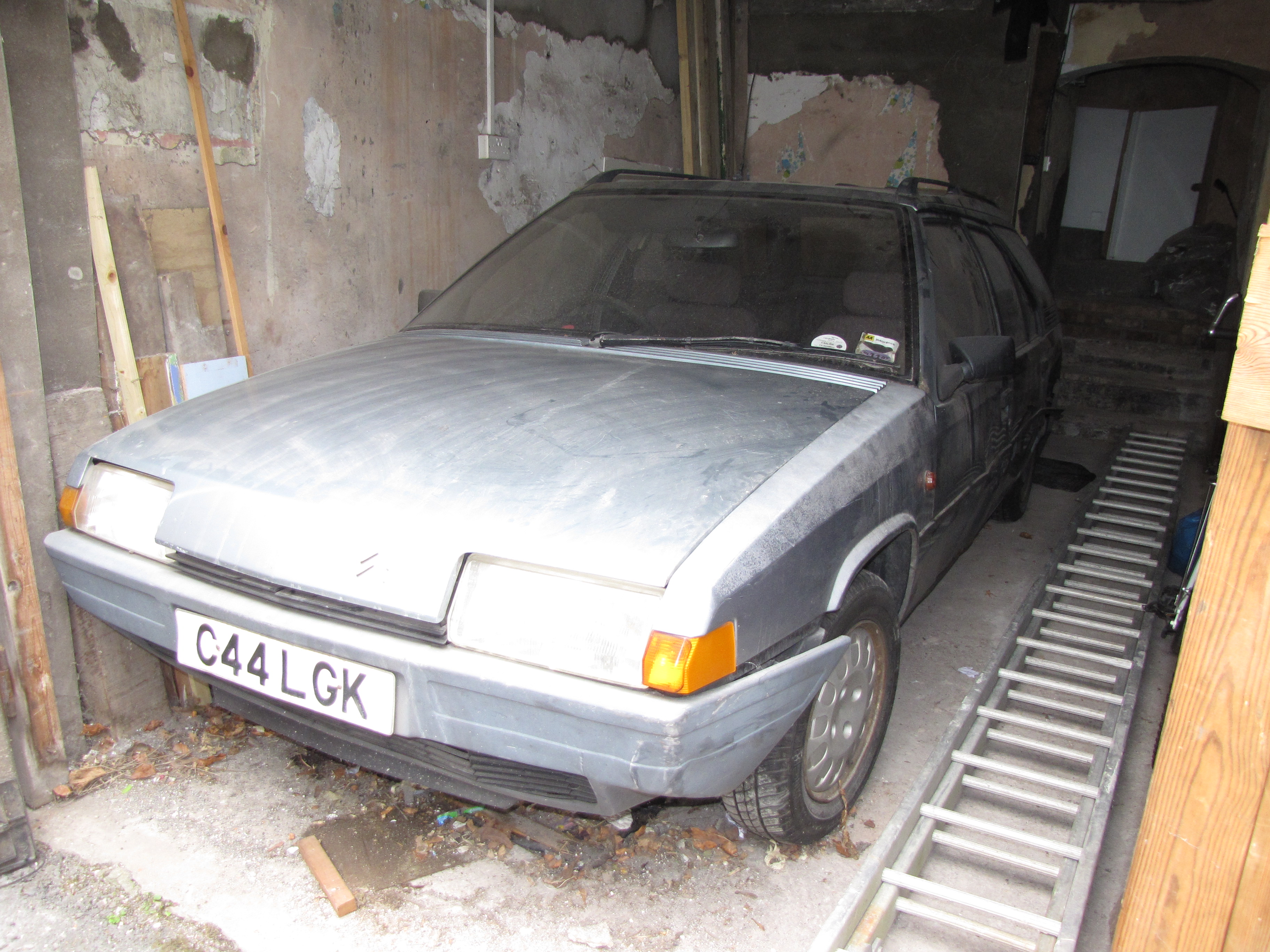
This is how I tried to justify my latest project –  a Citroen BX Mk1 estate, with 65bhp of throbbing diesel power. The cream on the cake of shiteness was the condition. There’s barely a straight panel on it and it had been languishing in a Bristol basement garage for over three years.

Citroen BX Mk1 estate project

You see a pile of scrap, Ian sees potential

First glance was certainly not promising. The paint is shambolic, the tyres were flat and cobwebs and dust abounded. However, it seemed solid in all the right places – if not all over – and had been in regular use prior to being parked up. That can make all the difference. Three years wasn’t too long to leave it.

A plan was hatched to collect it, using my Range Rover as a tow vehicle and a hired trailer. My biggest concern was about whether the BX would be prepared to start. Thankfully, the owner had stored the car on blocks – which meant we could get a jack under it if it refused to start. Trying to move a hydraulic Citroen with a dead engine can be a real challenge!

The owner’s Citroen Xantia was used to coax some electricity into the BX, and miraculously, it actually started! It took a few attempts, and it ran on three cylinders for quite a while, but nonetheless, the ran and the suspension began to pump up.

Getting the BX out of the garage proved a tight squeeze and once it was on the trailer, life didn’t get much easier. It really was a tight little street!

Range Rover in tight spot

Bristol proves a tight squeeze

Somehow we escaped, and the three hour journey home proved undramatic. The Range Rover proved itself an ideal tow vehicle – it’s Italian diesel engine slogging away quite happily without having to be revved hard. Agricultural but torquey!

Getting the BX off the trailer proved a surprisingly entertaining side show for the villagers where I live. The LHM level was a bit low, and the back end of the BX was failing to rise adequately. We overcame this by unhitching the trailer and raising the nose on the jockey wheel. Off she came! I then got to drive my new purchase for the first time, if only down the driveway.

The exhaust was blowing very badly – that much was obvious – but it seemed to go well enough. The brakes even worked – not bad after so long in storage! With the car in the garage, I was able to get the wheels off and check the brakes. Yup, a little rusty but working fine. I cleaned them up a bit and left it at that.

The radiator was clearly a right mess though, so a new one was ordered and fitted. I still think the fan switch also needs replacing, and the water pump has now also proved itself leaky. New items are on order, along with a timing belt kit.

With the new rad fitted though, I could focus on getting the BX road ready. I reckoned it was close to passing an MOT, so with a replacement driver’s door mirror fitted – thanks to Tim Leech of the BX Club, and a few replacement light bulbs, it was time to take her in. Would she pass?!

To be continued…

BX - it lives!

The BX lives!


Relay frustrating

I don’t know why I bother sometimes. I mean, the 2CV is about a low-tech as cars get. There’s no distributor, no radiator, no water pump, no cambelt, no brake servo, no power assisted steering, no EBD, ABS, ESP, SIPS, no electronic brains. Simple. So why do I keep trying to make it more complicated?

The idiocy began in 2003 when I fitted 123 electronic ignition to the Tin Snail, in a bid to overcome poor running due to a worn points cam and because points are a bit of a faff really aren’t they? To be fair, it did the trick, but problems weren’t far away. First, the car developed a starting fault because 123 is more power hungry than points. I had to replace the battery to overcome that one.

Ok, so that was about all that went wrong for 40,000 miles, but then starting problems struck again. I binned the unit and fitted a DG Ignition – a rather blatant copy. That lasted even less time, causing problems when I was on a 3500 mile trip all over mainland Britain. I returned to points, aided by a box of tricks from Maplin that effectively takes the high voltage power away from the points. Lovely.

The next unnecessary modern gadgets were headlamp relays. My 2CV has had halogen headlamp bulbs fitted since I bought it (I’ve never had to replace one in almost 100,000 miles!) which can cause the headlamp switch to get warm. The wise option, according to most, is to fit headlamp relays. I did this some weeks ago, having been meaning to do it for some years. After all, taking the strain off the wiring loom and switches has to be a good move doesn’t it?

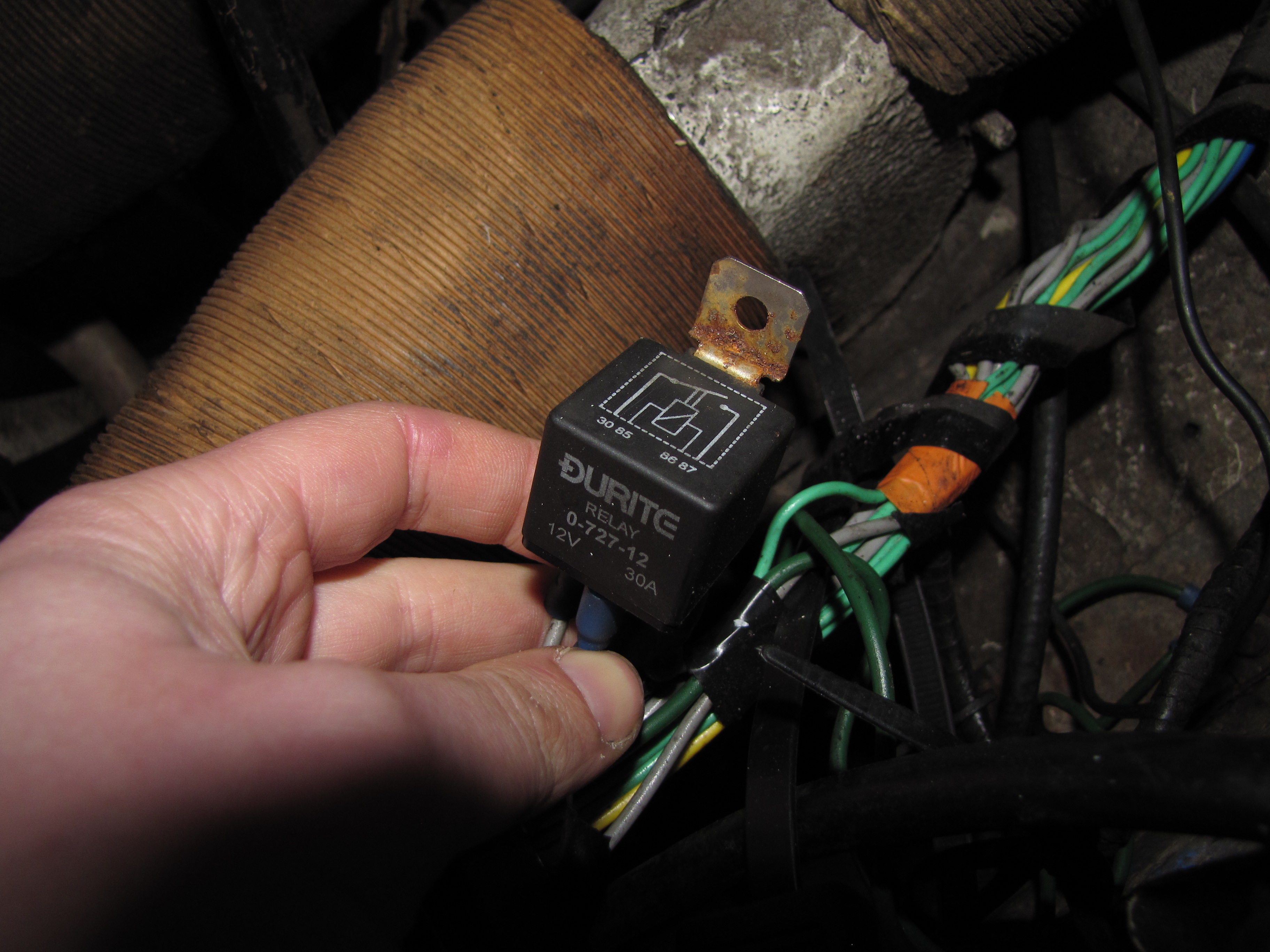
Headlamp relay

Relays - good or bad?

Apparently not. I was driving home in darkest Wales, went to put main beam on and got nothing but darkness. Quite alarming as I was doing 40mph at the time! Thankfully, the headlamps did continue to work but one of my new relays is broken already. If I’d not fitted it, I wouldn’t have had a problem.

It all leaves me wondering whether sometimes it isn’t just best to leave things as the manufacturer intended. The big test for this theory might be the electric cooling fan fitted to the Scimitar…

Mini caliper rebuild – Part 2

Having received the new wheel stud, I could complete the left-hand side. It all went back together beautifully and with an attractive assistant (the wife) on pedal duty, it was soon bled and functioning correctly. Lovely.

New brake caliper and disc fitted to proper Mini

Hmmm. Sooo shiny. seems a shame to cover it up with a wheel. New disc and pads plus refurbished caliper

Now attention could turn to the opposite side. I lowered the car back to the ground as I needed to reposition it – space is tight in the garage. This time,  I remembered to undo the main driveshaft nut BEFORE jacking the car up. Having read the Haynes manual, I decided to remove the caliper complete with pads this time. That was stupid – I then couldn’t get the pistons out. So, I connected the caliper back up and with the handy assistant again, could use hydraulic pressure to force the pistons most of the way out – using a spanner to stop the first one from popping all the way out until the second one was also easing outwards. It was then an easy job to use pliers to pull the pistons out – you wouldn’t want to do this if you were planning to re-use the pistons, but I wasn’t. They were in a dreadful state.

The only seized bolt on the entire job caused some issues – I couldn’t get the caliper into its two main parts. Eventually, I managed to smash a slightly-too-small socket onto the corroded head, and out it came. There may have been some colourful language before this! I then had to locate another bolt, which involved a trip to see a Mini enthusiast in Aberystwyth. Thanks Dave!

This was the side that had seized the most ferociously, and getting the old seals out proved a real ‘bind.’ See what I did there? The new seal holder things are incredibly soft and easy to damage but on this caliper, I actually managed to get one of the new ones to fit – though had to resort to an old one for the second piston. Then it was a simple case of swapping the disc and then re-fitting the caliper. New pads completed the job and with another bleeding session, she was ready to go!

The difference on the road was marked. When you’ve only got 45bhp to play with, binding brakes can be a very noticeable drag. I’m still to bed the brakes in – only 8 miles covered so far – but look forward to seeing how they go.

Very rusty brake disc

Yup, that'll be scrap then. No point putting this back on.

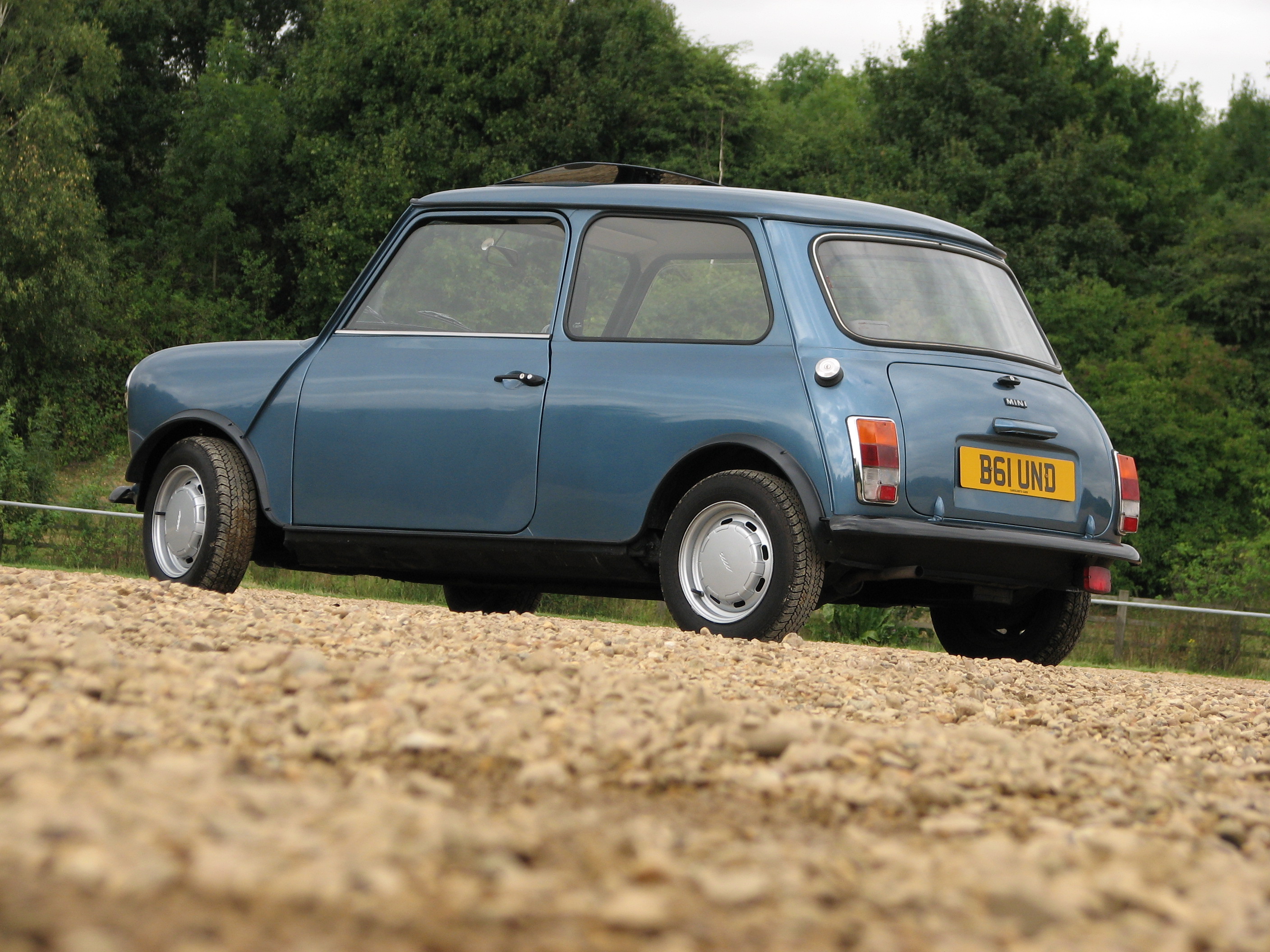
Betsy the 'proper' Mini

With fixed brakes, Betsy the Mini is ready to go!