Part Worn Tyres – are they a good idea?

As budgets get pinched, lots of people are considering part-worn tyres. After all, a part-worn good-brand tyre may be cheaper than a brand new budget tyre. Which might be rubbish. But are part worn tyres safe? Will buying them actually save you money?

Let’s start with safety. It’s certainly true that worn tyres affect stopping distances far more than you might expect. The British Rubber Manufacturers Association (BRMA) commissioned MIRA to study the effects of tread depth on stopping distances. This study found that on smooth asphalt, the difference between tyres with 6.7mm of tread and the legal minimum of 1.6mm was marked. In short, there was a 36.8% increase in stopping distance in wet weather conditions. That’s pretty huge and could be the difference between a near-miss and a dangerous accident. You can find more details on the RoSPA website.

Less tread = less grip

Less tread = less grip

That study led RoSPA to recommend that tyres be changed at 3mm – well before the legal limit of 1.6mm over 75% of the tyre’s width. In Germany, the limit is already 3mm – this is one source of cheap part-worns. That said, it’s not unusual to see part-worn tyres with 5mm or even 6mm of tread remaining. Presumably this is where a set of tyres has been replaced and not all were entirely worn to the limit in that country. Or they’re considered not worth re-fitting if removed to allow winter tyres to be used.

I personally don’t go in for the scaremongering that surrounds part-worn tyres. Some go on about how you have no idea of the history of the tyre, but that’s true every time you buy a car that isn’t brand spanking new. Do you fit a full set of brand new tyres every time you buy a car? No, I thought not.

But it is tricky to know what’s best sometimes. I’ve opted to buy brand new tyres for my 2CV recently. I couldn’t afford a full set of range-topping Michelins, so had to opt for the Toyo budget tyre. In my experience, it’s a really good tyre, but on the new European tyre ratings, it scores a lowly E for wet weather grip. I must concede, the car does understeer a fair bit in the wet when really pushing on. Might I have been better off seeking a part-worn set of Michelins instead? Possibly – though that leads to other issues. Michelins typically have a low wear rate, so a tyre with lots of grip could be ancient. Has the sidewall started cracking? Has the compound gone all hard? It might still be a liability in an emergency situation. But even by fitting brand new tyres, I’ve boosted the stopping power of the car. Poor tyres with lots of tread are still better than the same poor tyres with very little tread!

And that’s the biggest problem with tyres. Even rubbish ones can be ok for 99% of the time. It’s when you really need them – an emergency stop in wet weather, or an emergency swerve – that you can all too swiftly discover their limitations. I still recall binning a set of Goodyear tyres on a Peugeot 306 after an old lady stepped out in front of me. As I hit the middle pedal, the car locked up far too easily! Fortunately, I think the resulting skid actually helped me miss her. Despite that, I bought a brand new set of Avon tyres and both stopping and acceleration were immediately boosted in the wet. No more wheelspin. Far harder to force a lock-up.

So, this piece has no conclusion to offer I’m afraid. I can’t demand you always buy the best tyres out there, because I’ve just failed to do that with my 2CV. The Rover on the other hand wears really good rain tyres – it has much more performance and more weight to control in an emergency. I certainly wouldn’t rule out part-worn tyres, but I would aim for a really good brand. The near-limit Bridgestone tyres the Rover was wearing when I bought it were actually still very grippy. The cheap, Chinese tyres with lots of tread were not as stable during harsh, damp cornering. All I would say is think long and hard and consider the stopping distance rule. Whatever the tyre, less than 3mm of grip can have a very detrimental effect.
Why I grew to hate Greenlaning

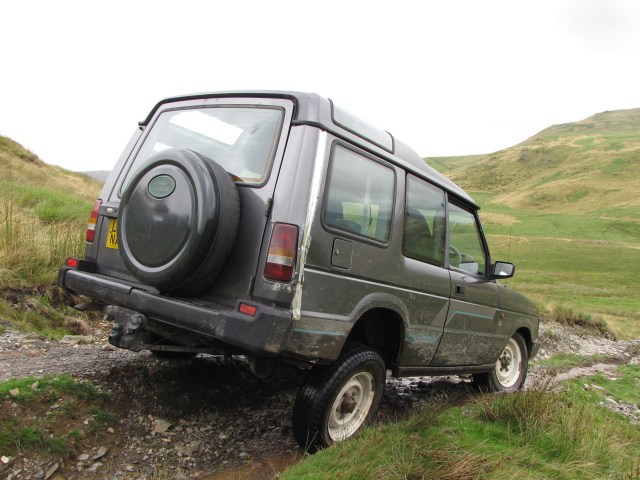
It’s now many months since I sold my Land Rover Discovery, and I still miss it. I get such a thrill from putting a 4×4 through its paces. There’s nothing on earth like it. You can’t drive a 4×4 well by trying to drive it quickly. It’s an entirely different discipline. Yet I grew to hate it.

Land Rover Discovery any good off road

Driving slowly has never been more fun!

The reason is the bad press that greenlaning gets. I was a good greenlaner. Damaging the terrain was something I did my utmost to avoid – unlike a lot of motorbike scramblers I saw and, sadly, other 4×4 owners. I drove gently. Unlike a LOT of scramblers I saw. I didn’t mind if I didn’t get stuck. Carnage I saw through the countryside sadly suggested that some 4×4 owners found greenlaning a bit boring, so they’d head off-piste to deliberately get stuck and have an opportunity to get the winch gear out.

That’s the biggest problem. I ended up feeling like I was trying to defend something with no real justification. One particularly angry farmer accosted me on a greenlane and asked me why I was doing it. I couldn’t really think of an answer. I mean, yes, he was wrong. We were on a greenlane, and so had every right to be there. I also have every right to say ‘your mother smells,’ thanks to freedom of speech. It doesn’t mean I should do it.

I would get very angry with ramblers and horse riders who frowned upon what we did. Especially the latter! I don’t know if you’ve encountered a group of horses on a narrow bridlepath when you are on foot, but it’s quite scary! Horses are big. They also make a real mess of soft ground, just like a 4×4. Yet I don’t go around complaining about it, because they have every right to be there. If I don’t want to deal with horses, there are plenty of footpaths that horses aren’t allowed on.

Yet when ramblers come trotting down a greenlane, it’s the 4×4 owner’s fault for disrupting the peaceful countryside and churning the ground up (more often due to water damage to be honest). If they don’t like it, why are they walking down a greenlane? It’s like walking around the M25 and complaining about the speeding cars.

Range Rover off-road

Greenlaning. A great way to annoy just about everyone

Yet even my wife complained about greenlaning. It’s a hobby that really does annoy an awful lot of people. People in The Peak District are going to great lengths to get greenlaning banned altogether. I can entirely see why. I see columns of muddy vehicles revving engines as they pass through tiny villages. I see AND hear horribly noisy off-road motorbikes razzing around – why do they have to be so noisy? Every time I went greenlaning, I felt I was associating myself with people who just seemed to have no respect at all for anyone nor the countryside. No wonder folk want it banned.

I did find some solutions to the problem. Pay and Play sites weren’t it though. I found them too full of idiots charging around at high speed because they weren’t constrained by any sort of rules. That’s the biggest issue to be honest. I think too many people get into 4x4s because they want to charge around like they’re in a monster truck. That’s certainly the perception the wider public has, and I’ve certainly seen antics that only go and confirm that. Mainly at Pay and Play sites.

The best compromise I found was at a proper off-road centre. This was Landcraft in Bala, Snowdonia. Here, David Mitchell effectively takes people on a greenlaning trip but on private ground. No-one can complain, people tend to behave. It works REALLY well.

A Discovery on a Landcraft trip

A Discovery on a Landcraft trip

In fact, the only issue was that it wasn’t cheap (for a skint bloke like me) and I had to drive all the way to Snowdonia to experience it (which also isn’t cheap in a 4×4). That was perhaps the largest problem. Owning a 4×4 for the two times a year I could get along on a Landcraft trip. It saddened me that this was the only way I could find to really enjoy just what a 4×4, even in standard form (I’m not into modifying). It’s why I felt I had no choice but to turn my back on the world of off-roading altogether. It’s very depressing.

I can see that one day greenlaning will be entirely banned. To be honest, some of the idiots who already spoil it deserve to be banned. It’s just a shame that those of us who wanted to quietly potter down a pretty, challenging lane will also find the lanes closed to us.

Ford Maverick laning

Greenlaning continues to divide opinion.

Road Tax: Changes that affect us all

For once, this Blog Post is not just for ‘car people.’ From 1st October 2014, there are major changes to Road Tax – or Vehicle Excise Duty as it is properly known. These changes affect everyone. Are you clued up? Even if you’ve no interest in cars other than a way to get around, you need to understand the changes.

For a start, did you know that you must now tax a car at point of purchase? That means that you need to purchase road tax before you can drive away in your new car, or you face a substantial fine. The DVLA is manning its phoneline 24-hours a day, but this is still a palaver we motorists could do without. This ‘saving us from red tape’ the Conservatives keep harping on about is actually making life more difficult. Nice work! There’s progress for you.

Road Tax

Goodbye tax disc. And tacky disc holder.

So, when you buy your new car, even if it has a tax disc in the window (not required after October) and outstanding tax on it, you must purchase more road tax before you can drive it away. The DVLA phone number is 0300 790 6801. Thankfully, 0300 numbers are treated as geographical, so if you have free minutes on your mobile, you can call them free of charge. Alternatively, you can do it online or you’ll have to seek a Post Office. You must do this even if it’s a Historic Vehicle which qualifies for free road tax – incorrectly referred to as tax exempt.

In reality, as the DVLA won’t be informed of the driver change immediately (and therefore the car will shop up as taxed if the previous owner is due a refund) I’d take the chance on it and drive home anyway, as the ANPR cameras will still flag the vehicle up as taxed if the seller had some remaining. Alternatively, we’ll find a lot more cars are sold with SORN. Makes sense. If you’re selling a car, declare it SORN and get a refund while you wait for the car to sell. The only potential problem here is that you won’t be able to let anyone have a test drive as it’ll be illegal to use that vehicle on the road without trade plates. If you’re buying a car which is SORN, then you have no alternative but to purchase tax immediately before you can drive the vehicle.

If you’re selling a car, and it still has tax on it, you’ll get a refund when you send the V5 to the DVLA. It’s a major incentive to get that paperwork sent off ASAP! When selling a car, always make sure that it is YOU, the seller, who sends the V5 off. Never trust the buyer to do it – just give them the green slip that they need to tax the vehicle.

The one ‘benefit’ is that from 1st October, you will no longer have to display a tax disc. That’s because from 1st October, you won’t even be issued a tax disc. So, how do you check up on that dodgy-looking motor you’ve spotted? The revamped Vehicle Enquiry website may come in handy. It also tells you the MOT status, so snoopers can play away to their heart’s content.

I suppose some might argue that being able to pay by direct debit is an advantage. I disagree. Ok, it might spread the cost, but more and more new cars pay such small rates of VED that it’s of negligible benefit. It would be a far bigger advantage if they just ditched VED altogether. After all, the cars I love most are the cars that get clobbered particularly hard. My 1992 Rover 416SLi, with catalyst, still pays slightly more road tax than a Band I post-2001 car – ie one that’s a bit of a fuel guzzler. Such as the ridiculously named Mercedes-Benz 400 AMG Sport Plus 7G-Tronic Plus 333 2dr Auto. Why does my older car have to pay the same tax as a 328bhp, £50,000 new car? Seems rather unfair. It’s not even a dirty car! Frankly, the sooner VED is ditched altogether, the better our lives will be. It’s an outdated system that’s very unfair.

Single Tweet Road Tests

I’ve driven an awful lot of cars. I’m very grateful for this. Even before I became Ian Seabrook the motoring writer, I drove a lot of vehicles. I’m pretty sure I was up to 50 by the time I was 21. It allows me to give my opinions on a huge number of cars. I thought it might be fun to hurl some of these opinions out onto the internet via the medium of Twitter. The One Tweet Test (#1tweettest) was born. Stuff like this Ford Maverick.

And this Rolls-Royce Corniche convertible.

Though of course, I can mix it up with real-world tests of some surprising vehicles. Such as this colourful Bedford CF.

I’ve even Tweeted a test of a 1918 Wren steam engine, courtesy of the Vale of Rheidol Railway.

Go and have a mooch at what I’ve covered so far. More will be added in a fairly sporadic manner. I hope you enjoy them. Share if you do!

2CV Clubs meet – Track Parade Video

It’s Thursday and I’m still buzzing about the weekend’s 2CV action. So much so that I cobbed together this edited footage of the track parade. Don’t worry. It isn’t all of my face! I do move the camera later. I’d estimate 120 cars at the start, but it was more like 150. Editing is a bit clunky on this one as my laptop has spent most of today throwing a hissy fit. Enjoy and share if you like it!

The best 2CV meet ever?

2CV meets are often remarkable, especially the larger ones. Attending the World Meeting of 2CV Friends in Sweden in 2007 remains an absolute highlight. However, this weekend just gone, I attended a 2CV meet that was so good, I’m only just able to write about it.

It turns out that combining the 2CVGB National with the Classic 2CV Racing Club’s 24-hour race was an absolute masterstroke! Of course, holding the event on Anglesey Circuit added to the magic. I’m not sure there’s a race track in the UK that sits in such a beautiful location. Certainly Snetterton in Norfolk can’t match it, which is probably why I’ve never been to a 2CV 24-hour race before. Or any race actually!

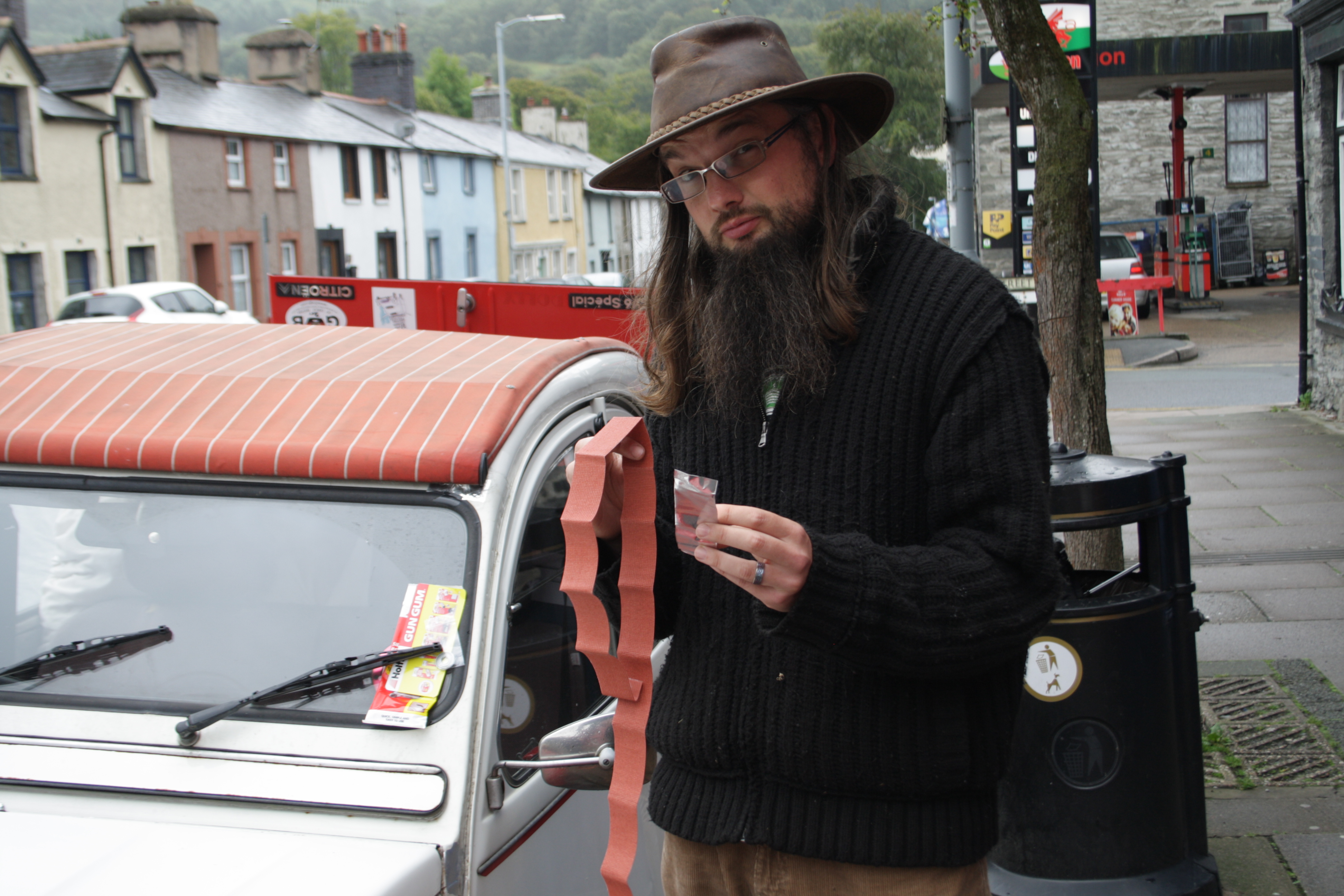
Getting there wasn’t without problems though. I’d mentioned on Facebook that the exhaust swan neck was looking a bit iffy. I was right to be concerned, and it fractured after just 20 miles of our 100 mile drive. I then stupidly spent ages repairing a small hole before noticing that it had indeed fractured completely. I bodged away with a roll of aluminium tape I handily found in the boot. This repair lasted five miles. After that, we lived with the noise.

Me and my materials of bodgery. Which I fitted wrongly...

Me and my materials of bodgery. Which I fitted wrongly…

When we got to the campsite, we pitched a tent, ate dinner, watched about 1.34 minutes of qualifying and then headed off for a ceilidh in the National’s marquee. This was brilliant and Blackbeard’s Tea Party didn’t disappoint. Nor did the stage, which turned out to be a converted Mk1 Ford Transit. Frustratingly, I got no good photos of it, so here’s a pic stolen from their website.

Mk1 Ford Transit van classic stage thing

Then there was more dancing and chat and stuff. We went to bed and worried our tent was going to blow away, even though it was far calmer than the previous night by all accounts. We arose feeling dreadful, so I set about repairing the exhaust. Then I realised I wasn’t going to get it fixed, so I went on a track parade with about 150 other 2CVs instead.

Parade time! Colourful.

Parade time! Colourful.

Then I did finally replace the exhaust, purchased from the busy tent of ECAS 2CV Parts (this post really does have a lot of links!). Things were a lot quieter now, though perhaps that’s an odd thing to say about fitting an exhaust during a 24-hour race. The rest of the day was spent mooching, taking photos and wandering about the pits – where very little seemed to be happening. I did consider staying up all night, but racing in the dark is really boring! In fact, generally I found my attention span was about 20 minutes. So, we went to bed, wondering if we’d sleep with all that noise. Yes is the answer!

We got up again at 5:30am, just so we could watch the cars race against the rising sun. Turns out this was a VERY good idea!

Racing as the sun rises

Racing as the sun rises

The sky was dramatic as the 2CVs battled on and on. It got quite exciting too, with the lead changing several times in the final hours. Eventually, Team SeaLion took the victory by less than one lap. That’s after over 1300 miles of competition! The atmosphere was magical, as 2CV folk converged on the track for the finale. To be honest, anyone could have won. It didn’t really matter! The spectacle was appreciated by all.

It may have taken a long time to happen – 24-hour racing has occurred since 1990 – but thank goodness it finally did. Incidentally, at no point did the 2CVGB National involve a static display of cars – other than when cars formed up for the parade lap. This is a good thing! Wondering around the site allowed a chance to check out cars, but what made it truly exciting was having so much going on. I feel this event can only grow stronger from now on! The National next year takes place in May, but the 24-hour race will again return to Anglesey in August, and 2CVers are sure to be there in strong numbers! It just proves that nothing creates magic like cars in use.

My thanks go to all involved with making this event a success. Well done.

What happened to good engineering? A Rant

At the weekend, as well was enjoying the absolute brilliance that was The Classic 2cV Racing Club’s 24-hour race meeting the Deux Chevaux Club of Great Britain’s (2CVGB) National Rally, I got to look at a Citroen C4 Cactus.

Disappointment, yesterday (with regards to Sniff Petrol)

My Twitter feed has been awash with motoring folk gushing about how brilliant this car is. I find this very surprising as it seemed bloody awful to me. I don’t really think that painting a car an admittedly wonderful, eye-catching shade then sticking plastic all over it makes a car great. If it did, modified Saxos and Corsas wouldn’t get such a bad press. Things got worse when I opened the door. It seems that while Citroen have at least attempted to make the outside eye-catching, they just gave up inside. Like pretty much every other car on the market (bar the Fiat 500) the interior is just a sea of black plastic and material. It’s as inspiring as a Vauxhall Astra. Or even worse. A Volkswagen. It even has the same horrible plasticky smell we’ve come to expect of moderns. It’s hideously disappointing.

I truly despair that Citroen, a company famed (and occasionally lambasted) for its engineering has been lowered to this. The entire DS range available at the moment is just horrible. Adding a bit of blingy trim does not make a car interesting. The DS5 is comically woeful when it comes to the HUGE A posts and the thin sliver of a rear window. The rear wiper seems smaller than that on a 2CV windscreen. The DS5 is to visibility what Cadbury is to the world of teapots.

As a lover of classic Citroens, there’s no pleasure in the modern range at all. When the company you love starts marketing the C5 Mk2 as ‘reassuringly German,’ then you know it’s game over. They’re now just churning out the same old bland rubbish as anyone else.

I can now see why classic Mini fans get so annoyed about the modern incarnation. Modern ‘retro’ cars really have no link to the cars they attempt to recreate. A modern MINI has about as much common ground with the original as an i-pad has with a typewriter. Now, I’m not against the modern MINI (Countryman aside – it’s just vile) and welcome that it has been such a success for the UK, where the decent ones (ie not the Austrian-built Countryman) are built. I hate the crap ride, but that’s also a criticism I level at the original. They’re decent motors though, and proof that prestige needn’t be restricted to huge cars. It has the build quality that the Smart really should have had. They’re pretty nice to drive too, if you ignore the torque steer, suspension and that stupid huge central speedometer. Oh and the uncomfortable seats. Yeah, ok. I’m not really a fan, but I certainly don’t dislike them. They’re a whole lot less bland than most stuff.

But I can see why Mini fans get upset when the MINIs try to invade the party. There is no link between the two cars at all. One was a packaging triumph – a flawed triumph perhaps, but that’s what it was and people loved it. The new one is just a stylish marketing product and one that actually seems to generate a profit for its maker.

Range Rover off-road

Where are today’s icons? What happened to bravery?

The same goes for the new Fiat 500. It’s very pretty, just like the original, and I imagine nowhere near as horrible to drive. You just can’t pretend that it’s like the original though. Yes, the styling cues are similar, but it’s a modern hatchback with modern running gear. It’s another marketing triumph.

And this annoys me. Marketing shouldn’t be given the final say in a car. It’s rarely a good thing. If marketing departments were listened to in the past, I doubt the original Mini would have been allowed to exist. The Range Rover would have been canned while it was still on the design board. Even when the Range Rover was launched, marketing had no idea what to do with it. Nothing like it existed. Happily, the engineering was sound and it became a legend.

Like a poor pub covers band. Oh gawd. Not Mustang Sally…

That’s the biggest problem today. You won’t create a legend by making something that looks a bit like an old car, in the same way that you won’t make it big as a band by performing tuneless covers of successful songs. There’s very little bravery out there now. I’d argue that there has been very little produced in recent years that’s even slightly interesting. The Renault Avantime, Smart, Honda Insight, Chevrolet Volt and Nissan Leaf have all had a hint of magic about them, but the main problem seems to be that the motoring world lacks an Issigonis, Spen King, Vincenzo Lancia or André Lefèbvre. Radical ideas that might change the world are seemingly too risky. It’s ‘safe, sales success’ all the way – which is why I’ll stick to old cars. After all, I prefer it when my French cars feel VERY French.

Coventry Transport Festival Road Run

I’ve had an exceedingly busy week, trying to earn actual money, but I shall finally put finger to keyboard to talk about the Coventry Transport Festival – specifically the excellent road run that I encountered on Sunday.

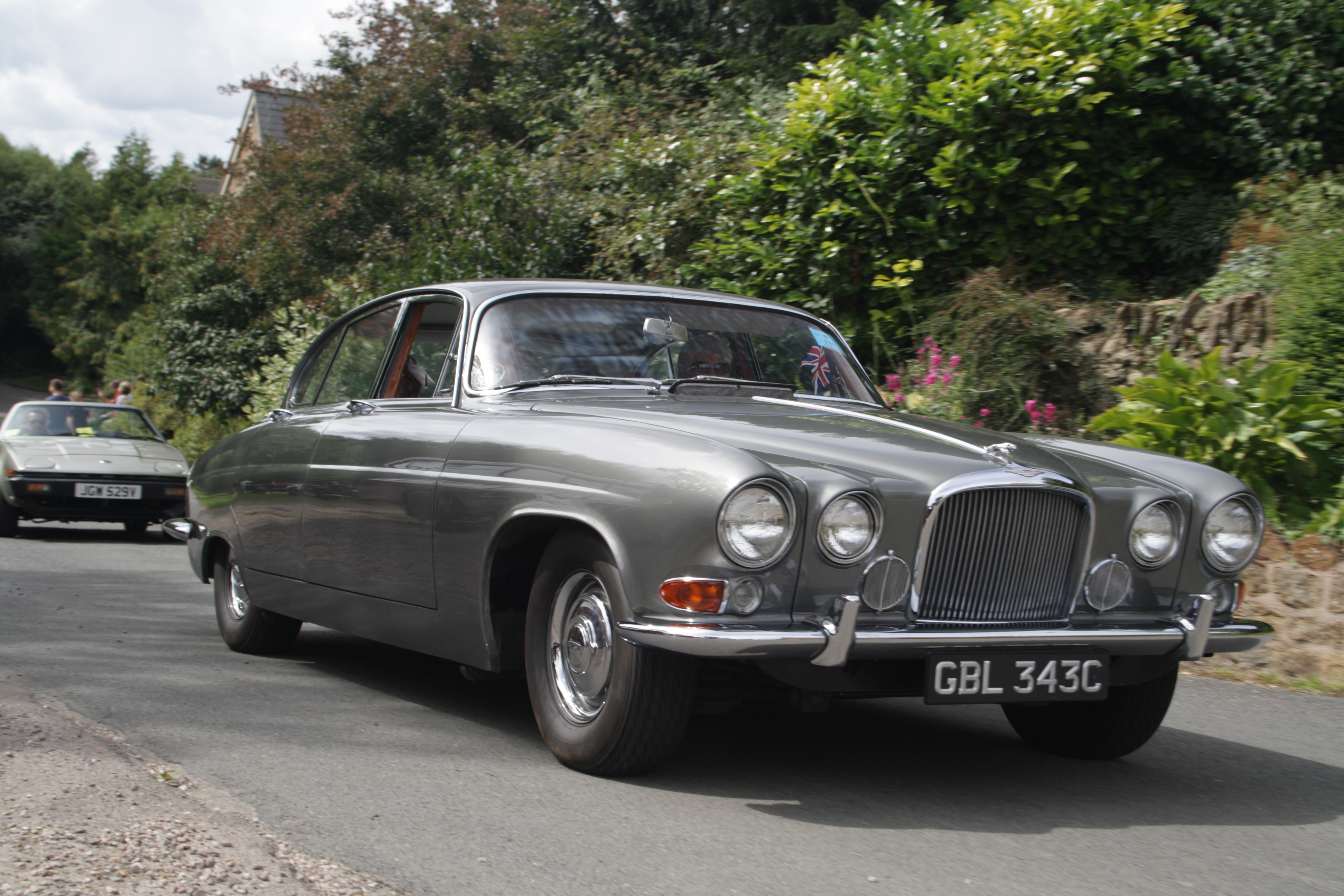
How big do you like your Jaguars?

How big do you like your Jaguars?

There’s an enormous Jaguar MkX for a start. Not my favourite Jaguar due to their sheer size, but marvellous all the same. Besides, it allows me to trot out my favourite statistic – that this, the widest UK production car of its time, is actually narrower than a Jaguar F-Type! As long as you include the F-Type’s door mirrors. Wow. I always felt the MkX just didn’t quite manage graceful, despite Sir William Lyons’ best efforts. It’s just  a bit too big! The 420 is a much better effort. Less huge, better balanced and almost entirely ignored today.

Alfa V8

Cor! Alfa Romeo Montreal V8 in a stunning colour

Or how about an Alfa Romeo Montreal? I don’t care if it’s any good or not, it looks and sounds majestic. Only an Italian styling house – Bertone in this case – could get away with those delicate eyelashes over the headlamps. Hardly surprising that Marcello Gandini is behind both cars. And the Citroen BX. One of life’s winners.

Not that I want you to think it was all exotic stuff. It wasn’t.

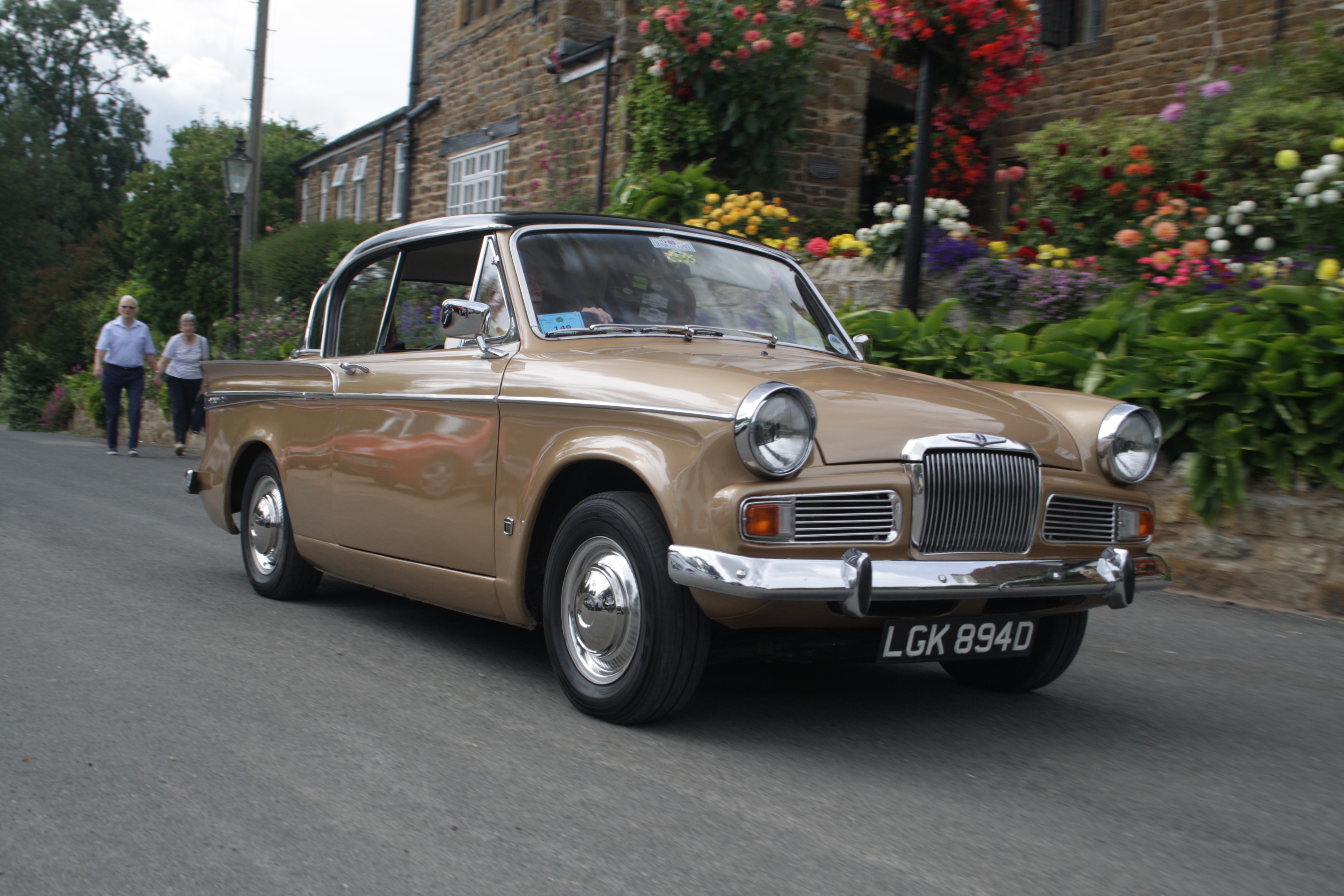
Sunbeam Rapier Audax

A stunning Sunbeam Rapier

These days, it almost seems more unusual to see a Sunbeam Rapier at a show than an Alfa Romeo Montreal. These Hillman Minx-based coupes were always stylish but oh so affordable back in the day. Old Billy Rootes certainly knew how to exploit a platform. Something Volkswagen seem to have taken on board. Ironic given that Mr Rootes himself regarded the Beetle as hopeless…

Anyway, I was very pleased to see this one, and even more pleased to see the whole family enjoying a trip out in it. What a lovely car. On a slightly different scale…

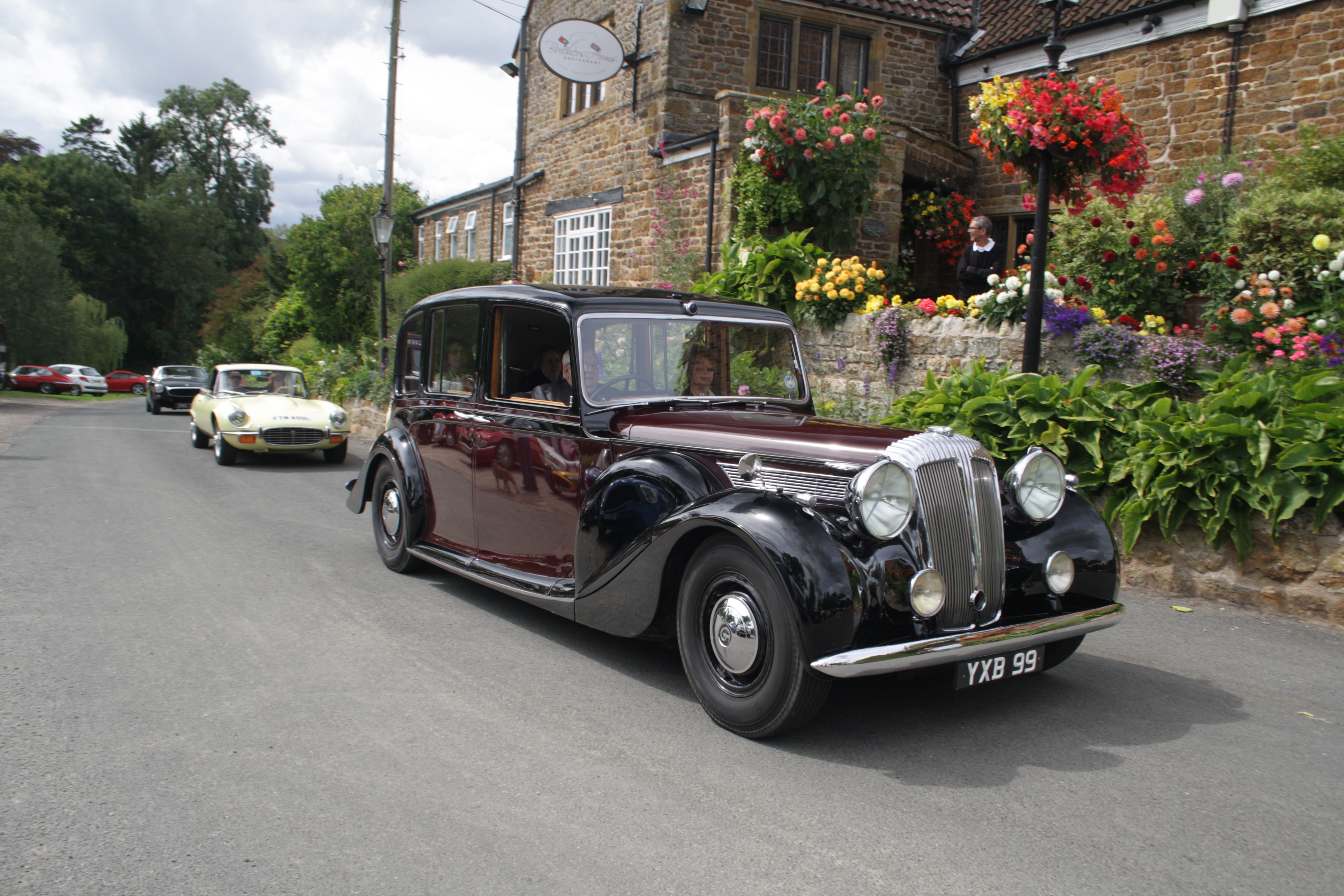
Daimler DE36

Monster! I’ve never seen one of these before

Feast your eyes upon this mightly Daimler DE36 Straight Eight Limousine. Powered by a 5.4-litre engine, it was the last production straight eight motor car in the UK – though this layout was used in Alvis military vehicles and some US cars for a while longer. I’m pretty sure I’ve never seen one of these in the metal before. It makes that E-Type look like a Dinky toy.

Lastly, rather more my size!

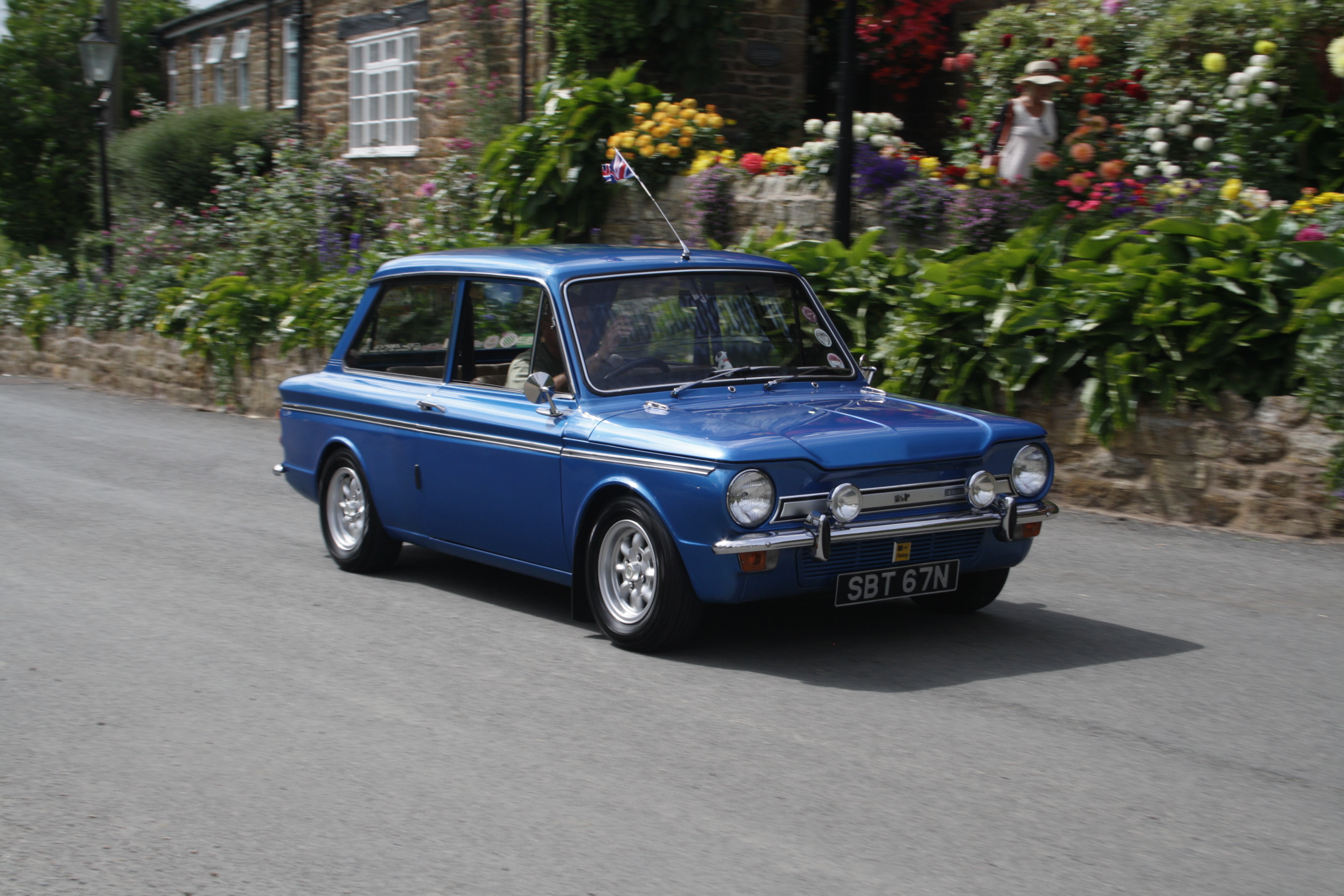
Hillman Imp

Sporty little Hillman Imp

You just can’t beat an Imp. I’d far rather own one than a Mini. In fact, I simply must own one at some point. I have driven one, and found it huge fun. By the time this one was built in 1974, they’d ironed out most of the bugs. I always felt the Imp was wrongly lambasted for its foibles. It’s main rival, the Mini, seems to get away with being shoddily built, poorly developed and questionably engineered (no, I’m sorry, but it was overly compromised by Issigonis) yet somehow deflects flack much more successfully. I don’t mind imperfections in a car, but the poor Imp was always battling unfair criticism.

Anyway, that’s a very-edited selection from the Coventry Transport Festival. I may well try and catch it again next year and see if I can’t spend even more time documenting the run. As it happens, I was tight for time yet still managed to take over 600 photos this time! I hope you like those that made the cut.

Rover Road Trippin’ Part Two

In the first part of this journey, I had travelled about 250 miles from home to Kent. I was in high spirits about the car and looking forward to the rest of the journey. The next stint saw me drive to Solihull. That meant another battle with the M25 so I left fairly early in the morning. This was a Bank Holiday after all. That strategy worked well and while the orbital was certainly busy, I barely had to drop out of fifth gear.

Once on the M40, things improved dramatically. As I was ahead of schedule, I took the unusual step of going into fuel-saving mode. A 60mph cruise. It certainly made a dramatic difference to noise levels. Instead of buzzing incessantly, the engine was near-silent. This was extremely relaxing. I may have even selected BBC Radio 3 on the wireless. I managed to avoid buying Werther’s Originals and a tartan blanket, but did go as far as to stop at a garden centre for a nice cup of tea. Sure beats the manic rush of the South East.

After a successful evening of beating a friend at Scrabble, it was then off to Northamptonshire. Again, I was in no rush and found myself heading towards Coventry – where there was a Transport Festival that very weekend. Once again, the smart phone came in handy and I was able to discover that there was a road run, that very day. It made sense to try and meet it, so off I went to rural Warwickshire, very close to a village I called home for several years.

A Swift, a Beetle, a Jag and a ropey old Rover

A Swift, a Beetle, a Jag and a ropey old Rover

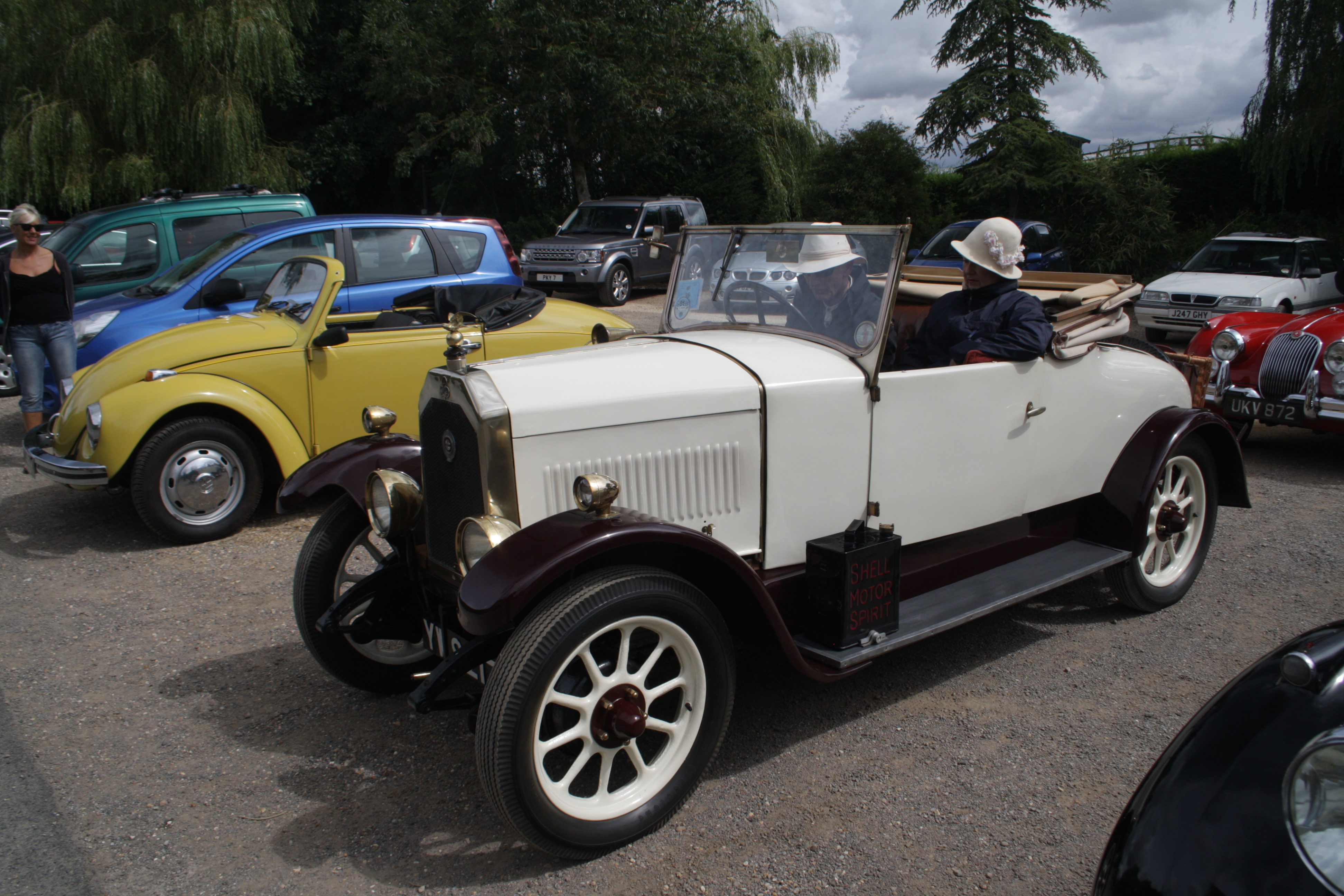
You can just spot the Rover in the background of this picture of a Swift – a little-known Coventry manufacturer that sadly left this world in 1931. Note excellent headgear. I was truly in seventh heaven here as all manner of wondrous machinery paraded past. Static shows do bore me. It’s so good to see even really old vehicles heading out for a drive. There were over 400 vehicles, but I sadly didn’t have time to watch them all – or listen to them. The Ferrari 250GT sounded glorious in exactly the way an F40 didn’t. Bentleys wafted past while Triumph Vitesses attempted to use sonorous decibels to hide their Herald origins.

I headed to Northamptonshire for a night with more friends and the utterly addictive world of Mythbusters. Oh and they let me drive their Citroen XM, which only made me want one even more. Certainly, it was more comfortable than the Rover, and far better over unsmooth roads. However, after a bright and breezy start the next day, it was to Rockingham Motor Speedway I headed, just 20 minutes away.

The weather was bloody appalling, but a few hardy souls still came out to play. The day was made up of static displays, tea-drinking and then, for those of a lively disposition, an introductory track session. I skipped this bit, but did opt for a session on the skid pan – primarily to test the Uniroyal RainSport 3 tyres I’d had the Rover equipped with.

Rover finds another Citroen companion at Rockingham

Sadly, no photos exist of my hilarious antics aboard the Rover, but much fun was had. The tiled surface offered as much grip as sheet ice and even my tyres couldn’t save me. The ‘kicker’ that induces a tail slide I found quite easy to counteract. Am I surprisingly gifted or were the tyres an unfair advantage? I went through and lifted off the throttle and much spinning occurred! Not just the tyres then. I was impressed though. Even on doused tarmac, the car remained fully in control. It took yanking the handbrake on at 40mph to induce a rather hefty slide. Impressive.

I was glad I’d had this opportunity to test the limits in the wet as the M in M6 appeared to stand for Monsoon. There was horrific standing water, yet the Rover felt planted and comfortable. In fact, I’d say that’s the only downside of the tyres. Perhaps they inspire a bit too much confidence.

A few hours later, I was home. The Rover had averaged 37mpg again, which is mightily impressive given the on-skidpan hoonery it had endured. Even better, it appears not to have used a drop of oil. Changing it before departure, even though it wasn’t yet due, has clearly helped clean up those piston rings. I haven’t seen any puffs of blue smoke either. If I’ve cured the Honda D-series blue smoke issue with a simple oil change  – it worked with my smoky Sirion – then I will be pleased.

Now, the Rover can rest. The 2CV is being prepared (well, I changed the gearbox oil) for the 2CVGB National meeting on Anglesey this weekend, which includes the 24-hour 2CV race and hopefully a chance for some on-track antics for us non-race drivers too. Should be fun!

Rover 400: Don’t believe the Honda hype!

According to the Logic of the Internet ExpertS (LIES), buying a Rover 200/400 with the K-Series engine is about as sensible as trying to use rattlesnakes for shoe laces. “Oh they’re hideously unreliable and the head gaskets ALWAYS go. You want one with the reliable Honda engine.”

I’m not convinced.

For a start, I really rate the K-Series engine. Yes, OMGHGF is possible, but then that’s the case with LOTS of engines. Even BMWs, Hondas and Toyotas – the latter’s diesels as fitted to the Lucida and Hilux Surf seem to use cylinder heads made out of rice paper. For sure, there are some weaknesses in the K-Series that seem to make it more prone than most, but the news certainly isn’t all bad. 100bhp from a 1400cc engine isn’t too shabby, and they’ll deliver in excess of 40mpg too.

Rover gets new boots. Sills apparently quite solid!

Rover gets new boots. Sills apparently quite solid!

But, I’ve got a Honda with the super reliable, bullet proof Honda engine. Only it’s all a bit myth. The Honda engines can blow head gaskets too. Worse, they seem absolutely shocking for piston ring problems. I know this because my 416 will regularly pump out a cloud of blue smoke. That can mean only one thing – it’s burning oil. A quick search of various forums backs this up as far from unusual. From 80,000 miles upwards, it’s really rather common. Given that I know of K-Series engines with over 200,000 miles on them, the battle between the two engines is looking far from one-sided.

I’m not fretting just yet. Cheap motoring is full of situations like this. The Daihatsu Sirion was an oil burner when I got it and they also suffer from piston ring issues. Despite it only covering 2000 miles since its last oil change, I decided to do it again before thrashing it all the way to Northern Scotland. The Sirion was then vastly better. I shall employ a similar technique with the Rover. It’s not so much wear that’s the issue, but carbon forming around the ring, preventing it from sealing properly against the cylinder wall. This seal is necessary to keep the oil in the sump from squirting into the cylinders and making your car look (and smell) like a two-stroke. What didn’t help was Rover changing the recommended oil change period from 6000 miles to 12,000! I’ve also got no history with mine, so it could well have been neglected even more than that during its 85,000 miles.

I shall therefore treat it to an oil change, and will do so again in another few thousand miles. Hopefully that will help. I’m also hoping to get the timing belt replaced – again the lack of history is a concern. Has it ever been replaced? It should have been at around 60,000 miles, but there’s no way of knowing. Five years is generally considered a good innings for a cambelt anyway, so even if it was replaced at 60,000, that could be years ago for all I know.

Other minor improvements have also been made. Touch-up paint has been carelessly applied to previously rusty (treated and zinc primered) areas. It looks crap close-up, but will do from a distance. I’ve also fitted a missing piece of trim to the rear wheelarch and replaced the disfunctional clock. The main change since I last wrote about it is the fitment of four brand new Uniroyal RainSport 3 tyres. A-rated for wet weather grip, they certainly give a lot more confidence than the very worn/Chinese mix it wore before. A full alignment check has also improved things – the tracking was out front and rear. I’m looking forward to properly testing these tyres later in the month.

Can you spot the new bit of trim? It's tiny

Can you spot the new bit of trim? It’s tiny

I’ve got some serious mileage to do in this car later this week too. I’m really looking forward to it. I’m liking this car a lot more than I expected to.