Dear Readers, lend me your support.

You can now support ClassicHub, ie me, by donating via PayPal!

There’s a generalisation that folk only want stuff for free on the internet, and I’d like to disprove that myth if possible. After all, I make no money from any advertising you see on this site, and absolute peanuts from my YouTube channel.

Yet it all costs money to do. There’s fuel, the cost of kit (maybe I could buy some decent video kit one day!) and the cost of keeping my terrible motor cars going. On top of that, there are of course living costs and the threat that my much-abused laptop might give up the ghost. I’ve already worn out several keys.

Ultimately, there is also the need to raise funds for the restoration of my poor 2CV. Her salvation will not be cheap and she remains off the road until such time as I can scrape enough money together for a proper sort out. It would be nice to get her back on the road in time for her 30th birthday – which is April 2016.

I do guarantee not to give any money raised to any chuggers, Nigerian princes or war criminals. By supporting ClassicHub, you’re supporting pure petrolhead (and dieselhead and possibly electrichead) antics. Thank you.

Unlike some big, faceless corporations, Ian Seabrook is a UK taxpayer and all income is declared.

The realities of cheap living

When it comes to motoring, I do like to do it as cheaply as possible. Partly, that’s because I don’t have a lot of money, so don’t have any choice, but on the other hand, I’ve always tended to run cheap motors, even back in the days when I had a healthy IT-based income.

Not that I always get it right. The problem with cheap cars is that there are a lot of dogs out there! After all, most cars are cheap for a reason. Some of that reason is sheer snobbishness – the market for older cars is that much less because people would rather be seen in something newer – but it’s also inevitable that cars that are getting on a bit might well be past their best.

Sirion

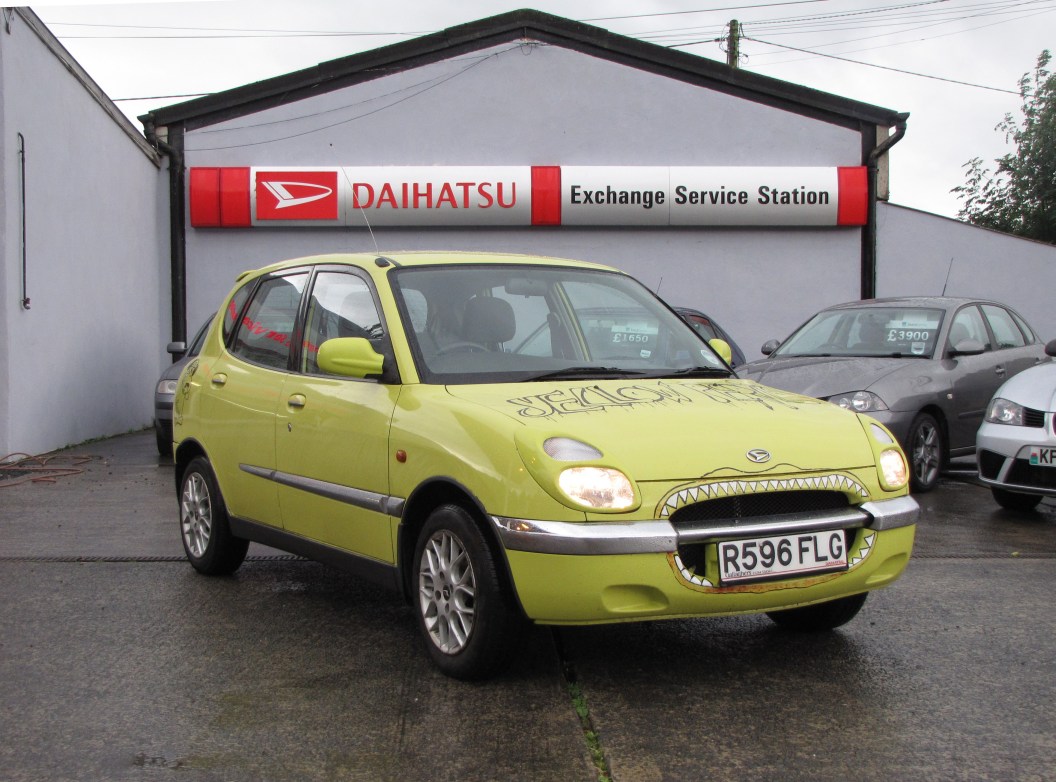
My Daihatsu Sirion was not good bangernomics. Poor thing.

Thing is, these days, a 20-year old car that is past its best may still have lots of life in it! Which brings us neatly to the Seabrook Bangernomics Principle. Pure Bangernomics involves buying a cheap car, and just throwing it away and getting another cheap car when the first one expires. I’m not a fan of this for two reasons. FIrstly, I can’t bring myself to throw away cars. Secondly, I much prefer to look after cars, even if they didn’t cost much to buy. Primarily, that’s because I have too much mechanical empathy, so I can’t drive cars that I know have mechanical issues. But it’s also down to safety. I want good tyres. I want to know that the braking system is working exactly as it should.

My Daihatsu Sirion was a case in point. I bought it cheap, had lots of fun in it but also spent quite a bit on it. I replaced the exhaust system and fitted new brake caliper slider pins. A few months later, I finally gave up the battle against it’s terminal rot and sold it to someone so they could scrap it. I couldn’t bring myself to do it! The money I spent on that car was a complete waste. There’s no point chucking money at a car that’s clearly an End Of Live Vehicle.

I was therefore a bit more cagey when checking out my Citroen XM. I paid £375 for it, but I decided it was a good basis, so probably spent another £300-400 over the next few months on making it better. It had some welding done and a few mechanical bits and bobs. It even had a fresh coat of underseal. Earlier this year, I threw another couple of hundred at it to have the timing belt changed. I’m now seven months and over 6000 miles down the road from when I bought it, and I reckon it still owes me around £1000 in total. That’s cheap motoring.

Not as cheap as the little Perodua Nippa granted. I paid just £300 for that, at 24,000 miles, and have probably spent less than £50 on it since – ok, maybe £100 if you consider the cost of an MOT and having a steering rack gaiter replaced. It has now happily covered over 1000 miles since purchase.

The XM is a relative no-brainer. If I can keep on top of corrosion (and it has very little for what is a twenty year old car), then it’ll only appreciate in value. I bought when XM values were as low as they were ever going to get, and they’ve already risen a fair bit. That’s the real trick. If you can buy and maintain a car that’s going to go up in value, you may end up with a car that effectively pays for itself! You can’t get cheaper than a car that generates its own profit. The XM is some way from doing that, especially as I anticipate spending another £500 on it before the year is out. However, if I can get to one year of ownership having spent £1500 in total (excluding fuel, tax and insurance) then I think I can consider I’m doing pretty well. Especially as this is a car that does 45mpg, is hugely comfortable and has fancy computer-controlled suspension. Economy needn’t be miserable – it’s huge fun to drive. It must be, or it would never have lasted this long on the fleet.

XM pauses during its busy two months

The XM has, so far, been a real Bangernomics success story.

It’s a shame that 2CVs no longer represent cheap motoring. Bodywork aside, they probably could do – I’m just finding that bodywork is a service item that needs renewing every 100,000 miles!

The realities of EV living

Another of my electric vehicle (EV) experiments is over, so I thought I’d tell you all you need to know about the realities of using an EV everyday.

A LEAF awaits its charge as the e-NV200 fills up

The electric era is now firmly with us. Would you choose an EV?

I’ll start with the positives. There is no power delivery system quite like an electric motor. That instant shove-in-the-back when you need it, and the irresistibly smooth power delivery when you’d rather take things a little more easily. Electric cars are so easy and effortless to drive that it’s easy to wonder why people still bother with those fuel-munching motors still found in most cars.

Sure, some modern cars are wonderful and quiet on the move, but you still won’t find many family cars that offer quite as much refinement. Diesels sound especially horrid these days, and are fast attracting a reputation for pumping out some really nasty pollutants.

That means they’re weighed down with loads of anti-emission kit, and stuff like dual mass flywheels to try and make them smoother. There’s an awful lot waiting to go wrong on a modern diesel. I really would rather go electric. Petrol engines have fewer issues, but they tend to lack bottom end torque, which means they’re not always relaxing to drive. Ford’s remarkable Ecoboost engines (also found in Peugeots and Citroens these days) go against the grain, but will they prove reliable in the long-term? 124bhp per litre is pretty strong stuff.

I think I’d rather still go electric, as the fundamentals are so simple. There are so few moving parts.

I’m not sure whether to claim environmental reasons as a good reason to go EV. Certainly, if you do a lot of city driving, you’re moving the vehicle emissions away from the city centre by choosing EV – as the power is generated elsewhere. That’s good. Some of that power comes from renewable sources too. My gut feel is that electric is, overall, better for the environment, especially when you take into consideration the impact of drilling for oil, fracking and then also having to mine stuff like platinum for the exhaust catalytic converter. Mind you, the lithium used in EV batteries isn’t exactly pleasant stuff either. Suffice it to say that I don’t think the environmental message stands up on its own.

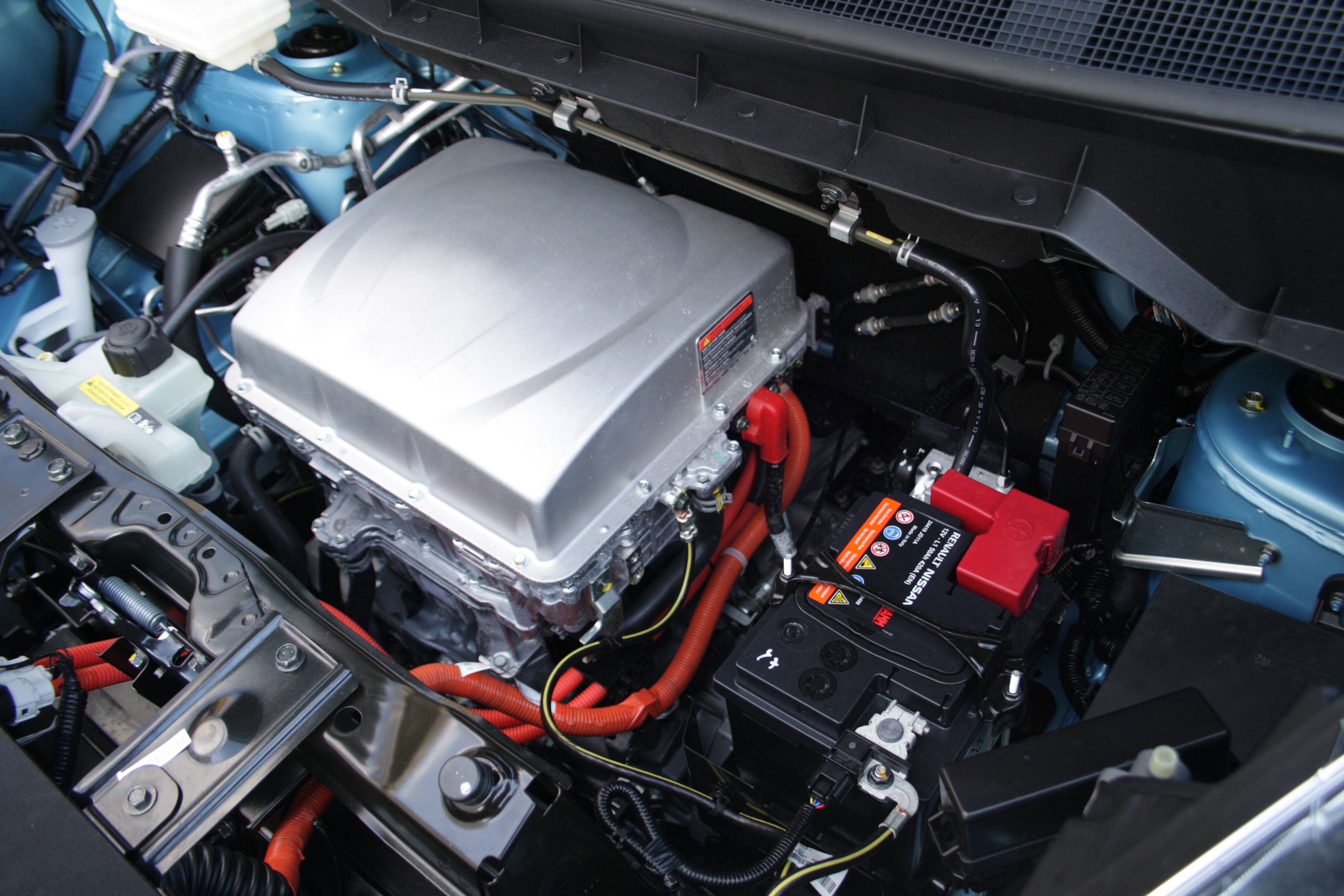
A refreshing lack of plastic in the e-NV200's engine bay

Far fewer moving parts in this Nissan e-NV200 Combi, and no dirty engine oil!

Range is still an issue too. While I discovered last week that it’s pretty easy to travel 300 miles in one day in an electric vehicle, I did spend pretty much the whole time anxiously keeping an eye on predicted range vs predicted mileage to destination. You just can’t turn off, and while that does great things for economy – because you tend to do your utmost to keep power use as low as possible – it’s not necessarily how most of us are accustomed to driving. There’s still that “fuel light on, running on dregs” feeling, and longer journeys need serious planning, though both of these concerns will be reduced as the charging infrastructure is improved.

There’s another easy solution to this. Don’t use an EV for long journeys! Many households have more than one car, or you could consider hiring a car for a long-distance trip. I spent two days of e-Golf custodianship using it how it should be used. I nipped to the shops in it. I visited local friends. I drove a short distance so we could have a walk by the sea. I didn’t charge the car for two days, because it wasn’t necessary. This is where the magic of electric really shines. For those short, local trips, it’s absolutely ideal. Especially when travelling a few miles from one village to another. The sort of journeys where combustion engines are barely warming up, and so are woefully inefficient – this study found that cold engines consume 13.5% more fuel when cold. That’s more emissions for less movement.

I must concede that a great amount of my driving is less than 30 miles a day. For a week, the e-Golf entirely replaced my own vehicles, and no hardship was created because of this. Yes, I work from home, but the same would have been true even if I had needed to commute up to 50 miles a day (which is the most I’ve ever wanted to).

But let’s look at benefits again, because combustion cars still require servicing. So do EVs, but there’s much less to do! No filters, no filthy engine oil to dispose of, no clutch to wear out, no exhaust to rot away. EVs even tend to be kinder to their brakes, so pads need replacing less often (due to regeneration effect where the motor generates electricity, thereby slowing the vehicle). That also means that your front wheels won’t get so dirty through pad wear build up!

Battery life is still the elephant in the room, and yes, that’s still a bit unknown in the long term. A taxi company in Cornwall has a Nissan LEAF with over 100,000 miles on the clock, and the battery is still pretty much fine – despite or perhaps because of being rapid charged several times a day. The success of that car seems to have even surprised Nissan, who previously were a bit wary of recommending frequent rapid charging.

I’m pretty convinced that for an awful lot of people, electric power now makes a lot of sense. It still depends on your access to electricity (a fast charger at home/work or access to the rapid charger network) but with prices for really very decent electric cars dropping as little as £6000-7000 now, the EV solution looks ever more appealing.

Event: Vulcan at RAF Cosford

Rather annoyingly, I completely missed the Welshpool Air Show this year. It’s a great little event and the Vulcan once more made an appearance. After three weekends away, I was feeling a bit broken, so I stayed at home and did nothing but watch the Le Mans 24hr race and sleep.

So, when I discovered that the Vulcan was due to make an appearance at RAF Cosford near Wolverhampton, I wasn’t going to miss out a second time. The XM whisked me out of Wales once more and I arrived with time to spare. Too much time in fact, so I decided to have a browse of the car park. What delights could I find? Here are the excited Tweets I made.

First up, a sporty Astra in need of a little tidying up.

Then I found this delightful Beetle Karmann Cabriolet. Not my choice of accessories/wheels but it was super tidy.

Then I found the sort of automotive contrast you just won’t see at the Goodwood Festival of Speed. A Hyundai Accent and a Jensen Interceptor. Oh, hold on. That’s not an Interceptor!

Indeed, it really is an FF! Not sure I’ve ever seen one out in the wild before. Fabulous.

For those not in the know, this is a longer Interceptor but with the Ferguson Formula four-wheel drive system and Dunlop’s Maxaret anti-lock braking system. It’s the original four-wheel drive sports car and they’re very rare.

Then things got very loud.


Still as awe-inspiring as ever - Vulcan XH558.

Still as awe-inspiring as ever – Vulcan XH558.

But, this is a Blog about cars, so check this beauty out!

I absolutely adore the Skoda Favorit. It was such a brave, quantum leap for the firm and one of my favourite designers – Giuigaro and Ital Design – came up with the distinctive looks. This is when cheap cars became really rather good – good enough for Volkswagen to take interest and take over. Even better though, this one had a brown interior! Highly desirable.

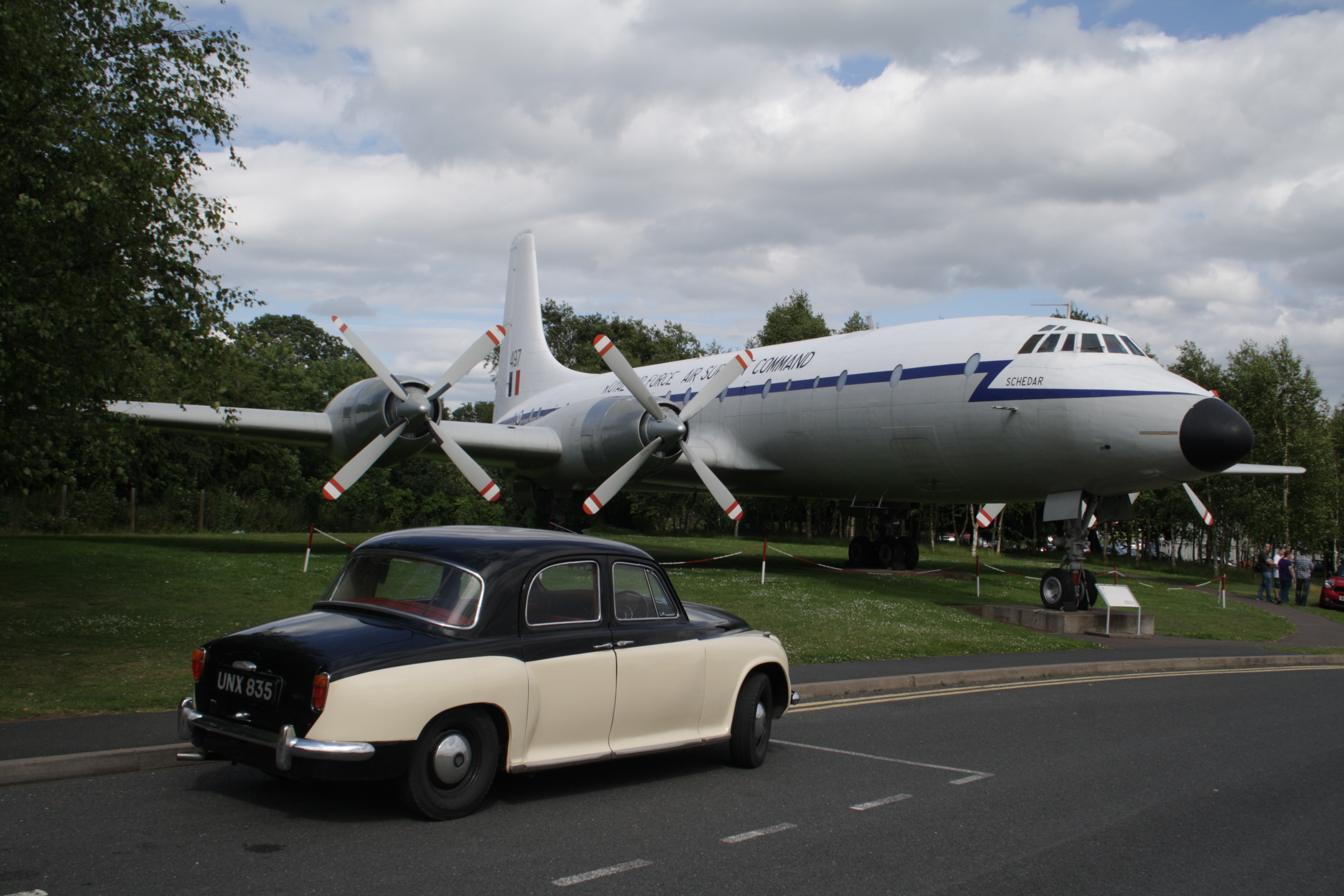
My day was completed by the chance to have a quick car park drive of this thoroughly charming Rover P4 60.

A delightful Rover P4 60. Oh that first gear whine!

A delightful Rover P4 60. Oh that first gear whine!

I love how this is the cheap, bottom of the range P4, yet clamber aboard and it’s leather and class all the way. Power, if you can call it that, comes from the Land Rover’s 2-litre, inlet-over-exhaust engine. Maybe one day I’ll get more of a chance to put it through its paces. Heavy traffic with folk seemingly desperate to leave meant a trip out on the road wouldn’t have been much fun! We just milled around and talked about cars for a bit until things calmed down.

All in all, a rather splendid day and nice to bond with my £375 XM again after a week in a £27,000 Volkswagen.


My fleet: A cunning 2CV MOT plan is hatched

I got woken this morning by the workmen on the narrow gauge railway, performing hedge-trimming activities at the ludicrous hour of eight o’clock in the morning. Perhaps this is why I stumbled into the land of the living with the hair-brained scheme of getting my 2CV MOT tested. I reasoned that after all, I didn’t know for sure what Elly the 2CV would have failed on had I put her in for an MOT back in April, before her MOT expired.

Headlamp woes afflict final push for 200,000 miles.

Look at her poor little face! Maybe I should park her the other way around.

Conveniently, I do some occasional work for a community bus scheme in the next village, located in the same premises as an MOT garage. I had bold plans to book an MOT and take Elly down for a fact-finding mission. After a cup of tea and rather more functioning of the little grey cells, I decided it made more sense to drive my XM to the garage and have a word with the MOT testers instead.

So, that’s what I did. Sorted a few things in the office, then sought out the testers for a few pointers. The key corrosion restriction is that there must be no serious rot within 30 centimetres of a body mount (where bolted to the chassis), seatbelt mount or mountings for the seat themselves. I know Elly has a fair bit of rot around the rear seat box. I reasoned I could merely remove the rear seats and associated belts (I can live without a rear seat) and that’d be that.

I returned home full of enthusiasm. I grabbed a tape measure and headed for my garage. Prodding around the seat box area, I realised things were more solid than expected. Brilliant! Then I crawled underneath and prodded around a bit. Oh.

Things were very crumbly indeed. Worse still, this rather serious rot was far closer to body mountings and front seat belt mounts than 30cm. Removing the rear seat was a hideous bodge I could cope with. I can’t really remove the front seats. Bumhats and, indeed, arse.

Now, I’m not foolish enough to have considered that I was on a hiding to an MOT pass without doing any work at all. For a start, I’ve just remembered that I pinched one of the headlamp relays for the XM and naturally, the fog light doesn’t work. But I did also have enough realism floating around my veins to know that welding was definitely going to be needed. It’s a question of how much. This is starting to feel like trying to dry out a used teabag so you can use it again. Thinking about it, a tea bag probably has more structural strength. And is probably better at keeping water out…

Common sense would suggest that I just strip the car down so further driving desires are entirely out of reach. Having the car sitting there, willing to go, is slowly driving me mad I think. I had to distract myself for a week with an electric Golf for heaven’s sake. Though that backfired as I had to enter the garage every day to charge it.

Others would suggest that I should weld it up myself, so as I’m fed up of repeating my feeble excuses for not doing that, I shall not do it again. Ok. I will. But only briefly. Suffice it to say that I’m too hirsute, too impatient and too easily distract-ooooh look! Cats on the internet!

So, for now, it’s back to the boring world of saving money up so that I actually can get this car rot free. Expect my next frustrated meltdown in about a month’s time. I apologise for whining like a teenager.

School Proms – Don’t Get Caught Out!

It appears to be school prom season again, so I’d like to remind classic car owners (or any car owners!) that it is illegal to be paid (ie hire and reward) to drive passengers to a Prom or any other function (bar two very specific exceptions – see below). There’s always a clamour to find a suitable vehicle to arrive in, but don’t get caught up in the excitement and run the risk of getting into trouble!

Stag

A Triumph Stag makes an AWESOME Prom car. No, it does. Really.

It is entirely acceptable to provide your car and your chauffeuring skills on a voluntary basis, and I’d imagine there is no problem with being paid reasonable expenses – ie a bit of fuel money. But being paid above and beyond this is where danger lurks. In short, to carry passengers for hire and reward, you are required to be licensed – yourself and the car. The only legal way to do it is to hire the car out as a self drive – which may require a separate insurance policy.

It is also entirely acceptable to be paid hire and reward if you use your classic car to provide transport for weddings and funerals. In fact, it can help bring in some useful income to cover repair costs. You should definitely check that your insurance company is happy to do this – some offer specific policies if you find yourself doing weddings on a regular basis.

More information.

Road Test: Volkswagen e-Golf Conclusions

Part 5. In which I actually make my mind up

My time with the e-Golf is almost over. In a week, I’ve covered over 700 miles putting this car properly through its paces. I have undertaken long trips, and it has also entirely replaced my own cars for normal car stuff – like going to the shops and general bimbling about. So, how has it been?

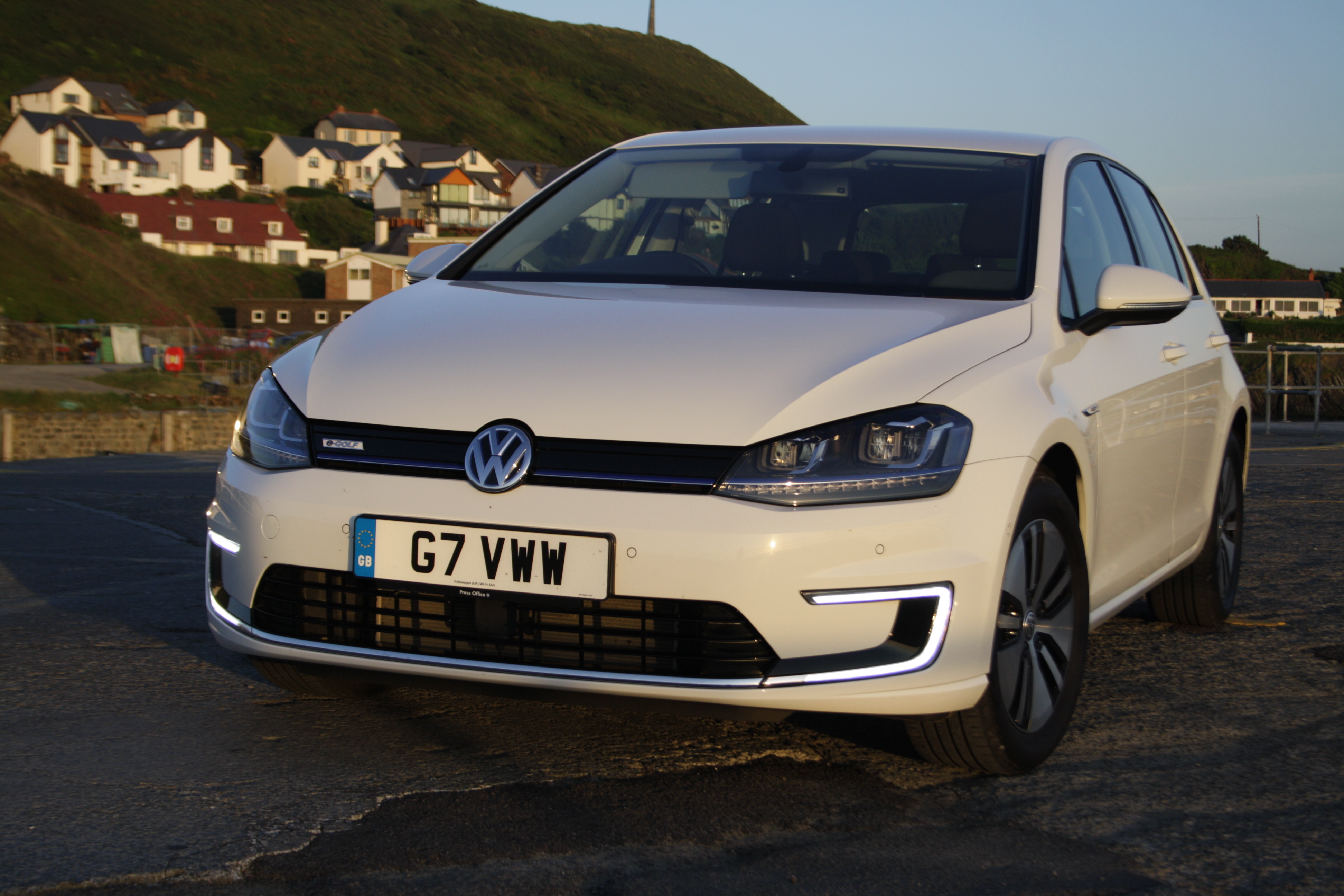
e-Golf

After 700 miles, have we reached a conclusion?

Firstly, you’ll find all the detail here, in my Introduction, Clever Tech, Downsides and Roadtrip reports. There I talk about the features and realities of the e-Golf, enabling me to keep this conclusion fairly short. For once.

It must be said – the e-Golf is a very capable machine. It should be. The Mk7 Golf is a very good basis. Mix in the super-smooth EV driving experience and you have a car that stands up very well. I don’t doubt for a moment that anyone buying an e-Golf would find it a very satisfactory experience.

But there are one or two caveats. Charging is perhaps the biggest issue. As I covered in downsides, the lack of a large on-board charger, and incompatibility with the most common form of rapid charger do put restrictions on use. Volkswagen have told me that they’re looking into an on-board charger upgrade in the future (no timescale specified) and the necessary CCS rapid chargers are becoming more widespread, so perhaps these issues will simply go away.

The other is price. Some will find it absolutely fine to pay a little more for what is seen by many as a prestige product. It certainly feels very well screwed together, but so do most cars these days. Seriously, a Nissan LEAF more than matches it for refinement and build quality. The e-Golf scores a few points over its British-built rival with the Adaptive Cruise Control though. I’m simply staggered at how well it works most of the time (not the smoothest in stop/start traffic) and how relaxing it makes the driving experience once you learn to trust it.

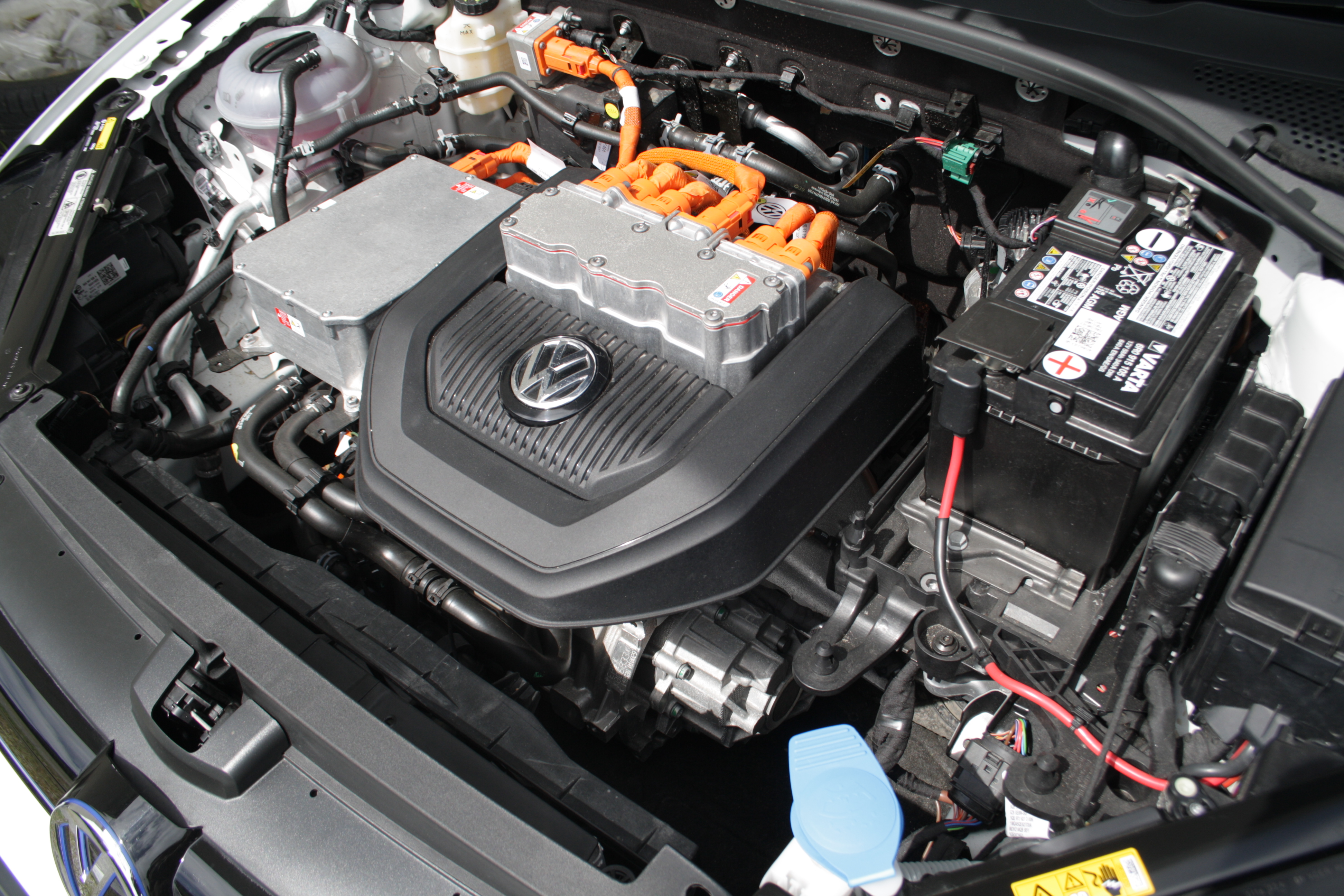
e-Golf engine

The e-Golf’s motor looks fairly engine-like!

I do have some concerns about rapid charging – the Volkswagen battery guarantee advises against doing it more than twice in succession (I did it three times yesterday, naughty me). That really rules the e-Golf out for those doing motorway miles or long distance trips on a regular basis. Which is annoying. That really does restrict the e-Golf to second car duty – ideal for those local trips (whether you live in the city or somewhere more rural).

The range is impressive – a genuine 100 miles seems possible, even in the hilly terrain of Wales. Of course, the caveat here is that I have not tested this vehicle in the winter (there’s an idea). My previous tests have deliberately been conducted in November, as that’s the hardest time of year for an EV. The less aerodynamic, heavier Nissan e-NV200 found 61 miles a real struggle when it was really cold against its claimed range of 106 miles (the e-Golf’s claimed range is 118 miles).

Overall then, this is a seriously impressive car albeit with a hefty price tag. Certainly, it only justifies its cheaper running costs (free road tax, cheap fuel) if you’re in the market for a new car anyway. Were I in the market for new, I’m not sure petrol and diesel would tempt me, so I’d be inclined towards EV. If I had the money, choosing between e-Golf and LEAF (I’m yet to test the Kia Soul and BMW i3) would certainly not be easy. I doubt I’d feel hard done by with either. They’re both great examples of just how far electric vehicles have come in recent years.

e-Golf: The biggest electric road trip yet

Road Test Part 4 – The 300-mile roadtrip. Part 3 (The not-so good) Here

Sorry, you’ll have a further wait for my conclusions on the Volkswagen e-Golf, as I first need to relate the details of my biggest ever electric car road trip.

I began the day aiming to crack 200 miles in the day, though I’d actually done this before with the Nissan e-NV200. After failing the other day, I aimed to get a rapid charge at Oswestry on the Electric Highway. From there, I would hopefully head north – probably to Chester, though that opened up the whole of the M6 and therefore, much of England.

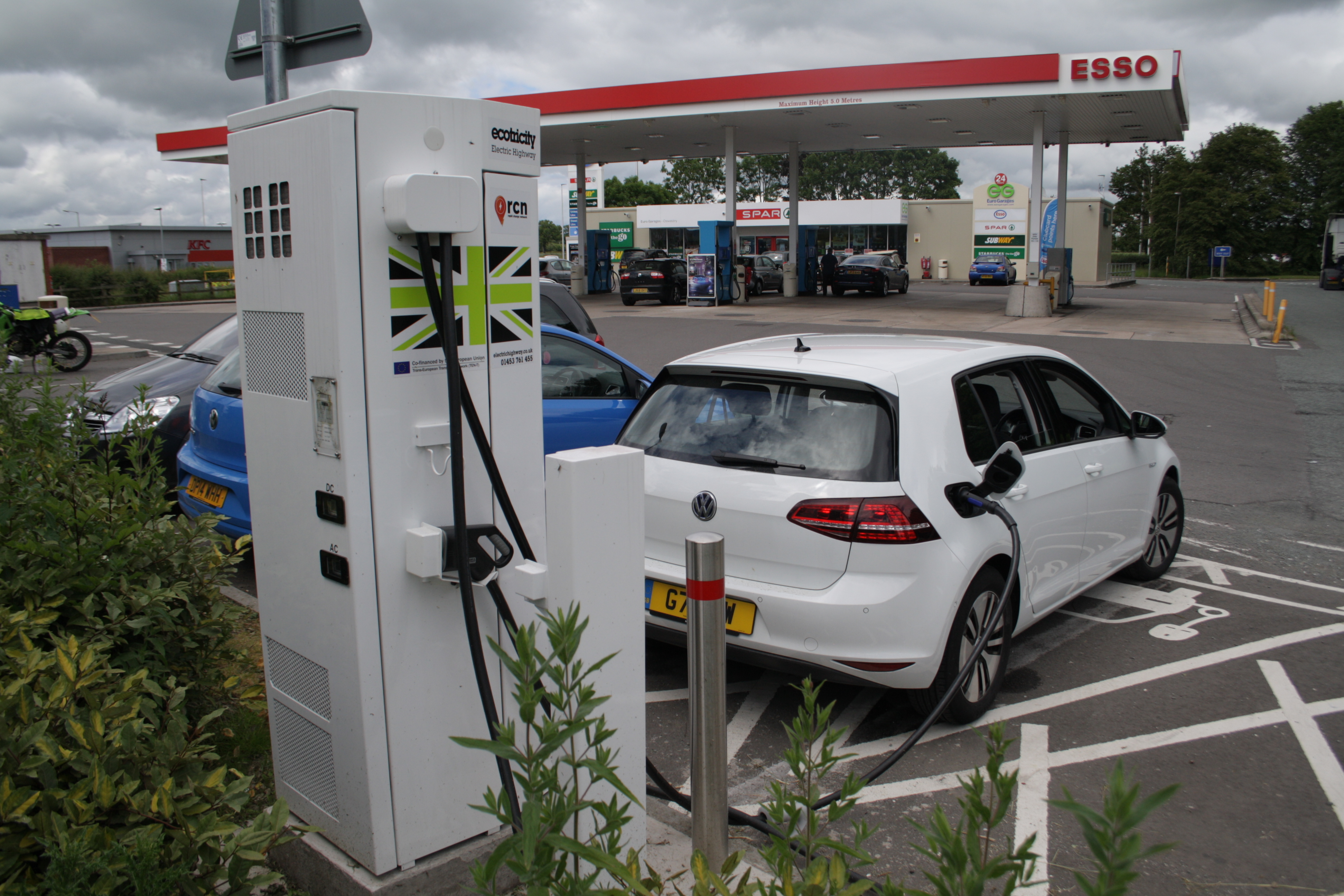
Success! e-Golf slurps DC current at 110Amps.

Success! e-Golf slurps DC current at 110Amps.

Now, things didn’t start all that well. The first two attempts to get electrons flowing resulted in a baffling error message. So, I did what any IT bod would do. I effectively rebooted it by removing the connector from the car and starting again. Third time lucky, and I could head off for a brew.

It was definitely time for a brew, as I’d been driving for almost two hours by this point, having covered 62 miles on typical Welsh A roads. By the time I got back to the car, it was already at 85% charge! It had been at 48% when I arrived just 15 minutes earlier. Charging slows as the battery fills, so although going to maximum is not advised (certainly on a regular basis – it’s healthier to stop at 80%), I left it going and supped my brew. And perhaps a cookie.

Soon enough, it was time to continue my journey. I headed up the A483 towards Chester. Now, Chester is a nice place, but the next rapid charger was a mere 35 miles away. That hardly felt like the stuff of adventure. Hold on. Isn’t there (bizzarely) a rapid charger on Holyhead? A quick consultation of Ecotricity’s map revealed that this was the case. Sat nav reckoned it was 92 miles away. The range estimate was 98 miles. Easy!

Of course, I may have neglected to remember that Snowdonia lies between the two, and that electric cars (and normal cars for that matter) use up a lot more energy when climbing hills. I got off to a good start though, and twenty miles in, it still reckoned it had over 80 miles of range. Brilliant. I passed through beautiful Llangollen (for the third time this year), delightful Betws-y-Coed and as I climbed the next steep hill, noted that I appeared to have 38 miles of range for the 34 remaining miles. Ah. I knocked the cruise control down from 50mph to 45. Perhaps if I climbed hills more slowly, all would be well.

Normally, travelling this slowly would pain me – even going uphill in the 2CV – but actually, it was really relaxing. Mainly because this was not a weekend and there was not much traffic. Incredibly, I still encountered folk going more slowly than me! I set the Adaptive Cruise Control and let the e-Golf follow their pace. Saving yet more miles. As we neared the A55, the range was again around 20 miles higher than my destination distance. I could do 60mph with relish.

I arrived at Holyhead with a full 16 miles of spare range. The charger (or rather chargers) took a little finding, being hidden at the far end of the short term car park at The Port of Holyhead. I was pleased with my stats so far though.

e-Golf figures

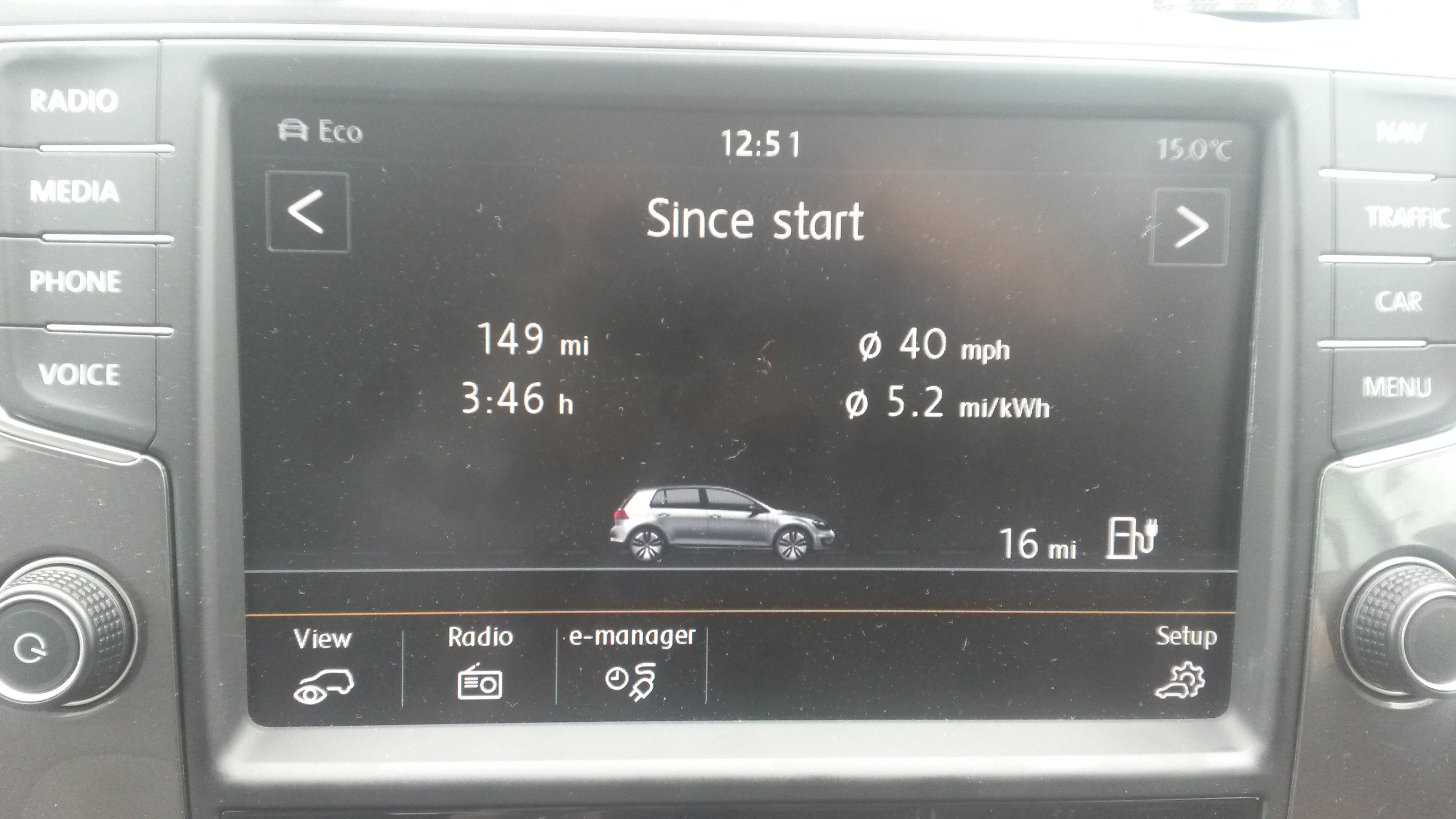
5.2 miles per kilowatt hour is pretty impressive for the speed and terrain!

Frankly, managing to AVERAGE 40mph across Snowdonia and mid-Wales is not bad in any car. But to do it while achieving a very creditable 5.2 miles per kilowatt hour impressed me no end. Clearly all the momentum-conservation tips I’ve learnt through 2CVing came in useful, as did actually allowing the car to slow on hills rather than using all of that beautiful torque to keep the speed up. It was also fun, as I didn’t slow down much for bends…

At Holyhead, the only issue was that I first parked at a charger that didn’t have the DC CCS plug I needed. The other one did, and started charging straight away – no issues.

Electric Highway Holyhead

Just to prove it. That’s a ferry in the background at Holyhead.

The only other issue is that the port is unremittingly grim! I’m glad I only had to enter the main building to use the toilet. I charged to about 90%, giving a range of 100 miles, and set off back to Oswestry.

There seemed a little more traffic on the way back, so I made more use of the cruise control. I found it accelerated more gently when placed in Eco mode, so I sat back to enjoy the views, listen to BBC Radio 6 Music on DAB (where terrain allowed) and focus merely on not steering the car off the road. I did get fed up with a dawdler in a BMW at one point and made a lavish, range-sapping overtake. That torque means you can zip past and expose yourself to danger for a very short period. Confident I’d make it back with miles to spare, I allowed myself the luxury of a 60mph cruise.

There was one brief period after a long climb where the range dropped below the predicted mileage, and the car started frantically asking me if I wanted to find a charging station. For a giggle, I told it to do this, and it told me it couldn’t find any. None of the Electric Highway chargers seem to be on its map. This is poor.

But I made it anyway, gave it another charge, drank more tea (I refuse to comment on cookie intake) and headed home. I had way more charge than I needed, so got a positive hoon on along the A44. It’s a nice car to drive briskly. As I pulled up at home, the e-Golf reported that it’d clocked up 300 miles since leaving home that morning. In total, I’ve driven this car 700 miles since Thursday. Not bad going for any car, but unthinkable with an electric car only a few years ago. Truly, times have changed.
Road Test: Talbot Alpine LE. Dreadful but fantastic.

A quick break from the world of electric Volkswagens as I correct a massive oversight – how could I forget that I’d finally had a decent drive in a Talbot Alpine?

Talbot Alpine rusty

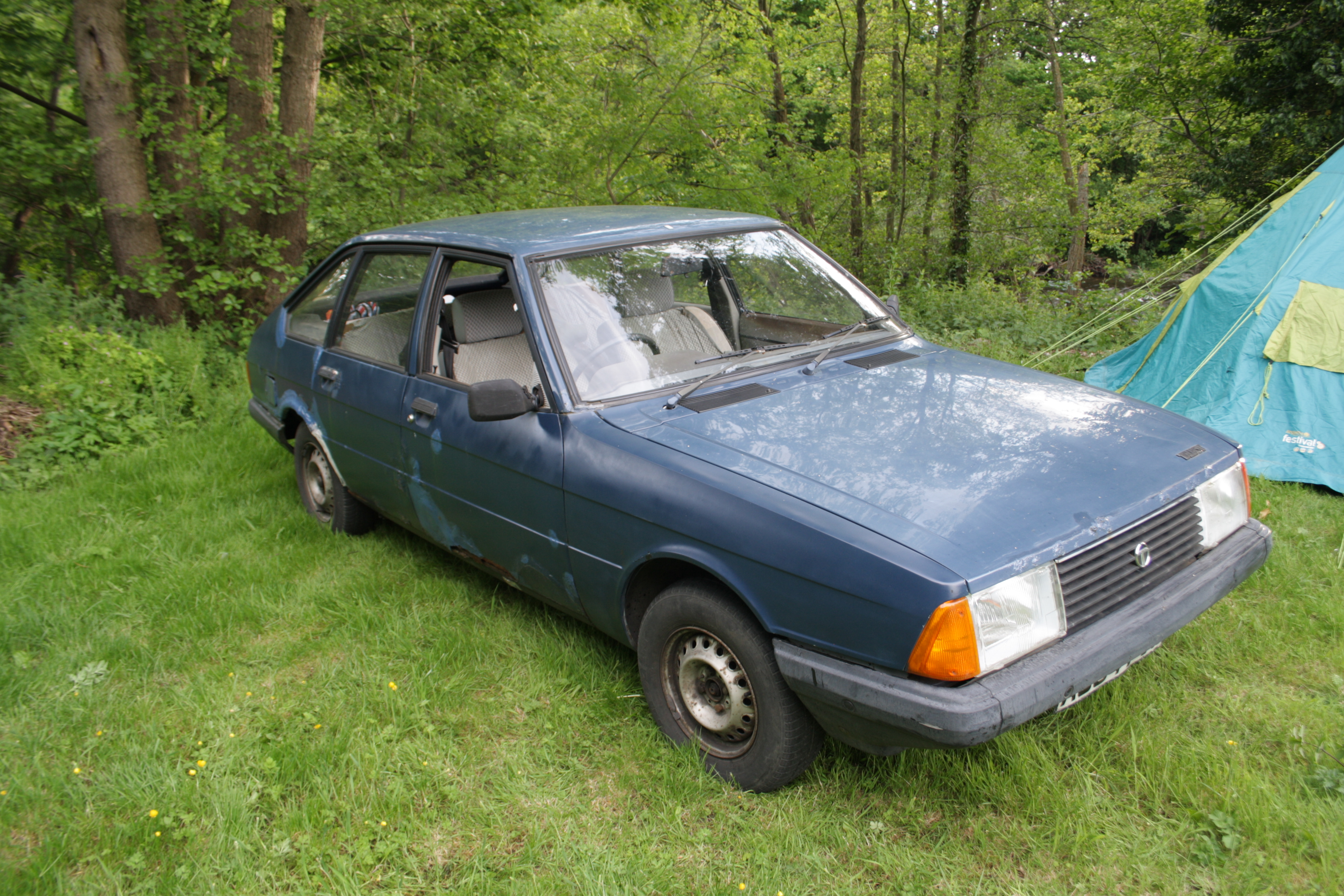
Sheer glamour, the other week. Surely it must be dreadful to drive?

I’ve long admired the Talbot née Simca/Chrysler Alpine. As Simca’s final flurry, it was a bold statement. It took the basic formula of the Renault 16 – hatchback, space, comfort – and brought it bang up to date, with sharp styling and quite a few less quirks. It was powered by the ‘Poissy’ four-cylinder, overhead valve engine that had first seen life in the 1961 Simca 1000. Ok, that bit was less bang up to date!

Sold as the Simca 1307 in France, and the Chrysler Alpine in the UK, the car took the European Car of the Year award in 1976 – the year after launch. That was also the year that UK production commenced, at the now-sadly demolished Ryton-on-Dunsmore plant near Coventry. Fewer than 200,000 were built there by the time production ended in 1986. Not a hugely successful run, though the Simca 1307/1308 sold much better – 200,000 were built by the end of 1976! This one model accounted for 7% of all French car sales that year.

The British were not so welcoming. The engines were seen as too noisy, and the market the Alpine was aimed at wanted a nice, conventional saloon. Like the Morrs Marina, Ford Cortina or Vauxhall Cavalier. Our loss really, as these are rather good cars. Chrysler Europe was sold to Peugeot in 1979, who dug the Talbot name out of the archives. The Talbot Alpine soon got a restyle, with a squarer nose.

This one looks dreadful. The body was absolutely hanging – at the time of writing, the entire rear quarter on the driver’s side has now been replaced and further work is ongoing.

Chrysler Talbot Alpine

Typical Talbot Alpine rot. This has all been cut out and replaced now.

Oddly, this base LE model has the 1592cc, 89bhp engine. It starts promptly and isn’t as noisy as you might expect. A lot of the ‘Simca rattle’ is down to poorly adjusted valve clearances. It certainly sounds much healthier than it looks! The seats are typically French – very soft, with coverings that have disintegrated in UV light. Pulling away, you soon realise that this is an exceedingly jolly car to drive. It feels leagues ahead of the Cortina/Cavalier/Marina trio. How stupid British conservatism can be. It is hard to place it as a car of the 1970s as it feels much more like a Cavalier Mk2 or Montego. The steering is particularly nice and while the car rolls a bit in bends thanks to that soft suspension, it corners really, really well. They do have a reputation for understeer if you push too hard, but that’s easily avoided by not pushing too hard.

The engine pulls staggeringly well. I tested the car up my favourite hill, and it just loped up it in fifth gear! You barely need to change gear at all, which is a shame as it shifts very nicely, with seemingly none of the baggy nonsense that a Peugeot gearchange usually entails – jump into a Peugeot 205 to see what I mean.

Shabby chic? Soft seats offer great comfort.

Shabby chic? Soft seats offer great comfort. Very 1980s in feel, even though design dates from 1970s.

Overall then, this car was one of the biggest surprises from a day of driving ‘dreadful’ motor cars. That honour is perhaps shared with the Lancia Y10, but while the tiny Italian tearaway was an absolute hoot, it’s the Talbot Alpine that I’d much rather own on a day-to-day basis. A shame then that they rot so readily! I’m glad this one is now getting the restoration it deserves.

Road Test: Volkswagen e-Golf. The not-so-good

Road Test Part 3. Part 2 (Clever Tech) here

No car is perfect. Not even the Citroen 2CV. So here are the less-good things my review on the Volkswagen e-Golf has found in my real-world road test.

Firstly, there’s price. At £27,395 on the road, this one is certainly not what you’d call cheap. I configured a top-spec Nissan LEAF Tekna with metallic paint, all-round parking sensors and a meaty 6.6kW on-board charger (quite expensive at £1150 extra) and the on the road price was £25,590. With the LEAF, you can down-spec (Visia trim starts at £16,490). With the e-Golf, there’s only one level of trim and quite a lengthy options list.

Electric Car Charger  EV

Free, non-smelling fuel – but charger confusion ruins dream.

You cannot specify a 6.6kW charger with the e-Golf, which is probably the next big hurdle. The optional bigger charger means a 32amp home supply can charge a LEAF in just four hours. The e-Golf will take eight – which isn’t that useful a saving over the 13 hours it takes to charge from a simple 13 amp plug. In short, it means it needs to charge overnight. Volkswagen are aware of the issue and there is talk of an upgrade to the spec at some point. Really though, they’re behind the game in this regard. Kia already packs a 6.6kW charger as standard on its Soul EV. Incidentally, the Soul EV’s RRP is £24,995 after grant, and it packs an impressive spec – including a 7-year, 100,000 mile warranty. Metallic paint is free.

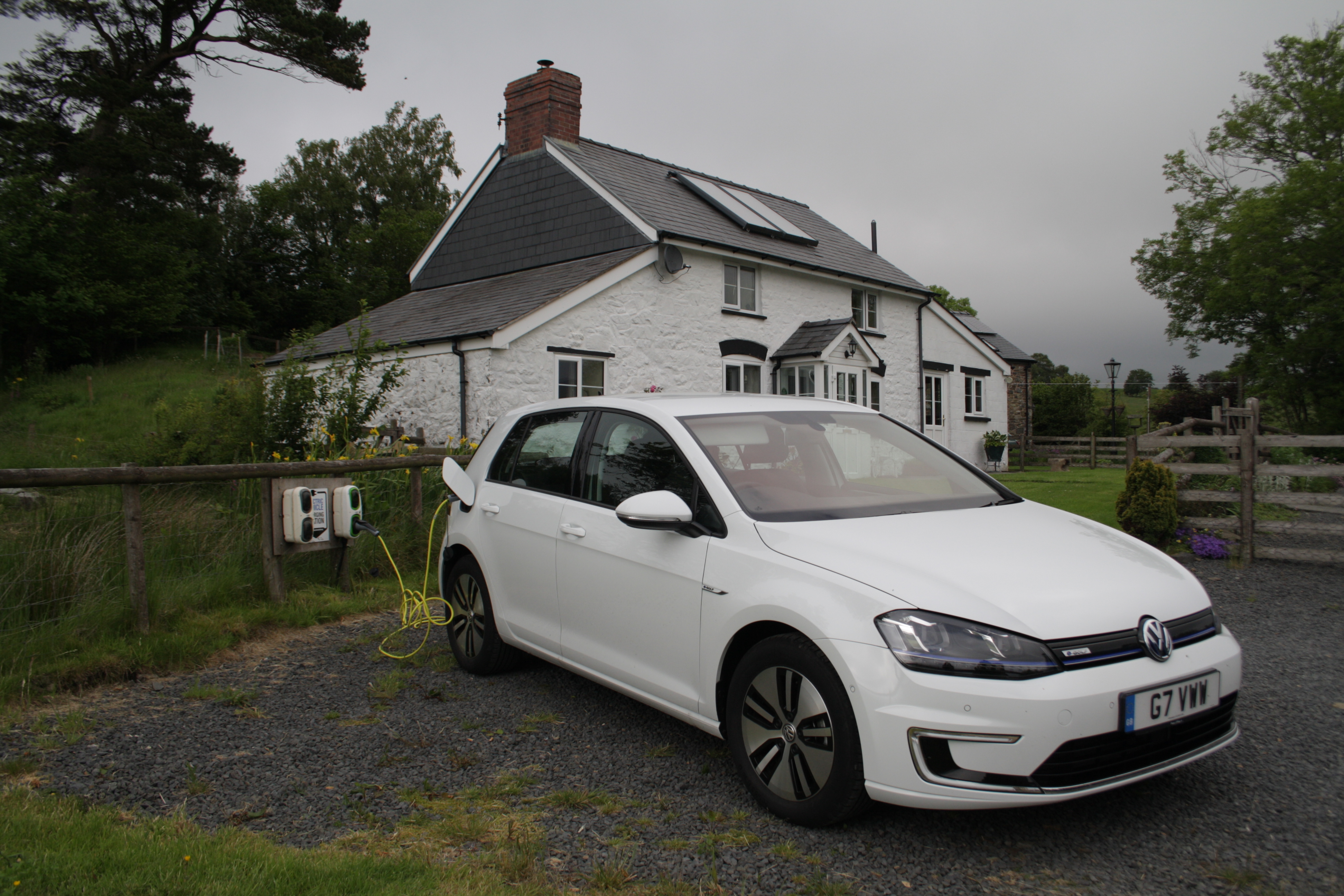
The e-Golf has another downside to charging – albeit one which is steadily improving. To rapid charge with DC (say at motorway services) you need to find what’s known as a CCS charger – Combined Charging System. Sadly, most DC rapid chargers use a ChaDeMo plug. It doesn’t fit the e-Golf. There are two CCS chargers in Wales. One is on Anglesey, the other is in Llanelli and doesn’t work. I visited one in Oswestry the other day, but got confused by the complete lack of labelling on the charger, and pages and pages of info in the owner’s manual that I found it hard to make sense of. I just could not easily see the information I needed and hadn’t realise that a lower cover needs removing from the charge port to allow use of a CCS plug. I did get the AC socket to work, but that relies on the slow on-board charger, so it took two hours to get enough juice on board. And I then discovered that this was not enough after encountering a few hills! I was forced to stop at the excellent EV-friendly Blaenglanhanog self-catering cottage where the owners kindly let me juice up some more. That took another two hours. Sure, some of this was my fault – I should have taken longer to make sense of the handbook – but it goes to show how something easy may not see so to a novice. It should be noted that more CCS chargers are being rolled out. See ZapMap for more.

Fast charging wall box

The friendly folk at Blaenglanhanog allow me to use their fast charger.

To be honest, those charging issues are the main gripe with the e-Golf. Yes, the ride is a bit firm and jiggly at times, but that’s sadly common with many modern cars. Low-profile tyres certainly don’t help here. I’m also not all that keen on how wide the centre console is – what’s hiding under there? It’s like the transmission tunnel in an E-Type Jaguar and I find my leg rests, uncomfortably, on the hard plastic if my foot is on the ‘clutch’ rest.

That’s probably just a personal thing though, as is annoyance at the number of beeps and bongs. One final issue was revealed as I visited Blaenglanhanog though, which is along a gated track. The e-Golf chucks a massive hissy fit if you get out while it is still ‘running.’ In effect, you have to restart it every time you get back in. Which can be quite often on a gated road!

EDIT 25/06/15 I need to add a few more gripes now I’ve covered over 700 miles in this car. The first one is that the climate control resets every time you turn it on. It puts the temperature to 22 degrees, and puts it on Auto. I find this infuriating after a bit as I have to keep putting the settings back to where I want them (usually a lower temperature, or off entirely). You can access very little information about the car while it is charging too – the info screens won’t show anything unless the ignition is on, which we are told not to do while charging. It’s important to have stuff to play with while sitting there charging! Not huge things, just things.

Next time, I’ll reach my conclusions and later on, I’ll discuss EVs in wider detail – the good, the bad and the downright frustrating!