The strain is all too much

I love simple motoring. Today, the clutch cable snapped on the 2CV while we were out. It has been failing in stages for some time, with the adjustment jumping out every now and then. It just took me a while to work out why…

The last ‘jump’ today left all of about two strands of cable to operate the clutch with. I didn’t fancy my chances of making it home like that but as luck would have it, I had a clutch cable underneath the front seat as part of an emergency parts package for an overseas trip last year.

Eek! The 2CV's clutch cable doesn't quite snap

Eek! The 2CV’s clutch cable doesn’t quite snap

I didn’t have any tools, but thanks to having to frequently adjust the clutch due to the cable issue, the nuts were finger tight – so I began the operation. There’s not much to it really, the only difficulty being that your hands end up covered in gunky horrible oil. Soon, the new cable was in place and off we set! I’ll adjust it up correctly now it’s got us home and I have access to tools.

It made me glad that older cars can be so simple to work on. Instead of having to contemplate a lengthy wait for recovery, I could just swap the cable and be on my way. Lovely.

Relay frustrating

I don’t know why I bother sometimes. I mean, the 2CV is about a low-tech as cars get. There’s no distributor, no radiator, no water pump, no cambelt, no brake servo, no power assisted steering, no EBD, ABS, ESP, SIPS, no electronic brains. Simple. So why do I keep trying to make it more complicated?

The idiocy began in 2003 when I fitted 123 electronic ignition to the Tin Snail, in a bid to overcome poor running due to a worn points cam and because points are a bit of a faff really aren’t they? To be fair, it did the trick, but problems weren’t far away. First, the car developed a starting fault because 123 is more power hungry than points. I had to replace the battery to overcome that one.

Ok, so that was about all that went wrong for 40,000 miles, but then starting problems struck again. I binned the unit and fitted a DG Ignition – a rather blatant copy. That lasted even less time, causing problems when I was on a 3500 mile trip all over mainland Britain. I returned to points, aided by a box of tricks from Maplin that effectively takes the high voltage power away from the points. Lovely.

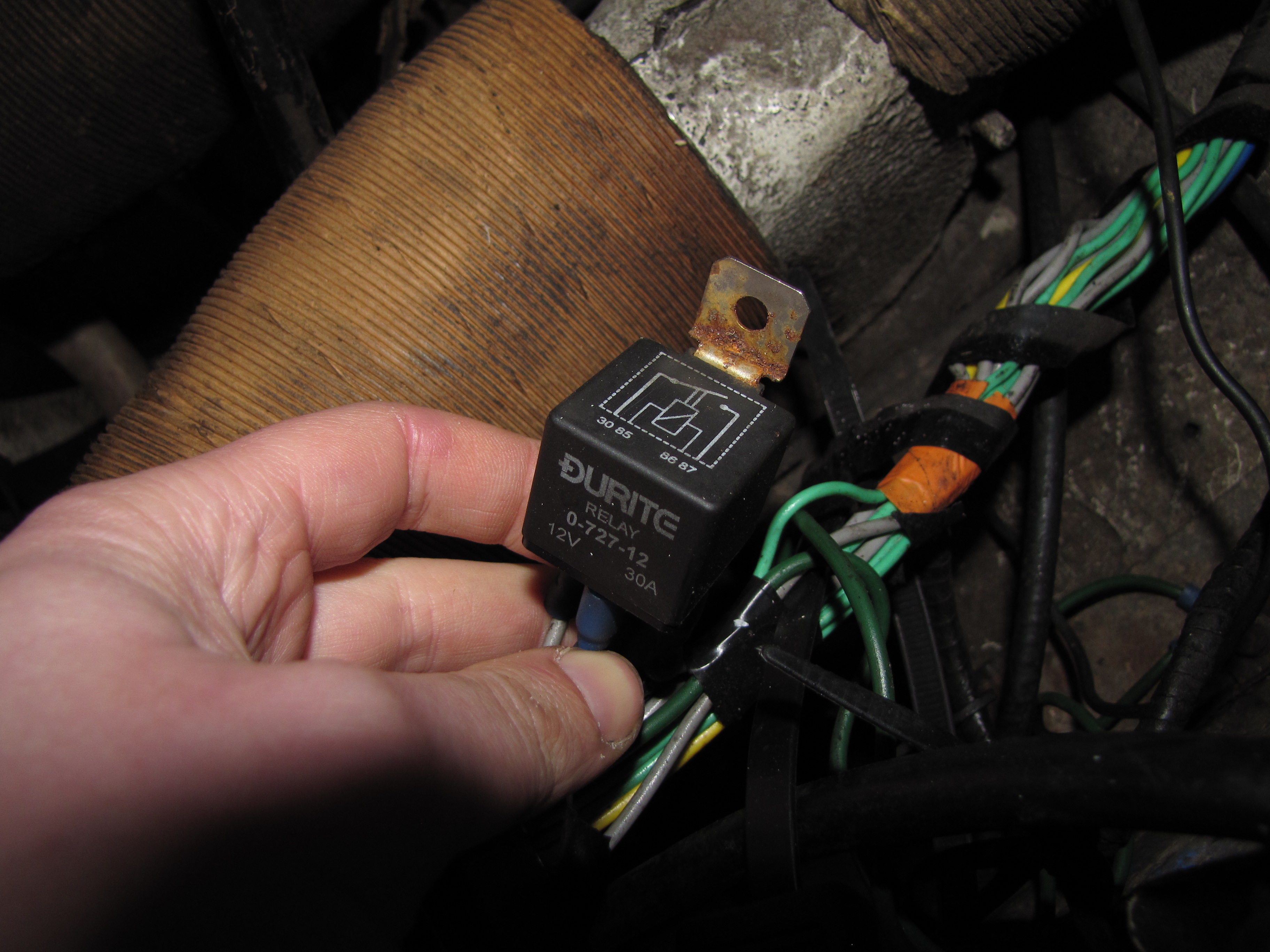
The next unnecessary modern gadgets were headlamp relays. My 2CV has had halogen headlamp bulbs fitted since I bought it (I’ve never had to replace one in almost 100,000 miles!) which can cause the headlamp switch to get warm. The wise option, according to most, is to fit headlamp relays. I did this some weeks ago, having been meaning to do it for some years. After all, taking the strain off the wiring loom and switches has to be a good move doesn’t it?

Headlamp relay

Relays - good or bad?

Apparently not. I was driving home in darkest Wales, went to put main beam on and got nothing but darkness. Quite alarming as I was doing 40mph at the time! Thankfully, the headlamps did continue to work but one of my new relays is broken already. If I’d not fitted it, I wouldn’t have had a problem.

It all leaves me wondering whether sometimes it isn’t just best to leave things as the manufacturer intended. The big test for this theory might be the electric cooling fan fitted to the Scimitar…

Smitten with a Scimitar?

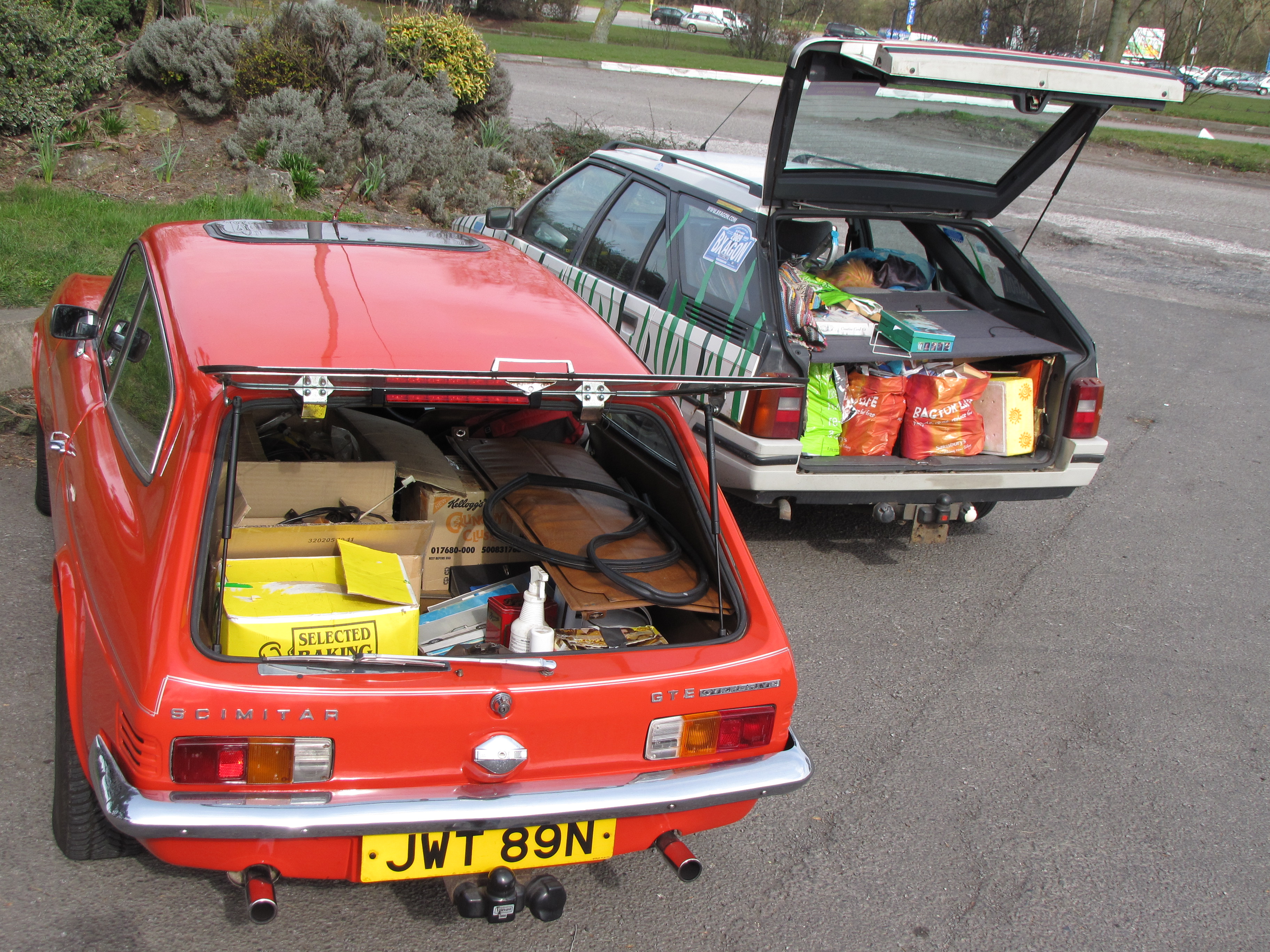
So, I’ve finally collected the Scimitar, but is it as good as I hoped?

Scimitar and BX load space

Scimitar joins the fleet, with a load of parts. BX off to pastures new and already working hard

After the 120 mile drive home, I think generally, the answer is yes. Ok, so electrical gremlins are already rearing their head with a low reading on the voltmeter when lots of kit is on, but the combination of tight handling and lusty Ford Essex V6 have already started to make an impression. As has the load carrying capacity – the back is still full of spares and literature so I’ve got more than the car to get familiar with.

The first full day of ownership has allowed me to prove that the voltmeter is telling fibs – it’s actually fine – and discover that it’s a pig to start from cold. If there’s a best technique, I need to discover it. Mind you, the previous owner seemed to struggle too! There’s a sweet spot on that choke setting somewhere…

Civic reception

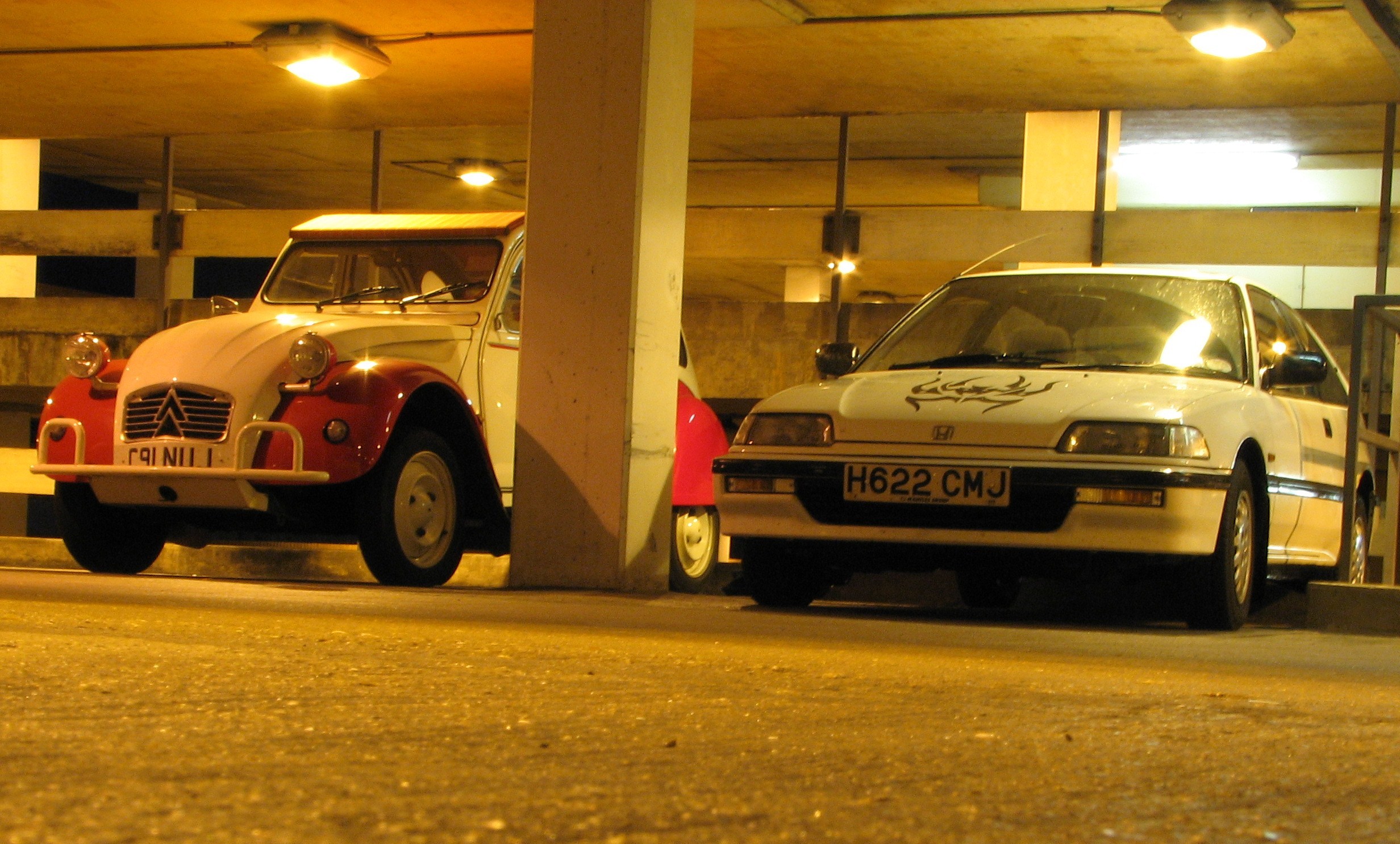
The brilliant thing about having my own blog is I can prattle on about all sorts of crap cars that magazine editors would tell me are ‘not suitable.’ A case in point is the 1991 Honda Civic I owned a few years ago. It was a 1.4GL and despite being built by the Japanese in the early 1990s, still had a manual choke and twin carburettors.

Honda Civic and 2cv friend

A much-loved Honda Civic (right) alongside a much-loved 2CV

Yet it was astonishing. For all the world, the engine felt like it was fuel injected. I loved it. In typical Honda fashion, it was a revvy little thing, not really waking up until 4000rpm. Insane fun yet I was also rewarded with 40+mpg. Now that’s my kind of car.

I bought it locally when we lived in Cambs, for all of £195. It needed new CV joints, as they clacked like a footballer’s rattle on sharp turns, and had rather serious rot in the left-hand rear wheelarch. I wasn’t going to complain at the price and I clocked up a good few thousand miles in it before flogging it while it still had MOT.

What I really liked about the Civic was that you could still feel the soul of Soichiro Honda in the very design of the thing. It was light, you sat low and the engine screamed like a starving baby. The bonnet was so low that you felt you could use it to stop a trailer rolling away on a hill – you wouldn’t sit on it because it seemed as low as the ground. Wonderful engineering shone out of every pore – from those achingly efficient carburettors to the fresh air vent on the driver’s side of the dashboard – rare to have a fresh air feed on such a modern design, but really rather good.

Naturally, the electric windows and sunroof worked perfectly and the only negative point about the driving experience was over-light, feel-less power steering. Once I fitted budget tyres, this lack of feel became quite an issue on wet roundabouts. It had all the directional stability of a shopping trolley full of bricks. Lesson learnt – don’t buy cheap rubber!

It all went a bit downhill from here for Honda. The Civic gained weight until it became the monstrosity that wears the badge today – relying on quirky looks rather than clever engineering, and a form-before-function mentality that poor Soichiro would never have been able to relate to.

PS – before you ask – yes, I did put the bonnet stripes on it. Me and my wife were the only people in the world (apart from the chav who bought it from me) who thought it looked cool. And don’t ask why I have a picture of it in a car park in Peterborough alongside my 2CV. I’m still struggling to recall exactly how I took two cars to work that day.

Addicted to dreadful motoring

Yeah, I might as well admit it. I LOVE crap cars.

Skoda Estelle and  Rapid

Hmmm. A sight to make our ClassicHub journo go weak at the knees

I realised that I had a problem when a ten-year old me was reading a copy of Auto Express in 1988. I still have the copy now. In it is a budget car group test between the Citroën 2CV, Fiat Panda 750, Yugo 55 and Skoda Estelle. So far, I’ve owned two of the four and deeply want to own the Fiat and Yugo that I haven’t yet sampled.

In a way, I find it frustrating that the Citroën 2CV now has an established classic car following. I think I preferred it when everyone derided them. That was one reason I got into them in the first place. I’ve never paid much heed to the opinions of others – I always have to try things for myself.

And I have too. In fact, my first Skoda really was quite crap. The starter ring gear was worn, so I’d often have to bump start it. In fact, I had to do that having handed over my £150 to buy the thing. The ignition timing was so retarded that sparks would come out of the exhaust at motorway speeds. Exciting! As I wasn’t much of a mechanic at the time, and couldn’t afford to pay for the labour involved in replacing the ring gear, I scrapped it. I still wish I hadn’t. Not only because I only got £30 back for it. I will own another.

I realised that I still had a problem when someone on the Autoshite forum saved an FSO Polonez from being scrapped. Most people would ask “why” but I thought this was brilliant. I’d love to try an FSO Polonez. Were they really so awful? Yes, they probably were but I still want one anyway.

So, why do I like shite? Well, cost is a large part of it. People’s snobby attitudes cost them a lot of money. I rarely if ever pay more than £2000 for a car, and most often, quite a bit less than £1000.  There are a lot of really quite good cars available for less than a grand, and some awful ones too. It doesn’t matter, they’re all an experience.

This is why I need to sell my Land Rover. It’s getting in the way of me continuing to own shite cars. Wonder what I’ll end up with next…


An Oxford Six nearly kills me

To be a classic motoring journalist, you need driving skills like no-one else. You must be able to jump from one classic to the next and quickly adjust – well, you can’t go around pranging people’s lovely classics because you didn’t know where the brake was.

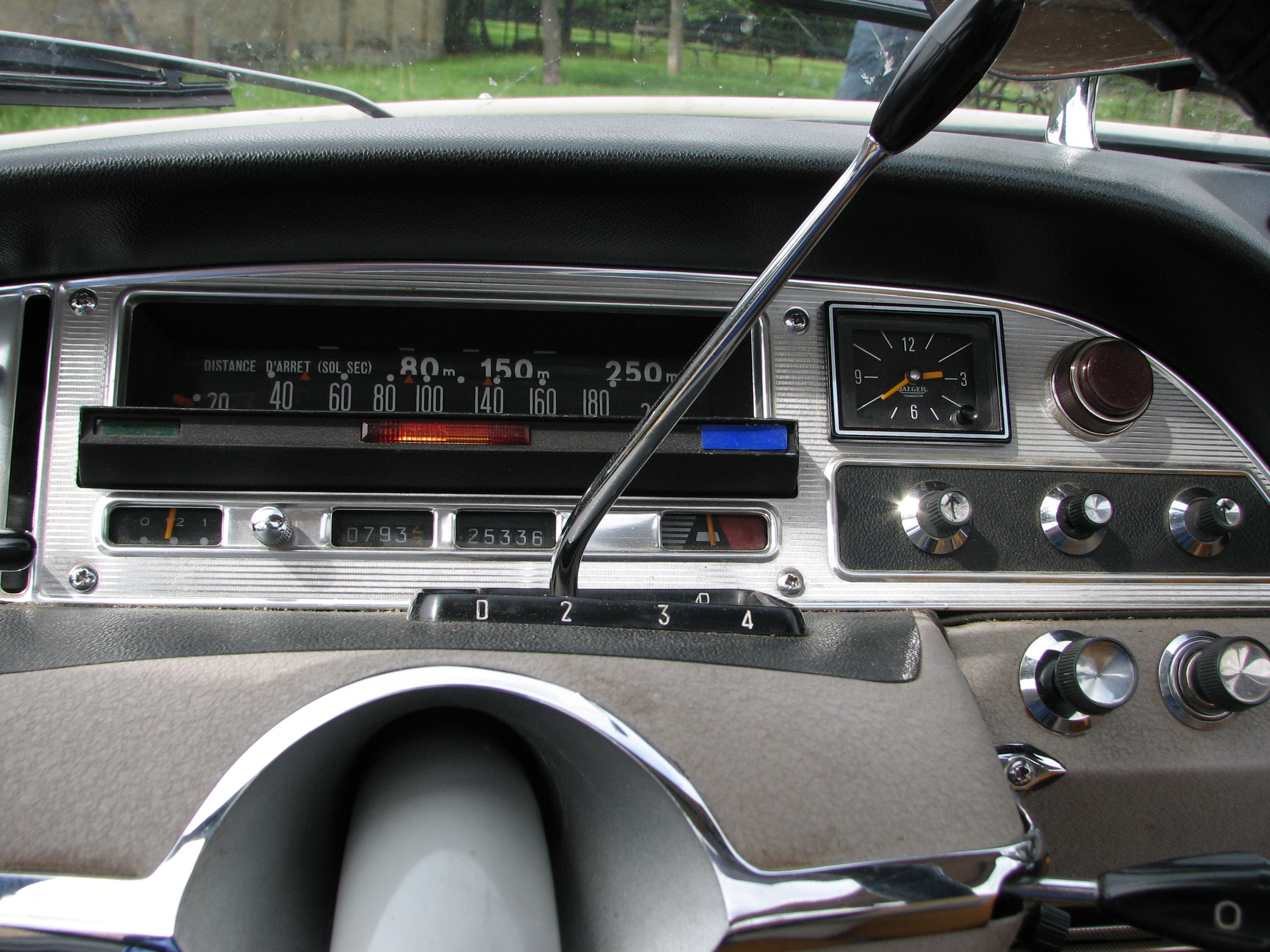
Ergonomics were yet to be discovered even as late as the 1950s. Take a Citroen DS, Ford Zodiac Mk2, Daimler Conquest and Austin Westminster A90 for example. All were in production in 1956 and the differences are staggering. Sure, the DS was quite unlike anything else at all, but let’s focus for the time being on gearchanges.

DS semi-automatic

Baffling controls an everyday challenge for the motoring journalist

On the DS, you move a small arm that sprouts from the top of the steering column in its own quadrant. The car looks after the gearchange and clutch operation for you – you just tell it what gear to be in. The Daimler uses a pre-select gearbox, so while there is a ‘clutch’ pedal, you don’t use it as one. To move away, just select first and raise the revs – the fluid flywheel transmit the power. Select  the next gear using the column change and operate the pedal when you want it to engage.

In theory, the Ford and Austin are much closer. Both have a column gearchange to a conventional gearbox – the Ford packs three cogs while the Austin manages four. But consider how you select first. On the Ford, you push the lever away and down, the Austin away and up. Second? Towards and up on the Zodiac, but straight down from first on the Westie.

It’s learning to adjust to these differences that enables us to do our jobs quickly and without breaking stuff. Yet there’s always one that nearly catches you out.

Austin Sevens I always find hard work. The clutch is a button with about an inch of travel, the steering is exceedingly vague and the brakes – especially on earlier uncoupled versions – are horrifically poor. I always return with a smile on my face though, even when one recalcitrant Ruby conked out on my test drive and only came back to life after vigorous hand-cranking. A journey in a Seven is never dull.

But it was a Morris Oxford Six, dating from 1933, in which I almost came a cropper.

1933 Morris Oxford Six

This 1933 Morris Oxford Six proved a challenge! A beautiful car however

For a start, the pedals are in the ‘wrong’ order. The throttle is in the middle, the brake where the throttle would normally be. The gearbox thankfully had synchromesh – I had driven an earlier Oxford without it and found coming down the gearbox a real challenge. What I didn’t know is that it had a freewheel! You can picture the scene as I come down a hill towards a red traffic light. I’m already focussing my mind on the pedals, so I don’t accidentally accelerate. My foot is right down and not a lot is happening  – brakes weren’t very good in the 1930s. To make matters worse, there is no engine braking as the car is now freewheeling down the hill!

My heart was truly in my mouth as I sailed just past the stop line. I’m very glad brakes have improved since then! While it may have scared me, it was a beautiful car. It had a top speed of barely 60 miles an hour, but sounded absolutely beautiful. While it came close to killing me, I still did rather like it!

Classic bed test

Better than a tent?

How does the BX estate handle, when asked to be a bed?

I’ve just returned from a weekend of camping with 2CV chums in Derbyshire. The weather this weekend has been rather horrid, and the idea of pitching a tent just for a few hours kip, then dealing with the soggy, mud-strewn thing the next morning was not appealing.

Therefore, a plan was hatched to turn my Citroën BX estate into a bed. After all, it is just about long enough.

I started by removing the rear seat base and folding the rear seat backrest down. This allows me to stretch my entire 5’9″ out. A self-inflating mat was added to provide some modicum of comfort. Pillows and a thick duvet completely the facility.

I must admit, after a drive across Wales and England on some very, very damp roads, it was nice to arrive at the campside, park up and consider bed ready for the night. After an evening of one or two drinks and a lot of friendly chat, it was back to the car to see if we really could sleep comfortably in it.

Judging by the snoring, my wife managed this very easily – though I suspect the addition of some alcohol may have helped and therefore her feedback is not to be entirely trusted. I found it almost-comfortable, though a touch narrow. The BX has a fresh air vent in the tailgate though, which was right above our heads. I do like fresh air and this feature was definitely appreciated, though we doubt it was designed with camping in mind.

The car has a number of features to increase comfort. By dropping the suspension to its lowest setting, I was able to prevent too much bodyroll during the strong winds, with only the occasional wobble giving a slight rock-a-bye-baby feel. However, the orthopaedic back massage system – masquerading as boot floor runners – did not give satisfaction. I had to keep trying to find a comfortable spot between them.

So, good ventilation and a slightly-sozzled wife provided adequate heating. Too much in fact – the car proved warmer than our house. We may need to review sleeping arrangements at home.

Overall, it was a cosy if slightly uncomfortable bed test, and we feel that perhaps we need to upgrade to a Maxi or Saab 95, advertising material for both suggests that people find them very comfortable. Is this true? We’ll have to find out…

Who needs a house?

Does the Saab 95 really deliver as a bed?

Best sounding classic?

No, not which one has the best sounding engine – I’d argue strongly for the Triumph Stag there – but which one has the best name?

Is this the best sounding classic? Or is he blogging about something different?

Triumph Stag is certainly a contender – a successful and aggressive beast is what the name suggests. Much better than Maserati Bora for sure. Some are a bit more functional – the Bond Minicar was just that, the Triumph Roadster likewise. Not very exciting though eh?

I recently drove a Bentley Brooklands Turbo R Mulliner, but that’s all a bit of an unnecessary mouthful. It’s like they were trying to chuck in every English thing they could think of. They might as well have called it the Bentley Royal Family Blackpool Pleasure Beach. I’m quite pleased they didn’t though…

The Gordon-Keeble GK1 starts well, but they clearly ran out of inspiration. Others just lie. The Morris Minor 1000 ended up with 1098cc, the Citroën 2CV actually had 3CV by the 1970s. Mercedes-Benz on the other hand just confuse. A 220SE has 2.2-litres, a 300SE has 3-litres. But you can also get a 300SE with a monstrous 6.3-litre V8! They called this the 300SE 6.3. Obviously.

The French were never much into names. Renaults were generally numbers after the Fregate/Dauphine/Caravelle era, Peugeots stick with the number-0-number and Citroën at most pulled a few letters together. The Traction Avant merely started life as 7A and only the Ami, Mehari and Dyane broke theme right up to the Xantia of 1993. That’s the French out for a refusal.

I guess it’s hard to decide, so I’m going to pick two Rovers with identical engines – something that gave the Solihull fellows a few sleepless nights. I therefore crown the winners of this non-competition the Rover Three-Point-Five and Rover Three Thousand Five.

This is a Rover Three Point Five...

...whereas this is a Rover Three Thousand Five. Very different (in engineering if not name!)

Let the ol’ girl go?

Is it time to bid farewell to the BX?

You are looking at possibly the best car in the world. It has the ride comfort of a Rolls-Royce, the practicality of a small van, the quirkiness of a true Citroën, easy motorway cruising yet also 50+mpg. It was stupidly cheap to buy, and despite what people believe, really quite simple.

And I’ve decided that I no longer want it. The problem is, I do rather tend to get bored of cars, and am always seeking something better – or at least different. Hence why I find myself wanting to get rid of probably the best car I’ve ever owned.

I bought the BX in September 2009, primarily to take part in the BXagon Rally – a drive around the circumference of France  to raise money for Cancer Research UK (hence the tiger stripes – well, you’ve got to look the part). It covered the 3500 with aplomb and I liked it so much that the car remained on the fleet, clocking up 20,000 miles in my ownership this week. That’s a total of 162,500, but you wouldn’t really know it. These cars eat up miles.

In that time, I’ve used it on my daily commute, towed car trailers with it, filled it with stuff when moving house, collected a new oven and a new washing machine, driven it around Scotland, Wales and the South West of England – as well as through parts of Belgium, Luxembourg, Switzerland and Spain on that epic trip around France.

It cost £266 to buy, and that included tax and MOT. I’ve since probably spent £1000 on upkeep – including a pair of brilliant Hankook tyres, a hydraulic flush, the odd pipe repair, a new rear axle arm bearing and basic servicing. That’s cheap motoring in anyone’s book.

So, it’s bloody good at everything, costs pennies to run and garners attention like nothing else. It is the curse of the car enthusiast with wide tastes that I now want to sell it. Yes, it’s good, but it’s not ‘something else’ anymore. £300 anyone? Then I’ll go and buy something completely impractical, that will cost a fortune to run. With a £300 budget. Should be fun!

Classic winter motoring

Using a classic through the winter requires courage!


As we move into 2011, it’s time to look forward to digging out your classic and preparing to hit the road.

Or maybe, like me, your classics have been in regular use throughout the winter. If so, then congratulations on your bravery! A recent clean of my Citroën 2CV revealed that the poor thing is rather rusty in places – to the state that I’m considering hand-painting it to keep on top of the corrosion. Keeping a classic in first rate order at this time of the year is certainly a challenge.

But I find a lot of joy in driving classics at this time of year. Sure, it can be cold and it does create issues such as the rust-chasing, but journeys gain an epic sense of adventure – especially the 700 miles I clocked up over Christmas in the Tin Snail. There’s other bonuses too. When grip is at a premium, as it has been here in the wilderness of West Wales, I’d much rather be in a car  that lacks power assistance of its controls, allowing me to feel when grip is there and when it is not.

Sometimes, it really is not  there, which is where my 1988 Land Rover 90 County Station Wagon V8 comes in. At 15mpg however, I tend to rather hope that we don’t get too much snow! Sitting somewhere in between the two is my Citroën BX TGD estate, though as 12-hour mission to get from Cardiff (two-hours away) to home revealed that there’s no substitute for four-wheel drive when things get really slippy. A journey I’d rather forget. The BX also disgraced itself by freezing its heater matrix at one point.

It’s a battle to keep all three vehicles in sound condition with so much salt on the roads. I think I’d better get out there with the hose once more…