100,000 miles in a Tin Snail

I’ve finally achieved something I never would. 100,000 miles in one car.

It’s taken almost 12 years, but I got there! The steed I chose for this mighty endeavour? A 29bhp, 602cc Citroen 2CV6 Dolly.

It’s hard to recall all that’s happened in 12 years. The car has changed a lot and so have I! We’ve lived in urban Birmingham, rural Northamptonshire, the slightly-disturbing flatlands of Cambridgeshire and most recently the stunning wilderness of mid-Wales. Throughout this time, Elly the 2CV has been one of my trusty daily steeds. She’s often shared the mileage but has at times been the only working vehicle I’ve owned – and in one year, clocked up an impressive 15,000 miles. Generally, the annual mileage has been 5000-7000, which is still far in excess of what many classic cars manage between MOTs.

Citroen 2CV

100,000 miles together.

It hasn’t all been on-road miles either. At least once a year, she usually finds herself off-roading. Well, the 2CV was designed to cross a ploughed field and with axle articulation to shame a Land Rover, it just has to be done really.

At other times, she’s hurtled around some well-known race tracks. My first taste of this was at Mallory Park in Leicestershire as part of a Retro-Rides meet. You can enjoy pretty much all a 2CV has to offer in performance terms on any road, but to be able to really push it without worrying about other cars, pedestrians or stray animals was so much fun! A bit too much fun as harsh downshifting to second gear saw me break the synchromesh which failed on the way home! I still got home though – things were just a bit crunchy.

Another Retro-Rides meet saw me hurtling around the test track at the Haynes Motor Museum. Again, I proved not to be the slowest car out there, beating the same Volvo Amazon that I had done at Mallory! Again though, I suffered synchromesh failure not long after – third gear this time! That might have been unrelated though as third gear synchromesh can disappear…

She’s been up Prescott Hillclimb twice as well, only as part of a cavalcade but with plenty of hooning involved!

I drive with gusto on the road too, so it’s not like she’s had an easy time for those 100,000 miles! In fact, an alarming number have involved foot-to-the-floor driving, yet her original engine was still generally running fine at 170,000 miles when I finally accepted that she was burning too much oil for my liking due to wear. That’s an astonishing mileage for a harshly-treated, tiny, aged-design engine!

What’s also remarkable is how infrequent I’ve needed to call on recovery services in 12 years of motoring. There was a call-out in 2001 for a snapped throttle return spring, 2002 for a seized alternator – I had no tools with me – and then again in 2003 when the replacement alternator also seized! I learnt my lesson after that and always carried tools with me. When another duff alternator failed, I just removed the alternator and drove home without it! I love simple cars. I then finally fitted a brand new alternator…

2CVs wedding

Elly the 2CV as a part of Ian’s wedding celebrations

There have been a few hiccups with electronic ignition – I’ve tried two different ones and they both failed – but with a simple, Maplin-sourced points-assisted set-up, she’s been very reliable. The only issue with this is when a heat sink came loose in scorching Switzerland in July 2010. The ignition began to cut out leading to spectacular backfiring! We made it as far as some French mountains before it got much worse, to the point that I coasted downhill for several miles with the engine turned off. Try doing that in your Citroen DS5! I managed to bodge up a cool air feed which got us back home. In fact, the next day, we clocked up 660 miles getting back home. That took 17 hours (including a ferry and purchasing fuel in four different countries).

There’s a saying that the 2CV isn’t just a car, it’s a way of life and I must whole-heartedly agree. I was a trendy city boy (ha!) when I bought this 2CV, but I’m now a complete and utter hippy – albeit one with a love of burning petrol and eating meat. Through the 2CV, I’ve made many friends and had an awful lot of fun in fields all over the UK as well as in France, Belgium and Sweden. 602FTMFW! Or, 2CV’s really are quite marvellous if you prefer.
The last car built in Luton

Luton was once the home of Vauxhall, experiencing its best years before the consolidation of parent company General Motor’s European operations. From the start of the early 1970s, Vauxhall would lose out to German in-house rival Opel first losing design input, then losing car production at Luton altogether (though Vivaro vans are still produced there today – a joint project with Renault).

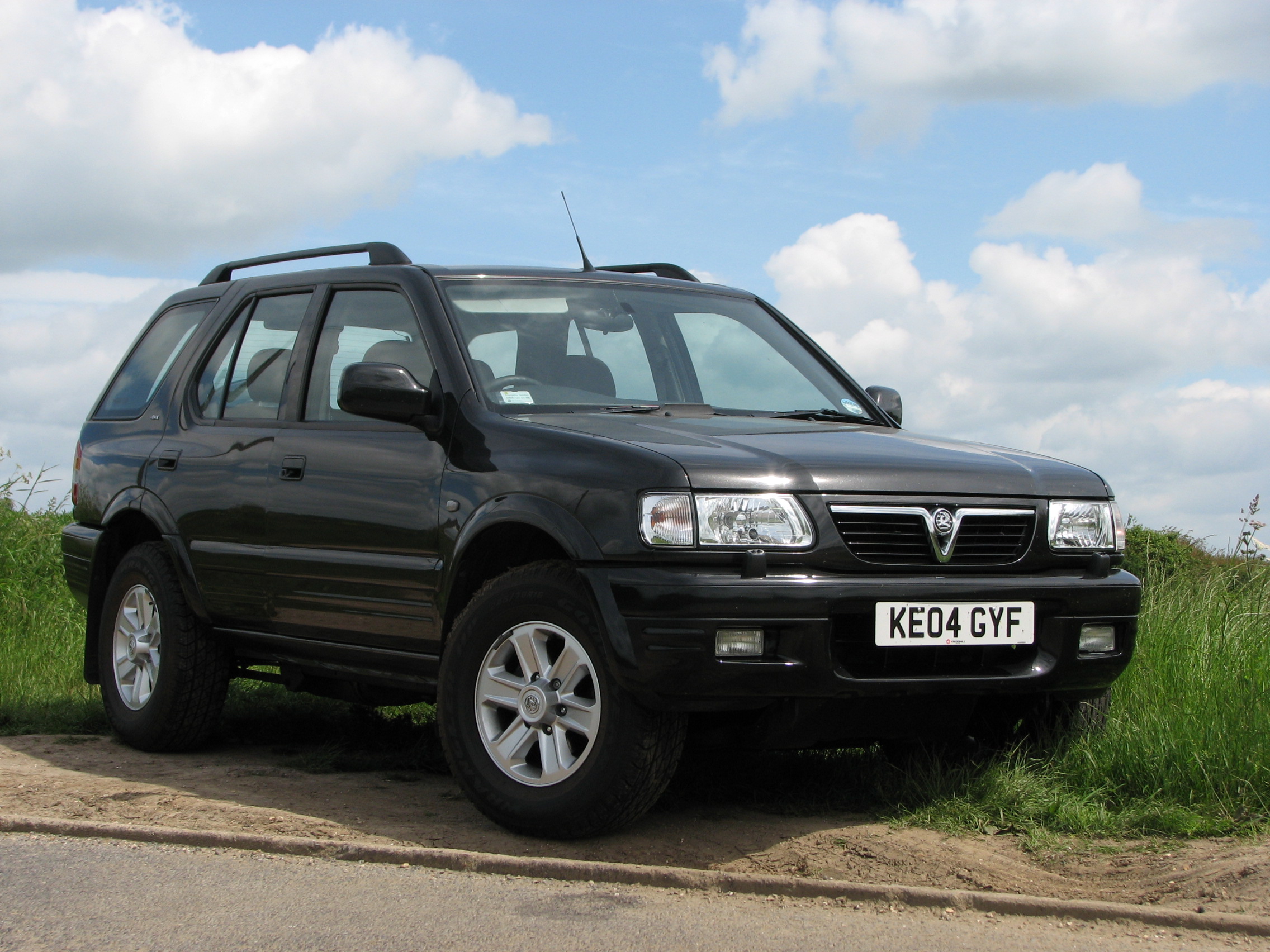
Vauxhall Frontera DTI

Yes, this is the very last Vauxhall Frontera. The last car built in Luton.

The last Frontera was built in 2004, and it marked the end of passenger car production at Luton (albeit at the former-Bedford factory rather than the main car production plant). Unusually though, it wasn’t an Opel design. In fact, it wasn’t very European at all. The Frontera began life in Japan as the Isuzu Mu (short wheelbase) or Wizard (long wheelbase). General Motors seemed to think that such a name made it unsuitable for Euro tastes, so launched the Vauxhall/Opel Frontera in 1991. The underpinnings were largely from an Isuzu pick-up truck, rebranded as a Bedford then a Vauxhall in the UK and used extensively by The AA.

Petrol engines were Vauxhall’s own 2.0-litre (swb) or 2.4-litre (lwb) but the lwb was also available with the 2.3-litre turbo diesel engine shared with the Carlton. Not one of the best. A facelift didn’t change an awful lot externally, but did replace the cumbersome rear leaf springs with coils. New petrol engines (2.0 and 2.2) were a boost, as was the fitment of Isuzu’s own tough 2.8-litre turbo diesel. It didn’t last long though. For some reason, GM opted to fit the VM 2.5-litre engine from 1996. This was an inferior engine in terms of refinement and reliability – it pops head gaskets (it has four cylinder heads) for fun if you neglect it.

1998 saw further improvements, with a more noticeable restyle, the 2.2-litre petrol carried over but a new 2.2-litre Vauxhall/Opel DTi diesel option and also a 3.2-litre V6 for those with no economy worries. By now though, the competition was moving on and the Frontera was feeling its age.

I know because I’ve driven the very last Frontera ever built and therefore the last car built in Luton.

Driving around on public roads in such a vehicle is really quite odd. No-one has any idea of the significance of it. Why would they? It’s just a black, bland 4×4 with nothing to distinguish its unique history. It is owned and maintained by Vauxhall’s Heritage team at Luton. They often use it to tow other classic Vauxhalls to various locations for displays and the like. This is a working vehicle. Yet when I drove it in 2008, it had less than 4000 miles on the clock.

I enjoyed driving it for a few days and took it as far as the Bromley Pageant of Motoring that year, where no-one paid it any attention, as you’d expect. I felt like frogmarching people up to it saying “Do you know how significant this car is?” But I rather feared I’d be taken away by nice people in white coats. Or at least the security guards.

Vauxhall Frontera rear

Last Frontera is very practical and often transports Vauxhall Heritage cars

Yet to drive, it wasn’t that enthralling. Sure, it was very competent in many regards, with fine poise, a quiet engine and good pulling power, but the ride was definitely on the firm side. It felt like the designers had decided that the only way to stop it falling over on bends was to weld the suspension up. On Fenland roads, it was horrific. On the motorway though, it was delightful – with enormous door mirrors making it very easy to keep an eye on traffic behind. Sadly, I didn’t get to put it through its paces off-road, but from what I’ve heard from others, they’re pretty good. After all, there’s a strong separate chassis and a proper low-range gearbox.

That was the problem. Like the Nissan Terrano II, the Frontera just wasn’t soft enough. New cars such as the Nissan X-Trail and the Vauxhall Antara proved that when it comes to 4x4s, the market wants a car that looks a bit chunky – they’re not really interested in actual off-road ability. Therefore the Frontera has another duty to perform. It must represent the end of an era too – the era when soft roaders were still actually good off-road. (Ok, it wasn’t the last. The Nissan Terrano managed to linger on for another few years but was killed off in 2007).

However, my work here is done. I have highlighted what the last passenger car built at Luton was, and it wasn’t the Vauxhall Vectra that most people expect. No, it was instead the Frontera. A car that enjoyed a 13-year production life. A car that deserves more credit than it ever receives. Especially the one I drove.

Breakdown! A rare event

On Sunday, the 2CV broke down. This was a bit disconcerting as despite clocking up over 100,000 miles together, my little 2CV rarely fails to complete a journey. In fact, it was the very first time that it has needed recovery – aside from when it got smacked up the backside by an errant Mondeo, which doesn’t count as it wasn’t the 2CV’s fault.

2cv broken down

Bother! The 2CV actually breaks down. Bad times!

The last time I called for assistance was in 2003 in fact. I was returning to Birmingham after visiting my new girlfriend (now my wife) and the alternator bolt snapped. A few weeks later, it did it again but I just took the alternator off and drove to my girlfriend’s house, promising to buy a new alternator this time and being very glad that 2CV’s possess so little electrickery.

This time, the fan pulley failed and broke into two pieces. The bit with the fan on it broke free from the middle bit, so I had much-reduced engine cooling and no alternator output. It had been making a noise for some time during our 200 mile journey, probably due to the fact that we’d covered over 100 miles absolutely flat-out. In 2CV terms, that’s about 70mph. Therefore I was aware that failure was imminent. Lacking tools and spares, I decided to push on. If there’s a sudden failure of cooling, a 2CV engine often develops a severe pinking habit, warning that you need to stop before damage occurs. There was no pinking but there was suddenly a smell of burning – later thought to probably be a bonfire! I got out and the fan was wobbling around a lot. I swiftly turned the engine off and when I removed the fan grille, the fan came apart completely. Frustratingly, we were 10 miles from home!

I did consider whether she might make it anyway – kit cars based on 2CVs often have no fan – but they also do away with the front bodywork and cowling, so air-flow is much improved. I didn’t want to chance it so called a good friend to tow us back. Fixing the problem will be simple. I just need to fit my spare fan. Well, ok. I first need to find my spare fan…

Project Budget 4×4: Still here!

Last year, I went a bit silly and changed vehicles very frequently. It was costing me a fortune in stamps as I sent ever more logbooks to the DVLA!

I promised to be better this year, and amazingly, I’ve done it! I’ve only purchased one new vehicle this year (ignoring the recently-returned BX ‘Safari’) and the Ford Maverick is it. Incredibly, I’ve owned it for over six months now, which means that all of my vehicles (the fleet is currently 5 including my wife’s Mini – which is for sale) have survived more than half a year on the fleet. That’s quite remarkable for me.

Splish splash

Maverick proves ideal in wet West Wales

Deciding to keep the Maverick is really quite a simple choice. It’s very good. I felt I needed to keep it for a while because I’d shelled out so much on overhauling the brakes. That took my £500 initial vehicle purchase up to closer to £800 by the time I’d factored in new calipers, discs and pads. Happily, the Maverick has proved so joyous to own that keeping it certainly isn’t a bind.

Time and again it has impressed me off the beaten track, but it’s also pleasant on the highway too. It handles well, isn’t too noisy and is spacious and pleasant behind the wheel. It can carry quite a weight and tow one as well.

Compared to the Range Rover I owned last year, it’s a revelation. Sure, there are some quality issues – the sunroof screen rattles and some bits of trim are broken (I suspect more to do with previous owners than any failing on Nissan’s part) but whereas the Range Rover’s dashboard always felt like it was about to fall apart, things do feel a bit more together in the Maverick. Not that it’s all been plain sailing. The heater blower resistor (as on the Range Rover) was faulty – but unlike the Rangie, it was a few minutes work to remove and repair. The driver’s electric window switch sometimes plays up too. Very little else does though. I like stuff that works.

I’ve clocked up about 1500 miles in the Maverick now and it doesn’t feel like time to say goodbye yet.

Absolute Bargains: Peugeot 406

People pay silly money for cars. Really silly. Personally, I can’t see the point in spending much more than a grand on a car so I’m very pleased that an all-time favourite of mine has fallen into my ‘affordability’ price range.

That car is the Peugeot 406 Coupe – a car which goes down as one of the finest efforts of the Pininfarina design studio.

Pininfarina designed 406 coupe

Cor, what a beauty!

Lovely isn’t it? An absolute triumph of simplicity. There’s not a line out of place and no gaudy details. Just clean, beautiful lines. They tried to repeat the magic with the 407 Coupe but just ended up with something ugly and inferior. The 406 instead references Vauxhall’s Calibra and says “we can do better.”

Basing the car on the 406 was a good start. Not an exciting car, but one with good handling, an excellent ride and a refinement that was lacking in a Cavalier or Vectra. The icing on the cake was the optional V6 engine though, a unit that delivers lusty performance and the sort of soundtrack that reduces a grown man to tears. I rate it as highly as Alfa Romeo’s marvellous V6 engine, though it falls down slightly against such esteemed comparison by not looking as beautiful under the bonnet. No reason for it to of course as most owners won’t even lift the bonnet!

Yes prices for this beautiful, competent machine are now falling below a grand. If that’s not great value, then frankly I don’t know what is.

500 miles in a knackered BX

The wedding of two very lovely friends saw us travelling to Cambridgeshire last weekend. An ideal first trip for the BX that has recently returned to the fleet. We decided to catch up with friends in Lincolnshire on the way, so with pre-flight checks completed, we headed east.

It took a staggering five hours to get to Lincolnshire, thanks to little more than heavy traffic and the odd burst of heavy rain. It’s a credit to the BX that after five straight hours at the wheel, I felt fine! Which is more than can be said for a night in the bed of our B&B…

We did almost run out of fuel. The gauge got stuck due to a faulty sender and it took me a while to notice. I decided that a full tank should easily get us 400 miles. I hadn’t filled up before we left but had shortly before, and reset the trip. Then I remembered that due to a leaking filler neck (now repaired) I’d short-filled last time! Oh dear!

We then got stuck in Stamford. Horrible traffic ruining a beautiful town. We eventually got through and found a fuel station where I squeezed 47 litres into the 52 litre tank. Pretty close, especially given that I don’t like to let the car go below quarter of a tank normally!

With wedding joy completed, we headed back home on the Sunday – a much better run.

Citroen BX estate

The Green Tiger rests in Lincolnshire after a 200 mile drive

The BX wasn’t exactly problem free, but given how it had been pretty badly neglected for the previous 30,000 miles, it did remarkably well. The niggles were just that really. An iffy fuel gauge, a rattly gearknob, a squeaky steering wheel and intermittent power steering.

Ok, that last one wasn’t much fun at all truth be told. However, I’ve cured that today with little more than a dose of spring cleaning. How nice it is to dispel the myth that BXs are horribly complicated! While intermittent power steering could be a knackered pump, a knackered steering rack or aged LHM (the lifeblood of the Citroen hydraulics) it actually turned out to be nothing more than clogged filters. The LHM must be exceptionally clean. The filters protect the system but like any filter, if they get clogged, the flow gets affected. The steering is one of the systems that requires most pressure, so if flow problems occur, it’s usually the first thing to go wrong.

I pulled the filters out of the reservoir, soaked them in petrol and wiped them down with clean rags. They weren’t in a horrific state but what a difference it has made! The steering is now as light as it should be – and at all times. All thanks to a job that took less than ten minutes. I should have changed the fluid – it’s been a good 40,000 miles since that was last done – but having had to put quite a lot of LHM in when I got the car, I’ve opted to leave it a while longer yet. I’ll see how quickly the filters clog up again.

The BX is very likely to find itself clocking up more miles over the summer. We’ve got a lot on and it’s so good – especially now the steering problems are overcome. It’s smooth, relatively quiet and does 50mpg. What more could you want from a car? The only slight concern is the clutch. The pedal is heavy and the bite is not particularly strong. My suspicion is that it is worn out. I’ve not done a clutch change on a BX yet. Perhaps it won’t be too long until I do…

Buying a car back

Image

A superb bodge, I’m sure you’ll agree

I didn’t really think whether buying the BX Mk2 back was a wise idea. I’ve never bought a car back before – plenty have gone over the years, and one have returned. In theory, it was a bloody stupid idea – and it still might be in practice…

But if you strip all of the emotion out of car ownership, it would be a very sad, boring and unfulfilling experience. For me at least. Yes, it’s stupid to feel a bond with a lump of metal and plastic but I’m incredibly attached to my 2CV – just as I have a favourite T-Shirt. And my current toothbrush is nowhere near as satisfying as the previous one, which sadly wore out. Perhaps I gave it too much love.

Anyway, the point is, buying the BX back made no sense at all but was driven by my memory of what a satisfying car it is to own. Supreme comfort, 50mph, a massive boot, self-levelling suspension and an entertaining driving experience. You might well ask why I sold it in the first place. A valid question.

Naturally, I overlooked such things as the crap single-wiper design with its equally crap washer spray bar. One wiper is half the number I normally like. The more the merrier when you live in Wales. The washer packed up so I was forced to fit a scuttle-mounted (with cable ties) washer to get an MOT. There is also no flick-wipe. This irritates me.

I also forgot that when it’s really cold, the doors freeze shut. I neglected to remember that the heater is stuck in the Hot position. I overlooked the fact that 187,000 miles is really quite a lot, especially when the car has been utterly neglected for the past 30,000 miles without any servicing at all really. Impressive that it stood up to that.

I also used my rose-tinted spectacles to ignore the fact that it’s really quite rusty in places. The rear crossmember is sufficiently soft for my MOT tester to give me an official advisory, the left hand rear wing has a great ruddy hole in it and the sills are not going to get through another test.

The first few weeks have been tough as well. The brakes have been playing up, I replaced the wrong wheel bearing (and then had to replace the correct one), the clutch feels like failure is imminent and the height controller linkage is very stiff. That means that getting the car to raise or lower is not very easy at all.

Image

Back, but was it a good idea?

Yet this is still a special car to me and after many hours of fettling, she’s starting to come good. I can sit behind the wheel and remember driving across the south of France in the most torrential rain I’ve ever seen, or slogging up a 2000m tall mountain in horizontal snow with a coolant leak. Or helping to move our belongings from our old house to this one. Or towing my Bond Equipe (I’ll tell you about that long-departed beast one day) to a garage after it started spewing petrol everywhere. It’s a car with many memories and a car that does many things very well.

In fact, the main reason that I sold it is because I didn’t want to be the one who scrapped it. Perhaps the hardest part of having it back is that once the rust gets too much, it could be me reading the BX its rites.

Project Budget 4×4: Why so cheap?

The fleet is running over-capacity at the moment. My wife and I agreed a four car limit, but the return of my old BXmeans that we have five vehicles now. This has its pros and cons. Sharing the mileage out amongst the cars means that service intervals don’t come around very often, but keeping on top of the inevitable maintenance becomes a bit of a pain. Just remembering when each car needs a service/MOT is tricky to keep on top of!

Ford Maverick 4x4

What’s the problem with the Maverick? It’s great, so why so cheap?

So, I half-heartedly started looking at what Ford Mavericks are going for at the moment. Truth be told, I don’t want to sell it but it is the thirstiest motor on the fleet, and the one I have most trouble trying to justify. Due to its fuel guzzling nature, it’s not the one I ever choose for long trips. It’s just an occasional workhorse and play vehicle.

Watching similar examples on Ebay has hardly made me keener to sell. Maverick 2.4s are struggling to top the £500 I paid for mine back in January. Why is that?

Firstly, thirst. Yes, it drinks a lot, but the diesel is not that much better (27mpg to 22) and diesel fuel is more expensive to buy.

Perhaps it’s because they’re a bit rubbish? Well, that doesn’t stop people paying three times as much for a Discovery in similar condition! Besides, they’re really not rubbish at all. Off-road, they’ll go pretty much anywhere that a Discovery will go – which is impressive. I really do rate Land Rovers when it comes to proper mucky stuff, but the Maverick has all the kit it needs. Separate chassis, low ratio transfer box, limited slip differential at the rear and (ok, rear only as the front suspension is poor) good axle articulation. Very similar to a Mitsubishi Pajero/Shogun in fact, but these also fetch silly money by comparison.

I can’t believe Mavericks are cheap because of the looks either. I find it a really appealing vehicle to look at. The inside is a bit cheap and plasticky perhaps, but that’s true of almost any Nineties car.

So, as selling doesn’t look very appetising, I shall just keep it for now. After all, it’s useful for lugging a trailer around and still good fun when I go laning. It’s a really nice car overall that’s hard to fault, so why doesn’t anyone else think so?

An old friend returns…

If you’ve been reading my Blog, thinking “Gawd, he does go on about diesel Citroen BX estates a bit much” then I’ve got really bad news. For the first time in my life, a car I’ve sold is coming back home. It’s a Citroen diesel BX estate. Sorry.

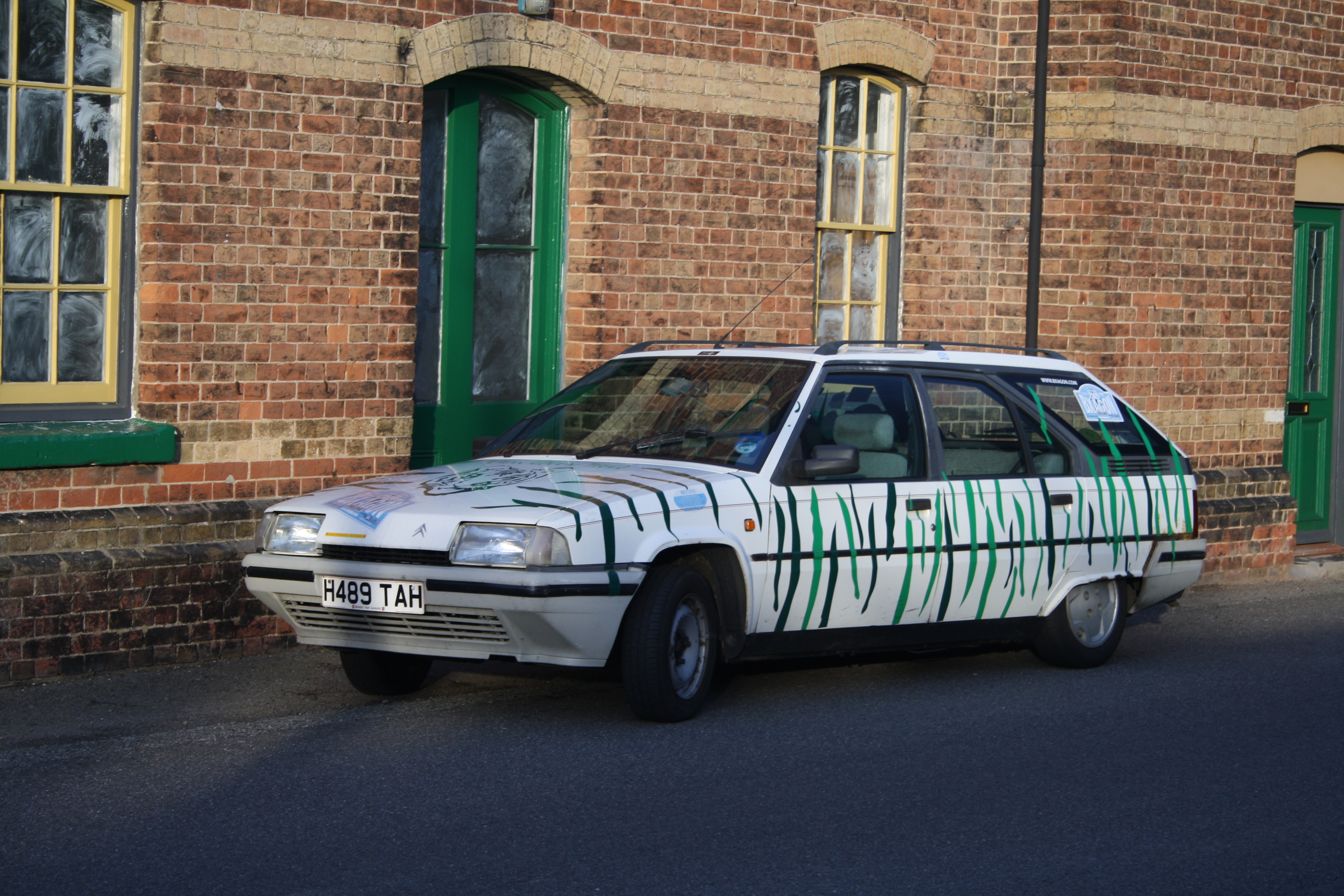
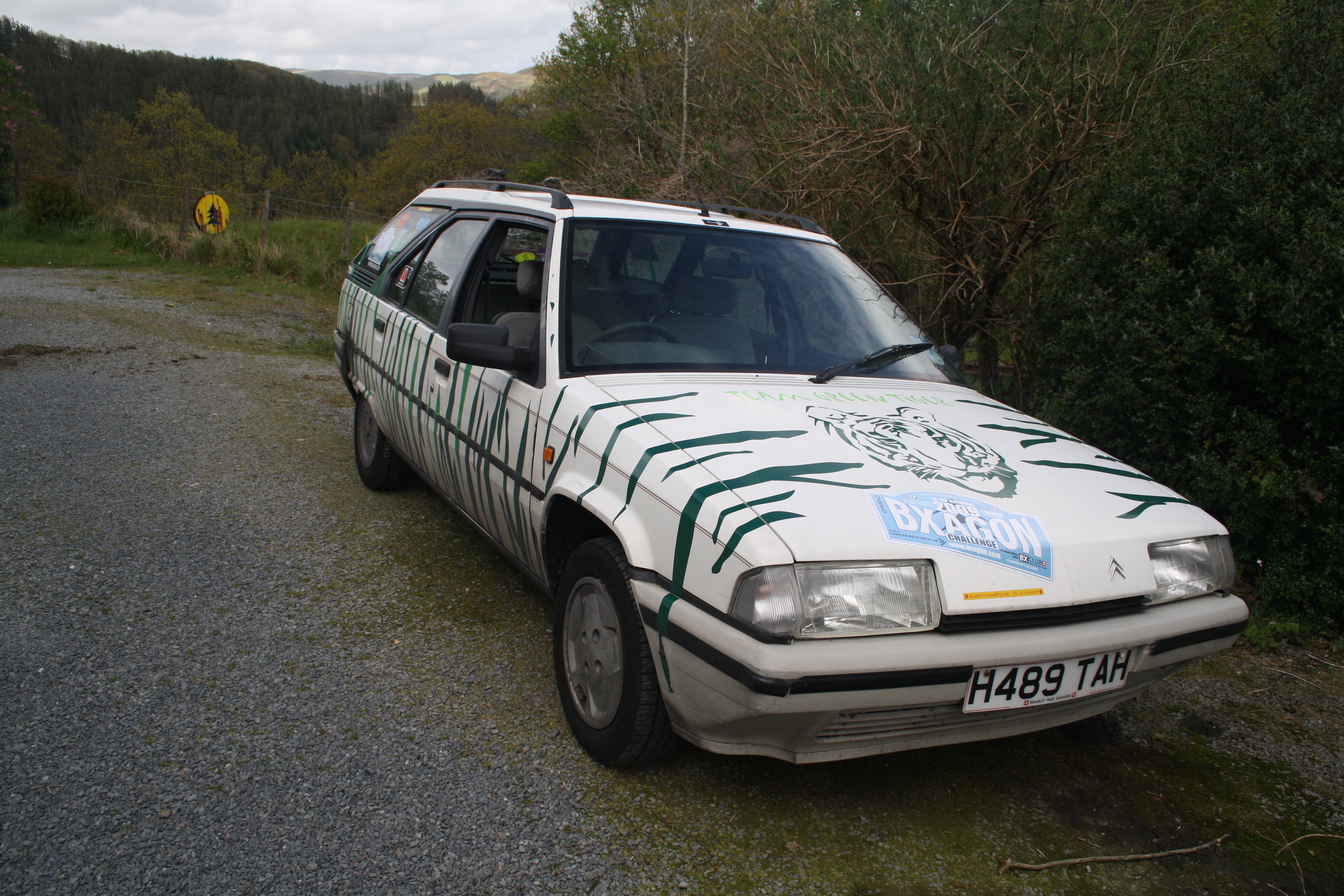
She’s not home yet – transport is underway and she’s currently somewhere between Ramsgate and here. I’m expecting a delivery on Monday. Why am I so bothered about a BX estate when I already own one? Well, Bex (as she is now known – not named by me) is a bit of a special motor really. I bought her to undertake the BXagon challenge in 2009. This is one of those rallies where you drive your cheap banger abroad – not a proper banger rally as most participants loved and cherished their cars and weren’t the sort to put silly adornments over their bangers. Then there was us!


BX estate stripes

Bought for a banger rally, but kept – and now returned!

Team Green Tiger – myself and a friend called Matt – bought our car the month before the rally, by which time everyone else had fully fettled their cars. A hasty service and check-over was carried out and we were soon on our way, clocking up over 3000 miles by driving around the perimeter of France – taking in bits of Belgium, Luxembourg, Germany (in one350 mile day), Switzerland and Spain as we did. We also drove over a 2000m tall mountain. In a blizzard. With cooling pissing out through a holed coolant pipe. It was certainly an adventure – a very enjoyable one.

After the 12 days of that, I became rather attached to the car. After all, she had transported the two of us and our belongings in absolute comfort, while delivering 48mpg. It was huge fun on the twisty mountain roads of The Alps and The Pyrenees but also excellent at munching motorway miles. It would be madness to sell her. So I didn’t. She became my daily driver. After six months of ownership, I calculated that she’d cost me about £1000. That included purchase and fuel! Ok, so keeping her in fine fettle did eat up more money. She needed rear arm bearings, a cambelt change, an alternator, a hydroflush to cure intermittent power steering and a pair of tyres. I clocked up about 15,000 miles in 18 months before my usual boredom set in. In a moment of madness, I sold her to a friend – replacing her with a Reliant Scimitar of all things!

After a few weeks, I realised I’d made a mistake. I spent a frustrating time trying to find an ideal replacement but gave up. Nothing matched the perfect balance of a BX diesel estate. I though I’d discovered the Holy Grail when I bought my Mk1 Citroen BX estate, but in truth, that project is a long way from finished. It’s just not good enough.

So, when I got offered Bex back, I leapt at the chance. Sure, she has some mechanical issues that I need to solve, but she’s clocked up over 30,000 miles in 14 months since I sold her, so she’s justified in requiring a bit of TLC. It will be nice to have a fully working BX while I try and get the older MK1 into similar mechanical order.

I can’t wait for Monday.

Estates compared

Scimitar might be quite practical, but it couldn’t beat the BX

Project BX: The joy of simplicity

There’s a huge myth that hydro-pneumatic Citroens are horribly complex. This is because an engine driven pump powers a hydraulic system that powers the steering, suspension and brakes. It runs at up to 2500psi, which is admittedly a bit scary, and it gives the BX the most powerful brakes of any family car of the 1980s. When you enter the world of the BX, you do need to learn all about height correctors, accumulators and suspension spheres but it’s all quite simple really.

Ignore the suspension and you’ve got an incredibly simple machine. This has massive advantages, as I discovered yesterday after a weekend in Derbyshire. By the time I got to the East Midlands, there was a grumble coming from the engine bay. My bet was on alternator bearings and on the drive home, this was confirmed. By the time I got to Shrewsbury, it was really quite bad. I limped to some services – it’s nice to be able to choose where you’ll break down – and pondered what to do.

My options were limited, due to a rather ridiculous lack of tools. I decided that the best course of action was to remove the alternator belt altogether, but how to remove it? Fortunately, I had a multi-tool with me and while it lacked a spanner of the correct size to adjust the alternator, it did have a small saw. So I cut the belt off. Easy!

I still had over an hour of driving ahead of me, but a Citroen BX diesel uses very little in the way of electrickery as it drives along, so I reckoned I’d be alright. The fuel pump is mechanical and there are no computers controlling various aspects of the thing. In fact, the only reason voltage was needed was to keep the stop solenoid open (switching off the ignition shuts this, and therefore stops the engine) and to operate the lights and wiper. I was hoping to avoid rain entirely, but being Wales, didn’t entirely manage this. However, I did safely manage to get home. Phew!

An option now is to rebuild the alternator, but I’ve managed to score a reconditioned replacement for £44 delivered on Ebay. I had to order a new belt as well of course, but the old one looked pretty ropey anyway. It was also clear to see that it had been slipping for some time. The pulleys had a very polished look!

The BX coped very nicely otherwise, with another 300 mile trip. With new window seals fitted, it’s utterly transformed and barreling along at 60mph is very pleasant indeed. I’ve been struggling slightly with project motivation of late, but am now feeling more positive and ready to tackle the reducing To Do list.