2CV: Decision made after a roadtrip

I first hinted in December last year that I might have to get rid of the 2CV. This weekend, I’ve reminded myself why that hasn’t happened yet!

After a barren year for 2CV-related activities, I decided it was time to pack the tent and actually drive my 2CV to a field – in this case Stratford-upon-Avon Racecourse, where the Citroen Car Club was holdings its annual Midlands-Section rally. The thought of meeting up with a group of 2CV chums (who hadn’t attended the previous year) was truly exciting. I loaded the 2CV with my feeble camping gear and headed off. On the way, a milestone was reached!

Another milestone. That’s 197,000 miles from new. 108,000 in my ownership

As you can see, this really does prohibit a sale. She’s now less than 3000 miles away from 200,000 miles! So, that’s it. I’m committed. The MOT is up in April, so I’ve got to clock up 3000 miles before then. After that, I think a full body refurb is going to be on the cards. Perhaps by then I’ll be able to afford it…

I got to the event and began selling a few body panels so I could pay for camping.
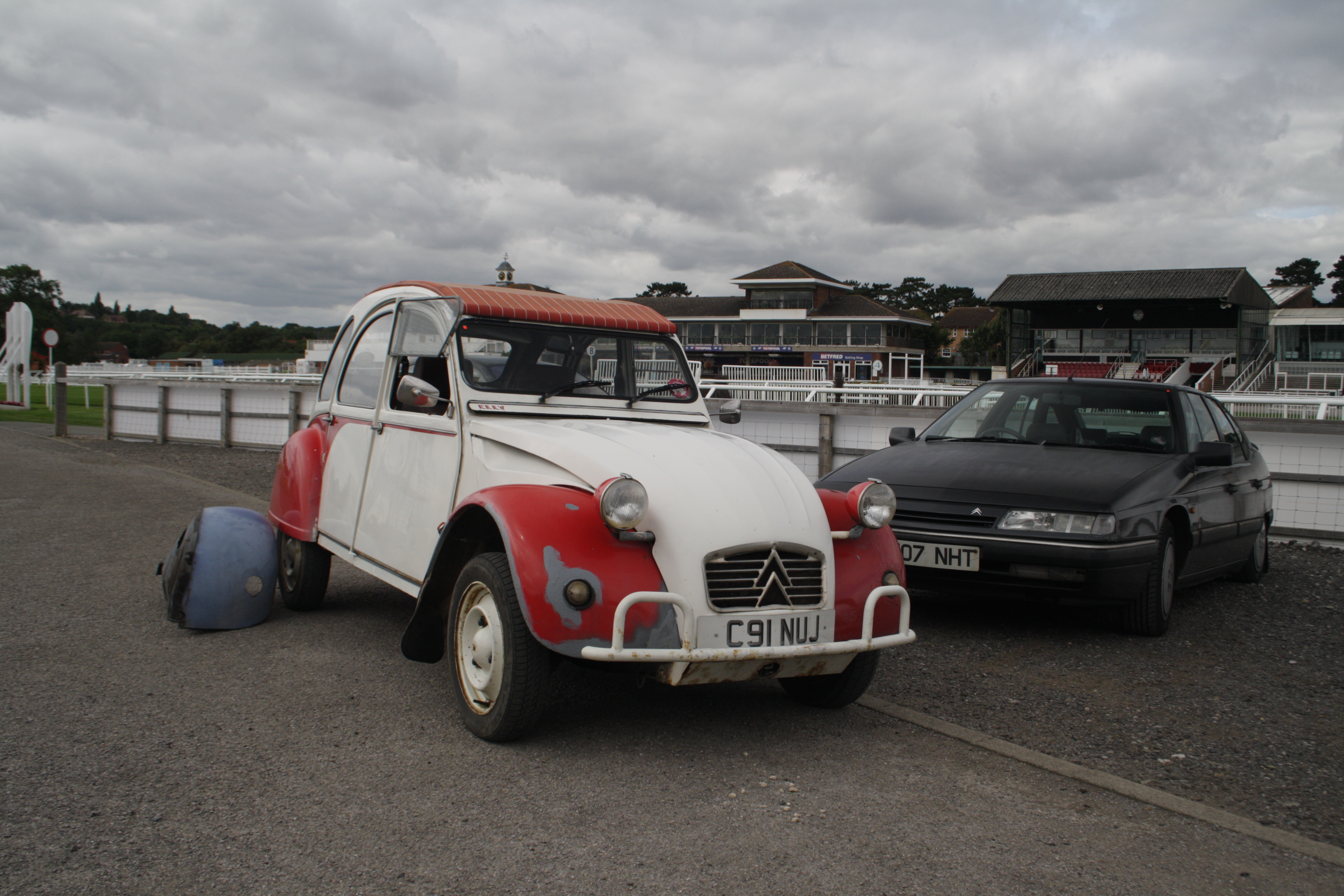
At the racecourse, flogging bits

At the racecourse, flogging bits

This strategy worked so well that I came home with more money than I left the house with! Even factoring in fuel, this weekend seems to have roughly cost me nothing. Yeah, I know the panels cost something at some point, but it was ages ago and rates as ‘forgotten’ money. Therefore, it was all profit. In my mind at least…

The show was a little on the small side, but most Citroen groups were well represented. I’ll do a little show report at some point once I feel less shattered! Sharing a camping field with other scruffy 2CVs made me feel a lot better though. Proof that cars don’t have to look like show winners. In fact, I was greatly impressed with how fabulous and used the other 2CVs looked. Especially Neil’s yellow one, which travelled up all the way from Cornwall!
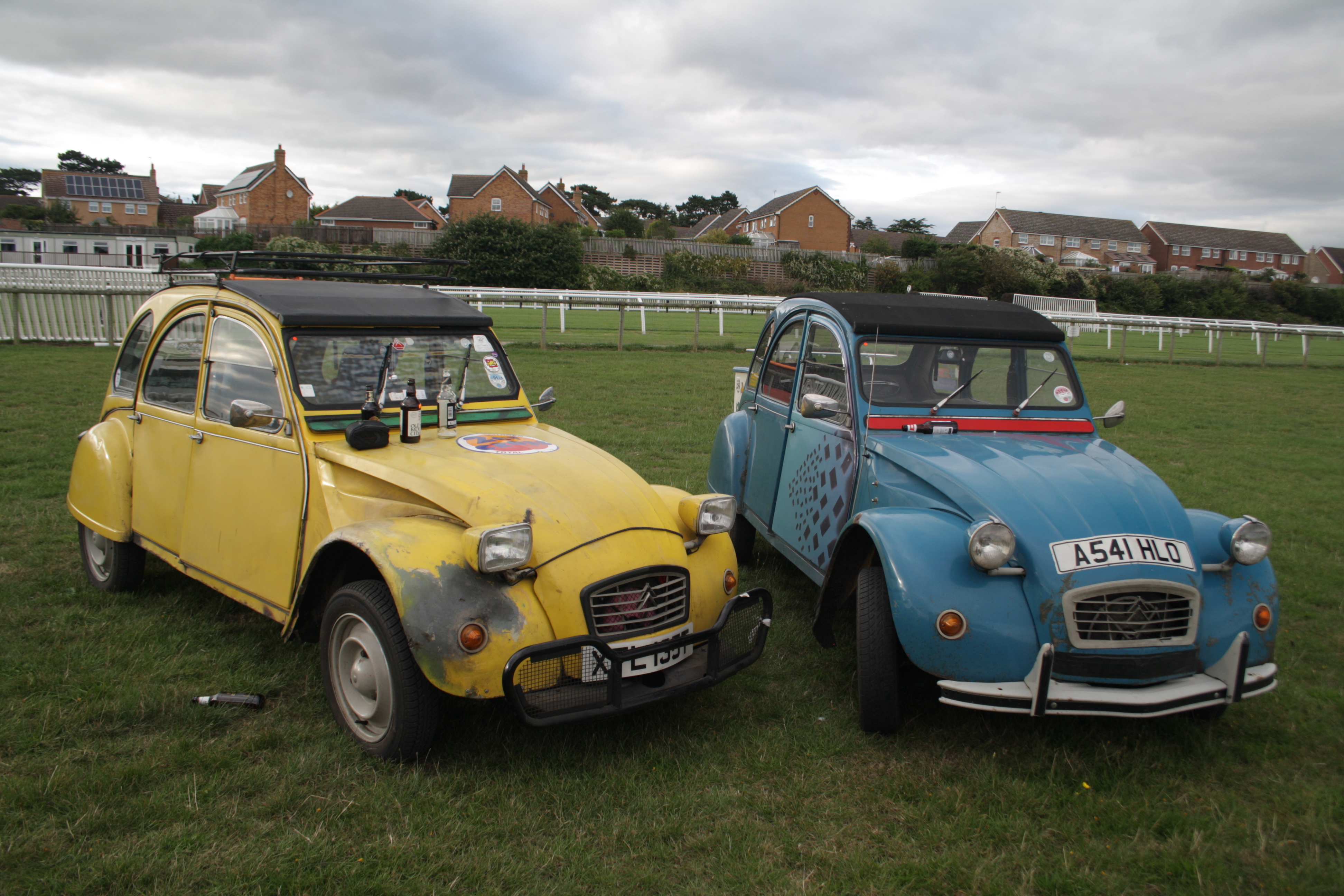
Used 2CVs look good!

Used 2CVs look good!

It’s wonderful to see 2CVs looking like they get plenty of use. It was an important reminder that there’s an awful lot more to cars than looking shiny! This pair tell a story with their odd paint finishes, dinked panels and crusty areas. Proof that age is not a bad thing, despite what TV ads try to tell us!

The 220-mile round trip certainly gave me a lot of time to think about my 2CV. I’ve already made the mistake of a full cosmetic overhaul. I won’t be doing it again. I bemoaned how scruffy she looked back in 2003, after her bodyshell had been thoroughly restored but looking back, I should have celebrated her looks! Stunning as she was after a complete rebuild, there was only one way for her looks to go after that. Downhill.
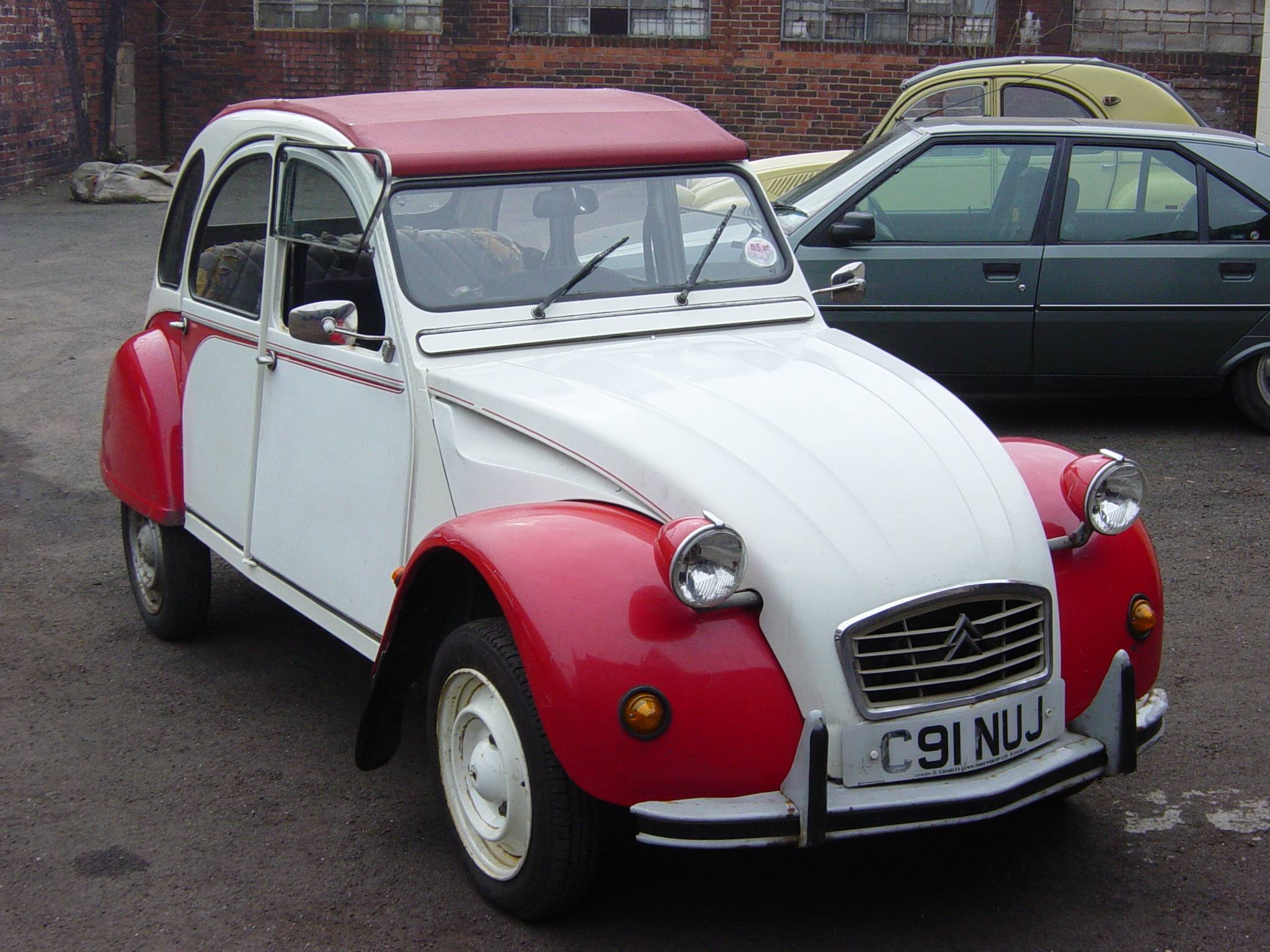
Elly after the first rebuild. Scruffy, but solid!

Elly after the first rebuild in 2003. Scruffy, but solid!

So, I shall focus on getting her solid again. I’m not sure how, and the tutting and sucking-through-teeth as my friends examined Elly’s rust-riddled bodyshell hint that major expense is needed. I will do it though. Elly must ride again! After all, if she can go 100,000 miles between rebuilds, that’s not so bad really is it?
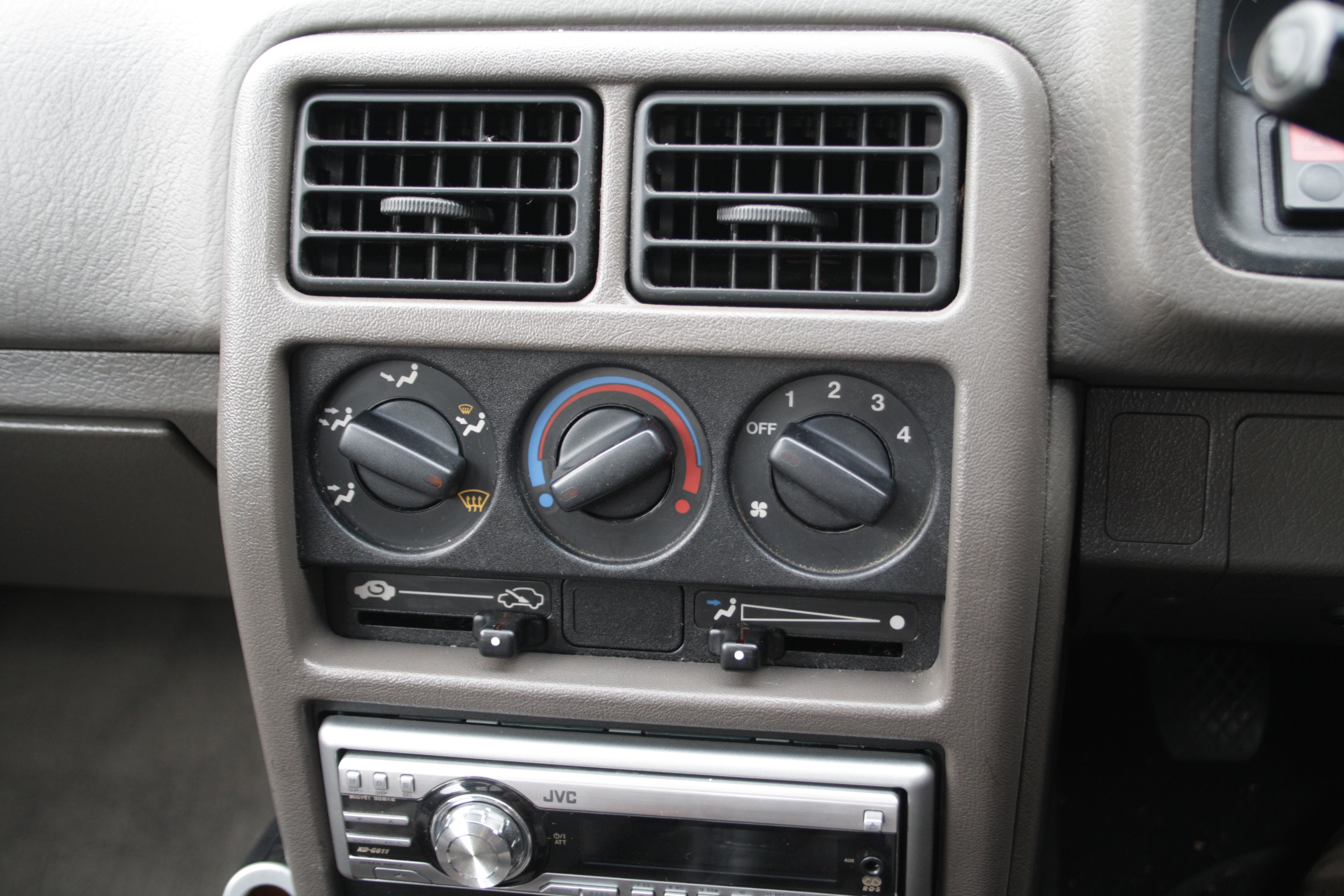
Ventilation exasperation – and relief

If a Citroen 2CV can do it, and a Land Rover can do it, and a Rover P6 can do it, many Mercs can do it so why can many cars NOT do it?

I talk of course of the ability of a car to provide warm air to the windscreen and/or feet, while also supplying cool air to the face. A Citroen BX can’t do it, a Saab 9000 finds it a struggle and I’m pretty sure my Alfa Romeo 164 found such a scenario too perplexing.

Happily, my Rover 400 CAN do it. I spent a decent chunk of today driving around in horrendous weather. To keep the windscreen clear, I had to direct warm air upon it. But it’s summer, so I don’t really want to heat up the interior, which is why being able to use the face-level vents to provide fresh air to ones nostrils is so pleasant.

Rover's ventilation is rather wonderful

Rover’s ventilation is rather wonderful

The magic happens thanks to that slider, bottom right in the picture above. Though it doesn’t much seem to reduce the air flow when you move it…

However, I’m still very glad of it! With air-conditioning becoming more prevalent, such controls aren’t really needed. That’s because air-con dries the air, so you can set it to a comfortable temperature and still see where you’re going – though I don’t much like the way it also dries out my sinuses.

That makes the set-up in the Rover just about perfect. The 2CV is rather more direct about it – just open the flap beneath the windscreen – but it’s still a feature I welcome. That was refined somewhat on Dyanes, with individually controlled air vents at each end of the dashboard – though it must be said that I once had hail come flying in during a particularly bad storm, so simple isn’t always best!

I still find it odd that manufacturers found it acceptable to do away with any form of fresh air ingress. Quarter lights had their uses, but then they became fixed to boost security, and then vanished altogether. I guess it’s much more simple to not bother with fresh air vents, which is presumably why Vauxhall and Ford did away with them – other mainstream manufacturers followed suit.

Of course, more ventilation joy comes from the tilt/slide sunroof. That is also a good way of bringing more fresh air in as well as more natural light. I really am starting to like this car an awful lot! Apart from the lack of rear wiper perhaps. That is annoying. Mind you, I’m not sure I could fit four full-size tyres in the boot of a 200 hatchback. Swings and roundabouts as ever!

Tiny Road Test: Austin A40 Somerset

There’s something entirely lovable about old ‘county’ Austins. The bulbous lines are quite fantastic – like scaled-down Bentleys to my eyes. Again though, they have been rather a blind-spot for me. I’ve driven quite a few Sevens right up to the Ruby, and I have also driven an Austin Ten – which was hard work and not very pleasant. The ‘county’ Austins have passed me by though, and I’ve only driven later Westminsters and Cambridges.

Lovely! I drove it sans trailer tent

Lovely! I drove it sans trailer tent

Here was my opportunity though – a 1953 A40 Somerset that had been driven to Wales all the way from Southend-on-Sea. I first had to be reminded where the gears were. It’s the same pattern as my old Westminster, but that was a few years ago now. I was impressed. This column-change felt absolutely marvellous. A quick twist of the ignition/headlamp switch – yes, for some reason they are combined – and the engine fired into life. This was actually a 1489cc Wolseley B-Series rather than the 1200cc original. That’s a jump from 42bhp to about 55, enough to get the 0-60mph time down from a laughable (even to a 2CV owner) 36 seconds to something more like 25 at a guess.

Certainly, as I accelerated, enjoying the delicious first gear whine, it felt brisk enough. Not quick by any means, but not too shabby either. It seemed to handle far better than I expected too, with the huge wheel seemingly free of play given the steering box. It felt more positive about the idea of going around a bend than the Westminster did too and while it hardly encouraged you to really chuck it in, it didn’t cause the bottom to clench unwillingly either.

It all left me feeling like a bit of a fraud really. If a 23-year old  can use such a vehicle as daily transport, why haven’t I got anything older than 1986?

Why I love dreadful cars

Not a lot of people understand why I love dreadful cars that cost peanuts to buy. My buying tendencies leave people confused, wondering if there’s genuinely something wrong with me.

Certainly, it’s true that my financial state leaves me little option but to explore the cheaper end of the motoring scale, but that really isn’t the sole reason. Not by a long chalk. There are times when I’ve almost been wealthy and there has always been some random heap on the fleet.

More money just means more heaps!

More money just means more heaps!

Reason one is that I can’t stomach finance. That means that even when there’s plenty of money around, I’m still not going to commit to a car that costs thousands and requires financial assistance to enable me to pick up the keys. I’m never going to save up thousands of pounds, so I just exclude pretty much anything less than ten years old from my list of options.

But the main reason is that I just love the cars I buy! It’s staggering what you can get for very little money, but there’s one big word of warning. If you care about what other people might think about you, then old snotters are not for you. The thing is, if you can get behind that ‘keeping up with the Joneses’ mind-set, you’ll discover you can save a huge amount of money!

Even if you want a proper, sporty little number, you can pick up a Toyota MR2 for less than £800 – though you’ll need your wits about you to find one that isn’t rotten. They do exist though. I don’t like sports cars though. I like comfort too much and hate sitting with my backside close to the ground.

Nostalgia certainly plays a large part in my purchasing decisions. It’s why most of the stuff I own belongs to the 1980s and 1990s. It’s just very fortunate for me that these cars are utterly worthless at the moment. I was always fascinated by 2CVs and Dyanes as a child, which is why I’ve owned several. It’s getting to be a problem for me now though that you can’t buy one for a few hundred quid anymore. I owned many (about 12 over the years) while they were peanuts to buy. How I’d love another Dyane. Or an older classic. I can’t bring myself to spend thousands on a car though. This is very difficult.

Delicious BXs continue to tempt me

Delicious BXs continue to tempt me

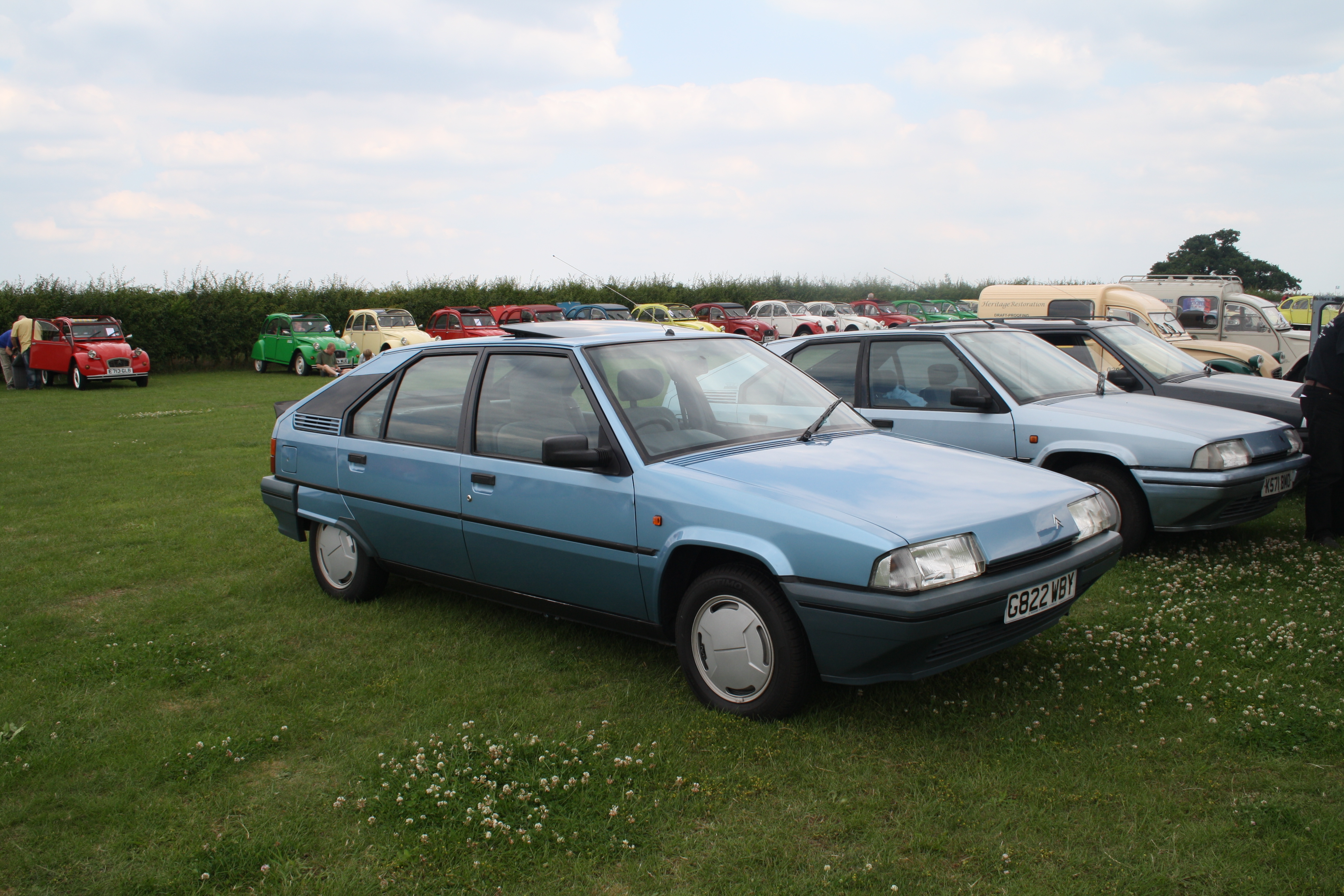
I’ve had lots of BXs as well. That was driven by frustration that we never got to have one in the family when I was growing up. We got Montegos instead. It just so happens that I like a lot of things about the BX, though they’re not perfect. I remember this everytime I buy one. Maybe a petrol auto would be closer to perfection…

The BX is a classic case of proving what fashion does to values. It’s a car with fabulous hydropneumatic suspension – rather better in my opinion than that fitted to the iconic DS. Here’s a family saloon with full self-levelling suspension, wonderful comfort yet superb handling. Yet diesels can crack 50mpg without a struggle, and the fearsome 160bhp 16v can see off most hot-hatch rivals. Even the 1.4-litre petrol offers a surprisingly entertaining package.

That’s the thing. Folk may laugh at my purchases (this often happens) but all I see is that I’ve bought something that’ll cruise at motorway speeds all day without problem, can cart me and my kit wherever it is I want to go and yet it’s cost less to buy than one tyre on some modern cars. If something goes spectacularly wrong with the thing, I’ve only lost a few hundred pounds.

Not that I pretend to be an expert. Some people make money at this game, but I get too emotionally attached to the cars. I’ll spend a few hundred more pounds on my few hundred pound car because I refuse to run a car as cheaply as possible just because it is cheap!

My Rover is looking great. Total expenditure still less than £400

My Rover is looking great. Total expenditure still less than £400

The main thing is though, there’s really no depreciation at this end of the market if you buy something halfway decent and look after it. I watch other people lose thousands of pounds with each car purchase. Yet this huge loss seems to be invisible. It isn’t to me. I can buy something that’ll transport me AND interest me for a few hundred pounds. Glory days.


H8ers be H8ing, but the MGB is actually good!

The MGB is an absolute icon. The quintessential British sports car. The car that MG sold over half a million of (513, 276 of all types). A car so good that no other two-seater sports car sold as many units until the Mazda MX-5 – which surpassed it in 1999/2000.

The first MGB I drove, an early three-synchro model. Lovely!

The first MGB I drove, an early three-synchro model. Lovely!

It’s also a car that makes fans of other classic cars groan. It’s the one that always gets the prime front cover spot – usually in red – to the cost of pretty much any other classic. It’s seen as a default choice. A sports car for those who aren’t brave enough to go hunting for something different. A beige jacket of a car, not a ‘proper’ sports car. Whatever that means. They point at the feeble performance (105mph top speed, 0-60mph in 13 seconds), the fact that so many parts (engine, suspension basics, switchgear) are borrowed from boring family cars. “How could anything sporting have leaf springs and trunnions?” “How could something so ancient still be on sale in 1980?”

I don’t really get any of that. Sure, an MGB is not the fastest thing ever, nor the keenest when it comes to cornering at speed. But if ancient technology was so bloody awful, why do any of us like classic cars at all? Why do Morgan still sell cars with similar suspension and construction to those built 100 years ago? (albeit with an extra wheel since 1936. Steady on with the upgrades!).

An undeniably pretty car

An undeniably pretty car

A lot of the B’s appeal for me comes from the looks. Don Hayter (or is that H8er?) is largely responsible for that and while the B always lacked the seductive curves of the MGA, the neater snout and those delicate rear lines mean the MGB could never be called ugly. Dare I say it, I can even live with the later rubber bumpers even if I do dislike the corresponding rise in ride height – both driven by US Federal requirements.

If the roadster is attractive, the GT is almost more so. Pininfarina helped shape it and while it can’t quite stand up to the eerily beautiful Jaguar E-Type FHC, the GT can at least hold its pretty head high. It works really rather well, even if the rear seat is an absolute joke.  Don’t get me wrong – I won’t dash across a field to look at an MGB, but I’ll appreciate the styling as one drives past. And the bark from the exhaust. They really did manage to make them sound mean and powerful, even if they aren’t.

In terms of driving experience, the MGB feels about as modern as you’d expect. Not at all. The rack-and-pinion steering offers plenty of feel, even with the enormous steering wheel fitted to early Bs, but the ride quality is pretty dismal and if you really chuck it around, the limitations of that leaf-sprung live axle at the back are quickly met. You can still drive very quickly in one without coming unstuck though and have a jolly old time as you do, without necessarily risking your driving licence or frowns of disapproval from other motorists.

Amazingly, you can get them in other colours too

Amazingly, you can get them in other colours too

In fact, I’d argue that you can have more fun in an MGB on the open road than you can in an MX-5. Dynamically, Japan is ahead. It really should be having had the benefit of so long to do so. The MX-5 didn’t appear until the B had been dead for nine years and appears to have actually had a development budget. But, to really enjoy an MX-5, you need to go much, much quicker. In the B, I reckon you can have more fun at legal speeds and there’s a fair chance it’ll be less disastrous if you do over-step the mark.

No, I’ll stick with the rustic charm of the MGB please. Power really isn’t everything after all. If it was, I probably wouldn’t drive a Citroen 2CV. For sure, the MGB really isn’t anything special. It doesn’t particularly excel at anything. The thing is though, it doesn’t matter! The only thing that matters is whether driving one is enjoyable. Having driven many over the years, I can honestly say that I’ve enjoyed every one. It is one of those cars that is greater than the sum of its parts. I’m not sure how Abingdon managed it, but I can hand-on-heart tell you that while other cars may be ‘better,’ the B is a car that I hold in pretty high esteem.


What is a Citroen H van like to drive?

Citroen H vans seem to be the new big thing. Sadly, a great many are being turned into ‘quirky’ catering vans. A lot of these just get shipped around and never actually get driven. People claim they’re too slow, heavy and generally just horrible. What’s the actual truth? Given that I drove one over 3000 miles to Sweden and back, I’m fairly well qualified to answer that question, so here goes!

First up, the history bit that The Law Of Writing Stuff dictates I must begin with. The H van was a quite remarkable van launched in 1947 by Citroen. It utilised front-wheel drive and monocoque construction with Torsion Bar suspension, just like a Traction Avant. In short, that means it has no chassis. It really is a box with some wheels and a drivetrain stuck on the front. A subframe holds the engine, front suspension and steering, with four large bolts holding it in place. This was revolutionary for the time. The main benefit is a seriously low floor in the back. It’s an easy step up, which is why the H van has been very popular for years as a camper. People up to about 5’8” can stand up in one with no need for a roof extension too.

Is an H van hard to drive?

Is an H van hard to drive?

The engine sits in front of a three-speed gearbox – engineering largely borrowed from the Traction Avant. The panels are lightweight and ribbed for greater strength – and a rather marvellous aesthetic. Early ones had a split windscreen and all had ‘suicide’ front doors, with the hinges on the rear. Well, ok. All but later ones for the Dutch market who deemed the original design a bit dangerous. They may have a point. I have heard tales of people falling out on the move…

Low floor is great. Yes, that is a piano in the back

Low floor is great. Yes, that is a piano in the back

Two wheelbases were available, and various overhangs. Coachbuilders also built their own specials. Three were built in right-hand drive form to test the UK market but they were a bit too unusual. Engines were a 1628cc or 1911cc petrol (with aluminium cylinder head from 1963 and 58bhp at most) or a rather feeble and noisy diesel. Amazingly, production did not end until 1981!

Driving an H Van

Clambering aboard is interesting, especially with suicide doors. There’s a handle near the windscreen to aid your entry. You sit right on top of the front wheel, rather like a Volkswagen Type 2. That means you sit quite high up, with a commanding view of the road. A button starts the engine once the ignition has been switched on and it’s quite noisy! That’s because it sits between your feet and those of your passenger, with just a thin, steel cover over it which is easily removed for maintenance. An H van is loud! Smothering the cover in sound-deadening is definitely a good idea.

Commanding driving position, here on a big bridge in Denmark

Commanding driving position, here on a big bridge in Denmark

Now you must get to grips with the gearchange. The lever is very heavy but precise. The shift pattern is back to front though. First is away from you and back, second towards and forwards, with third back from there. Reverse is opposite first so you need to get it right! The gearing is short, so you don’t need to slip the clutch much, but will quickly find yourself needing to change into second. You’ll soon be in third, which is good from about 25mph upwards. This means you don’t often have to change down. Don’t bother changing gear if approaching a clear roundabout, just keep going!

That’s probably a good idea, as the brakes take a good shove. A lot of people complain that H van brakes are rubbish. No, they’re not. They DO require a good shove, but an H van is capable of stopping briskly if you need to – as long as the brakes are well set-adjusted. Indeed, with no load, it’s very easy to lock the rear wheels.

You don’t really need to slow down though. Despite being a design that’s been around for longer than a Morris Minor, the H van handles like a big Mini! The steering is heavy, but wonderful. It’s so direct and you quite easily find that your crockery is on danger if you’ve got a camper.

The biggest problem is that gearing though. 50mph is hard work, as the engine is revving very high. 60mph is just about possible, but Motorhead is quieter. Even if you stick your head next to an amp. It’s hardly relaxing and the day we drove 288 miles in Germany is one of the toughest things my wife and I have ever done! I must confess that those who ship their catering vans to events may do so to protect their hearing.

Front-wheel drive secret to H van success

Front-wheel drive secret to H van success

But, you need to accept that an H is an old vehicle. Yes, it will be challenging at times, but they have a truly marvellous charm about them. They were never designed for gallivanting all around Europe. It’s frankly amazing that they do so in their stride, albeit a rather noisy stride. Mechanically, we had no troubles at all on our trip other than a slightly noisy driveshaft. When we flattened the battery at a campsite, I just started it on the handle.

So there you have it. Unsurprisingly, what was revolutionary in 1947 is perhaps hard work today. The fact that it remained in production so long just demonstrates how long it took the world to catch up though. Even in 1981, most vans were still rear-wheel drive with leaf springs. It’s only in the past 20 or so years that the H van formula of front-wheel drive has really caught on. How ahead of the game is that?

18 years of Tin Snail adventure

About ten minutes ago, I realised that it’s a very important anniversary. Yes, my wife and I have yet again forgotten our wedding anniversary. It was two days ago. We usually have to rely on friends to remind us.

Today really is an anniversary though. 18 years ago to this very day, I jumped off the number 18 West Midlands Travel bus in Cotteridge, Birmingham and after a short walk, picked up the keys to only my second car ever. A 1984 Citroen 2CV6 Special in bright red, called Sweet Pea. I paid £650 if I remember rightly, with my decision swayed by the replacement chassis it had, and the Reef sticker on the window. I was a fan of the band at the time.

Bad fashion-sense, good car-sense

Bad fashion-sense, good car-sense

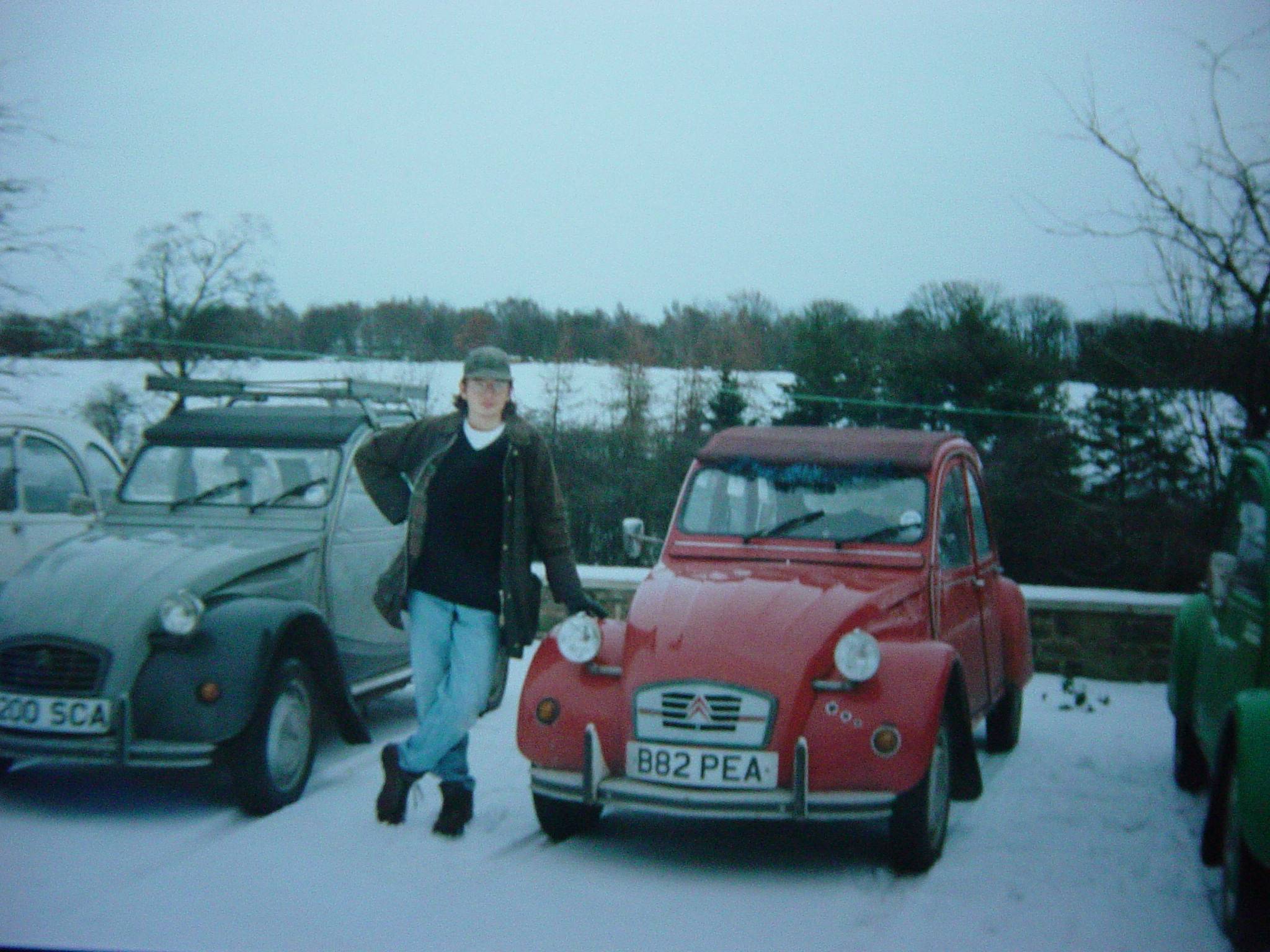
It was with that car that I discovered the Deux Chevaux Club of Great Britain. I joined in October 1996 and the above picture is from the first event I went on Raid Tan Hill. This is a drive in the North Yorkshire Moors that still takes place every year. It was by far the furthest I’d ever driven from home. We even stayed in a hotel. That was possibly the first time I’d ever done so. Oh to be young, free and with 2CV!

Sadly, I was no better at dealing with rust than I am now. 2CVs were cheap, so I eyed up a really small welding bill and spend £750 buying a 2CV with a better body from a specialist, who then replaced its rotten chassis with the one from under my red special. Now I owned my first Portuguese-built 2CV! I’d also started a ridiculous cycle of only owning cars for six months, or less. It still persists pretty much!

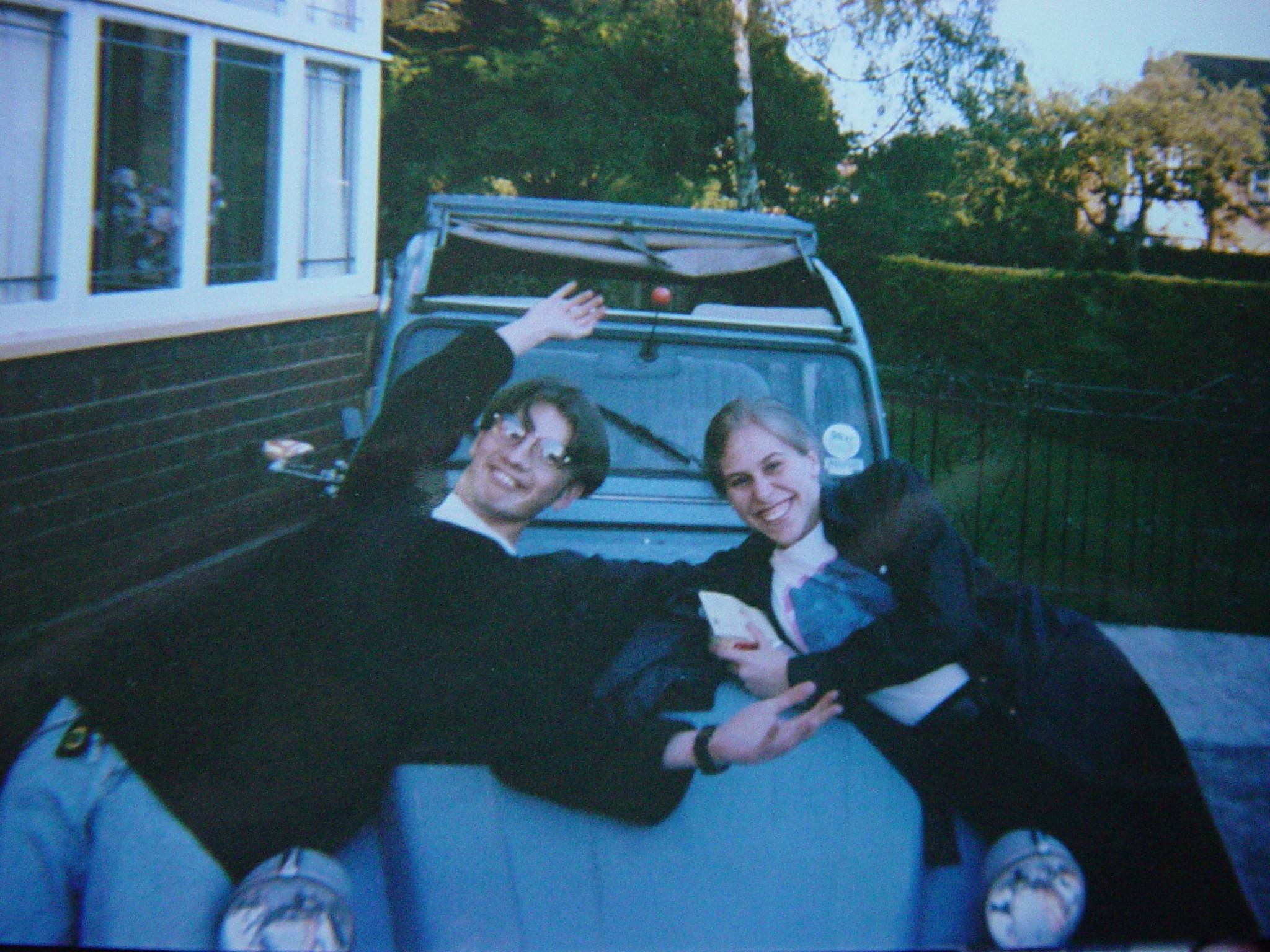
Me, my friend Louise and Misty the 2CV

Me, my friend Louise and Misty the 2CV

Sweet Pea’s engine sat in our shed, but not for long. I soon tired of poor Misty and sold her. For about what she cost me to buy I seem to recall. A rare occurrence! I replaced Misty with a £375 Dyane called Mildred Mildew the Marshmallow. I’ve lost some of my creativity I feel since then when it comes to car names. Mildred’s engine burnt almost as much oil as it leaked, so Sweet Pea’s heart was installed. I did that job with a club friend. What an experience! Drive to friend’s house, rip car apart, drive home with a different engine powering it and no two-stroke hue from the exhaust.

Sadly, I don’t seem to have an electronic photo to hand of Mildred, nor Jemima Puddleduck, Abby-Jo, the Skoda 105Lux, Collette (a free 2CV!), a Peugeot 205 or my first BX, purchased in 1999. Yes, I owned all of those vehicles in just three years! I bought a brand new Daewoo Matiz in 1999 as well. Clearly I was very young and very foolish (though I did like Purple Myrtle!)

I also owned this in 1999.

Me on the right, with my Acadiane. Dyane posers are still friends. Taken in 1999 I think

My first van and also my first left-hand drive vehicle! A 1984 Citroen Acadiane called Wilma the Whirlpool for fairly obvious reasons. Gosh that van was fun. If you think a 2CV leans a lot on bends, you haven’t seen anything until you’ve witnessed a fully-laden Acadiane Mixte (with rear seat full of friends and camping gear) cock a rear wheel on a roundabout! It was very rotten sadly and a failed restoration attempt saw it carted off for spares.

These were truly joyous times. I’d jump into whichever aircooled machine I owned and would drive all over the place. Mildred the Dyane covered 14,000 miles in her year with me. The poor thing only got serviced once! I wouldn’t have known what a kingpin was, let alone where to grease it. I had friends at university and I’d nip down to London to visit for the night, or help them move to Hull. We once drove all the way to Blackpool and back, from Birmingham, to try and catch a Radio 1 live show that had finished by the time we got there! Via Liverpool…

Petrol was about 60p a litre and friends would scrape the pound coins together so we could go off on our great adventures. In the summer, the roof would be rolled back and good times were had by the bucket load. Almost every weekend would involved driving some crazy distance to attend a 2CV camp somewhere. I recall discovering understeer and oversteer on a wet, Lincolnshire road, five-up and somehow surviving. That was in Mildred. We also took her greenlaning in Yorkshire, surprising a group of trial bikers. How was a car that cost less than £400 so much fun? You can see why I’m often loathe to spend more.

In fact, I HAVE found a picture of Mildred! Here on the right, with her friend George.

Citroen Dyane

My mate’s car George, and my Mildred Mildew the Marshmallow

Life got more serious though. That setting-down stuff seemed to occur, and not just with partners and sensible jobs (yes, I’ve had plenty of those too). In 2000, a red and white 2CV stole my heart. My first Dolly. She’s still mine now. She must be Spécial.

Citroen 2CV Dolly

18 years since my first 2cV, owned this one for 14!

FutureFear: Driverless cars

I was astonished to discover last year that I like electric cars. There I was thinking of how much an internal combustion engine is a key part of the driving experience. Turns out I was wrong. Now though, all the talk seems to be about cars with no driving experience at all. This I dislike very much!

I’m not sure why there’s such a fever about driverless cars at the moment. Perhaps it has something to do with Google getting involved, and their large promotional budget. Certainly, the news are going crazy about it today. I wish they wouldn’t!

Driverless cars are nothing new really. Since the advent of the automatic gearbox, engineers have been trying to automate as much of the car as possible. Arguably the first driverless car was a Citroen DS developed here in the UK.

Huge computer in the rear replaced driver

Huge computer in the rear replaced driver

That used cables in the road for steering purposes though. Not very practical really. You can see why they chose a DS though – a futuristic car with a futuristic technology!

You see, it’s quite difficult to replace the human brain. Robots and computers are good at menial tasks, or crunching a lot of data. But driving a car is not a simple process. If it was, we would have got around the task by employing chauffeur monkeys by now. I’m sure of it.

It doesn’t stop me from hating the idea of it. I like driving! Ok, so driving in traffic jams isn’t much fun, but I’d rather avoid the jams than find a more pleasurable way to drive in them. For a start, I get nervous enough as a passenger in a human-driven car – even when that car is an AC Cobra being driven around the Silverstone Race Circuit by a very experienced driver. I still felt like asking him whether this was perhaps a bit too quick.

It’s a control thing. I can just about cope with an automatic gearbox – if it behaves in a manner I expect – but the idea of a car driven by technology fills me with horror. If technology was that good, we wouldn’t need airline pilots, train drivers or captains on ships. Computers are quick, but can they really make the sort of judgements driving requires?

I’m not sure it’d be any safer for us actual drivers if the roads were filled with driverless cars either. Computers go wrong. A safe process would be for the car to stop if it detected an error. Would we find ourselves swerving around rapidly-stopping cars? Would a computer-driven car be more or less predictable than a human?

Frankly, if you want to get somewhere without the ‘tiresome’ business of driving a car, do us motorists a favour. Leave the car at home and catch the bus. They’re amazing. You just sit there and end up at your destination with no work at all! It’s true.

Rover – first week review

A week today, I was sitting in The Midlands, frantically browsing the internet to find a car to buy and drive home in. The things we do to avoid three hours on a train.

Eight days and 250 miles later, I’m very pleased with the way my emergency purchase has panned out! In the past two days, I’ve been tackling issues. The wheels have been balanced to cure an annoying wobble and the loose catalyst heat shield has been silenced with an exhaust clamp. I’ve also had a new oxygen sensor fitted, which means the Check Engine light has finally gone away. A frustrating rattle from the back end turned out to be the bars that hold the boot open. A bit of insulation tape padding cured this. Obviously, there was a fair ol’ burst of sticker removal too.

Rover receives rectification

But the more I drive this car, the more I like it. A lot of people seem to write the car off as nothing but a Honda wearing Rover badges. That’s seriously unfair. Honda were not at all keen on the MacPherson strut front suspension for a start, preferring double wishbones (as used on the Japanese-market Concerto). Rover won out though, using its experience at providing good European-friendly suspension. It’s a good history too, when you consider the different techniques used – baffling bulkhead-mounted springs on the Rover P6, Hydrolastic, Hydragas, rubber cone, torsion bars. With the Rover SD1, Spen King even proved that a simple live rear axle with coil springs could be good!

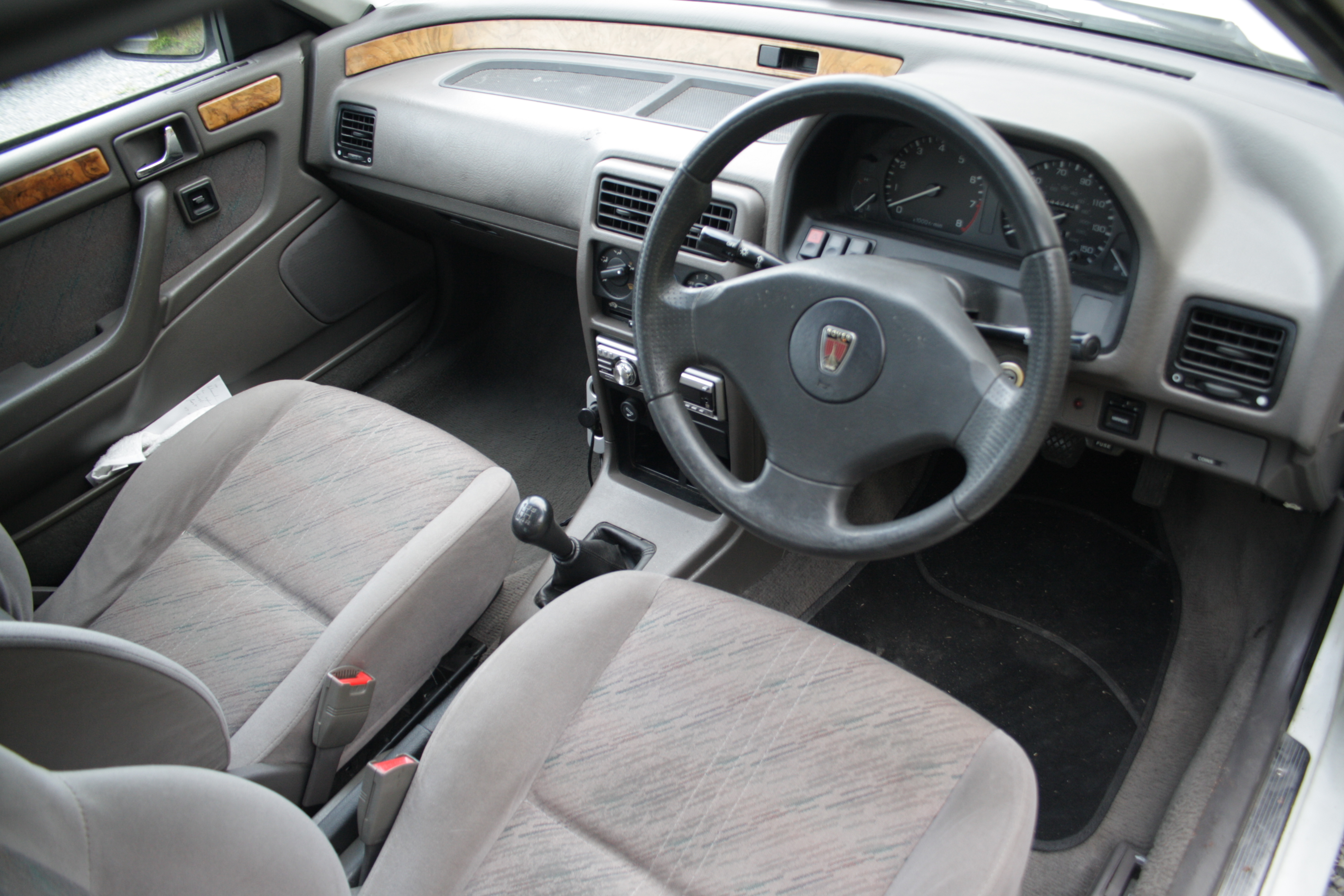
I digress. Rover also had the main say on the interior, and that’s one reason it’s such a happy place to sit. It’s one of those cars that just feels ‘right’ as soon as you clamber aboard. There’s a hint of Honda-esque low scuttle, but it’s not too low. Visibility is superb and the steering wheel, which has a surprising amount of rake to it, feels wonderful in the hand.

This is a lovely place to sit

This is a lovely place to sit

What really impresses is that it’s nice to drive quickly, but also relaxing due to the lack of engine revs. I was pretty sure it’d be a rev-happy monster, and it just isn’t. I also thought it might be a bit genteel – perhaps because the flat cap brigade like them so much. It isn’t though. It has a lovely poise about it when cornering, and the steering is surprisingly pleasant. A touch light perhaps, but not alarmingly so.

The power steering pump does make alarming noises though – I fear for its future! Other than that though, the car seems really good. I’m hoping to get the sill patched up tomorrow and then it’s just a case of driving it and seeing how much I like it in a few week’s time!

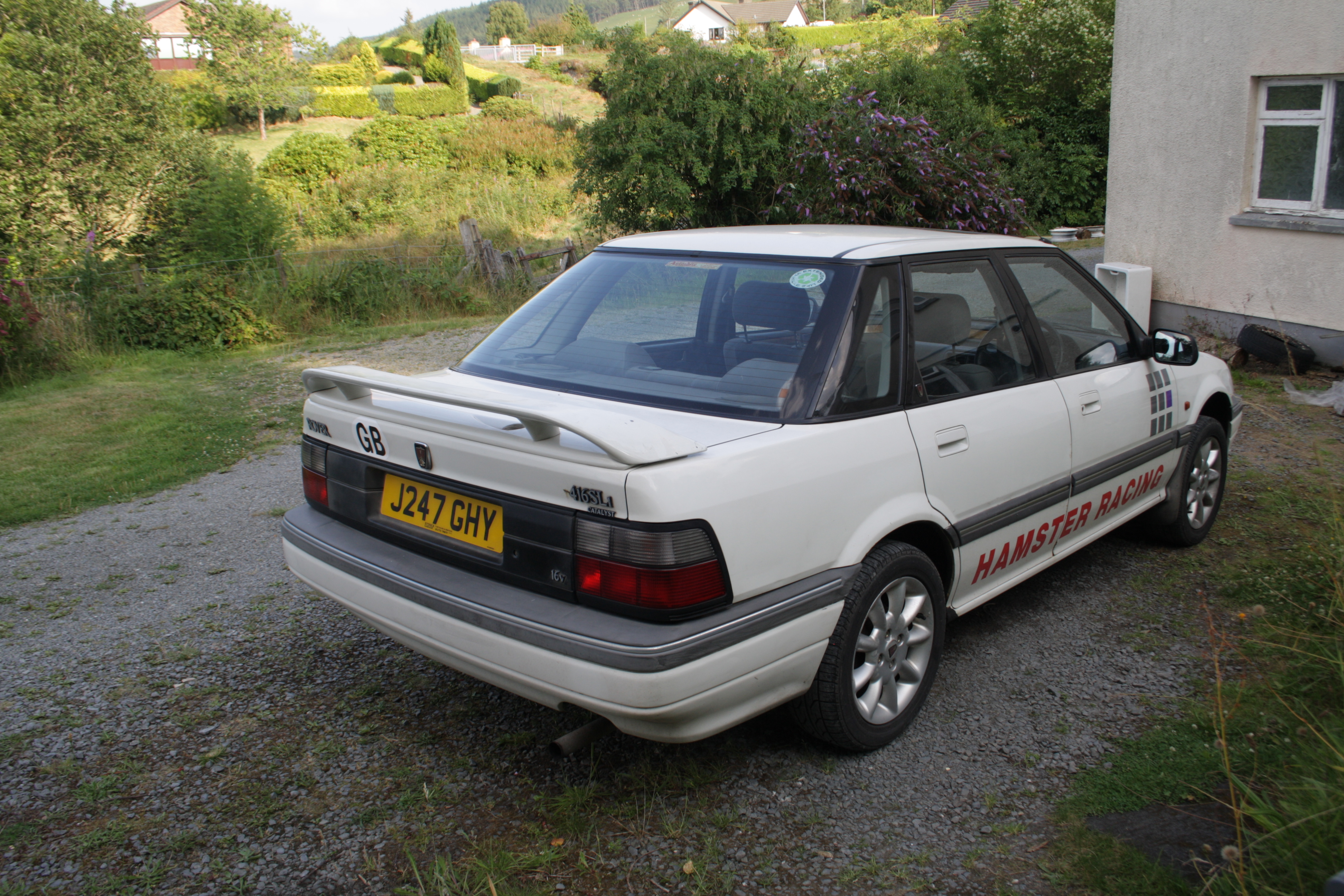
Well, almost. I do have one big problem with the car and I don’t know what to do about it. Dating from 1992, this car is a late pre-facelift model. But it now wears a later grille and later two-tone bumpers. At this age, it should have grey bumper and grey lower body colour. The rear lights are also incorrect later items and of course that silly 200GTi rear spoiler is definitely not right! The alloy wheels are from a later Rover too. It’s very wrong. EDIT – actually, this car is from a rare period when they did have body-coloured lower edges and small indicators, but no fancy grille.

Many details are incorrect. Do I care?

Many details are incorrect. Do I care?

But, I’m not sure I’m really bothered. My 2CV is nowhere near stock condition after all. It also has the ‘wrong’ bumpers and many detail inaccuracies. I wanted to put my own stamp on it and I did. Why would I try and make it look like original factory spec? Is it not better for a car to show how it has evolved over the years?

So, I’m not sure I care about the wrongness of my Rover. It’s a nice looking car as it is, so let it be, let it be.


The best Rover since the P6

With the mileage covered since purchase on Tuesday now standing at over 210, I’m able to reflect more on my feelings about the car. I don’t feel any disappointment that it isn’t a 600 –  I will still own one at some point.

There’s naturally a big nostalgia kick with this car. The 200 (project R8) was launched in 1989 – the year I started Secondary School. The 400 saloon followed on early in 1990. In 1993, I had my school work experience at the Land Rover factory, and I still  remember being driven up to the Gaydon test facility in a Rover 200 – though I can’t recall which engine it had. I do remember that the bloke, a test driver, borrowed it from a colleague, and then gave it a darned good thrashing. “It’s good to blow the cobwebs out,” he said. As he spent his days driving the Discovery Mpi, he was probably glad to be driving something with a bit of oomph…

Rover's high point?

Rover’s high point?

A few years later, my dad owned a 414 – an M-plate one, so fairly near the end of production for the R8. I was driving myself by then, so don’t have many memories of travelling in it other than the occasional time I borrowed it. These cars were everywhere at this time though, especially if you travelled around Longbridge – where the cars were built alongside Honda’s Concerto.

This may cause arguements, but I reckon the R8 was the first Rover since the P6 that was actually any good. Don’t get me wrong, I like pretty much everything Austin-Rover/BL built, but the R8 was a real move forward. Maybe that was the influence of parent company BAe, but I’m sure it has more to do with the increasingly happy relationship that Rover and Honda enjoyed. The Triumph Acclaim was the first flowering of this relatoinship, but really was just a Honda Ballade with different seats. The SD3 Rover 200 that followed was pretty good, but also clearly very Honda, even if the 216 used a Rover engine. The Rover 800 may have shared the Honda Legend’s underpinnings, but managed to look and feel very different indeed. A shame then that build quality was just not quite there.

The R8 changed that. It had the quality but you also felt that Rover had a far larger say in the design of the car than what had gone before. Honda’s double-wishbone suspension was replaced by good old MacPherson struts up front and a clever-Accord-esque four-link rear suspension. The driving experience was a great deal better too, with far more concession to the European market. Greater ride comfort allied to improved (if still not perfect) ergonomics. Now the 216 used a Honda engine while the 214 used Rover’s new K-Series engine. A great engine in my experience, ruined by cost-cutting and production issues that harmed reliability. Something British Leyland knew a lot about! Head Gasket Failure became sadly common-place, but far less so on earlier cars. When it began production, it was a corker – 96bhp from just 1.4-litres and also 45mpg economy. It made Ford’s Escort and Vauxhall’s Astra seem woefully outdated.

The Rover 600 was perhaps even better, being more like the 800 and looking very different to its Accord sibling. But all was not well. The re-skinned 800 was not entirely successful, hindered by a need to retain the flat roofline of the earlier model. Then BMW took over and the Honda relationship was utterly doomed. 1995’s new Rover 400 was also a good car – the ride in particular was especially fine from personal experience – but it somehow lacked the clean-cut lines of the R8 and the view of it has been somewhat tainted by the fact that it remained in production, as the 45, until the very end of MG Rover in 2005. Also, the main beam was absolutely hopeless. I certainly remember that! We flogged it and bought our 1986 Mini instead. I think the headlamps were better.

Our previous Rover 400. Looks were always a bit bland

Our previous Rover 400. Looks were always a bit bland

So, I shall just bask in the enjoyment my R8 gives me. It demonstrates just how good Rover could be, and perhaps could have remained if the Honda partnership had been maintained. After all, platform sharing is no bad thing. Just ask Volkswagen.