The big rebrand

I started ClassicHub back in early 2011, but have been forced to admit that a lot of what I write about isn’t necessarily about classic cars. While most of my paid work is in the classic magazine sector, my tastes are far wider than that. I’m especially keen on electric cars and find myself getting interesting in modern cars for the first time in many, many years.

So, just like Marathon chocolate bars and Opal Fruits sweets, I’ve gone in for a rebrand! I’ve tried to move away from the previous name, but with rather more effort than when West Midlands Travel became Travel West Midlands. I think HubNut reflects my interest in motor vehicles quite nicely, and I hope you agree!

So, after many years, I say goodbye to ClassicHub and herald a new dawn. Welcome to HubNut.

Sure, the URL currently still has ClassicHub in it. I have plans to deal with that, but you’ll have to wait for more!

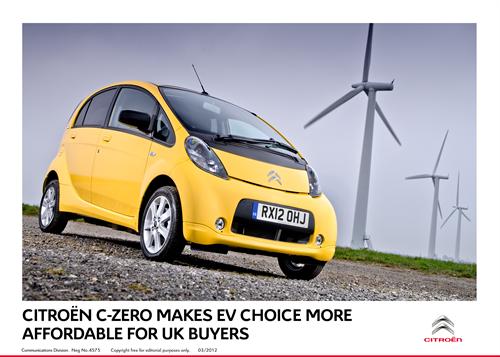
A new Citroen I actually like!

Yes, I’m surprised too. Since the demise of the XM and Xantia, I’m not sure there has been a Citroen that I actually want to own. Nice as a C6 is, they’re a bit – needy. And huge. And scary.

The Citroen I would really like to own is not huge. It’s not really a Citroen at all – it’s a Mitsubishi. But hold on a minute. What actually is a Citroen these days? The C1 is a Toyota while everything else is just rehashed Peugeot. Hydropneumatic suspension is dead and the entire range is one big pile of Meh. The Cactus looks a bit interesting, and has a nice interior, but I wouldn’t rate it as desirable.

Stupidly exciting. No, really.

Stupidly exciting. No, really.

The C-Zero on the other hand, that really does appeal. For a start, it’s based on a Japanese Kei-car – built to strict regulations on size and speed. My Perodua Nippa began life as Kei-Car (though it’s 847cc is over the 660cc limit). I’ve always loved Kei cars and the skinny, high-up looks of the C-Zero put me in mind of the 2CV.

Best of all, the C-Zero is electric, so EV kicks ahoy! One of the first electric cars in fact, with the Mitsubishi i-MIEV on which it is based launched in 2009. It seems to be a fairly good one as well – I’ve spent a lot of time looking into this. Now sure, it’s no Nissan LEAF – it’s far smaller for a start and a lot lighter – a good few hundred KG. That makes a difference. While it’s range is firmly in the 60-80 mile range, that’s pretty similar to an early LEAF. It’s an entirely useful amount of range, just not for every journey you’ll ever do. I reckon it’d cover about 90% of my journeys. The range isn’t brilliant, but that’s because the battery is a lot smaller than a LEAF. It has to be, the car is much smaller. The major benefit here is that charging time is reduced – seven hours from pretty empty to full compared with ten hours for a LEAF. Appealing.

But the good news doesn’t end there. Citroen (and Peugeot with the identical iON) actually suspended their agreement with Mitsubishi while they tried to sell existing stock. I think that must be complete now and with the agreement rumoured to cover 100,000 vehicles (split between Peugeot and Citroen), they seem keen to make a real crack of it again – the price has dropped to a remarkable £11,995 on the road (including government grant). That’s astonishing! These cars were £28,000 or more when they first hit the market.

Given that a brand new Renault Twingo starts at £9495, it puts the C-Zero on a far closer par with a petrol equivalent. It makes me want to dash out and do something stupid on finance, which is a feeling I haven’t had for many years. I won’t of course, because my wife would kill me, and I quite like living a finance-free existance, but even so…

You’re probably wondering what a C-Zero is like to drive though. So am I. Frustratingly, I’ve been utterly unable to get my hands on an i-MIEV, C-Zero or iON so I’ve no idea. None of the manufacturers seems to have one on the press fleet and dealers have been less than sympathetic. And often bloomin’ miles away too!

Needless to say, if you do own one and don’t mind a strange chap with a beard having a drive, do let me know!


Building Cars Live – my thoughts

Having recently returned to the world of the TV Licence, I can start watching TV as it is broadcast again. That’s what I did last night, tuning into the 90 minutes of Building Cars Live.

The show consists of live segments, in which James May, Kate Humble and Ant Anstead show different aspects of the BMW Mini ‘Plant Oxford’ site (or Cowley as I still prefer to call it), interspersed with pre-recorded elements.

Some telly people tell us about cars.

Some telly people tell us about cars.

Generally, it’s a very good programme. Sure, some of the live links are a bit messy – especially the one where James May failed to fit a tailgate – but I found it interesting and informative. I must say though, I really can’t stand Kate Humble. She manages to sound very patronising, which I think is because she’s trying to sound knowledgeable about stuff she doesn’t really understand. There was a pre-recorded segment on electric cars for instance where she either managed to act the part of a clueless idiot very well, or she really is a clueless idiot when it comes to EVs.

Far better were James May’s visits to Nissan in Sunderland, McLaren in Surrey and Morgan in Malvern, demonstrating that we really do still make things here – and vastly different things too. Ant Anstead had an amusing outing with some original Minis too and, surprisingly, he seemed the most comfortable of the three during the live sections – though May’s oddball sense of humour made his bits fun to watch too.

However, the history section was a bit garbled and frankly, wide of the mark. A German designer was seemingly presented as the designer of the new MINI when the truth is, the genesis of the car is very British. And hearing the designer try to claim that the MINI meets the same design objectives as the original was painful indeed. It’s neither as small as possible, nor as simple and economical as possible. It couldn’t be further away from the Issigonis ideal, though I shall avoid the temptation to go on about in-grave acrobatics. He wouldn’t like it though.

But, that was a mere trifle really. Yes, it’s sad that a mere 4000 people are employed at Cowley now compared to the dizzy heights of 28,000 decades ago, but that just shows how the industry has moved on. Fantastically clever robots do so much of the work now,  and everything is timed to the second. You can bet your life that BMW actually manages to make a profit on its version of the iconic Mini.

The show returns for another hour tonight, in which ‘their’ car appears from the paintshop and, I think, enters the assembly hall. There, we should see the dashboard installed in mere seconds, which can only make the poor sods who need to remove one several years down the line green with envy…

I shall certainly be watching. Again, well done BBC. You do things differently, which is to be applauded.

EV: Still can’t bloomin’ afford one

Every time I plug my smart phone in for its daily dose of electricity, I’m reminded of my love for electric vehicles (EV). Cars that to make go further, you simply plug into a socket.

Also, every time I go down a hill in a conventional (or ICE for Internal Combustion Engine) vehicle, I’m appalled at the sheer waste. All that potential energy lost though the brake system as heat. If I was in an electric vehicle, that energy could be recouped as range-extending electricity.

It may seem a small thing, but when I tested the Nissan e-NV200 Combi, I found it easy to generate more than 1kwh of electricity (per charge) through regenerative braking. Now, that might not sound much, but as I discovered with the Volkswagen e-Golf, it’s possible to drive 5 miles or more per kilowatt hour. That’s five miles of range generated for free! Pure gravity. It must be said, those figures were obtained without trying particularly hard either. Even with the short range of electric vehicles, I tend not to hang about.

Nissan electric van

Nissan e-NV200 Combi. Encourages economical efforts.

That said, I’m pretty sure that I drive much more economically in an EV than an ICE. It’s all too easy to just put my foot to the floor with petrol power, as you don’t get an instant sense of how bad that is. Shove your foot down in an EV and while you (usually) get a wonderful shove in the back, you also watch the range begin to plummet. With an EV, you have to drive efficiently.

Here’s the thing though. I still find that HUGELY enjoyable! When I had the e-Golf, I drove it on a very testing challenge across Snowdonia. Here are some of the finest driving roads you could wish for. I had a great time, but I also managed to drive very economically – 5.1 miles per kilowatt hour. That’s pretty impressive for an electric car. Especially as my average speed for the entire trip was 39mph. Given that there was very little dual carriageway and no motorway at all, I consider that quite remarkable. I doubt I could safely achieve more in an ICE. In Snowdonia, you just can’t drive much quicker than that.

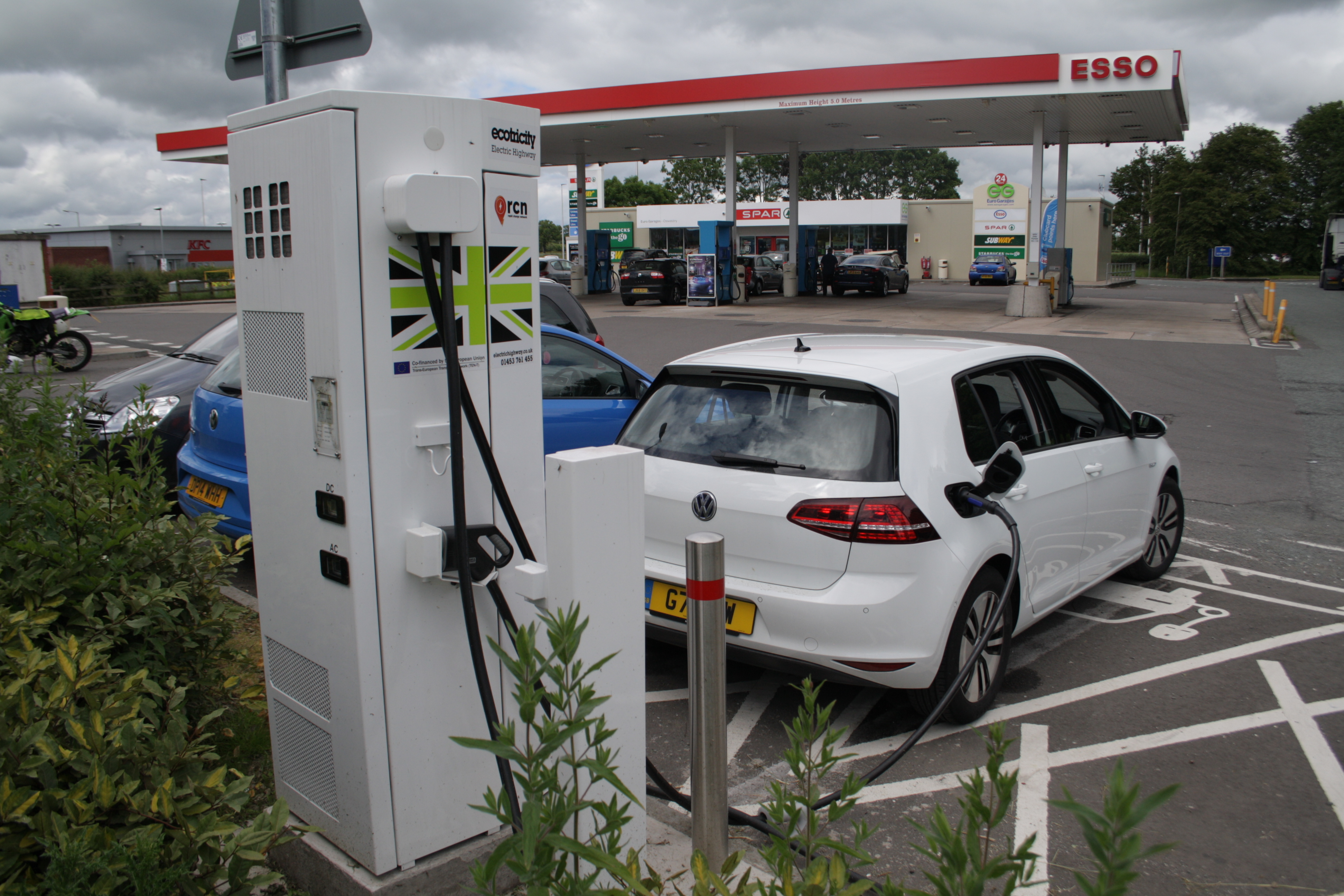
Electric Car Charger EV

Certainly, EVs are a lot more pleasant to refuel. No smelly diesel or petrol here – just over there.

I’m sure that I’m now driving my ICE’d cars more economically too. Owning a 2CV has been really useful, because you learn a lot about momentum conservation. Finding the racing line (even if you stay your side of the central white line), judging your speed well so you don’t end up scrubbing too much away as you turn and trying to anticipate road and traffic conditions to avoid harsh braking. I HATE harsh braking! Yet lots of people do it. Smooth braking is a lot more comfortable, and also more economical.

Frankly, I’m a bit astounded by how much I love driving electric vehicles. I love the clean, smooth power delivery and the way you can often use different modes to boost the engine brake sensation – ie activate the regenerative braking without you even having to touch the brake pedal. It means you can easily control your pace with just one pedal. That’s very satisfying.

Electric makes so much sense for so much of my driving too. Sure, it would have made the trip to France a bit difficult – the charging infrastructure is barely keeping up with demand and some areas are still worryingly free of chargers – but for the vast majority of my time at the wheel, I’m driving distances between four and 25 miles. No trauma for even the worst EVs. I could even manage that in a G-Wiz – albeit very slowly.

A LEAF awaits its charge as the e-NV200 fills up

Congestion at charge points already becoming an issue.

But alas, the youngest EVs worth having are still only five years old. I’m starting to see Nissan LEAFs below £8000, and the Renault ZOE for as little as £6500 (albeit with a monthly battery lease to pay on top). Still way out of range for me given that my current ‘moderns’ cost £300 and £375 each. It’s a frustrating business waiting for depreciation to kick in, and waiting to see if EVs develop any ageing issues now they’re getting on a bit. There are interesting times ahead, and an EV will definitely be joining my fleet. I just can’t say when.

XM: The car that changed me

Today is a historic occasion. It is 12 months since I drove home in my new Citroen XM. The strange bit is that I still own it! Happy anniversary!

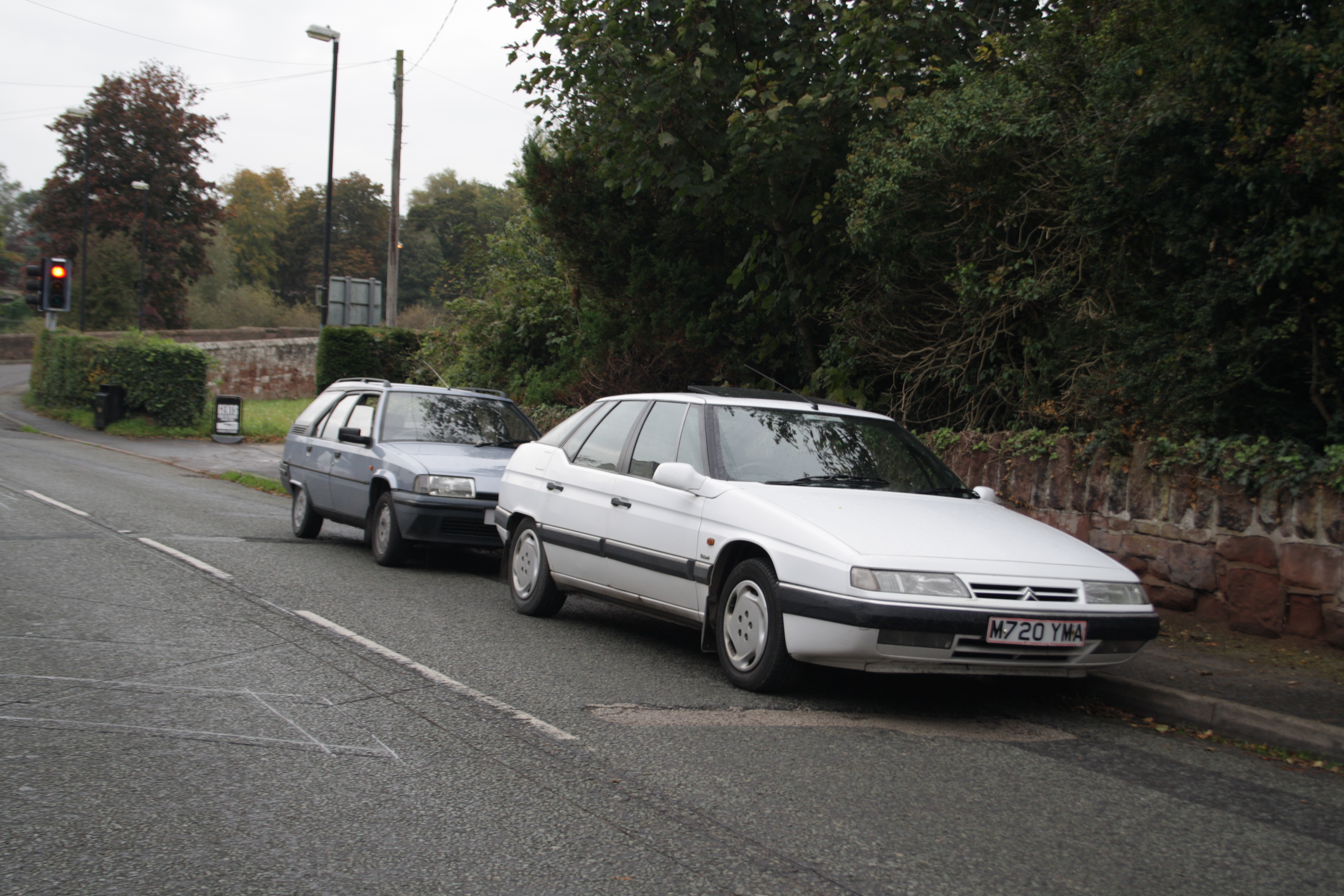
XM and BX

One year ago today – the XM joins my fleet (seen here with my former BX)

I’ve spent a fair chunk of the past 12 months wondering what’s happened to me. A few weeks after getting the XM home, I realised that I wasn’t frantically scouring the classifieds anymore. I’d barely been anywhere near Ebay. I came out of the house to go for a drive, and smiled as I jumped behind the wheel. A few months later, this was still happening! The absolute constant in my life – the search for the Goldilocks car – seemed to have come to an end.

Some cars have got very close to this, and most have been PSA diesels. The first was a Peugeot 306 DTurbo that I owned for more than two years, and in which I clocked up over 40,000 miles. That remains an all-time record – bar my 2CV (15 years and over 110,000 miles). A Daewoo Matiz, the only car I ever bought brand new, managed 18 months and 18,000 miles. A BX non-turbo diesel estate managed two bursts of my ownership and I’ve therefore lost count of how many months and miles I clocked up in it – a significant amount, but it managed 30,000 miles while it was away from me.

Aside from an Acadiane that spend most of its time with me off the road, that’s it. Over 60 vehicles owned, and only three have endured until now. So, have I changed or is the XM actually that remarkable that I don’t want to replace it?

I’m not entirely sure myself. Certainly, I was getting increasingly fed up with the sheer ballache of changing cars. Buying and collecting is huge fun – I love it – but then there’s the increasing despondency that it isn’t quite right, and the utter pain of trying to sell it. Then my insurance company charges me £15.75 every time I change cars. That was a lot in 2014. It cost me a fortune.

Certainly, it’s true that every time I clap eyes on the XM, it fills me with joy. I love the concept-car-style looks, especially the tail end. I love the driving position too. It feels just right. The Citroen BX got very close to being the perfect car for me, but was let down by two surprisingly minor problems. Not enough wipers (I hate single wipers) and no flick-wipe. Doesn’t sound like a big thing, but I live in Wales. I find a flick-wipe very, very useful. And that’s another point. The column stalks in the XM feel much nicer than the horrible Peugeot items in the BX – and the earlier Mk1 dashboard is no better, despite its wackiness. The actual feel of the switches is properly grim. Nothing like a CX.

XM rear lights

Rear styling in particular does impress me. 

The engine is a major plus too. My conclusion with BXs is that the petrol carb engines are a faff, while the non-turbo diesel is too sluggish, and the turbo diesel too peaky. The 12v, 2.1-litre XM turbo diesel, with its Mitsubishi turbocharger, is a delight. It pulls strongly from 1500rpm. In many ways, it behaves like a BX non-turbo diesel, but goes much more quickly! Not all that sprightly by the standards of today, but more than enough for me.

Of course, it’s also hugely practical. The boot is enormous and on our recent trip to France, it swallowed up most (but not quite all) of our belongings, including a bass guitar in a case, an amplifier and two ukuleles. I did have to concede defeat and park our suitcase on the backseat.

XM boot space

This is a very practical machine. Spacious and fully self-levelling.

I love how it corners too. The steering is assisted, but not too assisted. It turns in with relish and then doesn’t wobble around when you crank up the G-force. It still then rides very well, albeit not as well as my Dyane. I reckon it still needs those centre spheres changing. I’ve been saying that for 11,000 miles now.

So, are there any downsides to this £375 wonder car? Well, yes. The clutch is heavy and the gearchange is horrible – sadly all too common on PSA diesels. I had the same issue with my Peugeot 306. There are a few interior rattles that I just can’t banish either. Also, the nose is a bit too long and a bit too low. It’s very hard to place. And rear visibility is appalling. And the tiny door mirrors hardly help. And the foot-operated handbrake is bloody awful to use. But I don’t care. As I well know, no car is perfect. Yet, it seems the XM is closer than most. It seems I really did manage to buy a good car for once. I think it probably deserves a wash.

I’m a user and an abuser – deal with it

I’ve come to a bit of a shocking realisation. I’m utterly dreadful at saving cars.

The evidence speaks for itself. The vast majority of cars I’ve owned have been scrapped. Only a few by me – my first and second (half of which lived in in various other cars) but the point remains that when they’ve left my hands, they’ve generally been pretty close to death – or no more than a few years away. Sure, I still own my much-loved 2CV, but she’s rotten as a very rotten thing indeed and not able to come out to play anymore.

Floor rot

Holey floors Batman! This has now been repaired, but rot always finds a way…

The problem here is that preservation is a costly business. Or, it generally means not clocking up thousands of miles a year in all weathers. That’s what I do. I use my cars. My enjoyment comes from driving them. Like anyone owning a modern car, I just want to get from A to B – it’s just that I choose to do it in cars that aren’t very new.

They generally are very cheap, which is usually with good reason. The cars I buy tend to be hovering somewhere in the chasm between huge depreciation and classic status. I call it Bangerdom. Very few cars escape Bangerdom. It’s where values are rock bottom, and the cost of one repair might be more than the vehicle is worth. The XM is a case in point. I paid £375 for it, then spent over £400 getting it welded up. Now, that may look like preservation, and it is to a point. The problem is, that one bit of welding (well, two actually) is not enough to keep rot at bay. I’ve extended the life of the vehicle, but I doubt very much that my XM will be a survivor. Rot will creep into hidden crevices and seams, despite my efforts to spray anti-corrosion wax about the place.

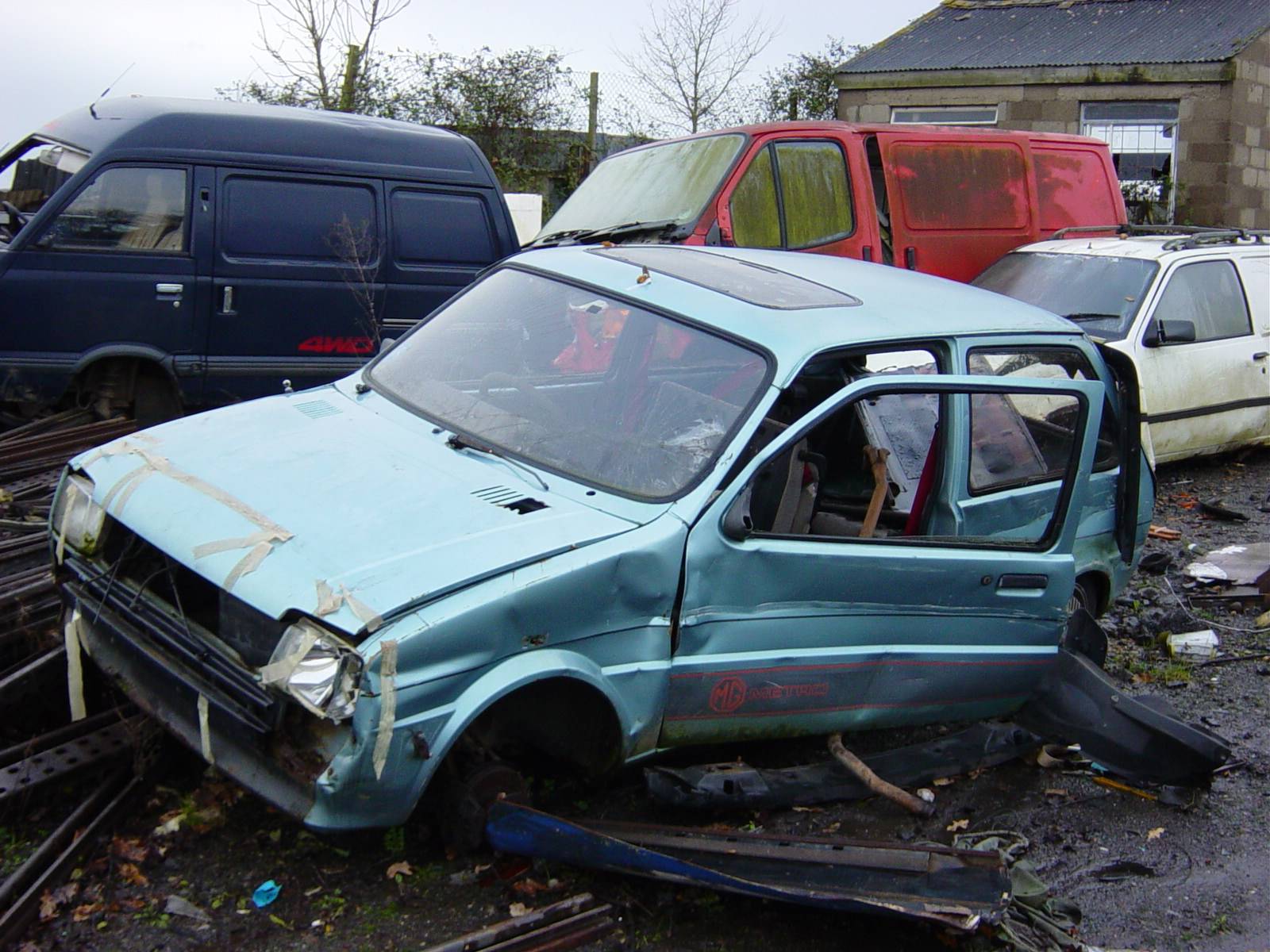
Crashing is not pretty

Most cars come to a scrappy end eventually.

Eventually, that rot will be discovered and that’ll probably be the end of the road. Or perhaps there will be some exceedingly costly mechanical repair needed. There comes a point where restoration/daily running just becomes prohibitively expensive. Especially for someone living a frugal lifestyle. I’ve been asking myself recently whether I can live with that. I think I can. The XM is already well catered for by preservationists. They aren’t going to all die out. I doubt mine will ever have a following anyway. It’s a cheapo, bottom of the range model – and a diesel manual at that. V6 Autos and top range toy-laden versions are where the interest lies.

So, I’ll certainly keep the XM going as long as I can, but I won’t hate myself if it one day reaches the end of the road. Cars are made to be used, and the vast majority of cars will not make their 30th birthday. When you think about it, mine is already doing well to have passed it’s 20th.

I’ll certainly have many happy memories of the time I ran one of those lovely old hydropneumatic Citroens as my daily driver. I look forward to that, when I’m whizzing around the UK in my ‘bangerdom’ electric car.

Nippa News!

Er, well. Ah, hmmm. You see, the problem is, there’s not a lot to report in Perodua Nippa land. Since purchase in March, the Nippa is averaging 43 miles a week. Since passing its MOT on 31st March, it has covered almost exactly 1000 miles. The 2CV has covered more miles this year, and she’s been off the road since April!

Perodua Nippa at speed. Sort of.

My wife Nippa-ing about the place.

Yet, the Nippa still manages to be useful. It’s my good lady wife’s first choice of transport after her own feet. I often borrow it if I just need to nip somewhere. It’s fizzy, fun and just like a Yorkshire Terrier. Not very refined and liable to destroy your cushions if you leave it unattended. I’m sure I heard it bark at the cat the other day.

It’s not very brilliant to drive though. I quickly tire of the cramped driving position and hilariously awful suspension. If the XM is Yang, then this is very much its Ying. The reason I live with the tired centre spheres of the XM is that it still feels like bleedin’ lounge slippers and a cosy snuggle on the sofa compared to the spine-shattering bounce-fest of the Nippa. It’s like an earthquake. Quite amusing in a wobbly sort of way, but you hope it doesn’t kill you.

Not that I care very much. This is cheap motoring in the extreme. It would cost more and be more hassle to sell it than to keep it, so it can live on as the second or third choice car. Not the default for enjoyable motoring, but you’re glad of it when you need it. Perhaps I’ll even treat it to some winter tyres, seeing as the heater seems able to produce heat by the time the car has moved about quarter of a mile. That’s impressive.

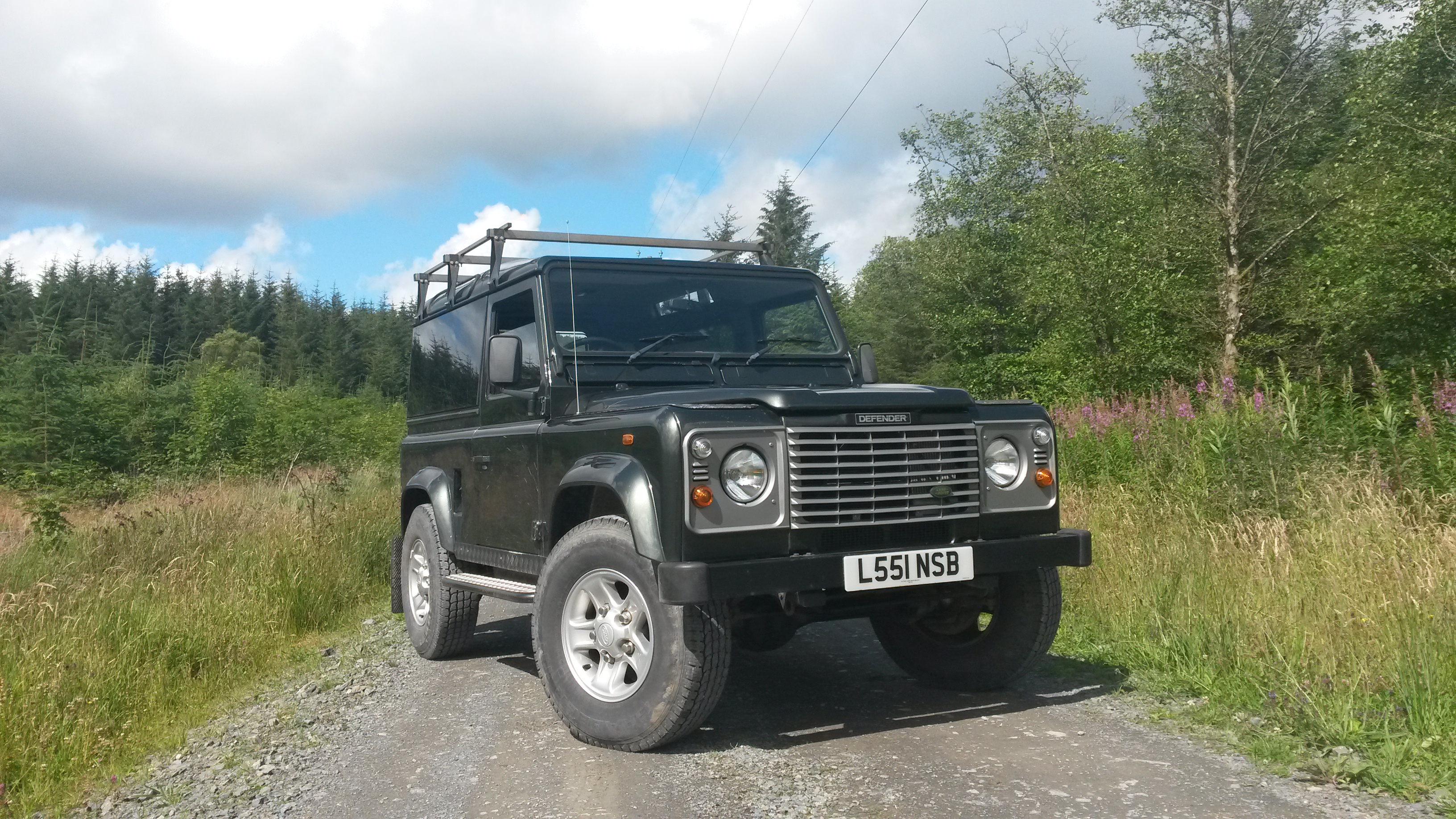
Video: Lovin’ the Landy

Currently, Land Rover says the Defender will end production in February 2016. So, I thought I’d better shoot a video on this most iconic of off-roaders.

Is it really goodbye for the Land Rover?

Is it really goodbye for the Land Rover?

That said, as I ponder in this video, it seems Land Rover actually is considering keeping it in production elsewhere in the world. Sadly, I think it would still be the end of European sales – it’s becoming a struggle to make this simple, rugged 4×4 green enough to remain in production – especially when a mere 14,000 were sold last year. While there is still a market for this simplistic icon, it’s a very small one. Japanese pick-ups are proving popular with farmers as, dare I say it, they are often (but not always) more reliable.

But, all good things must come to an end. I’ll be sad to see the Land Rover go, but many thousands of them will live on.

Enjoy driving? Head to Wales

Things have been quiet on here lately, because I’ve been having a holiday type thing. After a week in France, we spent another six days in Sussex with more kindly family folk. For two entire days, I didn’t drive anywhere at all. The horror of the drive up from the ferry port at Newhaven was still large in my mind. Roads that congested are just no fun at all.

Stupidly, I then decided to go and have a nose around Brighton. I don’t recommend this. Endless jams eventually overcame my desire to see the sea and I bolted for it. I was planning to head back to base when I was contacted by the man behind Fu’gutty Cars. I won’t go into too much detail, as it’s his story to tell, but it involved spending an afternoon tinkering with an elderly Citroen to try and ensure it could make it 500 miles back to Scotland.

Citroen barges, both with a long way to go.

Citroen barges, both with a long way to go.

It was a nice way to spend an afternoon, and I got to have a drive in a CX again. Always an incredible experience. I was glad I hadn’t forgotten how to drive one. They really are like nothing else.

After a couple more family-filled days, it was actually time to head back to Wales. It was a Sunday and we’d hoped to get the jump on the worst of the traffic. I was amazed at how busy the roads were though, and things got very slow at the meeting of the M23 and M25, where queue-jumpers conspired to balls things up for everyone else. Idiots.

The M25 itself wasn’t too bad apart from the people who still have no idea about lane discipline. Idiots. I mean, how hard is it to keep left unless overtaking? And what was the point of constructing five lanes if people will only use three of them? As luck would have it, we nipped off at the M4 junction just before everything ground to a halt. Phew.

Things got better from there as traffic levels continued to drop. Getting away from the frenetic madness of the South East is always a pleasure. In fact, we reached Crickhowell in just under three hours, which means our average speed since leaving Sussex was 67mph! Amazing. That was cruising at an indicated 75-80mph too, so hovering around the speed limit once you factor in the built-in speedometer error. The XM felt fabulous at cruising speed too. It’s remarkably refined.

From Crickhowell, things naturally slowed down a lot. No more motorway – in fact, not even so much as a dual-carriageway for the next 58 miles. There was even single-track roads as we headed over the stunningly beautiful Elan Valley Mountain Road.

The Elan Valley - wonderful driving terrain.

The Elan Valley – wonderful driving terrain.

What amazed here was how the XM was incredible fun to drive. It manages to be a comfortable barge that remains tight and entertaining in the bends. It doesn’t wallow and just grips. Furthermore, because the engine has so much torque, you find yourself driving very quickly in a very relaxing manner.Despite a boot full of shoes, bass guitar, ukuleles, bass amp, a large crockery plate, beer, wine, tools and spares (suitcases relegated to the back seat), it hurled itself over the undulating terrain with delicious composure. Perhaps not quite as fluid and controlled as a 2CV, but hey, no car is perfect.

Sure, the XM has its (minor) faults, but it really is very, very good at the things I want it to be good at. It must be. I’ve now covered nearly 11,000 miles in it and am a few weeks away from one entire year of ownership. After that enjoyable adventure, perhaps it’ll be here for even longer yet.

Holiday: Why I adore France.

Having a father-in-law living in France is pretty handy. It enabled us to have a rare thing – a holiday! Our lifestyle doesn’t really have the budget for holidays, but living in beautiful Wales and having lots of spare time, it often feels like we don’t really need a holiday at all. As it happens, a rush of work for both my good lady wife and myself meant that a break was welcome!

This was our first overseas trip in more than five years. In fact, it was our first overseas trip since before we entered into our new, more economical lifestyle. I hadn’t realised quite how much I’d missed France until we excitedly drove aboard the ferry at Portsmouth. It’s a fascinating country and, as you may have noticed, I have rather a soft spot for its automotive creations.

As it happens, I made one major mistake. We arrived in Caen at half past nine. Of course, by the time we got off the ferry and through passport control, it was more like 10pm. It was therefore what is commonly known as night-time. An XM spotted on leaving the ferry terminal led to a small bout of joy which was instantly demolished by a combination of poor street lighting, dreadful XM headlamps (made worse by the necessary headlamp adapters) and a complete lack of cats eyes. Seriously, they are one of the best inventions of all-time, and you don’t take them for granted until there aren’t any.

Then we got stuck in a car park. The French are very good at designing car parks with hidden exits.

After we reached our destination, things improved a great deal.
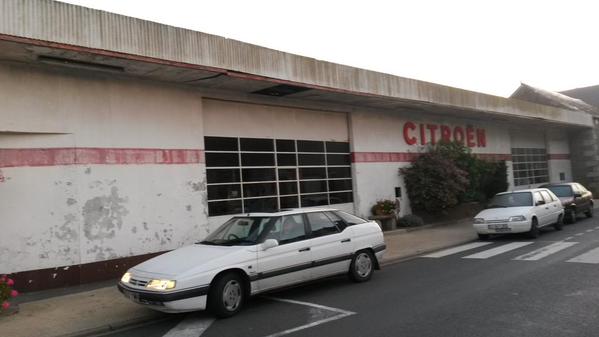
Citroen XM in France.

Citroen XM in France.

For a start, France is in a constant state of shabby chic. I adore the somewhat timeworn state of much of France. I generally avoid cities – much as I do in the UK. That said, a visit to Le Mans was well overdue, and after a gentle drive around the road section of the track, we really enjoyed a walk around the town. It’s absolutely lovely, especially the old section that overlooks the river. Recommended, even when there’s no racing on – or perhaps even more so when there isn’t.

The town of Alençon is worth a visit too. It’s where I managed to spot a Citroen DS 20 in use. Older stuff really is getting harder to find in France, especially near bigger towns. I was well chuffed.

Spot of the holiday? Perhaps. Certainly joyous.
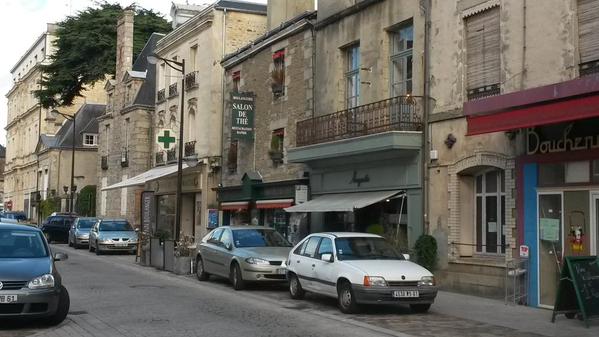
Spot of the holiday? Perhaps. Certainly joyous.

A wonderful street scene in Alençon. Very French.

A wonderful street scene in Alençon. Very French.

Oddly though, I really didn’t spend much time driving around. We stayed a mere hour away from Caen and I spent several days of our week not driving at all. That included getting a lift to Trun for an Onion Festival. I’d hoped for loads of classic commercial content. Sadly, H vans have all become trendy coffee vans in the UK and my only properly classic van spot was this delightful Renault Estafette – another ancient front-wheel drive design.
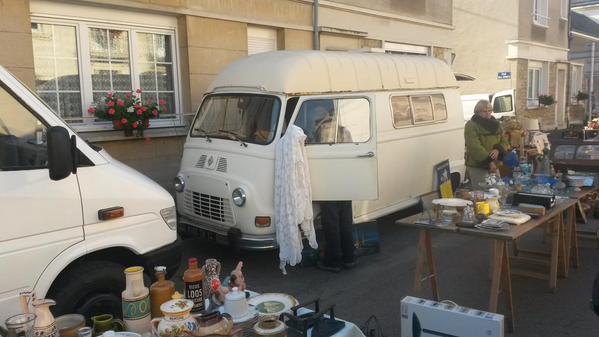
Renault Estafette at the Trun Onion Festival, Normandy.

Renault Estafette at the Trun Onion Festival, Normandy.

Our longest drive of the trip – French side at least – was the trip up to Dieppe to catch the ferry home. We shunned the autoroutes mostly, especially the Peage. We ensured we had plenty of time, so why pay to rush? Besides, European countries all look very similar if you stick to the motorways. Far better to head to the quiet, main roads instead. After all, you often get traffic levels like this.
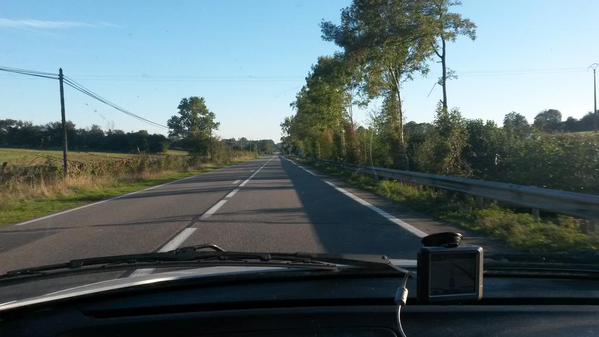
Barely any traffic in France.

Barely any traffic in France.

Not a car to be seen. So wonderful to just be able to make progress. Not that the roads were always this major – my Garmin Nuvi sat nav, visible in this picture, is ancient and has a wonderful tendency to seek out the most scenic, and often narrowest routes. We twisted our way through some amazing countryside and wonderful little towns.

On the last run to Dieppe, we finally did make it onto a free section of autoroute, and I was able to get my clog down and enjoy 130km/h entirely legally. That’s an indicated 85mph in the XM, or around 80mph in reality. The XM was built entirely with this sort of driving in mind. It was absolutely wonderful.

Four hours later, we disembarked in Newhaven and found ourselves battling incredibly high traffic levels once again. After the sheer glory of the quiet French roads, it was rather a shock. Oh well. The roads can be pretty quiet in our delightful slice of mid-Wales. It’ll be nice to be home.

But once again, I fell in love with France. It’s no wonder so many Brits decide to move there. Wonderful architecture, friendly people and fantastic bread. Oh, and superb cars of course, which enjoy (away from Paris and other major cities) fantastically peaceful roads. Thanks to those who made this trip possible.