Road Test: Renault 16

I rate the Renault 16 as a better car than a Citroen DS in many ways. Like with the Renault 4, the firm took a shrewd look at Citroen’s offering and thought “we can do sis but betterrr.” Apols to French viewers. My accent is terrible.

They were certainly right with the 4, which went on to sell about 3 million more than the 2CV, even if you include all of the Citroen derivatives.  They got it right again with the 16 too – 1.8 million sold, compared to 1.4 million DSs. Oh, and that was in just 13 years, compared to the DSs 20-year lifespan.

Renault 16 TS

Renault 16. Only one sidelight working, because French.

A brief look at the facts demonstrates remarkable similarity. The gearbox is ahead of the engine, driving the front wheels. The engine is a water-cooled straight-four. The gearbox is controlled by a column change. The suspension is very soft, but the handling is good. There is LOADS of space (the Renault offering it in just 4.2 metres of length, compared to the 4.8 of the DS).

But crucially, the 16 had the hatchback that perhaps the D should always have had. That made it even more practical. It was also much more simple – Renault realising that torsion bars offered full independent springing without the complexity of the Citroen hydraulic kit. Sure, self-levelling suspension is notably absent, and a full load makes the 16 squat like a resting D, but for the vast majority of the time, this doesn’t matter in the slightest.

The Renault doesn’t have the space-age majesty of the D either – something which has helped the latter get recognised as a complete icon of the motoring age. The 16 falls more easily off the radar, not helped by being remarkably prone to rot – and not as good at hiding it as the base-unit construction DS! A pretty D could actually be rotten as a pear. A rotten 16 generally looks rotten!

16

Stylish and oh so practical!

I’ve only driven one 16 before, and I absolutely adored it. That was a manual, and I was amazed at how pleasant the change was. More recently, Shitefest allowed me to sample an automatic. Not for Renault the curious semi-automatic of the D (a full auto was a later option for Citroen).

Now, 1960s/1970s automatics tend to be rather inefficient things, and certainly if its performance you’re after, then look elsewhere. The Renault rather gently gathers pace, not helped by a gearbox keen to get to top gear as soon as possible. Fortunately, the 1565cc engine has good torque characteristics, so it’s happy to slog on. Press the throttle fully to the floor and it will kick down and pick up its skirts a little, but it’s better to take things easy.

Not that you have to slow down much for bends, as the car steers beautifully. There’s plenty of body roll, but no Citroen fan is worried by such exploits. It goes where to you point it – though I was warned that the tyres are of poor quality. I didn’t exactly have it on its doorhandles.

The ergonomics aren’t brilliant, with the control layout seemingly arrived at by handing them to several different people, and having a game of ‘pin the control on the donkey.’ It seems most of them missed, and one column stalk (for the wipers) simply sprouts straight from the dashboard instead.

I don’t care though. This is the first modern hatchback for the family. It deserves far more credit, especially in this, it’s 50th year. If I didn’t think it’d dissolve in an instant, I’d have one like a shot.

Cactus proves a turn-off

Oh, the signs were so good. I love Citroens. I love adventurous styling. I positively adore three-cylinder engines. I’m definitely not averse to the pleasures of the turbocharger.

Yet when I got to test drive a Citroen C4 Cactus 1.2 Puretech Flair at the weekend, my over-riding emotion was that of disappointment. Yet again, Citroen had let me down.

Bold looks ruined by dreadful suspension

Bold looks ruined by dreadful suspension

You see, there is plenty to like. The external styling is bold, and the interior is very pleasant indeed. Yes, lots of plastic, but it is well styled and nicely textured. But as soon as I started to drive the Cactus, it all went horribly wrong.

For a start off, the steering is horribly light, and has a numbness to it which is quite staggering, even by modern standards. Then there’s the suspension. I think they forgot to add any. A Citroen should have a peachy ride. What had gone so wrong?

Sad to say but I’m sure the target market won’t care. Some people so blind to fashion that all that matters is the wrapper. That means that large alloy wheels will be specified, even though they’re hugely detrimental to ride comfort (the same is true of the Tesla Model S by the way – ignore the 21″ wheel option!). It also means that on-track road manners seem to matter more than every day comfort. The Cactus is certainly not alone in having these considerable downsides. MINI, I’m looking at you.

On top of this, the fabulously thrummy three-pot engine is so muted, that it doesn’t seem to have much fun left in it at all. Punchy, it certainly is – despite only 1.2-litres, 110bhp will whisk you to 60mph in just 9 seconds – but while the acceleration is good, it is somehow devoid of pleasure. Even though the back of the car squats noticeably under power. How does it do that yet remain so uncompliant over poor surfaces? To add to the misery, the seat bolsters are the hardest found in any car since the Peugeot 205 GTi, where they were seemingly hewn from granite.

Frankly, it’s all a bit frustrating. Do people not value comfort anymore? It’s not like it’s impossible to make a modern car ride and handle well – The Citroen C5 can manage it, even on coil springs. The Nissan LEAF is another outstandingly comfortable family hatchback.

Across a mildly rutted field, the Cactus was horrific. By comparison, a 1950s Citroen Bijou over the same field was as smooth as if it was on unruffled asphalt. Is this meant to be progress?

The French used to be the masters of ride AND handling. I really don’t understand how things have gone so wrong. Given the horrendous state of many of Britain’s roads, you would have thought a compliant suspension would be top of everyone’s lists when forking out over £17,000 on a car. Apparently not.

Go another way – two-finger salute to Starbucks

I absolutely hate motorway service stations. They’re almost all utterly dreadful – Tebay Services being the very notable exception. It’s on the M6, up north, and even has an organic farm shop.

Most of the time though, it’s all big-brand blandness. Hideous prices, for food that’s about as interesting as a lecture on carpets of the 1990s. Starbucks are good at this, selling some of the most horrible sausages I’ve ever encountered. I reckon they’re safe for vegans due to being 99% sawdust. Then they charge you the earth, then fail to pay any tax on their copious profits. Arseholes.

So, faced with a long trek from Cornwall to home after a family holiday, I decided it was time for an alternative. We had no time constraints, so why not get well away from the motorway and see what else we could find? Cheddar seemed an ideally-placed location for a break, being about two-hours away from our start point.

A curious, and delightful place for a spot of lunch.

A curious, and delightful place for a spot of lunch.

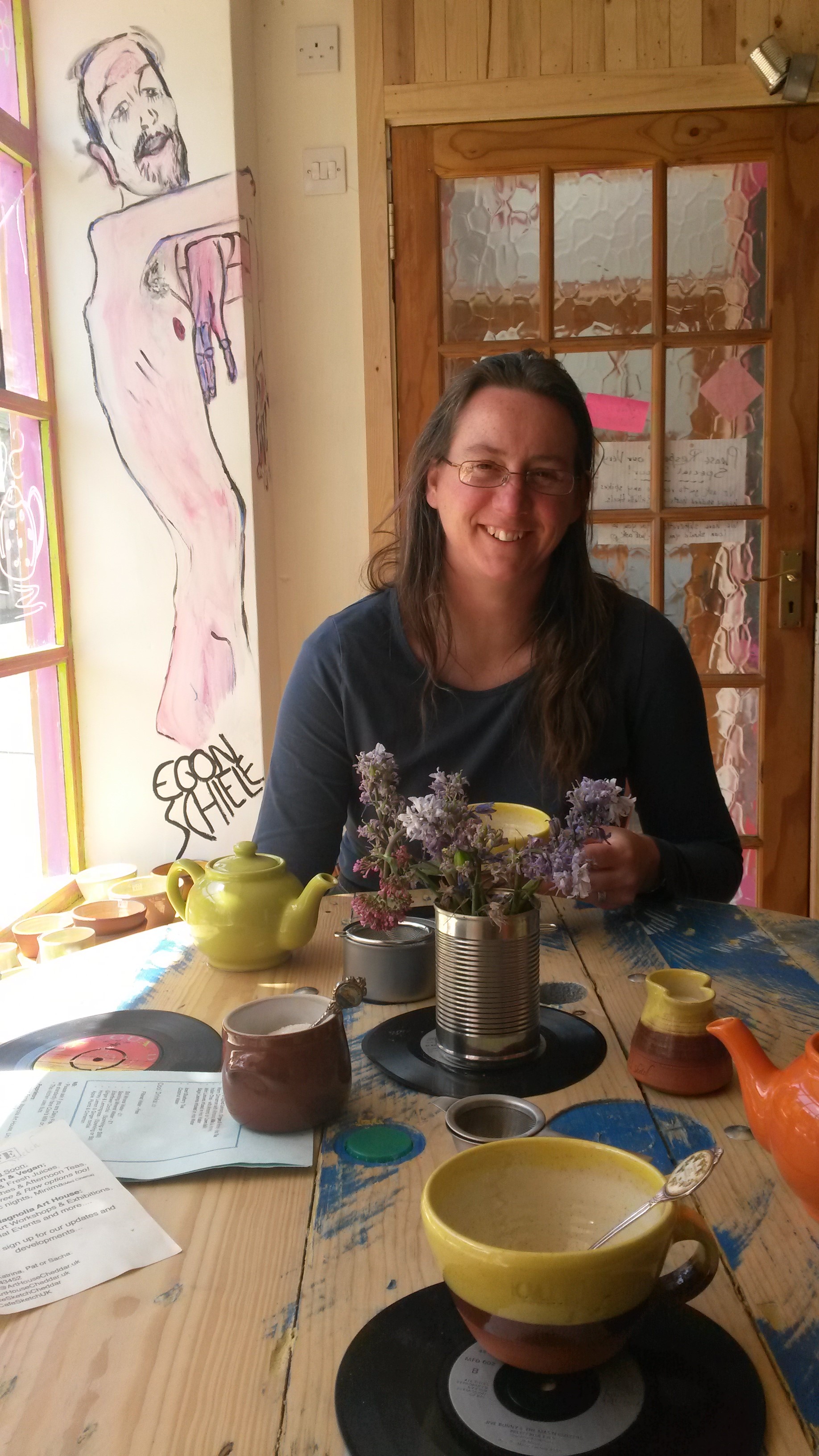
We paid an entire 60p to lodge the XM in a car park, then wandered about town. This quirky arts cafe struck us as an ideal place for lunch. We got the feeling it had only just opened. The floor was made of what looked like old pallets and cable reels, as were the table tops. Lots of arty stuff filled the walls and lunch was served upon roofing slates. It was delicious though. I had superb cheese on toast, while Rachel enjoyed a bowl of soup. There was a huge range of tea on offer and yes, the place mats were old vinyl singles – I got Jive Bunny while Rachel had to cope with Jason and Kylie.

Rachel also bought a mug – a fine selection of pottery was on offer – and including that, we spent just £20. I’d imagine lunch for two would swiftly approach that at motorway services, and would be utterly horrible!

Getting back to the motorway included a pleasant detour along beautiful country lanes (we didn’t explore the gorge this time). We continued until thirst encouraged us to take another break. This time, we were approaching the pretty town of Crickhowell in Wales.

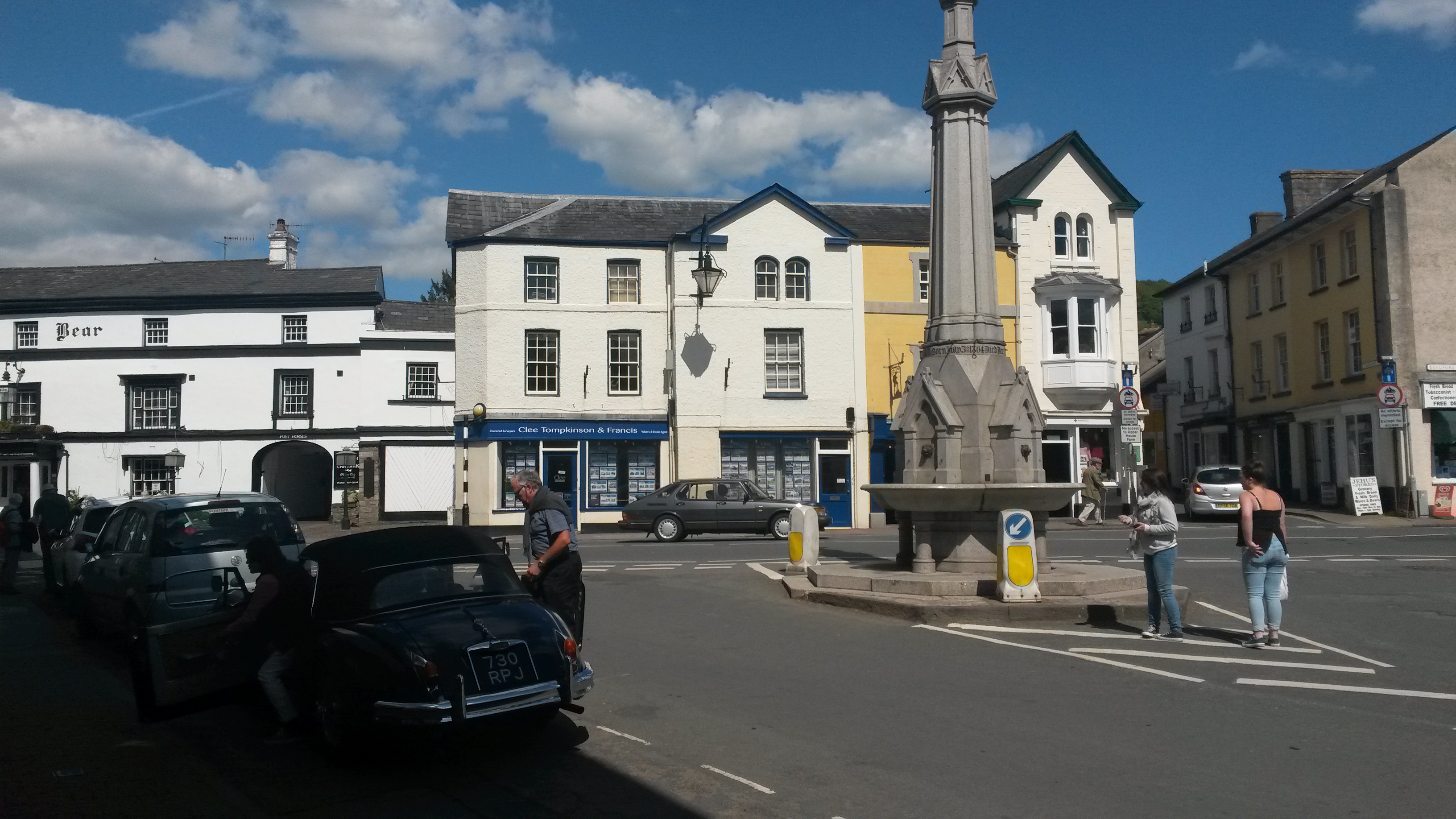
Crickhowell was overflowing with classics.

Crickhowell has plenty of appeal as a stopping place

I’m guilty of having passed through this town many, many times without stopping. More fool me, because it’s a lovely place, with lots of independent stores (and a current campaign to stop Tesco invading the town). Having free, one-hour parking is a smart move too. Park up, stretch your legs and head off again. Perfect. Making the most of such opportunities means leaving the comfort of known brands. Yes, you can buy a coke if you must, but I was of a mood to avoid nasty chemicals – namely sweeteners. So, we explored a few shops before I found what I was looking for.

No, I'd never heard of it either

No, I’d never heard of it either

Brilliant. This amounted to little more than fizzy water with some lemon juice in it. It certainly packed quite a punch, while being nicely natural. It has to be said that the fizzy orange was rather less punchy. It felt good from a taste point of view, and from a ‘supporting the small-time player’ point of view.

I’ll certainly be attempting to keep up this avoidance of rip-off motorway services. Why do so many people put up with paying so much for so little? We’re idiots for our ‘convenience’ ways really. We so often put time-taken ahead of quality.

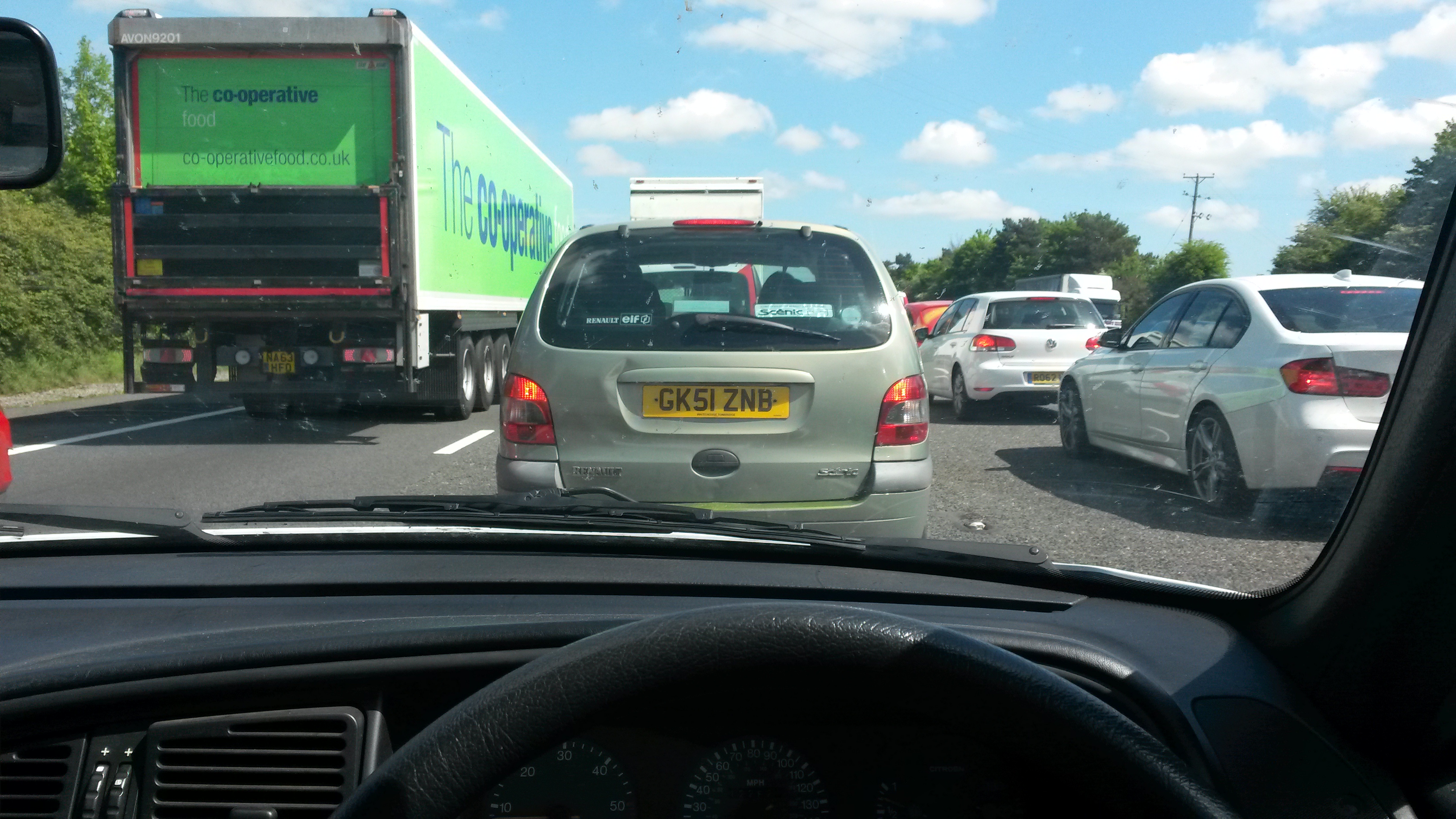
Not that we’d necessarily have saved time on the motorway. It looked like this just before we came off.

Stationary traffic. Ugh.

Stationary traffic. Ugh.

So, I think I shall keep up my plan to avoid motorway services unless I really have to. After all, fuel is usually much cheaper on normal roads too. We’ll see how we get in with our next roadtrip – Ripon in Yorkshire.

Dream Drive: Citroën-Maserati DS V6

I’ve known of this car since at least 2006. Built by former Lotus engineer Adie Pease, the DSM is the car the DS should always have been – with a few added quirks. A bit of background first.

Citroen Maserati

My first sight of the DSM, in 2006 – here with the roof off.

When Citroën was developing the DS, it rather ran out of development funds. That led to the mighty D wowing the world with its starship looks in 1955, while that swooping bonnet hid a warmed-over Traction Avant engine – a unit with pre-war origins (which miraculously lived on until 1981 in the current catering van of choice – the H van). Later on, it got a better engine, but it never had enough cylinders. The initial plan was for a flat-six, but those plans were kiboshed by economics. Even Michelin, who then owned the company, apparently had limits.

The SM was launched in 1970, and finally here was a car with DS-like suspension and steering (albeit further developed) and a worthy engine at last – a product of Citroën’s purchase of Maserati. The V6 engine has a 90 degree angle, which is largely due to it being a truncated V8. There are four camshafts, sodium-filled valves (often replaced) and a soundtrack that can gently cause excitement amongst the hair folicles of a motor enthusiasts neck.

Nine years later, riding in a dream machine.

Citroën did build a few DS V6s, but only really to test the SM’s hardware. That said, they did take one of them ice racing just for a laugh and that car is still in the Citroën Conservatoire. It’s a car I have a lot of time for.

So, if you wanted a V6 DS, there were few options other than to build your own. Over a few suitable drinks at a Citroën Car Club meeting, that’s what happened when Adie Pease and owner Edward Davidge let beer replace common sense.

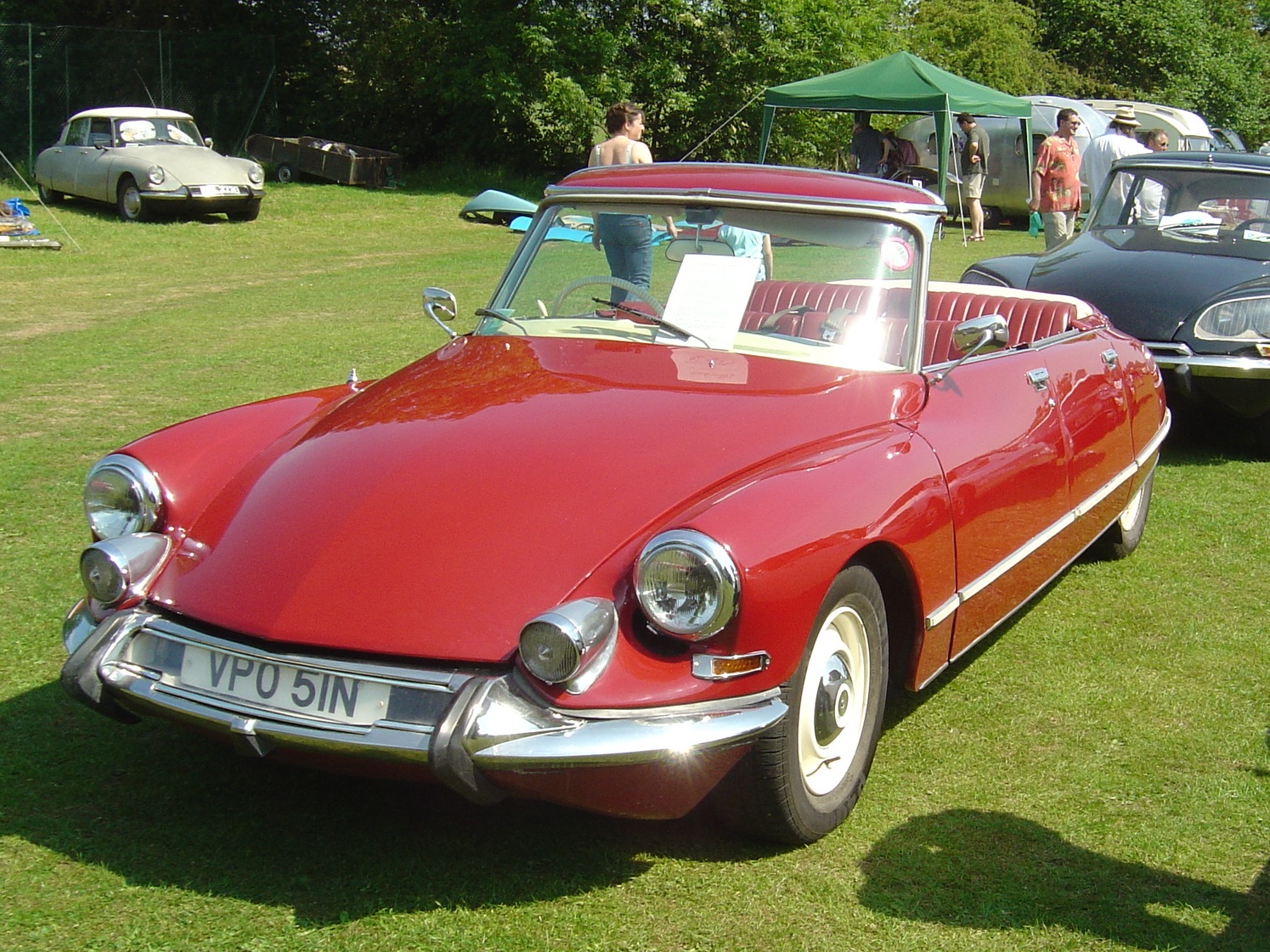
Just to add to the fun, they opted to use a semi-automatic gearbox, as used on the DS but never the SM. Oh, and they’d already turned the car into a four-door convertible – the entire roof is removable.

While I’d known the car for years, I’d never had a chance to meet the owner until he turned up at a small camping event I’d organised near home. When we decided to head into Aberystwyth to soak up some sun, I was thrilled to get a chance to have a ride in this car – one I’d lusted after for so long. When he said I could have a drive if I liked, it was all I could do to stop running around in circles and jumping for joy. That sort of thing rarely gives the owner much confidence.

However, I did get my hands on the keys and soon found myself trying to manoeuvre a very powerful car, with five people in it, in a very tight car park, backwards. A few things made this difficult. One, the DS is wider at the front than the rear, so you can’t just rely on your mirrors when reversing through a tight spot. Second, this DSM uses a semi-automatic gearbox, which has a centrifugal clutch. It’s a mechanical, automated clutch over which the driver has no control. Thirdly, the clutch set-up ‘needs work.’

Citroen DS DSM V6

Yes, that is my hose reel. Sorry about that. Here, the DSM has its roof fitted.

Disaster was averted and I was able to drive away from Aberystwyth in a big, floaty car that made noises I could listen to all day. Make no mistake, this is a car that demands your attention. Your first experience of a DS, SM or CX can be a terrifying one. Super-direct steering is allied to super soft suspension, while the brakes are incredibly fierce, and controlled by a rubber button on the floor. My experience with these cars paid off, and I kept all of my movements as slow and controlled as possible. The reward is a car that shrugs off the worst of roads – not actually too much of an issue in rural Ceredigion as the roads are fantastic.

With the engine warm and a hill looming, I could give it a bootful and let that Italian engine really sing. Power was actually a bit lacking – the car could do with a fettle admits the owner – but go beyond 3000rpm and she really hitches up her skirts and dashes for the horizon. It feels quite racy apart from one aspect – that semi-automatic gearbox. A small stalk protrudes from the steering column, and can be casually flicked by your right-hand without having to relinquish your hold on the steering wheel. The actual gearchanges are performed using hydraulic power, though you do need to lift off the throttle. That’s because the clutch is disengaged as the change is made. You have to time your return to the throttle perfectly. Too soon and the clutch is not yet engaged, and you just end up with revs. Too late and precious momentum is lost. It’s a ridiculously sporty engine allied to a not-at-all sporty gearbox. Yet somehow, it works.

The tight, twisty roads of mid-Wales were no problem at all, as the DS has fabulous road manners. the hydraulically-assisted steering is wonderfully direct, and nicely weighted. Grip is plentiful – from the tyres, if not the seats. My passengers had to hold on tight. It didn’t seem to take long for me to get used to this car. I quickly adapted to the need to blip the throttle on downshifts, as otherwise, the centrifugal clutch tends not to re-engage very quickly – which can leave you feeling like you’ve got no engine braking and a gearbox full of neutrals. Easing off on the throttle helped make changes smoother too, though there’s a real knack to getting a perfect gearchange, especially when really going for it. The owner told me to go for revs – I wasn’t going to ignore such an invitation!

The problem here is gearing. It’ll quite happily do 70mph in second gear! Fourth is very much an overdrive, but there’s quite a gap to third. That means you often end up hanging on to third gear, just because fourth result in too much of a rev drop – and a loss of momentum. Not that a screaming V6 is particularly onerous to listen to, but it remains a minor imperfection.

I hate to grumble though, because this is a very rare thing indeed. This is one of those ‘meet your hero’ moments that definitely did not disappoint. In fact, the only negative thing is that I was so fired up about the experience, that photography went straight out of the window. I can only apologise. I was having the time of my life.

PS – I did get a video while I was travelling in the rear. Sadly, the engine noise is not very prominent, but you can enjoy the views!


Back on track – Devon roadtrip

After last week’s brain fart, I’m pleased to report that sanity has returned, helped my a marvellous weekend roadtrip to visit family and do some other things in sunny Devon. I often seem to find myself travelling solo long distance in the XM and I really do enjoy it – though naturally it seems a bit selfish to be wafting along in a huge barn with even my lovely wife joining me.

Another roadtrip, almost flawless

Another roadtrip, almost flawless

There was an added element of panic initially when paranoia got the better of me, and I decided I simply had to get the XM’s cambelt replaced. I had no idea whether it had been done recently or not and the last thing I wanted was an expensive, engine-wrecking failure. So, the XM was whisked over to Sparrow Automotive all a bit last minute, which helps explain why it was still being worked on when I arrived to take it to Devon. Pete is a very busy man!

I had to turn my sat nav into a manual map to navigate my way across Hereford due to simply horrific jams. I’ve no idea what was going on, but cars simply weren’t moving. Eventually, I got to the other side, after exploring many side roads, and filled the XM’s tank. Over £80. Gulp.

Then it was down to Newport, across the Severn Crossing, down the M5 and the rest was easy. Or was it? No. The motorway had been pretty blissful considering it was rush hour by the time I got past Bristol. But roadworks on the slip road at junction 27 of the M5 were absolutely crippling. I’d like to meet the person who decided that was a satisfactory way of doing things. It took over half an hour to travel one mile. ONE!

At this point, I noticed the temperature gauge was sweeping upwards. That was impressive in itself, because The Seahorses “Blinded by the Sun” was blaring out of the cassette player with perfect timing – the XM still had no headlining after the sunroof saga, and I therefore had no sunvisors. There was no doubting it though. The gauge was now above 90 and didn’t seem likely to stop. I’m sure the fans are meant to kick in at that point. I resorted to putting the heater on full blast, which took things back below 90. So, Devon’s stupid road planners almost cooked my XM.

Once up to speed along the A39, the temperature went back to its usual spot and all was well. And all remained well for my time in Bideford and the surrounding area and my return home. In fact, the XM really is a truly marvellous weapon for a long-distance jaunt – though my only points of reference at the moment are an exceedingly tiny, Malaysian city car and a French peasant wagon. Still, the XM is relaxing in the extreme. Best of all, I got back home after over 400 miles with well over half a tank of fuel left. Astonishing given that I was hard on the speed limit at all times.

XM pauses in Welsh border country. Stunning. View and car.

XM pauses in Welsh border country. Stunning. View and car.

And there’s another point of reference. This was a repeat of the trip I attempted in an electric car in November last year – a journey of stress, boredom and cold toes. The ‘range’ of the XM meant I simply didn’t have to worry about whether I would make it to the next stop. At one point, I drove for three hours without a break (other than sitting in a stationary car in the first lane of the M5 for half an hour) which is something most electric cars can’t even contemplate. I even avoided a breakdown by merely putting the heater on. Something I’d been loathe to do in the Nissan e-NV200.

I enjoyed it a lot. I just love long-distance jaunts. Driving into the sunset, music playing, car wafting – as much as I love the 2CV, this really is something the XM is exceptional at. It’ll be even better when I refit the sunvisors…

The 200k Tin Snail Roadtrip

Time was running out. My 2CV was creeping towards its 200,000th mile, but there was a serious danger that the MOT was going to run out before it got there. There was an amazing feeling of deja vu here, as I’d had much the same dilemma way back in 2002, when Elly the 2CV was nearing her 100,000th mile with an MOT deadline. I solved that problem with a 350-mile day trip to Snowdonia. Now, I lived in Wales. Where was I going to go?

That problem was solved by an invite to visit family in Sussex. There’s nowt like seeing our nephew and neice (and associated family and animals) to motivate us to get on the road. Even in the days leading up to the trip, I found myself looking longingly at the XM. Comfortable seats. Absolutely serenity at motorway speeds. It was clearly  the sensible choice.

Pah. Where’s the fun in that? My wife pointed out that it was no wonder Elly the 2CV was struggling to reach 200,000 when I kept finding excuses not to drive her. It’s true. Her annual mileage has plunged below 3000 at times in recent years. It has been over 10,000 at times. So, I committed to the plan, checked the levels and off we went!

The trip didn’t get off to the best of starts. Within just a few miles, I’d rounded a corner and, distracted by an approaching van, drove into a HUGE puddle. This sent up a wall of water, which we then drove into. Elly began spluttering and banging, popped out her air cleaner and steamed up like a sauna. The van driver must have found it hilarious. Elly cleared her throat and picked up and off we went, though I stopped once we’ve dropped down from fearsomely chilly parts to refit the air cleaner.

2cv bonnet up classic car

Oh dear! Not an ideal start. Too much water sees Elly struggle.

We drove on, but had to stop again at Builth Wells due to a misbehaving front indicator. I wiggle the bulb. It worked again. We drove on. We got as far as the Brecon Beacons before it played up again. We stopped for tea and further investigation.

A duff contact was causing the indicator to not flash.

This was a successful fix. We headed for Newport and were soon tearing along the M4, heading east. The only real problem was sunlight – it was blazing in through the side window. I was forced to block it out with the sun visor. This was hardly the end of the world. We did have the misfortune to visit Membury Services on the M4. My recommendation is that you do not. The car park is disgraceful, and the way the traffic flows have been designed is absolutely hopeless. Forcing trucks to merge from the right – that could only be designed by someone who has never driven a truck. Or had even a modicum of common sense. We filled up, with annoyingly expensive fuel, and drove on. At least it doesn’t take much fuel to fill a 2CV. We’d used £21 of fuel so far.

We made it to the M25 very swiftly indeed, and stopped at the new, rather delightful Cobham Services for another break. This was much more like it, and the weather was simply fabulous.

Basking in the sun at Cobham services

As you can see, the grille muff remained in place. Official advice is to put it on below 10 degrees, which it was, and remove it at 15. It’s fine to keep it in place at motorway speeds UNLESS you own a very late 2CV, on which extra sound-proofing runs the risk of you cooking the engine.

The M25 wasn’t too bad for traffic, but the road surface was something else. The concrete sections set off a noise inside the car that made it sound like every mechanical part was starting to seize. It wasn’t very pleasant at all. The odd short section of tarmac reassured us that our steed was not about to give up.

2CV on the M25, and the most horrible road surface in the world

However, we made it to Sussex and there was much merriment, tea and some plant swapping. We know how to live.

The next day, we didn’t even leave the house. Our nephew and niece kept us quite busy without us having to go anywhere. The day after that, we went off to explore Lewes. While Elly was parked up, she managed to attract a rather fine friend.

2CV meets another XM

I guessed that the XM must be owned by an enthusiast – look at the number plate and general condition. I wasn’t wrong. ‘FakeConcern’ had posted his own version of this photo on the internet and contact has now been established. It seems Elly is famous enough for plenty of people to recognise her.

I didn’t meet ‘FakeConcern’ though. I took this photo before we headed off for a second tour of Lewes, and it was still there when we returned.

All too soon, it was time to head home. We left Sussex at half eight this morning, knowing that should we make it home successfully, Elly would hit 200,000 miles at some point. With that in mind, we decided to stay off the motorway. The weather forecast was another reason to stick with A roads – a headwind was very likely. When your car has only 29bhp and the aerodynamics of a crumpled paper bag, it pays to pay attention to this sort of thing!

The A272 is a largely delightful road that snakes across the south. It’s certainly a lot more enjoyable than the M25/M4, with pretty places like Petworth proving an utter joy to pass through. There was a section of A303, then some other road I’ve forgotten and eventually, the A417 bypassing Swindon. We had a brief stop for lunch just after Swindon, before heading to Gloucester – which is where Elly hit the second major milestone of her life.


Zero miles! 200,000 miles for my little Tin Snail

She didn’t choose the best of locations, so I had to hurriedly use a bus stop to grab the above photo before we quickly got moving again. After that, it was foot to the floor as we raced into Wales. The headwind was making 60mph quite hard work, so perhaps raced isn’t quite the right word…

It was starting to feel like a true marathon now. I was starting to feel tired and Elly was starting to groan in a manner that suggested that she’d had enough too (must grease those knife edges…). Hailstorms livened things up, and leant a sense of urgency – worse weather was a possibility. All was well coming over the Elan Valley a second time though. We were almost home.

The Elan Valley mountain road means home isn’t far away

As we plunged over crests and weaved our way through the mountains, I recalled how I’d done much the same thing 13 years earlier, as I marked this car’s 100,000th mile. You really can’t beat the rural roads of Wales for driving joy. It’s a country I like very much, for this and other reasons. I’m not sure Elly will make it to 300,000 miles though. Her body is a right mess. But I’m not going to dwell on the future at the moment. Instead, I shall celebrate my incredible relationship with an incredible little car.

111,000 miles together. Not bad for a tiny little motor car.

What YOU need to know about driving classic cars

This post isn’t aimed at those of us who regularly drive classic cars, but it is designed to help folk without classic experience. What is a classic car like to drive? Are they all horribly slow? Why do they take so long to pull away at junctions? What are those strange controls?

To make life easier, I’m focussing on Post-war classics – those made since 1945. Even then, controls aren’t always labelled in the same way, so for the classic novice, the interior of an elderly car can be a confusing place to sit. If it makes you feel better, classic fans often feel just as confused when clambering into a modern car, where there are more buttons on the steering wheel than the entire dashboard of many classics! Before you can start the engine, you generally need the control below.

If you own a modern car, you probably don't recognise this.

If you own a modern car, you probably don’t recognise this.

The choke control knob adjusts the mixture and throttle for a cold start. The logo on it shows a butterfly valve restricting air flow. Modern cars do this automatically, but most classics don’t and require user input. Knowing how much choke to use can be a bit of an art. It depends on ambient temperature, engine temperature and how long since the engine last ran. You also generally need to steadily reduce the choke as the engine warms. Again, this varies from car to car. A Citroen 2CV can generally run choke-free after less than a mile, but a classic Mini may take a few miles before you can shove the choke fully home. It sounds more complicated than it really is and for many, it’s like using a clutch. You just no longer really think about it.

Starting the engine can now proceed. You might need a bit of throttle, but you might not need any at all. You build a relationship with a classic car, and that means you have to discover what it needs. Some classics require you to turn a key, others have a starter button – a recent trend in moderns too.

We’d better talk about gearboxes before setting off. They can be rather clunky and some lack synchromesh on all gears. It’s something we take for granted these days, but synchromesh allows for smooth changes at all speeds. It effectively gets the gear cogs up to the required speed before they mesh, so there’s no crunch. Many post war classics lack synchromesh on first gear and some – Fiat 500s for instance – lack any synchromesh at all! Going up the gearbox, that’s not much of a problem. Going back down is more of a challenge though. For that reason, many classics need to come to a complete halt before first gear is selected. That’s why they can sometimes seem to linger at junctions. They’re not doing it just to annoy you! Experienced classic drivers learn a trick called double-declutching so that downchanges can be conducted on the move. It requires some skill and familiarity with the car. Don’t worry about it if you are a novice, but do note that you may need to come to a complete halt to select first without a crunch. A tip is to select second, then first when you have stopped as this will stop the gear cogs whirring and will allow a crunch-free change.

Steering is the next challenge. Power assistance is rare on classics, though some larger ones will have it. Where fitted, it’s often very light indeed. If it isn’t fitted, the steering will be very heavy at slow speeds, bordering on very heavy indeed at car park speeds. You’ll also notice that the steering gets heavier as your cornering speed increases. In classics, you often feel the speed you are travelling far more than in a modern. It can be hard work. The steering can be vague, especially if a steering box is used, which can make driving at speed very hard work. It’s one reason many classics prefer to travel at a gentler pace. The other is that older engines aren’t always happy to be driven hard.

Handling can be very different too. Skinnier tyres and different suspension designs mean many older vehicles just can’t be driven as quickly as a modern hatchback – certainly unless you are very skilled in how these vehicles handle on the limit. With classics, it’s often more about enjoying the journey than arriving in the quickest time possible. They’re not all bad – my 2CV can certainly corner very quickly, and so can classic Minis. Morris Minors on standard-width tyres are at something of a disadvantage though, and pushing one hard can be a scary introduction into the world of oversteer – where the back end pushes out and you go sidewards.

Driving classic cars can be challenging, but is huge fun!

Driving classic cars can be challenging, but is huge fun!

Then we come to brakes. They can be awful by modern standards. Even a 2CV, which has very powerful brakes, has a pedal that needs a good shove to get any braking effect. This is because it doesn’t have a brake servo. These use a vacuum created by the engine to boost the braking effect. It’s why many moderns require just a light touch on the middle pedal. That said, a Citroen DS has a rubber button on the floor which can produce very strong braking with the lightest of touches. Certainly, it’s a world away from other cars of 1955. The lack of braking is another reason why a classic owner may choose to drive comfortably below a posted speed limit. There’s no ABS either, so the old art of cadence braking may be required in an emergency. Again, I’ll leave Wikipedia to the details. Needless to say, it’s an art that has saved my skin on several situations!

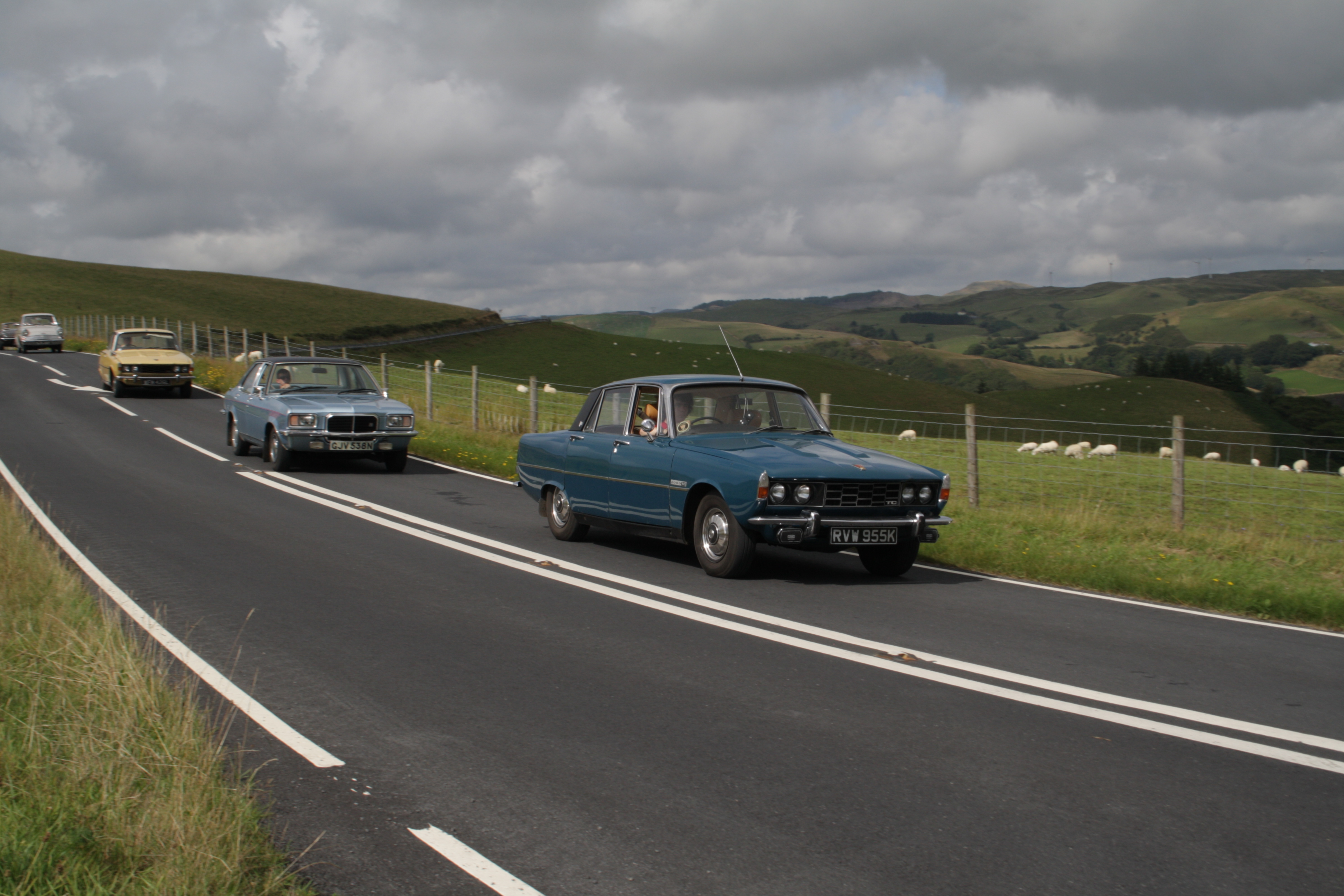
If all this is making classic cars sound like a complete nightmare, then I apologise. However, some people do jump into older cars and are horrified by what they find! You have to set your expectation levels. Some older cars – Rover P6s, bigger Citroens for example – are truly exceptional to drive, but they still don’t behave like modern cars.

Triumph Herald is thoroughly charming and quite different too.

Triumph Herald is thoroughly charming and quite different too.

Nor do they all behave the same. There can be a vast difference in how older cars drive, even when you compare rivals at the time – such as the BMC 1100, Ford Escort Mk1 and Vauxhall Viva. Each has a far more distinctive character than rivals of today.

Above all else, older cars somehow feel more alive. They have personality. You have to learn how to get the best out of them and can’t just expect the car to do all the work. Journeys become a team game and the most tedious of journeys can be turned into something far more joyous. Then there’s the looks. Check out the Triumph Herald above. You rarely see a modern car that’s even half as bright and cheery. We seem to have gone back to the black and white days in fact – a sea of monochrome.

So, while some re-education might be needed for you to get the best out of a classic car, overall, it’s well worth the effort. But even if you don’t own a classic and never will, please show a little patience. Drivers of older cars are not deliberately trying to hold you up. It’s just that when you’re driving a nice old car, you learn that you don’t need to rush to have a good time.

Unexpected electric – driving a Finnish EV

Today, I went to visit someone I know locally who owns a 1920s car. After playing with said old car for a bit, we then got discussing electric vehicles. A few minutes later, I was driving a Subaru Domingo, converted in Finland by a company called Elcat for the Finnish Post Office – or Posti – and other largely-Finnish companies. A Japanese electric van with a Finnish twist.

Japanese van with Finnish electrickery

Japanese van with Finnish electrickery

You may be wondering why the Finnish Post Office needed right-hand drive vans. Well, when you think about it, in countries that drive on the right, it saves the postman having to step out into the road doesn’t it? That’s why Belgian Post Office 2CV vans were right-hand drive. Many Post vehicles in Scandinavia still are RHD.

Mr Postman got other benefits too. Like a lever control for the winding window, that allowed it to be rapidly lowered and raised – perfect for reaching an arm out to fill a postbox. Why even open the door? Well, Finland gets cold, so opening the door lets more heat out. That’s why despite being electric, this van actually has a petrol-burning heater. Still far fewer tailpipe emissions than if it was fully petrol-powered.

So, what’s it actually like to drive? Hop behind the wheel and all seems entirely normal. There is a key where you’d expect it. Turning the ignition on makes fans hum in the back. There’s a conventional gearlever too, connected to a conventional gearbox. There’s even a clutch pedal. To make the vehicle move, select a gear, then just press the throttle. You can use first, but second will do on the flat. Away you hum! Pick-up is brisk, as you’d expect as electric motors deliver all of their torque straight away. There’s no clutch-slipping needed – you use that pedal only to change gear. Apparently, third is as high as you should go, as the motor doesn’t have enough grunt for higher gears. That’s still enough for a top speed approaching 50mph on the flat. Trying to extract grunt out of an electric motor at low speeds will go horribly wrong – it’ll just burn the motor out. A display of LEDs indicates battery consumption. Red is bad, orange ok, green is better! Not as hi-tech as the Tree display in a Nissan Leaf, but better than nothing. Don’t forget – this vehicle was brand new in about 1995. It’s much older technology.

There is no battery read out, which seems a bit odd, but it does ‘misfire’ to warn you it’s getting low on juice. Just like a car running out of fuel! There’s a good engine braking effect, as a regeneration mode kicks in when you come off the throttle. This uses your momentum to put some energy back into the batteries. Conventional brakes are there if you need to stop more swiftly.

Sure, it’s a compromised vehicle. Hills slow it dramatically, there’s a hefty battery pack in the middle of the load bay and the range isn’t very high – 50 miles would probably be about it. But it’s still good fun to drive and I suspect very practical for a large percentage of journeys. I was intrigued. It was an unexpected driving experience but entertaining nonetheless. It hasn’t done anything to dampen my electric desires that’s for sure!

The van lives at Blaenglanhanog Cottage, a delightful self-catering abode hidden in the Welsh hills. The major bonus is that the cottage has dedicated charge points for electric cars! (as does the village of Carno itself) They get used too – apparently one owner visited in his Nissan Leaf from Croydon. Who says range is an issue?

Citroen C5 Mk1 Road Test – not as bad as it looks

Yesterday, I had my second drive in a Citroen C5 Mk1 and yet again, it didn’t disappoint. The rather unfortunate looks are still not particularly easy on the eye though, especially when the car is parked next to its sleek, Bertone-designed predecessor. However, a video was made, and you can now view it!

Oh gawd. Yet another vehicle on my ever-increasing wish list. I just can’t escape my love of hydropneumatic suspension! In fact, in the past week or so, I’ve driven a C5, C6, Xantia and XM. So further thoughts on those will be unleashed at some yet-to-be-agreed point in the future.


Single Tweet Road Tests

I’ve driven an awful lot of cars. I’m very grateful for this. Even before I became Ian Seabrook the motoring writer, I drove a lot of vehicles. I’m pretty sure I was up to 50 by the time I was 21. It allows me to give my opinions on a huge number of cars. I thought it might be fun to hurl some of these opinions out onto the internet via the medium of Twitter. The One Tweet Test (#1tweettest) was born. Stuff like this Ford Maverick.

And this Rolls-Royce Corniche convertible.

Though of course, I can mix it up with real-world tests of some surprising vehicles. Such as this colourful Bedford CF.

I’ve even Tweeted a test of a 1918 Wren steam engine, courtesy of the Vale of Rheidol Railway.

Go and have a mooch at what I’ve covered so far. More will be added in a fairly sporadic manner. I hope you enjoy them. Share if you do!