My Perfect Saturday Pt1

Ok, so having a 7am alarm and actually waking up 45 minutes before said alarm would not go down as a perfect start to a perfect day for a lot of people, but Rachel made me a cup of tea for me to consume while still in my bed, and that seemed to set the scene for a rather lovely day.

A car in which I had many funs. As you can see.

A car in which I had many funs. As you can see. It was spotlessly clean when I left home…

The plan was to head to a car auction in Staffordshire, where I would meet fellow Autoshiters for a game. That game is pick seven cars, in seven different categories and aim to ‘spend’ as little as possible by following the hammer prices. Autoshiters were heading down from as far away as Glasgow just to take part – one hero drove down from Glasgow, in a Citroen AX! He left at about 3am. Crikey.

I only had a two-hour drive by comparison, and it should have been easy. However, I hurled my sat nav away after it refused to acknowledge the existence of Cannock and so would rely on my memory. Naturally, I didn’t have a map in the car. Despite this, I decided to see if I could remember the scenic route from Newtown to Shrewsbury that ignores the A458 via Welshpool for some rather more entertaining roads.

This plan had only one significant failing. I took the wrong road from Newtown and ended up heading south. I knew Builth Wells really was in the wrong direction so quickly took the B4355 from Dolfor to Knighton. I was in Knighton yesterday, so I knew I didn’t really want to be heading in that direction either, but it was better than Builth.
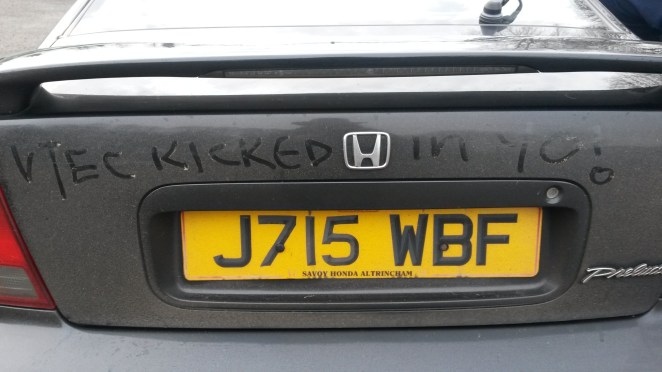
Only my Honda doesn't have VTEC Mr Yo.

Only my Honda doesn’t have VTEC Mr Yo. I acquired some graffiti.

By golly! This road is INCREDIBLE! You are never travelling in a straight line. It’s just bend after bend, with altitude changes thrown in for good measure. Fortunately for me, I was in exactly the right car too – my Honda Prelude 2.0i automatic, purchased this very week. Driving on the motorway to get the car home hadn’t really given me chance to discover just how good it is, but now was its chance to truly shine.

The steering is just perfect. The weighting of it could not be better, and assistance just helps. It somehow doesn’t managed to rob too much feel. Yet it’s also wonderfully direct, so you don’t have to turn the wheel very far. The rather firm suspension which had been bothering me, was now absolutely ideal. The Prelude felt taught and responsive, and changed direction beautifully. It was really starting to inspire confidence, and I shocked myself a few times as I exited a corner and glanced at the speedometer!

This was despite me holding back somewhat due to the conditions. Mud and water do not make an ideal racetrack. Public roads are dangerous places to hoon. I was having to rein in my enthusiasm a little. Drive quickly, but not too quickly.

I’m not sure if I’m just getting older and more accepting, or whether I really have finally started to buy cars that I really enjoy driving, but this was truly something special. There’s very little I’ve driven from the past 20 years of production that manages to convey this feeling of utter joy.

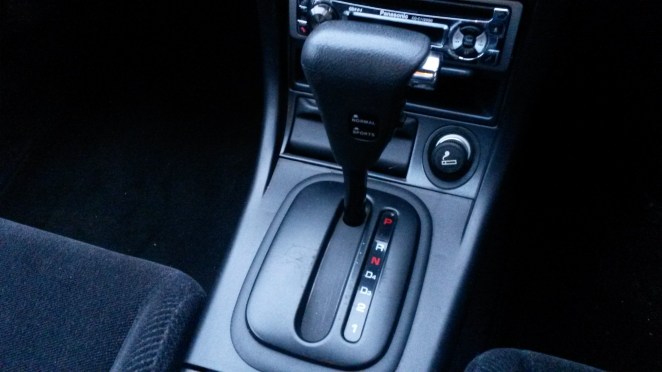
You’d think the automatic gearbox would be a hindrance but far from it. I didn’t bother with sport mode, but I just flicked into third gear on the approach to tight-looking bends. It saves the brakes form overwork and gives much better control, ensuring you’re already in the right gear when you want to apply power rather than waiting for the gearbox to catch up. Amazingly, the gearbox is happy to use the torque of the engine, and I found I only went above 3000rpm on steep climbs. Like the XM, this makes it relaxing while also remarkably quick. But it feels much more nimble than the XM – the big Citroen always feels big. And heavy. It’s remarkably capable for a luxurious barge, but a barge it truly is – one with a lot of weight up front.

At Knighton, I joined the A488 which heads via the painfully pretty town of Clun and on towards Shrewsbury. This road had plenty to recommend it too with some seriously sharp corners lurking to catch out the unwary. By the time I reached Shrewsbury, I was exhausted! It had been one of the best drives of my life, and I still wasn’t anywhere near the end of my journey. Now the Prelude could just waft along at motorway speeds with no drama at all.

Rover Honda

Both 2-litre, but worlds apart. 60bhp vs 133!

It gave me chance to reflect on the morning’s experience so far. It made me realise that overlooking the 2-litre, especially in slushbox form, is utterly wrong. Would I have had as much or more fun in a manual VTEC? I’m not sure I would. The VTEC effect gives a massive boost in power as you get beyond 4000rpm, but that can quickly get very tiring – not to mention illegal. 60mph can be some way in the distance very briskly indeed. I suspect that every time I got a VTEC on cam, I’d be straight on the brakes hard for the next bend.

As it was, I was using my momentum-conservation skills learned through many years of 2CVing to keep the Prelude at a good pace without the need for harsh acceleration. There really wasn’t room for it anyway! Bends were coming so thick and fast that power absolutely would not have been any advantage at all. I was having all the fun it was possible to have, while remaining at entirely legal speeds. To be honest, I was below 50mph for quite a lot of it!

I arrived in Cannock in a very dirty Prelude, which had very clean brake discs. The filth was almost a badge of honour that had been deservedly won. Though considering I’d washed the car the day before, it was a little annoying…

Part 2 to follow – auction antics! It’ll have to follow as I’ve clearly got a bit carried away here. Sorry.


A bit of retro Japanese action

I knew saving up for 2CV restoration was a dangerous move. You see, normally, I can easily resist cars for sale because I have no money. Buyers tend to demand an exchange of the stuff for whatever it is they’re selling so if you don’t have any, you don’t get very far.

Now German Classics magazine is live though, my income has received a pleasant boost. Straight away, I shuffled most of it into my savings account, thinking it’d be safe there. I kept a little to pay for things I needed, like new walking boots as my old ones have fallen apart at long last, and the occasional pleasant lunch out. Truly a treat.

But stashing the money in my savings account was not enough. When I found a Honda Prelude Mk4 2.0i for sale on a certain forum, my will was tested. And proved about as robust as a bridge made of Pringles. I chucked in a low offer and to my distress, this was accepted. Oh dear. So, I found myself on a succession of trains to Devon all of a sudden, where the steed was located. I hadn’t expected to get up on Monday and buy a car but I was now frantically searching for cheap train tickets (www.splitticketing.com helped here) and by Tuesday, was on my way south. Well, North, West and eventually South because trains are rubbish.

Prelude black

A temptation too far for my feeble will power.

I was in a hurry to collect as I’m currently editing another new magazine, to follow on from German Classics. It’s called Retro Japanese, and perhaps now you can see why my head was turned!

I’ve owned Hondas before, and I like them. Even the 1990s Civic posesses something of the Soichiro Honda flavour that so defined this famous Japanese brand. You can feel the precision of engineering, and the car sits so low to the ground.

Prelude rear mk4

Not a hatchback but a two-door with rear wiper!

Clambering aboard the Prelude for the first time – I’ve never so much as driven one – I found myself almost lying on the ground. The scuttle is just as low as I’d come to expect from the Civic, and also Rover’s shared 1980s designs. I like that. I don’t like a scuttle I have to peer over.

Driving home the next day was enjoyable. Sure, it’s only a 2-litre automatic, but it still packs a 133bhp punch, which is plenty for me. I’m a firm believer that there is more to going quickly than out-and-out power, and I was able to hustle the Prelude along very nicely thank you very much.

Prelude engine bay

‘Only’ 133bhp, but more than enough for me. Goes well!

The ride is a little unrefined, but I’d come to expect that. I think Japan probably has smoother roads, and the double-wishbone suspension lacks travel. Something that frustrated many a Rover engineer. It all feels very good in the bends though. The Civic had hideously over-assisted steering but around the straight-ahead, the Prelude feels like it doesn’t have any assistance at all frankly. It turns into bends beautifully and surprisingly even weight distribution and that firm suspension conspire to make it behave wonderfully. No bodyroll, no deviation. I look forward to pushing harder once the weather improves. Frosty or sodden roads do not great confidence make, though the Prelude felt utterly secure.

The automatic gearbox seems to work well, and the fact that the torque converted locks up at about 52mph probably explains why I was able to extract a creditable 34mpg from it. It isn’t overly smooth though, despite what many would regard as a fairly low 89,500 miles. It’s fairly low by my standards, that’s for sure!

Automatic gearbox not the smoothest, but easy on fuel.

Automatic gearbox not the smoothest, but easy on fuel.

The ride then is not cosseting and nor are the firm sports seats, though the bolsters grip me in a far more effective way than the massive lounge chairs in the XM. I did have some backache after several hours, but then to be honest, that’s true of most cars.

Having chosen to read reviews only after I’d formed my own impressions, I learned that the Prelude was considered one of the best handling cars in its class back in the early to mid 1990s. Naturally, most press tests were of the more potent models – VTEC kicked in YO! With those, 185bhp is enough for a 0-62mph time of 7.1 seconds and a top speed of 140mph. I reckon mine is closer to ten seconds for the acceleration dash, and is probably all done by 120mph. Plenty fast enough really. The VTEC could be specified with four-wheel steering too, though I haven’t seen much to suggest this really makes any difference. It seems little more than a fad of those times. Remember the Mitsubishi Galant with four-wheel drive AND four-wheel steer?

A little bland perhaps, but purposeful.

A little bland perhaps, but purposeful.

Anyway, in real-world conditions, what I have is more than enough. The 2-litre really is wrongly overlooked. In fact, aside from the poor ride, I haven’t found very much that I don’t like. The ergonomics are a bit Japanese – the mirror adjustment requires you to stuff your elbow down the side of the seat, and the dashboard dimmer switch is obviously located behind the handbrake – but as a driving machine, it feels like a very purposeful one, that’s also more than capable of cruising along at a goodly rate with no stress at all. There is a clonk from the rear suspension, but this seems to be a very common Mk4 and Mk5 Prelude trait that can be solved by inserting washers above the rear damper bush. Hopefully, it’ll prove to be a  good buy!

Flourescent dials add a touch of glamour.

Flourescent dials add a touch of glamour.

How long do you need?

Mostly, my job of being a freelance writer involves nothing more exciting than sitting in front of a laptop. I have a phone to hand, plenty of reference material and an eager mind. And tea.

From time to time, I’m lucky enough to get to drive cars and here comes the biggest challenge. There often isn’t time to spend more than an hour or so with a car, and is that really long enough to form firm conclusions? This is especially true of sports cars, where you very rarely get long enough to really test the car – doing so on public roads is not really recommended, and is certainly not safe.

Porsche 911 German Classics

Driving a Porsche 911 is not necessarily a jolly!

Take my own Citroen XM for example. I maintain that for enjoying yourself on public roads, it’s one of the best cars out there. Sure, it’s 110bhp is rather less than the 1001bhp of a Bugatti Veyron, but (and I welcome the chance to prove this), I reckon the Veyron is absolutely no fun at all on the tortuously twisty terrain of mid-Wales. It’s simply too big, and you can’t use even 20% of the potential before you’re having to brake for the next bend. It must be infuriating.

But I’ve driven over 12,000 miles in the XM now, so I’ve come to know it very well. I have discovered that it’ll grip far harder than I have any wish to explore really, and I utterly know what to expect when cornering quickly. Not much steering feedback, great turn-in and a clichéd corner-on-rails experience. Yet, if you jumped behind the wheel for a quick drive of a few miles, I reckon you’d find it pretty underwhelming. Comfortable, certainly, but you might wonder what the fuss is about.

When I drove a Porsche 911 last year, for an upcoming feature in German Classics magazine, I therefore had quite a challenge. Here is a car with a terrifying reputation, and here was me having only ever driven a 911 on a race track (and that was a far grippier 997 version) wondering how I’d get on. You’ll have to read the magazine to find out more – on sale 15th January 2016 – but you’ll note that I’m not dead as I write this, so you’re safe to assume I survived the experience.

I clocked up fewer than 100 miles in that Porsche though, and even then I was covering more ground than I’m often able to. Certainly, it was enough to get a good enough impression for a magazine feature, but I still maintain that you need a good 1000 miles in a car to really stand a chance of understanding it as a daily proposition.

Take Pete Sparrow’s Citroen Ami for instance. I’ve raved about it before, because it is remarkable fun, but would I feel quite so merry about it after 1000 miles? Would the noise just get on my nerves? I feel the same about his BMW-engined 2CV as well. Fun for a bit, but would I get tired with it?

To return to the XM, I think you could drive one for the first time and frankly be a bit bored. It’s through constant ownership that I’ve discovered just how incredible the handling is. I’ve been able to push it far harder than I’d feel happy to do in anyone else’s car – which is another problem. I am emphatically not Top Gear and I’m not happy driving someone else’s car like I’d drive my own. Even in the BMW-engined 2CV, I wasn’t pushing it (even on track) as hard as I dared because I didn’t want to break it (nor cause an issue on a race track about to hold a 24-hour race! Pressure!).

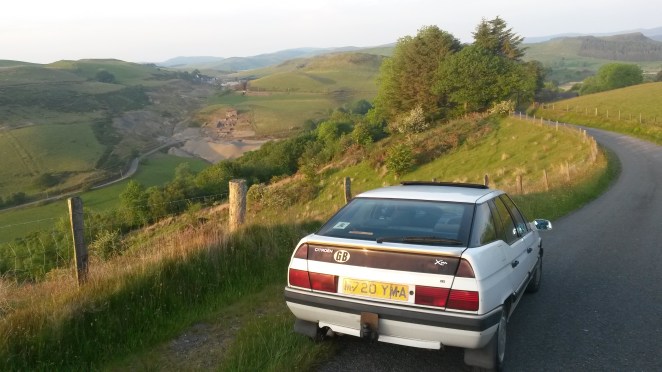
XM rear

A superb-handling car and some superb roads in mid-Wales.

As well as trying to form impressions about a car, I’m also often having to think about photography, and that’s very distracting. I often need to find a good venue, need to consider light conditions and then actually have to get the camera out and get snapping. Trying to do all this at once, especially when you don’t know the area, well it can be surprisingly hard work! Sure, that’s a first world problem if ever there was one, but I’d like you to understand just how much work goes into a feature like this. It certainly isn’t just a jolly! Hopefully, you enjoy the results.

German Classics goes on sale 15th January 2016 and is edited by Ian Seabrook. On sale in all good newsagents, or available HERE.


My favourite videos of 2015

Excuse the self-promotion as I guide you through my favourite videos of 2015 – my favourite HubNut videos that is. 2015 was a year in which I really stepped up video production, so here are my personal highlights. This is my Top Five.

Number 5 – Nissan e-NV200 Combi

This was the first electric car that I tested long distance, and it has to be said it wasn’t exactly stress-free! Using the Ecotricity Electric Highway, I was able to drive from home in mid-Wales to Bideford in Devon. Choosing to do this in Winter, in a vehicle with a 60-mile range was the problem. This is also a review of the e-NV200 itself. A very useful vehicle but still blighted by good old range anxiety and an inefficient heater.

Number 4 – Perodua Nippa

This one joined the fleet in March, and has proved to be an ideal little runaround. This review was filmed not long after purchase and while it’s certainly a car built cheaply, it continues to run well. Listen to the road noise though!

Number 3 – My first Vlog

Vlogging appears to be a thing – video blogging – so I thought I’d have a go. This is where I began a series of (so far) ten videos. I aired some annoyances with the regime in Saudi Arabia – exacerbated by recent developments as I write – and I also talk about electric cars and the Citroen XM.

Number 2 – Honda Insight first generation

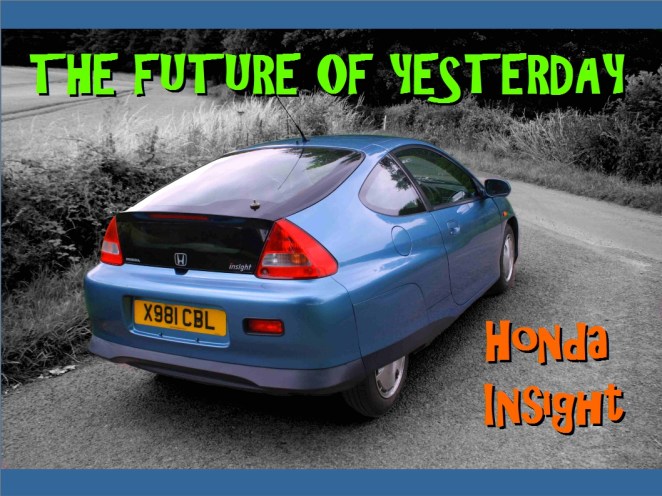
Insight rear

Testing the Honda Insight Mk1

It seems that I love every car that I drive, and I expected the Insight to be no exception. It didn’t quite do it for me, as you can see in this video. Still an appealing car, but not quite what I’d hoped for. It is proving to be a popular video though.

Number 1 – My 2CV and me

Picking one favourite is not easy. My XM V6 video continues to amass a huge number of views, and the Citroen Ami one was an absolute hoot to put together. But, my friend Keith Hicks helped me make a rather special tribute to my 2CV. I still don’t know what the future is for this car, but I’ve had many good adventures in it and I’ve loved every minute behind the wheel.

Thanks for watching. Once the weather improves, I hope to get cracking on some more videos. 2016 promises to be very exciting. Stay tuned!


Review: Volkswagen e-UP! Part Two

Having discovered just how poor the range of the Volkswagen e-UP! is, I then set about using the car in a rather more typical fashion. An awful lot of my journeys are short ones, to neighbouring villages and towns. Here, the e-UP! was just fantastic. I like having so much torque in so small a car. Great for acceleration and for climbing the great many hills in these parts.

A City car, emphatically not in a city

A City car, emphatically not in a city

Even better, the short range isn’t an issue so close to home, so I could drove the e-UP! in a much more spirited fashion – much more how I’d normally choose to drive.

In those circumstances, I was averaging around 3 to 3.2 miles per kilowatt hour, so about a mile less per kilowatt hour than when I was driving as gently as possible. I don’t feel that’s too bad at all, especially with lots of heater use and sub-zero temperatures at times.

But naturally, I got bored just testing the e-UP! on sealed surfaces, so I also indulged in a little light greenlaning. All this and more is contained within my latest video. Enjoy!

Video: Mitsubishi Pajero Junior

I love small cars, and 4x4s don’t get much smaller, or cuter, than the Mitsubishi Pajero Junior. Well, ok. There’s the Pajero Mini as well. Full details below! The test features on and off-road antics.

Another dream achieved. Baby 4x4!

Another dream achieved. Baby 4×4!

I’m particularly thrilled with this one, as I love 4x4s that have proper 4×4 functions. This is not a mere city car with chunky looks. The Pajero Junior was never officially sold in the UK, but many of the 70,000+ built were imported. It was replaced in 1998 by the Pajero Pinin – sold as the Shogun Pinin in Europe the UK, and built by Pininfarina. That’s also a 4×4 with very genuine ‘rough stuff’ ability.

Road Test: Hyundai i10 Gen1 (2007-2014)

I’m a huge fan of oriental engineering. It’s been fascinating to watch first Japan, then South Korea and Malaysia go from producing cars that were a bit rubbish, to cars that rival the best Europe can offer.

The rather-nice, Indian-built, Korean Hyundai i10

The rather-nice, Indian-built, Korean Hyundai i10

Hyundai first hit the UK scene with the Pony in the 1970s. It was a car developed with the help of some former British Leyland folk. It evolved into a fairly decent hatchback by the late 1980s, though dynamically, it was still some way off the pace – not enough to tempt very many from their Astras and Escorts.

With the Atoz city car of 1998, there was a bold attempt to smash into the class that had opened up below the Supermini. It was battling other oriental mighty miniatures such as the Daewoo Matiz, Daihatsu Cuore and Suzuki Alto. The styling was a bit gawky though, and even when it evolved into the Amica, it wasn’t the very height of desirability. It was still all a bit Oriental, in the same way that a 1970s Datsun was exceedingly reliable, but somehow not quite right in the styling department.

That all changed with the i10 of 2007. Suddenly, Hyundai had a supermini that was every bit a match for Ford’s Fiesta. Five-year warranties and excellent reliability meant people really did start taking this South Korean company very seriously indeed. That run has continued and the current i30 manages to look very handsome, especially now the Ford Focus effectively looks like it has melted.

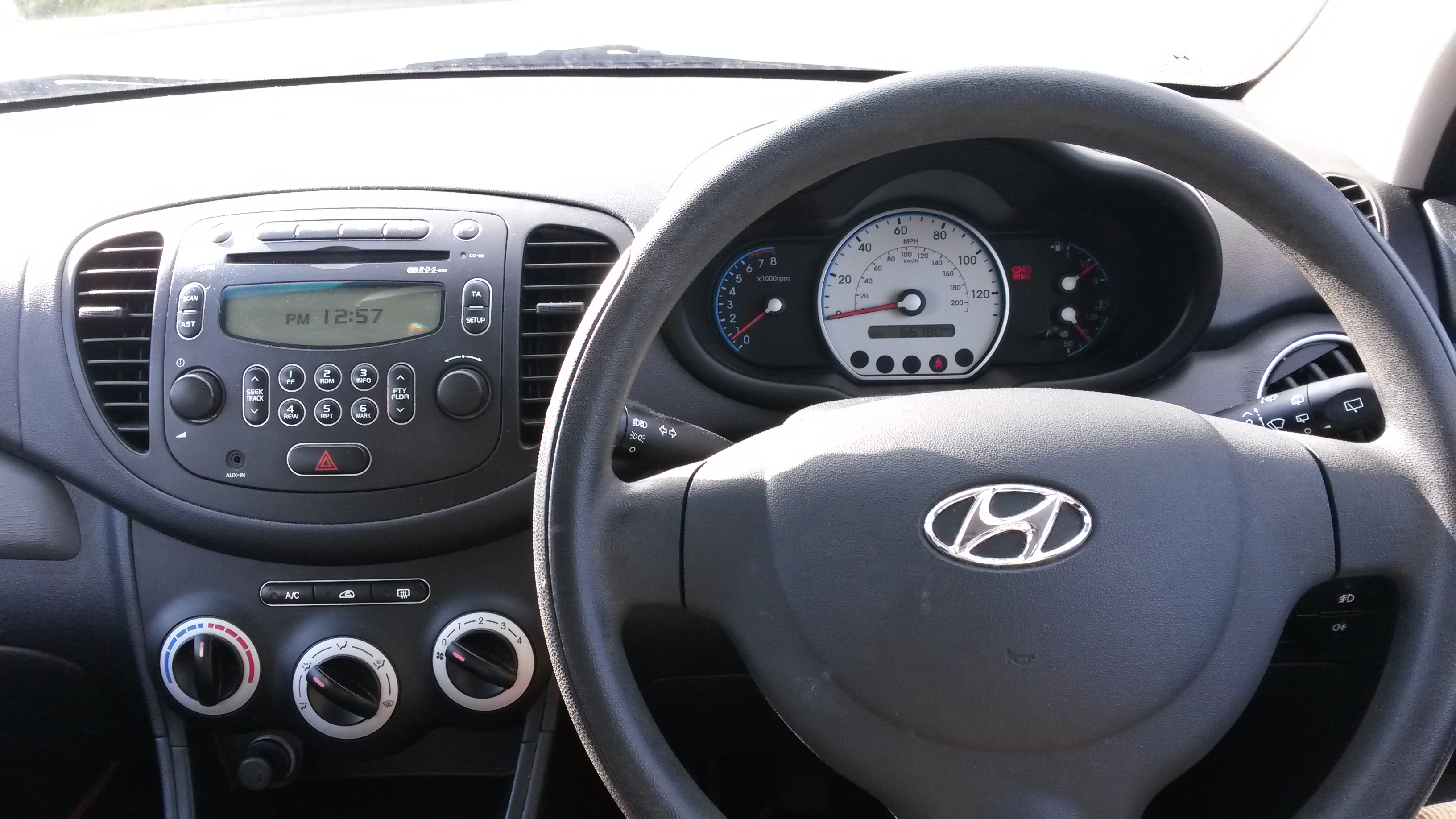
Acres of black plastic, and not particularly nice black plastic.

Acres of black plastic, and not particularly nice black plastic.

A lot of i10 development was carried out in Europe, and the first generation was built in India – the current one hails from Turkey. Hyundai really is a world player these days.

Behind the wheel, it must be said that the interior plastics are a bit grim, but that’s certainly true of the Fiesta of this era. Like the Ford, the dashboard protrudes noticeably down the middle of the car but the i10 at least leaves plenty of room for your left leg. There’s even a foot rest! Far, far better than the Ford.

The controls are certainly all very logical and straight-forward and once you’re under way, the gearchange is beautifully light, the brakes powerful and the steering nicely weighted – though I did feel it loaded up rather strangely in the bends at first. Possibly because I’m used to a Citroen.

It’s certainly very zingy, with 76bhp on tap. Sure, like most modern multivalve engines, there’s a lack of lower down grunt, but the pleasant gearchange means it isn’t a bind to go hunting through the rev range. It’s certainly very quiet, which means most of what you hear on the move is road noise.

The ride isn’t too bad at all for a small car and while it does jiggle around a little, I reckon it’s actually more compliant than the current model. Certainly, it feels a LOT more pleasant to drive than the Fiesta and reviews of the time suggest it was better than many of its rivals too. Impressive.

Downsides include rear leg room. At 3.5 metres long, it’s not a big car and I would struggle to fit behind the front seat set for my 5’10” frame. The boot is also not entirely generous, though enough for most.

Overall though, it’s a very appealing package. It looks quite smart, with the front end having a particular cheeky appeal. Certainly, this is the starting point of Hyundai becoming a major force in motor manufacturing.

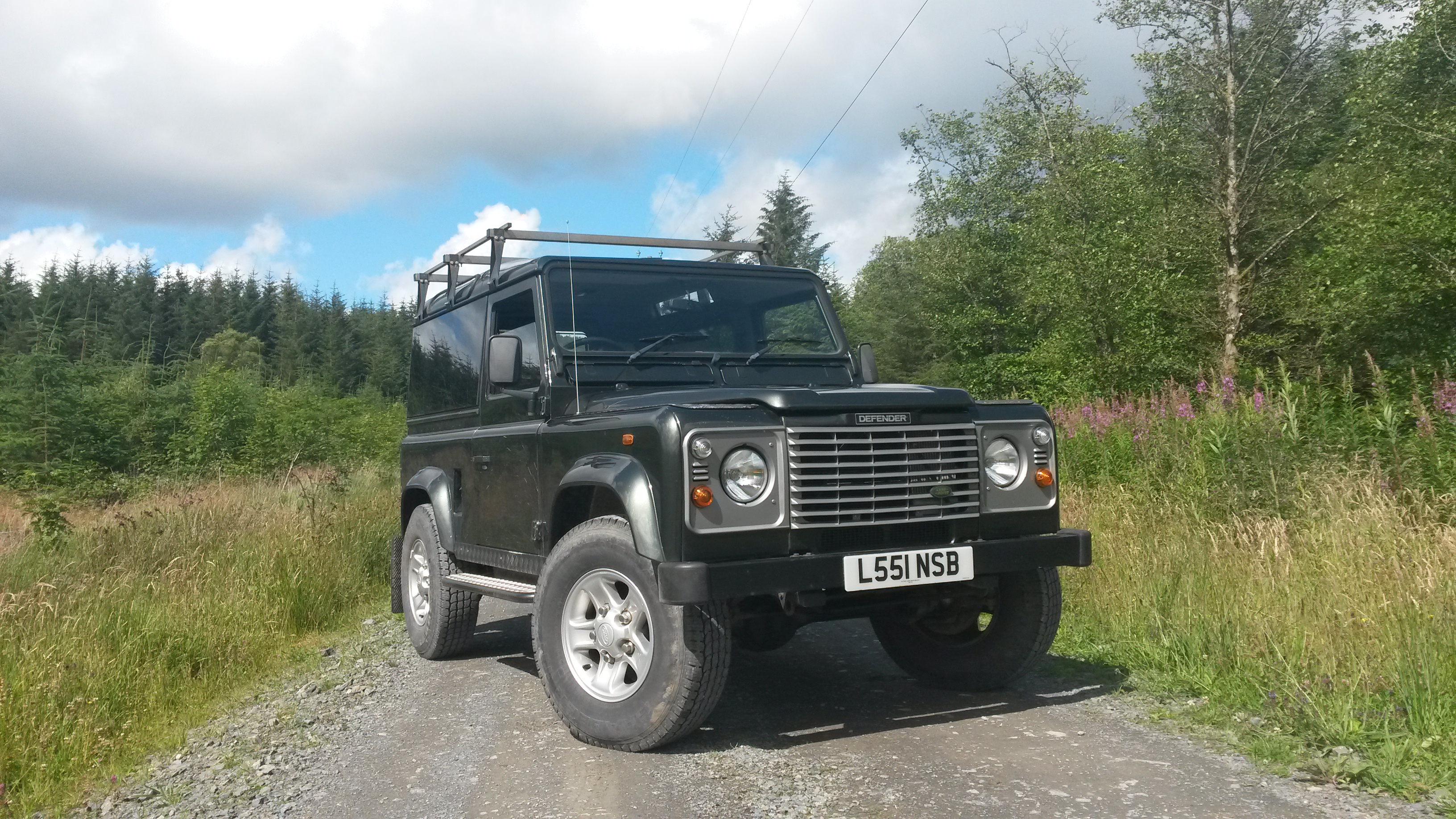
Video: Lovin’ the Landy

Currently, Land Rover says the Defender will end production in February 2016. So, I thought I’d better shoot a video on this most iconic of off-roaders.

Is it really goodbye for the Land Rover?

Is it really goodbye for the Land Rover?

That said, as I ponder in this video, it seems Land Rover actually is considering keeping it in production elsewhere in the world. Sadly, I think it would still be the end of European sales – it’s becoming a struggle to make this simple, rugged 4×4 green enough to remain in production – especially when a mere 14,000 were sold last year. While there is still a market for this simplistic icon, it’s a very small one. Japanese pick-ups are proving popular with farmers as, dare I say it, they are often (but not always) more reliable.

But, all good things must come to an end. I’ll be sad to see the Land Rover go, but many thousands of them will live on.

Enjoy driving? Head to Wales

Things have been quiet on here lately, because I’ve been having a holiday type thing. After a week in France, we spent another six days in Sussex with more kindly family folk. For two entire days, I didn’t drive anywhere at all. The horror of the drive up from the ferry port at Newhaven was still large in my mind. Roads that congested are just no fun at all.

Stupidly, I then decided to go and have a nose around Brighton. I don’t recommend this. Endless jams eventually overcame my desire to see the sea and I bolted for it. I was planning to head back to base when I was contacted by the man behind Fu’gutty Cars. I won’t go into too much detail, as it’s his story to tell, but it involved spending an afternoon tinkering with an elderly Citroen to try and ensure it could make it 500 miles back to Scotland.

Citroen barges, both with a long way to go.

Citroen barges, both with a long way to go.

It was a nice way to spend an afternoon, and I got to have a drive in a CX again. Always an incredible experience. I was glad I hadn’t forgotten how to drive one. They really are like nothing else.

After a couple more family-filled days, it was actually time to head back to Wales. It was a Sunday and we’d hoped to get the jump on the worst of the traffic. I was amazed at how busy the roads were though, and things got very slow at the meeting of the M23 and M25, where queue-jumpers conspired to balls things up for everyone else. Idiots.

The M25 itself wasn’t too bad apart from the people who still have no idea about lane discipline. Idiots. I mean, how hard is it to keep left unless overtaking? And what was the point of constructing five lanes if people will only use three of them? As luck would have it, we nipped off at the M4 junction just before everything ground to a halt. Phew.

Things got better from there as traffic levels continued to drop. Getting away from the frenetic madness of the South East is always a pleasure. In fact, we reached Crickhowell in just under three hours, which means our average speed since leaving Sussex was 67mph! Amazing. That was cruising at an indicated 75-80mph too, so hovering around the speed limit once you factor in the built-in speedometer error. The XM felt fabulous at cruising speed too. It’s remarkably refined.

From Crickhowell, things naturally slowed down a lot. No more motorway – in fact, not even so much as a dual-carriageway for the next 58 miles. There was even single-track roads as we headed over the stunningly beautiful Elan Valley Mountain Road.

The Elan Valley - wonderful driving terrain.

The Elan Valley – wonderful driving terrain.

What amazed here was how the XM was incredible fun to drive. It manages to be a comfortable barge that remains tight and entertaining in the bends. It doesn’t wallow and just grips. Furthermore, because the engine has so much torque, you find yourself driving very quickly in a very relaxing manner.Despite a boot full of shoes, bass guitar, ukuleles, bass amp, a large crockery plate, beer, wine, tools and spares (suitcases relegated to the back seat), it hurled itself over the undulating terrain with delicious composure. Perhaps not quite as fluid and controlled as a 2CV, but hey, no car is perfect.

Sure, the XM has its (minor) faults, but it really is very, very good at the things I want it to be good at. It must be. I’ve now covered nearly 11,000 miles in it and am a few weeks away from one entire year of ownership. After that enjoyable adventure, perhaps it’ll be here for even longer yet.

Holiday: Why I adore France.

Having a father-in-law living in France is pretty handy. It enabled us to have a rare thing – a holiday! Our lifestyle doesn’t really have the budget for holidays, but living in beautiful Wales and having lots of spare time, it often feels like we don’t really need a holiday at all. As it happens, a rush of work for both my good lady wife and myself meant that a break was welcome!

This was our first overseas trip in more than five years. In fact, it was our first overseas trip since before we entered into our new, more economical lifestyle. I hadn’t realised quite how much I’d missed France until we excitedly drove aboard the ferry at Portsmouth. It’s a fascinating country and, as you may have noticed, I have rather a soft spot for its automotive creations.

As it happens, I made one major mistake. We arrived in Caen at half past nine. Of course, by the time we got off the ferry and through passport control, it was more like 10pm. It was therefore what is commonly known as night-time. An XM spotted on leaving the ferry terminal led to a small bout of joy which was instantly demolished by a combination of poor street lighting, dreadful XM headlamps (made worse by the necessary headlamp adapters) and a complete lack of cats eyes. Seriously, they are one of the best inventions of all-time, and you don’t take them for granted until there aren’t any.

Then we got stuck in a car park. The French are very good at designing car parks with hidden exits.

After we reached our destination, things improved a great deal.

Citroen XM in France.

Citroen XM in France.

For a start, France is in a constant state of shabby chic. I adore the somewhat timeworn state of much of France. I generally avoid cities – much as I do in the UK. That said, a visit to Le Mans was well overdue, and after a gentle drive around the road section of the track, we really enjoyed a walk around the town. It’s absolutely lovely, especially the old section that overlooks the river. Recommended, even when there’s no racing on – or perhaps even more so when there isn’t.

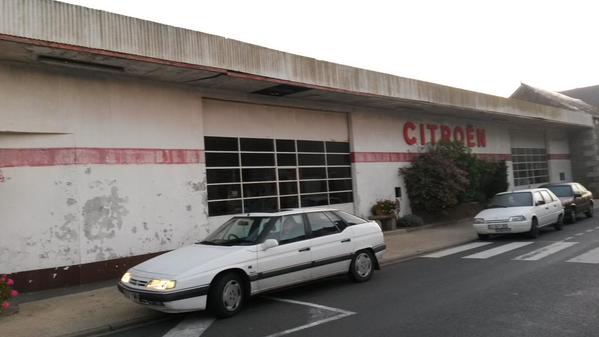
The town of Alençon is worth a visit too. It’s where I managed to spot a Citroen DS 20 in use. Older stuff really is getting harder to find in France, especially near bigger towns. I was well chuffed.

Spot of the holiday? Perhaps. Certainly joyous.

Spot of the holiday? Perhaps. Certainly joyous.

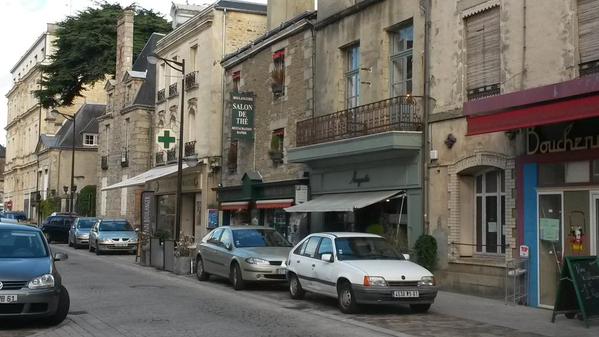
A wonderful street scene in Alençon. Very French.

A wonderful street scene in Alençon. Very French.

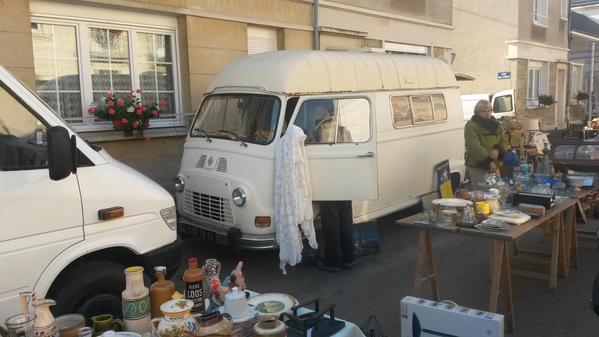
Oddly though, I really didn’t spend much time driving around. We stayed a mere hour away from Caen and I spent several days of our week not driving at all. That included getting a lift to Trun for an Onion Festival. I’d hoped for loads of classic commercial content. Sadly, H vans have all become trendy coffee vans in the UK and my only properly classic van spot was this delightful Renault Estafette – another ancient front-wheel drive design.

Renault Estafette at the Trun Onion Festival, Normandy.

Renault Estafette at the Trun Onion Festival, Normandy.

Our longest drive of the trip – French side at least – was the trip up to Dieppe to catch the ferry home. We shunned the autoroutes mostly, especially the Peage. We ensured we had plenty of time, so why pay to rush? Besides, European countries all look very similar if you stick to the motorways. Far better to head to the quiet, main roads instead. After all, you often get traffic levels like this.

Barely any traffic in France.

Barely any traffic in France.

Not a car to be seen. So wonderful to just be able to make progress. Not that the roads were always this major – my Garmin Nuvi sat nav, visible in this picture, is ancient and has a wonderful tendency to seek out the most scenic, and often narrowest routes. We twisted our way through some amazing countryside and wonderful little towns.

On the last run to Dieppe, we finally did make it onto a free section of autoroute, and I was able to get my clog down and enjoy 130km/h entirely legally. That’s an indicated 85mph in the XM, or around 80mph in reality. The XM was built entirely with this sort of driving in mind. It was absolutely wonderful.

Four hours later, we disembarked in Newhaven and found ourselves battling incredibly high traffic levels once again. After the sheer glory of the quiet French roads, it was rather a shock. Oh well. The roads can be pretty quiet in our delightful slice of mid-Wales. It’ll be nice to be home.

But once again, I fell in love with France. It’s no wonder so many Brits decide to move there. Wonderful architecture, friendly people and fantastic bread. Oh, and superb cars of course, which enjoy (away from Paris and other major cities) fantastically peaceful roads. Thanks to those who made this trip possible.