Disco: A British 2CV?

As I revealed in a recent video, I’m not sure why I like the Discovery so much, I just do. However, that seems a bit feeble, so I’m going to attempt to explain myself.

Firstly, I’m no blinkered Land Rover owner who thinks they’re the best vehicles ever produced. They’re not. Build quality was always an issue, a British car really should be much, much better at keeping rain outside and running gear components should last much longer than they actually do. Mine feels its 180,000 miles, whereas a friend’s Shogun has more miles and feels much fresher. I don’t believe in ignoring the car’s faults just because of where it was produced and I deplore tribalism in all its forms. 2CVers love their little tin snails, but you don’t often hear them slagging off Renaults or Peugeots. Indeed, there’s often a lot of respect for the 2CV’s rivals.

I love it, but why?

I love it, but why?

The British do love an underdog though, and the Discovery certainly was one. Land Rover had to tackle the new ‘family 4×4’ market head-on, yet lacked the funds to do so after the dark years of British Leyland, and reluctant financing of the British government. Yet somehow, they took the Range Rover and reworked it into a car that proved a huge success. The car marketed as the first ‘new’ model for 19 years was in fact just a Range Rover with a wax jacket and wellies replacing the black tie and evening gown. It was a stroke of genius, using underpinnings that were somehow ahead of their time when the Range Rover was launched in 1970, while also being ancient. I mean, beam axles? Citroen considered those old-hat in the 1930s.

Like a Citroen 2CV though, it’s soft, long travel springing that made the Discovery so good. It managed to be comfortable on the road, but displayed exceptional ability away from sealed surfaces too, with Tin Snail-rivalling amounts of suspension travel. I clearly have a thing for long travel suspension, as the Citroen BX, Rover P6 and (surprisingly perhaps) the Triumph TR7 all employ it to a greater or lesser extent. Spen King engineered the P6 and TR7 too. He knew what he was doing, that’s for sure.

Another thing I love is permanent four-wheel drive. It’s decried as wasteful by the Japanese, who prefer selectable systems where you generally drive around in two-wheel drive. Yet I don’t see Japanese 4x4s achieving greatly better fuel consumption. I wonder where this alleged saving is? Making four-wheel drive selectable adds many problems, like the need for free-wheeling hubs (allegedly) and the ability to get stuck before you’ve selected all-wheel drive. Generally, there’s no centre differential – though some Mitsubishis do have one. This means that using four-wheel drive on tarmac is a very bad idea as you can damage the transmission. Even on Mitsubishis, you cannot have an open centre differential when in low ratio. This becomes an issue when manouevring with a trailer. I love using low box for this, as it’s far kinder on the clutch. In fact, I did so today when collecting wood.
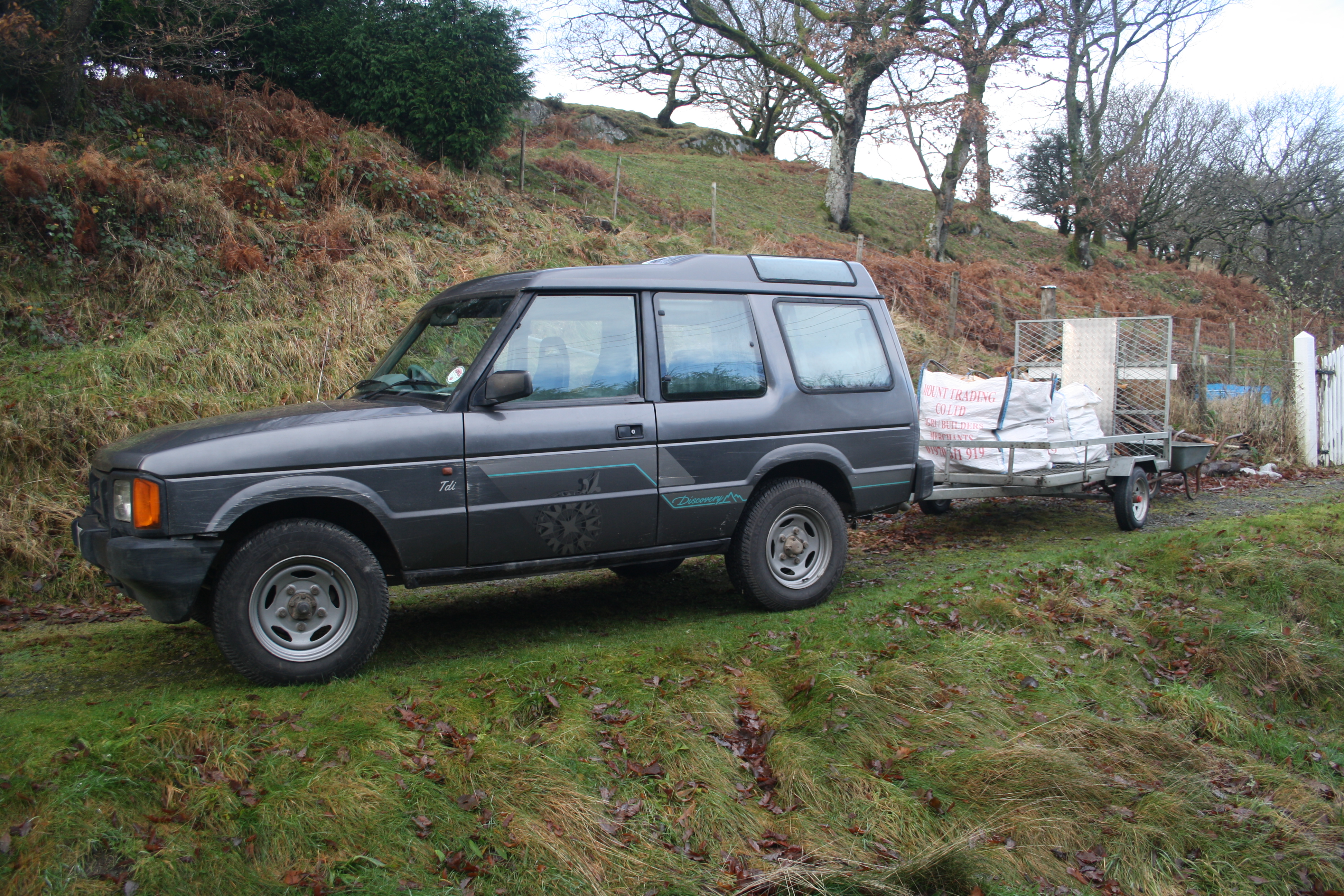
'Low box' is a great boon when towing

‘Low box’ is a great boon when towing

I also crave visibility in a car, and side windows don’t get much larger than a Discovery, this side of a Toyota Sera at least. In a Range Rover, you sit so high up that your head brushes the ceiling but the Discovery has a higher roofline, so you don’t feel that you sit too high. You just get a very good view of the world. The switchgear has a nice feel to it too. I’m a bit fan of those Maestro/Montego stalks. They’re far  better than the horrible Honda-inspired stalks fitted to the Rover 200/400 and I reckon better than those fitted to the facelifted Discovery as well. Why? Because in those, you turn the wipers on by twisting the stalk. A small thing, but a bloomin’ infuriating one for me, as you have to remove your hand from the steering wheel.

I like a simple, uncluttered dashboard too. The pre-facelift Discovery 1 has that. The facelifted model and Discovery 2 don’t.

Above all, I love simplicity. The Discovery is not a complicated design. It’s about as simple as you can get, but it remains very good to drive. Again, the 2CV combines these features. It manages to be hugely simple, but is very well engineered, so it’s far better to drive than it has any right to be.

Perhaps that’s it then. Maybe the reason I love the Discovery so much is because it is actually quite like a 2CV. I’m sure my 2CVing friends won’t agree with that conclusion, but there are direct comparisons to be made. They both have separate chassis with soft, coil-springing to make them good off-road. They both rot horribly. They both regard water ingress as acceptable. They’re both very simple, but clever. They’re both much better to drive than you’d expect. Could the Discovery be the 2CV’s long lost big sister?

Ok, I’ll concede. The 2CV is much cuter.

Disco must go, 2CV can stay

Sometimes, there is no easy answer. After much hard thought, I’ve decided that I just can’t get rid of the 2CV. It would be getting rid of a major part of who I am.

This leaves the Discovery in the firing line, as the Sirion is pretty much worthless but is still very useful. I can’t say I want to get rid of the Land Rover either, but needs must.

The Disco must go

The Disco must go

After all, the Discovery is just a toy really. Occasionally, it’s useful to haul something heavy about the place, but I can’t really justify keeping it on those grounds. It would be cheaper to just hire a van when needed. I absolutely love off-roading, but when funds are tight, it starts to look like a very expensive hobby.

Still, having taken 20 years to get my hands on a Disco, there is extreme reluctance to part with mine. Even though it still needs lots spending on it. Even though it drinks fuel in a rather alarming manner (compared to the other two little cars on the Seabrook fleet).

I've really enjoyed this sort of thing

I’ve really enjoyed this sort of thing

I’ve put the Discovery on the market at £945, hoping the winter weighting will allow me to get good money for it. It is a far better vehicle than it was when I bought it in July. If you’re interested, do let me know!


Buy a classic car for £80!

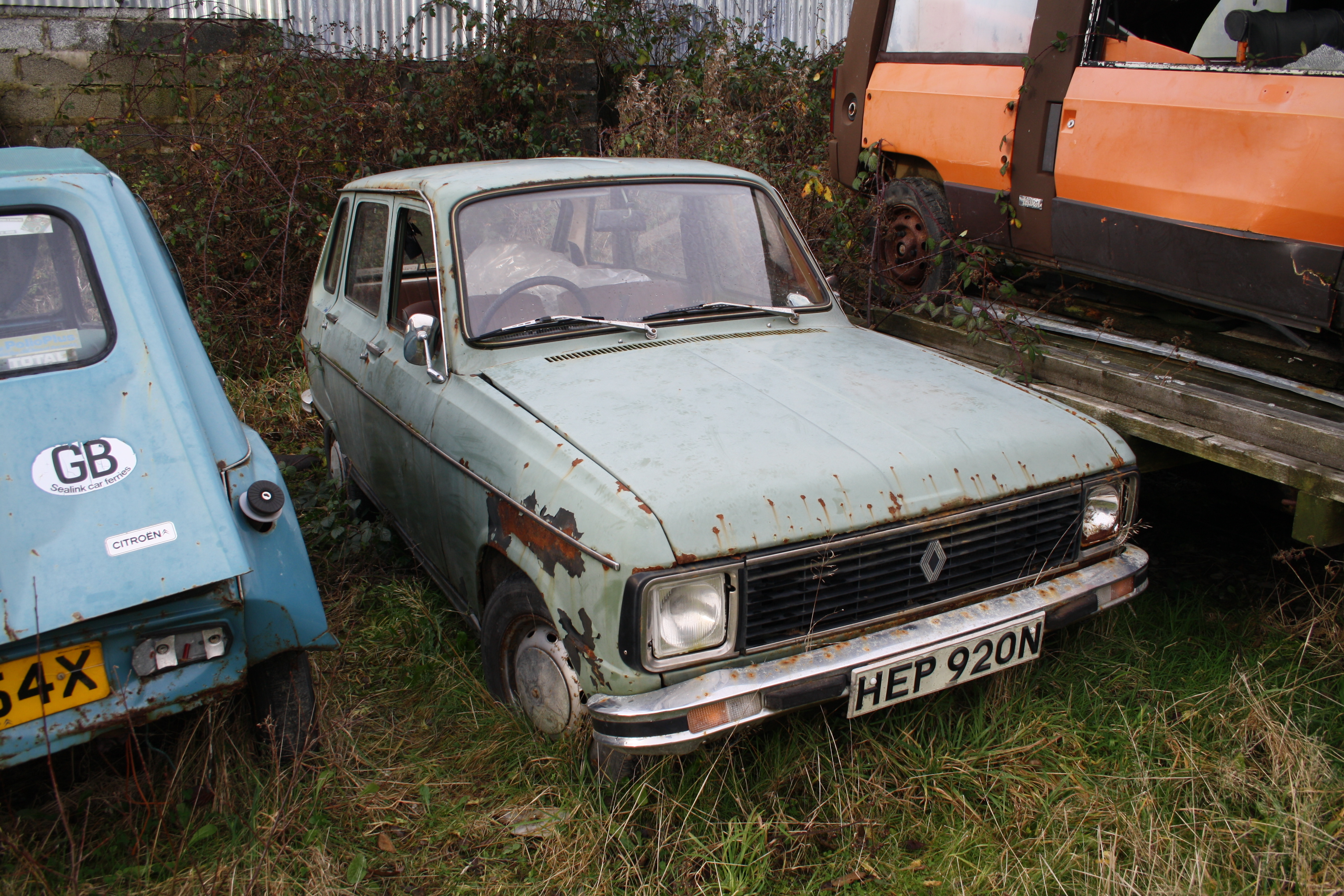
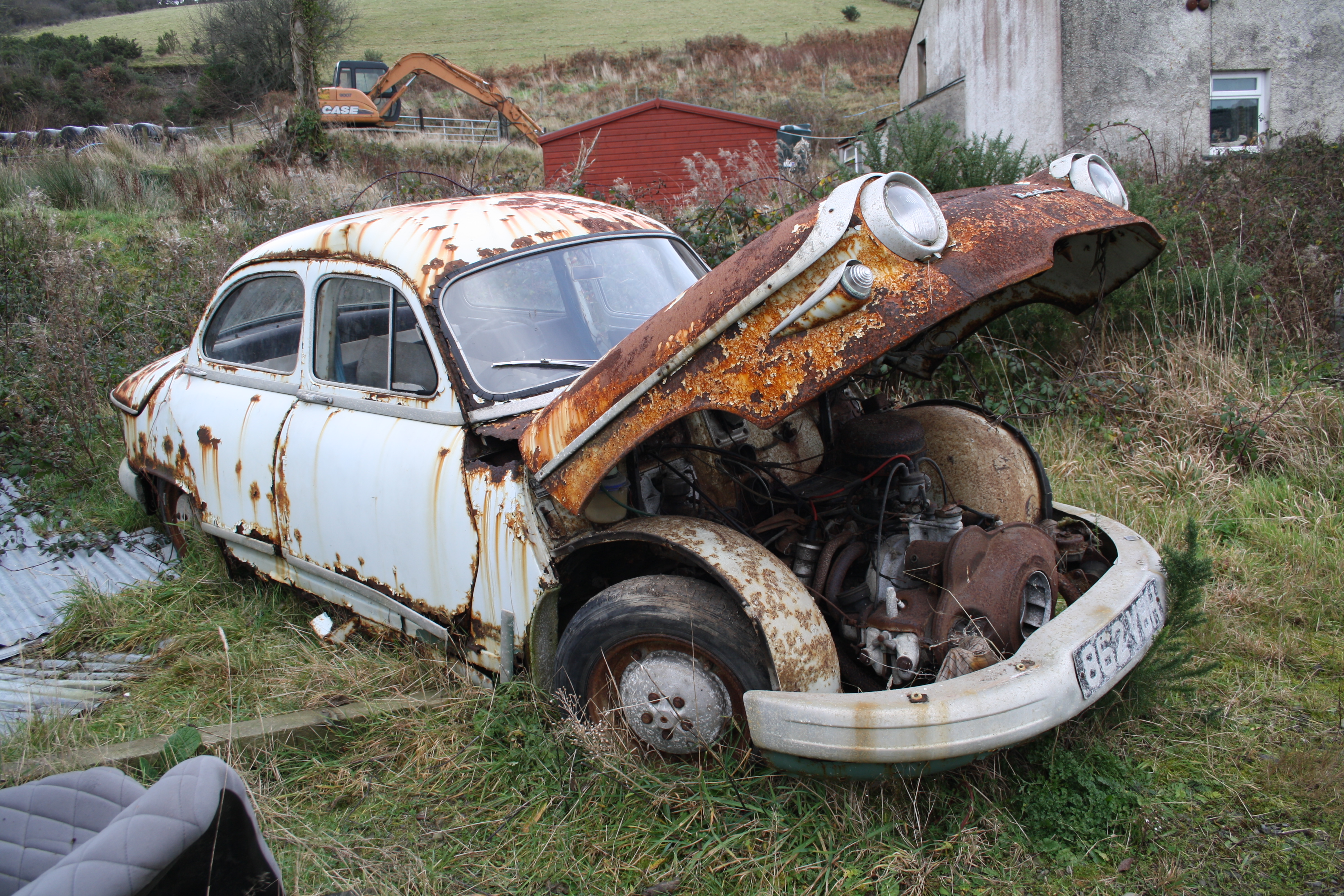
Yesterday, I found much joy hiding in a field in mid-Wales. A selection of iffy classics hoping to find salvation. As well as a right-hand drive Panhard PL17 that only needs a miracle to see the road again, there was another French classic that you very rarely see these days. A Renault 6!

Surely worth £80? The scrap man is hovering

Surely worth £80? The scrap man is hovering

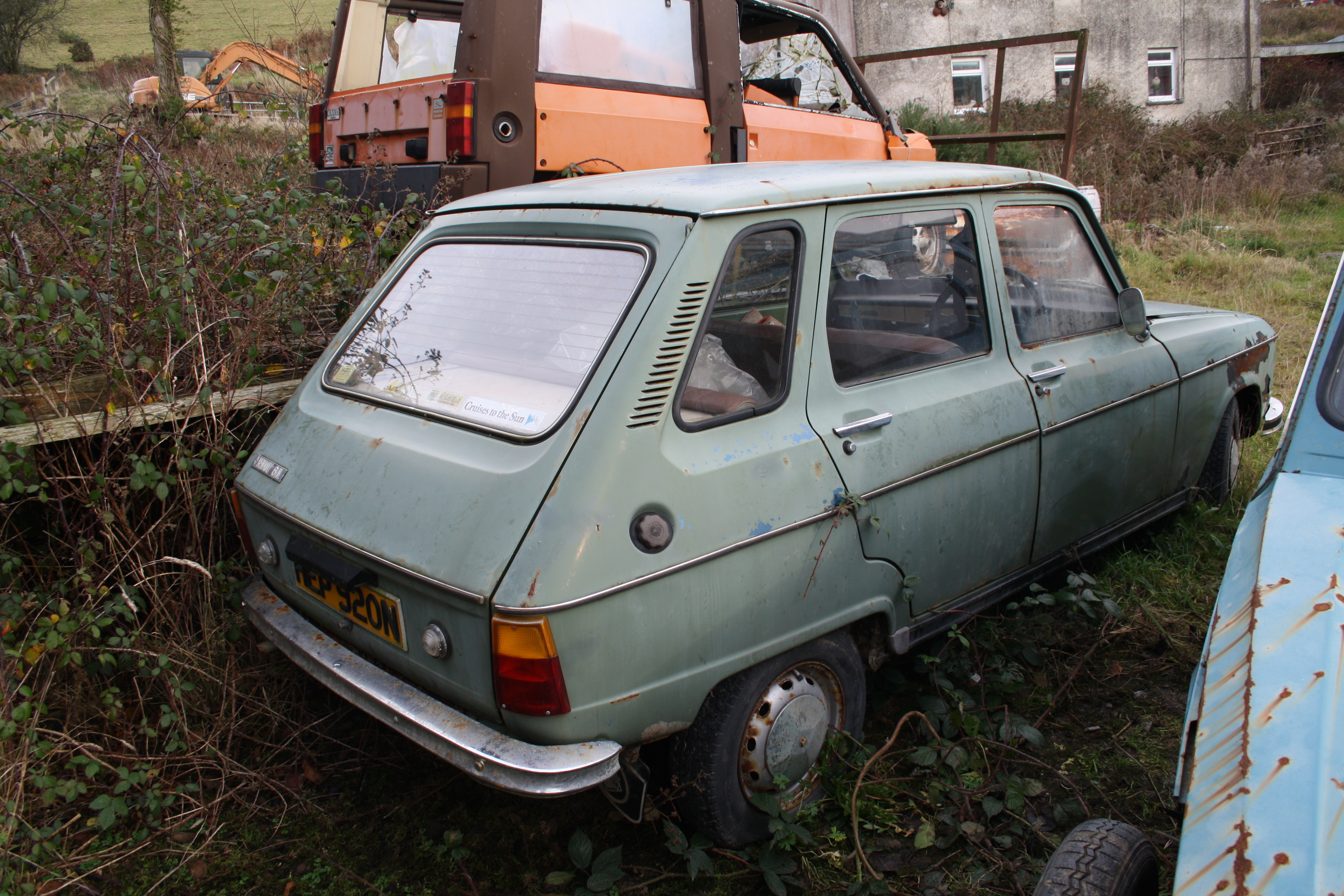
As you’d expect, the 6 is not in the sort of condition that would impress a concours judge. It has been off the road since 1993 and while barn stored for most of that time, it has spent the past year sitting outside in a field. Despite this, it seems remarkably solid. The biggest problem is that it has been lifted with a strap by the roof, so it has buckled slightly either side above the front doors. This distortion certainly looks ungainly but the doors still open and shut very nicely indeed. I wish I could save it but alas I’m skint enough as it is. I do fear for this car’s future though as the 6 has never really gained a following in the UK. There’s a very nice one for sale at the moment for £1200 – this doesn’t help either!

A surprising lack of rot

A surprising lack of rot

While very solid, there’s no doubting that a thorough overhaul is needed. These engines don’t like standing around and if I remember correctly, use liners, so a thorough strip down is needed really. I’d imagine the brakes are in a dreadful state too.

The Renault looks factory fresh compared to the Panhard. Apparently £300 will secure this.

You'd have to be brave to restore it. £300?

You’d have to be brave to restore it. £300?

This has also been lifted by the roof, but has suffered much more from that. If it was stored in a barn, this must have sat under the leaky bit too as it’s thoroughly rotten. It is complete though and surely a good source of spares. I do wish I had money. And a very big barn.

If you’re interested in any of these vehicles, get in touch. They’re located not a million miles from Lampeter. I’m hoping to salvage the Dyane body.


2CV – no option but to sell?

When my wife and I moved to Wales in 2010, we know life would be tough. Between us, our household income dropped to about a third of what it had been. I am the only one earning money, and I do it in the highly unstable environment of freelance writing. As security goes, it’s a bit like putting your most prized possessions on the end of a broom handle, balanced upon the chin of fate. While fate is on roller skates. On a hill. Being pelted with bricks.

But, we get by. Food grows in the garden, we rarely travel outside the local area and holidays are a thing of the past (apart from the one coming up but we’ll ignore that for the sake of dramatic narrative). I try to enjoy my car habit, but do so with the knowledge that big expenditure is just out of the question. I won’t be owning a Rover SD1 just yet, nor a Triumph Stag. V8s are generally not driven by skint hippy types.

Citroen 2CV

Can I really sell my 2CV?

Cars have a habit of being expensive things to run though. It is possible to do it cheaply – witness the fabulous Sirion – but the problem is that I own cars which are not cheap to own. The 2CV these days falls into that category. I bought Elly back in 2000 for £450. Glory days. She was the latest in a long line of cheap 2CVs. I ran them until they were too broken to run, or too rusty to pass an MOT. Then I got a new one. Naturally, I realised this couldn’t go on forever, so Elly was fortunate and got restored. Problem is, she’s rusty again now and further restorative work is needed. This is not cheap.

That would have been fine when we were both earning good money. Not having children gives you so much freedom! We had plenty of disposable income, which is why I could do things like commute in a 1955 Austin Westminster, drive the 2CV to Switzerland or drive a Citroen H van to Sweden. I would have scowled at the cost of a restoration – largely because I’d be thinking of all the other cars I could buy with the money – but I would have happily paid for it.

That just isn’t an option these days. I’m worried enough about the insurance renewal (less than £300 for three vehicles, pretty impressive) and also my own tax return. Car insurance is essential, and HMRC would no doubt view my tax payment as fairly high up the to do list as well. Restoring a car is very hard to justify.

I could do the work myself couldn’t I? Well, even if I had the skills, I reckon the parts and materials bill alone would be getting on for £1000 before the angle grinder (which I do at least already own) began work. Then there are all the mechanical issues I’ve been trying to ignore for the past year. Poor Elly is really getting a bit tired.

2CVs wedding

Elly the 2CV as a part of our wedding celebrations

I could defer decision making, declare her SORN and stash her away in the garage, but I’m very reluctant to do this. Once a car is off the road, it can be very, very hard for it to find its way back onto it again. Weeks turn into months and into years and storage isn’t kind to cars. The longer she’s laid up, the more difficult recommissioning becomes. Also, aside from the couple of months of road tax I’d get back, it isn’t something that will put money in my hand.

No, it sadly seems to make more sense to offer the ol’ girl up for sale as a going concern. She currently has tax and test, making it far easier to find her a home I suspect. Cheap, roadworthy 2CVs are not exactly common these days.

It wouldn’t be an easy sale though. No other car has transported me over 100,000 miles. No other car has followed me through at least nine jobs and three house moves. No other car has been with me longer than my wife. No other car was a big part of our wedding. (well, ok, my mate’s 2CV Beachcomber was but I don’t own that one!). She somehow feels like a lot more than just a car.

Another terrifying prospect is the idea of not owning a 2CV. I’ve owned at least one 2CV since 1996, when I was just 18. Since then, there has barely been a time when I haven’t driven one at least once a week. I’ve been a member of the Deux Chevaux Club of Great Britain since 1996 too. How would it feel to be a member but to not own a 2CV? Rubbish I suspect.

For all these reasons and more, selling the 2CV is a very unappealing option. Truth is though, it might be the only option to take.

Why not buy a pre-war classic?

While researching this week’s Morris Eight Buyer’s Guide for Classic Car Weekly, I faced some rather worrying truths. When you look at the age of owner when it comes to pre-war classics, none of them is what you’d call youthful. In fact, most seem to be firmly the older side of 60. Not that there’s anything wrong with being of that age – the only concern is, where are the incoming fans of these older classics?

I myself love pre-war cars. They’re almost always hilarious and hugely entertaining to drive, often at speeds far below the legal speed limit. What’s the point in having 400+bhp on a public road after all? Or even more than about 100 to be honest.

One I truly fell in love with was a shambolic Austin Seven Ruby that classic dealer Malcolm C Elder had for sale way back in 2008. “Go on, take that one out,” they encouraged, “you’ll have fun in it.” I should point out that their cars for sale are usually to a rather higher standard! I was intrigued though. Off I went…

Austin Ruby brown

Shambolic, ancient and fun!

They weren’t wrong. I soon found myself pottering along at all of 30mph, grinning like a loon and weaving all over the road as I did battle with the super-sensitive-but-vague steering. You need an entirely different mindset for driving really old cars. The brakes are feeble, roadholding rather gentle and performance often lacking. My 2CV was starting to feel like a race car by comparison! The whippy gear lever has all the accuracy and control of a fairground grabber and the engine roars but doesn’t seem to deliver much power. It’s hugely addictive!

Cramped, wonderfully patinated and yes, that is the horn...

Cramped, wonderfully patinated and yes, that is the horn…

I pulled over for a photo session and to allow my aching sides and arms some respite. This much fun should carry a much higher price tag. With the pictures completed, I tried to restart it. It wasn’t interested. After a few attempts, the starter just whirred quickly to a halt. I was forced to employ the starting handle. Incredibly, it worked! I suspect the battery was long past its best.

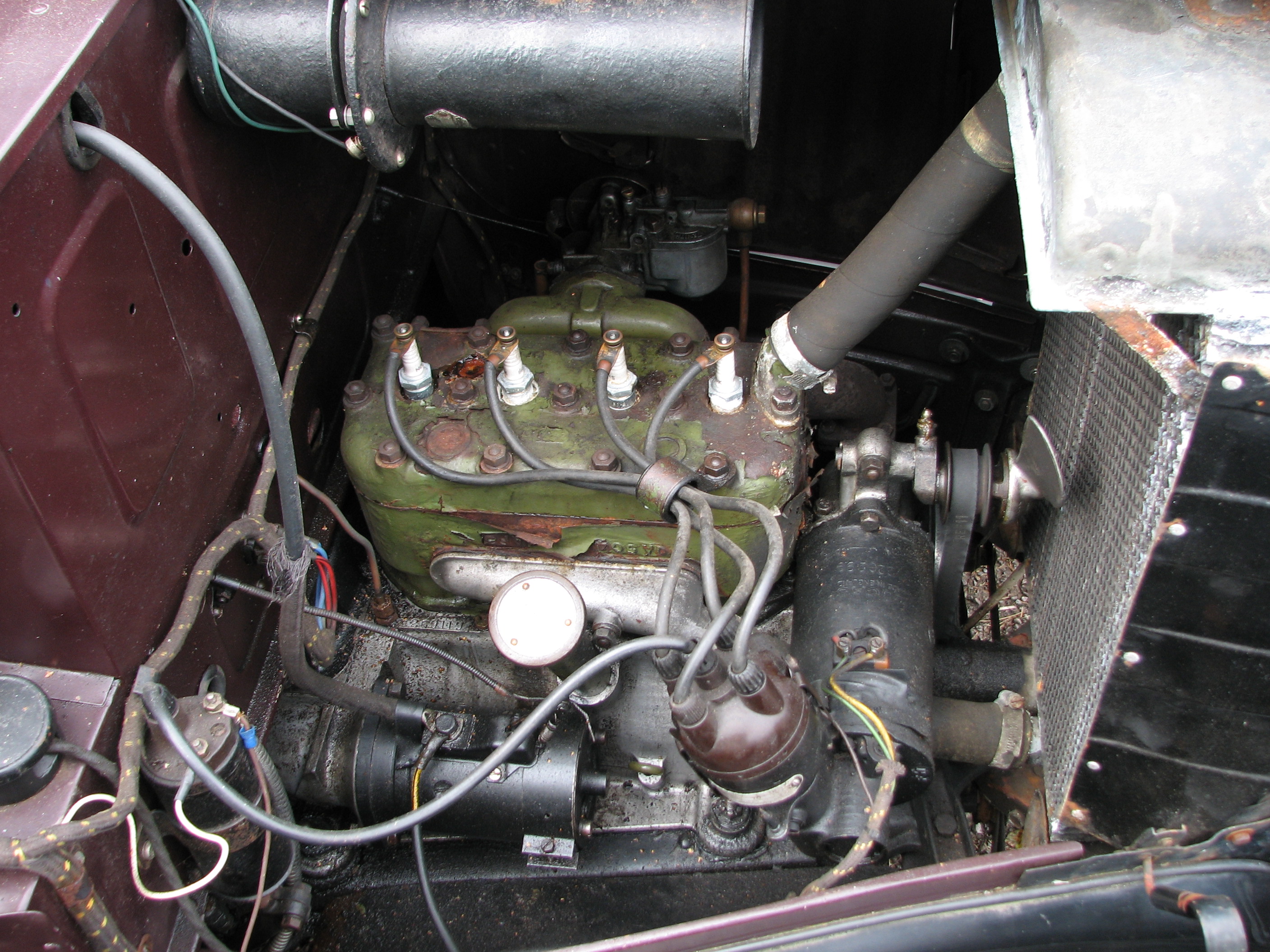
747cc of throbbing power

747cc of throbbing power

With the engine running once more, I quickly hopped aboard and tried my best not to stall. That’s quite tricky to avoid in a Seven as the clutch pedal has a movement of what feels like millimetres. Most clutch pedals have more free travel than the entire action of a Seven’s. I made it though, found my way to top gear and weaved the car back to its temporary home.

Sadly, I now live in a very hilly part of Wales, so the idea of owning something quite so feeble is not entirely desirable. If you live somewhere a little flatter though, I thoroughly recommend having a dabble with a pre-war classic. After all, there are lots out there and they’re great fun. They’re often stupidly simple to work on too, as the assumption was that the owner would always be indulging in home tinkering. One Morris Eight owner told me he’d changed a head gasket roadside after blowing it while on the Continent!

Oh, and don’t assume pre-war cars aren’t fun to chuck around either. The Vintage Sports Car Club members love showing what older classics can do!

PS –  one annoyance is the common use of the word ‘vintage’ to describe classic cars. Vintage cars are specifically those built between 1919 and 1930. The Austin Seven Ruby therefore is not vintage, as it was launched late in the Seven’s production run, in 1934.


Not video: Seasonal rant

I’m getting properly Scrooged up this year, even more than normal. Here we are less than two weeks from Christmas and I just can’t be bothered with it. Partly, this is down to the annoyance of Christmas songs, that usually have me sick of Christmas even before December arrives. The other reason is that I’m getting old, and Christmas comes around far too quickly for my liking now. So, I’m going to give it a miss this year. Roll on Christmas 2014! I’ll celebrate that one instead.

A certain romance to driving in the dusk

A certain romance to driving in the dusk

Of course, my mood is not helped by the long nights and short periods of anything approaching natural light. I love driving, but even I struggle to enjoy it in the dark. Observation is everything to me when driving, and that gets that much harder in the dark. How can I scan half a mile ahead up the road when it’s completely dark? Perhaps I need to become one of those strange people who bolts about twenty extra lamps to their Land Rover. I might melt the tarmac, but I might also be able to see where I’m going.

That said, there’s  a certain romance to barreling along on an illuminated motorway at night, or cruising along at pace as dusk falls. I quite like to do that, but have to drive for two hours just to find a motorway, and even further to find a bit that lights up. Generally though, I find winter is not a great time for the motor enthusiast. The cold conditions make working on cars seem rather less enjoyable and if you like a clean car, best put it away in October until April. Road muck is disgusting during the winter months. Then there’s the battle against frost and the car wanting to steam up so much. Things got so bad recently that I went to Kwik Fit to get the air-con on the Sirion fixed. Air-con is brilliant I’ve decided. It massively boosts demisting power.

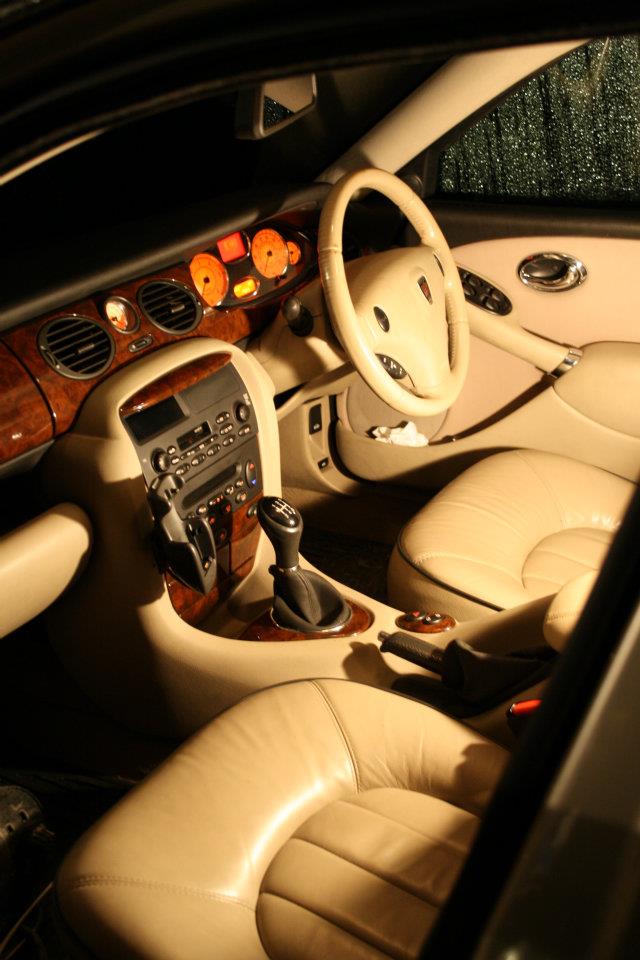
Night makes for great photos sometimes

Night makes for great photos sometimes

I can sometimes force myself to enjoy Night with a burst of photography. You can get some really good effects, like this Rover 75 interior shot, but I still prefer actual daylight. Incidentally, this shot was illuminated with the help of a simple lead-lamp if I remember correctly. It really brought out the classy details of the Rover’s lovely interior. I’m missing those heated seats too…

Yet, despite my hatred of driving at this time of year, we’re soon to embark on a 1200-mile round-trip to northern Scotland. At least by then, the days will  be getting longer! Forget Christmas. I’ll be celebrating December 22nd, the day AFTER the shortest day! Spring cannot come soon enough.

Video: Land Rover Discovery Tdi test

I’m having fun experimenting with video at the moment. Inspired by a pal on Autoshite, I’ve experimented a little more with editing on this one – though I’m still very much at the mercy of my poor equipment and Windows Movie Maker!

Still, I think there’s progress from the Nissan Leaf review. Hopefully 2014 will allow greater investment in kit and more opportunities to put my video camera to the test.

Video: Daihatsu Sirion Review

Yes, another video. This time, I review my own 1998 Daihatsu Sirion 1.0+, mainly because I only have access to my own vehicles.

As the video says, the Sirion is a lot of fun. Not perfect by any means, but an entertaining little motor with lots of appeal. I’d recommend people to try one before they all disappear. That’s happening at quite a rate of knots because they do like to rot! Rear wheelarches, sills and in fact most of the back end will swiftly corrode if not looked after.

The Sirion was launched in 1998, making mine a pretty early one. As well as the thrummy little three-pot, you could get a 1.3-litre four-cylinder in the UK. In Japan, the Sirion was sold as the Storia. Bonkers Japanese market specials included 660cc, four-cylinder turbocharged versions with two or four-wheel drive. The Sirion carried many badges around the world, and was available as the Toyota Duet in some markets. Toyota took a controlling stake in Daihatsu in 1999 and sadly Daihatsu withdrew from the UK market in 2011.

More video: Nissan Bluebird Road Test

I know you’re all been waiting for this, perhaps the most exciting video of all time. A beardy-bloke drives one of the most boring cars of the 1980s.

I made this video in 2012, but it’s taken me a while to get around to processing it. Seeing as some liked my Goffey-esque ramblings in the Nissan Leaf video, I thought I’d serve up another, showing just how far Nissan has come since 1986.

Production values are as low as ever. I had no way of mounting the camera inside the car when I made the video, so it sits on a tripod wedged into the passenger footwell and I had to be careful not to tip it over while driving. This did happen. Several times.

What I didn’t acknowledge in the video is that while the first Bluebirds built at Sunderland were indeed little more than assembly jobs, by the end of the production run, it’s thought that somewhere in the region of 80% of the car was constructed in the UK. Sunderland remains a fine example of the fact that the British CAN build cars successfully – when the management knows what it is doing…

ClassicHub gets almost serious about video

Despite only having a minimal level of video kit, I’ve created a new channel on that there YouTube thing. The very first video uploaded is nothing to do with classic vehicles, but please bear with me! Exciting(ish) road tests on old vehicles will be appearing soon, and you can find previous hoon videos of some of my old cars in the Playlists section on YouTube. Look for ClassicHub or just check out this video or click this link to older content:http://www.youtube.com/playlist?list=PL54-PwTtwEP4ACWUhO3QkexwT4bWMTJPx

I’d like to think that my videos have a whiff of proper old-school Top Gear about them, but stating so may lead to legal action. I know some people do like the ‘bloke with a beard drives a car and talks about it’ style of the wonderful Chris Goffey. He has been my inspiration. I hope he isn’t upset by this.

All videos are editing in hideously basic Windows Movie Maker and they’re all pretty wobbly too. I’m using a Canon Powershot SX10IS, which is a beefy bit of kit. Stay tuned for more!