Sirion – assisted once more

After one day, I decided to refit the power steering belt. I’ve decided I no longer want to be a guinea pig for whether it causes any long term problems with the car or not.

Sirion is super-light again

Sirion is super-light again

Some people wondered what the insurance implications of this modification were. Surprisingly, my insurer (Peter James) was very happy to simply note the modification on my file with no charge or concerns. A bit too happy in fact that they put the change through even though I’d only asked whether it was possible!

I must concede that while annoying, the assistance perhaps isn’t the greatest evil in the world. Turns out I hate it far less than my good lady wife. She really does prefer steering with feedback. Sensible lady!

So, the belt is back on, and I went for a drive with my new HD camera.

Sirion – ditching power-assisted steering

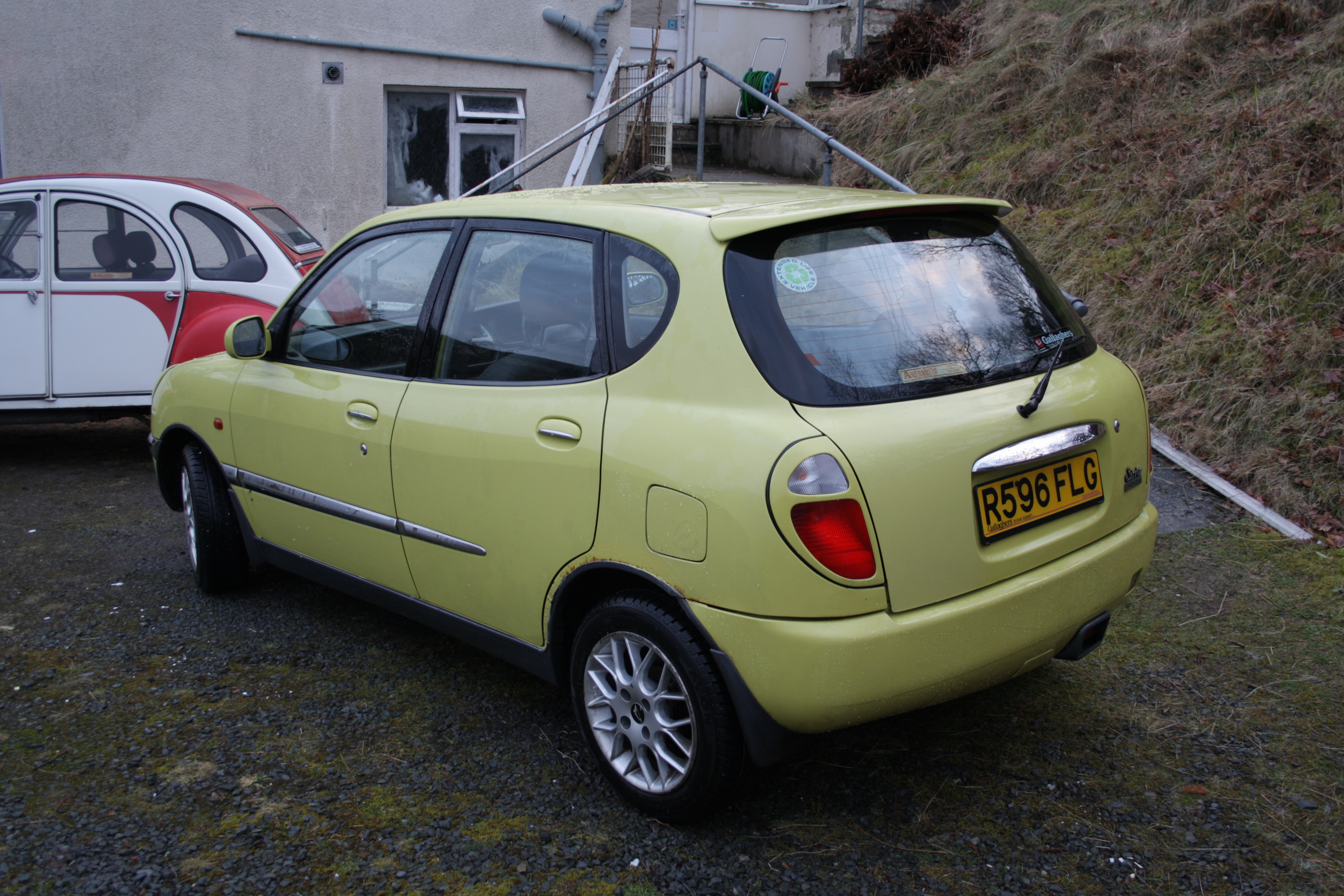
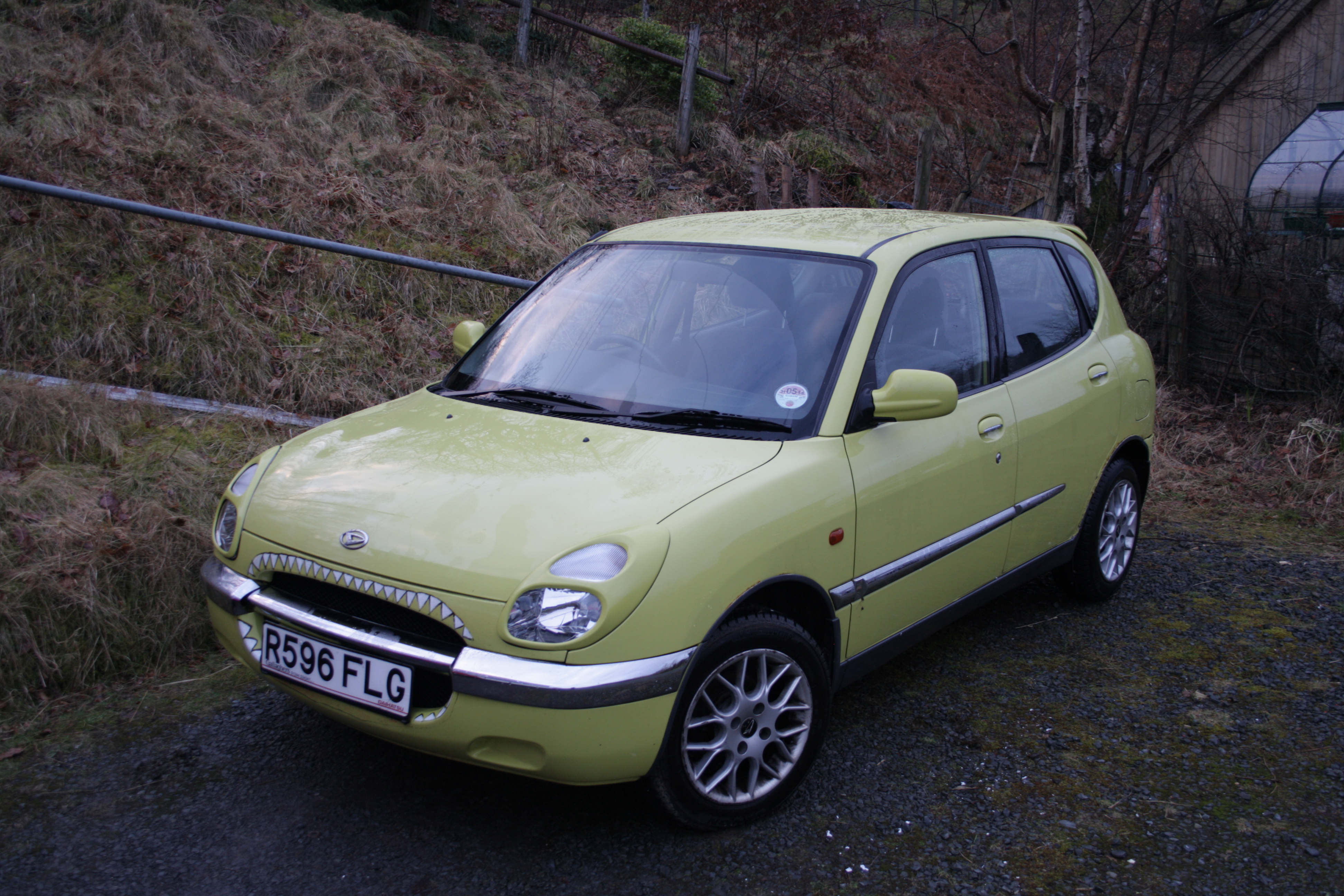
Now I love it again, the Sirion has been receiving a lot of attention. To start with, I returned to the graphic removal plan, after several months of inactivity. The teeth remain (and will continue to do so) but the Sirion is looking better than ever I reckon.

Sirion improvements

Sirion improvements continue. Teeth remain

The ridiculous bird on the roof is gone. It took hours to remove it! Other graphics have also been removed, though another session with white spirit is in order to eradicate them completely. Permanent marker can be, perhaps unsurprisingly, quite permanent.

My thoughts then turned to other matters. The power assisted steering is way over the top. I’m not against PAS, but I’m really not a fan when it is far too light. Like a 1970s Jaguar, the Sirion’s was so light that sneezing behind the wheel is quite terrifying. Feedback is entirely ruled out, making it feel quite twitchy as you attempt to find the right angle for the bends. It detracts from what is otherwise hugely entertaining! It’s like trying to get the feel of a classic Mini via a Playstation.

At this point I shall insert a disclaimer. What follows is an experiment and I cannot be held responsible if you decide it sounds like a good idea. Proceed at your own risk!

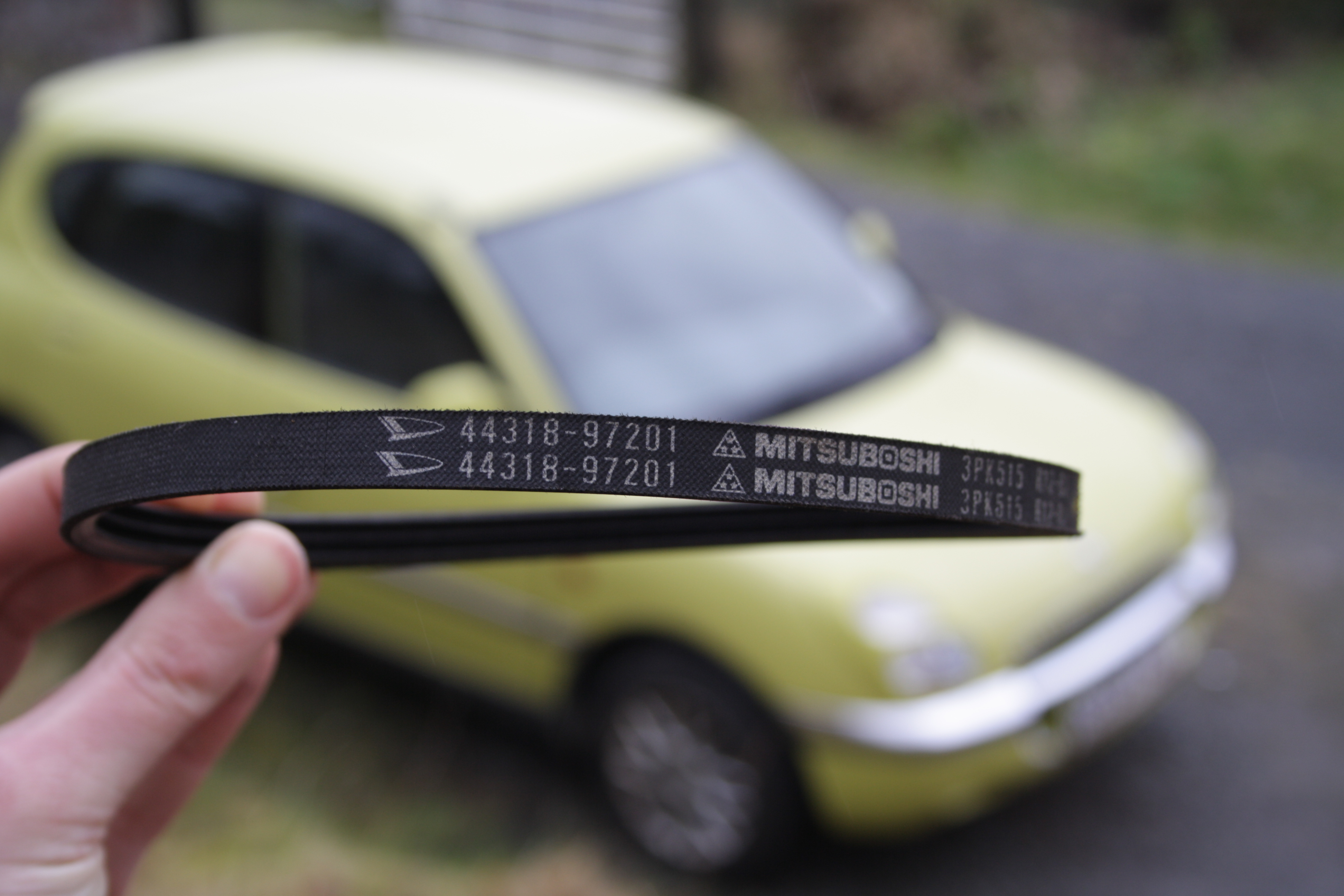
What I did was simply remove the power steering belt. With no power going to the pump, there is now no assistance. I don’t think this will generate any issues, though fitting a non-assisted rack is probably the ultimate way to go. Removing the belt was a lot easier.

Power steering belt removed

Power steering belt removed. Good idea or folly?

The result? The car feels much more pleasant to drive. Most of the time, you can’t even feel any difference, but the steering now weighs up nicely once you start cornering. It feels much more natural, though having all the assistance gubbins still fitted is likely to still be reducing feedback. I can’t say I’ve yet tried cornering hard enough to see whether feedback is really improved – I’m not one for pushing the limits of grip on public roads. Around town, it is harder work, but not onerously so. It just means I can’t steer with my little finger anymore, which is probably a good thing.

It’ll be interesting to see whether any issues develop longer term, and also whether there are any economy benefits now the engine is no longer having to turn the PAS pump. On the basis of 30 miles of driving so far though, all it seems to have done is make a fun car even more entertaining.

Where you can find me

Just a quick bit of administration. As well as appearances in various automotive titles, mainly of a classic persuasion, you can find Ian Seabrook:

On Facebook. https://www.facebook.com/pages/Ian-Seabrook-Writer/362329277237811

On Twitter. https://twitter.com/dollywobbler

On YouTube. http://www.youtube.com/channel/UCfxlBQnvNXX6o-2KbCMszWQ

Click one of the above links and Like or Follow me. 2014 promises to be an interesting year, and social media is where I’ll be placing updates first, whether relating to my everchanging fleet happenings, or where you can find my work.

Splish splash

Make sure you stay in touch – follow Ian Seabrook’s car happenings!

Thanks for all of your support so far. ClassicHub has been gently ambling along the cyberspace highway for three years now. Long may it continue!

My relationship with the Citroen BX

No, not like that. Behave.

In early 1999, I bought the nicest car I’d ever owned. That may not sound that bold a statement for a 20-year old to make, but in three years, I’d already owned about seven cars. All of them rubbish (if lovable). That changed when I handed over the extraordinary sum of £1600 for a 1992 Citroen BX 19TGD in silver. Sadly, I don’t seem to have any photos of it in electronic form, so you’ll have to take my word for it. It was silver and felt hugely rapid! It was a 1.9 non-turbo diesel, so most of that was down to the fact that my only other experiences were 2CVs, Dyanes or a 1-litre Fiesta and a 1-litre Skoda Estelle that barely worked. Compared to these, the BX was a flyer, and it had five gears!

I clocked up about 6000 miles in six months, taking its total over 150,000. It still drove incredibly well, but I stupidly traded it in for a brand new Daewoo Matiz later in 1999. I have made better decisions over the years.

It didn't look much better, even in focus

It didn’t look much better, even in focus

Not until 2004 did I get my hands on another BX. This time, rather than a 71bhp diesel, I opted for the most powerful BX (Group B rally cars excepting) that you could buy. The fearsome 160bhp 16-valve. It was ludicrously quick, ludicrously shoddy and huge fun. I somehow clocked up about 4000 miles in it during a frantic eight weeks of ownership, including trips to Devon and North Yorkshire. It was utterly knackered, but kept on going somehow. It was sold and later broken for spares, where it was discovered that it was hopelessly rotten. Oops.

I sold it mainly because my driving licence was in real danger. In a diesel BX, the power is pretty much all gone by 4000rpm. In a 16V, it’s only just waking up. Hitting 4000rpm felt like pressing a nitrous button. The thing would leap down the road and the scenery went all blurry. The problem was, you just wanted to keep on doing it! That was a problem in a car that would spring from 30mph to 70mph in just 7.4 seconds. Blink, and your speed was illegal. It was still hugely addictive, with the engine roaring in a manner that just encouraged you to be a hooligan. It had to go. It was swapped for a far more gentle Rover 414 ‘bubble.’

It would be a few more years until I scratched the BX itch again. A foolish plan was hatched by a friend and I, to take part in a Citroen BX rally that would drive around the perimeter of France – about 3000 or so miles. The only slight sticking point was that we didn’t own a BX. Happily, I found one on Ebay that sounded ideal and was on our doorstep. I bought it with an entire month still to go. It had 142,000 miles on the clock, and had lived in our village for most of its life.

It was so clean when I bought it!

It was so clean when I bought it!

Frankly, it was the best £266 I’d ever spent on a car. It didn’t come with much service history, but I popped to our local garage, and then got a print out going back years! I now had a fully historied diesel, in pretty good condition, with tax and MOT, for next to nothing. Result! Sure, the heater control had been cobbled together with a bicycle brake cable and the rear suspension arm bearings were groaning a bit, but I didn’t care. It’d be perfect! It just needed a livery…

Is it time to bid farewell to the BX?

The Green Tiger ready for its trip to France

It was too. I treated it to a service and then we headed off, wondering just what we’d let ourselves in for. Ok, so it wasn’t problem free (one split coolant hose and a rear disc shroud fell off) but we clocked up over 3000 miles in 17 days, averaging 48mpg in our £266 car. I felt a real bond with it after that, and couldn’t bear to part with the car or the graphics. It became my daily driver.

We used it to drive around Wales one weekend, where we found the house we wanted to move to. It helped us move too, with several 400-mile trips back and forth from Cambridgeshire. We went on holiday to Scotland in it. We once got stuck in a hideous snow storm in it. We even once slept in it (actually, I didn’t learn my lesson and attempted this once more on my own at a later date, with little more sucess).

Naturally though, I got bored with it in the end, and flogged it to a friend of mine. He hideously abused it for 30,000 miles and when I got it back, it was in a very sorry state. I tried to revive it – it remains the only car I’ve owned twice – but my love for it just wasn’t there anymore. I sold it for a pittance to someone who uncovered a lot of serious rot. It was sadly scrapped last year. It didn’t half pack a lot into its last few years though!

Not long after first selling it, I got wind of something quite remarkable. A Mk1 Citroen BX estate! At the time, these were just impossible to find. I paid £250 for it and dragged it home with my Range Rover. This one did not have full history and an MOT. It was a wreck.
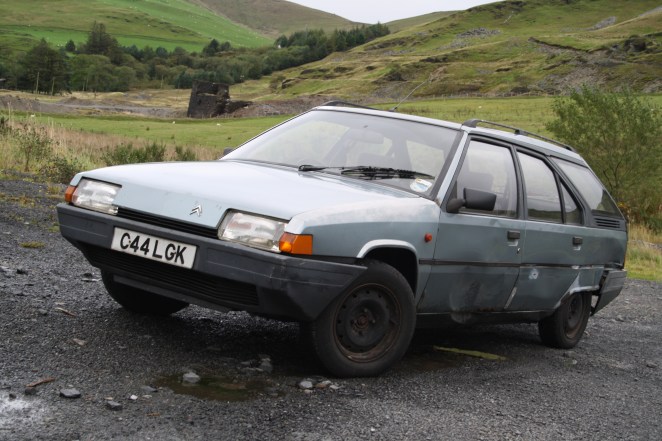
BX is on the road!

The wreck I revived. What a car

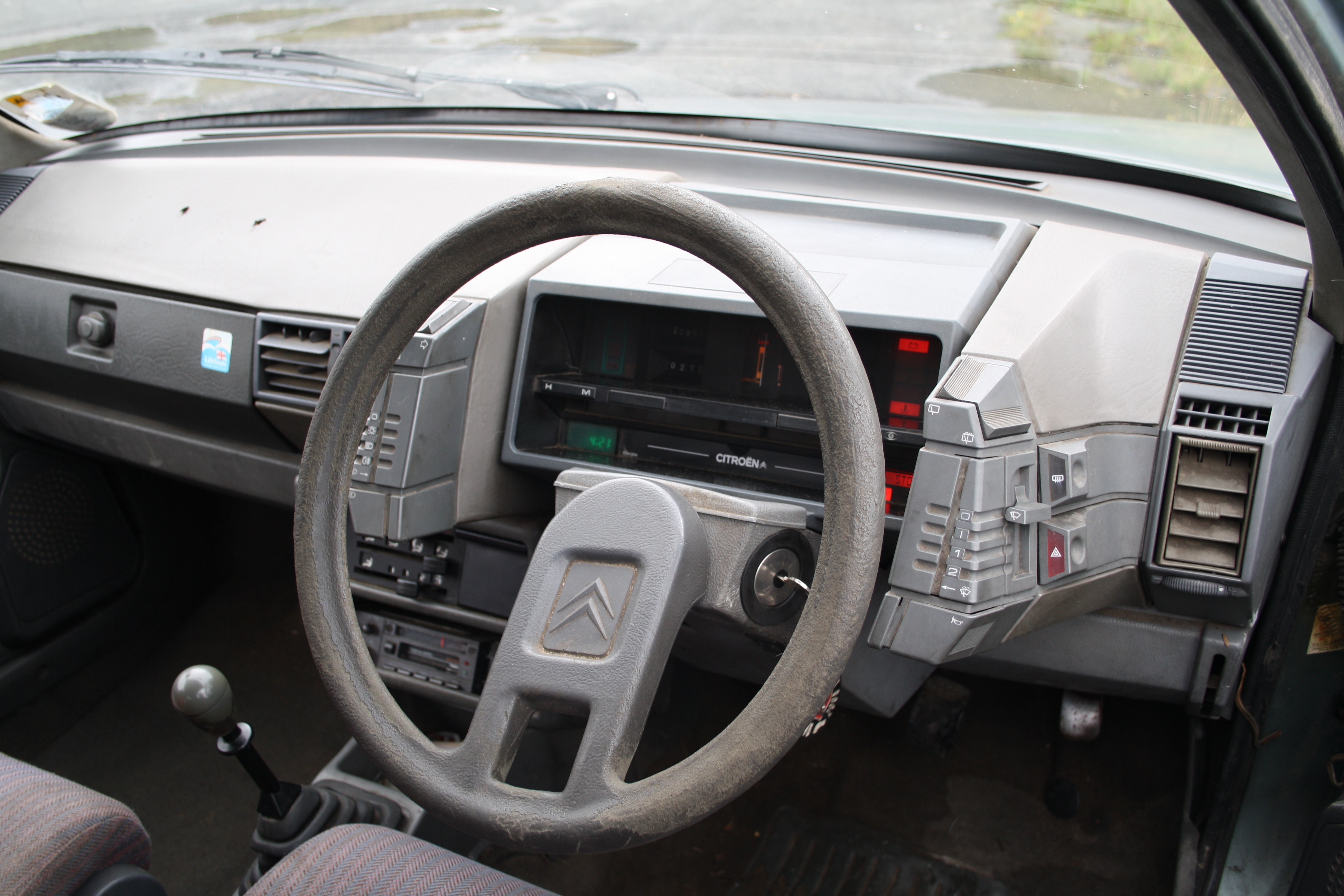
The above was taken after several months of ownership. It took that long to fettle it into a state where it could just about scrape an MOT. I won two awards for it at two shows, both for worst car there! Truth was though, I found it a bit of a disappointment. The Mk1 BX has the wacky, original dashboard with utterly bonkers controls.

Bonkers

Bonkers, complete with rotating drum speedo

It was as insane as a Citroen dashboard should be. For example, there were no column stalks, just a lot of switches within easy reach of the steering wheel, banked down each side. You indicated by using a rocker switch. A slider controlled lights or the front wiper. The speedometer needle did not move, so the speedometer itself did, rotating around on a drum. I probably spent FAR too much time looking at how fast I was going, just because of how lovely a speedo it was. Thankfully, it was a diesel (and a poorly one at that) so I was never travelling very quickly.

But the switchgear wasn’t very nice to use. I didn’t enjoy it even half as much as a CX I’d owned earlier. I actually began to pine for the later Mk2, which still groups switchgear around the steering wheel, just with more sanity and sensible dials. I sold the Mk1 to a very enthusiastic enthusiast, who has continued its restoration. It still looks dreadful though! I still love it for that.

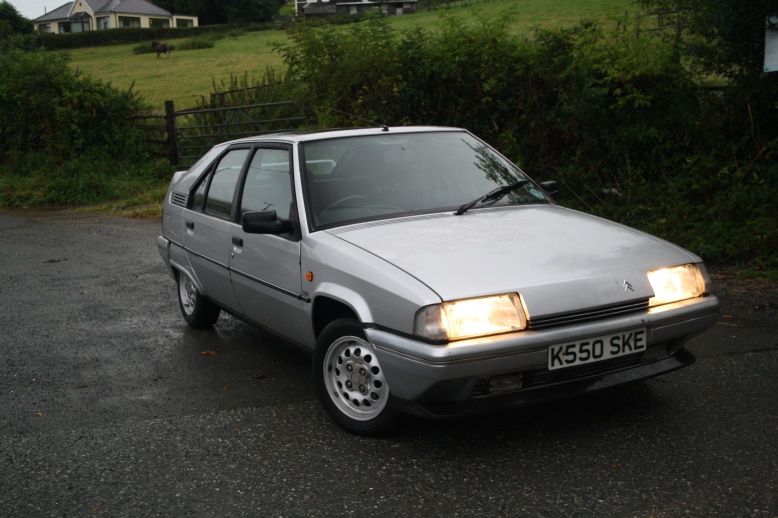
I was still feeling the BX love though, so bought my first turbo diesel for £375 in 2011. The extra performance was nice, as was even better fuel economy (54mpg on a run) thanks to taller gearing. That made it better on motorways than the non-turbo diesel. More refined.

Citroen BX turbo diesel

This car was very quick. Its Peugeot alloys were sold very quickly

I hate alloy wheels, so they were quickly sold. With the proceeds, I purchased a set of winter tyres and found them superb. I also fitted a remote central locking kit. Wonderful. I liked this car a lot, but began to miss the extra practicality of the estate – nice as it was to have a sunroof. It lacked a tow bar too, so for some reason, I bought another BX that was (in theory) better.

BX estate turbo diesel

BX Turbo Diesel estate was not as good as I’d hoped

Now I briefly owned two BXs! The red estate had covered over 300,000 miles. The thing was, it felt it! I lost my love for the vehicle after it blew a front-to-rear pipe, which cost almost as much (£400) as I’d paid for the car (£500). The silver BX got sold, which was probably a mistake looking back. The red estate later got swapped for a Volkswagen Golf, which was not a mistake – though it did quickly make me realise how inferior the Golf was when it came to ride comfort.

So, I left the world of BXs on a bit of a dark note. I decided to have a break from them. That’s lasted since July 2013 so far, and it’s now February 2014. I’m looking forward to a return to BXs once more – my fourth non-turbo diesel! I’ve gone through my reasoning before, so I won’t do again. While the BX isn’t perfect though – I get very frustrated by the single windscreen wiper, lack of a flip-wipe and flimsy interior build quality – I still haven’t yet managed to find a car that really matches it as a general all-rounder. Not that I’ll stop looking of course! That’d be silly.


BMW Z3 – did I like it?

BMWs attract a bad press generally, and the people who like them are often considered of very bad judgement: People who love themselves and want to show the world how great they are by cruising around in an ‘enthusiasts’ motor car, not white good trash built for plebs. I’ve been one of the detractors for many years, though I was still alarmed to get accused of onanism on one occasion while overtaking a ‘classic’ Mini in a BMW E39 saloon. It wasn’t even mine and we owned a Mini at the time! At least, I think that’s what he was signalling. It definitely wasn’t ‘turning left.’

The annoying thing is though, BMWs often ARE really good cars, built for enthusiasts – though they do seem to produce feeble versions for the wannabe pleb-types. I always thought the four-cylinder Z3 roadster was such a vehicle. Surely the real enthusiast absolutely has to choose the sonorous, powerful six-pot version?

Apparently not. Because I drove this, and I liked it.

Annoyingly good

Annoyingly good

It’s a 1.9-litre, four-pot and the first Z3 I ever drove. (that’s not me at the wheel, this was only a couple of years ago). I jumped into it assuming I’d hate it. From the moment of its launch, it seemed to be a car that screamed ‘smug’ at the top of its voice. Even worse, James Bond abandoned his Aston for one in the film Goldeneye. I’m not sure I’ve got over that to be honest. It was a low moment for the Bond franchise. I’m not actually that bothered that all Z3s were actually built in South Carolina in the USA. Judging by this one, they did a decent enough job of screwing them together.

The quality was certainly the first impression. The way the doors shut, the interior plastics and the lack of rattles on the move all give a feeling of quality that you certainly don’t get in say an MGF, the sunvisors for which were stolen from Fisher-Price. The engine is punchy enough too for public roads, allowing you to build speed rapidly, with a nice exhaust note, without attracting the attentions of The Law. What really staggered me was the handling though. I thought I’d chuck it about a bit to see how good the grip was, but only managed to upset my internal organs.

Not rubbish

Not rubbish

I clambered out of it feeling like I’d had an absolute hoot. The same day, I drove an MGF and found it entertaining if flimsy, and an Audi TT Roadster which was about as exciting as a four-hour lecture on envelopes. The Audi went so far as to be a disappointment. It was so typically a German car. It worked so hard to be good that it ended up being dull. The sort of extrovert that you hide from at parties before they crack another ‘hilarious’ joke and try to get the pretty girls to drink too much.

This makes it all the more extraordinary that the BMW delivered. It manages to be good without losing sight of the need to be able to go ‘wheee!” as you zoom down the road. My short road test of the Z3 just left me wanting more. On paper, that’s not very surprising perhaps. It’s so like me to favour a lesser-powered version. Maybe I need to savour a six-pot to see whether less is more. What is surprising though is that this is far from the first BMW that has left me realising that behind the much-derided badge, is a series of very impressive cars.

Fleet news – Citroen takeover plans

Yes, it seems I’m thoroughly returning to the world of Citroens. Astonishingly, within hours of putting the Discovery on the market, a friend with a BX offered a swap deal involving actual money, as well as a 1988 BX 19RD estate. I couldn’t possibly refuse. After all, I have been missing BXs since I swapped my turbo diesel estate for a Volkswagen Golf last summer.

Don’t get me wrong – the BX is not a perfect vehicle. However, I still find it a very difficult car to match dynamically. It has an excellent balance of ride and handling – it’s good at both – and yet is massively practical, attractive (in an Etch-a-sketch kind of way) and economical. I’m looking forward to the swap taking  place, but it’s a good few days away yet. The BX is going to have a fresh MOT, and the Discovery is going to have new rear radius arm bushes fitted. I’m very excited.

Here’s a picture of it, next to my old striped BX estate.

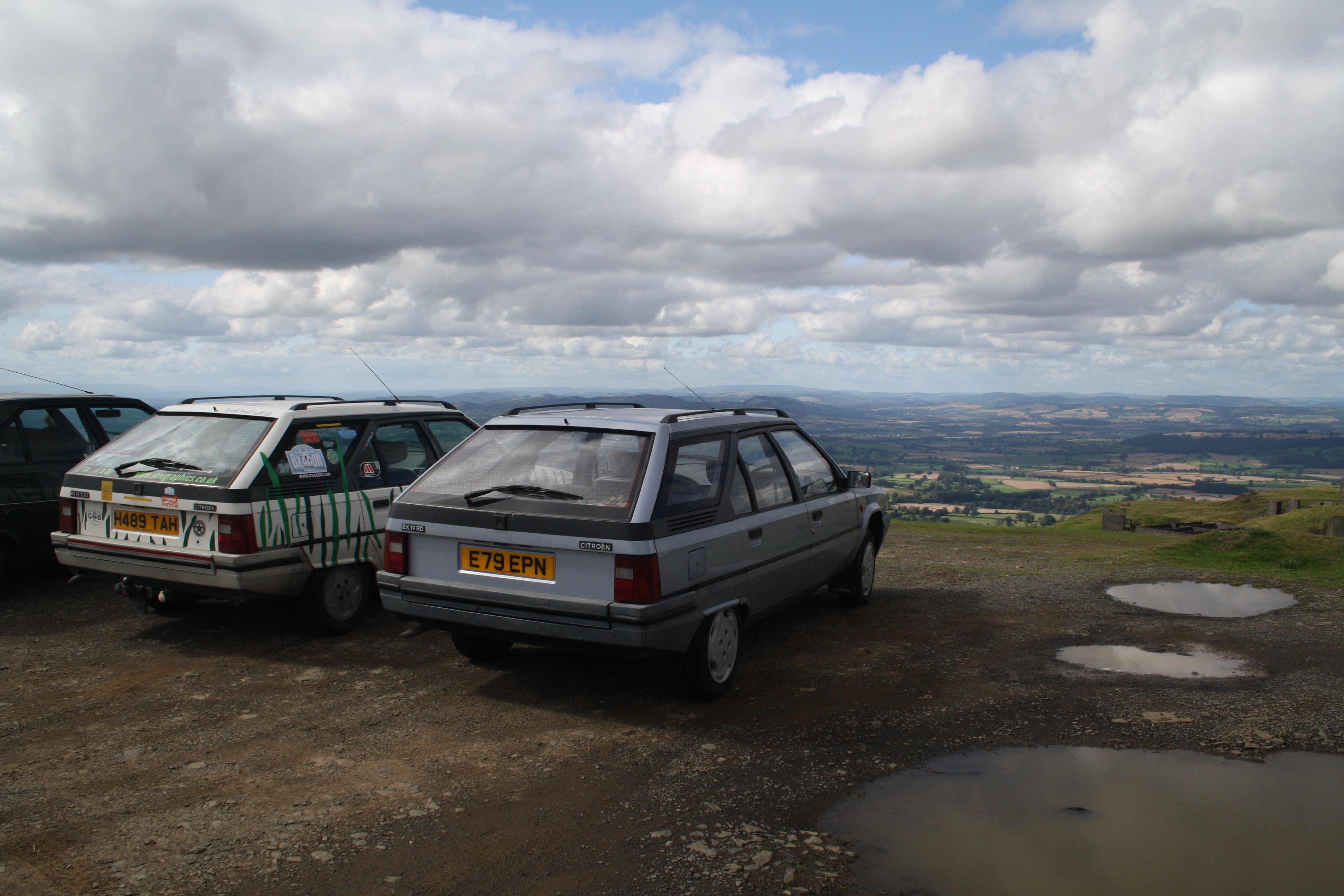
My new BX sits alongside my old one in 2012

My new BX sits alongside my old one in 2012

I am still hoping to close a deal on a Citroen XM as well. I’ve never owned an XM, but as it is really just a scaled up BX, I should imagine I’ll like it. It’s an automatic, so it’ll drink a lot more fuel than the BX, but offers a full-on-waft driving experience. Yet, as I well know, an XM can be hustled through corners with surprising vigour. Will it just be too big for Welsh roads? That was certainly a fault of its predecessor – the CX. I look forward to finding out.

Disco a go go

I tried to sell the Discovery and failed. This led me to believe that I should keep it and I readily entered into the spirit of that decision. However, I was wrong. At the moment, I can’t justify a car I barely drive. It takes too long to warm up, so I don’t use it for local (ie less than 10 mile) journeys. It’s rubbish at hooning too, so I prefer using the 2CV or Sirion when twist roads are encountered. Twisty roads are encountered on pretty much every journey. I can’t even say that I use it everytime I go greenlaning, as I recently went in the 2CV instead. Albeit not too successfully

Sorry for the to-ing and fro-ing, but it really must go

Sorry for the to-ing and fro-ing, but it really must go

Last week, I did use it for a long-ish distant trip, but found it wasn’t as comfortable as I thought it was. It also reminded me just how unwieldy it is on twisty roads. Yes, it handles very well for something with a steering box, beam axles and so much weight so far from the ground, but it always feels heavy, especially when braking. I don’t really like that.

So, sensible head wins again. It really must go. I’ve got a lot of long-distance driving to do this year, and sadly my trip to Leicestershire in the 2CV has only reminded me how regular long distance driving really wallops my admiration of the Tin Snail. It was never built for motorways and driving it out of its comfort zone takes me out of mine too. A 2CV on a motorway should be an occasional adventure – one to savour. Just getting from A to B as quickly and as smoothly as possible is not its forte. You really are driving a 2CV at its limits at motorway speeds, and while it’ll happily lap up the abuse, it’s hardly relaxing.

What the replacement will be, you can only guess at. To be honest, I’m playing a guessing game myself. I may be getting an Citroen XM, but the purchase is not exactly going smoothly. A hydropneumatic Citroen seems a sensible option though. No other car rides in quite the same way, and 1980s/90s hydro-Cits combine ride and handling in a quite spell-binding way.

In the meantime, the Discovery is for sale with an asking price of £795. It’s not one of the best, but it’s a sound basis for further improvement. I may be sad to see it go, but perhaps it’s better to say goodbye while the memories are still fond. After all, few vehicles manage to combine the glorious looks of a Mk2 Transit, the humped roof of a Citroen CX Safari and lighting pinched from Maestros and Sherpas quite so well. I’m glad I have many photos of it.

Tin Snail Travels – Leicester

Today, me and the 2CV have swapped the rural idyll for city living. Well, after I’d removed the reverse light that is, as its mounting had broken.

Travelling twin-pots – destination Leicester and Wisbech

The Dyane decided to stay with us for the weekend because it doesn’t like the rain. It belongs to a friend who lives even further east than I was planning to travel today. Fine weather today convinced me that there was only one car to drive. After all, what do I crave most in a car? Comfort! The Sirion is woeful at providing this, while the Discovery is far from perfect. So, 2CV it was.

My decision was pretty much justified, though only by factoring in the brilliance of noise-reducing ear plugs. They don’t block all noise, but take the edge off – which in a 2CV is pretty useful. On mine, the roof seems to be flapping, which really doesn’t help. I need to adjust it. Engine noise is almost entirely cancelled out though, and with the engine doing over 5000rpm at motorway speeds, that REALLY makes a difference!

It’s the ride comfort that really makes the difference though. Less noise helps, but wafting along over bumpy roads is just great. Even the sectioned part of the M6 after Jct 6, which is like driving up a kerb at 50mph in the Sirion, was noisy but not uncomfortable. Impressive.

The 2CV is also fairly joyous in traffic. Low gearing means you can swiftly get the clutch up, and still be moving very slowly. A heavy flywheel makes it reluctant to stall too. That was handy as there seemed to be a rugby match ending when I reached Leicester. There was LOTS of traffic.

The view this evening is rather different.

The mean streets of Leicester

Yes, the phone on my BlackBerry is woeful. Tomorrow, I’m busy with a photoshoot (the details of which will be revealed one day) before heading back to wet West Wales.

Skud dreams are wedded bliss

Who am I to disagree? Some very dear chums of mine got married at the weekend. Sorry for taking quite so long to get my report of the day into readable form. There have been many distractions. Both are quite keen on the brand known as Skoda, as it seems are their friends and a good chunk of their families too! Skodas were plentiful, from rear-engined ‘jokes’ of the early 1980s right up to a brand new Superb estate, kindly loaned to the couple for the weekend by Skoda UK. Very nice of them!

Logistics are always a challenge, so I’d offered my services as a driver – though I could hardly offer any of my rusty relics as suitable transport. Fortunately, a mutual Skoda-owning chum called Dave, who was the best man, leant me his 1983 Skoda 120LE. This forerunner of the more-common Estelle shares the same delicious, kinked-up wingline as later models and naturally has the engine at the back. This example had only covered 19,000 miles. It was an honour to transport important folks to the service in style! Even better, another 120LE (that’s 100% of the 120LEs known in the UK) transported further wedding people. We enjoyed a merry convoy even in horrible weather conditions.

Fabulous wedding convoy!

Fabulous wedding convoy!

As you can see, it’s a lovely example of the breed, though so is the yellow one behind it. Right. To the road test. The first one I’ve ever carried out accompanied by a bridesmaid.

It’s been a while since I drove a rear-engined Skoda, and I’d almost forgotten how thoroughly charming they are. The engine hums away in the distance, behind you though it must be said, it doesn’t provide very much urge. It delivers its power smoothly though, with a nice spread of torque. The gearchange is very much like many other rear-engined cars, from Volkswagen Beetle to Renault Dauphine. You can feel that there’s a lot of linkage, but there’s a nice, mechanical feel to the change, and I certainly didn’t have any issues finding the desired ratios.

The steering was lovely. It uses rack-and-pinion but having little weight up front means it can be nice and direct without being heavy. I was hardly going to push the handling to the limit – hairstyles and bouquets were at risk – and it’s probably best I didn’t, as they’re a bit of a handful when pushing on. I was still able to barrel along at a heady 50-60mph without having to get too pedestrian at the curves.

All-in-all, it was a reminder that I really do need another rear-engined Skoda in my life. There has been only one, and it wasn’t very good. Next time, I shall spend more than £150.

Finally, best wishes to Rob and Sophie Parker-Norman for the future. May life bring you much happiness and even more Skodas!

I'm sure the official photographs are better...

I’m sure the official photographs are better…

Winter tyres vs 4×4

Ok, so this isn’t the most scientific of tests, but an unexpected burst of snowy weather has allowed me to compare my Daihatsu Sirion and its Avon Ice Touring tyres versus my Land Rover Discovery on a set of Avon Ranger All-Terrain tyres. It has been a very interesting day.

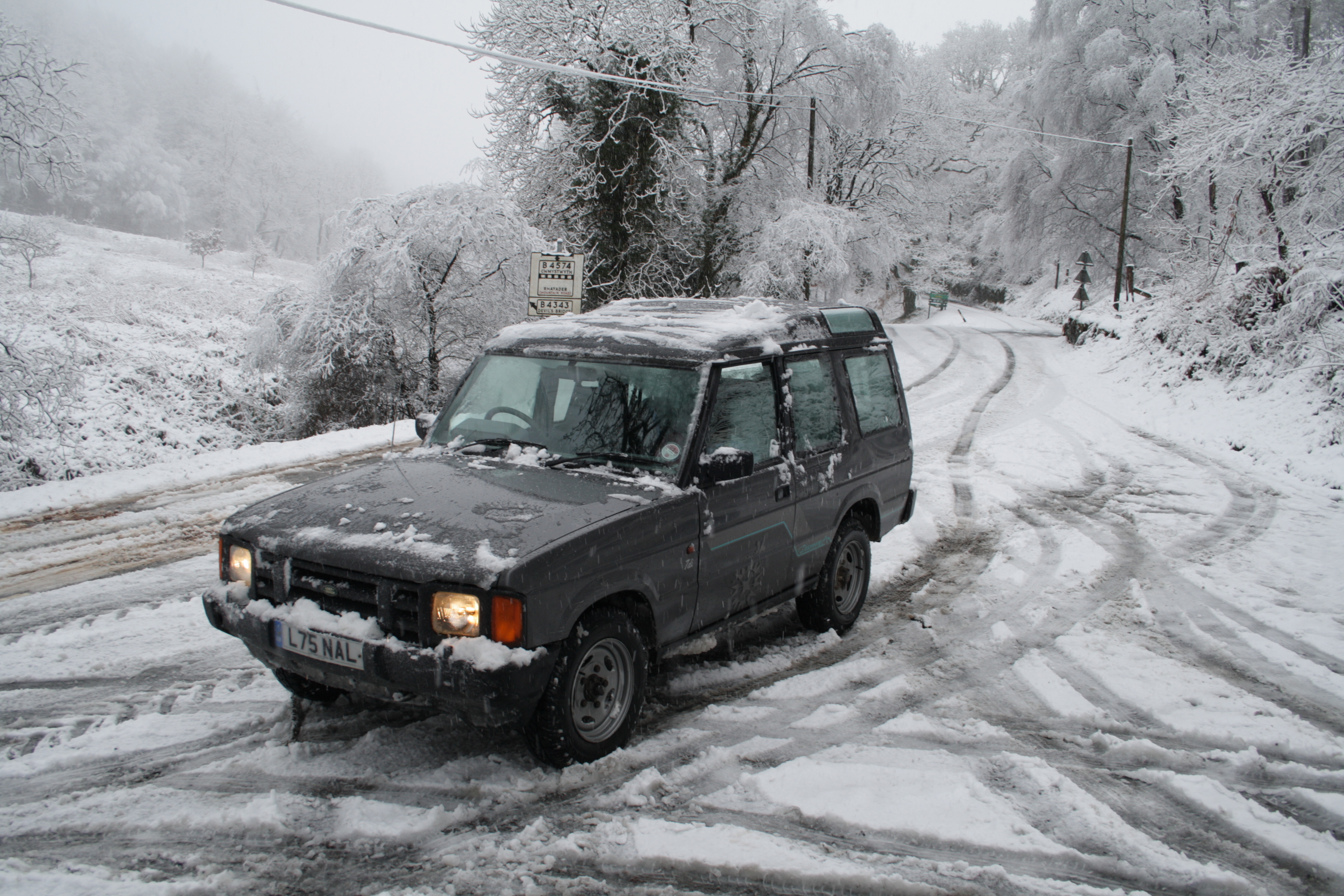
Discovery still a handful in the snow

Discovery still a handful in the snow

First of all, I’d like to point out that the biggest factor in surviving tricky conditions on the road is the driver. Owning a 4×4 does not make you invincible. Of this, I was already well aware. Even so, I was surprised to get wheelspin as I pulled away in the Discovery (diff lock not engaged as snow coverage was patchy) and even more surprised that the first sharp turn had it feeling very twitchy. Proof that despite the rather general ‘Mud and Snow’ tag on the Avon Rangers, the compound just was not soft enough to provide good grip.

I engaged the diff-lock for steep descents, and it was nice to have that luxury. By engaging the diff lock, I was more effectively spreading the braking between the two axles, hopefully making it less likely that I would lock a wheel should I have to brake. The best way to avoid wheel lock is of course to use a low gear and keep well away from the middle pedal, but you never know what’s around the next bend.

But, even when the snow had cleared enough to leave dry tracks on the road surface, hitting the banks of slushy snow in between left the Discovery feeling very unstable. I got back home and jumped into the Sirion.

Sirion proved very capable

Sirion proved very capable

Straight away, the Sirion felt very different. Sure, the lack of four-wheel drive meant wheelspin was impossible to avoid when starting on a snowy slope (or from where it is pictured above on fresh snow) but it felt more stable. Hitting slush was no more dramatic than dry tarmac. The Sirion also proved how great proper winter tyres are at stopping on snow and ice. For the above shot, I braked gently on the fresh snow with no ill effects, then pressed the pedal really hard, which finally made the anti-lock brakes kick in. For me, this stopping power is what makes winter tyres an essential item.

It isn’t a conclusive test, as I was unable to test both cars on exactly the same roads, at exactly the same time. I also didn’t have the luxury of trying the Discovery on winter tyres or the Sirion on summer ones for direct comparisons. One thing I will say is that the high degree of power assistance to the steering on both vehicles is very detrimental in these conditions. It’s very hard to know exactly how much grip the front wheels have, as so little feedback comes through the steering wheel. This means it’s easy to be in a skid without realising it. A reminder that perhaps I should have dragged the 2CV out of its cosy garage!