Shitefest ’14 – the report

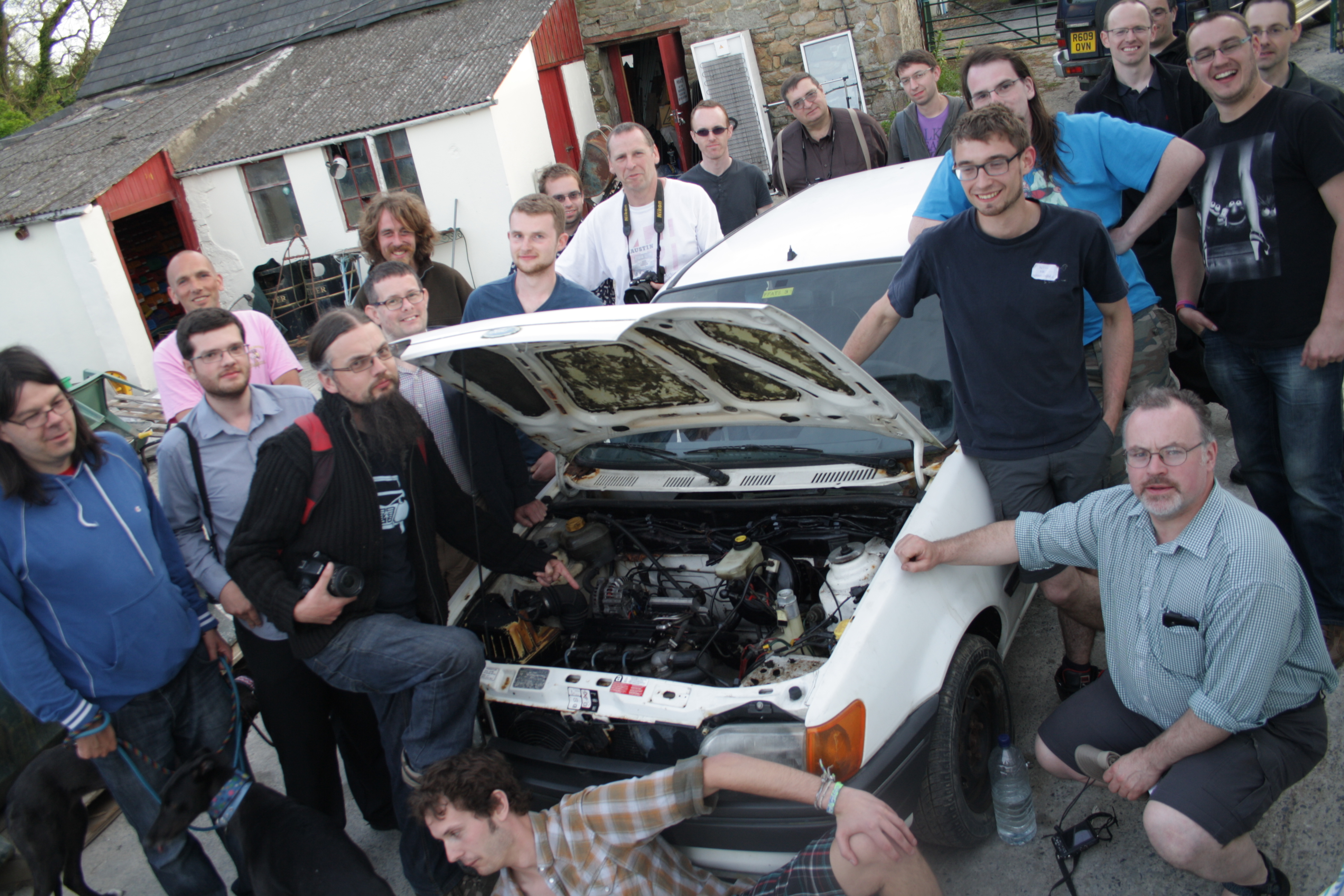
I’ve just had a very interesting weekend, amongst some of the rarest cars on UK roads. It made me realise that an open mind really is a very good thing!

I’d organised Shitefest ’14. This is the annual gathering of folk from the Autoshite forum. It is a superb forum where cars ranging from the 1960s to the early noughties are enjoyed. It doesn’t really matter what they are, there will be someone there who likes them and there’s the absolute opposite of snobbery. Sure, there is an in-joke that all Vauxhalls are rubbish, but this really is just an in-joke. Put strange people together, and strange things happen. Don’t ask about Pineapplists.

Anyway. I nervously awaited the hordes at a carefully selected site just a few minutes walk from home. This meant I could take all three cars. Lovely!
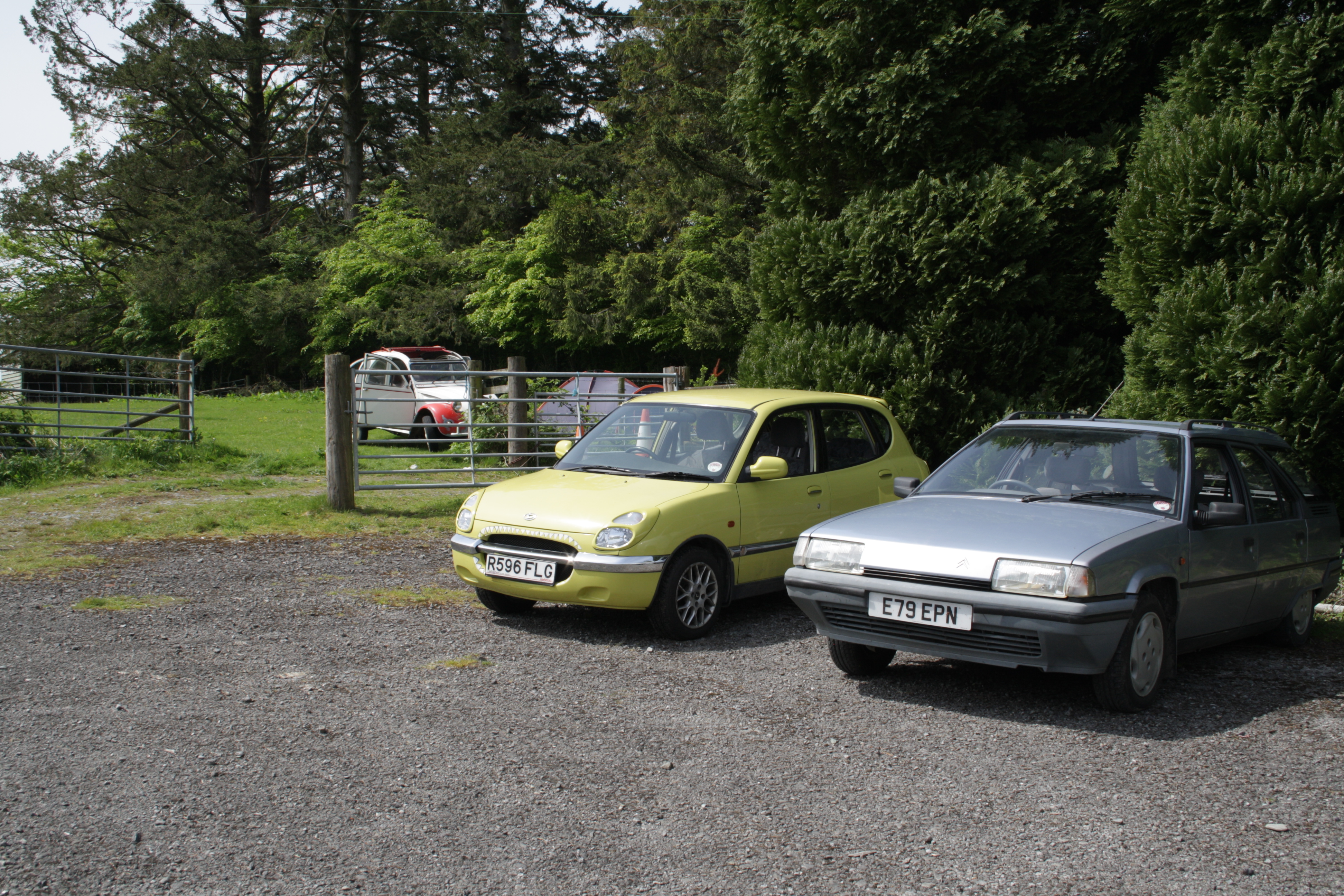
The ClassicHub fleet together at a show

The ClassicHub fleet together at a meet

Folk turned up and it became a truly magical weekend, aided by the Hafod Hotel whose site we used, and some incredible weather. On the Friday, cars included a large selection of Scottish Volvos, a delightful Fiat Panda Mk1, a Volkswagen Scirocco, a 1993 Cadillac Eldorado, more Volvos not from Scotland, a Freight-Rover Sherpa, a Triumph Acclaim and a Lancia Beta in disreputable condition as well as a fair few more. A pub quiz was enjoyed and then there was much nattering around a fire. Perfect.

On the Saturday, I planned nothing during the day. There really is no need to play everything to the hour. Just leave folk to their own devices. Some went out for the day, but most people opted to swap cars. Getting the most out of their ‘drive any car third party’ insurance cover, folk enjoyed the local roads in different machines. Autoshiters really are trusting as most of these runs were unaccompanied. I’m ashamed to admit that I wasn’t so trusting and sat in my cars when they were taken out. The Sirion did a few trips, a few people drove the 2CV around the car park and a few were treated to demonstration runs out on the road. A 2CV CAN be quick! But not uphill.

It was also a chance for me to try some other vehicles. This was hugely enjoyable. While I had great fun at the Heritage Motor Centre’s press day the other week, I get a buzz every time I clamber into a vehicle I’ve not driven before. It doesn’t matter if it’s a fiery sports car or a Vauxhall Cavalier Mk3 with rusty wheelarches – it’s a chance to put my perceptions to the test. You can look forward to individual road tests in the near future, but a Peugeot 504 diesel estate really won my heart – and I wasn’t alone.

On the Saturday evening, I led a scenic drive to Aberaeron for food, before we headed to the superbly quirky and enthusiastically run Internal Fire Museum of Power further down the Welsh coast.

Food

Chips to feed the Autoshite collective

This was the biggest challenge to be honest. The drive there was a good hour, leading a convoy of seven cars on a cross-country trip on Welsh roads. We got well away from major routes and saw spectacular sights – like many Fiat Multiplas and a shabby Peugeot 205. Then I had to get everyone fed pretty quickly (the New Celtic Restaurant did a great job with their take-out counter) and moving again to get to the museum.

We arrived only half an hour later than I’d planned – I really hadn’t factored in enough time for food – but it was well worth the wait. Thanks to the Arts Council, museums are encouraged to open at night on the weekend I’d chosen for a car rally. Arriving at 7:30pm was therefore no problem at all. It was a huge bonus to my planning for the weekend. Huge engines were running, and we were treated to an up-close introduction to the Orbital Two-Stroke Ford Fiesta that the museum usually has tucked away. Sadly, it wasn’t quite running (attempts had been made) but it was great to see such a rare car. To the best of my knowledge, there is only one other in the UK, at the Haynes Motor Museum.
Apologies for the poor Woollarding attempt

Apologies for the poor Woollarding attempt

Other highlights were the running of the Proteus Gas Turbine, which can apparently drink 40 litres of fuel in a minute! It made some people feel better about their ‘thirsty’ cars. We then headed back to the hotel, following a still-twisty but more straight-forward route that allowed us to get more of a crack on. Even the heavily laden 504 made good time. The reason for the rush? A Hyundai Stellar had arrived at site!

Very rare Hyundai Stellar

Very rare Hyundai Stellar

It’s a crap photo as I was over-excited and didn’t have a tripod. Sorry. It wasn’t just because it was a super-rare Stellar either. This one packs rather more of a punch by having a Rover V8 engine. It was a project started many, many years ago, when Stellars weren’t quite so rare. The Autoshite massive didn’t berate the owner for the non-original motor, but just applauded its magnificent noise! The car isn’t yet road legal and was actually still in Anglesey that afternoon having the exhaust custom made. It arrived being towed by a Volkswagen LT – in itself something of a rarity these days.

Sleep eventually happened, then we woke up and folk gently began to head home. Very gently. Some even had a cream tea first. I could tell you many more tales about the weekend, but that’s probably enough words for now. Suffice it to say that I’m very glad I organised it, very glad it was so well supported by local businesses, and so glad people came from miles away (385 miles in one case) just to stand around in a car park full of crap cars. It is so nice to have a meeting where cars aren’t judged, just enjoyed. Even the Kia Pride. Inspirational.
The Great Road Tax Rip-off

Not that long ago, there were at least eleventy twelve different e-petitions calling for a re-introduction of a rolling ‘free’ road tax for classic cars. I didn’t sign. I actually don’t mind paying a bit of road tax – or Vehicle Excise Duty to give it its proper name – because I do like the freedom to drive my car where I want. Fair enough.

Bentley

The same to tax as a diesel BX. Not fair!

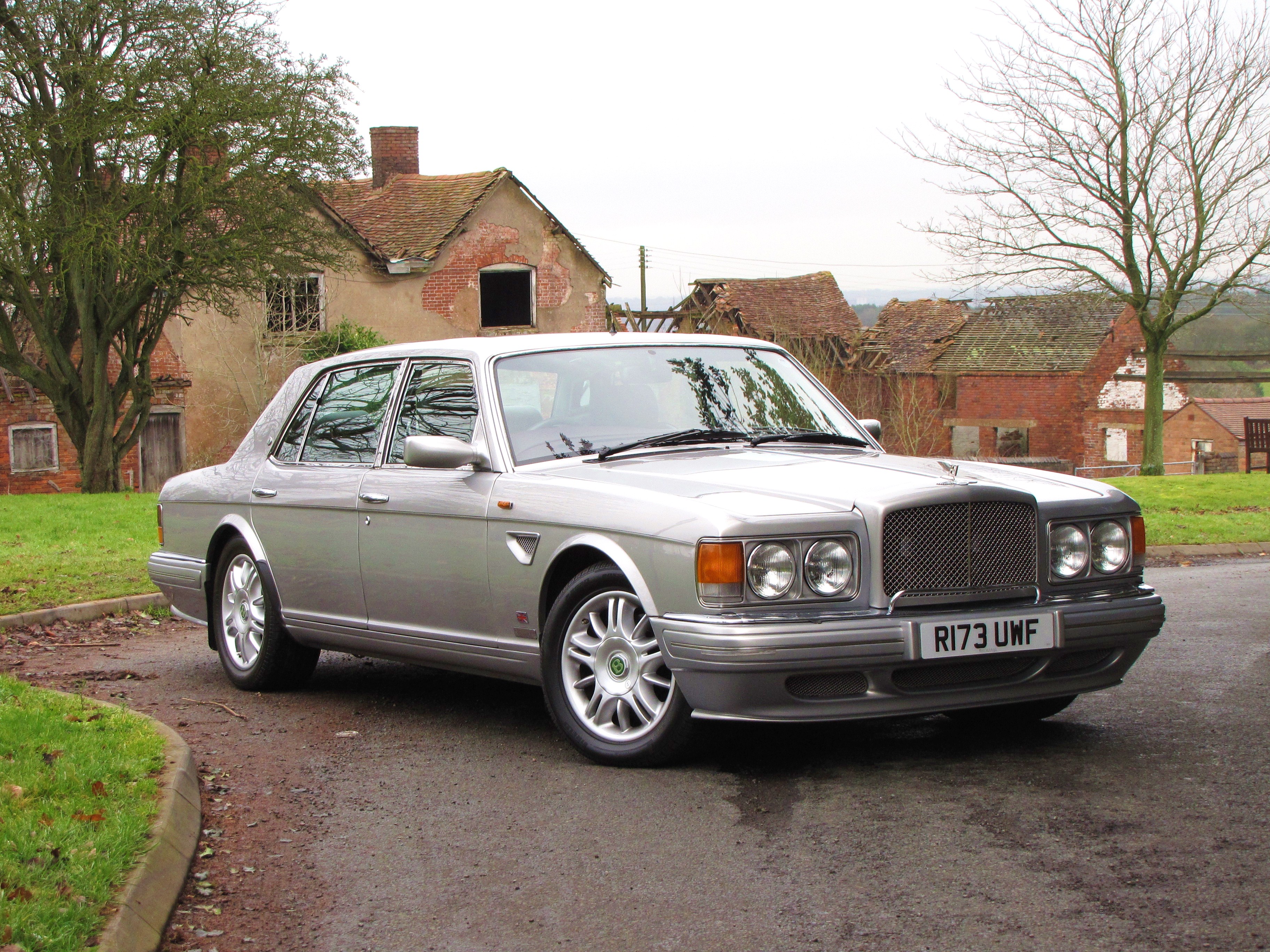
Only it isn’t really. Successive governments, but primarily Labour, have really ballsed up the tax system. In trying to incentivise sales of environmentally sound cars, road tax has become trifling on new cars. Some are entirely free, others a mere £35 or so. Yet my pre-2001 cars are left with comparitively huge annual tax bills – £145 for the 2CV and Sirion, £230 for the BX. I feel I’m being unfairly punished here. After all, by running older vehicles, I’m saving the manufacture of a new one. It isn’t like they’re thirsty, fossil-fuel munching monsters either. They all deliver 45mpg or more. The Sirion even has a catalytic converter. Tax rates for my older cars don’t account for size. It’s a flat rate bar the 1549cc cut-off that separates Sirion/2CV and BX. I could buy a 6.75-litre Rolls-Royce and it would cost the same to tax as the BX.

It’s surely about time for a change. Why not reduce the VED for pre-2001 vehicles? There can’t be that many in regular use as people blindly follow the fashion for buying new. I’m not asking for free tax, just something that doesn’t punish those of us who can’t afford or who really don’t want to buy new.

This is especially topical at the moment as I’m currently faced with not being able to tax the Sirion. It expires at the end of May, but it seems I don’t currently have the funds to pay for it. Getting the 2CV more solid has been the priority, and it has eaten up my meagre funds. Had I a car officially classed as low emission, I’d face a much smaller bill. Even a Sirion 1.0 registered after March 2001 has a tax bill of £110. £35 less, just because of when it was registered. It’s still the same car!

It does upset me greatly. VED has become a hugely unfair system, punishing the wrong people. Not that I’ll be setting up an e-petition about it. For all the use those things are, I might as well present my case via the medium of contemporary dance. (I won’t be though, sorry to disappoint).

Still electric dreaming

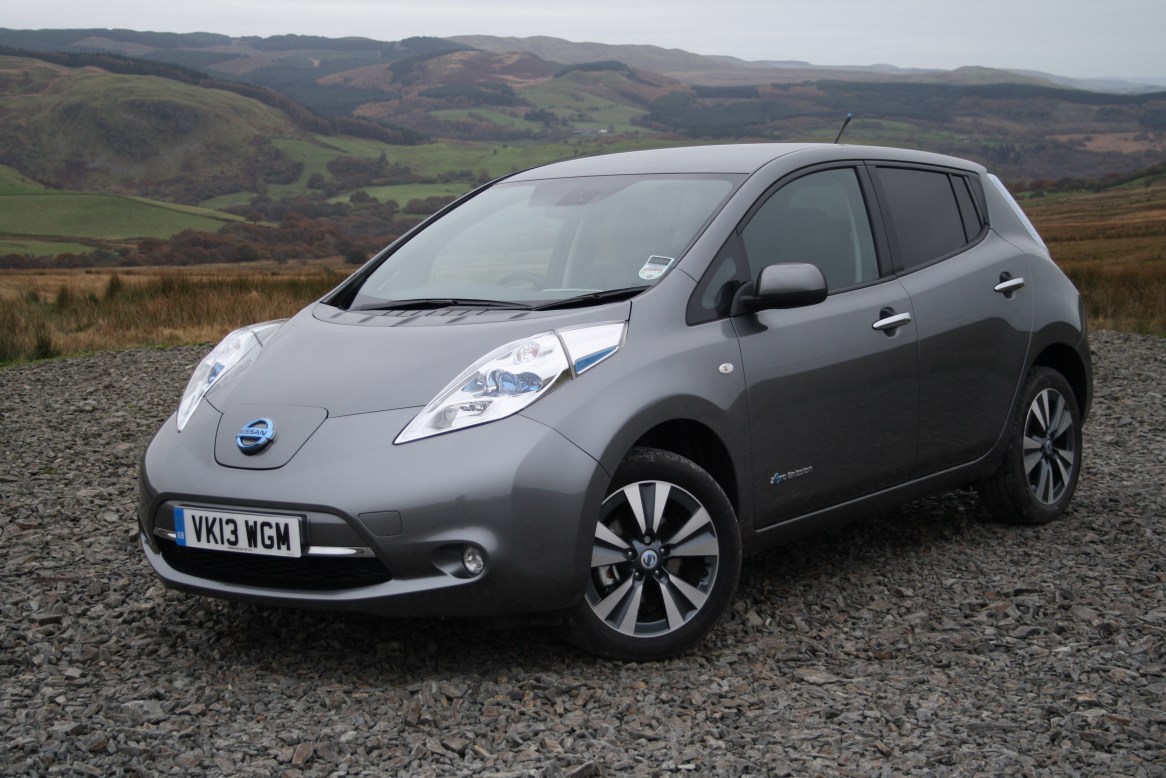
Last year’s test drive of a Nissan Leaf has properly got under my skin. I was amazed at how good the car was, and how it confirmed that electric power makes so much sense, so much of the time. Sure, if you’re clocking up tens of thousands of miles per year, then electric isn’t the answer yet. But most people I know don’t often travel more than 80 miles a day by car, and then electric really makes sense.

Nissan Leaf

I still like the Leaf

For instance, I do a lot of trips to the next village. It’s about five miles away. By the time I’ve got there, I bet the engine oil isn’t even up to temperature – especially as a lot of the journey there is downhill. Even trips to town are only 25 miles in total there and back. Easily within the scope of an electric car.

Now, much as I like them, I can’t afford to buy a Leaf. Not even the £10k one I spied on Ebay recently. They’re not cheap. So, what other options are there? The Volkswagen e-UP! is a car with many grammatical annoyances, but seems a good car. They’re still £20,000 new though, even with the government’s helpful £5000 plug-in grant.

Electric cars can be cheaper though. What about the wacky Renault Twizy? The problem is, the Twizy is utterly stupid. Yes, I found a one-year old one for a mere £5000 on Ebay, but it didn’t have any doors. Why on earth did Renault design a car with no doors?! Even if you do raid the options list for such fancy features, they don’t have windows, so don’t offer that much protection from the elements. In short, it’s a motorbike with none of the performance, manoeuvrability or style. And the idea of French electrics is pretty terrifying too.

Renault Twizy. Pointless. http://tinyurl.com/twizych

Ok then. So buying a new/nearly-new electric car clearly isn’t an option. The second-hand market isn’t too promising either, as mainstream manufacturers haven’t really taken the concept too seriously until very recently. Hybrids are a possibility. In theory, this are the best of both worlds. An electric motor for pottering around town, with a petrol engine for longer trips – and both units working together when you really want to get a shift on. I’ll admit, I’m intrigued about these and would dearly like to try one. Not sure I’d want to buy one just yet though, and the cheapest are still only just sub-£2000 for a 2000-build example.

Mind you, that’s still cheaper than my next option, which is to convert the 2CV. The little Citroen makes an ideal base for an electric car, as they’re so simple in the first place. There’s no cooling system, power assists or complicated drivetrain. You really can just remove the engine and bolt an electric motor in place. Job done.

Naturally, there are batteries and controllers to consider and so far I’m struggling to find a complete package of bits that comes in much less than £10,000. I have found many different electric 2CVs around the world as part of my research though, including this excitingly brisk one in Australia.

It really has got me thinking. I know it may seem like sacrilege for a petrolhead to like electric vehicles, but the truth is, most four-cylinder petrol engines are about as exciting to listen to as an electric motor. The Leaf proved that you can still have a car that’s entertaining to drive with electric power. A car is a car after all. Diesels don’t sound good, yet people are happy enough to buy them. In fact, the idea of an electric BX is rather appealing! It’d be a lot quieter than the clattering XUD diesel.

I will keep exploring this area though. Diesels are being squeezed to the point that they’re struggling to remain reliable these days – a far cry from the sheer, wondrous simplicity of the BX’s powerplant. Getting petrol engines to be cleaner is likely to take them down the same road. Burning oil is increasingly not as much fun. Perhaps electric power really can take over. Once we get around the small problem of generating electricity that is…


Our survey says – go to blazes!

I hate surveys. People unlucky enough to own a television are never far away from a show all about ‘the funniest TV moments ever’ or ‘the best people we love most who wear jumpers and were once on a tv show, slightly’ or something. A great opportunity to wheel out folk you wished were a part of history to make some ‘hilarious’ comments on how good these people they’ve never met are. Ugh.

Mini breakdown

Best British car of all time my arse. It’s broken!

Sadly, the car world falls for this scam from time to time. Autocar, for instance, has just released the results of a survey to find ‘The best ever British car.’ Why? What good can such a survey achieve? Considering it found the Mini to be the best car, clearly not very much. It’s proof that democracy doesn’t work. Yes, the best car we British have ever produced was horrible to work on, ran badly and leaked when it rained, and generated pretty much no profit at all. I guess it does at least prove that the Brits really do love something that’s hopeless. Like Eddie the Eagle Edwards.

Don’t get me wrong, the Mini does actually have stuff to recommend it. They do handle well, and they don’t take up a lot of space. The constant engine oil leaks ensure that the front subframe is the one part that doesn’t actually rust too.

But these surveys are just pointless. The Top Ten is basically a list of supercars that few people have ever been near, let alone driven and a slightly-sporty Ford Escort – the rather feeble, incorrectly feted Mexico. Again, not a bad car, but it was the RS models that actually had exciting levels of power and went on to rally successes.  Why present the mild one as the best?

You really can’t go around comparing supercars with family bread-and-butter anyway. The word ‘best’ is so loose that really, it doesn’t say anything at all. It’s just a list of cars in a slightly random order.

Range Rover off-road

Doesn’t handle as well as a Japanese shopping trolley

It’s for reasons like this that I absolutely hate being asked what my favourite car is. I don’t have one, because there is not one car out there that does everything I want from a car. Many cars do many things well – the 2CV for instance. But the 2CV doesn’t have a V8 engine. The Range Rover does, and also does many things well (fourth in the pointless survey by the way) but it can’t deliver 40+mpg. It’s not as much fun to point down a tight, twisty lane as a Daihatsu Sirion either. I don’t have a favourite, because I like all of them. Not having a favourite doesn’t seem to cause me problems in day to day life. It is unnecessary.

There is no point trying to see one car as better than another. Don’t see a list of 100 ‘best’ cars as anything other than a list of cars to try. Even then, don’t rank them against each other. Just enjoy what they are! Cars are not to be ranked. Just enjoy them, and leave pointless surveys to pointless TV programmes.

Heritage Motor Centre – an amazing day

The Heritage Motor Centre contains some incredible cars – absolute icons mingle with odd prototypes and immaculate examples of cars the world didn’t necessarily take all that well to. I got to drive some of them last Thursday, as you can read in this week’s Classic Car Weekly (7th May issue).

That article gives you the background for why it happened, but here I’m going to focus on the vehicles that really stood out for me. One is HUE 166 which, as any Landy fan knows, is Land Rover Number 1. There’s some debate about exactly what this means – some reckon Huey is the first production Land Rover, others that he is in fact a pre-production one. It also must be said that a thorough restoration (Huey was sold by the factory and used as a farm hack for several decades) in the 1970s included the fitment of quite a few non-original items. Such as the rear body. And trafficators.

First Land Rover

HUE 166 and a hairy bloke (Pic: Richard Gunn)

I couldn’t care less. Huey remains one of the most significant vehicles in our motoring history. He’s one of the most famous too, and is very often wheeled out for events and TV programmes. I seem to recall that Dick Strawbridge drove him around on a beach in North Wales as it’s where the concept of the Land Rover was conceived. But, this was my chance to get behind the wheel. I was thrilled.

For a start, I’ve never driven a Land Rover older than a Series III and have always loved the cute looks and earnest appeal of the super-basic Series 1. As I clambered aboard, my 2CV began to feel almost luxurious! It’s rare to see quite so much exposed metal on a car. I gave the starter a shove, and the 1.6-litre, inlet-over-exhaust engine fired promptly into life. This was it. I was going to do it!

So, it was a shame that I pulled away in third gear really. The gearing is so low that this didn’t really seem to matter, but down-shifting to second for a particularly nasty speed bump confirmed my error. I had my suspicions by this stage! Huey felt quite sprightly really, and eager to stop too. Noisy, certainly. Not just engine noise, but the rattles and bangs of many metal panels. I got a chance to go back to third, and did a beautiful double-declutched downshift into second for a tight roundabout. There is no synchromesh on first or second.

Then I got a good run down towards the Centre and managed to get up to fourth. I was having the time of my life! Not only was I driving a Series 1 Land Rover, but this was the most famous of them all! Sadly, they wouldn’t let me take a trip around the off-road course.

Other iconic vehicles were present, but sadly while I got a short drive of the first Morris Minor – NLW 576 – the brakes had failed, so I had to be somewhat careful. Happily, I’m an expert at driving vehicles with no brakes… The Rover P6BS was an astonishing opportunity too, though sadly tainted by a hideous misfire. I doubt more than five cylinders were working.

My next choice was a Range Rover that has fascinated me since I was a child. In 1971, two Range Rovers drove the length of the Americas, from Alaska to Cape Horn. Most of the 18,000 mile journey was no problem at all, but the Darien Gap was the tricky bit – a chunk of rainforest and swamp that joins North to South America. Through here, they averaged just 2.5 miles a day. I’ve read many features about these cars, both of which survive. One is part of the incredible Dunsfold Land Rover collection, the other was retained by Rover and is a car I can remember from when I first visited Gaydon back in 1993. I remember standing next to it wondering about the adventures this car has undertaken and being struck by the contrast between jungle-battling and standing silently in a museum.

Darien Gap Range Rover

Therefore, I was overjoyed to get the opportunity to actually drive one of these famous vehicles. I wasn’t the first – it seems it was taxed in 2012 at some point. That probably explains why it was so joyous to drive. It felt absolutely spot on. Top heavy, yes. It still wears the ladders they used to cross the forest and they make it top heavy! So overloaded were the cars that the rear differentials developed a habit of very often breaking on the trip. Experts were flown out from Solihull to pinpoint the problem and the vehicle loads reduced.

This Range Rover has an amazing history, from over 40 years ago!

This Range Rover has an amazing history, from over 40 years ago!

Some cars were only available for passenger rides – such as a 1904 Rover and an MG Metro 6R4. Time didn’t allow for such pleasantries, but I did drive a mix of other vehicles, including an Alvis TE21 and an Armstrong Siddeley Sapphire 346. These were very pleasant indeed, but neither really stood out. After all, they were just classic cars albeit rather nice ones. It’s amazing how historical context makes one car feel so much more special than another.

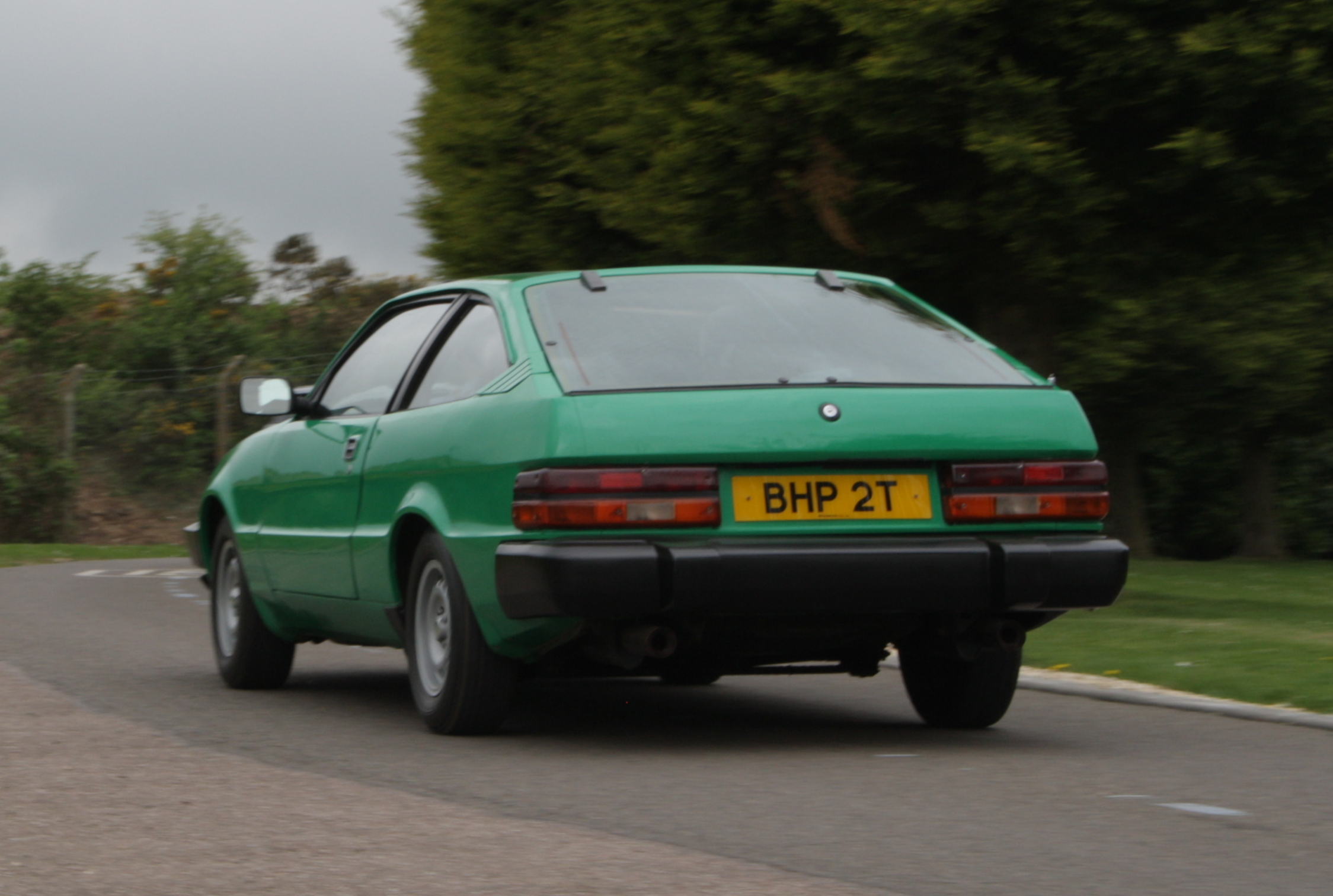
Which brings me to the Triumph Lynx. I almost didn’t get to drive it, as it spectacularly blew a coolant hose after a couple of drives. Hats off to the Heritage Motor Centre mechanics though, because it didn’t seem to take them at all long to get the hose changed.

The Lynx is actually a pre-production example. They got that close to actually building it. The styling is an odd mix of Harris Mann’s TR7 and a Canley designed rear. Not the happiest rear end it must be said. The platform is extended TR7 but with a Rover SD1 rear axle set-up. It’s a Capri-rivalling, US-pleasing V8 four-seat coupe. Sadly, industrial relations were so bad at the TR7 factory in Speke that management shut down that factory, and with it the hopes of the Lynx. The project was shelved before tooling could be put in place and this vehicle remains a remarkable one-off.


Lynx rear

The Triumph Lynx was very nearly a production reality

What a shame too. It is a lovely car to drive, with delightfully-weighted power-assisted steering, and the lusty grunt of the V8 that arguably should always have powered the TR7. I was very pleased to secure a drive in this almost-production car. What a day.

I know this is already a very long piece, but I really must thank the mechanics, management and volunteers at the Heritage Motor Centre for making this incredible day a reality. It was pretty much unprecedented to have so many important cars out and actually working and it made for a true spectacle. It was truly heart-warming to see how much everyone involved – from volunteer right up to the management team  – absolutely loved the day. I wish them all the best for the new Museums Collections Centre, which will allow the reserve collection to be displayed for the first time. Exciting times indeed.


Less is more. I think.

I’m still trying to re-adjust after a week with a 245bhp Jaguar. My three cars have only 154bhp between them. The thing is, that’s just how I like it. After all, the Jaguar was capable of reaching quite naughty speeds even when still in second gear. What’s the point of that?

Power not included

Power not included

I’ve said this before, but I’ll say it again. Power is not essential to have fun. Any 2CVer knows this, and so do Austin 7 owners and custodians of Austin-Healey Sprites. Power has the ability to make pretty much any car exciting, but it isn’t a must-have ingredient. No matter what the presenters of a so-called motoring programme on the BBC may try to convince you.

The more I drive my 71bhp, non-turbo diesel BX, the more I’m convinced it’s the best engine you could specify. I’ve tried the turbo diesels, and they’re frustrating. Yes, the taller gearing is nice, and accelerating up a hill is a pleasant novelty, but you end up working so hard to keep them on boost. That means extra engine noise, as you must keep it between 2000 and 4000 rpm. By contrast without the turbo, I rarely trouble 3000rpm. Doesn’t sound like fun does it? But it is. I can mash the throttle pedal into the floor in all gears, and barely trouble the law. I also have to work hard to preserve momentum, which is an enjoyable challenge in itself – one alien to those accustomed to loads of power.

Speaking of which, the most exciting BX I’ve ever owned was a 160bhp 16v sports model. It was hilarious with its VTEC-like power delivery but, as with the Jaguar, you really had to blow speed limits to shreds to properly enjoy yourself. I sold it before it blew my driving licence to shreds. I imagine the 1905cc 8-valve petrol is a good engine choice, as you don’t need to rag one of those silly to get a shift on. But it won’t do 50mpg.

So, I’ll stick with the non-turbo diesel. Sure, overtaking needs a lot of planning and care, but that’s probably a good thing anyway. Lots of power means you’re tempted to have a go at gaps that aren’t really there. You can still have lots of fun though, due to the BX’s keen handling and excellent steering. Even when there’s play in the steering rack. After all, the real beauty of diesel for me is simplicity. Once you start bolting on turbos, you’ve started on the slippery slope that has led to today’s hideously complicated, problematic diesel engines. The Keep It Simple Stupid motto really is the way to go.

Sirion: More brake trouble

Just over a week ago, the Sirion’s brakes seized in a rather unpleasant manner. I pride myself on feeling a problem well before it becomes dangerous. With only 54bhp, the resistance caused by a binding brake was enough to arouse my suspicions. I shouldn’t have to accelerate downhill! Then I detected a wheel wobble. I was hurtling down a very steep hill at the time so I cautiously applied the brakes and pulled over. Sure enough, the nearside front wheel was hot to the touch. I’d only travelled about a mile from home! Ideally, I would have had something big and made of metal with which to wallop things – that can often force a sticky caliper to retract, or a stuck pad to free itself. I had no tools so just have the wheel a good kicking. This, amazingly, did free things up enough for me to drive another couple of miles to my destination.

I drove the car home the next day with no problems at all, but the very next journey revealed the same symptom. Life got hectic for a week and so the Sirion had to sit on the driveway and await some spare time.

That finally arrived today, so I began to strip down the caliper. It’s a floating caliper, so the first task was to remove the slider bolts. I’d replaced these not long ago and I could quickly eliminate them from my enquiries. With the caliper free, I could see if I could push back the piston. I could not. I opened the bleed nipple and tried again. Same story. This at least confirmed that the flexible brake hose wasn’t at fault – they can degrade internally and act as a one-way valve.

The only conclusion remaining was that the piston had seized into the caliper. I looked up the price of new calipers. Eek! At least £65. I looked up the price of a new piston and drew a blank. Not being particularly flush with cash at the moment, I decided to remove the piston and see how bad things were.

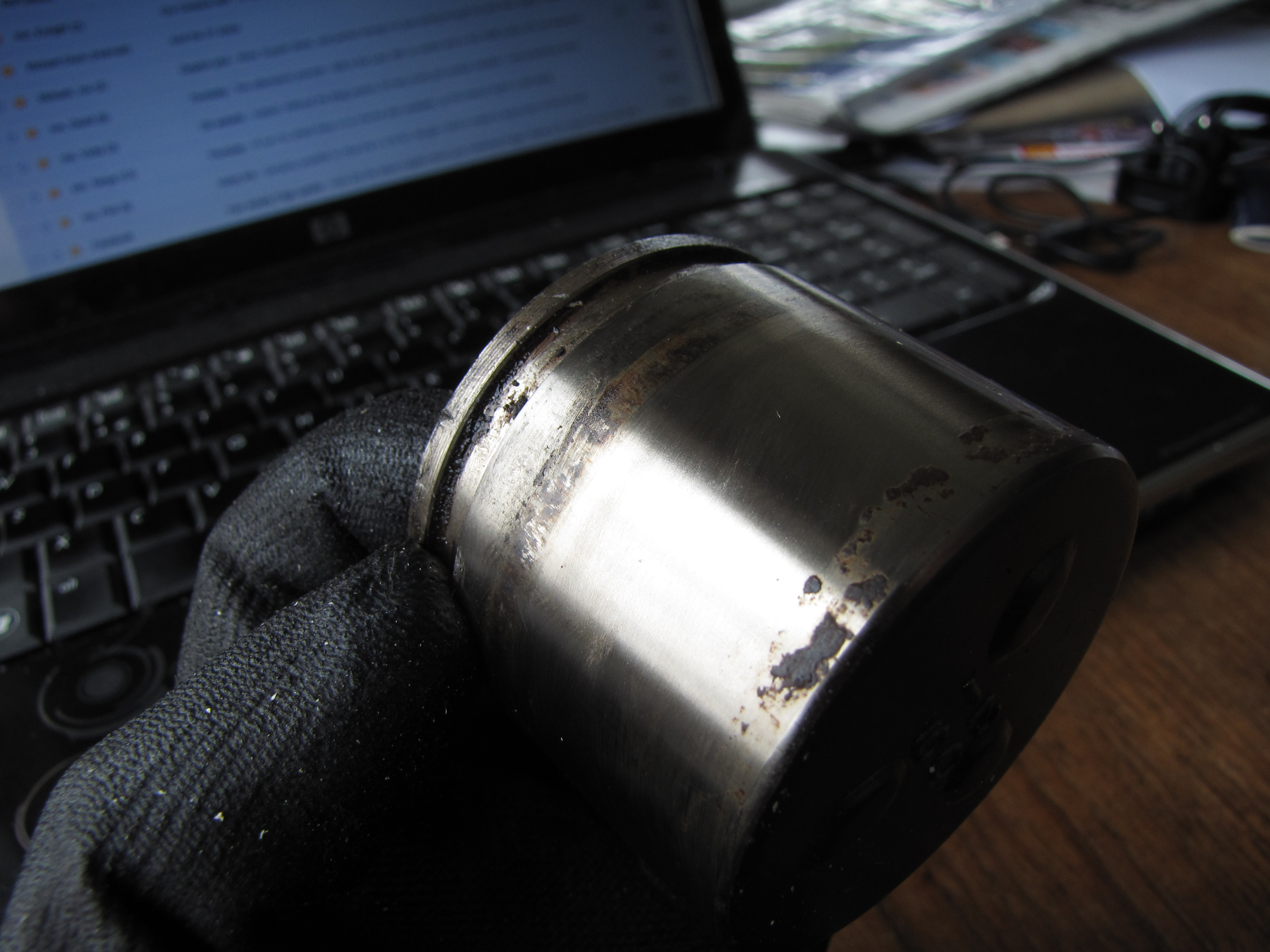
Icky piston

Icky piston

Removing the piston was quite easy. One option is to use compressed air. The other is to use the power of the braking system. I opted for this one. It involves pressing the brake pedal down until the piston comes out. Make sure there’s something beneath the caliper to catch all of the soon-to-be-free brake fluid! I did it gently, in stages. Press pedal, go and have a look, press pedal, go and have a look etc. Eventually, it popped gently out. Then I put a hose clamp on the brake pipe and undid the union on the caliper. The piston didn’t seem too bad really – a bit grotty in places perhaps. A good clean with a cloth improved things, and I used a very light emery paper to smooth things even more. Be very careful not to overly scratch the surface of the piston.

With the piston out, I could see that corrosion had built up on the bore, especially between the two rubber seals. I didn’t have a seal kit, so had to carefully clean the face of the bore – a screwdriver for the big chunks, then emery again. After that, I had to clean out the bore and seals very carefully. Any muck here is only going to give a problem later. With everything clean, I dug out the red caliper grease and applied that to the seals. I also smeared a little over the piston itself to aid its refitment. That worked a treat and it slipped home beautifully. I refitted the caliper and pads, bled the caliper (keeping a close eye on the level in the master cylinder – it needed a fair bit of topping up) and had a successful test drive.

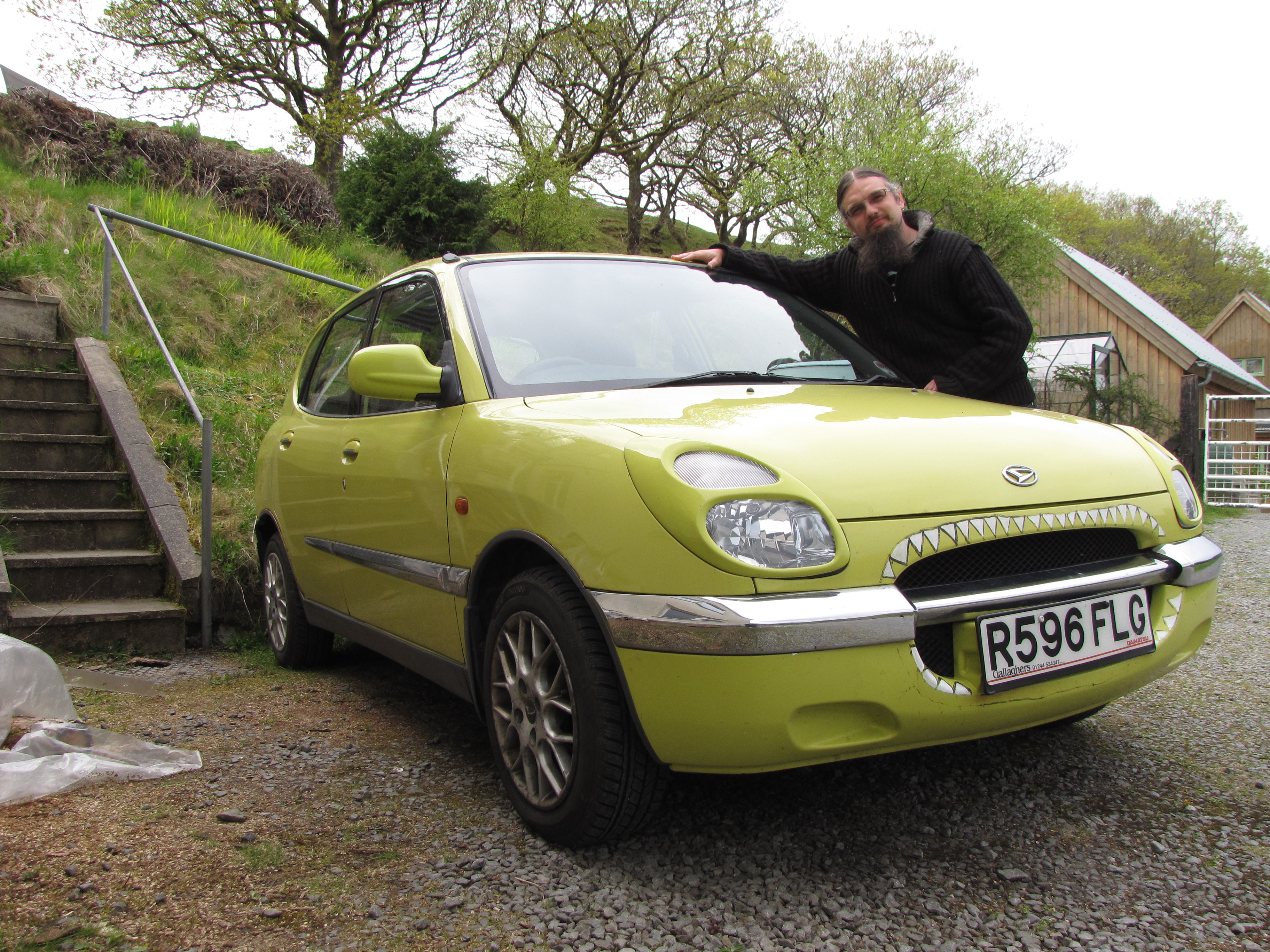
Daihatsu Sirion yellow

The Yellow Peril is still in the good books, and now stops!

The internet is full of people asking which grease they should use for calipers. I use red caliper grease for the piston, seals and sliders. Some claim it isn’t suitable but my experiences so far are that it is. Lithium-based greases can be bad news as they can destroy the seals and apparently don’t react well with DOT brake fluid. Certainly, you should NEVER use copper grease. This is not a suitable application. It’ll just turn into a sticky gunge and will definitely cause you problems!

It’s good to have the little Sirion back in use again. It makes me laugh with its daft looks and ridiculous exhaust bark. Six months this car has survived on the fleet. Will it make it past the tricky eight month stage?

Jaguar – and now, the end is near…

I’ve spent the past week absolutely ignoring my own cars. Well, to be fair, I was away for three days of that week. The BX is in Cheltenham, the Sirion has a seizing brake caliper and the 2CV is resting in the garage.

That’s because I’m still hurtling around in a Jaguar, being ever more glad that I’m not having to personally fund its horrendous 23mpg fuel habit. It’s a real shame that it drinks so much, as otherwise, I’m particularly fond of it. There’s a real danger that my love of automatics could even trump my preference for manuals. However, I’m exchanging the Jaguar for my BX again tomorrow. I’m already wondering what it’s going to be like swapping 245bhp of excitable Big Cat for 71bhp of sluggish diesel. Mind you, the novelty of 50mpg will be nice!

X300 poses with neighbour's S-Type. Different, but very Jaguar

X300 poses with neighbour’s S-Type. Different, but very Jaguar

There’s plenty more excitement to contend with tomorrow too, but you’re going to have to wait for details of that. Hopefully you won’t have to wait too long…

Spending a week, and over 700 miles, with the Jaguar has been a real treat. Usually, to spend that much time with a car, I have to buy it. I’ve been amazed at how my thoughts regarding the car have changed in that time. It’s just long enough for the first flush of excitement to give way to thoughts of practicality. For instance – the seats cause my back to hurt. This is pretty poor. The fuel consumption is terrifying too. It’s also a car that shrinks around you out on the open road, but which grows alarmingly when it comes to parking the thing.

It has been nice to really get a feel for the Jaguar, and also to spend time with fellow Jaguar enthusiasts down in the South East. A gathering of Jaguars is really a rather fine thing. I ended up getting all philosophical about the brand.

You see, I have a real problem with the styling of the F-Type sports car and the current XJ. Neither seem to have very much at all in the way of ‘Jaguar Heritage’ about their styling. That’s in stark contrast to earlier XJs, S-Types, XFs and even the X-Type. All of these seem to scream ‘Jaguar’ in a way to which we’ve become accustomed.

But, here’s the rub. When you see an E-Type next to an XK150, you soon realise what a massive leap this was for Jaguar. Malcolm Sayer’s aerodynamic bullet shape has the merest of hip-kinks to hint at the flowing lines of an XK120/140/150. In short, it really looks nothing like a Jaguar. But I don’t hear anyone complaining about that car’s looks. I still find the XJ hard to stomach – it’s all a bit too brutal – but the F-type is winning me over. It sounds absolutely fantastic for a start, even in ‘entry level’ V6 form.

Not a traditional Jaguar?

Not a traditional Jaguar?

All of which is relevant to the X300 I’ve been driving around in. It looks a lot like a Jaguar should, and behaves like one should too. I wonder how an X-Type compares? (hush with the Mondeo jokes!)


Big Cat Frenzy – including X300 conclusion

Sorry for the lack of blogs. I could blame it on being away for the weekend, but that would do disservice to the wi-fi connectivity I enjoyed at two hotels, and the fact that I did actually take my laptop. I shall just have to blame it on laziness and too much time hunting for Professor Alice Roberts in Greenwich. This mission did fail. She’s probably glad.

Anyway, the weekend involved driving over 600 miles in a shabby, tired Jaguar XJ6 X300 to attend the Jaguar London to Brighton run. It was hugely useful to do, because it isn’t until you attempt a mammoth journey that you REALLY get a feel for a car. That’s a problem for those of us who write about classic cars, as we’re generally not allowed to drive them 600 miles in four days, including driving right across London. I’d love to subject every car to such a test (well, apart from the London bit perhaps) but time is rarely our friend.

But what a difference a few hundred miles makes. Last week, I was extolling the virtues of my new, temporary acquisition. Now? Well, let’s just say that the downsides have made themselves known. Firstly, I must apologise yet again. I seemed to get distracted by all of the pretty Jaguars and the below is the only photo I took that has some of the X300 in it. Just very slightly in the bottom right corner.

I didn't travel in this car

I travel in a Jaguar, backwards, to take a photo of this lovely Daimler

This is one of the rejects from a little photoshoot we did on Madeira Drive, in Brighton. I was hanging out of a side window, being thankful that the public weren’t allowed on this road on this day – the Jaguar Enthusiasts’ Club had hired it for the end of the London to Brighton run. I hope they got a discount as frankly it was all a bit dishevelled!

Anyway, that’s a Daimler from the Coventry firm’s own Heritage collection, and was once used by Sir William Lyons – Mr Jaguar. You’ll be able to read more about it in a future edition of Jaguar World Monthly.

None of which tells you anything about my adventures. Firstly, I’m sorry to say that the Jaguar became rather less magnificent after a few hours at the wheel. No matter what I did, I couldn’t adjust the seat in a manner which didn’t hurt. The compressor-inflated lumbar support is very clever, but didn’t help. Secondly, this example is not in the prime of life. With over 126,000 miles on the clock and the shame of ‘pool car’ status, it isn’t one of the best.

That said, it coped admirably with the horror of London driving and the automatic gearbox is one I simply adore. A good automatic makes you question all that faff with clutch pedals and stirring cogs yourself. A bad one leaves you cursing man’s inability to stop trying to improve things. This is a very good one indeed. Even in normal mode, it can dish out lairy if you give it a bootful, but can also be marvellously lazy when you’re just looking to cover miles without ear-bleeding engine revs. With light throttle, it dashes smoothly and promptly towards top gear and shows a marked reluctance to kick down unless you really want it to. Perfect!

Elegent enough, but a bit tired and slightly shabby

Elegant enough, but a bit tired and slightly shabby – ATCNBE

Less good was the vague steering. I thought it was pretty good at first, but that might just be because I’d clambered out of a Citroen BX with a worn steering rack. Perhaps the same issue applies here, because it’s noticeably iffy around the dead-ahead, and tramlines alarmingly at times. It also shows a propensity to jerk all over the road when hitting a bump. Sometimes. This isn’t very Jaguar and leaves me wondering what a nice one drives like.

The door mirrors irritated too, as the lenses changed position every time I turned the engine off. What manner of stupidity is this?! Then there’s the broken digital clock, the temperature gauge that randomly decided to have a rest halfway through the journey home (but then woke up again), the increasingly intermittent window switches, the absolutely horrific fuel consumption (23mpg according to the on-board computer, which could be optimistic) and the single windscreen wiper. It’s appalling really.

Yet, I can feel the good car underneath. I manage to generate a huge list of complaints, but am forced to admit that I really rather like it. Whether giving it a bootful, or just wafting along (and I did rather more of the latter in a desperate but hopeless bid for greater economy) it made me smile. I can’t explain why that is so this conclusion is rather incomplet

Jaguar X300 – luxury on the cheap?

Thanks to a tie-up with Jaguar World Monthly, and its publisher Kelsey Media, I’ve got my hands on a Jaguar X300 for a week or so. I’ll be putting it through its paces over the next week, including a trip to the South East this coming weekend. I’ll be discovering what it’s like to live with a luxury motor car – one which can be bought for peanuts. Is buying one at all sensible?

Jag XJ6

One fine looking motor car

I’ve found this opportunity particularly appealing because I’ve always liked the X300. It was the Ford-sponsored reworking of the earlier XJ40. They took a good car, and made it better. Improved quality, much stronger reliability and further reworked engines. The X300 was only in production for three years – 1994 until 1997 – but relaunched Jaguar’s reputation. It looked entirely like a Jaguar, and a further evolution of the theme launched by Sir William Lyons way back in 1968 – something the current XJ has broken away from entirely. And not satisfactorily in my opinion.

Yes, a few Ford-influenced things do jar a bit. The key feels very cheap, with a similar feel to a Ford Escort. There’s also what looks suspiciously like a Fiesta electric window switch to control the folding mirrors. But, there is also a very large amount of bespoke, Jaguar switchgear – some of it a little eccentric to operate, like the headlamp switch and the cruise control. This is good.

The feel as you clamber aboard is very Jaguar too. The driving position is low, snug and cosy. There’s lots of wood and leather. There’s a handbrake lever nestling right next to your leg. It feels purposeful. Up front, a four-litre, straight-six engine provides a healthy 245bhp and sounds very similar to the Mercedes-Benz 300E I owned last year.

Jaguar wood leather seats

Very Jaguar, very lovely

But what really appeals is that this is not really a complex car. Yes, there is an on-board computer, but it concerns itself with telling you how frightening the fuel consumption and what the range is rather than operating a handbrake. Useful stuff. These cars are cheap at the moment – if this one were to find itself on the market, I doubt it’d command more than £700. But as later XJs got ever more complex, I can see that DIY enthusiasts after a bit of luxury could find the X300 the absolute pinnacle of Jaguar saloon production. Already, really nice ones are holding their value in a way big Jaguars just don’t normally. £2000-3000 is needed for a really smart one. That still seems good value to me.

Of course, the next week could prove me wrong. I’ve always wanted an X300, but will a week of motoring change my tune? Or will I be changing my mind about which car I want to buy next yet again? At the moment, battle is raging between a Citroen Ami 6, GS or XM. Could it be that Britain’s luxury saloon will seduce me instead? Stay tuned and if you’ve got any thoughts on your experiences with an X300 (or even the later X308 V8s) then do let me know.