Dyane Distraction Dilemma

I went to look at a new car the other day. I think the lack of aircooled Citroen action is starting to get to me! So, I ended up considering a little project that might help fill the gap until I can get Elly the 2CV restored.

It may seem silly to spend money on another project, as this’ll surely pull funds away from the 2CV restoration fund. It will. Which is why I haven’t entirely made my mind up yet. This Dyane certainly needs some work, but having now looked at it in the metal, it needs far, far less bodywork than my (younger) 2CV.

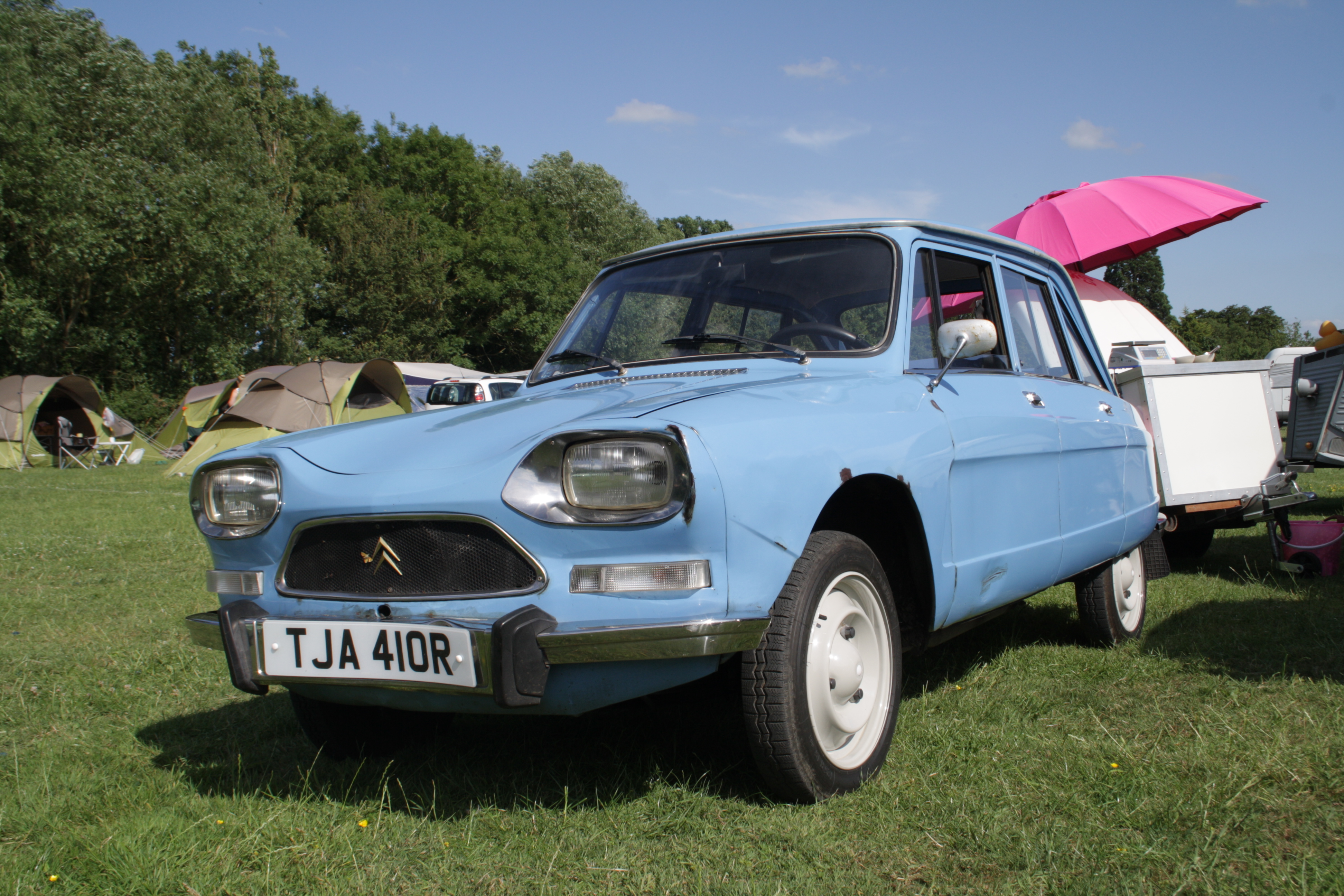
Dyane 6

One shabby, yet delicious project.

Oh. Did I forget to mention that someone had painted it in a camouflage stylee? Yes. They even painted the roof. This bothers me not at all, because I’m looking for an ‘art project’ anyway. This is because there simply are not enough hand-painted 2CVs (and derivatives) at events these days. Too many shiny cars!

As you can probably see, the panel beneath the windscreen is pretty bad. Ideally, that needs replacing – though I’d attempt to put that off until it is at least road legal again. It needs a few small patches to gain an MOT, and the price agreed with the vendor is firmly on the side of acceptable.

Needs a roof, but body is largely very solid.

Needs a roof, but body is largely very solid. May also need wheels/tyres.

We got the engine running, and it sounds very sweet. There were discussions about getting the car MOTd so I can drive it back, whereupon I can try and fettle it into rather better condition – the long-term plan would be to enjoy it while the 2CV is off the road, then sell it again when the resto project needs a financial kick. Having recently received a tax refund, it would be nice to have something ‘nice’ to show for it!

I must admit, I really like Dyanes. The idea of getting another 2CV isn’t appealing, and my meagre budget is certainly not going to see me behind the wheel of a super-desirable Citroen Ami 6 anytime soon. I clocked up 14,000 miles in a year in my first Dyane. They are quite remarkable machines – like a 2CV, but just a little bit better. The doors don’t flap around on the motorway, the windows are a bit more practical (sliding rather than folding) and there’s a useful hatchback. They are also a little wider, with much more elbow room. Impressively, Citroen sold 1.4 million of them, though it was still outlived by the 2CV.

Whether this is the right car for me right now remains to be seen. A few more discussions need to take place, and I need to ensure my man maths actually stand up to greater scrutiny!

Road (and field) Test: Combi-Camp trailer tent

I feel that I should probably do a review of our Combi Camp trailer tent, because we’ve used it quite extensively this summer. How has it fared and how easy is it to use?

Pitched up with Combi-Camp friends at 2CV meet.

Combi Camps compared. Ours has a ‘wonderful patina.’

First, the history. Combi-Camps originate from Denmark, and first became available in 1964. The premise is simple enough. Make something light and very quick to erect, so you get something that’s better and more comfortable than a tent, but not as much hassle to tow as a caravan. There have been many models over the years, and you can still buy Combi-Camps new! They’re all a bit fancy these days, but the basic design of ours – which I think is a late 1970s/early 1980s one – continued with very few changes for quite some time.

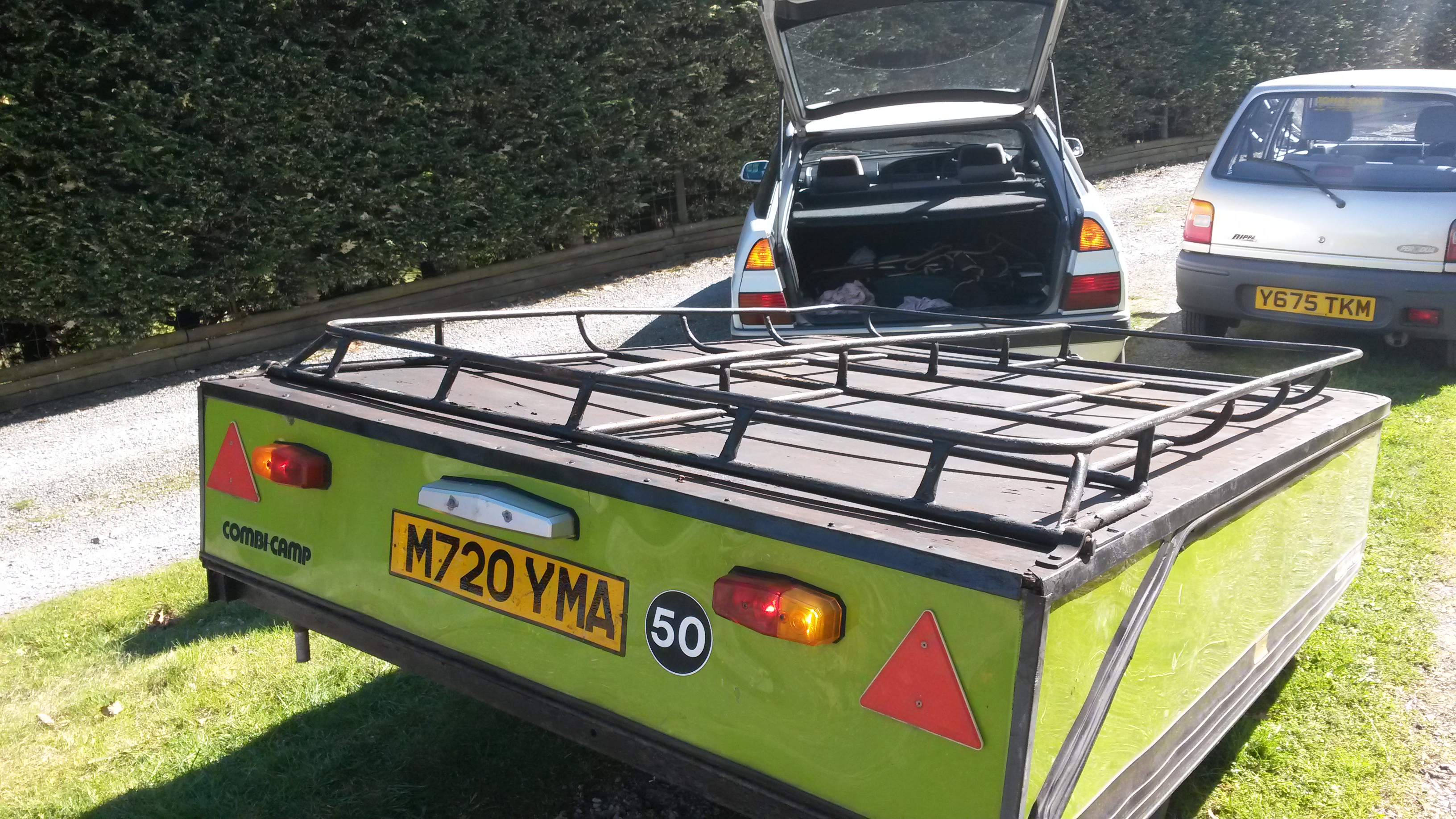
Ours is a Combi-Camp 2000, so it clearly dates from a time when the year 2000 seemed a long time in the future! The curtains and mattress are more recent additions, albeit very colourful ones. As far as I can work out, it weighs about 300kg – though that might include the awning which we’ve never used. Frankly, there’s plenty of space for a couple for a weekend. For one person, it seems an almost unseemly amount of space.

Folded up and ready for the next adventure! Lights are excellent.

Folded up and ready for the next adventure! Lights are excellent.

It tows beautifully. There are no brakes, because it is so light. My 110bhp Citroen XM barely feels the strain of pulling it along and being a similar width, I don’t have to worry about squeezing through gaps, nor bothering with extra mirrors. If the car will go through, so will the trailer tent. It seems to follow a very similar trajectory to the tow car too, so it isn’t very often that I even have to think about it. I sometimes get reminded I’m towing when I take level crossings too swiftly and the poor trailer tent bounces into view! The 2CV should be able to tow it too. I look forward to testing that at some point. Some 2CV friends of ours are currently heading to Poland with their 2CV/Combi-Camp set-up. Brilliant.

On arrival at site, it’s very easy to erect. Because the jockey wheel is missing on ours, I find it easier to ‘deploy’ still hitched up to the car – it helps that I can lower the suspension on the XM to get the trailer tent nice and level. You release two small legs at the rear of the trailer tent, then unclip the catch and simply fold the canvas out. Job done! You can even make your bed at home, then fold the trailer tent so you really are seconds away from kip on arrival. Folding isn’t really much more effort, you just have to keep stuffing the canvas in as the lid closes. The huge luggage rack acts as a countweight, so the lid doesn’t close too swiftly. Genius!

Camping perfection at last?

Camping perfection at last?

There is an inner, which we leave permanently in place. The bed is huge! Not far off kingsize width. The mattress on ours is perhaps a little thin, but it’s non-original. An airbed could be used. I find it comfortable enough on my own, but not so comfortable when sharing for some reason – perhaps because I can’t move around the bed so freely to find a new comfortable position. If we keep it, I may need to make changes.

But it’s so quick to erect and so much more comfortable than roll mats on the floor of a tent! There’s plenty of standing room and enough space for a table in the ‘standing’ area. There’s room for one seat too, and you can park yourself on the end of the bed. Some apparently can convert the bed into a sofa.

Age is the main issue. There are quite a few rips, one of which is proving very difficult to repair. However, I’ve camped in some horrific conditions in it, and it has generally fared very well. Overall, I’m very impressed and I think I may well seek a fresher example at some point. Certainly, in my many years of camping, having tried small tents, big tents, camper vans and even a little caravan, it is my favourite so far by quite some way.


Don’t crash. Pay attention!

I’m currently a MiDAS (Minibus Driver Awareness Scheme) DAT (Driver Assessor/Trainer) and I must say, it’s been a very interesting thing to take on. I’ve certainly seen benefits in my own driving and I hope that’s also true of the people I’ve taught.

Now, everyone thinks they’re a good driver, something which is not backed up by fact. Consider that according to my training material, 95% of road collisions are caused by human error. It really doesn’t take much – just a moment’s inattention and it can all go wrong. See this video for some good examples.

Now, it’s all rather tame compared to some of the horrific Russian/Asian dash cam compilations. Do note how many motorcyclists were taken out though – none of them hooning around at stupid speeds either. There are some examples of what looks like brake testing – possibly the most stupid thing you can do on the roads. I learnt my lesson at a very young age after brake testing a truck that was tailgating me (I was doing 30 in a 30 zone). I’m still not sure how he missed me, but 18-year old me decided that was a stupid way to behave. In short, this is where you stab the brake pedal to ‘teach the driver a lesson.’ Believe me. Driving is much more pleasant if you just take a deep breath and let the idiots get on with being idiots without getting involved.

But inattention is the biggest problem. It’s how you end up saying “I just didn’t see you.” It’s how the car can drift out of lane, forcing you to make a swift correction – which vastly increases the chance of a skid, especially in the wet. Think about a single-carriageway road. If you drift more than a foot or so in either direction, you’re going to have a MASSIVE accident. Put down that sodding phone and concentrate on what’s going on!

I blame modern cars, and the way they insulate you against the feeling of speed. 60mph in a 2CV FEELS like you’re covering the ground at a speed sufficient to get you 60 miles in just an hour. It’s like cycling. 60mph in most moderns feels like you’re barely moving. You have no idea how quickly you’re travelling until you want to stop, and suddenly find yourself being educated about stopping distances.

Observation is all-important too, and something I drill into people during training. Spot incidents BEFORE they become incidents. Make sure you check your mirror before crossing a lane – that includes turning right from a main road into a junction. Is some idiot trying to overtake you? A family got killed at a reservoir not a million miles from where I’m sitting because of a Grade A idiot who overtook two cars – the lead car turned right into a parking space. However, if the driver of the unfortunate car had checked her mirror before cutting across the path of aforementioned idiot, she would have ended the day swearing at an idiot rather than being part of a terrible tragedy.

You have to expect the unexpected. You have to pay attention. Safe driving is not pottering along at 40mph – safe driving can be done perfectly fine at the legal limit if road conditions allow. But you must have in the back of your mind some consideration for what could go wrong, and what’ll happen if it does. In 2013 in the UK, 785 car occupants lost their life. Gone. Ended. That compares with 398 pedestrians (pedestrians certainly don’t tend to come with airbags) and 331 motorcyclists. 265 people died in air-related disasters that year. In the entire world.

So, drive safe and don’t let yourself become immune to the danger. You don’t want to end up on someone’s compilation video.


Fleet news: Citroen XM mega-miling

The weekend before last was 2CVGB Registers’ Day in Cambridgeshire. We clocked up about 500 miles driving there and back, having forgotten almost entirely just how far away it is! We didn’t make it last year, so it was nice to head back to our old stamping ground, and the superb location of Burleigh Hill Farm. Rustic barns, beautiful scenery and nice flat camping fields!

Pitched up with Combi-Camp friends at 2CV meet.

Pitched up with Combi-Camp friends at 2CV meet.

The XM coped with the trip very well, though I thought I’d lost turbo boost at one point. It seems more likely that I’d just misjudged the weight of all of our camping gear, plus the trailer tent and changed up into fifth a little bit too early on a really steep hill.

After a few days of local trips back in Wales, it was then back out on the road again to attend a beautiful wedding in the Peak District. Generally, the XM was fairly well behaved, though the ABS warning light came on at one point – and then self-repaired at the same time as the remote central locking packed up. That was another 400 miles covered and there’s more mileage to do this month yet! I’ll be getting on for needing to give it another service again at this rate.

The XM looks at home at Chatsworth House, even though this is just The Stables!

The XM looks at home at Chatsworth House, even though this is just The Stables!

So, it’s now getting on for 8000 miles in my ownership and I still like it. Have I suddenly become a changed man? Or have I truly found the closest thing to motoring perfection?

I must give a big thanks to the many people in 2CVGB who have let me drive their cars this year though. It has taken the edge off the frustration of not having my own 2CV on the road, though it truly has fired up by desires to own another Dyane, or perhaps even an Ami. There’s a real danger that my 2CV rebuild plans could end up on the back burner while I blow my meagre budget on something else instead. Is that the right thing to do?

Road Test: Ford Cortina Mk3 estate

Citroen and Austin were busy innovating in the late 1960s, with their displacer-based hydraulic suspension systems, front-wheel drive and increasingly radical styling. Against this, Ford opted for utterly conventional. The Cortina Mk3 was a gentle evolution of the Mk2. It was wider, but still rear-wheel drive, still with overhead valves (2-litre excepting) and still with a simple live rear axle – albeit now with coil springs.

Cortina Mk3 estate

A beautiful load lugger for sure, if an unadventurous one.

But despite the dreary spec, Ford knew styling was important. With its clean snout and curvy rear wingline, the Cortina Mk3 is certainly a very attractive car, even in estate form. The extra width over the Mk2 meant it was very spacious inside, especially with the earlier dashboard, which curved away from the driver as it descended. It was a huge sales success – 1.1 million sold in just six years. During that time, the Pinto engine would replace the 1.6-litre Kent and trim levels would vary greatly. There was even a plush 2000E.

The car tested here is an early 2-litre L estate, dating from 1971 (but registered January 1972). That means it has more than enough power and torque for most. You certainly couldn’t call it sluggish. But what really impresses is just how pleasant this car is to drive. It feels planted and secure and the controls are all wonderfully light and accurate. That includes the gearbox, which is actually a five-speed Type 9 Sierra unit retro-fitted more recently. A cut-down gear lever gives a wonderfully precise change, and allows the Cortina to lope along at motorway speeds very comfortably.

Cortina mk3 rear

Oooh! Aftermarket rear wiper!

I was also surprised at how good the road manners were. I wasn’t going to start hanging the tail out in someone else’s pride and joy, but I could certainly corner briskly and feel perfectly safe. The engine has good torque characteristics, so you don’t have to rev it hard to build up speed. It’s just really nice.

And that’s the key to the Cortina’s success. Sadly, Ford proved that a car could be thoroughly, almost mind-numbingly safe in engineering terms, but pleasant for anyone to drive. The case for greater complication was already starting to look weak, even in the 1970s. After all, here is a car that even over 40 years later, is still wonderfully competent. I drove the car after it had driven to West Wales from Bury St Edmunds. It proves just how usable classic cars can be. It also proves that while a lot of cold, hard facts formed part of this car’s conception rather than engineering or design flair, the end result is a car you can’t fail to like.

Road Test: Citroën Ami 8

I asked ‘social media’ whether I should write about a Bentley MkVI Sports or another Ami, and democracy told me that another Citroen was the way to go. So, here’s my driving impressions on the Ami 8.

Ami 8 berline

Far less quirky than the 2CV and Ami 6. All things are relative.

As I’ve already covered, the Ami was a major money-spinner for Citroen. A revamp was ordered in the late 1960s as as the Ami’s stylist – Flaminio Bertoni – had passed away in 1964, it was up to new boy Robert Opron to remodel this remarkable success story. He would go on to style the GS, SM and CX and there are hints of those, certainly the GS, in the new Ami 8 of 1969.

The controversial nose treatment was toned down and looked almost normal. Enough that British buyers became interested at last. At the rear, the reverse-rake window was abandoned, and a stylish fastback was now in place, with a vertical bootlid beneath its lower edge – just as on the GS. There were soon fancy options, like winding front windows on posh (later all) models, or individual, reclining seats. Disc front brakes were added mere months after production began too -a further benefit being that this system used the green LHM of the DS. A fluid which has a higher boiling point than conventional brake fluid, doesn’t absorb water and, most importantly, doesn’t encourage corrosion!

The engine remained the same 602cc M28 flat-twin as used in the last of the Ami 6s. This produces 32bhp DIN at 5750rpm. Otherwise, underpinnings remain refreshingly 2CV-like, with the same platform chassis, independent suspension and hilarious bodyroll. One change by the time this Ami was produced is that the suspension was no longer interconnected front to rear.

Blue Ami 8 between two sixes.

Blue Ami 8 between two sixes. Green one to the right is a rare Ami Super.

Remarkably, up until this very moment, I had never driven an Ami 8. It must be said, it felt incredibly refined compared to the 2CVs with which I’m far more familiar. Sure, that aircooled engine remains noisy, as does the transmission (especially in third in this example), but it’s far easier on the ear overall, and there is far less wind noise.

I mean really, it’s outright luxurious what with its reclining seats, proper dashboard and winding front windows. Of course, it doesn’t feel particularly quick, especially after you’ve jumped out of an XM turbo diesel, but you can follow the same 2CV principle of ‘maintain momentum at all costs’ with no bother at all. The owner, Richard Sadler, assures me it’ll sit comfortably at motorway speeds all day. I don’t doubt it. The handling is still superb, though the extra weight can cause even more comedic levels of bodyroll. Have faith. It will get you round that bend or at the very most, start gently pushing the nose wide.

The ride is truly magnificent, as you’d expect and I can’t say the lack of interconnection makes a huge difference behind the wheel. The overall comfort and practicality mean that this really is a very usable and very enjoyable motor car – if you can keep rust at bay. It makes me realise how wrong it is that these later Amis get overlooked for the super-quirky earlier ones. With the Euro weak and the French survival rate for Amis still strong, it might be just the time to nip over The Channel to buy one, just like this left-hand drive example. Tempting isn’t it?

Road Test: Triumph TR7 V8

Oh yes. Those last two digits make all the difference! After all, pretty much any car can be vastly improved with the insertion of Rover’s sweet V8 engine.

The TR7 was launched 40 years ago and was meant to be one of the crowning highlights of British Leyland, along with the wedge Princess. However, 1975 was also the year in which British Leyland went bankrupt, which tells you how challenging these times were.

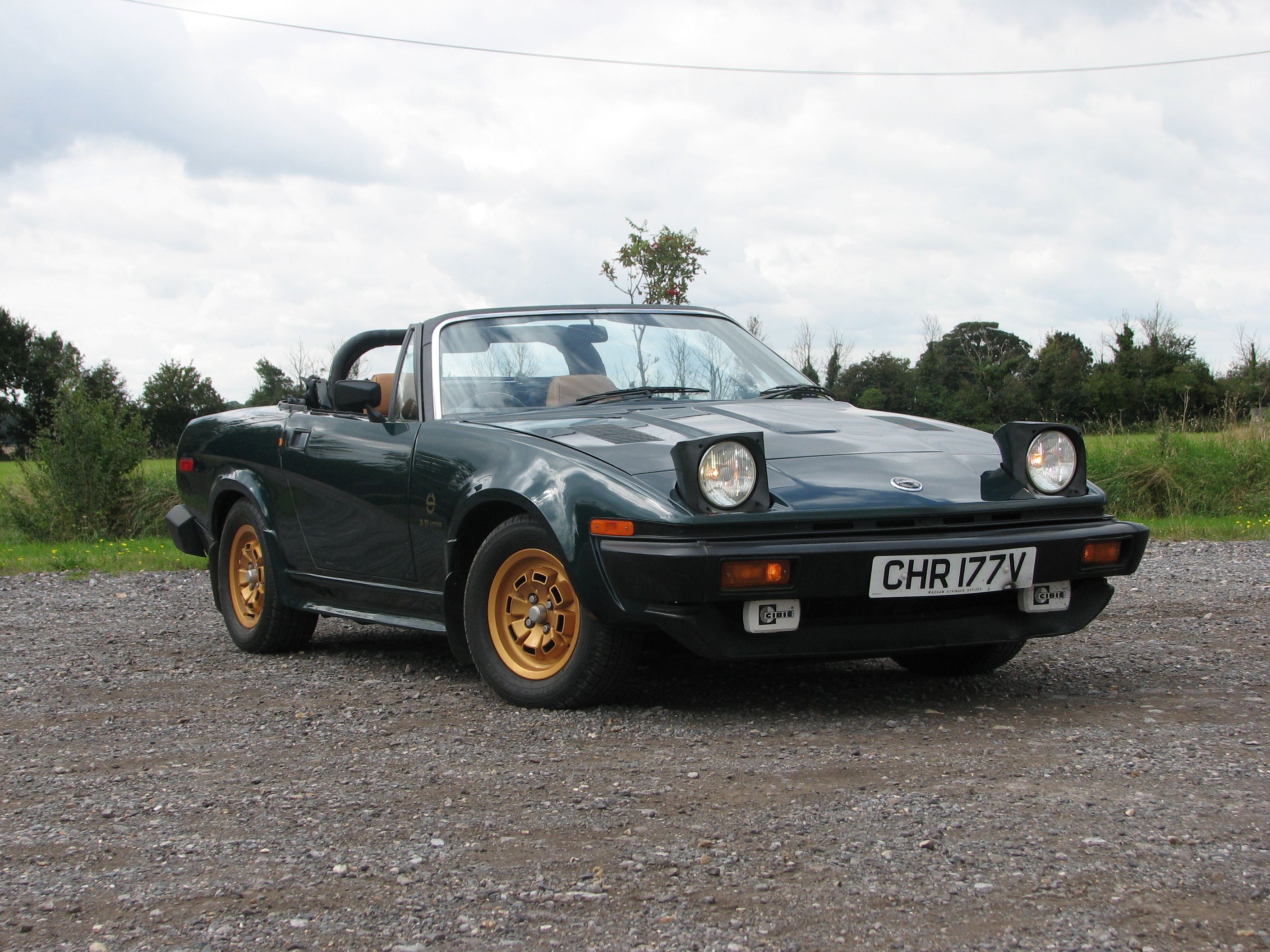
TR7

Amazing how an engine can transform a car.

So, the TR7, intended to extend the legendary TR series of roadsters, was launched with serious build quality issues and, most annoyingly, only a four-cylinder engine option. There always had been a plan to insert the Rover V8 – there was certainly plenty of room to allow it – but a factory V8 would not arrive until 1978, and even then only in America. A convertible was also late on the scene and ridiculously, was not marketed until 1980 in the UK – just a year before production ended and after the TR7 had moved production facility twice!

The car driven here is one of many TR7s since converted to V8 power. Only a handful of genuine, factory TR8s were built with right-hand drive. So, ignore the TR8 detailing. It’s a lie. I reckon it’s an attractive car though, even with the lurid gold alloys. The TR7 works so well as a drophead that it’s ridiculous that it was not produced earlier in the TR7’s life – thank a misunderstanding of expected roll-over regulations for that. This is also why the Jaguar XJ-S was initially only available as a tin-top.

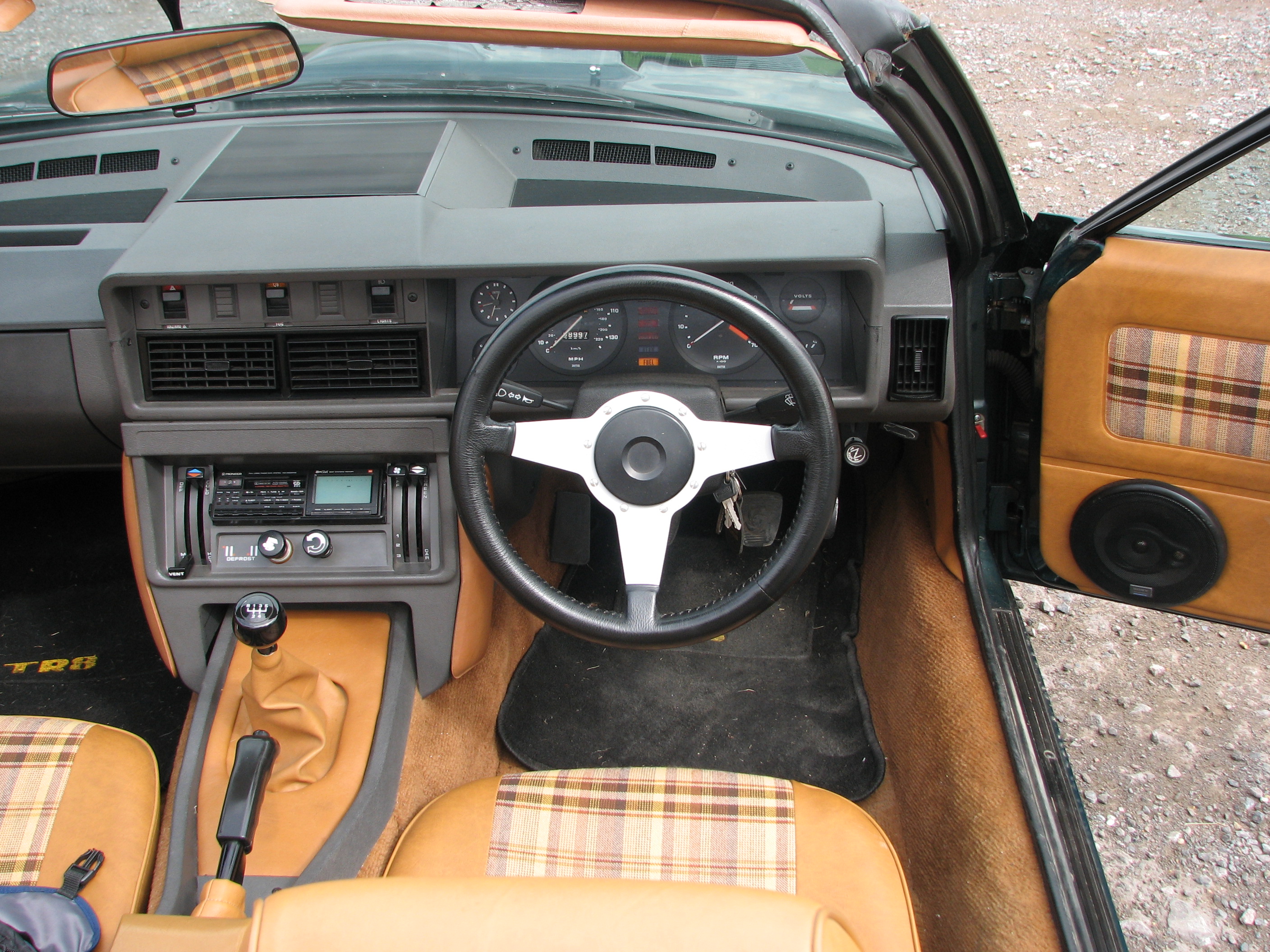
Very 1970s in here. Plasticky dashboard not brilliant. Seats are though.

Very 1970s in here. Plasticky dashboard not brilliant. Seats are though.

Sure, it’s nothing like the TR6 it replaced, but then it shouldn’t be! The mid-section of the TR6 dates back to 1961 after all, and the launch of the TR4. Evolution is no bad thing. That’s especially true when you consider the good work Spen King did with the suspension. It’s pretty similar to the Rover SD1, with MacPherson struts up front and a well-located live rear axle with coil springs. King loved long-travel suspension (see Rover P6 and Range Rover), so the TR7 offers comfort you simply won’t find in earlier TRs, yet still handles very well indeed with delightfully accurate steering.

But it’s the engine that’s the star of the show here. I dread to think how many SD1s have given up their engines to make TR7s quicker, but it’s not just the shove in your back that’s intoxicating, it’s the bellow of those eight cylinders as you accelerate down the road. As much as I love electric cars, the noise a raging V8 makes just sends shivers up and down my spine. As you can see in this video of a TR7 V8 rally car in action.

The gearlever offers quick changes, so you can just keep the power coming – until you glance nervously at the speedometer and decide to ease off. But even just burbling around gently, this car sounds fantastic, yet you know with just a prod of that pedal, it’ll launch itself at the horizon like a cat after a mouse.

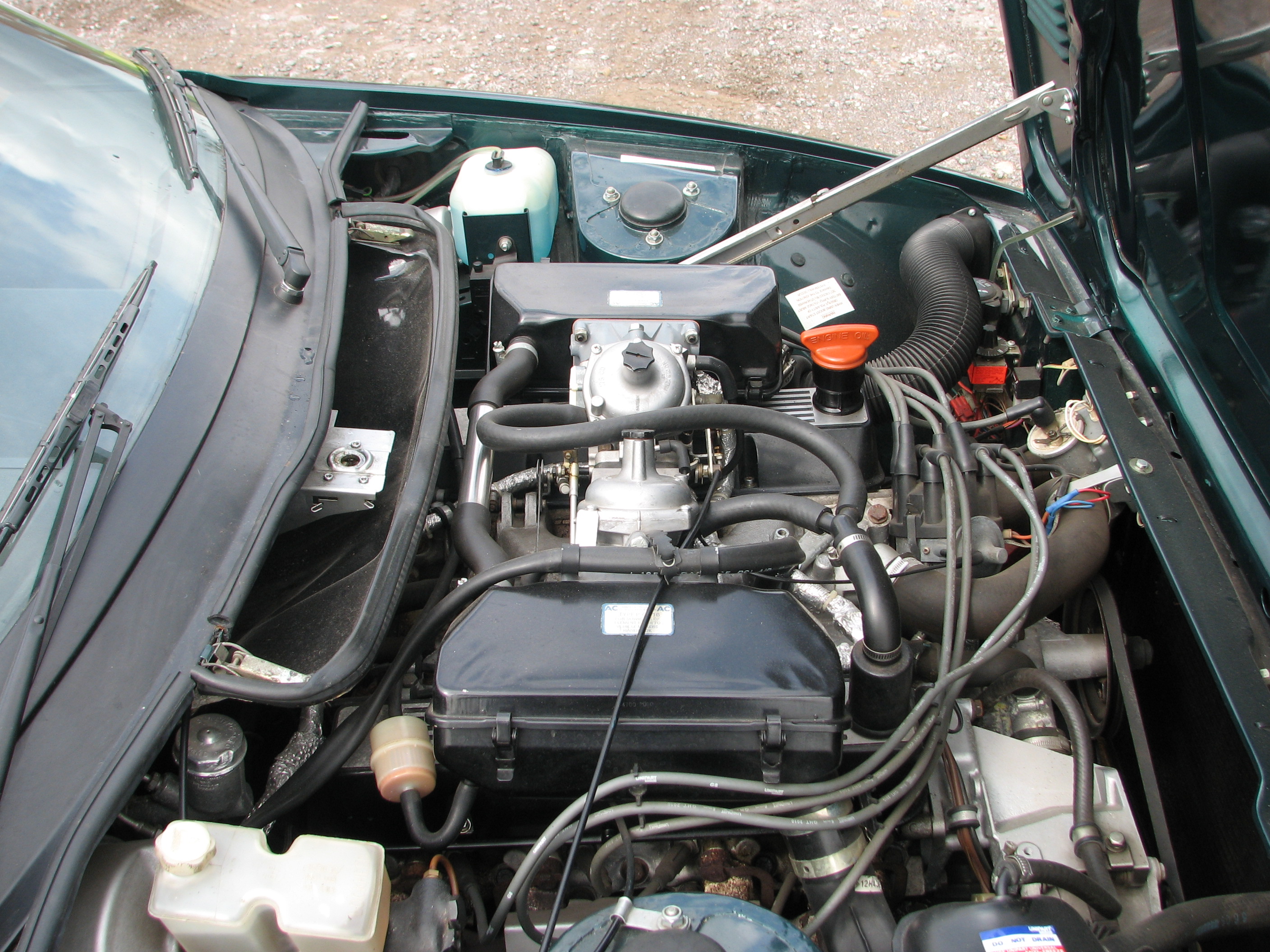
TR7 Rover V8

The meaty motor itself. Note delicious pantograph driver’s wiper.

You needn’t worry in the bends too. In fact, the only matter of concern is the brakes. They’re not all that great with just four-cylinders, so if a V8 conversion has been carried out, better brakes are a good idea – one reason so many converted V8s wear larger, aftermarket wheels. It allows larger stoppers!

Overall then, this feels like the car it should have been from the start. A crying shame then that the financially crippled British Leyland just couldn’t quite pull it off.

Road Test: Renault 4CV

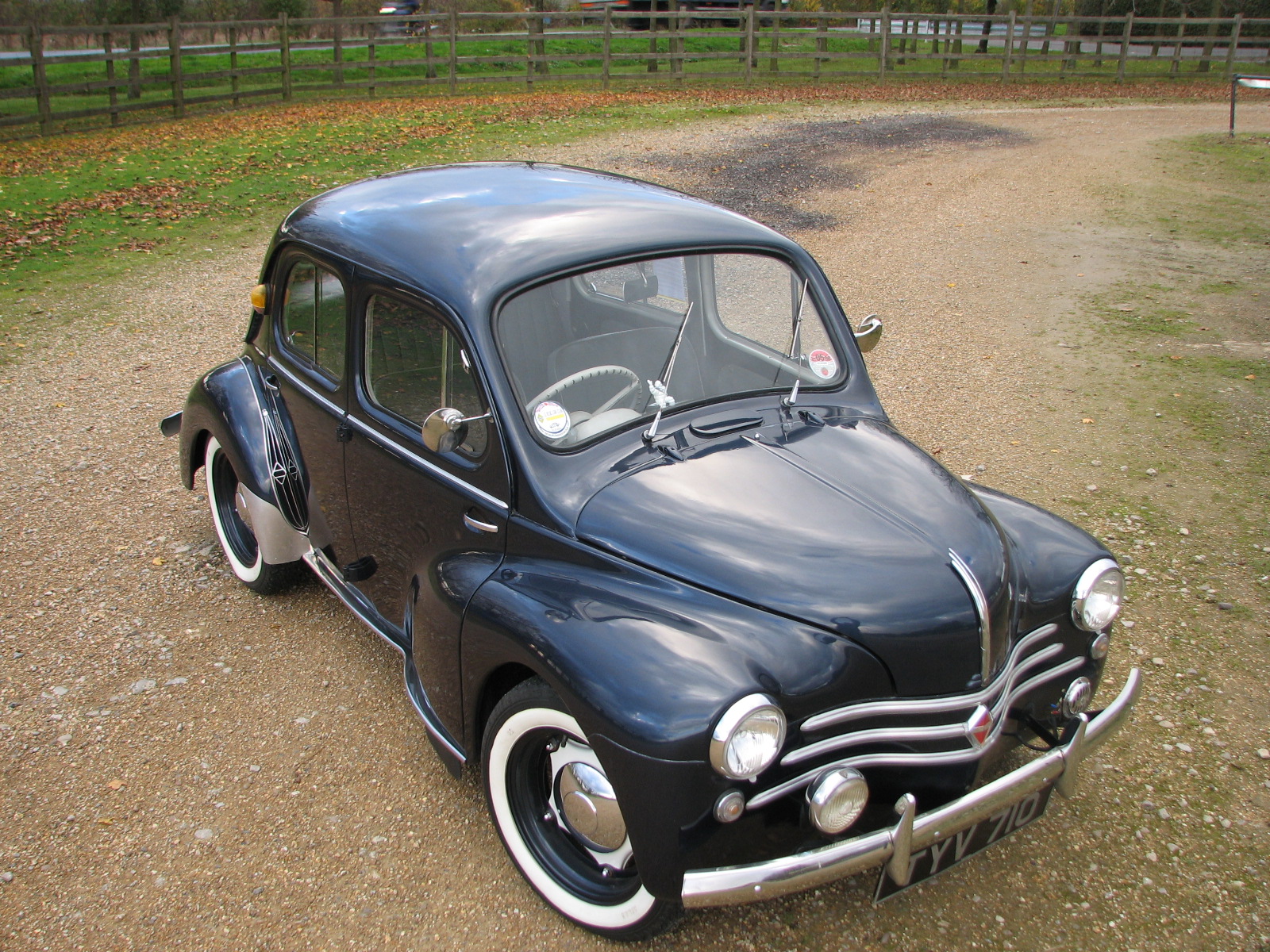
Ok. This one’s from the archives, as I drove this car many years ago. So, is a 4CV twice as good as a 2CV?

Renault 4CV

Aw, does it really matter how it drives?

Of course not, but let’s start with history. The 4CV was France’s answer to the problem of affordable motoring. It was launched a full year ahead of the 2CV in 1947, with a rear-mounted, water-cooled engine driving the rear wheels. It must be said, while it had independent suspension all-round, it didn’t possess the fine handling manners of the 2CV – which could be hurled into bends with gay abandon. With the Renault, more care was needed.

Not that it harmed sales. It was the first French car to sell one million units and production continued until 1961. They even built them in Acton, London for a time.

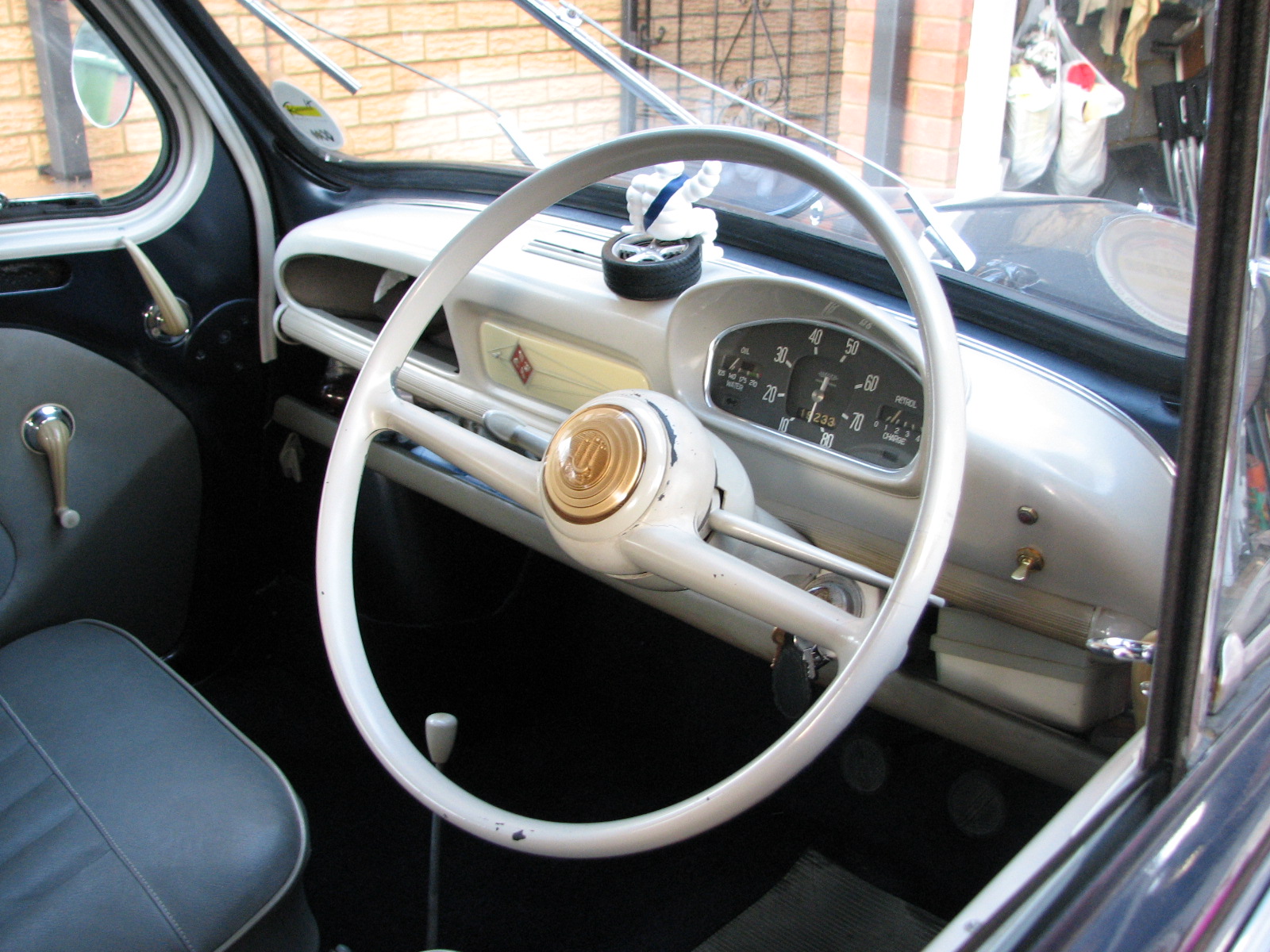
4cv interior

Surprisingly stylish inside. And very, very cosy.

Clambering aboard is the first challenge, with a suicide door and a rather large wheelarch to contend with. Also, this car is tiny! The cramped cabin puts me in mind of my Perodua Nippa, where the door crushes one side of you, and the gearlever seems to be almost beneath your leg.

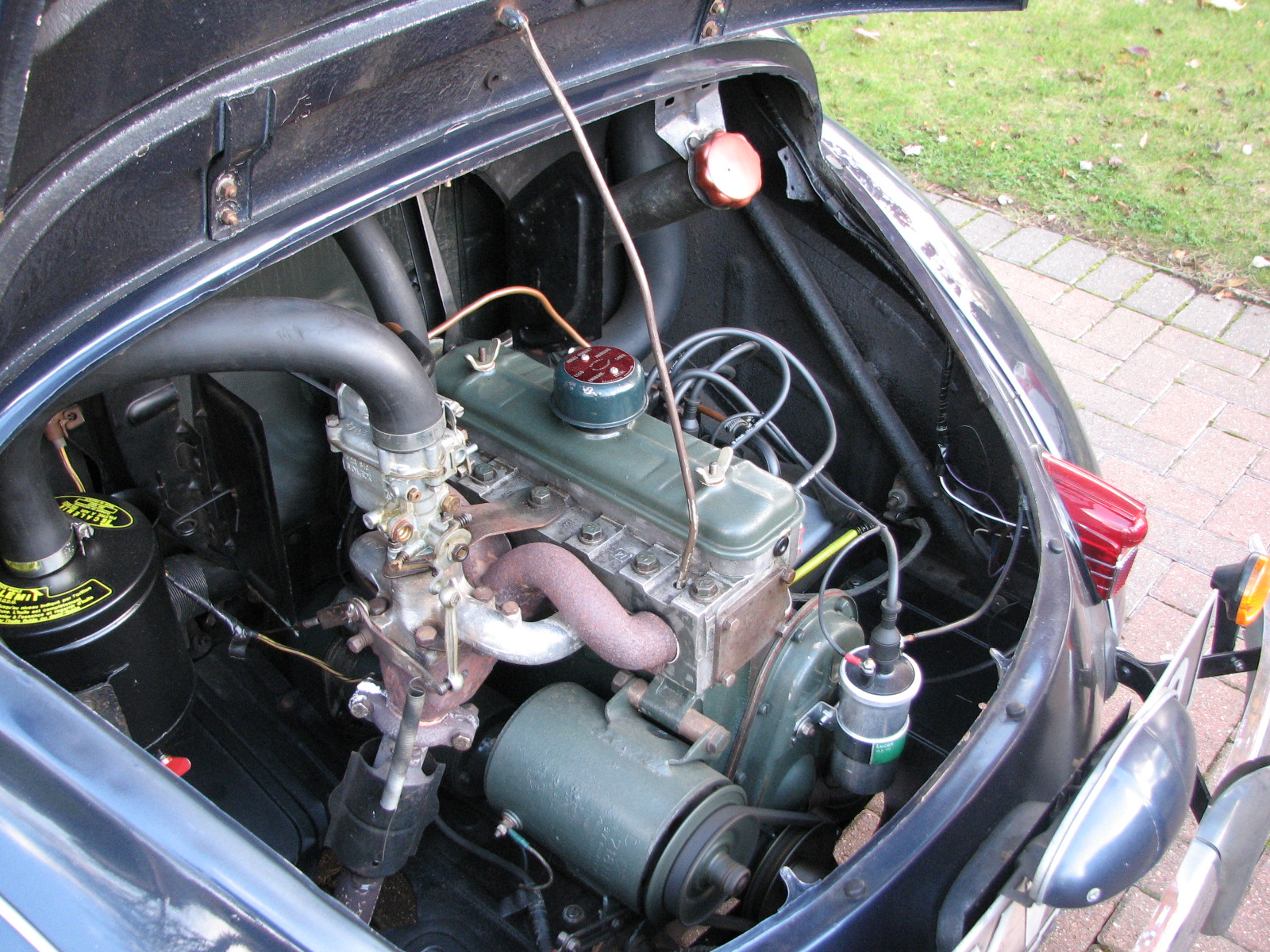
Things are a lot more charming once you get under way though. The four-cylinder engine has superb low-speed lugging power, so it doesn’t really matter which of the three gears you are in. It builds speed up nicely. Most of the time, it handles well enough too – it’s only if you start chucking it around, especially in the wet, that the limitations of swing-axle suspension and a rear-mounted engine can combine to cause real problems.

4CV engine

This is a silly place for an engine. Renault has not learnt this.

It’s just so utterly charming though! You can forgive it any fault just because it looks so cute and seems to try so hard. It’s clear, scientific proof that humans are stupid creatures who find it impossible to ignore the aesthetic. It’s why we put up with bird-shredding cars. It’s why puppies are allowed to wreak havoc and just get laughed at. It’s why people think Fiat 500s are good. No. They’re not. I think the Renault 4CV is much better than a 500. It’s certainly quicker. Yet, I’m worried that really, I’m just a sucker for looks.

Road Test: Citroën Ami 6

Yes, I have driven an Ami 6 before, but that was a modified monster that while hilariously amusing, was not something I’d necessarily choose to live with on a daily basis – unlike its creator, who uses it for the school run.

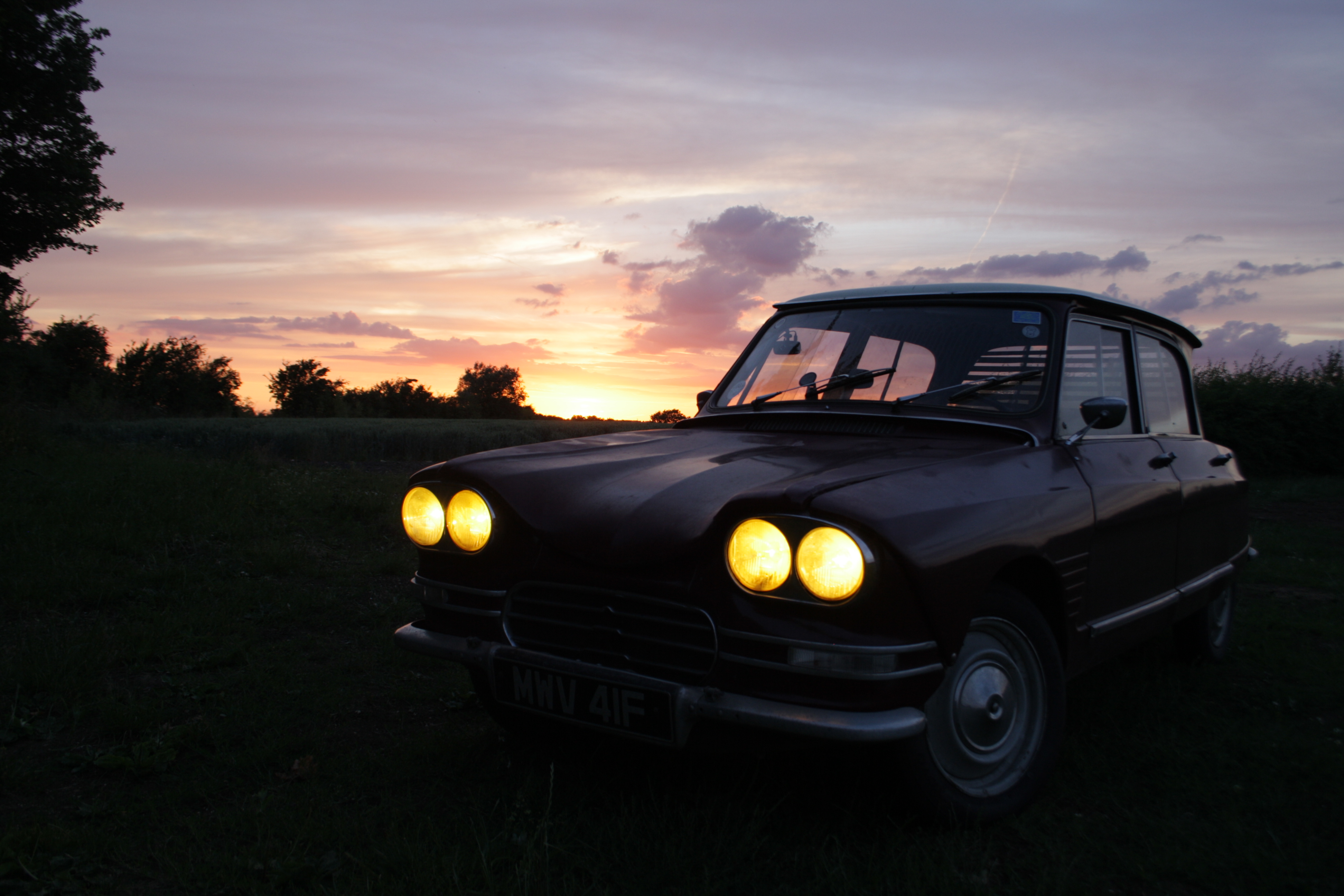
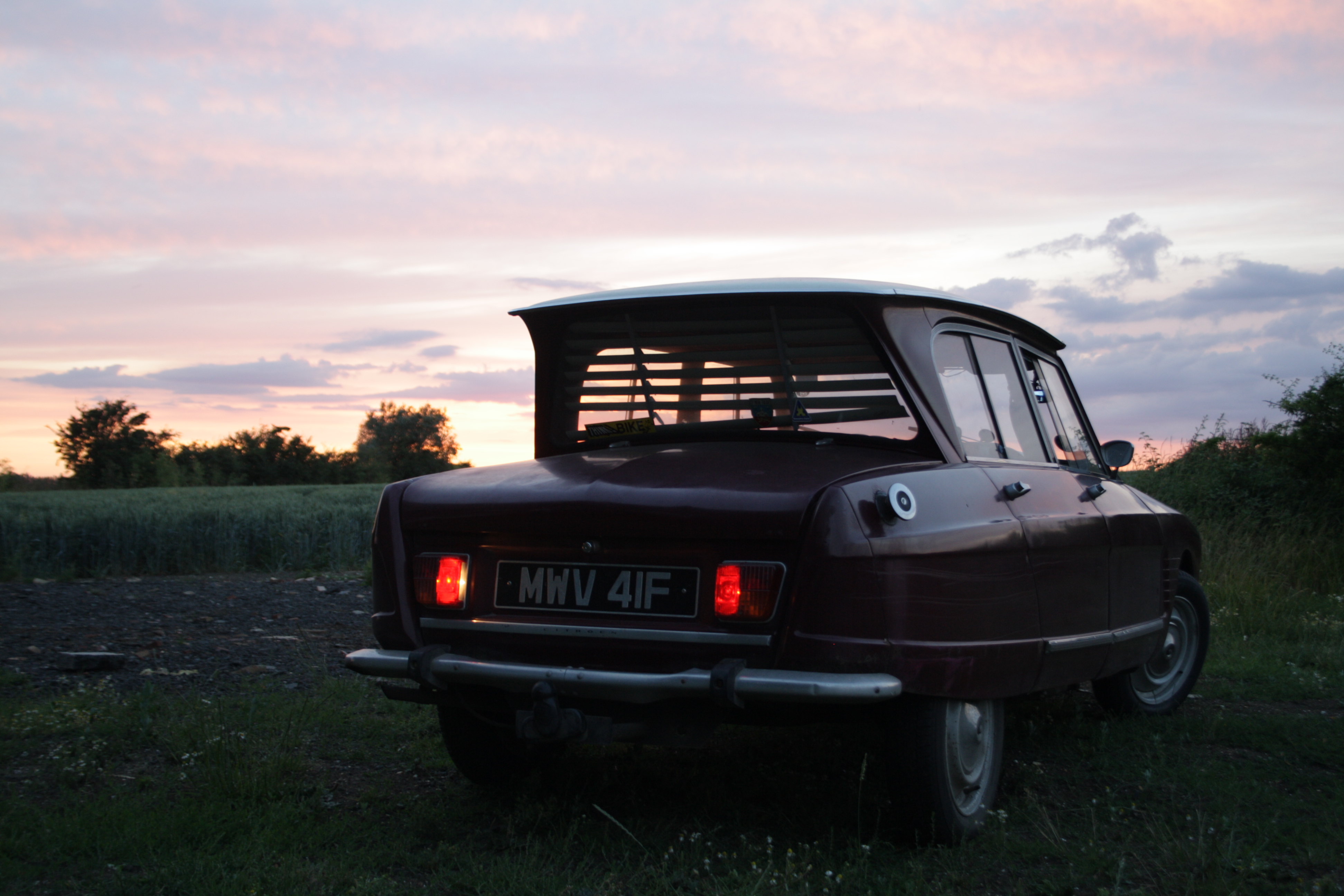
This time, I got to enjoy a sunset cruise in a late Ami 6 in stock condition. What sort of difference did that make?

Citroen Ami Berline

Dramatic and beautiful. Sunset not bad either.

Firstly, history. The Ami 6 was introduced by Citroën in 1961 as an attempt to plug the enormous gap between the 2CV – the farmer’s friend – and the super-plush, super-complex DS. Under the skin, the Ami was little more than a 2CV chassis and running gear, albeit with a larger 22bhp, 602cc engine. The skin itself was penned by sculptor and stylist Flaminio Bertoni, who had already added some graceful charm to the 2CV and styled the Traction Avant and DS.

The looks are a tricky one. Most people run a mile at first but stay with it, and start taking in all of the delicious details and Bertoni’s motoring sculpture really does warm the heart. It is certainly quite unlike anything else and even more extreme than Ford’s Consul Classic. It was also one of the first cars to feature headlamps that were not round – though the later one I’ve driven here has quad circular units. Features shared with the DS included the remarkable single-spoke steering wheel, and the glassfibre roof.

Ami 6 rear

Even in the dusk, that’s a rear end like no other.

The Ami was an enormous success in France, with more than one million sold by the time production ended in 1969 – when the smoothed-off Ami 8 took over. Attempts to market it in the UK were thwarted by a market that preferred convention and import duties. Only three or four right-hand drive Ami 6s remain in the entire world.

By the time this Ami 6 was built in 1968, power had been increased substantially. A completely redesigned 602cc engine had been introduced that year, taking power from 25bhp (DIN) up to 32. It had been facelifted too, with circular headlamps now the norm and new combined rear light units that would soon be fitted to the rear of the 2CV – remaining in production until 1990.

That redesigned engine ended up in the 2CV as well, though detuned to 29bhp. Again, it remained in production until 1990, and proved very robust.

To be honest, I’ve never been a fan of these later Ami 6s. The earlier cars may have less power and a more fragile engine (one that has no external oil filter), but they have a delicious purity that the later ones lack. That said, when I look at the pictures of this one now, perhaps I’m being too picky! It’s still a remarkable looking little car.

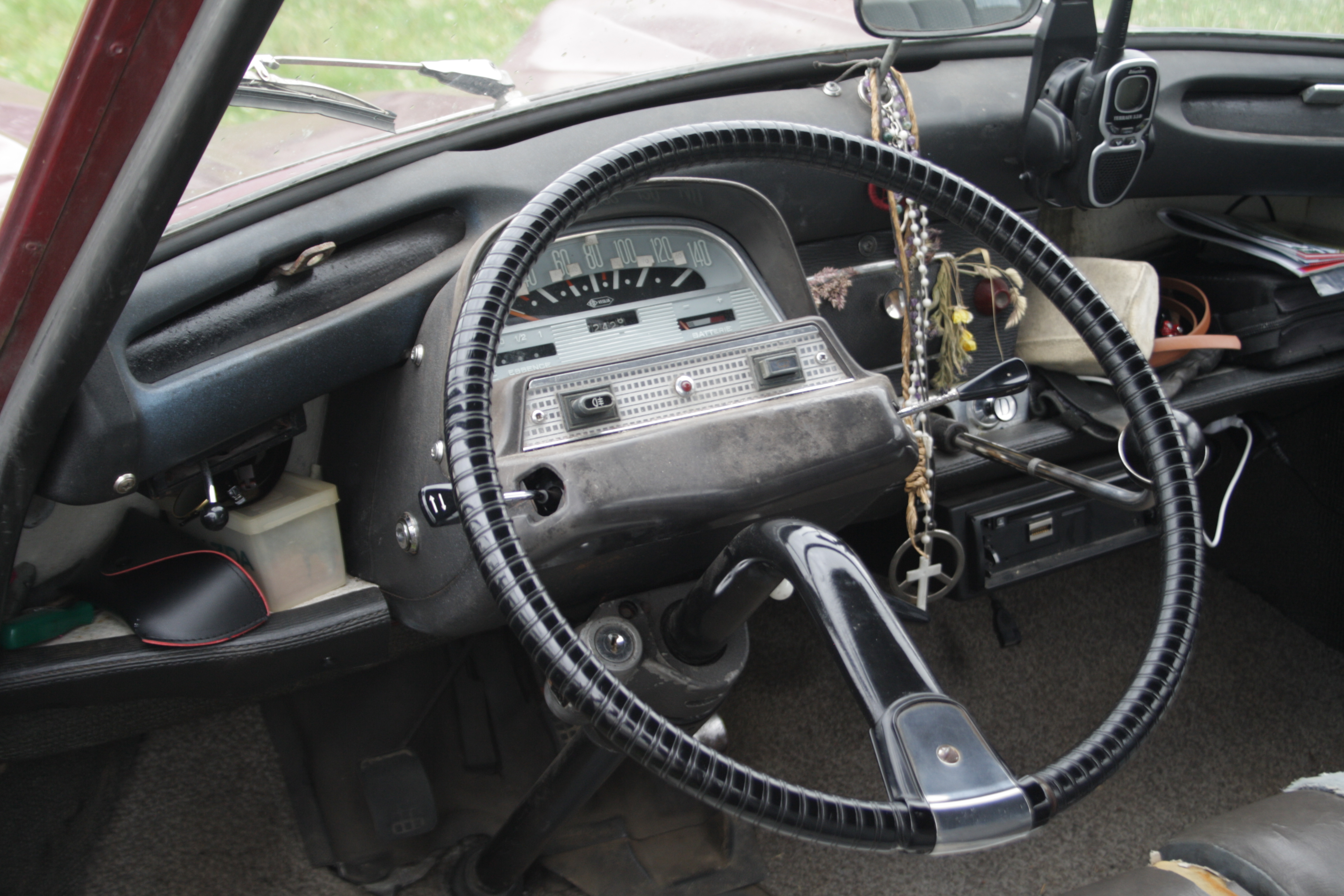
Inside, beneath all the paraphernalia that confirms this car’s role as a daily driver for its lucky owner, there isn’t that much that has changed from the earlier Amis. It’s very simple, but very charming. Turn the key, pull the button marked D (for démarreur or starter motor) and the engine swiftly fires into life with the usual 2CV-esque whirring noise. The same push-pull gearlever as the 2CV offers perfect gear selection and bodyroll is just as pronounced once under way.

Ami interior

Cluttered interior as this is a daily driver.

What really amazes me though is how refined this car feels. Sure, there is still plenty of engine noise – it’s hard to make a quiet aircooled engine – but it’s not as obtrusive as it is in my 2CV, nor Pete Sparrow’s modified Ami. It’s almost peaceful.

The ride is truly astonishing too. The Ami 6 was given telescopic dampers to replace the previous friction dampers in 1963, yet it still retained ‘batteurs’ on the rear of each front wheel hub. These are effectively oil filled tubes with a large weight in them, further damping wheel movement over broken ground. Certainly across a field, the ride is extraordinarily smooth. Far more so than my XM, which is a little bit depressing given the respective ages of the vehicles, and the complication employed in the XM!

Performance is certainly acceptable, for 2CVers at least, with 0-60mph taking 27 seconds and a top speed of 75mph possible. The engine must naturally be worked hard, but that’s fine, because it likes to be driven hard. Maximum power is delivered at 5750rpm. The brakes are more than adequate, with large inboard drum brakes up front.

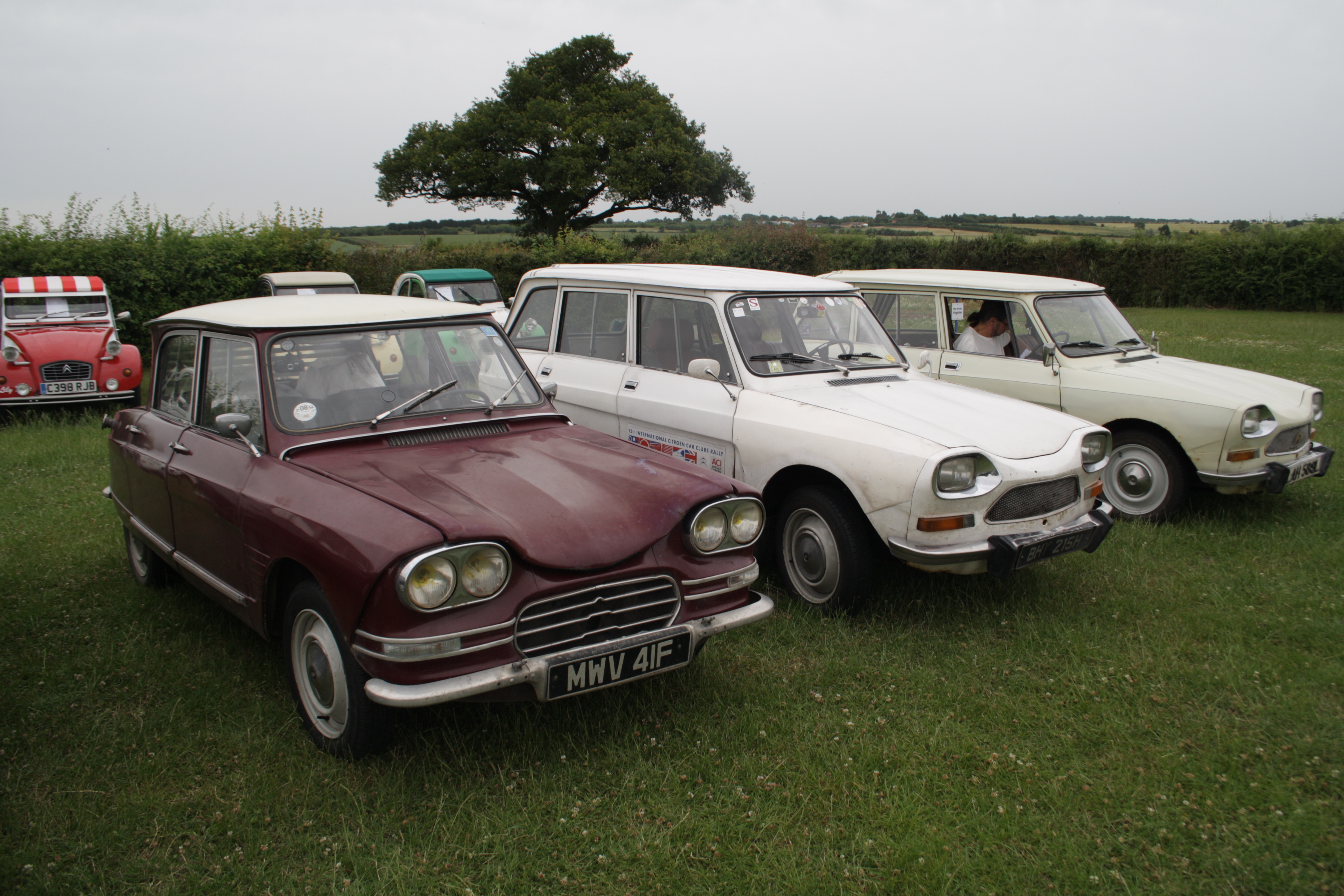
Citroen Ami line up

Amis compared. The 6 next to two 8s.

Overall then, I must concede that perhaps I was wrong to favour the earlier Ami. It’s silly how looks can lead us to overlook practicalities. Certainly, if I am to achieve my dream of Ami 6 ownership, it will be to the later end of production that I will look after this experience. In fact, I must concede that I was very reluctant to hand the keys back! The later Ami 6 really is a most magnificent machine.