XM: Brake caliper overhaul

Yesterday, I hoped to deal with a sticky brake caliper on the XM. Initial inspection revealed torn slider boots. The XM uses a single-pot caliper, with a single slider on which the caliper ‘floats.’ The best calipers simply have (at least) one piston per pad, either side of the disc. As on a 2CV, original Mini or Range Rover. These pistons push on the bad when you press the brake pedal, and braking occurs. The only thing that goes wrong is that the piston gets stuck in its bore due to corrosion, which leads to the brake sticking on – lots of heat, lots of wear and an accident if you don’t sort it out. The use of steel pistons (Mini/Range Rover) doesn’t help here. The alloy ones on my 2CV don’t corrode.
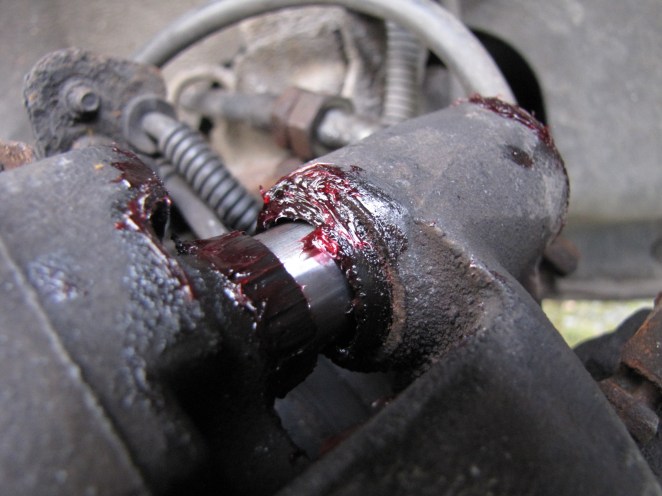
Here's the problem. Torn boot offers no protection for this slider.

Here’s the problem. Torn boot offers no protection for this slider.

Later floating designs cheapen the design by having only one piston. As well as pushing directly on one pad, the pushing power is transmitted by one or two sliders, so you get a gripping pressure on both pads – like your hand crushing a drinks can. Now there is more scope for problems, as these sliders can stick as well as the piston. Again, they can stick in such a way that the brake can’t release – as I once had on my Daihatsu Sirion – or they can stick in such a way that the brake application is uneven – as is the case with my XM right here. That’s because the seals that should protect the slider were torn, allowing muck to get in and damage the slider.

I ordered a new slider, because it seems you can’t order the boots separately. Besides, the old one was probably damaged. I also ordered new discs and pads as the uneven wear had caused one pad to wear very badly, and one side of the disc.

Sadly, I got sent the wrong slider, so this job is abandoned for now. I cleaned up the old slider as best I could, slapped it in red caliper grease, and reassembled. I’m not fitting the new discs and pads until I can fit a new slider. What a pain!

But if you’d like to see the work in action, here is my latest video.

Video: Bangernomics

As you’ve no doubt gathered, I’m a big fan of running cars on a tight budget. Mostly because I have to. But I also find it very satisfying to keep cars going that otherwise might just be thrown away. We’re a terribly wasteful society.

So, in my latest video, I talk through some of my experiences and tell you how to safely grab a bargain. I also tell you how I sometimes got it wrong…

Drat. I’m creative.

I’ve never really considered myself an ‘artist’ until recently. I’m not sure what triggered the introspection – it may have just been during a rather trying spell of self-loathing. Either way, I began to realise that I do in fact live up to several artist stereotypes.

Firstly, I’m very good at procrastination. I can flit around the internet more than Google, and sometimes I just stare out of the window. Sometimes you have to give ideas room to bloom. See? I’m doing it even now. Coming out with creative clap-trap.

Creativity, yesterday.

Creativity, yesterday.

I must admit that I’m very lucky. I find it very easy to write and almost never suffer from block – though I can still deflect myself away from work very easily. I’ll just suddenly decide that now is the time to attack the garden. Or fix that not-really-broken problem that has been very slightly bugging me on one of the cars. This isn’t your classic ‘block,’ it’s just sly avoidance that means I rarely sit with a blanking cursor wondering whether I can actually think up some words.

Occasionally, I’ll have to grind a feature out. This is surprisingly difficult in a way that immediately makes me feel quite pathetic. I mean, ‘difficult’ working conditions for a lot of people means physical exertion, or having to sit in a call centre trying to convince angry people that they should listen to you. Or being a nurse. Or a social worker. Or Jeremy Corbyn. My idea of ‘difficult’ means I can’t look at something I’ve written and feel happy about it. I’m unlikely to get much sympathy from workers in the sweatshops of Bangladesh. Or Apple’s factories in China.

This can quite easily turn into a major bout of self-loathing, which then starts me back at the start of this blog post once again. I don’t feel like I’m really making an important contribution to society and that just adds to it. This is probably why I’m involved with a community transport group. It’s to try and feel like I’m making some difference to people in an actually-important manner.

Perhaps the most difficult aspect of writing is that you rarely get to write about what really interests you. Especially when your motoring tastes are as unusual as mine are. What sells papers is stuff on sporty things generally. This is why you see so many red MGBs, Triumphs and E-Types. Even when it comes to modern classics, you’ll find acres of features on the Peugeot 205 GTi, but very few on the Mardi Gras diesel, or even the nicely-sporty-in-a-not-OTT-way XS.

Most difficult of all is that so little classic car writing involves cars at all. You must love books, and research and sitting in front of a computer for hours on end. If you actually get to drive a nice car, you’ll spend so much time hunting for good locations for photos that you’ll barely get to enjoy the car at all. You’ll be too busy getting angry that the sun is in the wrong place. Or that it is raining. Or that there’s so much traffic that this fantastic car you’re in is just overheating. I once had to drive a Jaguar E-Type V12 around Kidderminster. Kidderminster!

Anyway, all I’m trying to say, in my own pathetic way, is that I occasionally have bad days just like anyone else, and that being a writer is not as easy as some people think it is. I’m just annoyed that all this makes me feel <inverted comma fingers> CREATIVE. Don’t interrupt my flow darling.

You can keep your exotica

I think that yesterday neatly summed up who I am. I was incredibly excited to get the chance to drive a vehicle that would struggle to set a good lap time on a race track. I was thrilled to drive a machine that made the National Speed Limit seem like quite a challenge.

As enjoyable as a Porsche 911. To me, anyway...

As enjoyable as a Porsche 911. To me, anyway…

I see rather too much pant-wetting excitement from people who’ve had the chance to drive something really fast. Sure, even I am not immune to the spine-tingling power delivery of a TVR Chimaera, but even in one of those, I find the thrill doesn’t take long to wear off. When you’re not testing your neck muscles in a race to 60mph, you find yourself driving a car with not enough suspension, poor visibility and a driving position that while comfortable, requires some ambition and flexibility to reach.

Sod that. I want something that’s easy to drive these days, and preferably comfortable. The Pajero Junior was a disappointment in the power stakes, but only because I’m used to the delightful flexibility of the 2.1-litre turbo diesel engine in my XM. I love having enough torque to accelerate, even in top gear. I’m not really interested in the 0-60mph time, but 50-70mph in top I find more interesting. You rarely see magazines quote such figures these days, but I seem to recall that an Escort Turbo Diesel could give an Escort Cosworth a run for its money in the 50-70mph dash in top gear – though the Cossie obviously does it much more quickly if you downshift. What a bore. It’s a far more useful measure of a car’s ability than 0-60. I mean, how often do you actually accelerate to 60mph from a standstill anyway?

But mostly, I just love getting my driving kicks from pretty much any car. I don’t wish to boast about powerful machines and I’ll get just as giddy about a Pajero Junior as I have previously about Jaguar E-Types or Porsche 911s. Maybe more so, because a Pajero Junior is a vehicle I can actually see myself owning at some point.

Perhaps I can stray too far the other way, and end up in the murky world of inverted snobbery. It’s certainly true that I do delight in dreadful cars. It’s just who I am. Just remember, simple things can provide a lot of pleasure. Trinkets and power do not necessarily deliver any real-world benefits.

Video: The Eco Car Con

The government is working hard to encourage us to buy brand new, environmentally friendly cars. But is it actually better for the environment than just keeping our existing cars going? Inspired by a question by one of my followers, I decided to investigate.

Could it be that new is not best after all?

Could it be that new is not best after all?

Now, this is not that easy to get to the bottom of, because there are an awful lot of variables. Certainly, my XM doing 10,000 miles a year kicks out about the same amount of pollution as a brand new Land Rover Freelander diesel auto doing the same mileage, or better than an electric car doing 25,000 miles a year. Yes, electric has a dirty footprint too – in the UK at least. Paraguay is actually leading the way with renewables while we still rely on dirty gas and coal. Encouragingly though, this summer apparently renewables were more productive than coal. A step in the right direction?

But it’s manufacturing that still generates most emissions. Now, this will vary dramatically from car to car, but as far as I could find out, building a car the size and specification of my Citroen XM today probably produces about 20 tons of CO2, whereas driving it for a year generates 2.5-3.0 tons. I do more investigation in my latest video.

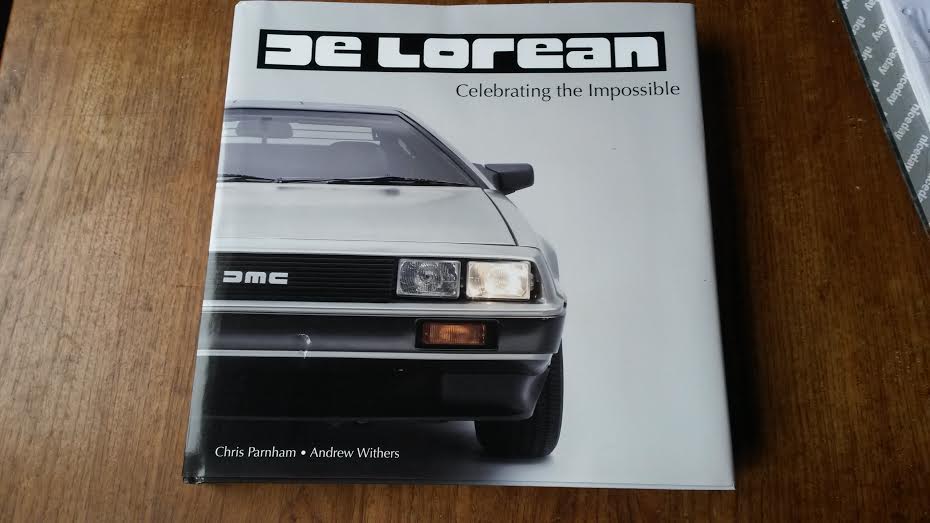
Book Review – DeLorean

DeLorean – Celebrating the Impossible – Buy Here

DeLorean - Celebrating the Impossible

DeLorean – Celebrating the Impossible

A lot has been written about John Z DeLorean. An awful lot. But for me, and the writers of DeLorean – Celebrating the Impossible, it’s the car itself which is of far greater interest. So I was thrilled to be asked to review a copy of this book. It has been independently published by two members of the DeLorean Owners Club and as such, manages to have a flavour about it that you just wouldn’t get from a traditional publisher. It’s at a far geekier level, and I say that in a very, very good way.

Sure, some of the design is a bit low-key, but even just as a book to browse through and admire the pictures, it is quite remarkable. There are wonderful shots of the various offices used by the DeLorean Motor Company, as well as never-before-seen shots of prototypes and development mules. Then there’s the textual content too – far more detail about these cars than I’d ever seen anywhere before. There are interviews with staff, recollections of the trouble of building a car in what was at times a war zone, and plenty about the difficulties faced by those that made this amazing car come to life.

This book contains some incredible images, many never seen before.

This book contains some incredible images, many never seen before.

At £75, this is not a cheap book but it is huge! That price includes delivery, which seems pretty fair given than the book weighs four kilograms! Your postie may not thank you. However, I can say that without shadow of a doubt, this book is an essential read for any petrolhead. You’ll love it.

Video: Dyane Hibernation

Since I bought my first 2CV in 1996, I’ve used aircooled Citroens throughout the year – apart from 2002-2003 when Elly was in pieces during a restoration. When the second phase of that restoration was completed in late 2005 to January 2006, I celebrated by immediately driving her from Lincolnshire to Aberystwyth at the height of winter.

This project is brought to you by almost no budget at all.

The Dyane will be going sleepy times this winter.

And, you can see the results for yourself. Elly the 2CV is now rotten as a very, very rotten thing indeed. So, I’ll be taking the Dyane off the road this time. I attempt to explain myself in this new video.


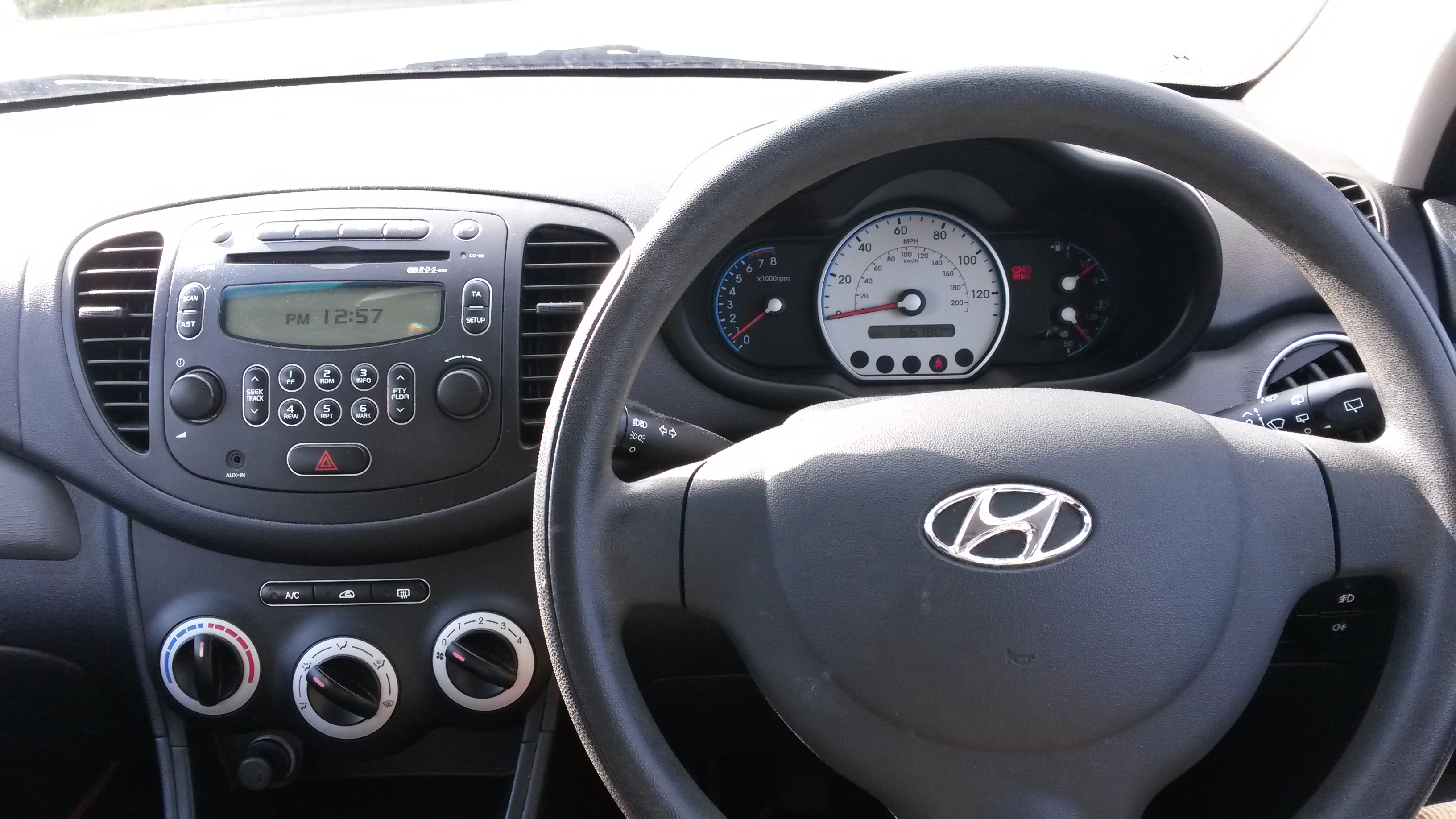
Road Test: Hyundai i10 Gen1 (2007-2014)

I’m a huge fan of oriental engineering. It’s been fascinating to watch first Japan, then South Korea and Malaysia go from producing cars that were a bit rubbish, to cars that rival the best Europe can offer.

The rather-nice, Indian-built, Korean Hyundai i10

The rather-nice, Indian-built, Korean Hyundai i10

Hyundai first hit the UK scene with the Pony in the 1970s. It was a car developed with the help of some former British Leyland folk. It evolved into a fairly decent hatchback by the late 1980s, though dynamically, it was still some way off the pace – not enough to tempt very many from their Astras and Escorts.

With the Atoz city car of 1998, there was a bold attempt to smash into the class that had opened up below the Supermini. It was battling other oriental mighty miniatures such as the Daewoo Matiz, Daihatsu Cuore and Suzuki Alto. The styling was a bit gawky though, and even when it evolved into the Amica, it wasn’t the very height of desirability. It was still all a bit Oriental, in the same way that a 1970s Datsun was exceedingly reliable, but somehow not quite right in the styling department.

That all changed with the i10 of 2007. Suddenly, Hyundai had a supermini that was every bit a match for Ford’s Fiesta. Five-year warranties and excellent reliability meant people really did start taking this South Korean company very seriously indeed. That run has continued and the current i30 manages to look very handsome, especially now the Ford Focus effectively looks like it has melted.

Acres of black plastic, and not particularly nice black plastic.

Acres of black plastic, and not particularly nice black plastic.

A lot of i10 development was carried out in Europe, and the first generation was built in India – the current one hails from Turkey. Hyundai really is a world player these days.

Behind the wheel, it must be said that the interior plastics are a bit grim, but that’s certainly true of the Fiesta of this era. Like the Ford, the dashboard protrudes noticeably down the middle of the car but the i10 at least leaves plenty of room for your left leg. There’s even a foot rest! Far, far better than the Ford.

The controls are certainly all very logical and straight-forward and once you’re under way, the gearchange is beautifully light, the brakes powerful and the steering nicely weighted – though I did feel it loaded up rather strangely in the bends at first. Possibly because I’m used to a Citroen.

It’s certainly very zingy, with 76bhp on tap. Sure, like most modern multivalve engines, there’s a lack of lower down grunt, but the pleasant gearchange means it isn’t a bind to go hunting through the rev range. It’s certainly very quiet, which means most of what you hear on the move is road noise.

The ride isn’t too bad at all for a small car and while it does jiggle around a little, I reckon it’s actually more compliant than the current model. Certainly, it feels a LOT more pleasant to drive than the Fiesta and reviews of the time suggest it was better than many of its rivals too. Impressive.

Downsides include rear leg room. At 3.5 metres long, it’s not a big car and I would struggle to fit behind the front seat set for my 5’10” frame. The boot is also not entirely generous, though enough for most.

Overall though, it’s a very appealing package. It looks quite smart, with the front end having a particular cheeky appeal. Certainly, this is the starting point of Hyundai becoming a major force in motor manufacturing.

Rejoice! Cheap cars have returned

I love it when the price of scrap metal slumps. While it’s not good news for metal recyclers, it’s bloomin’ great news if, like me, you love a cheap motor car. Suddenly, my £300 Perodua Nippa is looking expensive.

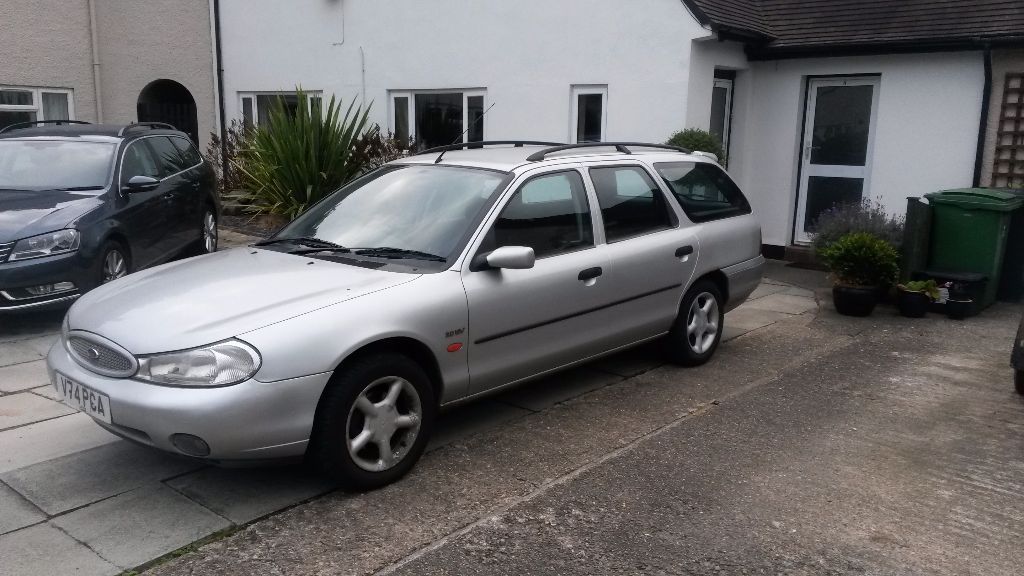
A very, very quick look on Gumtree saw me find this rather nice looking Mondeo after just a few cars. It’s a 1999 on a V-plate, 2-litre petrol and a very practical estate. It even has a tow bar, and a two-number registration plate (just something I like, no extra value here). A quick check of the excellent new MOT History website reveals that it passed a test last October, though sill rot (area ‘weekend’ according to the advisory) was a concern. It has MOT until 8th November 2015 though, so you can still drive it home.

The MOT history states that the mileage is 105,000 – so not ridiculous. Previous failures have been for minor things like brake pipes (replaced a couple of years ago) and suspension bushes. Sounds good. The asking price? £250! I’m almost tempted to flog the XM at that…

£250 - bargain? I reckon it might be...

£250 – bargain? I reckon it might be…

If you prefer something a bit smaller, how about this Toyota Yaris? No, I don’t much like white cars either but at £325, you can always paint it with a brush. You certainly get more comfort and refinement than our little Perodua here, with an MOT until March 2016 too. No power steering, which appeals to some people (notably my wife) and the 1-litre engine should offer great economy. MOT history hints at (again) some corrosion concerns around the sills, but you’ve got almost six months to do something about that. A few patches may be all it needs.

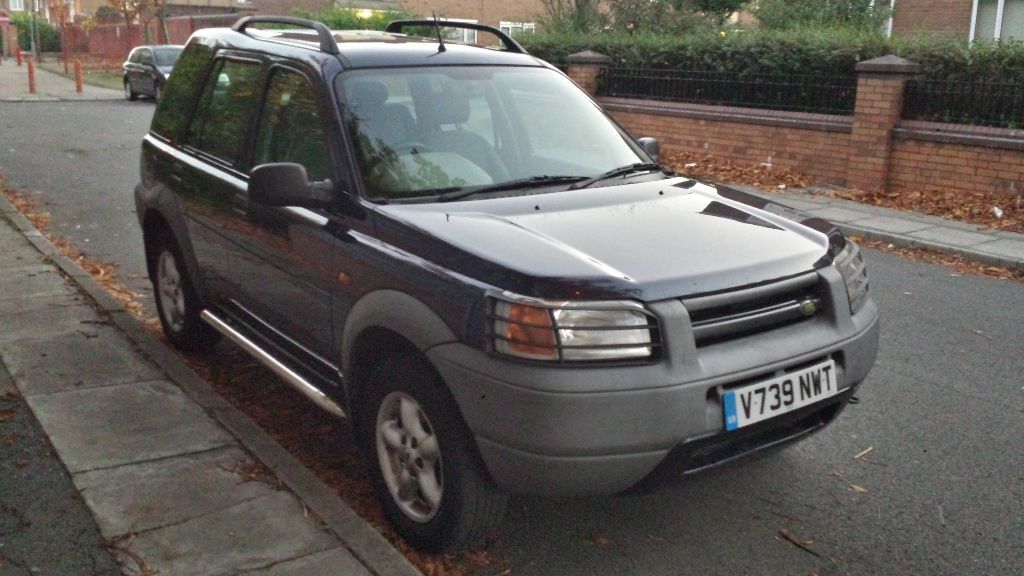
But I reckon the car most like to tempt me today is this £400 Land Rover Freelander. They have a pretty dreadful reputation, and this one has the less desirable Rover L-Series turbo diesel. Most people prefer the BMW diesel, which can be far more expensive to repair when things go wrong. I’ll take the agricultural old lump please.

Would you be tempted by a £400 Freelander?

Would you be tempted by a £400 Freelander?

Brand new MOT, 140,000 miles. MOT mentions that clutch and gear selection is a bit hard, which is a pain as it probably means the slave cylinder is failing, or the mount for it has bent. I don’t think the slave cylinder is inside the bellhousing like it is on the BMW-engined ones – another benefit. Might be a fairly easy fix.

I do feel for the owner though, as the silly MOT tester has ballsed up entering the mileage. When it failed (on quite a big list), the mileage was stated as 147, 714 miles. When it was retested for the pass a few days later, the mileage was put in as 174, 417 miles. Sloppy, because the MOT history certainly confirms that the lower figure is correct.

Now, I would add a pretty big warning here. Freelanders are notorious for IRD (Intermediate Reducation Drive) failure. In short, this is what gives it four-wheel drive when needed – it’s usually front-wheel drive only. Folk usually fit a blanking plate and remove the rear propshaft for a cheap fix – they often claim it’s done for economy reasons! As the Freelander is two-wheel drive all of the time unless it detects wheelslip, that’s hardly going to save any fuel! I’d certainly ask whether the rear propshaft is still in place.

And that’s the thing here. Cheap cars will almost always have something wrong with them. Even my £300 Nippa needed a steering rack gaiter for the MOT. That turned it (including test) into a £380 Nippa. Still cheap, but any cheap car could be a money pit.

Still, you simply won’t get anything with a year’s MOT and a Land Rover badge for anything like that sort of money. Go on. Find yourself a bargain!