2CV – rot hunting

I didn’t mean to go rot hunting, but that’s what I ended up doing. You see, I’d decided that the sill and C post needed painting after the recent weldathon. That meant taking the rear wing off again. With that off, I thought I’d better hose off the muck and see what was what. Rot was rot as it happened.

2CV corrosion

Eek! More rot found

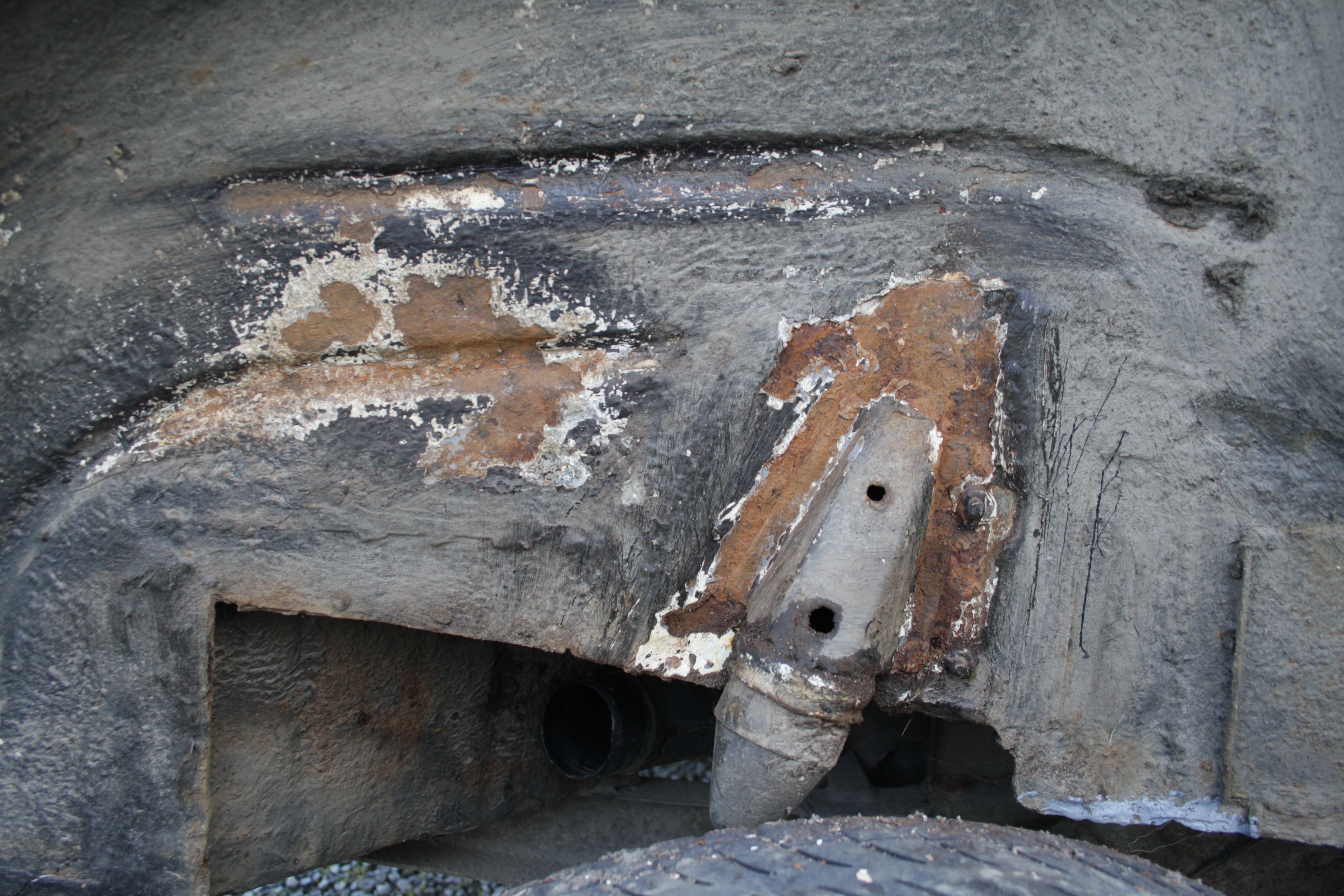
The pressure from the hose was sufficient to have the underseal flaking off, and rot was very much lurking behind it. I attacked it further with a wire brush and a flat-bladed screwdriver to reveal the above. Apart from one tiny hole, it was all still solid. It was clearly time for action.

The first step was to grab my tub of Vactan. This rust converter is little-know but very effective. I gave the rusty areas a couple of coats with a period of waiting in between. It forms a black, protective layer once cured. It self-primes as well, but I decided to use zinc-rich primer in addition – a couple of coats of this were applied too.

Next I could actually get on with painting the bits I’d originally wanted to paint!

2CV restoration

Actual masking, so rear sweeps, C post and sill could be painted

I didn’t bother painting the inner wing as I hadn’t removed all of the underseal. Where it was still in good condition, it was still protecting the metal well – a couple of scrapes with the screwdriver revealed as much. I then unleashed some Bilt Hamber products – Dynax S50 for the box sections and cavities, and Dynax UB for the inner wing, underside of the sills and the floors – front to back.

The rear wing has been carefully refitted, but then plans got ruined by cloud and rain. I don’t want to refit the rear door until the paint has had a good chance to harden, so it’s frustrating that the sun has disappeared now!

Of course, I need to repeat this job on the other side, and I am slightly concerned. I fear the rot above the wing is worse that side. There’s some sealant stuff that seems to have been used in that area, as two panels are welded together. Sadly, this sealant seems to have done a great job of trapping moisture, which allows the seam to rot. But, doing nothing isn’t an answer, so I’m going to have to get brave, pull the other wing off and see what lurks beneath…

Not today though!

See no evil. Oh, I peeked!

It’s easily done. Many of us have been there. You’re a bit sick of the wallpaper in this room. There’s a bit that isn’t quite attached to the wall. Well, you need to redecorate anyway, so why not give it a tug? Now you’ve started, you might as well keep going. Before you know it, the floor and all of your furniture (as you weren’t actually planning to start right this moment) are covered in bits of wallpaper. Then you notice the state of the plaster. Oh bother. It’s knackered.

I’ve just done the automotive equivalent of that. I’d sprayed some lovely, Alpine white paint over the 2CVs sill – something we didn’t have time for after the welding. A coat of zinc primer had to suffice for the MOT. I knew the rear wing had to come off again to do the job properly. I pulled it off today but rather than just apply the paint as I’d planned, I decided to hose all the dirt from the now-exposed inner rear wing. This was a stupid idea, because simple hose pressure began removing underseal. And paint. I grabbed a wire brush and a screwdriver to remove all of the loose stuff. This is what I was left with.

2CV inner rear wing

Oh bother. Yet more rot discovered…

Yes, I am aware that this tyre needs replacing as well. But it’s the rot that’s the biggest problem. There are a couple of small holes. I’m contemplating what bodgery can be employed here, with a view to complete inner wing replacement at a later date. I haven’t really got time to do anything tonight, so my plans for taking the 2CV away for the weekend are on hold.

That meant I had to do something about the BX’s blowing exhaust as I can’t face another crashy journey in the Sirion. The previous owner of the BX was having such a nightmare trying to get the system to seal that he welded up one of the connection points. Sadly, this joint wasn’t entirely gas tight.

Aluminium tape exhaust fix

A truly magnificent bodge

This was an official bodge, in that the paste I used was labelled as exhaust repair paste, and the aluminium tape was labelled as exhaust repair tape. What’s more, it worked too! We drove all the way to Kent and back with a perfectly leak-free exhaust. The problem was the pointless clamp. It has nothing to clamp anymore, so I removed the clamp today and found a new leak directly beneath it. More paste and some aluminium tape I had sitting in the garage for bodywork ‘repairs’ were called into use. It’s now leak free again until I can get a proper, welded repair in place.

While underneath, naturally I found quite a lot of surface rust. I really do need a rot-proof car!

Citroen 2CV – rust-busting

If I make the mistake of looking at my 2CV as an entire vehicle, and adding up how many hours of work the body needs to make it nice again, I get very depressed. So, I’ve tried to stop doing that. Instead, I decided to get one small bit of rot sorted out before the imminent MOT. Despite the fact that I know well enough that rot-chasing can quickly get out of hand, I was still surprised at the work we ended up doing.

I say we, I mostly mean my mate Dave. I helped dismantle, paint and reassemble but he did all the difficult stuff. Dismantling the rear corner was the first job, so the rear suspension arm was swiftly removed and we could get a better feel for the quick plating job that was needed.

Corrosion

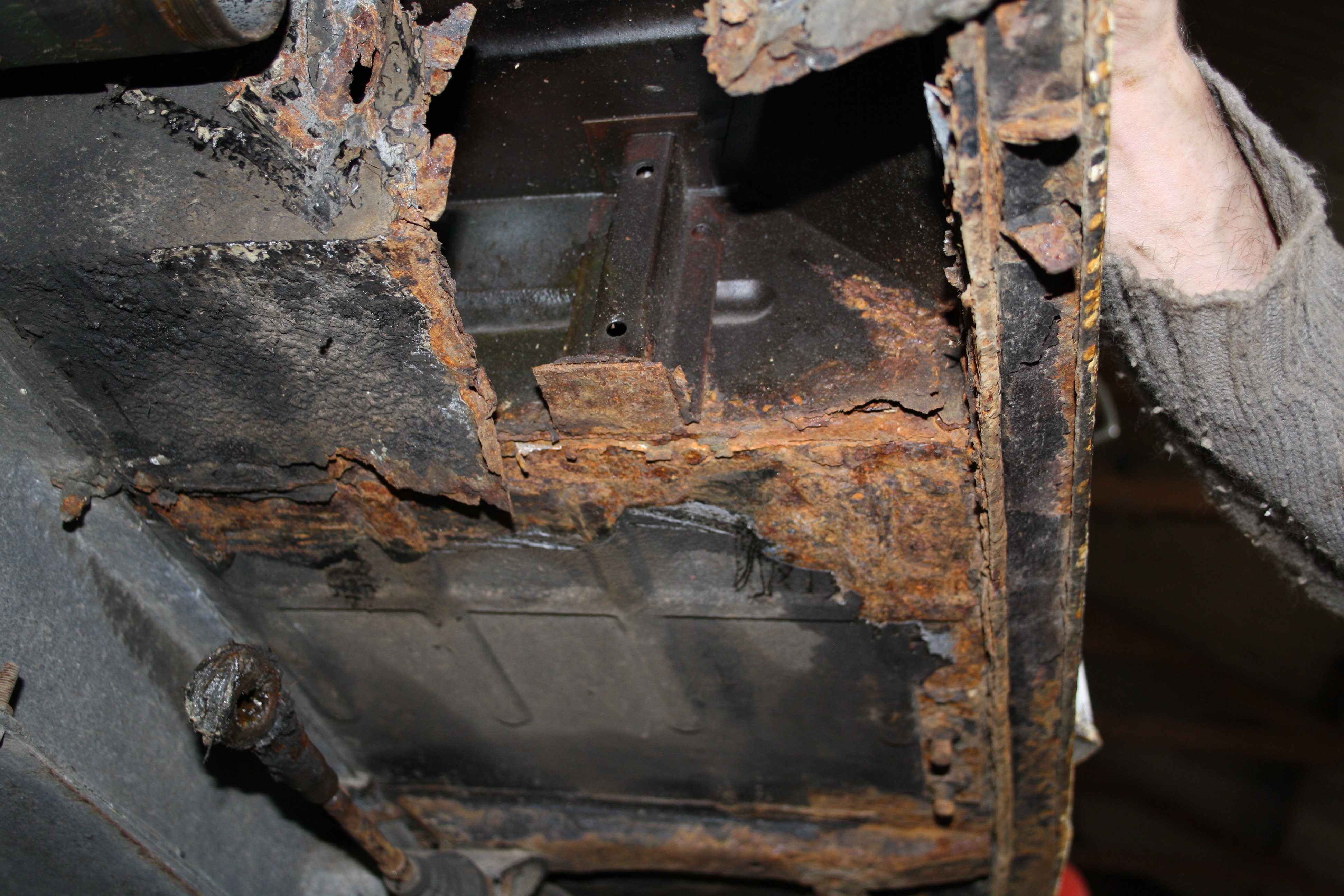
Under body rot – the ‘before’ shot

It’s never good when the floor appears to be hanging down. Naturally, once we started hacking back to good metal, we found more metalwork was needed.

Inside the rear seat box was ok. Around it less so

Inside the rear seat box was ok. Around it less so

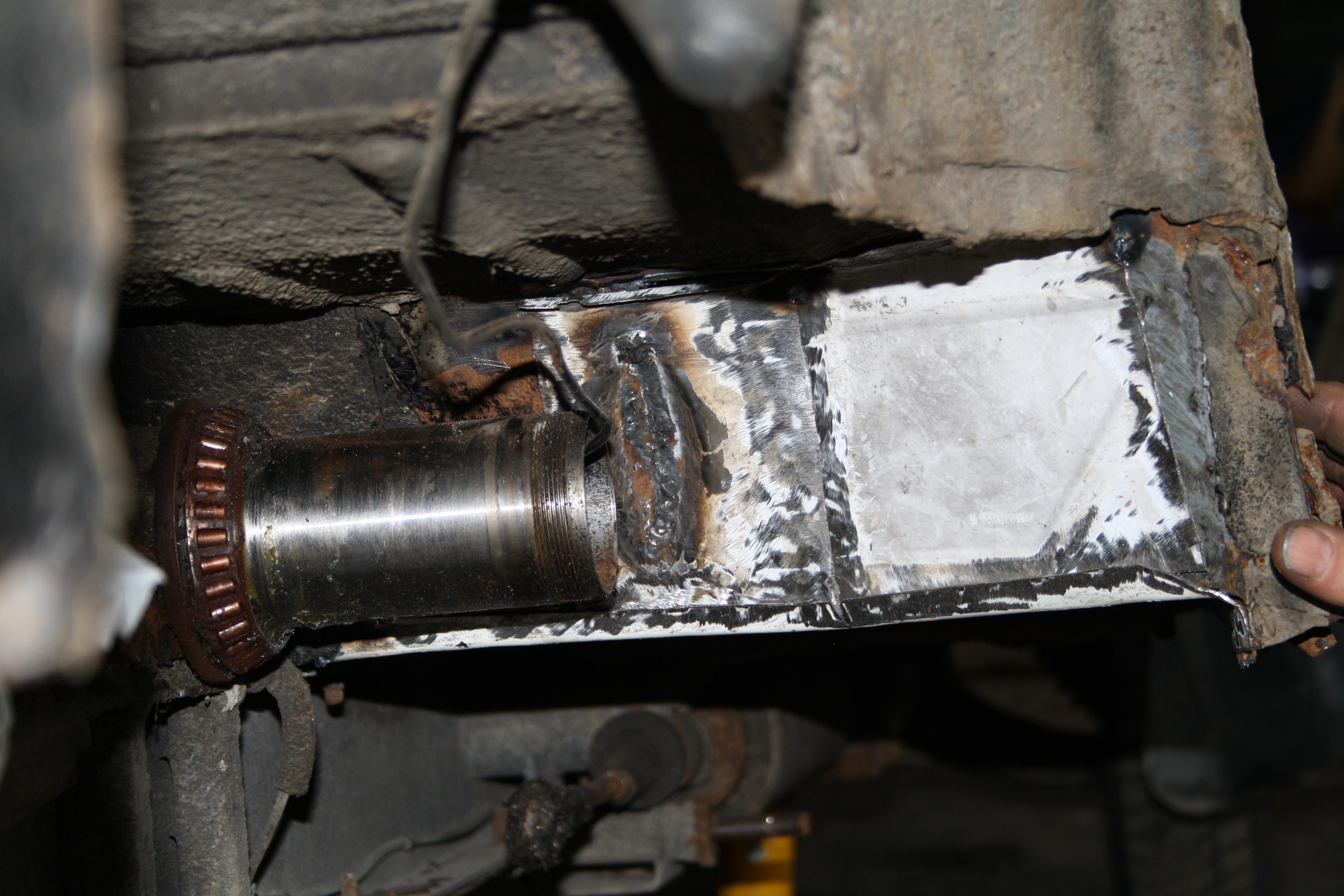
The seat box cavity is revealed. Much more metal needed to be removed though, including a fair chunk of the rear footwell. Time for Dave to get busy. Lacking proper repair sections, Dave carefully fabricated new items out of an old washing machine. Knew we’d find a use for it one day. In the meantime, I accidentally pushed my thumb through the C post.

repair section

Washing machine sections even the correct colour!

As you can see, Dave had to chase some rot up into the seat box itself. These are the repairs before they have been dressed. Note also the hole in the base of the C post, due to my thumb. With corrosion that close to the seat belt mount, I was glad to have spotted it in truth. New sections were carefully constructed for the underside too, with Dave even fabricating a ‘dent’ in one panel to clear the suspension arm and mimic the original panel.

Carefully fabricated to clear suspension. Not yet welded in

Carefully fabricated to clear suspension. Not yet welded in

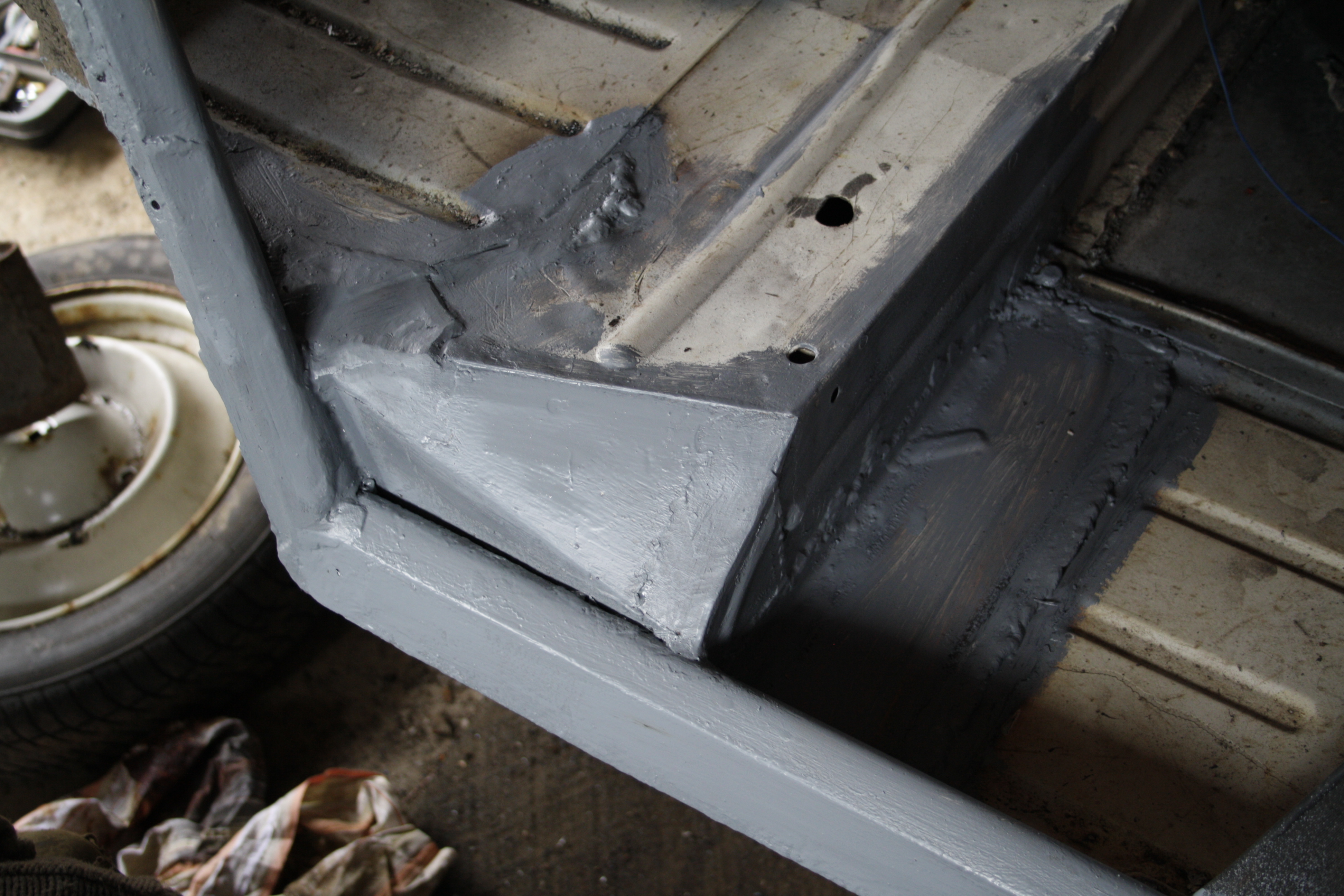
After two days of hard graft, Dave smoothed down the welds, though I wasn’t interested in a ‘factory’ finish. I got the zinc-rich primer out and proceeded to paste it all over the place – including areas we hadn’t touched.

Zinc-rich primered, though a touch of filler would be nice

Zinc-rich primered, though a touch of filler would be nice

I personally don’t mind repairs you can see. With enough time, I think Dave would prefer to make these things invisible, but I like repairs that an MOT tester can see. Hopefully it inspires confidence! I do need to get hold of some paint, but budgetary constraints mean that’s unlikely for a while. Elly is currently in the garage hiding from the rain, but here’s what she looks like at the moment.

rusty 2cv

Elly’s turning grey in her old age

Now I’ve just got the small matter of getting her through an MOT test. I’d better grease those kingpins!

2CV – the battle against corrosion

Today marked the start of my latest battle against corrosion with my 2CV. First, a quick history trip.

I bought my 2CV in the summer of 2000 for £450. It was largely solid – or so I though – but the chassis was going to need work. A bit of patching kept it going for two years. A full resto began in 2002. That saw the old chassis thrown away, and a galvanised replacement fitted. The bodyshell received new floors, lower bulkhead and sills, while the boot floot was patched and one seat belt mounting in the rear replaced. Elly returned to the road in 2003, looking much the same as when she’d left it. All the external panels were the same!

2CV restoration

Elly with no clothes on, 2002

In late 2005, the second stage began. The body was stripped and all panels refurbished before a full respray. A new complete windscreen panel was fitted as the old one had rotted out at the top. This work was completed in early 2006, which we celebrated by driving all the way to a quaint town in Wales called Aberystwyth, not thinking we’d live near there a few years later!

I thought I’d banished the rot, but I was wrong. It’s very hard to stop steel corroding. After a few years, new sills were needed again. The replacement sills had simply rotted from the inside out, despite wax protection. A year or so after that and the bonnet hinge had rotted out again. The paint cracked in several places all over the bodyshell, and gave rot the perfect reintroduction. Powder coated items suffered the same. One slight break in the surface and the metal was eaten out beneath the coating. I won’t waste my money on powder coating wheels or other items again. It doesn’t work.

As Elly sits now, the windscreen panel is rotten again, the front floors and lower bulkhead were replaced last year, the powder coated bumpers and headlamp bar are in a truly dreadful state and hints of corrosion can be seen almost anywhere you look. I was pretty horrified to look under the car fairly recently to discover the rear floor was starting to hang down in places though! Time for action.

Today, that action began. The 2CV was jacked up, the rear suspension shock absorber, tie rod and arm were removed, the fuel filler neck and rear wing were then removed and work could begin. A chisel and bare hands were enough to remove a fair bit of metalwork, with an angle grinder adding to the attack.

The 2CV loses flaws and floors, 2014

What I’m holding in my hand is largely held together by paint and sealant. The metal had crumbled readily and indeed, cutting back to good metal soon saw yet more bits of car landing on the floor of the workshop. A quick patch job turned into something much more involved. This surprised me not at all. I’ve been here before!

I’m finding it hard to know what I’m doing here. I’m asking my mate Dave to do a good job, while wondering just how much longer I can realistically keep this car going. To carry out a proper restoration of this already-butchered bodyshell is a big ask of even a skilled restorer. It gets harder and harder to restore it and not make it look an absolute mess. At the moment, I’m keeping my aims realistic. This welding session, which will hopefully conclude tomorrow, should hopefully see Elly through another MOT. With 195,400 miles on the clock, this pass will allow her to reach 200,000 miles – though I refuse to say how much of her will achieve that goal…

After that? It’s hard to say. The budget simply doesn’t exist for a full makeover, but I’m utterly failing to keep on top of the rot at the moment. If I’m not careful, she’ll just simply fall apart. Welding her up myself isn’t an option, as that in itself requires a fairly serious investment to start with, and development of the necessary skills. I’m as likely to take up welding as I am flower arranging. It’s just not me.

For now, it’s a case of ‘do what’s necessary’ and then focus on jobs I can do. Like replacing the headlamps, because one of them is full of water (well, it isn’t now, but the bowl is completely rotten), making sure the lights and brakes work and keeping the kingpins greased! Hopefully, she’ll be in for a test next week.

Sirion – brake troubles

I’m a bit sensitive when it comes to brakes. They are rather important after all. It doesn’t take much to have me resting my hand on the wheels after a long drive, just to check there isn’t excessive heat. If the tyre has got hot and you can’t touch the wheel, something is wrong!

It was actually a nasty smell that had me checking the Sirion’s brakes. Turned out to be Bilt Hamber’s Dynax UB anti-corrosion wax as I’d managed to get a bit on the exhaust, but the front wheels did seem quite warm. Especially given that I’d just driven up a rather big hill, and so hadn’t touched the brakes for several miles.

STOP! Hammertime

STOP! Hammertime

Once daylight appeared, I had another test drive. I found a section of road where I could avoid braking, and pull into a layby without having to touch the middle pedal at all. No doubt about it. While the discs weren’t hot, they were certainly warm. The calipers were binding slightly. This has a surprising effect. It can seriously impact on fuel consumption, even if there are no other issues. But generating excess heat can cause other issues too. Ignored, a seized caliper can cook your brake fluid, meaning the brakes effectively fail when you next use them, or they can generate so much heat that rubber components fail and/or all of your wheel bearing/CV joint grease gets liquidised, leaks out and wrecks those items. You ignore such things at your peril.

I hadn’t really had to do anything to the Sirion’s brakes, so this would be an education. I whipped the front wheels off to see what I was faced with. The Sirion uses ‘floating’ calipers. These have only one piston, which presses one pad onto the disc, but pulls the other half of the caliper towards the disc too. This floating section runs on slider pins. The biggest weakness of these floating calipers is these pins. They need to be greased. If the grease dries up, or if someone has used the wrong grease (copper grease is bad news, you need a rubber-friendly silicone grease) then the caliper can get stuck, holding the pads against the disc and causing the aforementioned foibles. If this has happened for quite a while, you might notice unbalanced pad wear. The other thing that happens is that the piston itself gets gummed up. The pistons are made of steel, and so corrode if not coating in grease. The lower the pads are, the more piston is potentially exposed to the elements.

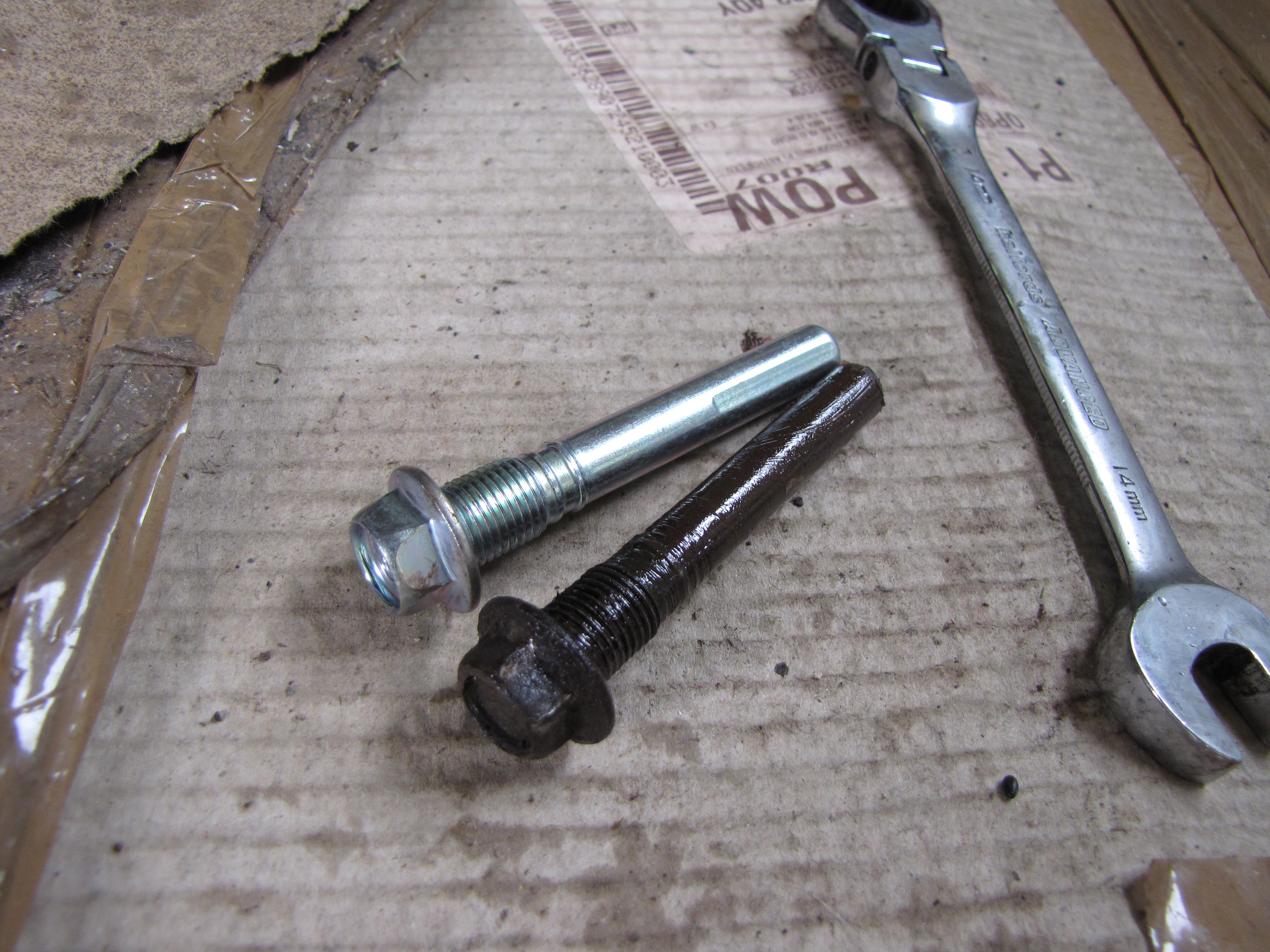
To pull the pads out, you need to remove the slider bolts. This became a bit of a battle, which suggested these might be the problem. They have 14mm heads, but both the lower sliders rounded off. I had to resort to extreme measures – a 13mm socket and an impact driver! Even then, it took a hammer and chisel to coax them out of the caliper. Sherlock Holmes would not be needed here.

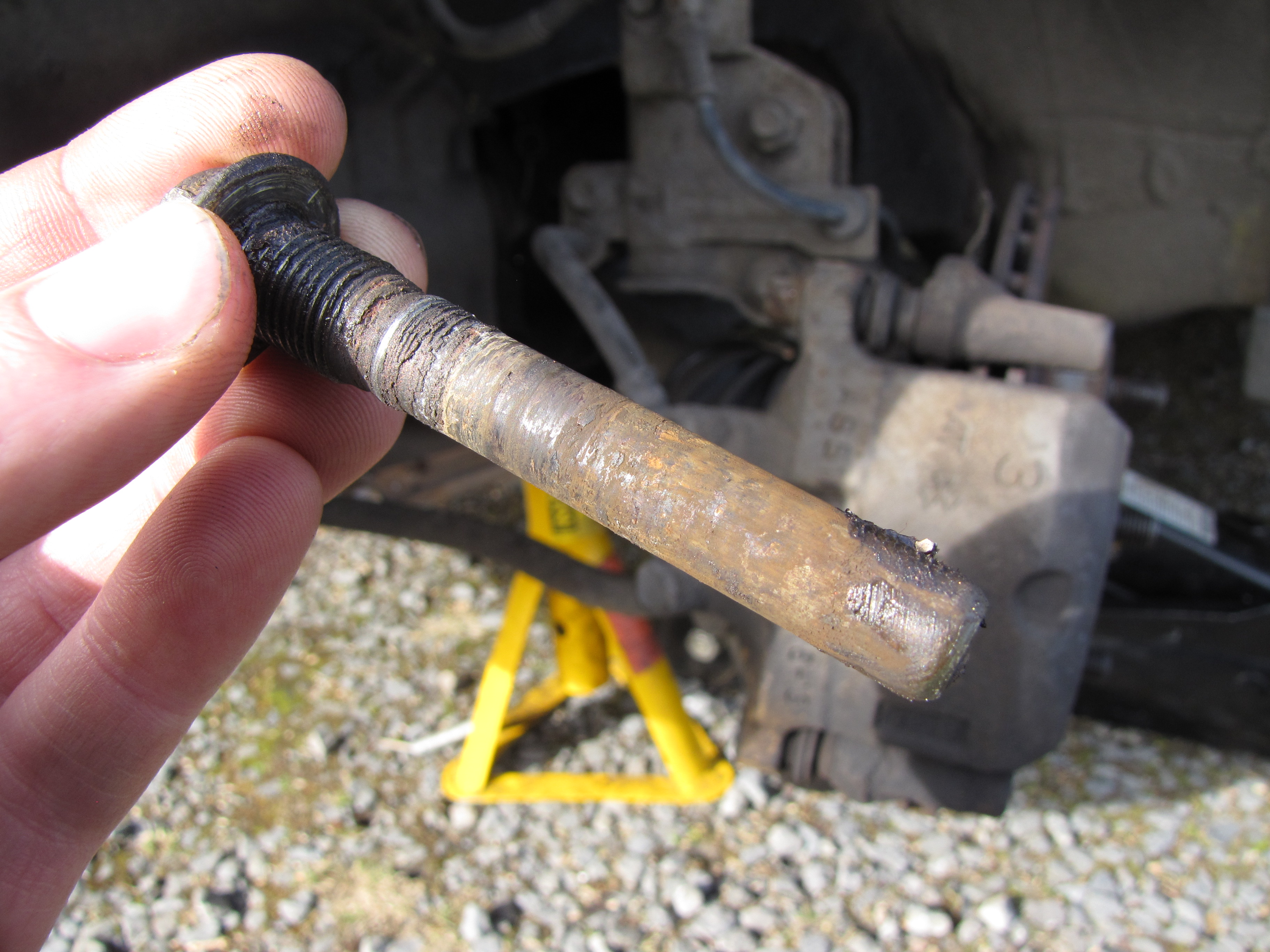
This slider pin should not be this dry

This slider pin should not be this dry

Once I’d forced them out, it was pretty clear that they were entirely dry. Even worse, there were signs of corrosion and score marks where they had been trying to slide across the dry surface. The actual movement is tiny, but still requires lubrication. With mangled heads, I couldn’t safely refit the pins, though I did so loosely just so I could move the car on my driveway. I ordered new pins from a Daihatsu dealer and accepted that I’d have to wait several days for them to arrive. The downside to owning unusual vehicles.

The pins arrived this morning. At last! I was a bit miffed to have been charged £5 postage, when it cost the dealer £2.30 and a second-hand jiffy bag. But they were here. The weather was chaotic – snow, hail, sleet, rain and wind. I turfed the 2CV out of its cosy garage and set to work.

It didn’t take long, because I’d already done the hard work. Here’s a pin comparison.
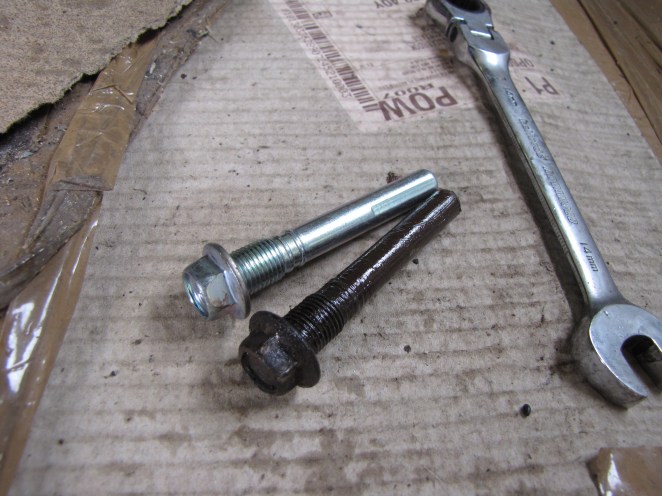
Caliper slider pins compared

Caliper slider pins compared

A fair bit of difference! The old pin is damp, because I lubed it up before refitting last time, just to make sure I could get it out again. Incidentally, ratchet spanners are BRILLIANT. The new pin was lubed with silicone grease – not too much – and I used a little copper grease on the threaded section as that doesn’t contact the rubber. This should make future removal far less trying. It’s important to use a grease which is compatible with rubber – not all of them are, and if the rubber boots are destroyed, the sliders will not be protected from the elements. It’s also sensible to clean out the slider tubes in the caliper. Do so gently and make sure you don’t contaminate the disc or pads. Oil is not helpful in a stopping situation.

It isn’t one of those jobs that makes a huge difference to how the car drives – there’s no difference at all it how it feels – but it was a useful bit of preventative medicine. If your car has floating calipers, make a point of pulling the caliper apart every year or so to make sure the sliders are still lubricated. You could save yourself a lot of trouble.

I’m glad to have the little buzz box back in use. It’s the exact antithesis of the BX, being rev-happy, zingy and displaying all the bodyroll of an original Mini – albeit with steering that feels like an original Mini with the front tyres at 60psi. It is also the only one of my fleet on winter tyres – and it seems winter is not quite finished with us yet.
BX: Tyre and error

Buying the BX on Tuesday means I had less than a week to prepare it for the following Monday, when I will be driving it 250 miles to Kent. It’s been an interesting week. First, I discovered there was almost no oil in the engine. Easily solved and thankfully no damage seems to have been done. Then I changed the upper engine mount, hoping it’d remove some nasty transmission shunt. No such luck, so I’ll have to change the lower mount at some point too.

Yesterday introduced a new drama, when I decided to replace the decidedly low-on-tread rear tyres. When the wheel came off at the tyre centre, I got a bit of a shock.

Jeepers! Brake pad is trying to escape

Yes, that brake pad is trying to escape from the caliper. Note how it has been rubbing on the inside of the wheel. Alarming. It had been like that long enough for a distinct wear ridge to develop on the pad – it’s overlapping the lip of the disc. The tyre place kindly removed that lip and shoved the pad home. I then nervously and gently drove home.

The good thing about buying another BX is that I know the cars well, and have various spares floating around. I know that somewhere in my garage, there lurked a complete second-hand caliper, with the pads (and importantly the retaining slider) still in place. Now, where was it?

After a fairly comprehensive ‘man search,’ I had a bit of a panic. I couldn’t find it, and time was running out. It was now 1pm on a Saturday. Motor factors were starting to close for the day all over the land, and the chances of getting a new fitting kit posted to me in time for a Monday morning departure were starting to look about as likely as me scoring an advertising deal for men’s grooming products.

There was nothing for it. I needed to conduct a thorough search. So, like an archaeologist, I began to sift through the detritus of the ages (less than two year’s worth worryingly) to find the Holy Grail. Unlike Indiana Jones, I managed to do so without having to battle snakes and quickly-closing doors. I found it!

The Holy Grail. For me anyway…

That sliding pin was extracted, cleaned up and fitted to the new caliper. I even managed to find the correct pin to hold the slider in place. Where did I find that? In a spare caliper that came with the BX. The one which also had a slider. DOH!

A test drive proved that all was well – not that there were any notable symptoms of the fault in the first place. The handbrake is much improved though. I also tightened up the straps holding the strut return to the suspension leg, and re-attached a CV joint cover which was oozing grease.

Not that the work ended there. Rather belatedly, I decided that today, I should check the gearbox level. This is done by first removing the filler plug. If fluid starts leaking out, all is well. Fluid did not start leaking out. Stupidly, I hadn’t thought to buy gearbox oil when I was in town the previous day, so a hasty (and very enjoyable) drive in the 2CV followed. I bought a litre of oil. The BX swallowed all of it and still showed no signs of being full. Bother. I added a further 100ml or so of slightly-too-thick oil as it was all I had. Oil began to seep out and the plug was refitted.

It has made a huge difference to the gearchange – it’s now much sweeter. I’m very glad I checked it. Now I need to consider which spares/tools to pack for the roadtrip. I’m really looking forward to it!

The workplace, courtesy of Rob Parker-Norman


Sirion – ditching power-assisted steering

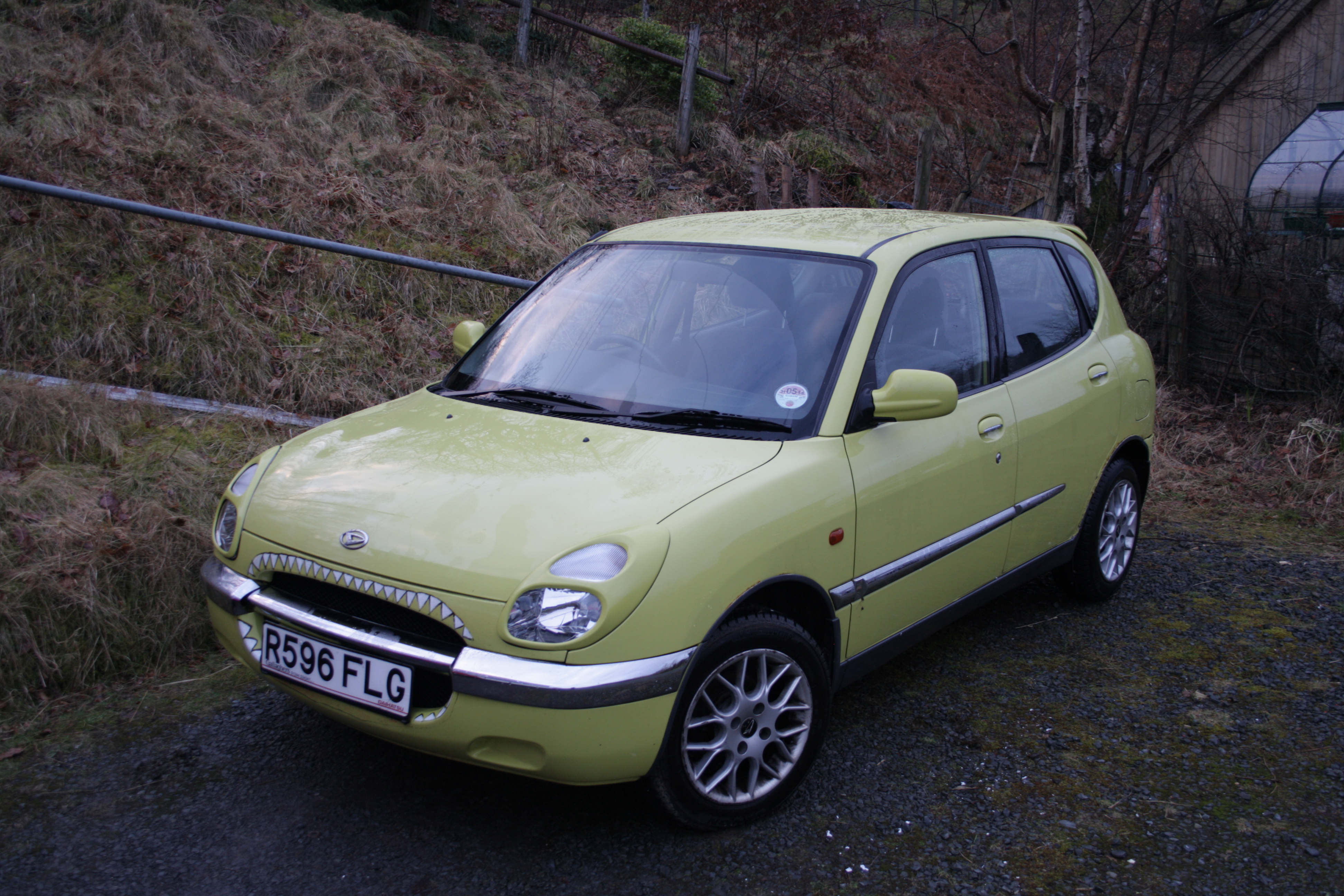
Now I love it again, the Sirion has been receiving a lot of attention. To start with, I returned to the graphic removal plan, after several months of inactivity. The teeth remain (and will continue to do so) but the Sirion is looking better than ever I reckon.

Sirion improvements

Sirion improvements continue. Teeth remain

The ridiculous bird on the roof is gone. It took hours to remove it! Other graphics have also been removed, though another session with white spirit is in order to eradicate them completely. Permanent marker can be, perhaps unsurprisingly, quite permanent.

My thoughts then turned to other matters. The power assisted steering is way over the top. I’m not against PAS, but I’m really not a fan when it is far too light. Like a 1970s Jaguar, the Sirion’s was so light that sneezing behind the wheel is quite terrifying. Feedback is entirely ruled out, making it feel quite twitchy as you attempt to find the right angle for the bends. It detracts from what is otherwise hugely entertaining! It’s like trying to get the feel of a classic Mini via a Playstation.

At this point I shall insert a disclaimer. What follows is an experiment and I cannot be held responsible if you decide it sounds like a good idea. Proceed at your own risk!

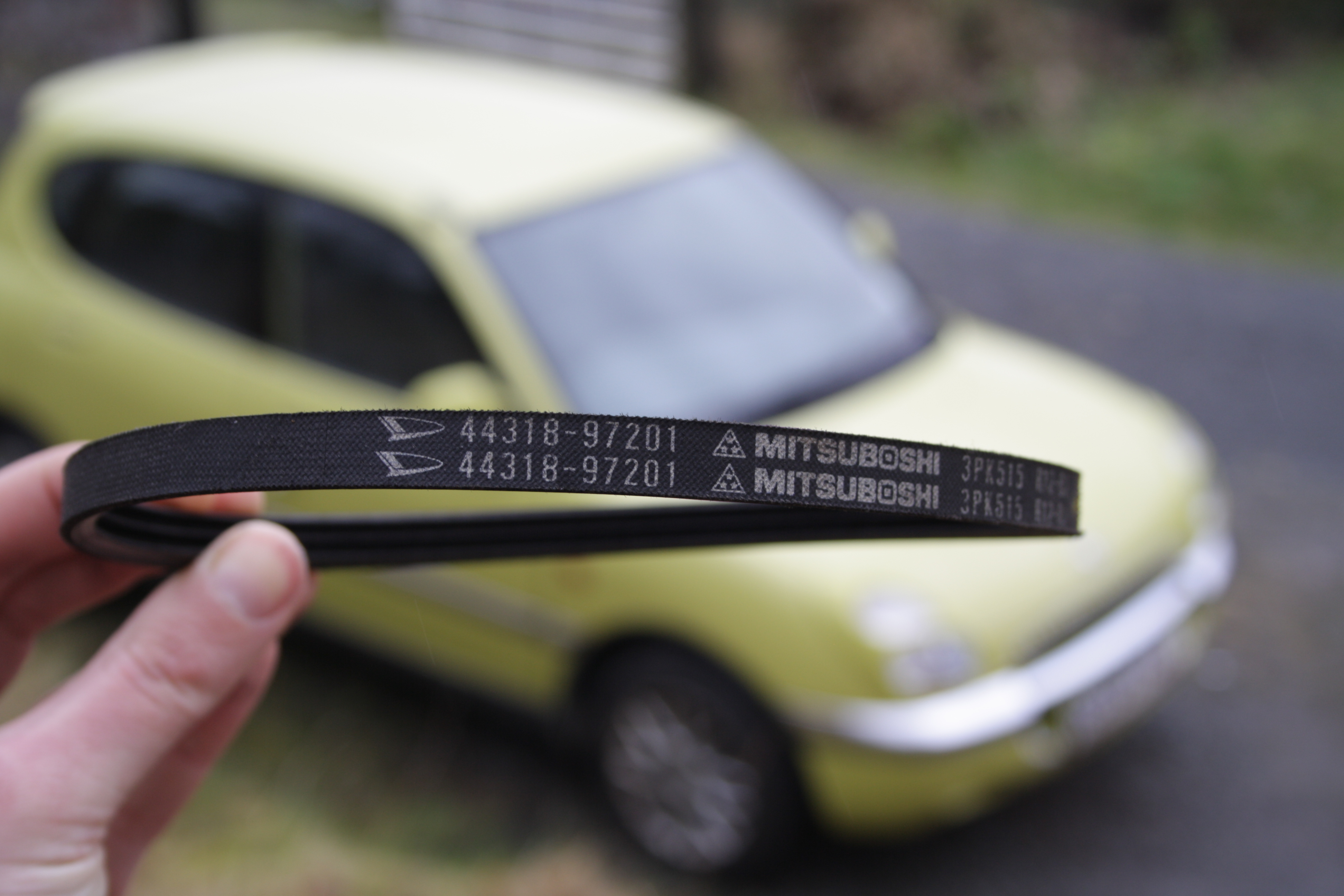
What I did was simply remove the power steering belt. With no power going to the pump, there is now no assistance. I don’t think this will generate any issues, though fitting a non-assisted rack is probably the ultimate way to go. Removing the belt was a lot easier.

Power steering belt removed

Power steering belt removed. Good idea or folly?

The result? The car feels much more pleasant to drive. Most of the time, you can’t even feel any difference, but the steering now weighs up nicely once you start cornering. It feels much more natural, though having all the assistance gubbins still fitted is likely to still be reducing feedback. I can’t say I’ve yet tried cornering hard enough to see whether feedback is really improved – I’m not one for pushing the limits of grip on public roads. Around town, it is harder work, but not onerously so. It just means I can’t steer with my little finger anymore, which is probably a good thing.

It’ll be interesting to see whether any issues develop longer term, and also whether there are any economy benefits now the engine is no longer having to turn the PAS pump. On the basis of 30 miles of driving so far though, all it seems to have done is make a fun car even more entertaining.

Handcleaner – my choice

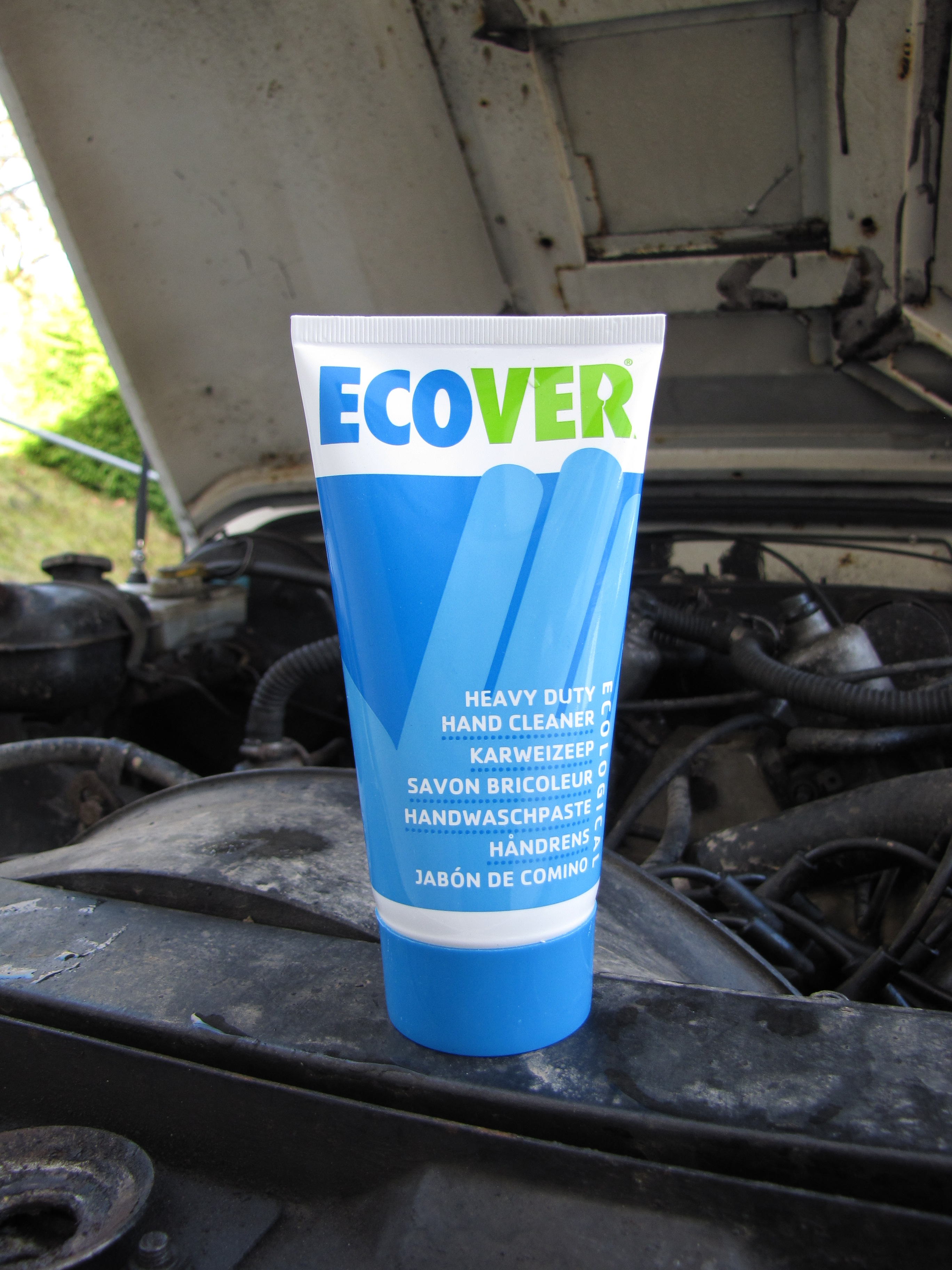
Working on old cars is a mucky business, especially if they leak as many fluids as a Land Rover does. I’ve tried many different hand cleaners over the years, but my overall favourite is Ecover’s Heavy Duty Hand Cleaner. Naturally, being a long-haired, 2CV-driving hippy, I like the eco-credentials, but I’m not one for using an inferior product just because Mother Nature likes it too.

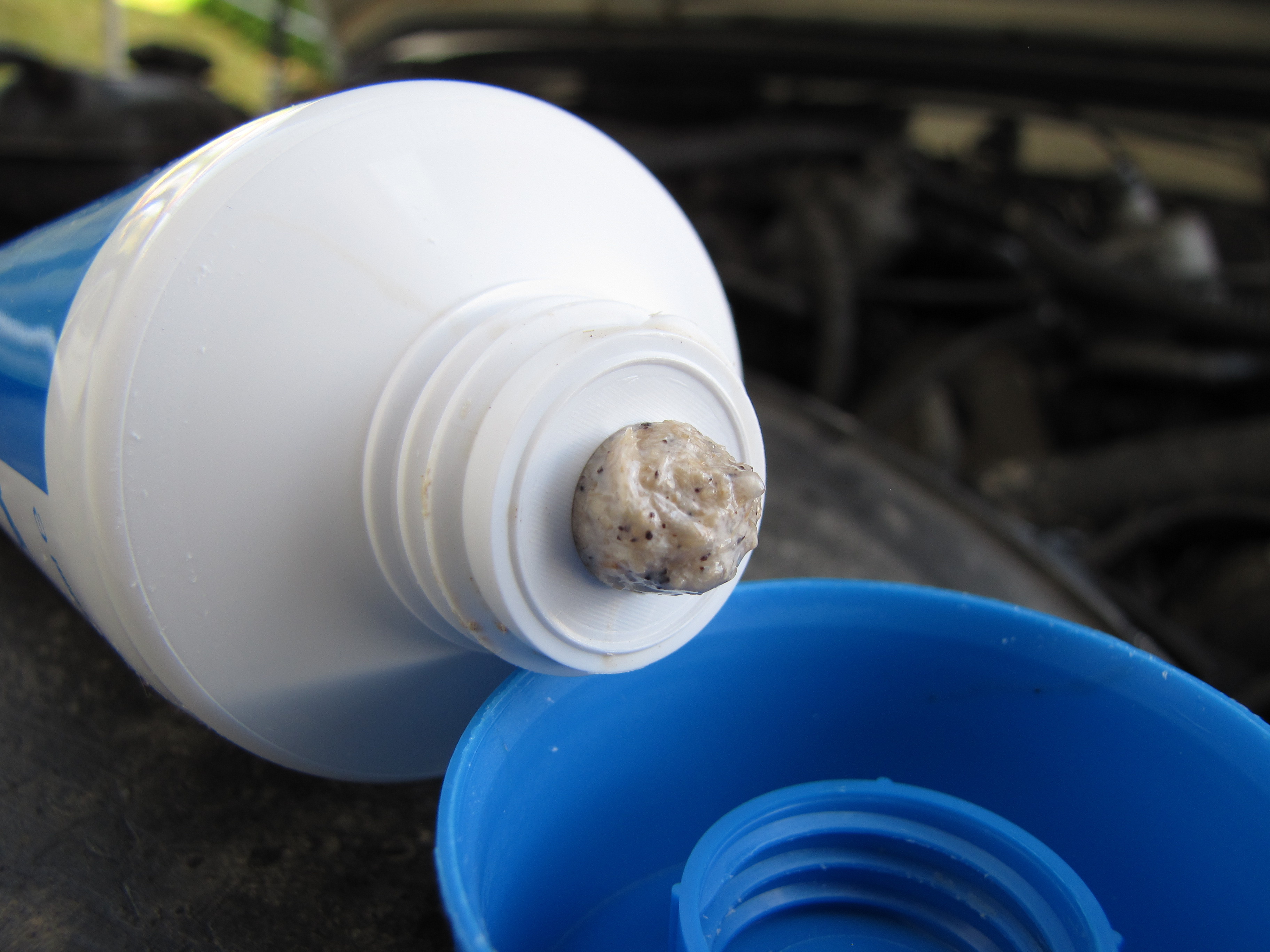
Crap tube design, great hand cleaner

Crap tube design, great hand cleaner

Happily, this hand cleaner really is very good, and it has been thoroughly tested during some exceedingly mucky jobs – including an engine rebiuld and change on the 2CV.

First, the downsides. It’s not a very easy product to get at. If your hands are filthy, the screw lid is not what you want to contend with before you can access the cleaner. It’s a fairly dry product too, so getting the last bit out is problematic. In fact, I’ve found that the only way to do it is to cut open the packet. This is pretty poor. You can also only buy it in these 150ml tubes. They only cost a couple of quid each, which is a bargain, but I’d be far happier with a nice, big tub.

That’s about it as downsides go though. The cleaner doesn’t carry very much scent – which is always good – and has good grit content. The list of ingredients is nice and eco-friendly, though does include stuff like Silver Nitrate. There are lots of other plant and mineral extracts, most of which I don’t recognise at all, but the simple fact is that this stuff is really good at removing oil and ground-in filth. You don’t need very much, and it responds well to adding a little water, allowing you to eke out your bargain supply for a surprisingly long amount of time.

Despite the high grit content, it isn’t harsh on skin either. I’ve often used it several times a day and not felt any downsides. Overall, it compares very well with its rivals. Swarfega loses out on no grit and a horrible stench. Comma’s Manista is very impressive stuff, and comes in a handy easy-access bucket. In fact, I find it hard to choose between the Comma product and the Ecover cleaner. I guess my hippy instincts draw me to the more natural product, even if I can only buy it in fiddly tubes.

Good grit content

Good grit content

Rapid recovery – electrics and a shocking decision

Hoorah! Technology has been restored. Thanks to a very generous member of the Autoshite forum, my laptop has been fitted with a new hard drive. Having blithely ignored the warning to create back up DVDs for Windows, I’m now using Linux for the first time. All seems fairly well so far…

The restoration of technology has enabled me to get into a very strong debate. I’ve caused lots of upset today by putting my 2CV up for sale. She needs a LOT of work, and probably deserves a better owner than me. Well, that was my thinking! The howls of derision from (almost) all angles has left me questioning my sanity.

The howls got a bit much for me to be honest, so I headed out after a plea for assistance from my Skoda-loving friend, Rob. He was having one of ‘those’ experiences that us classic owners sometimes encounter. Namely, checking that all the lights work on a car before an MOT test, then discovering that many of them do not in fact work once the test begins. Every year, I wonder if the 2CV’s sidelights are going to work or not. Rob’s Rapid had decided that headlights and foglights were superfluous. The MOT tester did not.

Electrical woes prevent MOT

Electrical woes prevent MOT

Electrical issues are quite easy to solve if you have a multimeter though. On lovely old cars, there really are limits to what can actually be wrong. There must be power, and there must be an earth. That’s about it really. One sidelight was powerless, though trying to trace it back through the loom proved tricky. It seemed to recover on its own. That sort of thing never inspires confidence!

Iffy headlamps proved a bit easier to solve. The multimeter reckoned power was getting to the bulb holder, so the holder was probably at fault. Adjustment of the contacts improved things. Before too long, all front lamps were working. Next came the fog light. For some reason, this has a relay. The MOT-bodge solution, after checking the wiring was all ok, was to simply bypass the relay. Rob can now either replace the relay or live with more power going through the switch. One fog lamp can’t draw anywhere near the current of a pair of headlamps though – which is why relays are often fitted in the first place. I don’t fully understand why Skoda felt the fog light needed one.

All of this was a fine distraction from the hornet’s nest I’d stirred up by wishing to sell my 2CV. One interested party asked for better pictures of the rotten bits, and this forced me to take a closer look. Yes, there is work needed, but for the MOT, I reckon a bit of plating beneath the rear seat box will be sufficient. Probably not beyond the means of even my meagre budget. Much more work is needed than that longer term, but perhaps I should focus on each bit at a time. As with any classic car restoration project, if you try to take in all the work that’s required, you’d quickly lose the will to crack on with it! After all, I’ve been steadily improving the Discovery. Now that it has failed to sell, I need to plan the next stage. There’s always plenty to do with old cars!

I've really enjoyed this sort of thing

Discovery has failed to sell. Perhaps not a bad thing?

But while selling Elly the 2CV is entirely sensible at a practical level – it’s cheaper to buy a better one (or a Dyane) than to restore Elly – emotion is a very odd thing. Witness the outpouring of disbelief from my friends over the sale. Why has my decision to sell an inanimate object created such a fuss?

The truth is that old cars are not very much to do with practicality or reasonable thinking. Why do we want to drive old cars in the first place? Nostalgia mainly. It’s a return to an older way of life, a simpler way of life. Or it might just be the desire to experience the vehicle we remember when we grew up. Or our first car. Our parent’s car. The car we saw on our street that we wished our parents had owned. Emotion is hugely important to any classic purchase and our ability to ignore the brain and listen to the heart is why so many of us end up making bad purchase decisions. That’s all part of the fun really! If you take the emotion out of it, it just doesn’t seem as much fun.


Daihatsu: Fitting winter tyres

Are winter tyres worth it? My experience last year suggests yes. I owned a Citroen BX Turbo Diesel at the time and I equipped it with winter tyres I had bought from a friend. I was astonished. Sure, the limits were still easily breached if you drove like an idiot – the turbocharged torque was easily able to break traction – but it was stopping that really impressed me. A hydraulic Citroen is not short of braking power and a winter skid is easily induced in snow or ice. The BX on winter tyres stopped almost as well as on dry tarmac. Incredible.

Sirion winter tyres

New rubber will soon be put to the test

Roll on to this winter. There’s a trip to northern Scotland in the offing later this month and while the 2CV and Land Rover Discovery both have plenty to recommend them, I’ve actually decided to take the Daihatsu Sirion. The Discovery can’t hope to match the little’uns for fuel economy, and with 1200 or more miles to cover in less than two weeks, the 50mpg Sirion will create quite a saving compared to a thirsty Land Rover. The 2CV is already in a dreadful state in terms of bodywork and I’ve no particular desire to make it worse. There’s no denying that it is hard work on a long distance drive, though it has been to the northern tip of Scotland before. That wasn’t in the depths of winter though. With a few mechanical issues to resolve, I think the 2CV will be happier to shelter in my garage.

So, Sirion it is. A light, front-wheel drive car can be very good in the snow after all, though it helps to give it a helping hand. The two rear tyres were already showing serious signs of aging, with the sidewalls beginning to crack. New rubber was very much needed and as it is chilly season, I sought out winter tyres. I managed to score a set of unused Avon Ice Touring tyres for £140 delivered. Job done.

Aggressive tread. Impressive

Aggressive tread. Impressive

These tyres have a surprisingly aggressive tread pattern – the ones on the BX (Riken Snowtime) were much more like ordinary tyres. Where both really score is in the compound. They’re much softer, which gives much better grip in cold conditions – snowy or not. Note also that each tread block has its own tread – these sipes maximise surface area in snow and give greater grip.

I’ve only driven a few miles on these tyres so far so haven’t yet put them through their paces. The car doesn’t feel any different to drive, though I’d expect it to be a little more unstable if pushed really hard. I drive quickly, but I don’t like to push the limits on public roads anyway.

With the BX, I found that wear levels didn’t seem too bad, even on dry roads at motorway speeds – though being me, I didn’t really keep the car long enough to fully test this fact. Noise levels seems very slightly higher but cornering in the wet was truly superb. It felt totally planted. A winter tyre should deliver benefits in cornering and stopping power when the temperature drops below about 7 degrees C. Pretty much the next few months then I expect.

One clear demonstration of the limitations of summer tyres was revealed to us just a month or so after moving to our new home in rural Wales. We were away from home and it snowed pretty much all of the day as we battled our way home. Just touching the brake pedal going downhill would induce a skid. Even engine braking was doing so! We then got stuck a few miles from home, very late at night. If a 4×4 hadn’t turned up to rescue us, we would have been stranded. I consider myself a good driver in snow, and the Citroen BX non-turbo diesel had previously shown itself to be pretty handy in the white stuff. We were both totally overcome by a lack of grip in the end though.

A month later and fresh snowfall saw the BX stuck on my driveway. I had to deploy my Land Rover to tow it to the road. The same snowy driveway with a BX turbo diesel on winter tyres last winter was easily tackled. There really is nothing like a decent bit of grip, which is why I had no qualms about fitting winter tyres this year. You don’t need a 4×4 to live in the countryside, but you do need decent tyres.