End of year fleet review

2011 has been our first full year of living in Wales – and what a pleasure it has been! On paper, living so far from everywhere, with a fleet of underpowered classics that don’t like dampness is a recipe for disaster – and sure, some of the fleet are looking a bit crusty in places. However, there are no motorways nor even dual carriageways for miles around, so in fact our feeble fleet is about perfect.

2011 started with the 2CV and Mini. Here’s the 2CV undertaking a spot of green laning. The grille muff suggests it was quite early in the year and therefore cold. The fact that it’s on a green lane and has the roof rolled back suggest the balance of my mind is disturbed.

Citroen 2cv off-road in the sun

Elly basks on a Nant-y-Moch green lane, near home

Here’s the Mini sucking up some moisture to allow it to rot further.

Mini City E

Whatever the weather, the fleet gets out and about

Just before Christmas, I bought a dream car – a Land Rover 90 V8. It wasn’t quite the dream thanks to a remarkably flat V8 and a clunky transmission. Was good fun off road though and an outrageous bargain at £1600. Sold it in March for £2300. A rare profit!

Land Rover 90 V8 County Station Wagon

A rare profit turned in on this Land Rover V8

The other carry-over from 2010 was my trusty BX, but in March, this happened…

Swap time

BX goes to a new home, Scimitar joins the fleet

I sold the BX to a mate, and bought another dream car – a Reliant Scimitar GTE. With the BX gone, I decided I needed another wafty barge as I needed to be clocking up a LOT of miles over the summer. Enter the marvellous Saab.

Saab joins the fleet

A marvellous wafty barge courtesy of the now-defunct Saab

I thought the Saab was a large dose of VALUE at £595 with a brand new MOT, but attempts to sell it later in the year proved otherwise. It went for £450 though it did leave with its head held high. It had cost very little to run and was the perfect vehicle for what I needed. I also sold the Scimitar having quickly tired of the crap driving position, booming exhaust and constant dread of electrical failure/engine overheat.

There was only one way to get over the dread of electrical failure/engine overheat – yes, I bought a Range Rover with the VM diesel lump!

Rangie diesel

A potential disaster, but actually huge fun!

Had enormous fun in this thing. Incredible off-road and decent enough for tooling about in on the road. Came in useful for a spot of towing too…

Bringing home the new project

Range Rover earns its keep collecting a new project...

That was the BX on its way to mine. Still needs a LOT of work, but I’m still loving it. Bonkers. Not sure if that’s a reference to the car or to me for throwing so much money at it… (actually, I’ve spent about £250 on it so far I think, but much more wallet bashing to occur!)

Range Rover had to go as the non-working heater was becoming a bit of an issue. If I had actual money left after the BX, I might have fixed it, as I was beginning to really quite like it. Got offered a swap for this.

Rover 75

Not a typical Ian-motor, but it didn't last long... BX already being put to use carrying ladders!

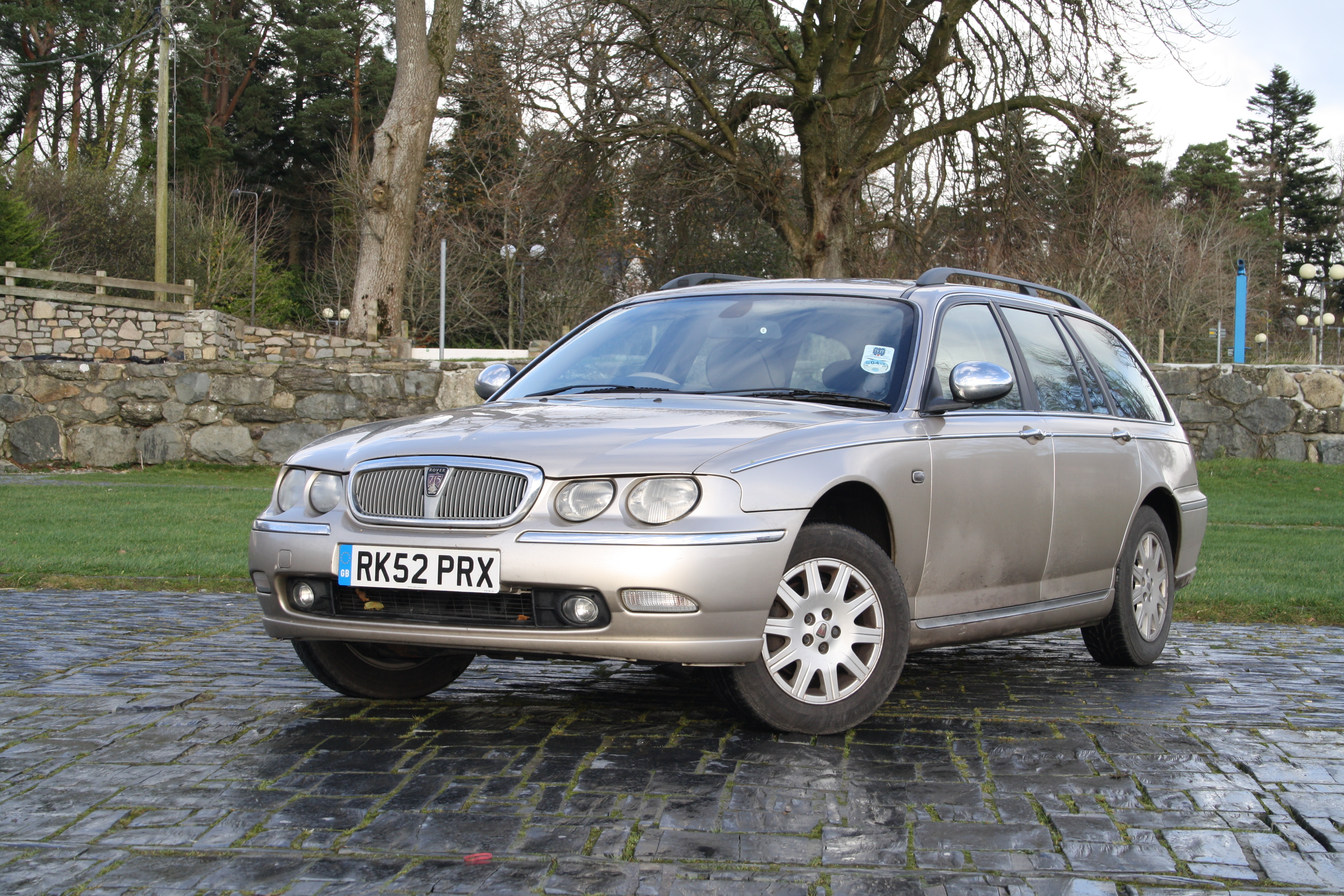
Rover 75 CDT Tourer. Top spec, pretty good condition bar some clutch/gearbox issues. Again, the perfect vehicle for the moment and it clocked up 1000 miles in a matter of weeks. Money was getting very tight though and as it needed work, it had to go. The BX’s welding was not going to pay for itself. So, a little deal was arranged for Minimad5 to donate some cold, hard cash and a Peugeot 309 to tempt the Rover to the North West.

I’m a sucker for basic motoring, so obviously I agreed to the deal, waving goodbye to electric everything, heated leather seats and turbocharged performance.

Peugeot - almost a Talbot Arizona

Back to the simple life! For the better? Peugeot 309 fitted the bill

So, 2011 ends with the 2CV, Mini, a different BX diesel estate and a Peugeot 309. Place your bets for which one has been sold/traded by the end of January… (this because my New Year’s Resolution will be to calm down a bit on the whole car buying/selling thing, which will obviously be broken ASAP!)

2011 has certainly been a colourful and action packed year on the fleet front, and believe it or not (my wife certainly doesn’t believe it!) I’m hoping that the fleet will settle down in 2012. Changing cars all the time is fun on the one hand, but stressful on the other.

Anyway, I shall take this opportunity to wish you a healthy dose of festive merriment and wish you all the best for 2012.
Rover 75 – what did it do wrong?

A month and a half. That’s how long the Rover lasted. Was it a disaster then? Well, no, it wasn’t. The Rover 75 remains a very good, and wrongly slated example of what the British CAN do with a bit of investment and some actual build quality.

Rover estate diesel

Bye Bye Rover. Not my cup of tea!

The problem is though, the 75 is just too modern. It’s a right royal pain to work on, too many jobs are not DIY friendly and the overall driving experience is too modern too. I guess I just love older cars. Stuff from the 1980s and early 1990s represents absolute perfection to me. By this time, the car had advanced to the level that they were staggeringly competent, but they also were not overly complicated. That’s why the Peugeot 309 is the perfect replacement. No frills perhaps, but who really needs them? After all, electric windows require the ignition to be on (in most cases) which manual windows don’t. Hydraulic clutches are needlessly complicated. A cable is fine. Being able to heat and adjust the seats electrically might be nice, but think of the weight and wiring it adds.

Then there’s visibility. The Rover 75 feels like driving around in a 1970s supercar. The windscreen is like an arrowslit, but that’s generous compared to the view rearwards. Your neck muscles develop a good workout due to the amount of movement required to see around the enormous A posts. It had reverse parking sensors fitted – and it did need them!

Naturally, the driving experience is entirely devoid of sensation. That’s great if you’ve got 500 miles to do in 2 days, which I did, but those sort of trips are not a frequent thing. It’s a trade-off for sure. Relaxing or involving? You can rarely have both (I still reckon the Citroen BX is one of few cars to manage it).

Running a Rover can be horrendously expensive too. I must admit to not feeling that enamoured by the car when one owner explained how he’d spent about £1800 on his in a matter of months, replacing both the engine and the automatic gearbox! Sorry, but I can’t justify that sort of expenditure on a car, especially one I’m unlikely to keep long enough to get my money’s worth out of.

The Peugeot on the other hand is proving much more likeable. I’ve already had another tinkering session with it and when you can actually get at stuff, it really is a pleasure.

Yet another new motor – Peugeot 309

It’s been a good couple of months since I last bought a car, so thought it was about time I had a change-around. The Rover 75 joined the fleet with perfect timing, proving just the tool for trips to Croydon, Sussex and Birmingham over the space of a few weeks. However, it needed a few things seeing to and risked becoming yet another project – the two Citroens are more than keeping me busy (and skint!) on that front.

Almost a Talbot

Ian's latest motor is simply delightful. Or is that simple and delightful? Maybe both

A deal was arrange that saw the Rover being swapped for a Peugeot 309 and some cash – the latter being handy as the BX is going in for Stage 1 of welding soon. The Peugeot is everything I love about older cars, especially compared to the Rover. Open the bonnet and you can actually see an engine and gearbox and from the driver’s seat, you can actually see out! If you suffer from claustrophobia, modern cars must be a nightmare.

The Peugeot has a 1254cc Simca-derived engine that is low on technology and high on torque. It even retains overhead valve gear, just like the Mini and the 2CV. None of this timing belt rubbish! No multivalve head either, and that means that the engine pulls well from low revs in just the way that modern petrol engines (and even some diesels!) don’t. Despite the low-tech engine, there is a five-speed gearbox. That’s about it on the toy count though. Keep-fit windows and steering and arm-stretch door locking and mirror adjustment will hopefully prove that there’s simply less to go wrong, while dashboard switches are restricted to just the hazard lights, heated rear window and rear fog light. Brilliant. I much prefer the low-tech life!

Yes, ok, perhaps on such a chilly day, I was missing the Rover’s heated leather seats, but I had a sunroof now, and it’s a clever one. A hidden switch operates a vacuum when the roof is closed, sucking it down to the seal to ensure a water-tight (and pretty air-tight too) fit. It uses the vacuum built up by the brake servo. Clever stuff – AND it still works!

Progress is quite swift too.  While the acceleration is boosted by much lower gearing than the Rover – 60mph has gone up from just under 2000rpm to getting on for 3000 – the engine is undeniably lusty for its size. Low weight helps. No toys keep things from getting heavy. That’s just as well as the unassisted steering was a bit of a shock to the system. After so long driving cars with PAS (I don’t include the Mini and 2CV in this as they’re proper old in design terms!), it’s unusual to once again be able to feel what the front wheels are doing, and feel the steering load up as cornering speeds increase. It’s good though. Much more reassuring. It stops you going too far with chucking it around, as you have a much better feel for when you’re going a bit too quickly – though the bodyroll alarms you as well. The ride is firm, but very composed. It doesn’t crash over bumps, but it’s also good in the handling department – typical French then really. It was also nice that it wasn’t a rattling nightmare of cheap interior parts. The Mk1 was, but this one feels nicely together, especially given the fact that it has clocked up over 120,000 miles.

There are some minor issues to sort out – the ignition timing needs checking, the speedometer cable needs connected up and the wiper blades are horribly smeary – but as a winter hack, it couldn’t be more ideal.

Some history for those who haven’t fallen asleep yet. The 309 wasn’t meant to be a Peugeot at all – which is why it doesn’t fit into the -05 numbering of the time (ie 205, 305, 405 etc). It was actually developed as a replacement for the Talbot Horizon, and was known as the Arizona during development. That’s why this one has a Simca engine as Simca was absorbed into Chrysler Europe, which Peugeot took over (applying the Talbot badge to what had then become Chryslers). At almost the last minute, Peugeot decided to kill off the Talbot marque and decided to badge the Arizona as a Peugeot. 309 was chosen as all the other -05 codes had already been taken. It will be interesting to see what Peugeot replace the 308 with…

The love that left me

Some years ago, I had more money than sense. Now I have little of either. Back then, I worked in IT Support for a large utility company, enjoying the highest earnings of my life up to that point. Then I turned 25. I decided to celebrate this momentous occasion by hiring an MG RV8 for a day. We clocked up 200 miles hurtling around The Cotswolds, enjoying the acceleration and wonderful noise as we exited every village. Other than the engine, the RV8 was nothing short of a massive disappointment. The interior was a horrible mix of controls pinched from such wonderful machines as the Rover 100 and LDV Pilot, the suspension seemed to have been forgotten completely and bends became terrifying as it skitted about like a tea tray skidding down a cobbled street. I digress.

Rover P6B

Ah, the car that broke my heart. What a machine!

It was my first encounter with Rover’s V8 and it was soon clear that like an addict, I needed another hit. The choice of what to go for was enormous. The engine has been fitted to so many cars. Here’s a few for you. Rover P5, P6, SD1, Land Rover, Range Rover, Land Rover Discovery, Land Rover Forward Control 101″, Ginetta G32, TVR 350, Griffith and Chimaera, Freight-Rover van, MGB, MG RV8, Triumph TR8, Marcos (various), Morgan Plus 8 and even, in Australia, the Leyland Terrier truck. It’s a bit of a whore is that engine.

I rushed out and found a Rover 3500 for sale, more commonly known as the Rover P6B. It was a car I’d long had a hankering for. It mixes British engineering, but with a large dose of Gallic flare – for the base unit construction is very similar to the Citroen DS, the big giveaway being the similar treatment at the top of the windscreen. So won over was I by the wuffle of that V8 (the Rover P6 DID get the engine it deserved, unlike the Citroen), the stunning Tobacco Leaf paintwork and the fact that it was a rare pre-facelift model. I ignored the rotten sills as a mere technicality.

Driving home in my new machine was certainly quite an experience. It was the oldest car I’d ever owned and driven up to that point. It didn’t have power steering, but that seemed no great loss as the large wheel seemed to do a pretty good job of making the thing go where I wanted it to. It was also my first automatic though, and while I had driven autos before, the old Borg Warner 35 gearbox used in the P6 is a clunky old devil and it took time to work out how to get the best out of it. The brakes were superb though – all-round discs were standard on the P6 even from launch in 1963.

I think I’d utterly fallen under its spell by the time I got back home. The cosseting ride and surprisingly nimble handling just left me to savour that V8 as it effortlessly bore me along. I did discover that the kickdown didn’t work, but that would probably end up saving me a small fortune. With so much torque on offer, who needed it? I could always snick the gearlever down into 2 if I fancied a bit of full-blooded acceleration, with the V8 screaming magnificently. It turned out I did fancy this, quite often! Especially as I accelerated out of Lower Boddington in Northamptonshire. I apologise to the residents. Not my neighbour at the time though, he loved it!

I can’t imagine there were many IT professionals (I use the term very loosely in my case…) who were sauntering around in a 24-year old, petrol-slurping executive car, but I was, and I loved it. Sadly, I was becoming aware that the sills were going to need attention before too long. The car went off for some expensive surgery. The bill for £1400 almost floored me, but around this time, I got a job that paid almost twice as well, so all was well. Wasn’t it?

Not really. Despite a wonderful random trip to Wales just after Christmas (not very far from where we live now, and we passed through our current village!) there was no denying that 20mpg was getting a bit tiring, despite my new income. Maintenance bills were making me weep too. Keeping a P6 in fine fettle gets very painful very quickly if you can’t do the work yourself, and I couldn’t then. In the end, I sold her on Ebay for a few hundred pounds less than I paid for her, after throwing a LOT of money at her in the time I owned her.

I still miss that car very much now. Would I forgive TBH 249J (or Tabatha) and take her back? I suspect my wife hopes that opportunity never arises…

2CV, Peugeot, Rover

The fleet was certainly varied in 2003! Only the 2CV survives various fleet culls...

Priorities

Apologies for the lack of recent posts. We’ve been doing a lot of work on the house lately, which has left time for tinkering and driving very restricted.

There was also the small matter of attending the NEC Classic Motor Show. I’ll try and get a report completed soon, but suffice it to say that with a first estimate of attendance in the region of 47,000 and with over 1200 classics on display, it’s a show that you really need to attend. Highlights for me included the Yugo Club and a rather pretty Simca 1100 that was batting its eyelashes at me all weekend.

The drive there and back was conducted in the Rover 75, and sadly all is not well. The clutch has taken to occasional malfunction, making traffic queues interesting. Also, a headlight has gone and it’s rather left me feeling as disillusioned with modern cars as I was before the Rover joined the fleet.

Things are just so difficult to do, with no good reason. Changing a headlight bulb requires accessing a small panel in the wheelarch and rooting around, feeling your way. Naturally I haven’t even attempted this yet, despite the on-board computer reminding me constantly that there’s a bulb out. There are other flaws too. The thermostat is damned near impossible to access without removing much of the front end, and even then it’s better to access it from underneath. The clutch master cylinder is ‘conveniently’ mounted near the pedals – never an easy place to access – while the slave cylinder is even worse – inside the gearbox bellhousing. Genius!

So sod it. The BX and the 2Cv are the priorities on the fleet and I can’t justify spending money on the Rover in preference. It’s up for sale and I’ll either stick with the two Citroens, or just buy a wreck for bombing around in. Project £2000 has hit the buffers.

Rover 75 – impressions

I’ve owned the Rover for just over a week, and a trip to south England has allowed me to clock up 531 miles in two days. That’s a total of about 12 hours at the wheel – more than enough time to get a feel for what is the first 21st century car that I’ve ever bought.

Classy Rover interior

Not a bad place to be, which is fortunate!

Generally, impressions are really rather good. They should be. With BMW’s money behind it, Rover engineers had the funds to do a decent job – something they’d not really enjoyed since the Rover P6 was launched over 30 years before the 75. Sure, there are one or two annoying rattles, but wafting along in the Rover is pretty close to bliss. It’s quiet, smooth and with the engine chugging along at a mere 2300rpm at motorway speeds, incredibly relaxing. Economy is good too – despite much time spent at an actual 70mph, and a bout of city driving in Croydon, the Rover returned 49mpg overall. That’s really not bad for such a large car – I can expect the BX to deliver that, and the 2CV if I’m gentle, but they’re much, much lighter and far noisier…

One feature I’m already enjoying is the automatic wipers. A positive boon for someone who lives in Wales and sure enough, our trip involved pretty much every strength of rain from drizzle to monsoon. Being able to adjust the heater output temperature separately for each side of the car has its advantages too…

In terms of handling, the Rover is very much a car that is competent but not corner-focussed. I was able to chuck it around a bit on some Welsh roads on the way back home – after I’d had plenty of time at the wheel to get a feel for the thing – but it doesn’t enjoy being driven quickly like that, and I didn’t really enjoy pushing it. That’s ok – the 2CV delivers plenty of cornering thrills! The ride comfort really is rather good though, and the seats are good too.

There are some issues to be resolved, one of the worst of which is badly juddering brakes. I shall look to replace the discs as soon as possible. This may have proved hairy for passengers as I was reluctant to brake too hard for bends. Sadly, crunchy third gear synchromesh meant my usual high standards of chauffer-ship were somewhat lacking as I attempted to operate all three pedals at once! By the return trip, I’d got the knack of double-declutching about right. Bye bye crunching!

I have discovered a hugely enthusiastic following for the 75 though, and this makes ownership much more bearable. It’s incredible just how much people do on their own 75s – the hype about electronics stopping DIY work is a definite myth!

The £2000 project

In 2010, I realised that I needed to try and stop wasting so much money on cars. I’d got into a bit of a cycle of buying crap cars, then spending loads of money on it before selling it for a pittance. An Alfa Romeo 164 V6 Lusso was a highlight – I only lost £75 on that one – but a Bond Equipe saved from the Scrappage scheme ended up losing me over £1000, while a Rover P6 stood me for a similar amount. I was doing it all wrong!

So, I saved up some cash – yes, me, doing actual saving stuff. Rare, I know. Eventually, I

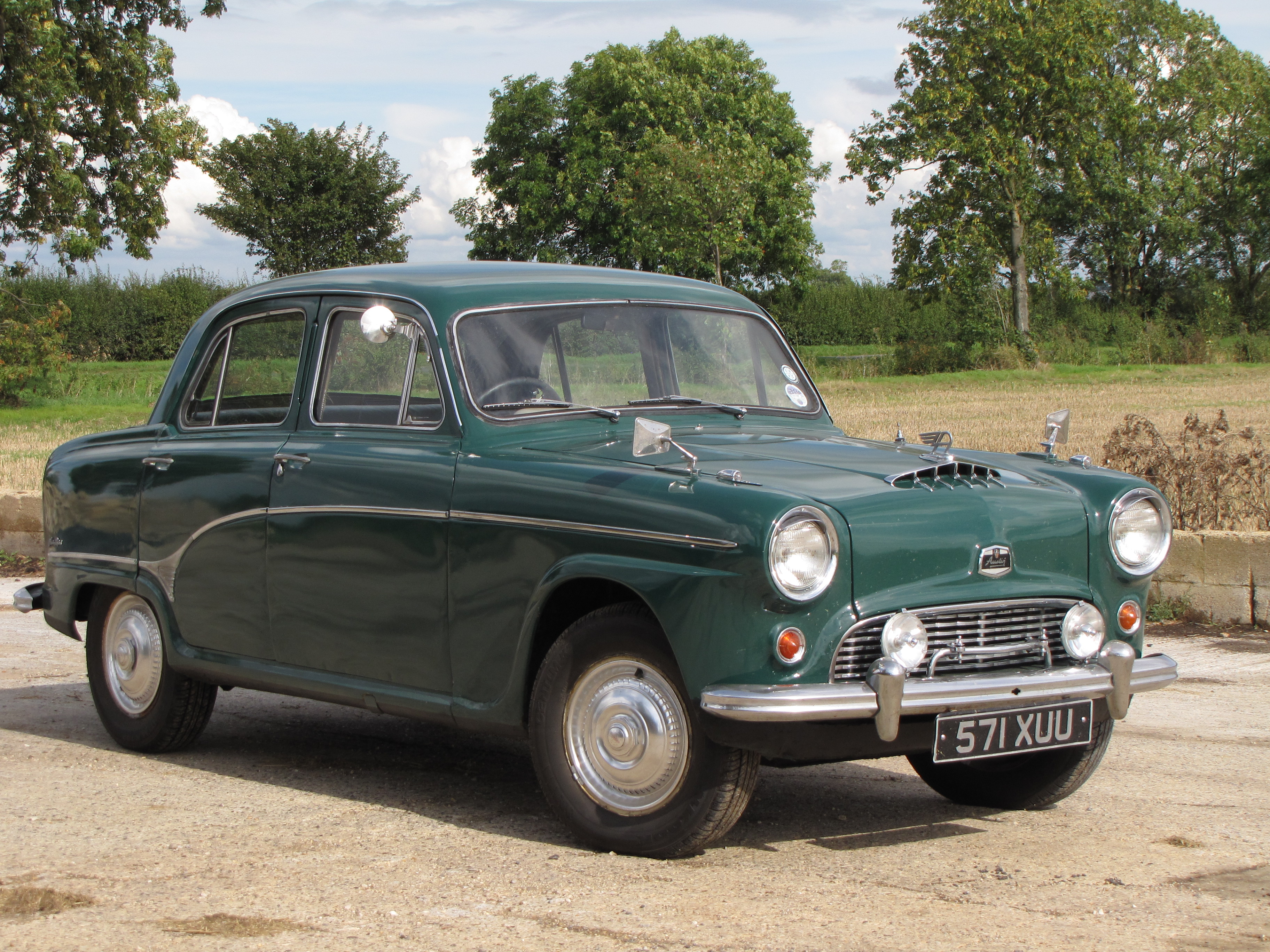
raised just over £2000 and spent £2200 on a rather delicious 1955 Austin A90 Westminster.

1955 Austin Westminster
£2200 spent on this fabulous machine. Could Ian avoid a loss?

It remains the oldest car I’ve ever owned, eclipsing the 1968 Bond Equipe GT4S, and 1966 Rover P6 2000 money pit. I loved the thundering Big Healey soundtrack from the Westminster’s meaty six-cylinder engine, its fine looks and the wonderful two-tone leather upholstery. Apart from a quick service, which cost very little in parts and materials, I did nothing to it at all and enjoyed a summer of column gearchanges and ponderous handling.

My plan to try and raise a profit hit a snag when my wife and I decided to quit our jobs and move to Wales. We owned five vehicles at the time and the sheer logistics of moving them all 200 miles away was a problem. The Westy would have to go, and quickly! So, it found itself shoved into a sale at Anglia Car Auctions while we drove west. It sold for £2050, which at least meant that I hadn’t spent or lost hundreds of pounds for once! £150 (plus another £100 for servicing costs) didn’t seem bad outlay for a summer of enjoyable motoring.

With the house move completed, I managed to sit on my £2050 for a surprisingly long time. Well, two months. Then I splurged the cash on a Land Rover 90 V8 County Station Wagon as snow meant I felt we needed a 4×4. Well, it seemed like a good excuse to fulfill a childhood wish of a V8 Landy…

Land Rover 90 V8 County Station Wagon
A bit different to a Westminster! Ian’s Winter 4×4

Amazingly, I managed to pay only £1600 for it in the depths of winter. Somehow it avoided the usual seasonal force that ramps up 4×4 values in the middle of winter. I collected it on a snowy evening near Birmingham and my first drive back home was exciting to say the least! It was some miles before I dared to really try the brakes…

Again, I carried out a basic service but it didn’t need a lot else. I had good fun off-road in it then sold it on Ebay for £2350. That went a long way to making up for 15mpg! It went to a trader who asked £3995, proving just how undervalued it was when I bought it. A rare good purchase by me!

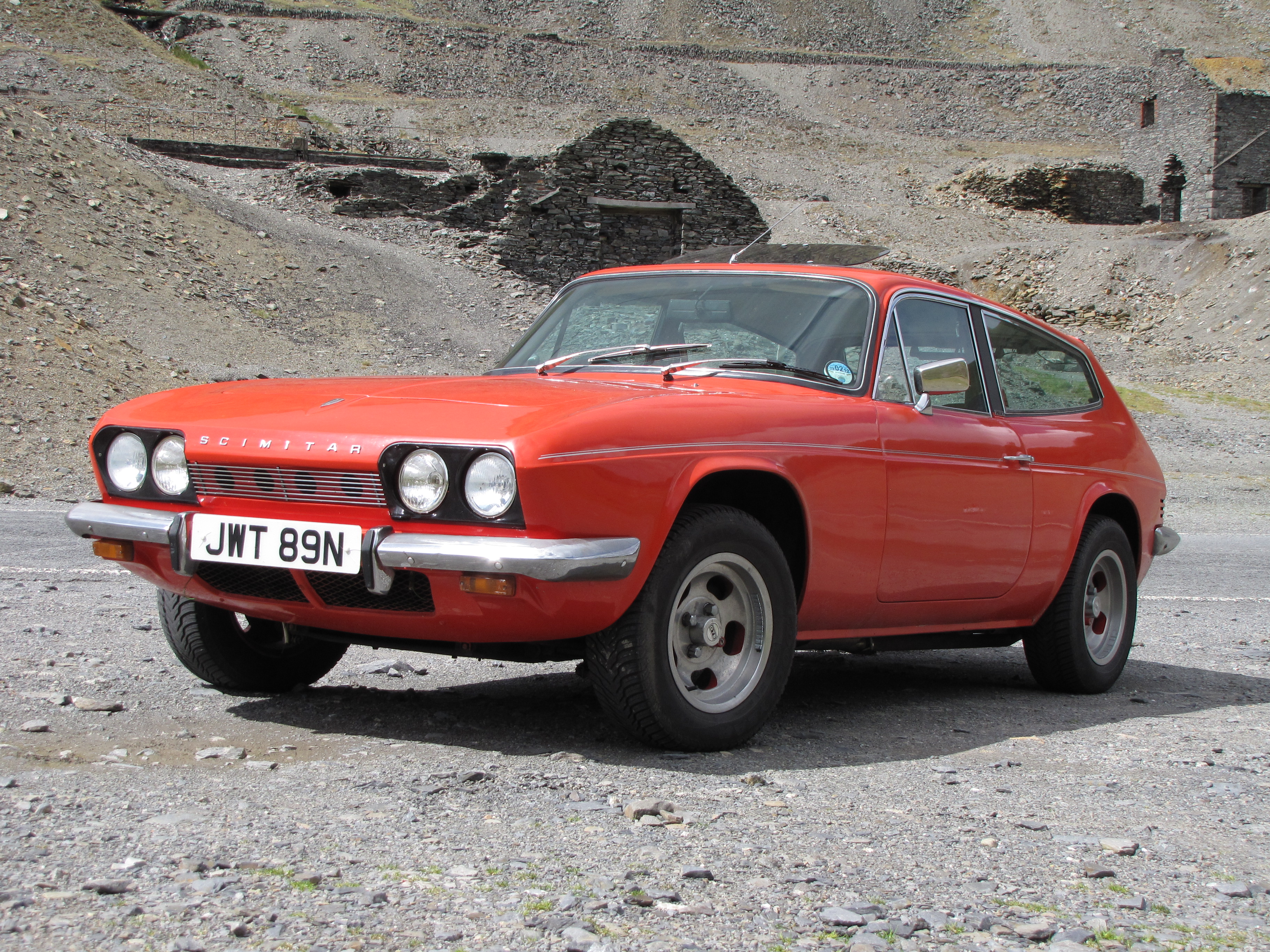
I got rather carried away at this stage I must admit. I’d bought a childhood dream car and not only enjoyed it, but managed to turn in a profit. I decided to grab another slice of boyhood dreamland in the form of a Reliant Scimitar GTE, after a lot of careful thought. I’d never driven a Scimitar before, but surely they’re actually good? I assumed so and bought an enthusiast-owned one for £1650.

Scimitar

The condition was first rate. How on earth was it that a sports car in such good condition, with such an incredible exhaust note could be bought so cheaply? Ok, so the quality wasn’t exactly superb, but it handled tidily and went very well, yet was also very relaxing on a long run thanks to tall gearing and an overdrive.

It wasn’t the dream machine for me though. I found the ride too hard, the electrics too flaky and the steering far too heavy thanks to wider-than-standard tyres. It soon found itself on the market once more and sold for £1700. That sounds like a profit, but I’d put six months of tax on it, so I was actually quids down. Frustratingly, it missed out on free road tax by only two years. Still, I’d managed to avoid yet another financial disaster. I was getting cocky now…

So it was that I bought a Range Rover with no MOT for £1000. Oh, and it had the ‘crap’ VM diesel engine too. Had I lost the plot?

Range Rover off-road

Surely this was a disaster waiting to happen?

Well, not entirely. I reasoned that the Scimitar sale left me with about £650 as a repair fund, and I reasoned that surely an MOT’d Rangie would get £1500? I reckoned it stood a good chance of getting a pass and, with a pair of tyres for a decent £150, it did so. Success! I’m getting good now!

Well, not entirely. You see, despite picking up on a heater blower issue when I test drove the car, I dismissed it as nothing much to worry about. Foolish mistake and after a full two days of painfully stripping out the dashboard, it became apparent that the wiring was a mess and the heater unit in need of replacement. Balls. Not a nice job.

While pondering what to do, I used the Range Rover to drag home my BX project, and also enjoyed its incredible off-road ability. If anything, I found it better and much nicer to drive off-road than the Land Rover. I will have to buy another one at some point because they are ace.

The problems kept coming though, and I managed to spend over £200 having new rear brake discs fitted and trying to get to the bottom of an ABS fault. I failed and the Range Rover was threatening to absorb too much of the ‘pot.’ With winter looming and problems developing, it was time to say goodbye.

And then I did something odd. I’d earmarked this £2000 pot for my ‘toy’ on the fleet. However, times had changed. I didn’t have a sensible car on the fleet any longer and while I absolutely love my Citroen 2CV, there are times when I do hanker for a bit of peace and quiet on the move. My Mk1 Citroen BX will hopefully take over the ‘sensible’ duties, but it needs a lot of work first. Some of the ‘project £2000’ cash will be taken up by the BX restoration. I needed a sensible car for the winter though and so I swapped the Range Rover for something sensible. Ish. That’s my Rover 75 which you can read about in my previous Blog. Yes, the Range Rover probably owed me getting on for £1500 but then I reckon there’s a fair chance of getting near that if I sold the 75 tomorrow. Which I don’t plan to do!

So, the project continues and – touch wood – I seem to be maintaining my £2000 fairly well. That’s impressive given that a complete lifestyle change has seen my wife and I cut our incomings by about two thirds in the past year. Outgoings have had to be cut too, and without the £2000 I earmarked back in 2010, I simply couldn’t afford to ‘play’ cars as much as I have. It’s been an interesting experiment into classic car ownership. After all, classics don’t depreciate so if you buy well, it should be simple to buy and sell your way through the classic car market with no great loss, or maybe even making an actual profit (I don’t pretend I can manage that!). Like any financial transaction though, there’s always an element of danger! But then, that’s what makes it exciting. So much better than savings sitting in a bank…


Rover 75 – where others fear to tread

I love reputations. People get all sheep-like about cars at times and some very dumb theories abound. Believe the hype and you’d think that Volkswagens never break down (tell that to someone who’s six-speed gearbox has fallen to bits), any K-Series engined Rover is a headgasket failure waiting to happen and that an Alfa Romeo will only lead to heartache.

Today, I swapped one reputation for another. My Range Rover had the OMG SHYTE ENGINE VM turbo diesel. Believe what you read on forums and you’d think it is the worst engine ever built, only a matter of minutes from complete failure. Sure, having four separate cylinder heads can be a pain, but I thought the engine pulled really well, and never suffered any head gasket woes.

I swapped it for a Rover 75. These are seen as desperately uncool and only fit for grandads. Well, Grandad might well be on to something because the Rover 75 is great! Developed when BMW was in charge of Rover, the no-expense attitude meant that here was a Rover that WAS nailed together properly, and which proves very reliable in use. Yes, there are issues with the K-Series engines, which are very likely to blow head gaskets, but the BMW diesel is the natural choice. Ironically, this engine is actually more reliable in the Rover than it was in BMW’s own 3-Series. In the Beemer, it proved very problematic with all sorts of induction woes. So, BMWs aren’t always problem free either. Another myth busted.

Rover tourer

Ian's bucked the trend again, with good reason!

The drive home in my new motor was very pleasant indeed. Don’t get me wrong, I was quite sad to wave goodbye to the Range Rover. I had a lot of fun in that car and it proved very useful at times, such as when collecting my Citroen BX project. However, with a non-working heater, it wasn’t quite the ideal winter vehicle it first seemed.

Contrast that to the Rover, which has (almost working) air-conditioning, with different temperatures possible each side of the car. It also has gorgeous, heated leather seats, electrically operated and heated door mirrors and rain-sensitive wipers. I think that latter item will be especially useful in Wales!

Does it have any issues? Well, naturally, as is almost always the case with sub-£1000 ‘bangers,’ there are some faults. The not-cold air conditioning is one, the gearbox that crunches into third is another – I’m hoping gearbox oil will help here. The brakes feel slightly juddery too, so new discs may be in order fairly soon. I like it a lot though and hopefully it’ll prove to be an ideal winter vehicle. If I’m feeling flush, I might even consider some winter tyres…

Fickle ol’ me – Rangie gets the chop

So much for the stay of execution! The Range is in for the chop. I have to face facts and I just can’t sort out its minor issues when I’ve got several other automotive projects and a house that needs work too.

I will certainly miss it. Range Rovers are worthy of a lot more respect than they get. This is a vehicle that turned the world of off-roaders on its head. In 1970, Solihull ended up producing a vehicle that while comfortable on the road, could beat a Land Rover in the rough stuff. Worryingly, I reckon that unless I can get another one fairly soon, prices will accelerate out of my price range too. At least I can say I owned one though, and it’s opened up some new avenues from a writing point of view as well – look forward to two very different features on the Range Rover appearing in 4×4 Magazine and the occasional Land Rover World spin-off Range Rover World.

I’m pleased that on a rare day of sunshine, I managed to get some lovely photos of it too. This one really will be a reluctant sale.

A stay of execution?

A week ago, I was quite prepared to wave goodbye to the Range Rover.  It’s appalling interior quality, electrical faults and non-working heater made it seem like a vehicle perfect to get rid of.

Range Rover off road

The Strata Florida bombhole provides plenty of entertainment

Now, I’m not so sure. After a hugely enjoyable day off-roading with a friend from the West Wales Laningclub, the Rangie is definitely back in the good books.

After all, the Range Rover is one of the most iconic vehicles ever built, with astonishing off-road ability and entirely acceptable road manners. It is practical, hardy (interior plastics aside) and thanks to the ‘dreadful’ Italian diesel engine, not too bad on fuel.

Yes, it has its faults, but then so do every one of the other cars on the fleet. So, it may be that the Range Rover stays around a bit longer. Well, unless I get tempted by the higher prices paid for 4x4s as winter approaches…