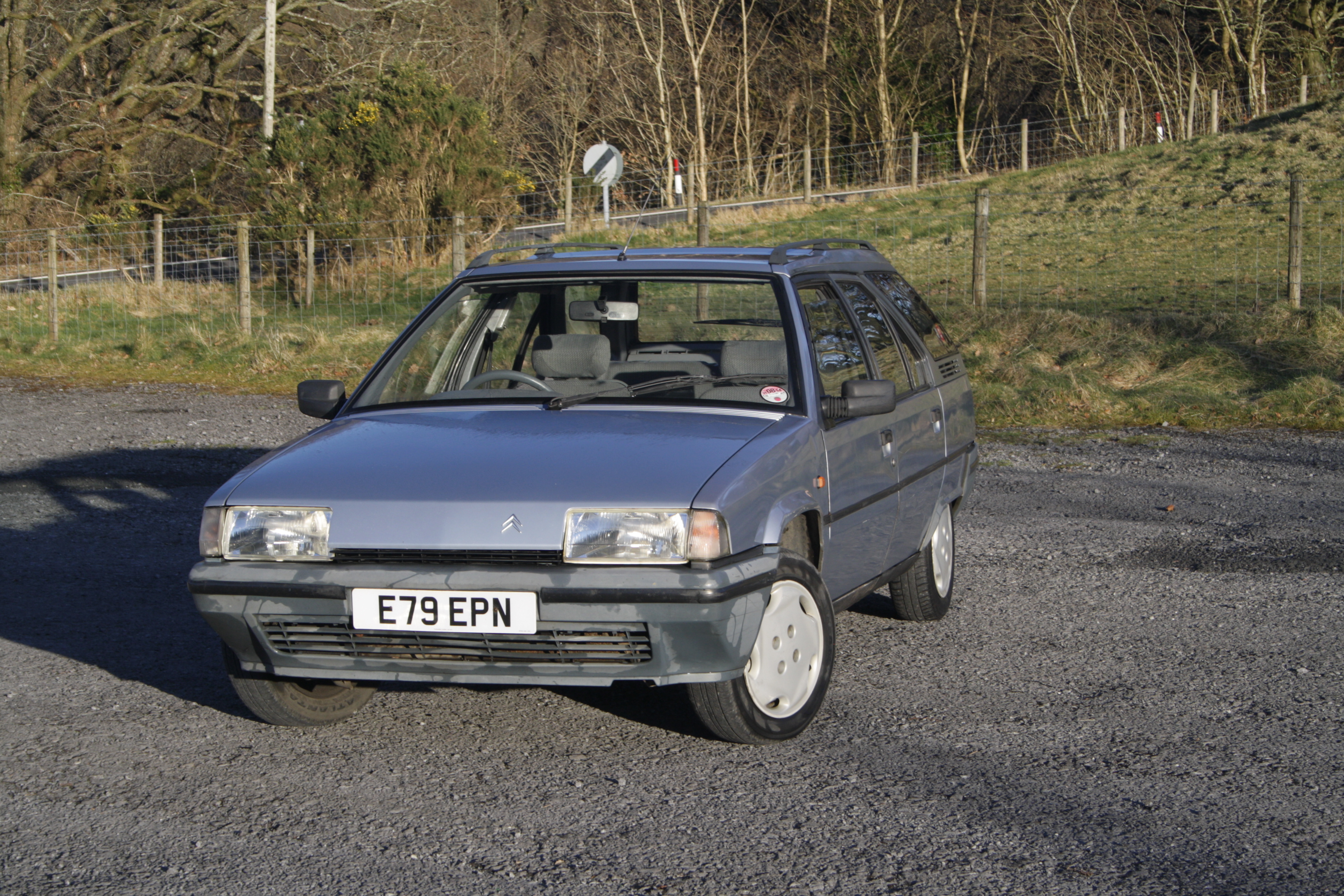
Is it possible to beat corrosion?

I’m getting a bit fed up with the fact that all of my cars are rusting. I nearly always buy cheap, so it’s not surprising that most of my automotive purchases have a dose of tin worm. In theory, buying more modern machinery would give a much better chance of beating corrosion, but I don’t like modern cars. The Sirion is quite modern enough. And it’s still rusting.

So, quite naturally, I’ve been wondering whether it is possible to own a vehicle that is rust proof. In theory, the answer is yes. All that’s necessary is a galvanised chassis and plastic bodywork. This must be the perfect vehicle then!

Reliant Rialto

Rustproof! If a bit short of wheels

Yes, the Reliant Rialto. A mild re-working of the legendary Robin. An important change was the move to a galvanised chassis. This protected the steel chassis from rust, while there were no corrosion worries with the glassfibre body. I even like the looks, though its less cute than its predecessor. I’ve not driven a Rialto, but I have driven a Robin. I drove it quite hard too. They’re far more stable than you might think, but I’m still not sure I’d ever feel entirely comfortable in one. I’ve done some very silly things with the 2CV, and it has always remained the right way up. The Reliant does have limits, and I’d be scared of one day finding them. There’s also the annoyance that stems from having the engine effectively beneath the windscreen. Some of the engine is accessed from outside, some inside. Or maybe that’s an advantage when it’s raining.

I’ll leave the Rialto on the ‘possible’ list. Galvanising became more and more popular during the 1980s. Porsche became major advocates of it, on the 911, 928 and 944. Problem is, I’ve seen enough 944s with utterly rotten sills to know it isn’t always foolproof. Besides, I can’t afford a Porsche. Audi also started to use it a great deal, but Audis are boring – unless they’re very quick, in which case they’re expensive.

No, I think the combination of plastic and galvo chassis is the way forward. Problem is, most cars were monocoque by the 1980s – apart from the odd anachronism like the 2CV and heavy 4x4s. There is one car that strikes me as ideal however. It’s French, which is always a good thing, has a proper number of wheels, and offers massive practicality.

Espace II

The Renault Espace, second generation

Yes, the Matra-built Renault Espace. I’d love an early one, but they’ve all pretty much disappeared. It is still possible to find second generation ones from time to time though. I’m not sure I’d want a later one, as complexity started to compromise a great design. The Espace is a true pioneer though. Sure, it wasn’t the first MPV, but it was the first to make real sense in Europe. Super-flexible seating allowed to to switch easily from people carrier to van, while its overall footprint was the same as a large estate. It wasn’t enormous. It was a van-sized car, rather than a van trying to be a car. It was good to drive and wonderfully quirky. That’ll be Matras input. Matra does quirky very nicely. The Espace was originally designed by Matra to tempt Talbot, but that company had its own issues. It does explain why the first Espaces looked more Talbot than Renault though.

After the third generation of Espace, Renault killed off Matra quite cruelly. The fourth-generation Espace was built in steel by Renault itself. Renault gave Matra the ‘compensation’ of building the Avantime. Which was a complete disaster, compounded by Renault creating an in-house rival in the form of the Vel Satis! Karma got its way though, and Renault forgot how to make diesel engines and almost went bankrupt.

I digress. I would very much like an Espace. It would have to replace the BX though. I think it’s probably a sacrifice worth making though. I can’t keep using BXs as cheap daily transport, as they’re no longer up to it. They rot too readily, and when they go, they are not at all easy to repair – especially if the rear subframe mountings go. Would I trade some quirk-factor for a rust proof vehicle? Yes. I think I would.

Citroen 2CV – rust-busting

If I make the mistake of looking at my 2CV as an entire vehicle, and adding up how many hours of work the body needs to make it nice again, I get very depressed. So, I’ve tried to stop doing that. Instead, I decided to get one small bit of rot sorted out before the imminent MOT. Despite the fact that I know well enough that rot-chasing can quickly get out of hand, I was still surprised at the work we ended up doing.

I say we, I mostly mean my mate Dave. I helped dismantle, paint and reassemble but he did all the difficult stuff. Dismantling the rear corner was the first job, so the rear suspension arm was swiftly removed and we could get a better feel for the quick plating job that was needed.

Corrosion

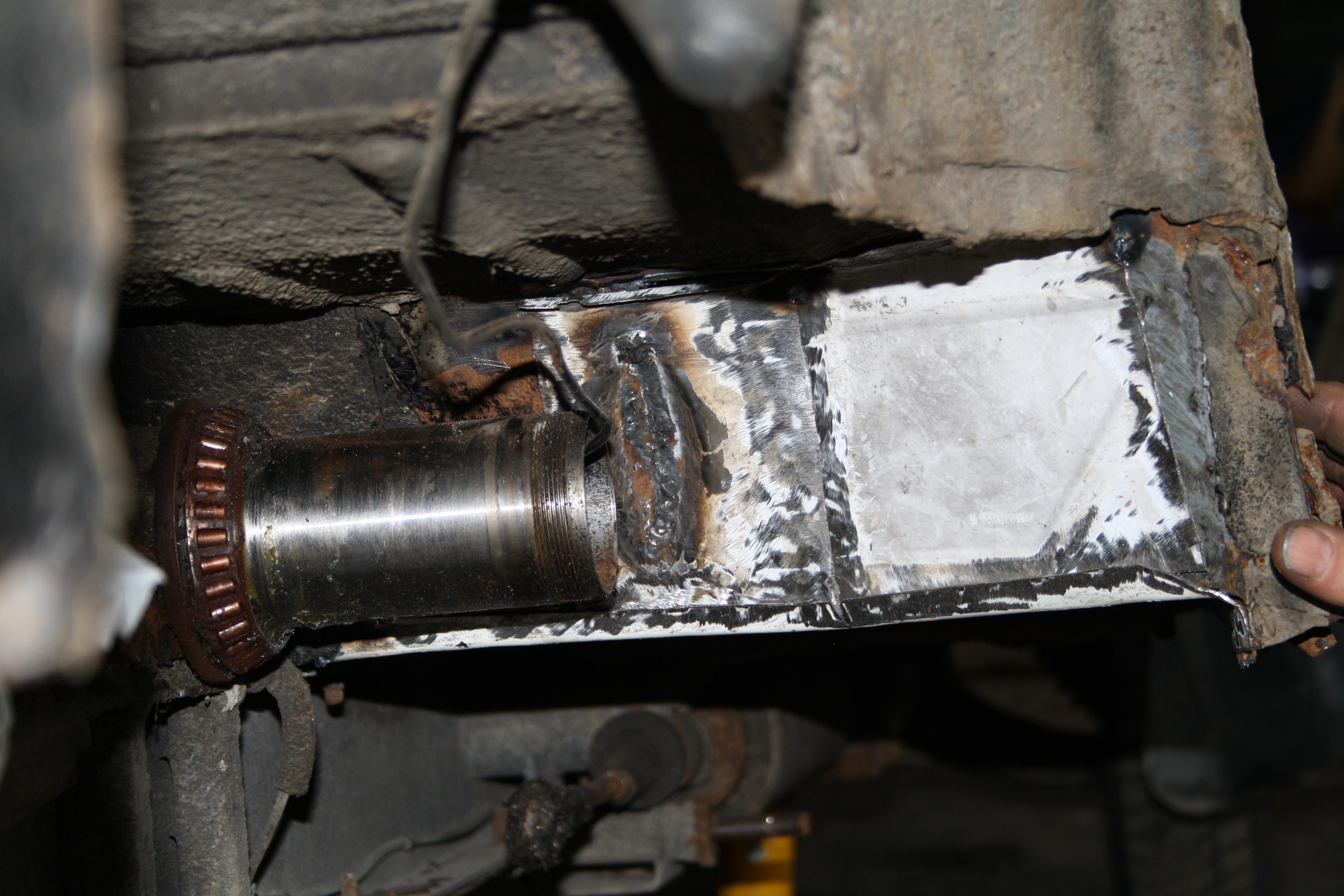
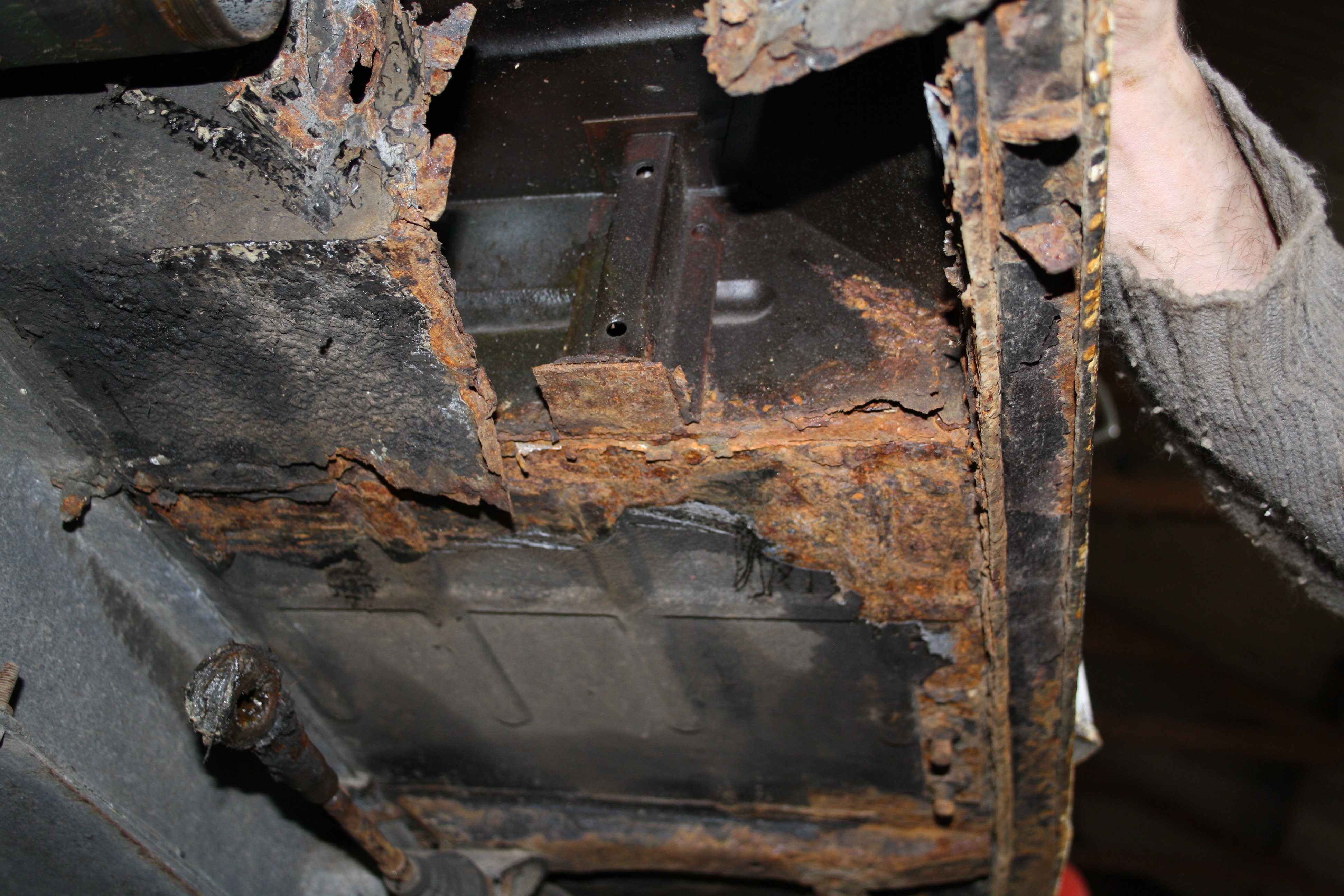
Under body rot – the ‘before’ shot

It’s never good when the floor appears to be hanging down. Naturally, once we started hacking back to good metal, we found more metalwork was needed.

Inside the rear seat box was ok. Around it less so

Inside the rear seat box was ok. Around it less so

The seat box cavity is revealed. Much more metal needed to be removed though, including a fair chunk of the rear footwell. Time for Dave to get busy. Lacking proper repair sections, Dave carefully fabricated new items out of an old washing machine. Knew we’d find a use for it one day. In the meantime, I accidentally pushed my thumb through the C post.

repair section

Washing machine sections even the correct colour!

As you can see, Dave had to chase some rot up into the seat box itself. These are the repairs before they have been dressed. Note also the hole in the base of the C post, due to my thumb. With corrosion that close to the seat belt mount, I was glad to have spotted it in truth. New sections were carefully constructed for the underside too, with Dave even fabricating a ‘dent’ in one panel to clear the suspension arm and mimic the original panel.

Carefully fabricated to clear suspension. Not yet welded in

Carefully fabricated to clear suspension. Not yet welded in

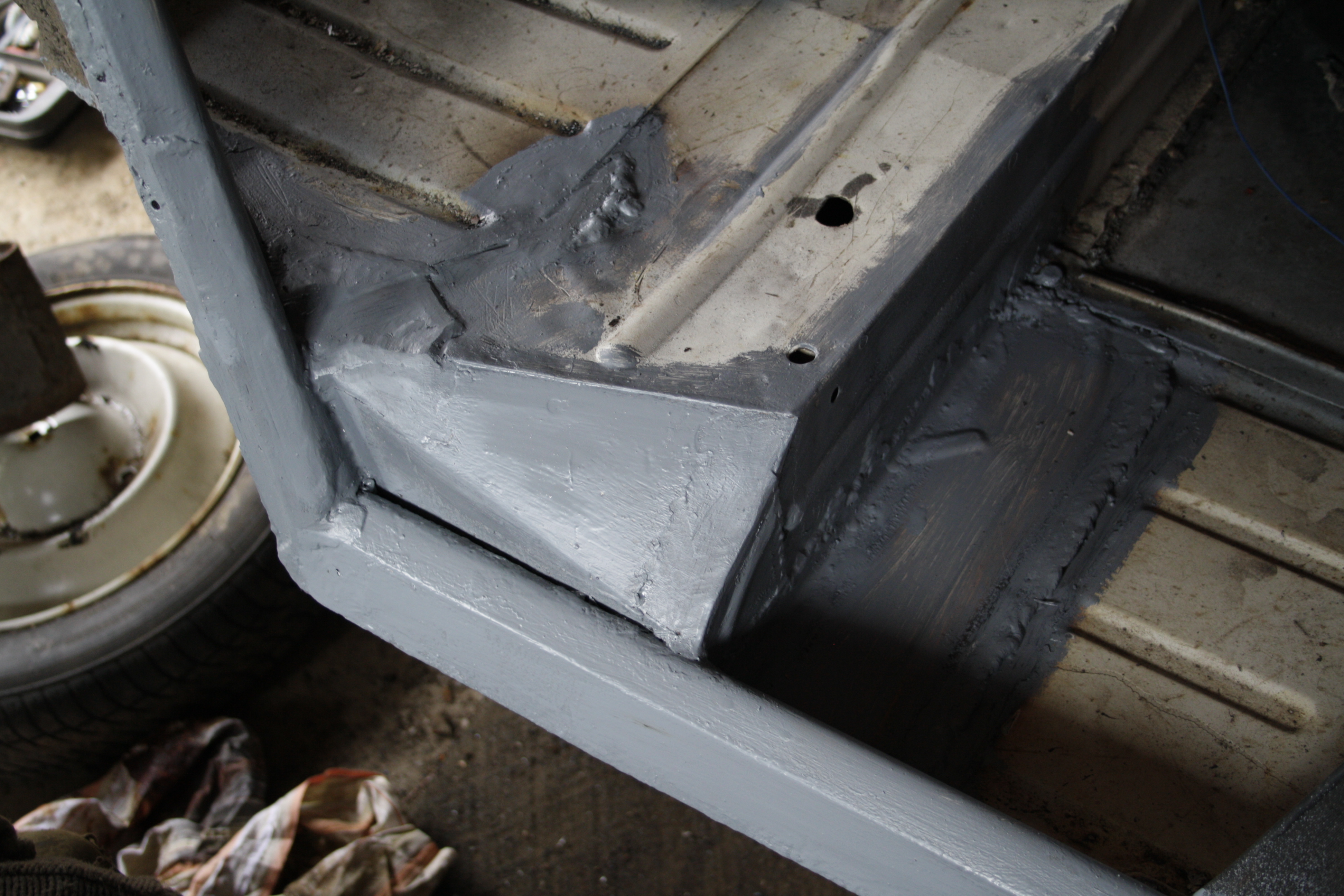
After two days of hard graft, Dave smoothed down the welds, though I wasn’t interested in a ‘factory’ finish. I got the zinc-rich primer out and proceeded to paste it all over the place – including areas we hadn’t touched.

Zinc-rich primered, though a touch of filler would be nice

Zinc-rich primered, though a touch of filler would be nice

I personally don’t mind repairs you can see. With enough time, I think Dave would prefer to make these things invisible, but I like repairs that an MOT tester can see. Hopefully it inspires confidence! I do need to get hold of some paint, but budgetary constraints mean that’s unlikely for a while. Elly is currently in the garage hiding from the rain, but here’s what she looks like at the moment.

rusty 2cv

Elly’s turning grey in her old age

Now I’ve just got the small matter of getting her through an MOT test. I’d better grease those kingpins!

2CV – the battle against corrosion

Today marked the start of my latest battle against corrosion with my 2CV. First, a quick history trip.

I bought my 2CV in the summer of 2000 for £450. It was largely solid – or so I though – but the chassis was going to need work. A bit of patching kept it going for two years. A full resto began in 2002. That saw the old chassis thrown away, and a galvanised replacement fitted. The bodyshell received new floors, lower bulkhead and sills, while the boot floot was patched and one seat belt mounting in the rear replaced. Elly returned to the road in 2003, looking much the same as when she’d left it. All the external panels were the same!

2CV restoration

Elly with no clothes on, 2002

In late 2005, the second stage began. The body was stripped and all panels refurbished before a full respray. A new complete windscreen panel was fitted as the old one had rotted out at the top. This work was completed in early 2006, which we celebrated by driving all the way to a quaint town in Wales called Aberystwyth, not thinking we’d live near there a few years later!

I thought I’d banished the rot, but I was wrong. It’s very hard to stop steel corroding. After a few years, new sills were needed again. The replacement sills had simply rotted from the inside out, despite wax protection. A year or so after that and the bonnet hinge had rotted out again. The paint cracked in several places all over the bodyshell, and gave rot the perfect reintroduction. Powder coated items suffered the same. One slight break in the surface and the metal was eaten out beneath the coating. I won’t waste my money on powder coating wheels or other items again. It doesn’t work.

As Elly sits now, the windscreen panel is rotten again, the front floors and lower bulkhead were replaced last year, the powder coated bumpers and headlamp bar are in a truly dreadful state and hints of corrosion can be seen almost anywhere you look. I was pretty horrified to look under the car fairly recently to discover the rear floor was starting to hang down in places though! Time for action.

Today, that action began. The 2CV was jacked up, the rear suspension shock absorber, tie rod and arm were removed, the fuel filler neck and rear wing were then removed and work could begin. A chisel and bare hands were enough to remove a fair bit of metalwork, with an angle grinder adding to the attack.

The 2CV loses flaws and floors, 2014

What I’m holding in my hand is largely held together by paint and sealant. The metal had crumbled readily and indeed, cutting back to good metal soon saw yet more bits of car landing on the floor of the workshop. A quick patch job turned into something much more involved. This surprised me not at all. I’ve been here before!

I’m finding it hard to know what I’m doing here. I’m asking my mate Dave to do a good job, while wondering just how much longer I can realistically keep this car going. To carry out a proper restoration of this already-butchered bodyshell is a big ask of even a skilled restorer. It gets harder and harder to restore it and not make it look an absolute mess. At the moment, I’m keeping my aims realistic. This welding session, which will hopefully conclude tomorrow, should hopefully see Elly through another MOT. With 195,400 miles on the clock, this pass will allow her to reach 200,000 miles – though I refuse to say how much of her will achieve that goal…

After that? It’s hard to say. The budget simply doesn’t exist for a full makeover, but I’m utterly failing to keep on top of the rot at the moment. If I’m not careful, she’ll just simply fall apart. Welding her up myself isn’t an option, as that in itself requires a fairly serious investment to start with, and development of the necessary skills. I’m as likely to take up welding as I am flower arranging. It’s just not me.

For now, it’s a case of ‘do what’s necessary’ and then focus on jobs I can do. Like replacing the headlamps, because one of them is full of water (well, it isn’t now, but the bowl is completely rotten), making sure the lights and brakes work and keeping the kingpins greased! Hopefully, she’ll be in for a test next week.

Old cars – essential skills

I’m no mechanic, which will surprise very few people, but I do know my way around an old car. That’s because it’s vital to understand what you drive.

Take the 2CV for instance. Unless you happen to break down very near one of the very few 2CV specialists, repairs can be traumatic. Most garages haven’t got a clue how they work, which means that you, as the driver, really need to. In over 100,000 miles and almost 14 years of ownership, the 2CV has needed the breakdown services only three times – and two of those were alternator failure in the first few years of ownership. Most recently, it needed a tow home after a cooling fan failed. If I’d had a spare and tools, I would have made it home just fine. Preparation is everything!

Roadside tinkering in Switzlerland

Roadside tinkering in Switzerland (ignore the legs)

That’s not to say that it has been entirely faultless. I’ve had many battles with electronic ignition, have had a points-assisted system get problematic, had the brake lights pack up and quite a few times had the idle jet in the carburettor get clogged, preventing it from ticking over. I also once had the alternator seize entirely.

But these faults could largely be cured/ignored roadside. When the 2CV refused to start due to a duff 123 electronic ignition unit, I discovered that it would still bump start happily. That said, on one occasion, it took ages to catch, then blew up the exhaust crossbox when it did. I had to drive home with a VERY loud exhaust. When the points-assisted ignition suffered a heat sink-related failure, I increased air flow by removing the engine bay side panels. When the carb jets got blocked, I cleared them by slapping my hand on top of the carb with the engine revving to suck the muck out. When the alternator seized and stalled the engine, I simply removed the alternator and drove home. When the brake lights packed up, I wired them up to the light switch.

The joy of old cars is that you CAN do these things. I’d like to see how far  you’d get in a modern car with no alternator fitted. You probably can’t even do it as the belts usually drive many other things. Yes, perhaps it is a downside when you HAVE to do these things, but it’s all part of the bonding process with an older car. You learn where you went wrong and move on. For instance, I stopped buying second-hand alternators and coughed up for a brand new one.

The BXs are similar. You really have to understand the technology, because you’ll struggle to find a qualified mechanic who understands the quirks and dangers of the hydraulic system. Fortunately, things aren’t as scary as you’d think – just different. I seem to recall having an alternator fail on a BX too. I had no tools with me other than a knife, so I cut the alternator belt off and drove home. Sometimes, you have to think on your feet. Old school diesels will drive a VERY long way with no alternator. I managed more than 60 miles that time as I recall.

Essential party preparation. Rear brake overhaul

Trying to identify a brake issue while visiting my sister

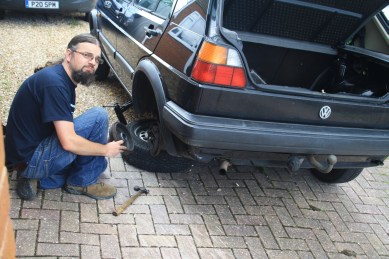
Diagnosis is another key requirement. Is that knocking noise something terminal or not? When the 2CV’s cooling fan fell to pieces, the engine didn’t ‘feel’ right, so I stopped, pulled over and found the problem before it destroyed the engine. If I’d carried on, I would have been left searching for a new engine. In the shot above, I was trying to find a fault with the rear brakes on the Golf. It made a horrible squealing sound. I didn’t get to the bottom of it here, but did improve things sufficiently for the drive home to be far more pleasant!

Old cars are, by their very nature, old. That means they’ll have problems that younger, lower-mileage cars won’t. I’m having to drive around a weak third gear synchromesh in the Daihatsu Sirion for instance and a worn engine mounting in the BX. One of those is an easy fix at least! But I am aware of the problems, even if there’s nothing I can immediately do to remedy them.

So, get to know your old cars. It could save you a lot of waiting around roadside, and it’s bloomin’ marvellous when you defeat an issue!

Dream car, driven properly

Ok, sorry. I’ll stop wittering on about unrealistic motoring soon, though I was suprised at how much attention yesterday’s Bentley blog received. Perhaps you’re not all as interested in hopeless old relics as I am…

Today’s topic is one of very few supercars that excite me. My bedroom wall was adored with photos of stuff like Leyland Daf vans, Vauxhall Fronteras and a catalogue of road tests from Auto Express. I was not a normal teenager. One supercar found its way to my bedroom wall though. The Ferrari 288GTO.

Undoubtedly to my mind, this is one of the most attractive cars that Ferrari has ever produced, as I’ve mentioned before. Yes, it’s very close in styling to the humble 308GTB, but that’s no bad thing. Why not take a beautiful berlinetta as your starting point? Under the skin, it is a fair bit different. The engine is longitudinal rather than transverse, and boasts twin turbochargers. The 2855cc V8 produced a startling 400bhp, so when launched in 1984, the resulting 189mph top speed made it the fastest production car then available – though only 272 were built. 60mph came up in less than four seconds, and it’d scream to 125mph in 15 seconds. I’m not really one for powerful cars, but this strikes me as impressive.

Sadly, I’ve never had the opportunity to drive one, but the people behind this video certainly have. And how! Would you be brave enough to drive a million pound supercar like this?


I’ll take the Bentley please!

If there’s one luxury car I would seriously like to own, it’s a Bentley of the 1980s/1990s vintage.

Bentley

Seabrook wants a Bentley

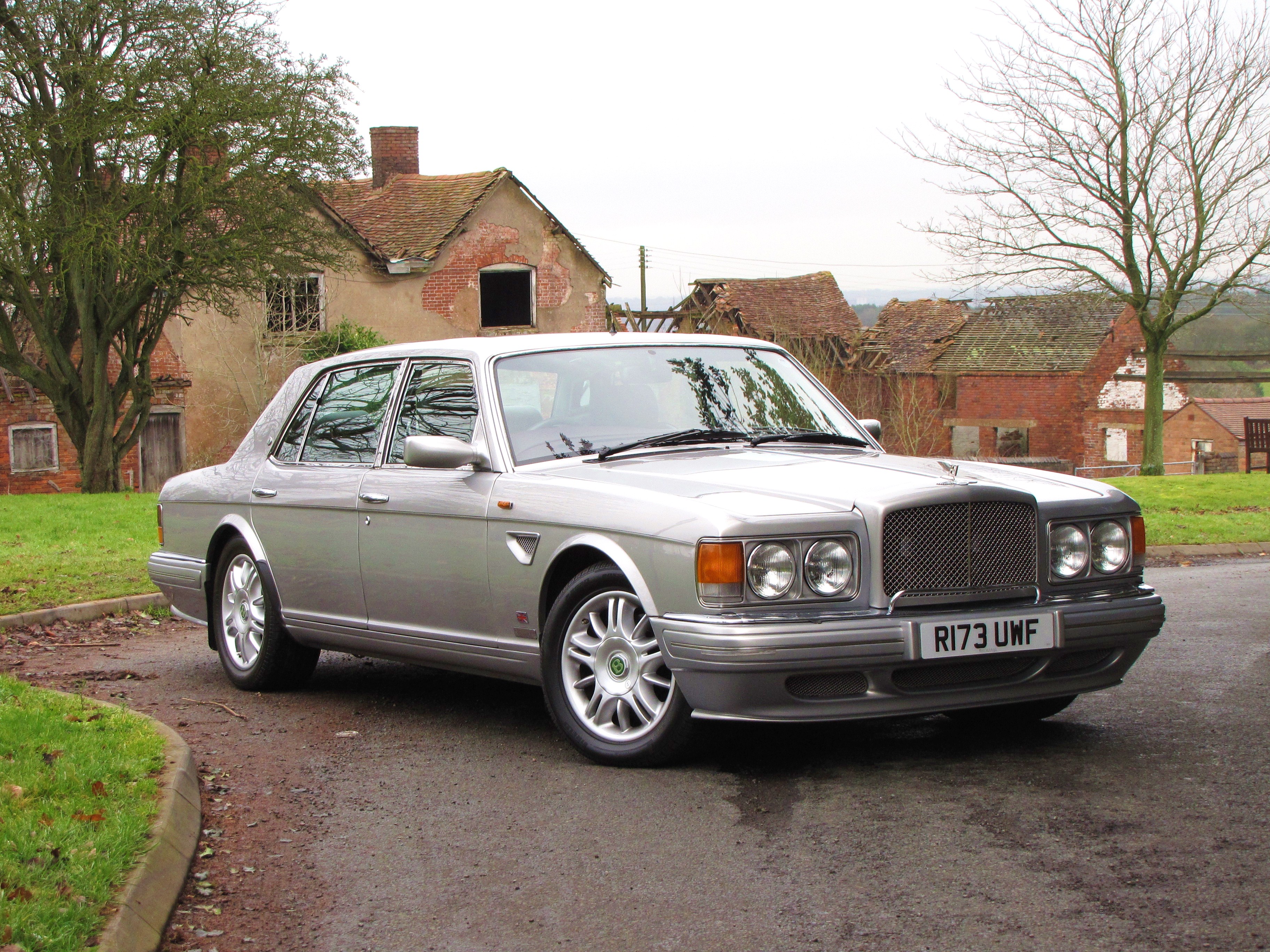
Take this marvellous example for instance. It’s a 1998 Bentley Brooklands R Mulliner. It uses Rolls-Royce’s famous 6.75-litre V8, with a low-pressure turbo helping it produce an utterly effortless 300 or so bhp. Sure, the blingy styling isn’t entirely comfortable – I prefer earlier incarnations of these Silver Spirit-based Bentleys – but there’s no denying it has presence, even in subdued silver.

Firstly, I must concede that the Rolls Royce Silver Spirit, on which his car is heavily based, is not my cup of tea at all. I find the grille too ostentatious and the handling far too wobbly, even for a 2CV owner. Bentley’s revival began with these cars though. At first, all you got was a different grille and, er, that was about it. Then someone had the bright idea of bolting a turbo on to create a Blower Bentley, just like the good old days. The Mulsanne Turbo still had wobbly suspension, but the much-tweaked Turbo R sorted all that out. By the time the one above was built, there was a baffling array of Bentleys, all with the same body but many variations of engine, up to the fearsome 400bhp Turbo RT.

You don’t need that much power though. Give the pedal a good length and the R Mulliner leaps towards the horizon with a most unseemly amount of haste. What boggles the mind is that it does so with seemingly no strain. It isn’t raucous, just insatiably brisk – 60mph coming up in a smidge over eight seconds. Mind you, your comprehension takes a further pummeling when it comes to corners. Despite being smooth enough to unruffle your passengers, the car handles with a degree of agility you just don’t expect of something weighing over 2400kg. Sure, the rather necessary power steering can’t provide race car feel, but the Bentley dashes into an apex with balletic grace, and body roll is notably minimal. The surge of power though is addictive. I found myself slowing down just so I could speed up again.

Inside a Bentley

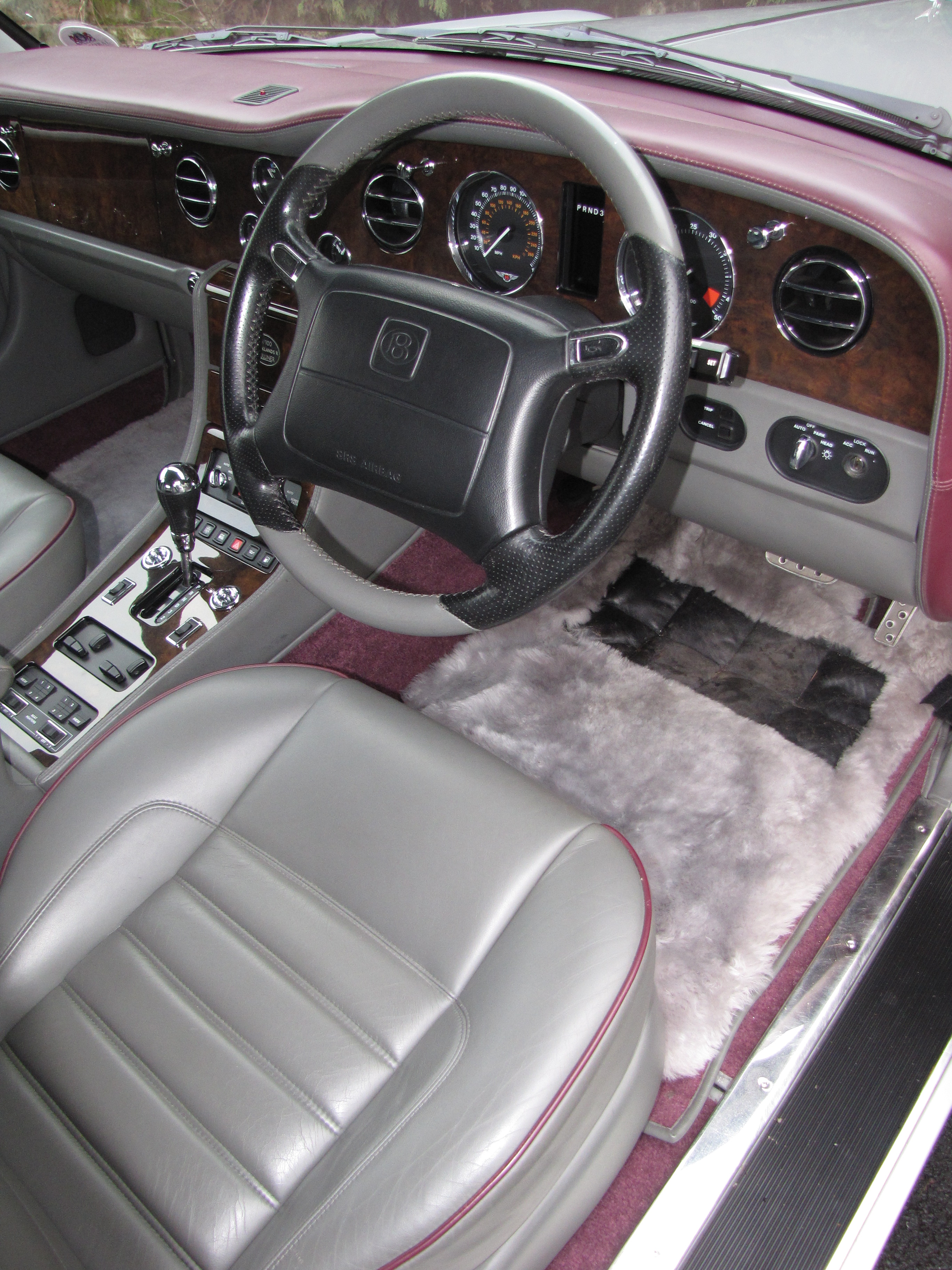
Plush – unusual colour combo

All this happens amongst the finest in luxury. There aren’t just carpets, but immaculate over-rugs that make you want to remove your shoes before clambering aboard. There is immaculate woodwork and beautiful leather – albeit with curious coloured piping in this case. The Mulliner allowed a great deal of customisation. The switchgear is a bit odd though. Some feels beautifully constructed. Other bits feel surprisingly cheap. Overall, it just doesn’t feel as special as earlier models, with their column gear levers and feel-the-quality switches. I must admit that an airbag is all well and good, but this was an era before designers had really worked out how to make a steering wheel so equipped look even slightly pleasant. The wheel wouldn’t look out of place in a Mondeo.

Where you really feel the quality is in the doors. They’re very hefty, and the hinges suitably beefy. Yet they swing majestically and close with a noise that suggests heft and quality. Then there’s one of my favourite touches – the pantograph driver’s wiper. Whenever I climb behind the wheel of one of these cars, the wipers will soon be operated. I apologise for my geekiness.

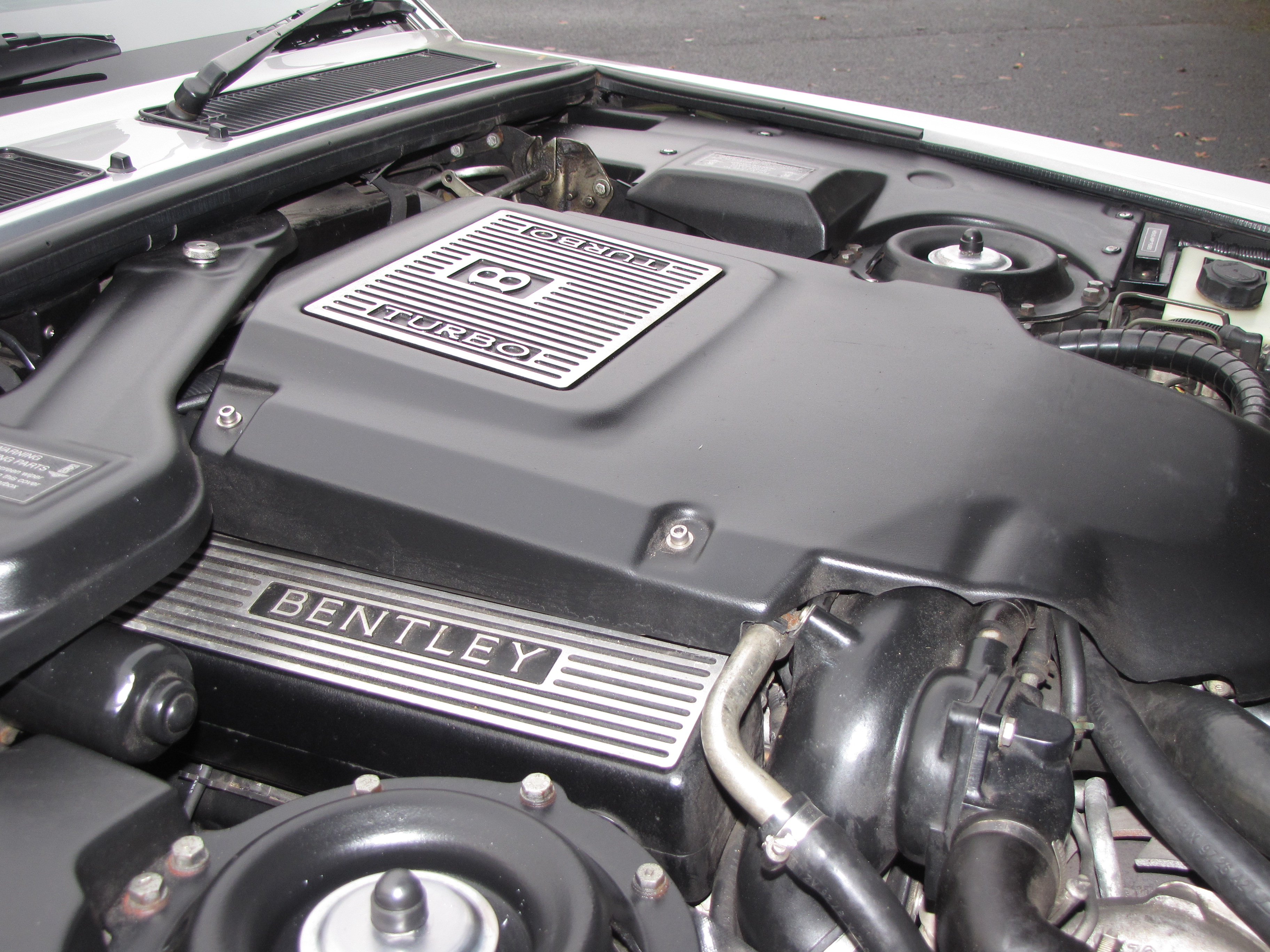
Bentley V8 6750cc

Famous V8, largely hidden

Under the bonnet – don’t bother. There’s very little to see. Even premium cars it seems are subjected to their engines being shrouded in plastic secrecy. “Oh yes, it’s one of the finest engines of all time. No, you can’t look at it. No, not even if it is your car.” I know very few Bentley owners would even know where the nicely engineered bonnet catch is, but I do feel enthusiasts deserve a better view!

What is perhaps most shocking is how cheap these big Bentleys are getting. If you’re feeling brave, you can pick up a turbocharged Bentley for as little as £5000. Yes, it will almost certainly cost a fortune to run and restore, but given how many people are happy to spend £20,000 or more on a Ford Focus, the Bentley seems like superb value! Sure, it’ll probably do 13mpg at best, but from behind the wheel, you’ll consider it money well spent, believe me.

I really do think I’m going to have to save my pennies and see just how badly wrong a cheap Bentley can be. This may take some time, that’s true, but the local(ish) petrol station will be thrilled!

Facts

1998 Bentley Brooklands R Mulliner

Engine: 6750cc V8, 300bhp@4000rpm, 446lb ft@2000rpm

How much? At time of writing, £22,000 for a Mulliner, £15,000 for a Brooklands Turbo, £10,000 for a Brooklands, £5000-8000 Mulsanne/Eight

My dream Leyland drive – a bus!

I’ve long been a fan of Leyland products. I know most of them were dreadful, but that just adds to the appeal for me. Yes, they may have been a bit hopeless, but I’ve always championed the underdog. After all, 2CVs may be cool now, but they were deeply unfashionable when I first got in to them. Joke cars were rear-engined Skodas, Ladas, Reliant Robins and 2CVs. I’m quite good at ignoring jokes and these cars were all desirable to the younger me.

They’re still desirable now. Back when I was young though, buses were the peak of my motoring exploits. For a time, we didn’t even have a car at all. Stressful times for the young petrolhead. So, it was buses or nothing, and I loved the thundering Daimler Fleetlines and whining MCW Metrobuses that transported me during my childhood. Leyland Nationals always appealed too, even though a chance to ride one was not a frequent occasion. I recall travelling on a National 1 at some point, that cut out every time it stopped, and I’ve a feeling I caught a National 2 with my aunt on the day my youngest sister was born. Nationals featured more strongly in my teenage years, as the same buses that took me home from school then took me home from Birmingham’s nightclubs in the wee hours of the morning. With the same drivers.

National 1s made a very high-pitched sort of a noise, and I loved the visible fan spinning around behind the engine cover. They had a very distinctive, top-end clatter and I really liked the styling – Giovanni Michelotti was responsible for it, bringing some car-based cohesiveness to the bus design. National 2s were redesigned with a longer nose, which now contained the radiator. Gone was the fan visible through the engine cover, and the new engine made a much deeper, throatier noise.

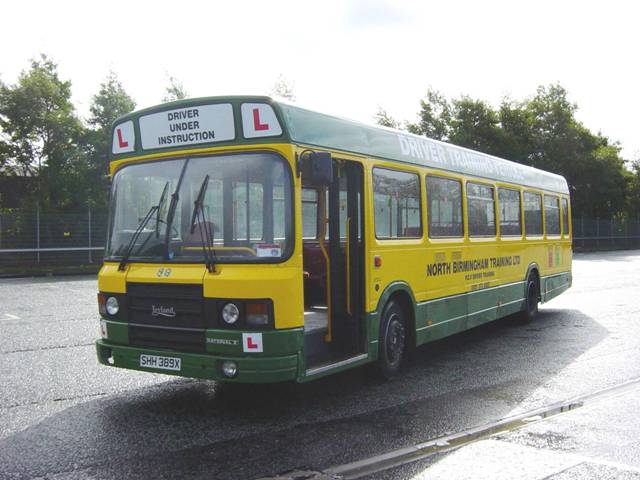
Some years ago, I got the chance to drive a National 2. At the time, it was used by North Birmingham Busways as a training vehicle. I was allowed to pilot it around the defunct Wolverhampton Truck Stop in exchange for some money.

Dream (bus) ticket. A Leyland National 2!

Dream (bus) ticket. A Leyland National 2!

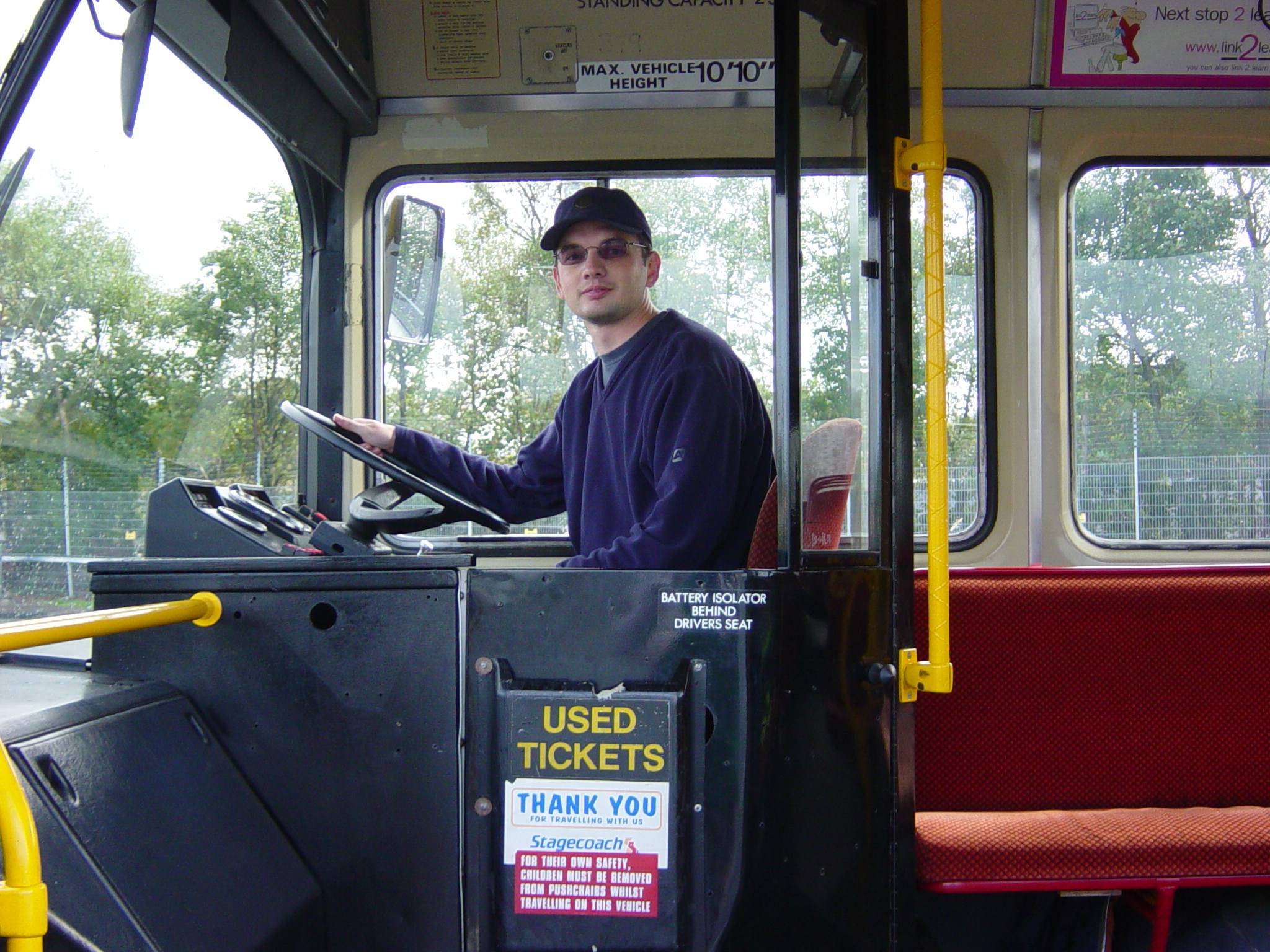
It was brilliant. The switchgear was largely familiar, as a fair chunk of it was lifted straight out of British Leyland’s saloon range. The gear lever for the semi-automatic transmission is right-mounted, and easy to use. I love driving larger vehicles and the way you swing around in front of the front axle is truly joyous. I couldn’t get much speed up, but I thoroughly enjoyed myself, and I was put through the manoeuvres you can expect on a full bus driving test. As a child, I dreamt of being a bus driver, but perhaps I’m glad I didn’t become one. It doesn’t seem too joyous a job these days. I’ll still to my community minibuses instead!

How young?! I'm happy, despite appearances

How young?! I’m happy, despite appearances

North Birmingham Busways is now sadly gone – having being absorbed by the Rotala Plc. The Leyland National still exists though! Happily, it has made it into preservation and, remarkably, a friend on the Autoshite forum is a part-owner of it! The bus now lives in Scotland and is red, white and black – Western livery.

You’ll have to follow the links, but here’s SHH back when I drove it, with its stablemates. http://tbg.150m.com/nbb-19.8.06.jpg

And here’s SHH as she currently looks. http://upload.wikimedia.org/wikipedia/commons/3/3f/GVVT_Open_Day_2012_-_A_Western_Leyland_National_2_-_geograph.org.uk_-_3184441.jpg

If you ever get the opportunity, I thoroughly recommend driving a bus. It’s a valuable insight into the bus driver’s world, and great fun too!


So, how’s the new BX doing?

I’ve driven about 800 miles in the new BX now. Today, I drove it back-to-back with the Sirion, which was a very interesting comparison! Is my return to BXing a good thing though?

Citroen BX 19RD estate mk2 Heuliez diesel

Arise and we shall go for a drive!

But in this post, I’ll focus on the BX. After the frenetic fun of the Sirion, climbing into the BX is like donning your favourite slippers. The thing is, it’s like discovering that actually, your slippers are ideal footwear for a cross-country run. The BX may be comfortable – I just adore the ride – but you can cover ground pretty swiftly. It’s just that you still feel like you’re in front of the fire with a warm mug of tea, even when pushing on a bit.

The engine is the major reason for the clash. You can’t really accelerate in the traditional term, but you can maintain good speed, without having to raise the revs beyond 2500rpm. Most of the time, I find I’m switching between fourth and fifth where in other cars, I’d be using third, and maybe even second in a desperate attempt to find some grunt. You never feel like you’re taxing the engine, yet you can corner vigorously enough to cause some impressive body roll. This car is far softer than my previous two BXs, which is hardly surprising as the turbo diesels used firmer ‘springing.’ The spheres in those are set to higher pressures like on the performance petrol BXs. They feel almost conventional. What’s the point of that?

After many a month with the Sirion, I find myself looking at the road ahead and cringing in anticipation of discomfort. There are bumps mid-bend around here that cause some anxiety. The BX just saunters over them without being flustered. It’s uncanny.

Not that it’s all good. The single wiper (especially the unswept area) still bugs me, I still need to replace an engine mount and it has a few more fluid leaks than I’m happy with. The dashboard rattles are like Chinese water torture too. Ugh!

But, in case you hadn’t guessed, I’m loving my return to BXing overall. I can’t really believe it’s already been two weeks and 800 miles. I guess time really does fly when you’re having fun. Have you had a break from a model of car only to rediscover your love later on? Or did the second chance prove that we sometimes have a rose-tinted version of our memories?

ClassicHub’s watch list

The internet is a great thing. You can lose yourself for hours watching wonderful, car-related videos! Here are some of my favourites.

First up, self-promotion. I filmed this at the Silverstone Classic some years ago. A very well-pedalled TR7 V8, with commentary by Tony Mason.

Next up, surely one of the most bizzare videos of all time. Happy Tatra. Some astonishing driving, and they roll it down a hill for good measure…

Jeremy Clarkson being very impressed with a model Ferrari. That runs.

Finally, if you are not acquainted with Roadkill, you should be. It’s American, loud, full of V8s and great fun.

Hope you enjoyed that selection!