What is the future for The Car?

We could now be at a time where the dominance of petrol and diesel could end. Electric car sales in the UK were up an astonishing 148% in September 2014 compared to the previous September – the actual numbers are still pretty low, but it’s impressive. Not as impressive as the plug-in hybrid sales though – they rose an incredible 1101% (yes, eleven hundred and one) year-on-year. Ok, so we’re still talking only 4303 plug-in hybrids sold in September 2014, but it’s still a huge shift.

PH-EV petrol hybrid

Mitsubishi PH-EV is cutting edge and surprisingly bland at the same time

With the first Hydrogen-powered cars now taking to the road as well, it’ll be very interesting to see what happens next. Hybrid sales are largely being driven by claimed economy improvements and tax benefits – both Vehicle Excise Duty or road tax and company car tax. On paper, they make a lot of sense. Some hybrids have a petrol engine with electric power boost, others like Vauxhall’s Ampera purely use the engine as a generator. The really clever ones, like Mitsubishi’s increasingly-popular PH-EV have an engine that can do both. It can either disconnect from the roadwheels to act as a generator, or active a clutch so it can provide driven power too. It has to be said though, hybrids work best when you can plug them in. Not all of them have this functionality.

Every form of propulsion has its issues though. Petrol and diesel are running out, yet fuel prices are actually reducing as demand drops – are the effects of hybrids and electric being felt already? Pure electric cars still have range concerns and pose a lot of problems for the government. There’s no VED (it’s free) and as you can charge one at home, there’s a loss of fuel tax too. Even worse, it’s possible to charge electric cars for free in a lot of places. This must surely end – it could be a nasty shock for the EV crowd.

Hydrogen has a lot of potential answers. It’d be easy to tax, as you’re unlikely to be generating it at home. The production of it is problematic, but it could be an ideal use for renewable energy. Use it to create hydrogen at times of high wind for instance, then store it when the wind drops. It’ll cost lots to create the necessary infrastructure, but it’s hardly beyond possibility. The cars themselves can do 300-400 miles on a fill-up apparently, and emit only water as tailpipe emissions. These are EVs without the woes of range.

Not that they have to be EVs – BMW has been experimenting for years with a petrol engine that can also burn hydrogen. I’m pretty sure they had an E38 7-Series burning the stuff that was featured on Tomorrow’s World. For several years they have claimed to finally have the technology ready with the current Hydrogen 7, but cars are still not actually on sale. Tailpipe emissions are still hugely better than petrol or diesel.
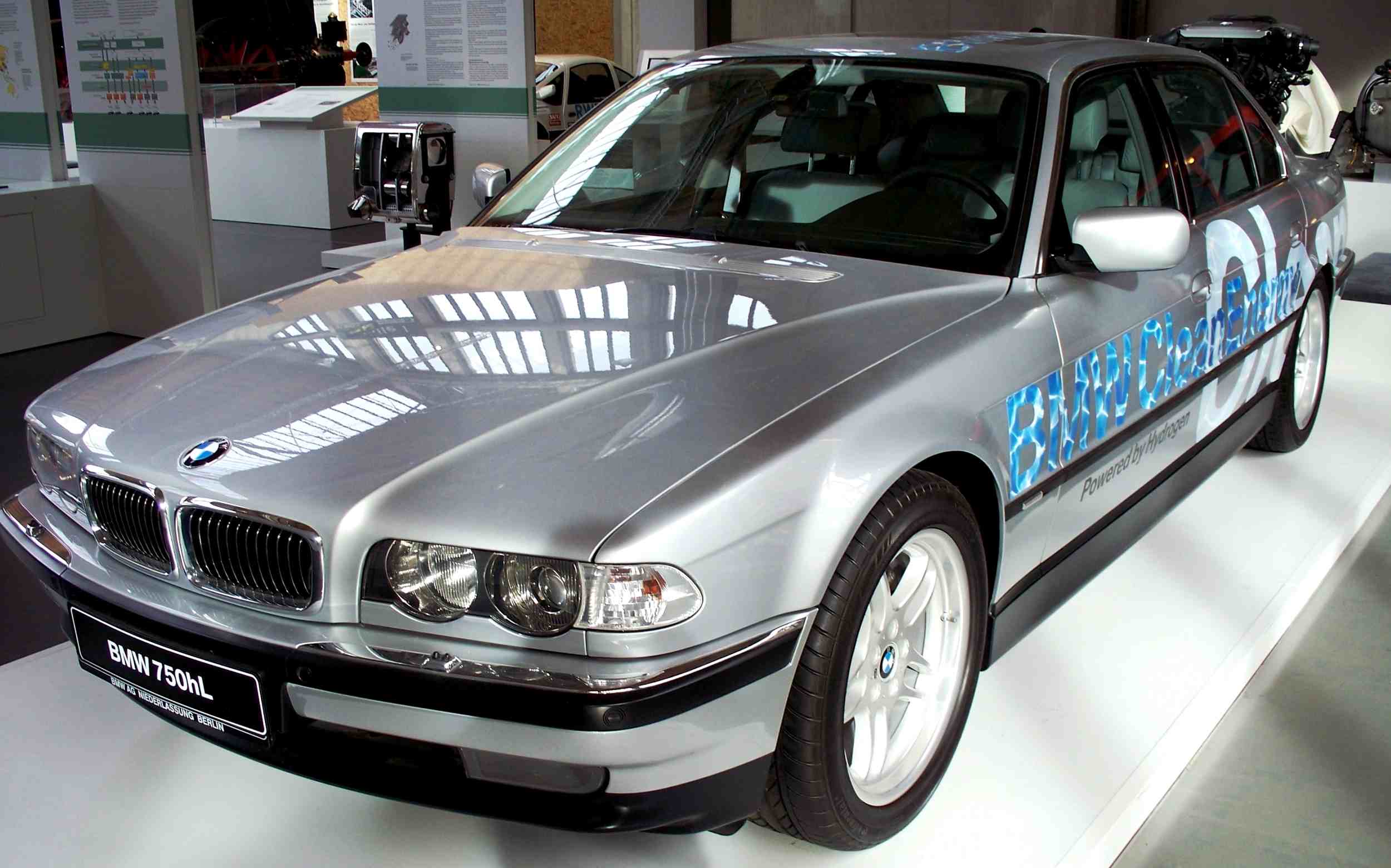
BMW 750hL

BMW’s E38 750hL promised hydrogen power as long ago as 2000

These are certainly very exciting times indeed as it’s not clear at this stage which form of transport will become king. The benefit to me is that I can’t afford a new car, so by the time technology filters down to me, a winner should have been chosen. The major downside is that until new technology becomes more affordable, I’m stuck burning fossil fuels with no idea what the future holds. Will I be able to even get fuel for my older cars once new technology takes over?

In the meantime, and despite the name of this blog, I’ll be keeping a very close eye on developments and the real-word impact of new cars as they appear.

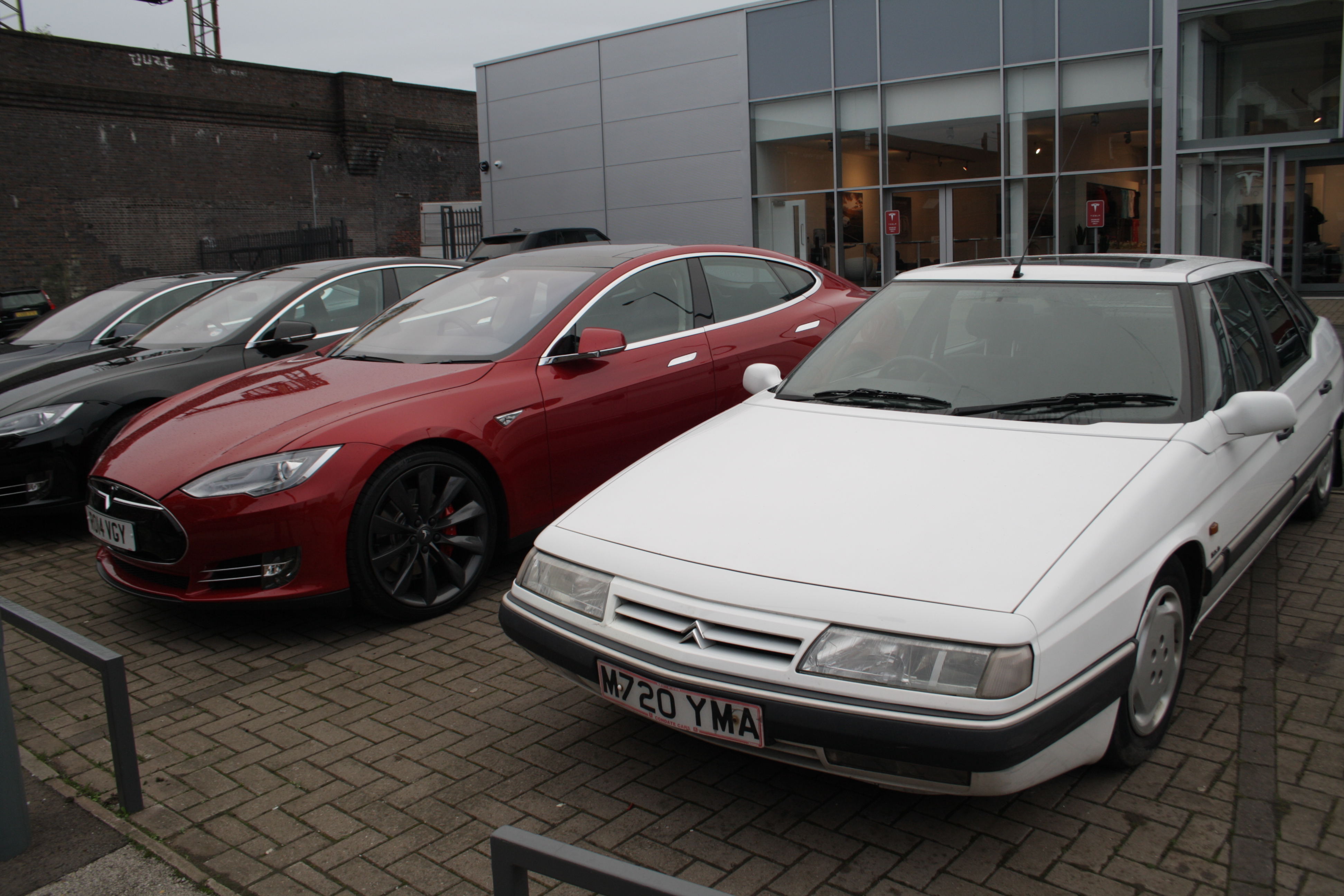
Strictly Stars and Electric Cars – Tesla Model S

Yesterday was one of those rather different days. The day began with me driving to Birmingham in my Citroen XM. The reason? I had an appointment with a Tesla Model S. Excited? You bet.

Model S

A very pretty electric car – the Tesla Model S

As I arrived rather sooner than was necessary, I headed to the Midlands Art Centre in Canon Hill Park – somewhere I spent a lot of time as a child. I thought I might grab a nice, quiet brew but the place was all of a bustle. Just to add to that, Strictly Come Dancing’s Alison Hammond was in the queue for coffee, having just finished with her day job on ITV’s This Morning. I used to work with Alison in a really boring office job. She always wanted to be on telly, and I always wanted to write about ‘boring old cars.’ It seems we both achieved our dream! I opted not to attempt a reintroduction (remember me? I’m that really boring car bloke you used to work with!) and went off to find a quiet spot for my brew.

But this celebrity nonsense was not the highlight of the day. No, that would come at the brand new Tesla showroom in Digbeth. I chatted with the staff, examined a bare chassis (briefly pondering what alternative bodies might be fitted on top) and then headed off for a 1.5hr drive. I filled the car with my video camera gear and quietly drove away, in a Tesla Model S with a list price (in this Performance model form) of £98,000.

I won’t go into too many details here, because the video review will contain much more. Certainly, it was exciting, even if comfort levels were rather lacking for a so-called executive car. Instead, I shall use my blog to challenge some perceptions.

For instance, a lot of petrolheads refuse to take electric cars seriously. Until a few years ago, they were probably right – electric cars were generally a bit rubbish. Those days are gone though. They are genuinely good motors and can be exciting to drive.

Yet, some petrolheads almost see it as insulting to consider liking electric. They see it as a sin to consider anything other than internal combustion. Sure, electric power may be quick, but you don’t get the excitement that comes from a screaming V8. This is true. But, I still liked it a lot.

For me, I think the genuine revolution is not actually in terms of power source. It’s the transmission of that power. The reason manual gearboxes remain popular is because the alternative has always been a rather poor compromise. Despite many advances, automatic gearboxes still leave people disappointed. They can be slow to react, or keep choosing the wrong gear. Modern ones, which can have eight speeds these days, then tend to want to change gear all of the time. I find this hugely frustrating.

But with electric power, there is only one gear. You just press the ‘quiet’ pedal, and you seamlessly gather speed. Around town, I found the Tesla astonishing. It has a really strong regenerative braking set-up, that means that you control pace almost exclusively with the throttle, and barely touch the brake pedal. Some automatics creep too quickly (you can turn off the creep function in the Tesla if you so wish) or require you to hammer the middle pedal to control the pace. You often feel like you’re fighting the power of the engine with the brake pedal, which feels hugely wasteful.

It led me to rethink just why I like manual gearboxes. In truth, I don’t think I do – I just consider if the least bad of the alternatives. The clutch in the XM is a pain, and the gearbox not entirely pleasant to use. But an automatic version would drink more fuel and they have a habit of developing faults. They also have a reputation for not choosing the right gear – 30mph tends to be done in third, so is noisy.

This is the point. With an electric motor, there is no battle to keep the motor in its happiest place for torque or power. There’s just grunt. An endless stream of it in the Tesla. When you mix in genuine range potential of 200 miles or more, you can see why the electric car is definitely here to stay. The only disappointment for me, asking price aside, was comfort. I got out of a £98,000 car into a £375 and it was an absolute pleasure. That’s a bit of a concern.

The future compared. The older 'future' is more comfortable

The future compared. The older ‘future’ is more comfortable

More thoughts on this will be revealed once I’ve edited the video. Stay tuned.

When variety was king

The 1980s was one heck of a decade. It boggles the mind to consider the variety of cars available to a new-time buyer. Would sir like his best-selling repmobile in blobby rear-wheel drive form (Ford Sierra) or boxy front-wheel drive (Vauxhall Cavalier, until 1988 when that went blobby too)? A smaller family car? How about a hydropneumatic Citroen BX? Or a rear-wheel-drive Volvo 340 with constantly variable transmission? Need more room for the family? A Nissan Prairie may be just the thing, or a Peugeot 505 with three rows of seats, or one of those new-fangled Renault Espace people carriers?

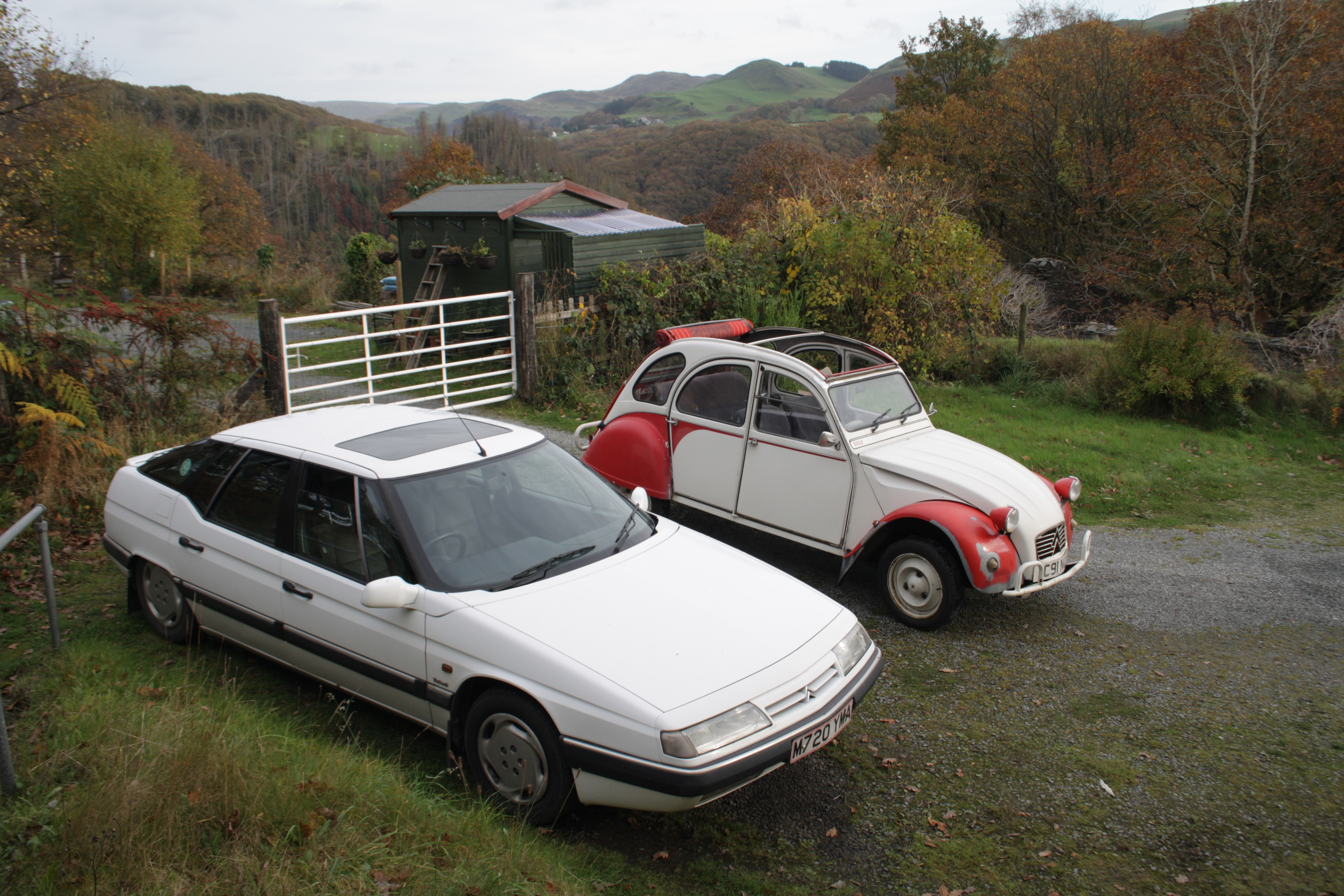
My own fleet reflects the huge variety available from just one manufacturer at one time. Yes, in 1989 and 1990, Citroen sold the 2CV alongside the incredible XM.

In 1989 and 1990, you could buy either of these brand new!

In 1989 and 1990, you could buy either of these brand new!

It’s hard to imagine two more different cars. One is packed full of clever hydraulics and electronics, the other is about a simple as a tin opener. One is flat-out at 70mph, the other is wafting along serenely at 2500rpm. Both contain wonderful engineering, but only one feels robust. Both have supremely compliant suspension, but only one corners on its doorhandles. I love them both.

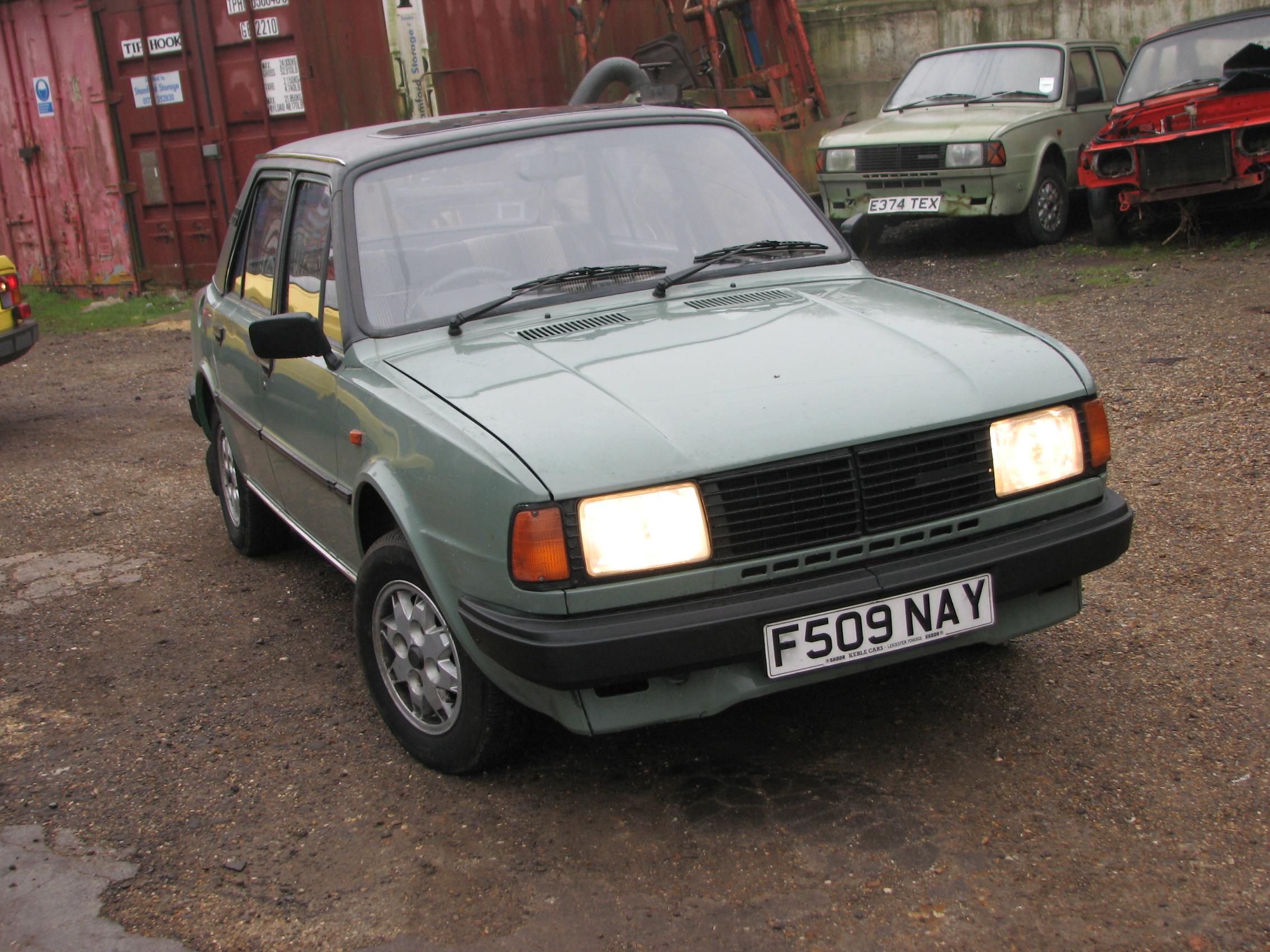
It’s down at the bottom end of the market that things were most interesting in the 1980s. The 2CV was, by then, just a cheap banger. Its rivals came in many varied forms. The rear-engined, Commie-era Skoda Estelle. The front-engined, rear-wheel drive Russian Lada Riva. The tiny, rear-engined, even-slower-than-a-2CV Fiat 126. The most advanced budget rival was probably the Yugo – it was at least front-wheel drive.

Not at all like a Citroen 2CV, nor a Lada Riva - Skoda!

Not at all like a Citroen 2CV, nor a Lada Riva. Back when Skodas were VERY different

Each of these cars had a very distinctive look. Today, cheap cars are actually entirely competent, and they do all look rather similar – even the Chinese MG3. You can’t even easily spot a base model these days – Dacia Sandero aside, and that’s only because cheap ones only come in white. Even further upmarket, a Vauxhall Astra SRi carries very few queues to its alleged sportiness. Where is the sporty red trim that makes a Mk2 SRi so easy to spot?

I’m therefore very glad that I grew up during the 1980s. Not only could I tell the difference between those cheap bangers on sight, they all sounded different too! When I drive the 2CV, people turn around as they wonder what on earth is making such a frightful noise. Cars don’t do that anymore. How did it all go so wrong? For now, I’ll just enjoy variety entirely of my own making. Just like the good old days.

I did a really stupid thing

This is my confessional. The other day, I made a serious misjudgement that could have had very serious consequences. Fortune saved me from disaster, but it shouldn’t have happened at all.

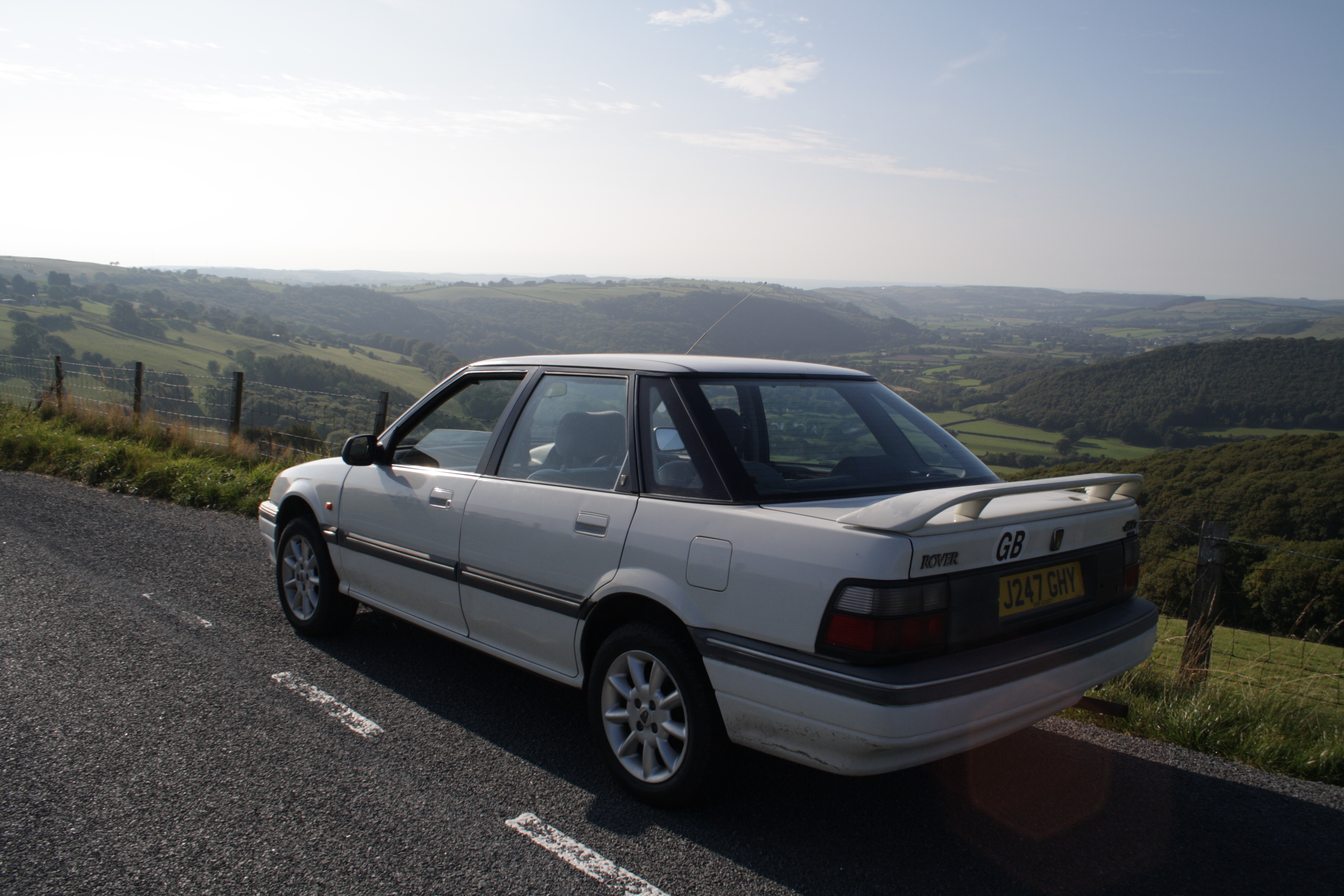
I was having my final drive of the Rover 400, as I delivered it to its new owner at Birmingham International (he’d got a train there, he doesn’t live at the station). I was only about 10 miles into my journey, but I was getting frustrated at being stuck behind an articulated lorry on one of my favourite stretches of road – the A44 between Llangurig and Ponterwyd in mid-Wales.

Lovely scenery and a car that's hard to love

Wales is full of beautiful driving roads, but they must be treated with due care and attention

I spotted an overtaking gap that I thought I could make, so I went for it, dropping a gear and shoving my foot hard down on the throttle. I was wrong. I was halfway alongside the lorry when a van appeared coming the other way. I had no time at all to make a decision. My decision was to keep my foot down. The Rover was entirely failing to really gain pace in a way that felt satisfying. Buttocks were clenched. My heart sank. I wasn’t going to make it. Fortunately for me, there was a layby on the other side of the road. The van swerved enough into it for me to complete the manoeuvre. I waved a pathetic apology. The truck, quite rightly, sounded its horn. I attempted to apologise via the medium of hazard warning lights. I felt like a complete idiot.

That was so close to being a really nasty accident, and it was entirely my fault. Yes, this road is short of good overtaking spots, but there are better places than I had chosen. Yes, being stuck being a lorry is frustrating, but it’s hardly life-threatening is it? My overtake was.

I don’t like making mistakes but I should have known better. This road frequently claims lives – a family of four were killed on this stretch in June 2014 – with overtaking likely to have been the cause. How on earth had I been so stupid?

The thing is, we’re only human and humans do make mistakes. I can hold my hand up and say I got my decision entirely wrong – but it was reminded that in a car, wrong decisions can end very badly indeed. If anything, modern cars encourage such behaviour, as even a shopping chariot can have a bit of grunt these days. There’s no way I would even have considered that overtake in my 2CV.

There are often calls to make the A44 safer. I’m not sure how you do such a thing without putting some horrific speed limit upon its entire length. But, it isn’t the road that is dangerous – it’s the people who use it. Only yesterday, I witnessed a Peugeot 107 (or similar) do exactly what I did – forcing the oncoming vehicle (in front of me) to brake to ensure the Peugeot could complete the overtake. People just don’t give what is a dangerous exercise a suitable amount of thought. Please do!

I admit to my stupidity because I hope it’ll be helpful to others. You really can’t be too careful when it comes to overtaking. I’m not saying don’t do it – I did plenty of it coming home in the XM later that day – but DO overtake safely. Make sure you CAN see a sufficient amount of clear road and have a good long think about what you’ll do if a car suddenly appears around that next bend. It really is a matter of life and death, and airbags are sod all use at these speeds, as Fifth Gear proved with this all-too-real possibility of a head-on smash. You don’t want to try this yourself.

Four years of Welsh living

It is now just over four years since we got the keys to our cottage in Wales. That means it’s over four years since we jacked in our jobs and decided to have a bash at the Good Life. I hadn’t realised that Felicity Kendal had made such an impression on me.

It’s good fun to look back. It was a somewhat bold move after all. We decided we could live on one exceedingly variable freelance income with financial sacrifices made in order to have a better overall life. After all, I’d been married for four years, but felt like I barely saw my wife due to hectic work-lives. For the past four years, we’ve been barely separated – it’s a bloody good test of a marriage! Happily, we seem to have passed it. We’ve absolutely loved living somewhere so special though. Every view is astonishing. The people (a mix of Welsh and English for the most part) are marvellous. It has been a largely very happy time. Living in Wales comes highly recommended.

Initially, I was a bit crap at the whole hippy thing. I sold my 1955 Austin Westminster A90 as it hardly seemed ideal hippy transport at 20mpg. Within two months of moving to Wales, I’d replaced it with a Land Rover 90 V8 which did 15mpg. Go me! To be fair, I later sold it for an actual profit! This happens not very often. So overjoyed with my money-making spree was I (all £700 of it) that I went out and bought a Reliant Scimitar GTE. Again, not really a prime example of hippy living. But that’s ok, as I later replaced it with a diesel Range Rover, which ate up lots of money and put a stop to such silliness.

Land Rover 90 V8 County Station Wagon

A crap hippy’s steed – 15mpg Land Rover V8

Since then, I’ve been more hippy-like. There has been a pretty constant stream of dreadful, but cheap motor vehicles. Driving adventures have been few and far between though, as we rarely have budget to do much travelling. Heading to Scotland in January 2014 was a very rare actual holiday, paid for by my lovely wife taking a part time job at a local tourist attraction. We drove all the way there and back in a rusty Daihatsu that cost less than £400 to buy.

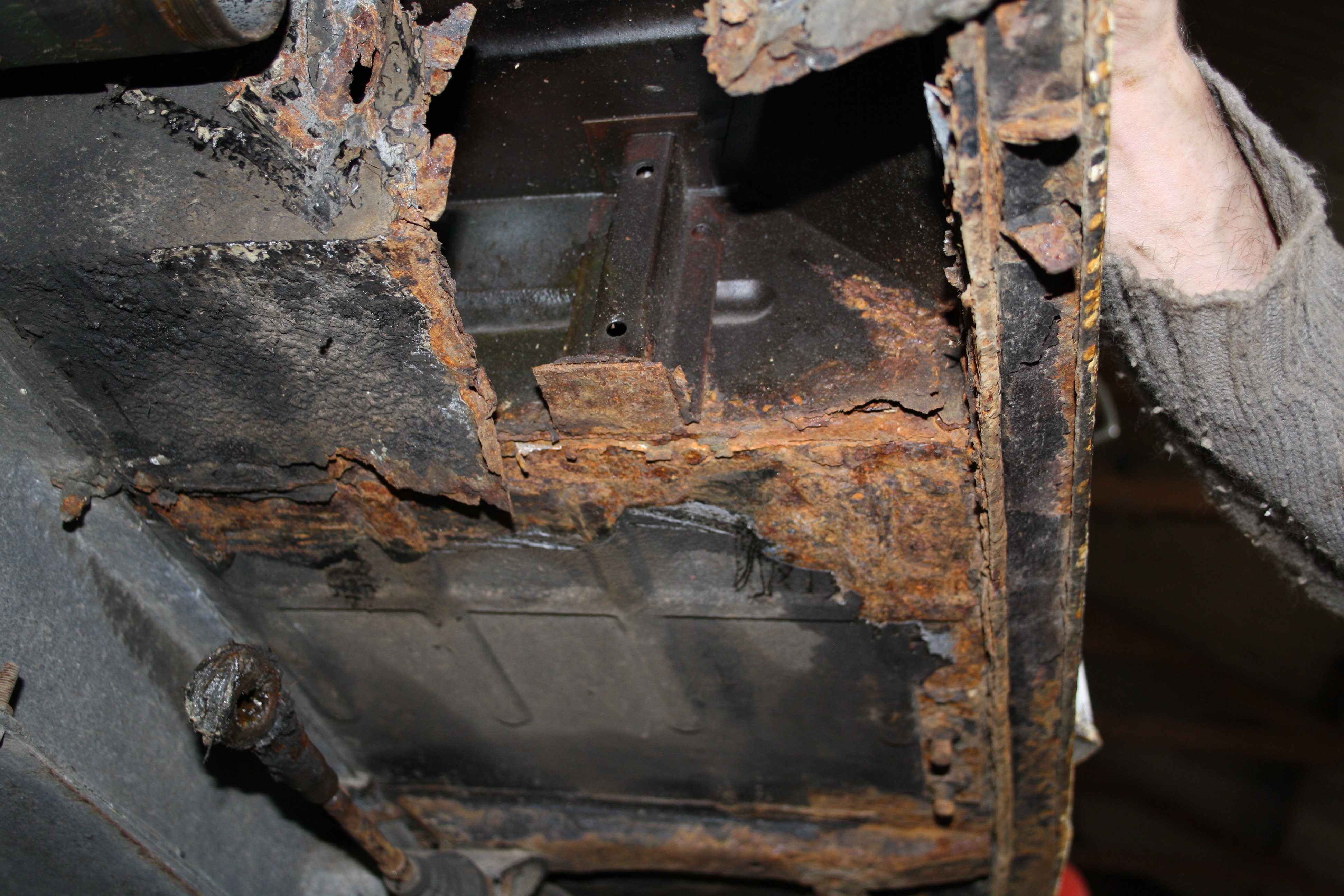
But now there’s a problem. It’s the 2CV. Famed for being the original hippy machine, I can only assume that it rained less in the Swinging Sixties. My 2CV is very rotten, and fixing it will be very expensive. Very Expensive is something we just don’t do anymore. It feels like a decision needs to be made, as current income does not support restoration fees. Something has to change. Either The Good Life needs some thorough re-jigging, or I can no longer own a 2CV.

Inside the rear seat box was ok. Around it less so

2CV keeps doing this. Restoration costs are significant

For now, I’m going to try and buy an XM and pretend the problem doesn’t exist. I’m sure everything will work out in the end.

Fleet change news – yet again

So, it seems the Rover has sold. I have a deposit, and collection is in the process of being arranged. It lasted over two months, which isn’t bad going for a car on my fleet!

Ultimately though, the major flaw with it is that it isn’t a car I really wanted. In fact, that’s true of every car I’ve bought this year. Like all of them it just happened to be available when I needed a vehicle. It’s yet another car to tick off the list. Plus, I got to improve it. A lot. Remember that it looked like this in July.

A quality purchase and no mistake! I think

I didn’t own it for long, but I think I improved this Rover quite dramatically!

I’ve been a busy boy though. As well as continuing my investigations into the realities of electric vehicles, and the future of motoring, I’ve been very much planning my next vehicle. I can confirm that it is a vehicle I actually want to own. Of course, the main problem now is will it disappoint?

Last year, the vehicle I very much wanted to own was a Land Rover Discovery. It was a pretty dreadful example (my budget often leaves me with someone else’s dregs) but I had a lot of fun with it, exploring its very impressive off-road credentials. That still didn’t stop me selling it of course, as I slowly but surely discovered that to own a Land Rover, one needs to have a pretty large reserve of cash for the constant repairs that are necessary.

I’m hoping my new purchase will be better in that regard but the truth is, at the bottom end of the market, big bills can be just hiding around the corner. Thing is though, I still like to throw money at a cheap car rather than the towel. Thankfully, the good people of Autoshite tend to be the same – the home of enthusiasm for cars no-one else likes. Folk there put insane amounts of time and money into cars that are worthless. They do it because worthless doesn’t mean hopeless.

I hope my new purchase works out. I certainly do have The Fear. Income has gently started to improve of late, but we’re still trying to live The Good Life on one exceedingly variable freelance income. It has been a pretty stressful summer, so I hope people won’t mind me indulging in a bit of luxury. Whether I can do so on a pauper’s budget remains to be seen. Hopefully all can be revealed next week, as the next Collection Capers unfold.

Of course, all this faffing about still fails to address what I do about the 2CV. I’m hoping for more chunky invoices so I can deal with that problem next year. We shall see.

Why hybrids don’t work

After my EV post yesterday, two people independently asked for my thoughts on hybrids. I did reply to both, as I’m polite about such matters, but here follows my reply in more detail. I’ll start with my conclusion. Hybrids don’t work.

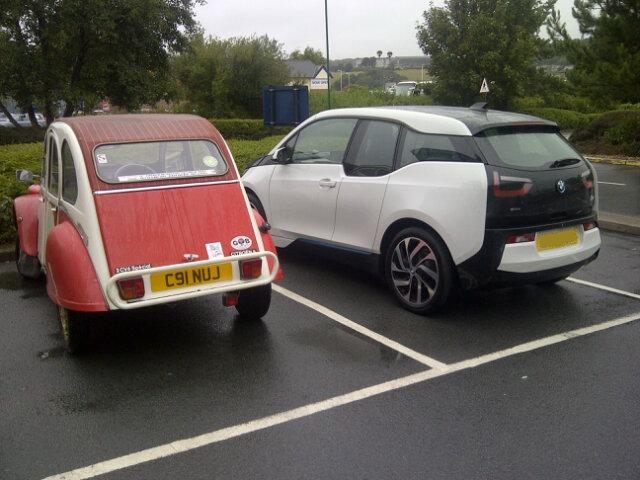
A bold statement. So why do I think that? Let’s take the BMW i3 Range Extender as an example. BMW is pretty much unique in offering the i3 in fully electric form, or halfway-hybrid with a range-extender engine. First, there’s cost. After government grant and at current prices, you’re looking at £25k for an i3. Opt for the one with an engine and that prices rises to around £28k. But, the engine only kicks in when charge is low, which means for a lot of time, the electric motor is having to work harder to haul unnecessary weight around. That makes it slower AND shortens the range on electric power. While the engine does double the overall range – from around 80 miles to 160 miles – it does so by making a buzzy din from its twin-pot engine. It only has a nine-litre fuel tank, which’ll last a maximum of 80 miles. It sounds like a bit of a poor compromise and just isn’t the answer for a long-distance trip. My humble 2CV, pictured below with an i3, can travel further on one ‘charge’ from its 25-litre fuel tank, which feeds a twin-pot engine that makes a buzzy din.

If you're going to have the future, have it fully electric

If you’re going to have the future, have it fully electric

And that sums up hybrids for me. There are some very clever ones – like Mitsubishi’s PH-EV where the engine can either charge or provide direct power – but it seems to me that all of these hybrids are just a desperate attempt to keep the internal combustion engine going for a bit longer. Once the problems of range are addressed – an Tesla especially are making huge leaps here – then the hybrid becomes pointless. Bear in mind that in real-world tests, the PH-EV seems to average 39mpg. Even an i3 Range Extender will struggle to reach that if you do a lot of driving with it undercharged. Yes, the compromise will work well in cities – you can float around on EV power and keep the petrol engine for when you need some oomph – but it all reeks of compromise to me. There is a better way.

That way is to either stick with your internal combustion engine – they’ve been transporting us pretty well for decades – or go the whole hog. Go full electric. Hybrids are a flash-in-the-pan. They, on paper at least, meet a set of requirements that currently exists. However, I predict that within five years, battery technology and the charging network will have improved to the point that electric makes absolute sense – even if you need to travel long distance.

Worst of all the hybrids for me is the Toyota Prius. Here is a vehicle that seemed to exist purely to try and appease the guilt of some motorists. But it’s rubbish really. Real-world economy seems to be in the region of 56-58mpg. That’s well within reach of modern diesels, and a fair few petrol models too. My 2CV can achieve 54mpg, and that’s older than the hills. It still manages to seat four (friendly) adults and have a boot.

It may have stickers, but it is still a poor answer

It may have stickers, but it is still a poor answer

So, sorry hybrid technology. A lot of research has gone into making something that’s barely any better than just a normal engine. If you really want to make the jump to electric, jump all the way. And no, I’m not convinced by Hydrogen either. Carting explosive petroleum around the globe is dangerous enough! Plus you’ve got to get the hydrogen in the first place. Electric doesn’t have all of the answers, but if I were a betting man, it’s what I’d be putting my hat on. Now, can they start working on an electric motor that sounds like a V8 please?


Electric vehicles – gaining a foothold

Nissan is celebrating record sales of the LEAF in September 2014, with 851 sold – a total of 2969 this year so far. Small potatoes for sure when it comes to mainstream manufacture, but more than Citroen managed to sell XMs here for all but three years of that car’s life. The LEAF’s sales are 156% higher than the same month last year. Are electric vehicles now being taken seriously?

Paul O’Neill, EV Manager, Nissan Motor GB Limited said: “Sales of the all-electric Nissan LEAF continue to go from strength to strength and it’s no surprise that the vehicle that pioneered the EV sector in the UK continues to blaze the trail for the rest of its class.”

LEAF gaining a BIG following. I do like it in red.

“September’s result gives us a clear indication that motorists are beginning to recognise that switching to a Nissan LEAF is not a compromise but an opportunity.”

I have to echo those sentiments. While there is still some range anxiety, especially where I live in rural Wales, the LEAF is a car that really does feel like a proper car – not some knocked-together-in-a-shed conversion job. It’s spacious, powerful, supremely comfortable and all of the technology works really well.

Yet electric vehicles are still ignored by a lot of motorists and enthusiasts. They’re still seen as a thing for environmentalists to pootle about in, feeling all self-righteous. The myth is maintained that if you’re a proper petrolhead, electric vehicles are of no interest.

This simply is not true, as I’ve discovered myself. That test was almost a year ago now, yet I’m still thrilled by the idea of electric. Worse than that – I find that driving internal combustion engine (ICE) cars leaves me feeling just how wasteful they are! Remember that an electric motor is much more efficient – so 80% of the energy you hurl into it via a 13amp plug results in you moving down the road. Petrol engines may be increasingly efficient these days, but they still struggle to get 25% efficiency for every lump of energy you put into one. It isn’t just the case that every £1 of fuel contains lots of tax, most of it is actually used to keep the radiator warm, so it just lost as heat to the atmosphere. Traffic jams result in you burning loads of fuel for very little movement. An electric car burns very little in such conditions.

I know zero-emissions depends entirely on where the electricity came from, but even here it is thought that even an electric car powered by a coal-burning power station results in less carbon emissions than a car – after all, getting oil, turning it into petrol and transporting it halfway around the world is not very environmentally friendly either.

The buzz of electric isn’t going away for me, and it seems that’s also increasingly true for the general public. Bring it on.

Top Gear – a victim of reputation?

I could scarcely believe it when I read so-called ‘news’ stories alleging that Top Gear was in trouble in Argentina. It just seemed hilarious that a registration plate could cause so much fuss. The story has snow-balled since then, and I wonder how. The allegation is that the number plate H982 FKL is somehow a direct reference to the Falklands War, which happened in 1982. I find this unlikely.

Some cocking about, not in Argentina, not yesterday

Some cocking about, not upsetting Argentina, not yesterday

First off, that number plate had been on that Porsche 928 since it was brand new. Secondly, Clarkson is well-known for liking 928s. He’s already destroyed one in the name of entertainment. How nice to be in a position where you can destroy lovely cars and get paid for it. I think I’d rather be skint. Which is convenient, as I am. I digress. The point is, the car was chosen for what it was, not because of the number plate it had worn since 1991.

But, despite my increasing dislike of a programme that gets further away from being about motoring with every series, I have to side with the team here. They sound appalled that this situation has blown up. I believe they were caught out by sheer coincidence.

It’s quite scary how many people outright refuse to believe this though. And that tells you where Top Gear has gone wrong. It has become so reliant on controversy that people are ready to believe that they deliberately provoked Argentina about a war in which hundreds of people died. They can honestly believe that it was just a joke to make people chuckle in the safety of their own homes. It is entirely reasonable to think that the team WANTED to be pelted with rocks and chased across the country.

It doesn’t matter how much the production team try to deny it, many people consider it the truth – even though the story broke in the British gutter press. I even wonder if the Argentinians even knew there was a potential issue before someone had a word with them. After all, the team were three days from finishing filming on what is presumably a lengthy piece. It seems unlikely they’d want to create quite that much of a stir.

Oh well. It seems Top Gear is reaping what it has sown now. I don’t believe they were in the wrong this time, but it just goes to show that if you court controversy, it’ll catch you out one day. I’ll stick to writing nice blogs and shooting nice, but hopeless, videos.

Vehicle tax – how to pay with the new system

Well, after a bit of a panic when the DVLA’s new computer system fell over, all now seems to have settled down. So, I can address some queries folk naturally have about the changes. How do you renew your tax and what are the options? Here’s what I now see when I enter the 2CV’s details at http://www.vehicleenquiry.service.gov.uk

Now more choice than ever!

Now more choice than ever!

Ignoring what a rip-off it is for my poor little, 602cc Citroen, you can see that there are now five options. The 6 month and 12 month rates remain the same, but the three new options allow direct debit payments monthly, six-monthly or annually. Monthly and six-monthly attract a premium of 5%. Direct Debits can apparently be set-up online or at the Post Office. The figures shown are for pre-2001 cars with less than 1550cc. Having just paid at the old rates as the tax lapsed at the end of September, I won’t be making any further payments until 1st April 2015. I have rather bigger questions to address then about what I do with the 2CV to be honest as the MOT is up around then.

I’m sure a lot of people will be opting for the Direct Debit option though. It means you can’t forget that it is running out (though DVLA will still issue reminders) and spreads the cost across the year. If your MOT runs out or you sell the car, DVLA will cancel the direct debit.

But the biggest pain for me is that vehicle tax doesn’t transfer with the car now. As I generally buy cars at the cheaper end of the market, that’s a pain. It means a cheap car will always have an additional cost. That said, if I set up the tax via direct debit, it’s only another £12-20 on top per month. There’s no need for a huge outlay immediately.

Keep these details to hand though. The website is www.gov.uk/tax-disc and you can call 0300 123 4321. Calls cost 2p-10p from a landline, 10p-40p from a mobile BUT the numbers are treated like geographic ones, so you can use your free minutes. And remember the terminology. It’s not road tax, it’s vehicle tax – or Vehicle Excise Duty if you want to be really boring about it.