Disco demonstrates abilities

Found time this morning to stop tinkering with cars and actually drive one for a bit. Took the Land Rover up to a favourite greenlane that I’ve not yet tackled in it.

As you can see, that long travel suspension is marvellous stuff for loping over rocks. As you can hear, there really is a lot of play in the transfer box.

Hope you all have an enjoyable Bank Holiday weekend!

The scariest cars to drive…

There’s been very little to report on the fleet this week, so I thought I’d put finger to keyboard to talk about cars that have scared me silly.

While driving a 440bhp Lola T70 replica on a damp December morning rates as one of the driving experiences most able to loosen the bowels, even that doesn’t come close to how terrified I was doing 40mph in an elderly British classic.

I remember it well. The car appeared to be trying to drive in two directions at once, the clutch pedal had about a millimeter of travel and the brakes seemed not to exist. Never has a straight road been such a shoulder-tearing challenge. Changing gear was akin to waving a wand at a bucket of cogs. There were no brake lights, no indicators and the headlamps redefined the word dim.

Terrifying isn't it?

Terrifying isn’t it?

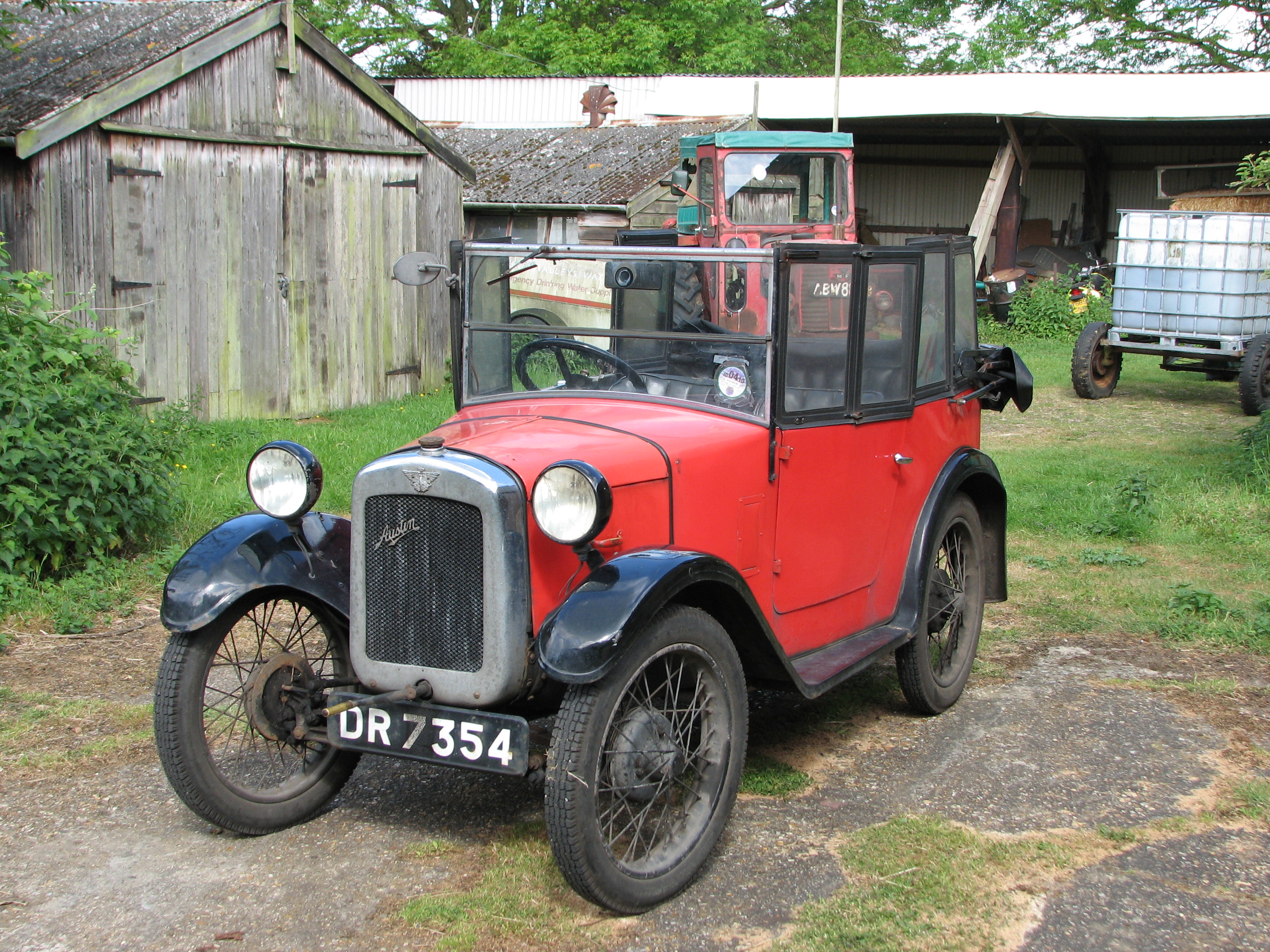
Yes, the car in question is an Austin Seven. I’ve driven several of them and they’ve all been pretty scary. Look at that picture again and you can just see the front brakes in the middle of the wheels. I’ve seen larger flies. I once drove one with an SU carburettor which could apparently do 70mph! I had enough trouble stopping it from 20…

But there’s something absolutely magical about a Seven. You really, REALLY have to drive one. You don’t just hop in and set off. Just travelling to the end of the road can be an adventure. I have major respect for the members of the Austin Seven world who drove the entire length of Route 66 in America. That’s just incredible.

The Austin Seven was conceived and developed in secret by Herbert Austin and a 14-year old apprentice. The management board thought it was a really bad idea, so Austin took to designing the car at home. Thankfully, the board were convinced that it was a good idea once they saw an actual car, and the Seven hit the road in 1922. It really was a shrunken down proper car, with a tiny four-cylinder engine, three-speed gearbox and mechanical brakes – the handbrake operated the front wheels, the footbrake just the rears. In 1930, the front and rear were finally linked.

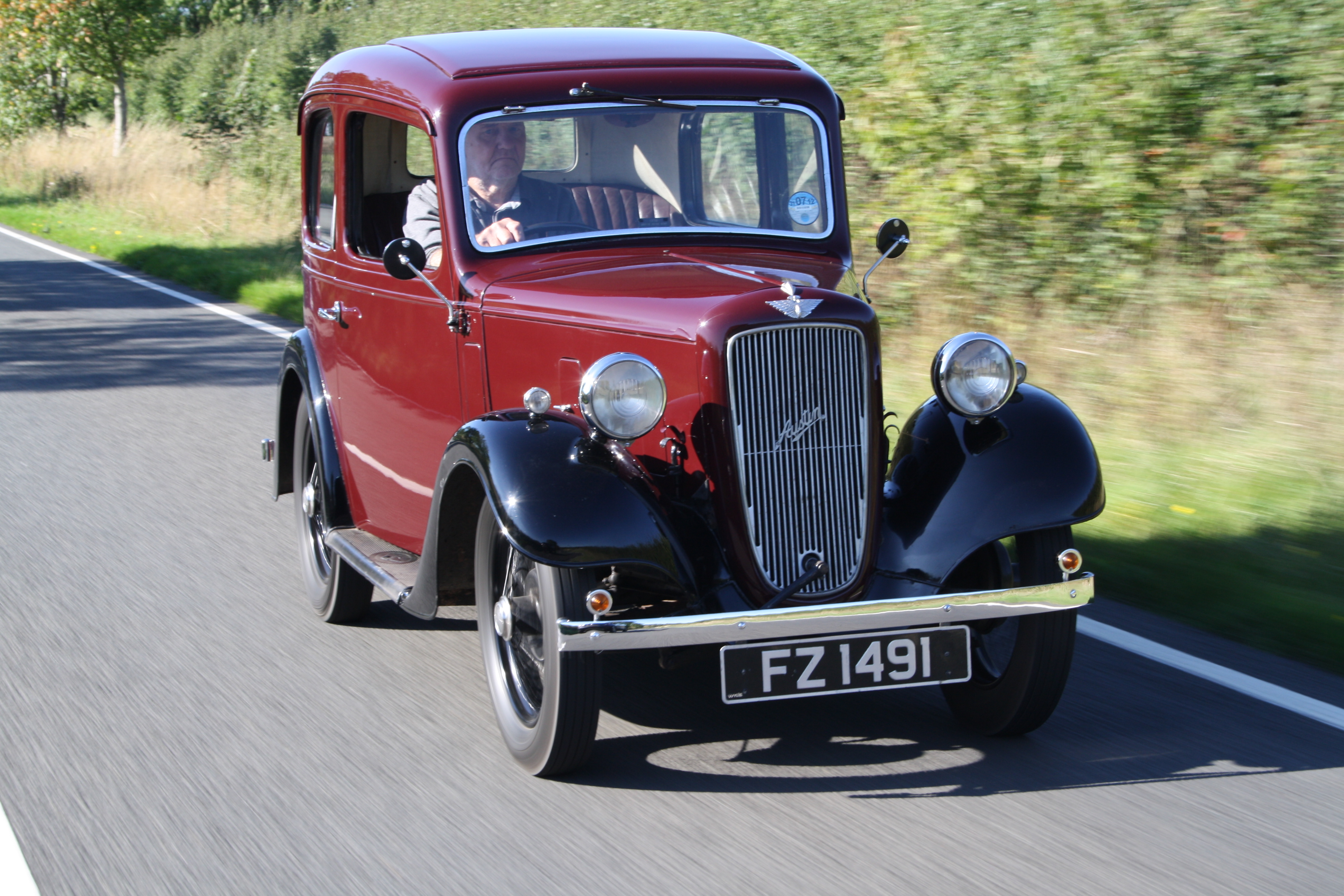
Sales were hugely strong, backing up Austin’s bravery in conceiving such a small design. The Seven was developed into the Ruby of 1934, which had a little more luxury. In fact, the Ruby is quite different to drive. Sure, it still fights all over the road, but the brakes are better and it steers with a little more accuracy. Still a shock to folk used to modern classics!

Ruby at speed. But not very much of it.

Ruby at speed. But not very much of it.

Really, everyone should be forced to learn how to drive an Austin Seven. You develop much more of an awareness of the world around you. Hills must be anticipated as must danger. You feel more like you’re wrestling a snake than driving, which keeps you awake! It isn’t a car that transports you with the minimum of fuss, it’s a car you must pilot with the care of an aeronaut.

Yes, they may be scary, but I still regard any opportunity to drive one as humbling and entertaining. It’s an experience to savour, all well within the speed limits of our time. If someone offers you the chance to try one, take it!


Rediscovering the 2CV magic

The 2CV had a blaze of activity in January, attending two events in the Abergavenny area, and ending up quite badly broken after both of them. First, the exhaust crossbox failed, then next time out the swan neck disintegrated. New parts were fitted and the 2cV then had very little use. In fact, the further it travelled for some time was when I took it to Hereford for some fettling.

It came back transformed and when the BX was ruled out as it’s not fixed yet, the 2cV was the only vehicle to take the Pride of Longbridge in Birmingham. That was a 210 mile round-trip and it was completed today without so much as a minor grumble – which is good as I didn’t take any tools. The weather was lovely to start with, turning to rain later in the day and reminding me that the leak situation is really not good. Fortunately I was wearing walking boots, so my feet didn’t get wet.

I can’t post any pics up of the event yet, in case it turns out that I can use said pictures to earn money. It would have been sensible to take some photos of the 2CV on its grand day out, but sensible didn’t happen.

You’ll have to make do with this photo, stolen from a friend, who happened to pass where I’d parked up in Longbridge earlier today.

2CV

2CV – just about (thanks Mark!)

Driving long distance in a 2CV can be a bit of a shock to the system. I reckon I nudged a genuine 70mph at one point on the M6 (near the M5 interchange – an astonishing result in any car!) which equates to 5000rpm. That creates a lot of engine and transmission noise but it’s nothing compared to the wind noise. The Ami felt almost silent by comparison. With folding, two-part side windows, a vent flap that doesn’t quite seem to fit below the windscreen, a hideously un-aerodynamic roof just above the windscreen and doors that flap above 60mph, it’s hardly serene.

It is comfortable though and, with a bit of thought, not too stressful – other idiots permitting. I got off quite lightly today. People can get rather upset when overtaken by a 2CV – presumably people with a problem in the trouser department. They either refuse to let you overtake by accelerating, or come flying past you moments later to try and prove to the world that trouser inadequacy isn’t a problem. As if people judge that by whether you let a rather feminine little car overtake you.

Mind you, I have been spoilt lately. The BX does a rather more gentle 2600rpm at motorway speeds, and wind noise is vastly quieter. I can actually listen to a stereo. I can keep it at 70mph no matter what nature hurls at me in terms of headwind and gradient too. I just put my foot down a bit more and allow the turbo to keep things moving.

Today was all about remembering that a 2CV is just as capable really. It may be a humble farmer’s wagon, but it’ll hurtle along motorways readily, and be surprisingly comfortable while it does it. I also had great fun taking some twistier roads on the way back. Few cars are such fun at entirely legal speeds.

It was proof that a properly sorted 2CV really is a marvellous thing.

The Ami Experience

Day two and the Ami is still making me giggle. Even just having it parked on the driveway is a pleasure.

Not as much of a pleasure as driving it though. Thanks to some choice modifications, including a Weber carburettor and gas-flowed cylinder heads, it’s ludicrously quick for a 602cc 4-seater built in 1965. At tickover, the exhaust sounds like it’s blowing badly, but give it the beans and it sounds insane! Acceleration is a bit of a shock to a 2CV owner too. This thing can actually shift.

It is unusual hearing that 2CV soundtrack in something which looks like a proper car – albeit one that looks most unlike any other proper car. But it is a little saloon, with proper doors, rather more comfort and a solid roof – one made out of plastic just to add to the quirky features. It feels like you sit much lower down than a 2CV, but I’m not sure that you actually do. The gearshift is a bit more of a stretch away, and not just because this car is left-hand drive. The cabin is wider than a 2CV, which means you seem to sit further away from the middle of the car – and therefore the gearchange. I’m sure there’s a gnat’s wing in it, but it does feel much wider.

Citroen Ami 6

Impress the chicks with an Ami

It’s quieter too. Sure, that exhaust is barking like an over-excited terrier, but wind noise is vastly reduced compared to a 2CV. With this punchy engine, an indicated 70mph is both relatively quiet and requires surprisingly little throttle. It’s quite unusual to be able to travel that quickly and still have power in reserve.

The seats seem to be even softer, closer to the feel of a DS – with that car also providing inspiration for the single-spoke steering wheel. The car bounces, and you bounce too, like the driver of one of those posh trucks where the seat and even the cab are separately sprung from the road wheels.

Not that the soft springing seems to bother the handling. The large wheel can induce comedy levels of lean, though the slightly lower stance of this one means it seems to corner with a little less drama. Fat 145 Continental tyres help too.

One intricate and quirky feature is the indicator stalk. Toggle indicators seem like a modern invention designed just to confuse people. Yet again, Citroën got there first! On the Ami, you flick the lever the way you want to indicate. It then returns to its normal position but the indicators flash. You have to pull the lever towards you to cancel it! Sounds absolutely ridiculous, but works well in practice, and at least the stalk doesn’t fall off in your hand like it can in a 2CV…

If all this makes it sound like I prefer the Ami to a 2CV, then you might just be right. I’m a bit shocked. Cars I’ve always wanted to drive can often be a bit disappointing in the metal. Not this one! The only problem is that I must force myself to remember that not all Amis drive quite as well (or as quickly!) as this one…

Road trippin’ in the Red BX

I enjoy driving, which is perhaps the most unsurprising statement with which to start a Blog post written by me. I enjoy driving long distance too, and I was itching for a long distance drive. After all, I’m planning to tour Scotland this summer in a car I only bought a couple of weeks ago. It needed a proving run.

So, I pondered where to go and it didn’t take long to realise that visiting my bestest and longest serving friend would be just about perfect. She lives 300 miles away on the opposite side of the UK – Ramsgate. From our house, that’s about 330 miles. Perfect!

For some reason, my wife didn’t fancy the seven hours each way of sitting in a passenger seat staring at motorways. It would be a solo mission. I carried out the necessary pre-flight checks (which mainly involved fitting some enormous rear speakers, though I did also check the fluid levels) and on Saturday morning, I hit the road.

The downside to living somewhere so beautifully remote is that it is beautifully remote. Therefore, the first hour and a half of my mammoth drive was spent getting to Telford, where some motorway happens at last. I shouldn’t complain – traffic levels were quite light, with few trucks about, so I was making good time. The approach to Birmingham was quite surprising though. It went down to 50mph, but no slower. Brilliant!

On I sailed, trying but failing to keep the speed down to an indicated 70mph. The car just felt happier at 80mph, which translates into an actual speed of about 72mph. At one point, I let it get up to an indicated 85mph, at which point the ABS warning light came on. Brilliant. I’ve got a car that likes to tell me when I’ve been naughty.

I pushed on down the M1, but called a very necessary halt for lunch at Newport Pagnell. This cost £7. Ouch. I also filled the car up with fuel. Or rather, having seen that diesel was 155.9p per litre, I sloshed enough in to get me to Kent and no more! Eventually, after what felt like many hours – because it was – I reached Margate, where my friend was working. Here’s an actual picture of the heroic machine.
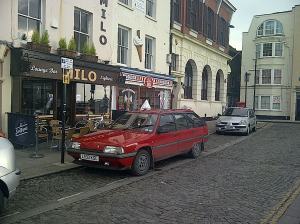
Margate BX

My trusty steed on the mean streets of Margate

Apart from the ABS light, there had been no drama at all on the journey down. The BX just sailed on and on, sipping fuel and producing hilarious amounts of exhaust smoke when I booted it. Which was often. That’s not to say the car didn’t have faults – there’s something amiss with the suspension, which makes it feel floaty on one side, but not the other. It’s a bit odd. There is also a very worn balljoint which will very soon be replaced, and a slightly worn inner track rod end on the other side. That means the steering lacks precision and it rides bumps with all the grace of a wheelbarrow full of crockery.

The next day, I discovered it was using a fair bit of oil too – hardly surprising as there is a pretty good oil leak down the back of the engine somewhere, as discovered last week. Still, at least it confirmed that the clever electronic oil level display on the dashboard is accurate!

The next day also involved a rather late night. We didn’t get in until 3am, and the BX found itself like many of its siblings once upon a time – on taxi duty. At this point, I’d like to point out that I don’t drink alcohol very often at all. My last alcoholic beverage was consumed on 22 May last year.

That meant that my plan to leave for home early on Monday morning was somewhat thwarted. I eventually managed to get myself on the road before 11am and prepared for another huge slog at the wheel. Again, it was plain sailing really. Not too much traffic, some idiots on the M1 but nowt I couldn’t handle and the miles were soon building up. I stopped for lunch after 127 miles – this time near Luton – then just kept driving, taking the M6 Toll and only stopping for roundabouts and traffic lights. I got back home at about 5pm. That’s a pretty good run.

I was very pleased with the journey. I had a horrible fear that choosing a Bank Holiday weekend would see me stuck in nose-to-tail traffic, but that didn’t happen once  – which is good because the cooling fan is on a manual switch and I was terrified I’d forget that fact. The motorway driving wasn’t too stressful, despite the best efforts of others and I do find real therapy in doing nothing more than piloting a car for hour after hour. It can still be enjoyable, even in this increasingly-crowded land.

The car coped absolutely fine, clocking up its 306,000th mile on the way there. Yes, there are things that need doing and yes, I need to really crack on with them. After all, it looks like we’ll be heading to the south east again before too long!
Mercedes – MOT time (again)

One thing I love about owning a Mercedes-Benz is the fact that those two companies – which merged in 1926 – are the two oldest manufacturers of motor vehicles in the world. Karl Benz and Gottlieb Daimler (who used the Mercedes name belonging to the daughter of one of his backers, Emil Jellinek) simultaneously developed their first cars – the first cars in the world. Benz got there first, just, in 1885 – the same year that Daimler built a motorbike. Daimler built a petrol-powered stagecoach the following year.

It’s a staggering history, unmatched by any other car manufacturer. Once the two companies merged, the Daimler-Benz organisation (now selling cars as Mercedes-Benz) fast gained a reputation for top drawer engineering.

Despite this reputation, I was still approaching today’s MOT test with some trepidation. After all, I’ve owned this car for a mere fortnight and have not seen the underside of it at all really, other than a quick inspection of the sills and front suspension mounting area when I bought it. 128 years of history was going to be little comfort if the underside had the structural integrity of a doily.

I needn’t have worried. The car didn’t disappoint and while on the inspector’s ramp, I could see that bar a couple of spots of light corrosion, there’s plenty of life in the old girl just yet. There were advisories for the surface rust, rusty fuel lines (still bone dry thankfully), a faulty fog light switch (it does work, sort of) and a wheel bearing with a hint of play in it. Phew. The gamble that was buying this car appears to have paid off. Jobs to do – but none of them too horrendous I hope, and I’ve now got plenty of time to get on with them. Or would have if work wasn’t quite so busy. Not that I’m complaining…

I’m not sure the Merc is going to be a keeper though. Don’t get me wrong, I really like it and have no plans to sell it just yet, but it doesn’t have the feel of a car that is going to win me over. One day, the lure of that smooth six-cylinder engine will be offset by the 24mpg it appears to be returning (which isn’t too bad to be honest). Fuel economy is not why I bought this car though. I wanted something effortless to waft around in. It does that very well. There’s just one problem. It’s not as comfortable as a Citroën BX!

I thought it might just be me but no, my wife agrees. The seats are ok, but the ride jiggles in a way that hydraulic Citroëns so marvellously don’t. It’s a reminder that the BX manages that comfy, big car feel in a package that isn’t unreasonably large. If only you could get a V6 BX. That would be an amazing machine.

In the meantime, the noise is something to enjoy – and now you can too with this snippet of video.

Almost a Citroen – Riley RM

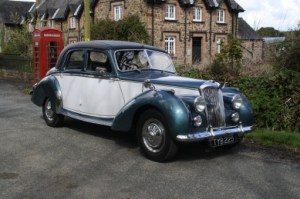
Earlier this year, I got a second chance to spend some time at the wheel of a Riley RM. It was a chance I leapt at as it happens to be one of my absolute favourite classic cars.

A superb blend of old and more modern in the form of the Riley RME

A superb blend of old and more modern in the form of the Riley RME

The Riley engineers took their inspiration from the Citroën Traction Avant, which explains features like the low-slung, sleek bodywork, rack-and-pinion steering and torsion bar independent front suspension. The engine is arguably more advanced than that of the Traction, with twin camshafts perched high up to allow for shorter pushrods. This allows the engine to rev more freely and the 1496cc engine in this RME puts out 55bhp, which is pretty much the same as the 1911cc Traction.

On the other hand, there’s still a separate chassis, the bodywork is still wrapped around an ash frame and the back axle is a simple live axle with leaf springs. Riley was tight for cash, so there were limits to just how far it could go in its pursuit of sport saloon glory.

The larger RMB/RMF used a 2443cc engine to give actual sports car performance. I’m very aware that this RME is a rather more gentle affair.

Clambering aboard is the first challenge. Suicide front doors and a narrow scuttle mean you have to slide your bum in, then squeeze your feet into the tiny footwell. It feels absolutely archaic, in a way that the flat-floored Traction just doesn’t. This example has an Open 5-speed transmission fitted, so there’s no worry about crunching into first gear. Just select and ease away.

Cosy inside, but beautifully appointed

Cosy inside, but beautifully appointed

On the move, this car is a revelation, casting aside its ancient demeanor to feel much more impressive than cars that came decades later – some wearing the same marque as badge-engineering was forced upon Riley. The ride isn’t that impressive perhaps – you’re under no illusion as to the elderly nature of the back end – but it feels taught and responsive in a way many older cars just don’t.

Sadly for France, I’d rate it ahead of the Traction Avant even. The steering is not so heavy, though the steering wheel is still enormous. Hustling a Traction through the bends will cause you to develop muscles in places you didn’t think existed, but the Riley feels light by comparison and cornering is an absolute joy.

Ok, so performance is leisurely at best, but it’ll ease its way up to a 55mph cruise and is comfortable to remain there all day. The brakes are up to the task with such limited performance and the car stops well.

It’s an odd mix then of old and more modern and for that reason remains one of my favourites.

A longer version of this feature was printed in the December 2012 issue of Classic Car Mart

It’s been a long time Monty…

The first car I drove after passing my driving test back in 1995 was an Austin Montego 1.6L estate in the rather pleasant shade of Lynx Bronze. It was my dad’s company car and a pleasant ol’ bus it was too. Leaping from a Vauxhall Corsa straight into this slab of Austin-Rover loveliness was akin to going from a dinghy to a royal yacht. This car was so big that you couldn’t easily reach the passenger door from the driver’s seat! It felt enormous.

All credit to my dad then because the weekend after I passed my test, he jumped into the passenger seat of said Montego and let me take him for a drive. Now, my dad is a lovely bloke, but he’s about as comfortable in the passenger seat of a car as I am. If Jenson Button was driving me, I’d question his abilities and would be convinced that I was surely to die in a spectacular fireball. I think my dad is similar of mind.

Happily, I didn’t crash but I still have happy memories of that first drive and find it a bit sad that the Montego in question was, like so many, scrapped many years ago.

Incredibly, I’d not driven a Montego since, though I did briefly own a Maestro 1.3L, which redefined the word ‘disappointing’ in my mind.

So when I found myself heading to the exotic location of Crewe to drive a Montego for the first time in 17 years, I was rather concerned about how the experience would pan out. Would it be utterly boring and disappointing like the Maestro or would it rekindle a whole heap of nostalgic memories?

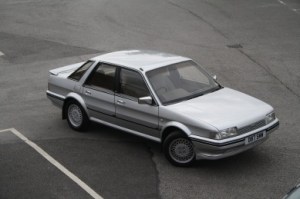
I must admit that I’m one of few people who consider the Montego an attractive car. Especially in silver, with a surprisingly pleasant set of alloy wheels attached.

Montego. Surprisingly attractive.

Montego. Surprisingly attractive.

I know that Roy Axe, who moved to Austin-Rover just as the Montego was developed, was horrified when shown a Montego prototype. He disliked the scalloped sides inherited from the Maestro and the uncomfortable rear side glass. To his credit, he tweaked as best he could and the Montego was one of the sharpest lookers of its time – though the blobby Ford Sierra and ruthlessly angular Vauxhall Cavalier were hardly masters of style themselves.

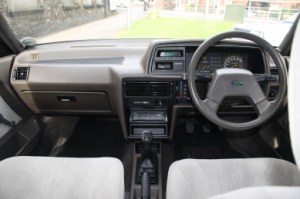
It’s not a bad story inside either. The interior hasn’t dated very much at all really, with clear, informative dials only let down by the rather scattergun approach to switchgear. One gimmick I love is indicator stalks that are gently illuminated. The fit and finish isn’t bad, but sadly there are some nasty plasticky creaks and groans. Nothing unusual to a Citroen BX owner it must be said…

Not bad inside, almost pleasant!

Not bad inside, almost pleasant!

But the time had come. Being a freelance writer allows you to indulge in moments like this. I was about to drive a Montego again.

You might mock, but I was genuinely excited about this. I’d hurtled northwards in my Nissan Bluebird with a genuine buzz, and not one generated by the Bluebird’s amazingly well constructed interior. I was putting the two cars head to head for a feature in Classic Car Mart – the details of which you can read in the November 2012 issue.

But this was it. The S-Series, 1.6-litre engine was up and running. Off we go!

The first thing that struck me is how un-boat-like it felt. That last Montego had felt wallowy and enormous, but I’ve driven an awful lot of cars since then. The Montego now felt really rather pleasant. There was no power steering, but it simply didn’t feel necessary, even with the extra width of the non-standard wheels and tyres. Noise levels were good, the engine felt perky and it was very comfortable.

Sure, it was about as composed in the bends as an X Factor contestant talking about how they were doing it for their guinea pig or grandfather or something, but that’s ok. This car harks from a time when family cars rightly placed comfort ahead of excellent on-track handling. It was fine if you didn’t push it. If you want a sports car, buy a sports car!

I really did enjoy this one though. It might seem odd to get excited about what has become such a forgettable car to so many people, but it was a firm reminder to me that ALL cars are worthy of collector status, for these are the cars that we remember from our younger days, and they’re often really rather good.

Montego - worthy of remembrance

Montego – worthy of remembrance

On the buses, ding, ding!

Moving to Wales in October 2010 was a MASSIVE decision, though I’m not sure it really felt like it at the time. We were both increasingly frazzled thank to work but especially location. So, we opted for a new start in a pretty place.

It has been a challenge though. It took us ages to work out the language – not just the actual Welsh language (we sadly must concede that we haven’t learnt enough of that) but pronunciations. How do you pronounce Ysbyty Ystwyth, Llanrhystud or Pontrhydfendigaid? (Usbutty ustwuth, clan(it’s hard to type the correct way to pronounce LL)-rust-id, pont-rid-fendy-guide)

My master stroke was to get involved with a local community transport group. It was a chance to volunteer my new spare time but also a superb way to meet local people, get to the bottom of pronunciations and find where these places are! I haven’t regretted getting involved, even though it eats up much more time than I first expected (largely because I ended up on the management committee).

Of course, it also meant I got to drive new and exciting vehicles, so here’s a run down of the two buses that the community transport group owns outright.

They both date from 2005 and share a bodyshell – a Volkswagen LT and a Mercedes-Benz Sprinter. Both have less than 65,000 miles on the clock too, so they’ve had gentle lives.

Can I handle the brute power of these mighty German machines?

Can I handle the brute power of these mighty German machines?

The Merc has a four-cylinder engine, the LT a warbling five-pot. They look similar because this was a joint development between Mercedes-Benz and Volkswagen and were even built in the same factories – though engines and transmissions hailed from each manufacturer respectively. That’s why the Sprinter – a facelift version – has a dashboard mounted gearchange while the LT uses the older floor-mounted design.

The engines are punchy enough, though with this much weight to shift, you can forget about traffic light grand prix, though that’s largely due to the nearest set of traffic lights being more than 12 miles away. That’s a shame though as the low gearing means you can surprise rabbits for initial getaway. You’ll need to change gear well before the speedo needle gets as far as 10mph though. Mr Rabbit just keeps going. Rabbit pie is off the menu.

Handling is good though, if you compare it with an Austin A35 Countryman. With a worn steering box. Grip is good thanks to the downforce generated by 15 or 16 passenger seats, and a tail-lift in the case of the Sprinter, though one doesn’t push the limits. The passengers tend to grumble.

The ride certainly can make them grumble. It’s a bit firm and crashy. That live rear axle is not set-up for refinement.

But they cruise nicely. A speed limiter set to 62mph might sound a bit boring, but then the legal speed limit around here is 50mph for a minibus. Only on the rare occasion that we travel as far as Carmarthen do we get to legally do 60mph on a dual carriageway. Legally, we can do 70mph on the motorway, but there isn’t one and even if there was, there’s a speed limiter set to 62. How odd.

It’s incredible how different these two buses actually feel to drive. The smaller Mercedes engine at least benefits from a sizeable turbocharger, though it’s one that spools up readily, making the one bolted to my Citroen BX feel like a relic from another age. The LT has that five-cylinder grumble that I do admire. but it doesn’t pull so well below 2000rpm. It’s more akin to the BX in that you really have to keep it within a sweet spot to get the best out of it. You might think that’s not too important, but it’s very hilly around here, and keeping the power coming while remaining smooth is important. The Mercedes wins here.

The clunky dash-mounted gearchange lets it down though. The LT’s gearchange is nothing special either – you can actually feel things meshing and it’s akin to operating an abucus with a long stick. So, the Mercedes wins again, even with its sometimes-unpleasant action.

With engine and transmission done, the differences become that much less. The switchgear is largely the same and the brakes and handling identical. Even with the differences considered, there’s not much between them. I guess I shouldn’t really have favourites, as I could be called upon to drive either of them as work dictates. So, I shall go for the traditional conclusion of the absolute cop out. I like both of them. Well, it is true. Mind you, I tend to like almost everything with wheels (Nissan Figaro apart perhaps…)

Perhaps one day I’ll get to do a head-to-head test with the Volkswagen Crafters and Peugeot Boxer that also make up our fleet. If this one hasn’t made you fall asleep that is…

Feegaro Failgaro

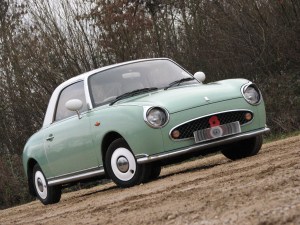
Nissan went a bit silly in the late 1980s and early 1990s, and started churning out some truly oddball stuff. All based on the Nissan Micra K10, other Pike Factory products included the curvy Be-1, the distinctly retro Pao and the even more retro Figaro.

All were sold in Japan only, but many have since made it to British shores – the Figaro especially. I must admit that the Figaro has plenty of charm. Sure, it’s not exactly butch but remember I own a 2CV. I don’t feel the need to compensate for inadequacies by driving around in something covered in bulges and air intakes.

Figaro by Nissan. About as masculine as LOLcats

Figaro by Nissan. About as masculine as LOLcats

When I got the chance to sample one a while back, I was overjoyed. I love quirky machines, and the Figaro is still more than capable of turning heads. It’s got masses of retro appeal, while managing to look like nothing else that’s ever been made. The canvas fold back roof is a nice touch, as are the wheeltrims – which combine classic-style hub caps with modern plasticky surrounds. It somehow works perfectly.

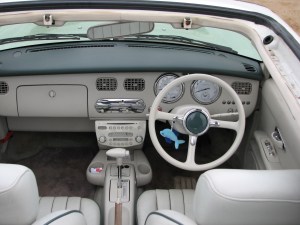
Then there’s in the interior. Wow!

Wackiness continues inside. Beautiful

Wackiness continues inside. Beautiful

They really did go the whole hog with this one. A spindly steering wheel and barely any black plastic to be seen. There are one or two chrome toggle switches and even the CD player is bespoke and designed as part of the dashboard. The dials are a rather blatant nod to British classics too.

I clambered aboard and prepared to cruise the mean streets of Peterborough in this stylish machine. That was a mistake, not just because Peterborough is a festering boil on the flatness of the fens. It was also a mistake because the Figaro is, in fact, rubbish. Absolutely bloody hopeless in fact.

The problem is that under the skin, it’s a 1980s supermini. There’s the unusual combination of a 1-litre, four-cylinder, turbocharged engine but also a power sapping automatic transmission. There was no manual option. It sounds utterly dreary and accelerates with all the urgency of a sleeping cat.

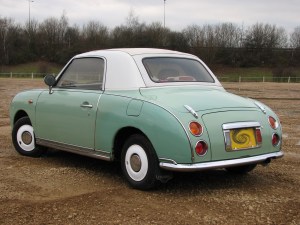
Cute arse can't save the Figaro

Cute arse can’t save the Figaro

Twirl that fancy steering wheel and the car changes direction. Er, that’s about as exciting as things get. The ride is also woeful. If that wasn’t bad enough, rust protection is entirely inadequate – Japan doesn’t hurl salt all over its roads in winter – so that pretty bodywork is also very prone to simply falling apart.

To say I was disappointed would be to understate things somewhat. I was less disappointed by the appalling mess that was Quantum of Solace – a Bond film that merrily urinates all over the famous 007 format by having a plotline that’s as interesting and believable as a party political broadcast.

You see, a car is more than just about quirky looks. A 2CV has quirky looks but it delivers a quirky driving experience. A Scootacar is quirky and also pretty horrific to drive, but you forgive it because it was nailed together by people in a shed. The Figaro has looks that are entirely unmatched by the driving experience. It’s like finally plucking up the courage to speak to that girl you fancy in the office and discovering she likes X Factor. And shoe shopping. And nothing more.