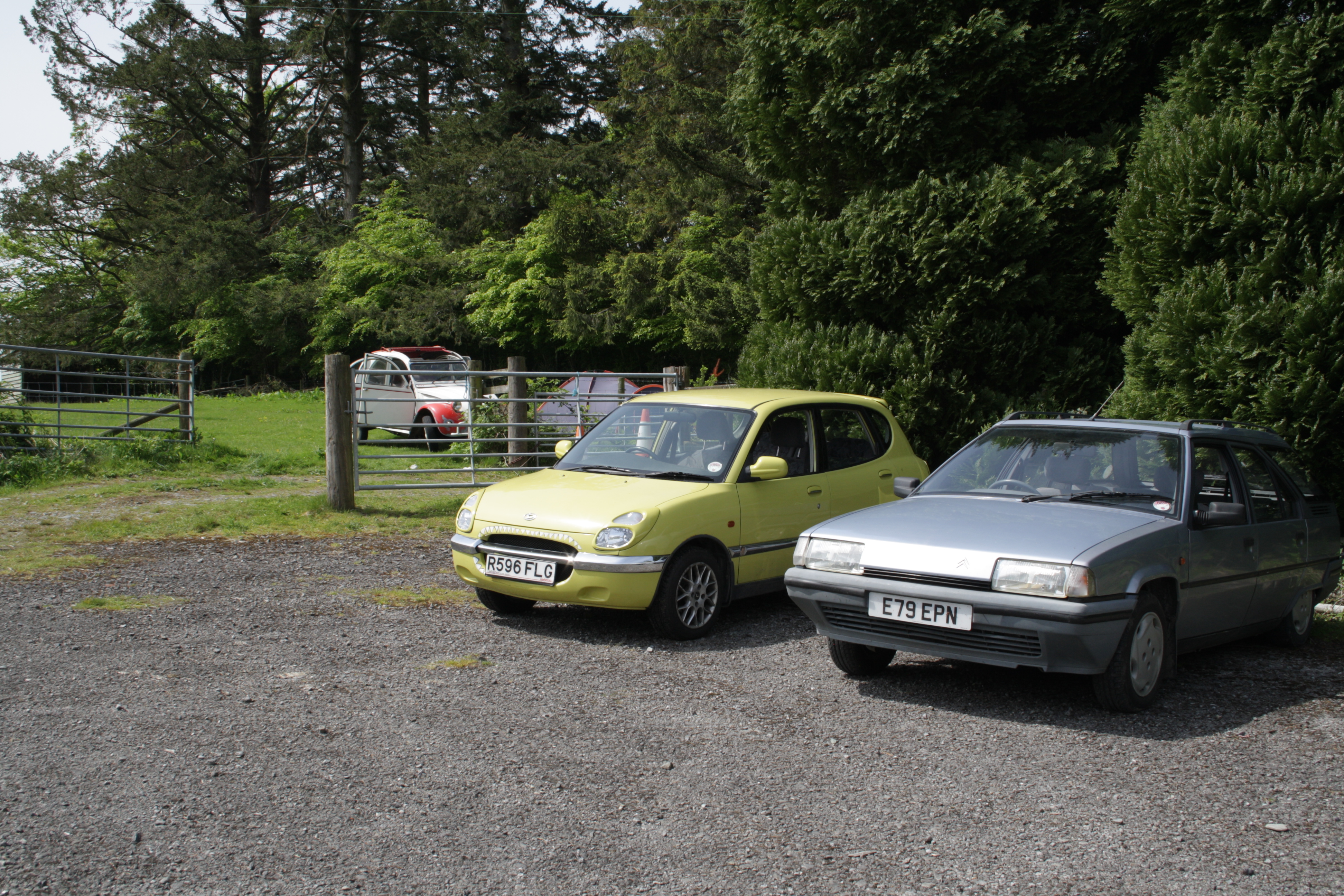
The teeny, tiny fleet

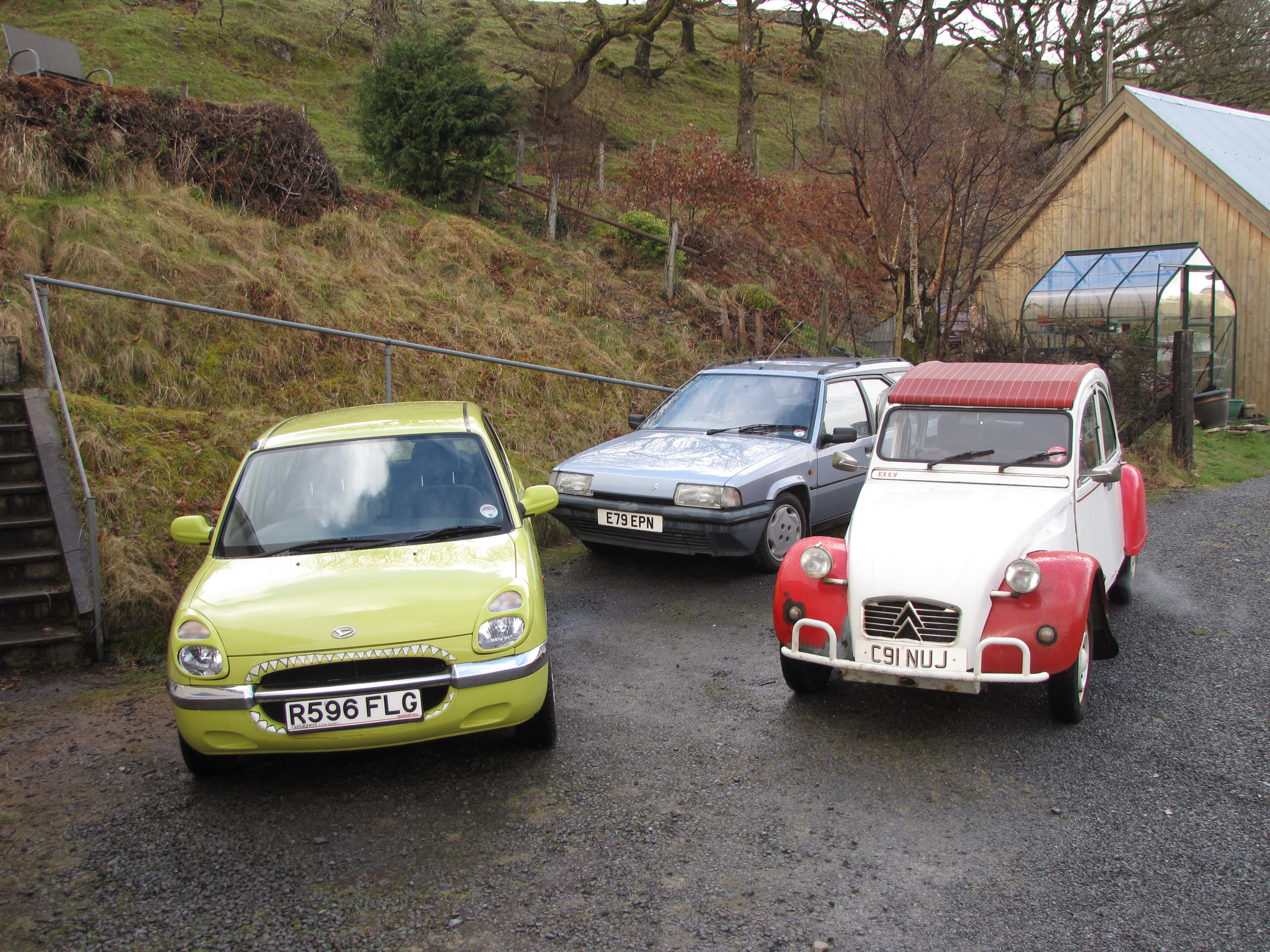
So, I have sold the most powerful vehicle in the fleet – a throbbing 71bhp and have left myself with a tiny fleet – 1591cc and just 83bhp between the pair of them.
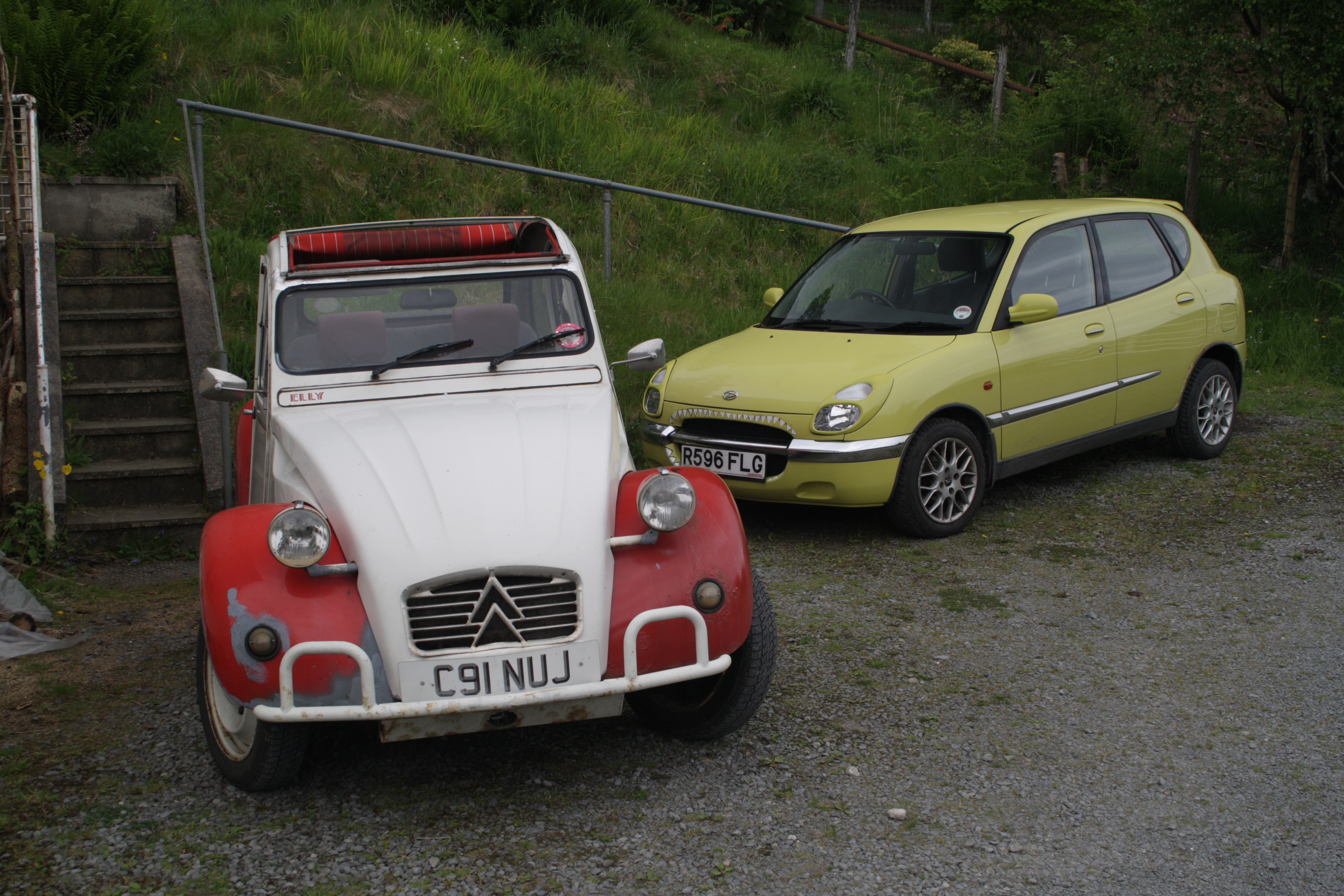
Little cars

Tiny fleet, happy fleet?

It was the right decision. These two feeble machines provide an enormous amount of entertainment and both are in the cheaper road tax group. I get a huge amount of pleasure from thrashing them around the wonderful Welsh roads and they still better 45mpg. Lovely. The BX was fun and economical too, but it was time to move on. It was the right vehicle when I bought it, but I’m hoping it’ll be easier to focus on the various maladies of just two cars.

In these power-crazed times though, I like ignoring ‘sage’ media advice from Top Gear and the like, that suggest we need more and more powaaaaargh. No, we don’t. Powerful cars are very exciting. For a few seconds. Then you’re left either frustrated that you can’t explore the full potential of the car at legal speeds, or in trouble because you have explored the full potential of the car at illegal speeds. The most powerful car I’ve driven on the road had over 400bhp and felt like you could out-accelerate time. Yet I came back from the test drive realising I couldn’t hit the red line in any gear but first without breaking the National Speed Limit. It’s like being given the keys to the chocolate factory and being told you can eat no more than one chocolate bar. Insanely frustrating.
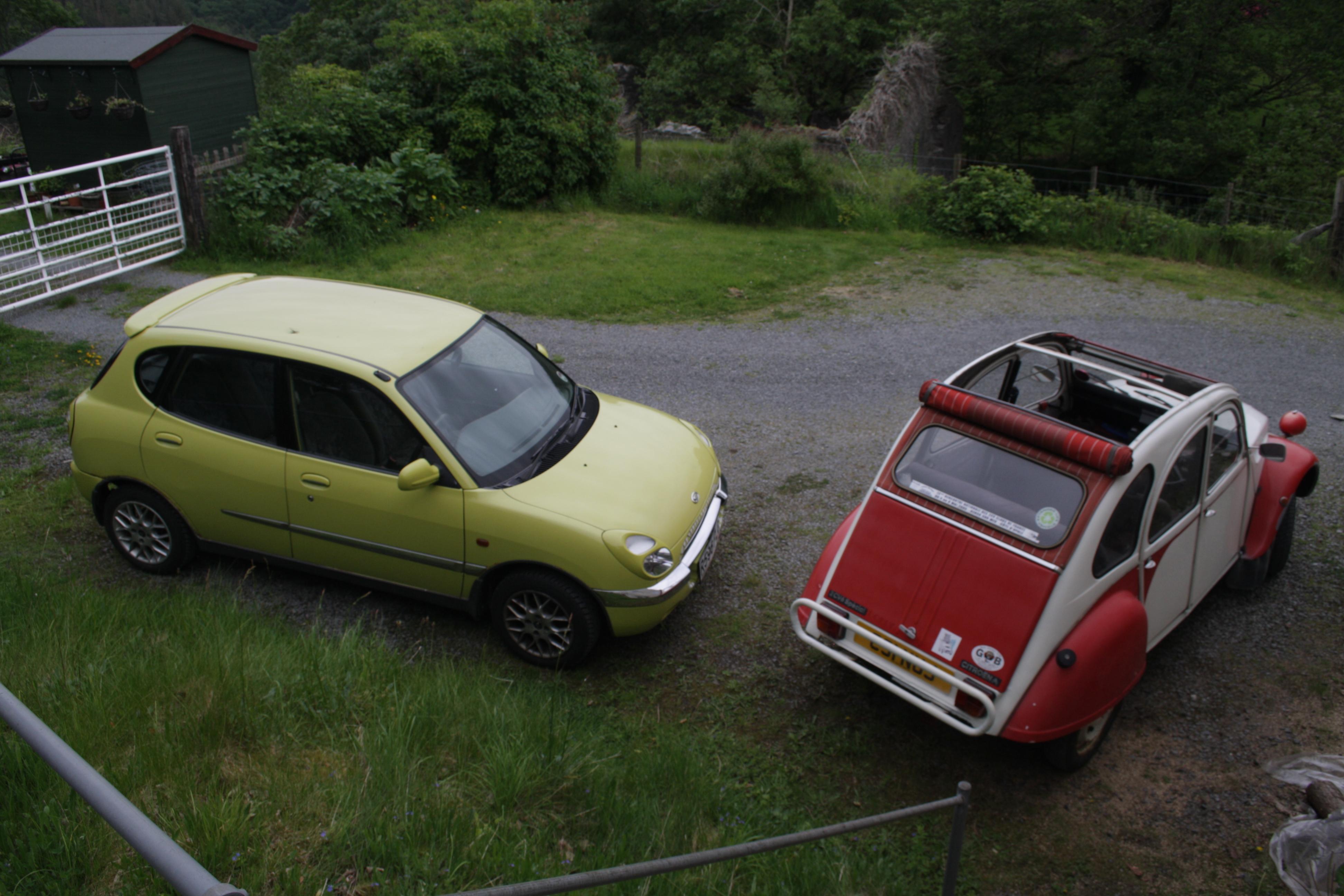
My oddball pair

My oddball pair

It’s a rather different story with my feeble twosome. The 2CV is pretty much flat out at the motorway speed limit and I can rag the Sirion through the gears and have lots of fun while not falling foul of the 60mph limit on local roads. I can chuck them into corners at what feels like very entertaining speeds, but what looks to outsiders as barely moving. There’s another key difference too – size. The BX was quite a big car, by my standards at least. You can’t have fun on Welsh roads in a big car, as you’re constantly concerned about what might be coming the other way. A narrow car is very handy on the other hand, as you can usually squeeze past whatever is coming the other way. If you can’t, light cars stop more quickly…

The only downside really is overtaking, which requires bravery, technique and a lot of anticipation. The main issue is that you get ‘mugged’ by more powerful, modern stuff which can accelerate swiftly while my pair need a bit of a run up. You can’t just put your foot down more if something suddenly appears coming the other way as you’re already flat out! One alternative is to sit back and just enjoy the view. It’s quite a nice view in these parts.

In the future, I do want another waft-barge, as I anticipate there’ll be a fair bit of distance driving to cover this year. I’m in no rush though. For now, I shall enjoy unpowerful motoring. The next priorities are further 2CV smartening and a bout of welding for the Daihatsu. Let’s see whether I can resist buying anything until those are done.
Shedlook – polishing is not for me

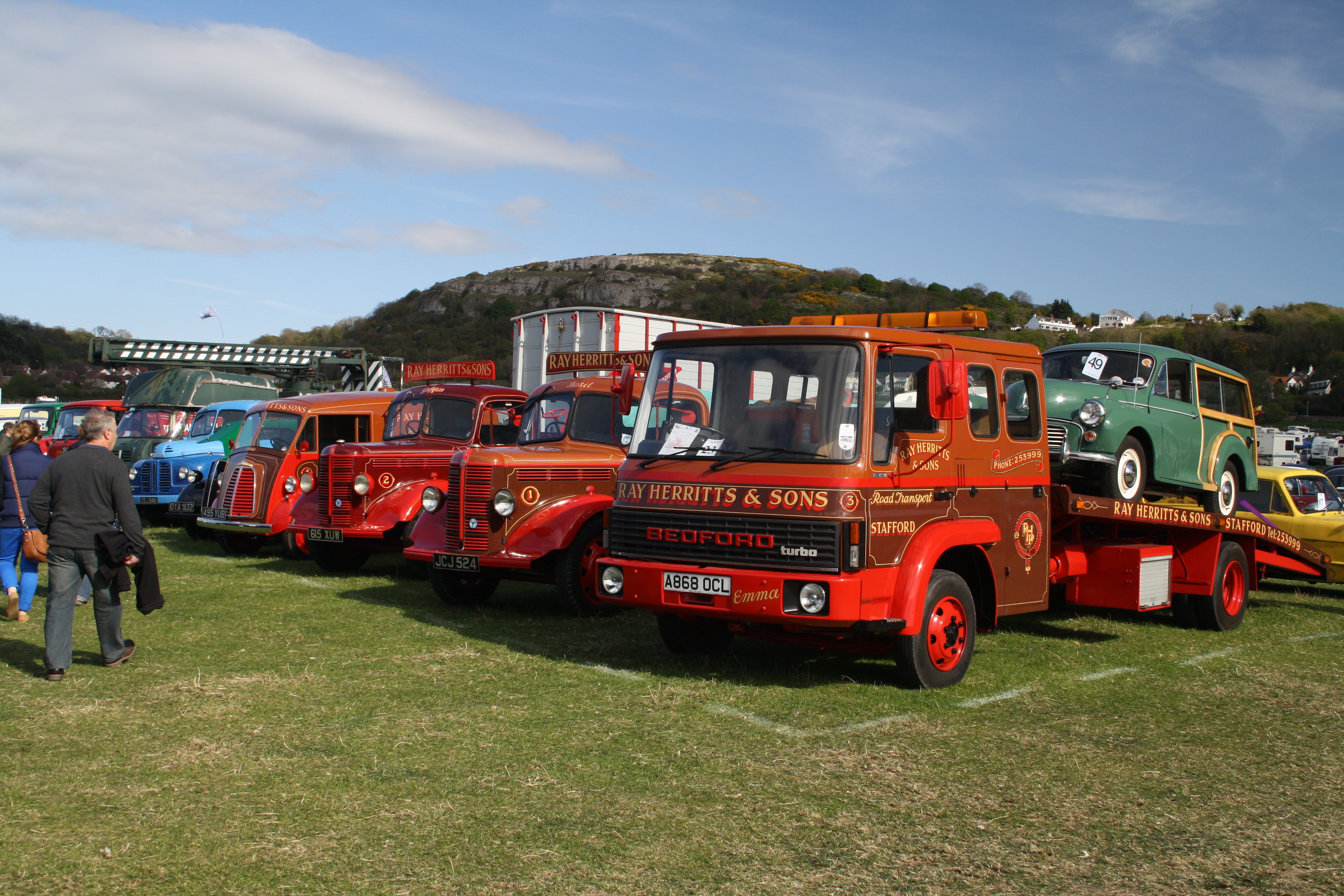
Car shows are awash with super-shiny classics. Fair enough. A lot of people take a lot of pride in their vehicles. The problem is, these cars rarely looked so nice when they were current. This is especially true of commercial vehicles. When prepared for show, they’re often far cleaner and more immaculate than the day they left the factory. Yet it often turns out that a shabby vehicle can get far more attention than an immaculate one.

The Bedfords of my youth were never this shiny

The Bedfords of my youth were never this shiny

Not that I’m a big fan of ‘rat look’ either. Deliberately letting your car go rusty is about as sensible as storing all of your actual cash money in a washing machine. It always looks fake too. A genuine distressed look is hard to replicate.

I find myself somewhere between the two. My 2CV is in an appalling state cosmetically. I dream of her being in immaculate condition again, like she was, briefly in 2006 at the end of a two-stage restoration. I don’t know why I dream of that, because trying to maintain that level of condition with a daily driver was impossible. So, I think I’m just going to accept that my 2CV is going to be tatty. It’s not a look that particularly suits the two-tone Dolly, but she’s not going to be factory fresh after 196,000 miles, and that’s that. If folk get sniffy about her shabby condition, then that’s their problem.

Another reason for not being tempted by the restoration route is that cars often look over-restored. I know my 2CV was. Two-pack paint was used, so she looked ridiculously shiny. The original cellulose finish would age with time and leave the car looking as old as it was. I love cars like that. Cars don’t have to be all glittery! The problem is, trying to maintain the sheddy look.

So fresh from resto that she's lacking side stripes

So fresh from resto that she’s lacking side stripes – 90,000 miles ago

The above is Elly immediately after her major restoration. So recent was it that the side stripes have not yet been fitted. Indeed, we were still fitting parts the day before this shot was taken, on the other side of the country! She looks good, it must be said. You can even see the inside of the wheels because they’re so clean!

Here’s what she looks like now.

rusty 2cv

Cosmetically challenged – a good thing, right?

Pretty shambolic, especially when you get up close. I’ve not bothered painting that wing because I plan to replace it entirely at some point. But, I’m ultimately happier with Elly in a messy state. I don’t have to worry too much about destroying her immaculate paint finish – it no longer exists. It means I’ll use her for pretty much any activity, including off-roading.

After all, variety is the spice of life. I’d be utterly devastated if I turned up to a 2CV meet, and was greeted by a line-up of immaculate cars, looking like they’d just left the factory. 2CVers have always gone in for customisation, and loving cars in all conditions. There’s no reason why this can’t apply to the wider world. Rat look shouldn’t really be encouraged as something to aim for, but increasingly, I’m thinking the same about full restoration. Why try and hide the life a car has enjoyed?

May 2014 Fleet Review

I’ve had a quiet couple of days on the car front. Frankly, it’s hard to know where to go next after the delights of a Kia Pride. Sadly, it seems that my thinking has focussed on saying goodbye to the BX. I really like the concept of the BX. It offers a wonderful mix of super-comfort, super-practicality and ridiculous economy. But I’m finding that the same niggles are frustrating me, and reminding me why I quit BXs last year.

The single windscreen wiper annoys me, as does the lack of a ‘flick’ wipe – an essential feature when you live in Wales, where there are at least one hundred and eleventy different grades of rain. The crap interior quality is a source of annoyance too. I’ve utterly failed to track down some of the trim rattles and every BX seems to have rattles in different places.

Fleet

One of these is for the chop…

That’s a poor list of excuses really though isn’t it? It seems more the case that I’m just bored, having owned many BXs between 1999 and now. In truth, financial matters are forcing my hand somewhat too. Our low-income, hippy lifestyle doesn’t really allow for huge expenditure on cars. I’m trying to run three of the things on a shoestring budget. All of the cars have their faults, and I can’t afford to sort any of them out at the moment. What can’t be avoided is road tax though, and as I’m still punished for enjoying middle-age tin, there’s no way of escaping it. The Sirion’s tax is up for renewal and sadly direct debit is not yet an option. It’ll be interesting to see how that works when it comes in later this year.

I shouldn’t complain. The Sirion has proved an excellent choice of machine. It has cost very little since I bought it for £370 last October. I’ve changed the engine oil twice and the front caliper sliders once. There will be bodywork to attend to before the MOT expires in July though – the sills don’t really seem to be there.

And here’s a strange observation. I love a comfortable ride. It’s why I own Citroens. The Sirion is pretty dreadful. Yet I’m finding that given a choice, I’ll choose the Sirion over the BX. That’s not a good sign. So, a fleet adjustment is in order and the BX is the one for the chop. Yes, it’s the most practical vehicle I own, but it also has by far the least engaging engine. The Sirion and 2CV prove that economy can still be fun and while the BX still has marvellous handling, it always feels a bit of a plodder – lacking the fizz of the Sirion’s screaming triple, or the 2CV’s vocal flat twin.

Naturally, I’m already contemplating what comes next, though this is somewhat at odds with my desire to keep the Sirion on the road and the need to pay a looming tax bill in July. I fear I may have to go down the road of owning only two vehicles for a while, which is somewhat at odds with my desire to stop the 2CV rusting away. She’s been spending a lot more time hiding in the garage of late, only coming out when the weather is fine. I must admit, 2CVing feels more fun when water isn’t dribbing down the dashboard and into your shoes. I’m also hoping that it’ll slow the body rot somewhat.

For now though, I shall attempt to move the BX on to a new owner and will do some window shopping as I try to decide what, when I can afford it, will be the best BX replacement. A warbling, five-pot Volvo 850 turbo diesel is appealing.

Craptacular Road Test: Kia Pride

As alluded to a few blog posts ago, what killed off typical cheap motors such as the Lada Samara was a new wave of ‘cars we’d seen before’ built somewhere cheap. These included the Spanish Seat Marbella (an older Fiat Panda), the Proton (Malaysian Mitsubishi Lancer), the Sao Penza (South African-built Mazda 323) and, from 1991, the Kia Pride – a Mazda 121 with a South Korean accent.

Kia had been producing cars since the 1950s, but a tie-up with Ford from 1986 proved useful. Ford already boasted a strong relationship with Mazda, and this led to the Pride. The story starts with the Ford Festiva, launched in 1986 and designed and built by Mazda. The Mazda 121 followed in 1988, but was not sold in Japan. In 1991, production moved to South Korea and the Kia Pride was born – still sold as a Ford Festiva in markets such as Canada, Australia and the United States. Apparently, 1800 Kia Prides were sold in the UK in 1991, but Kia has now become a popular brand here, with its current range far from being cheap, old versions of cast-off designs. That’s because Hyundai bought the bankrupt Kia in 1998 and the Ford interest was ended. The Pride made a brief reappearance in the UK and the tested car is one of those last models.

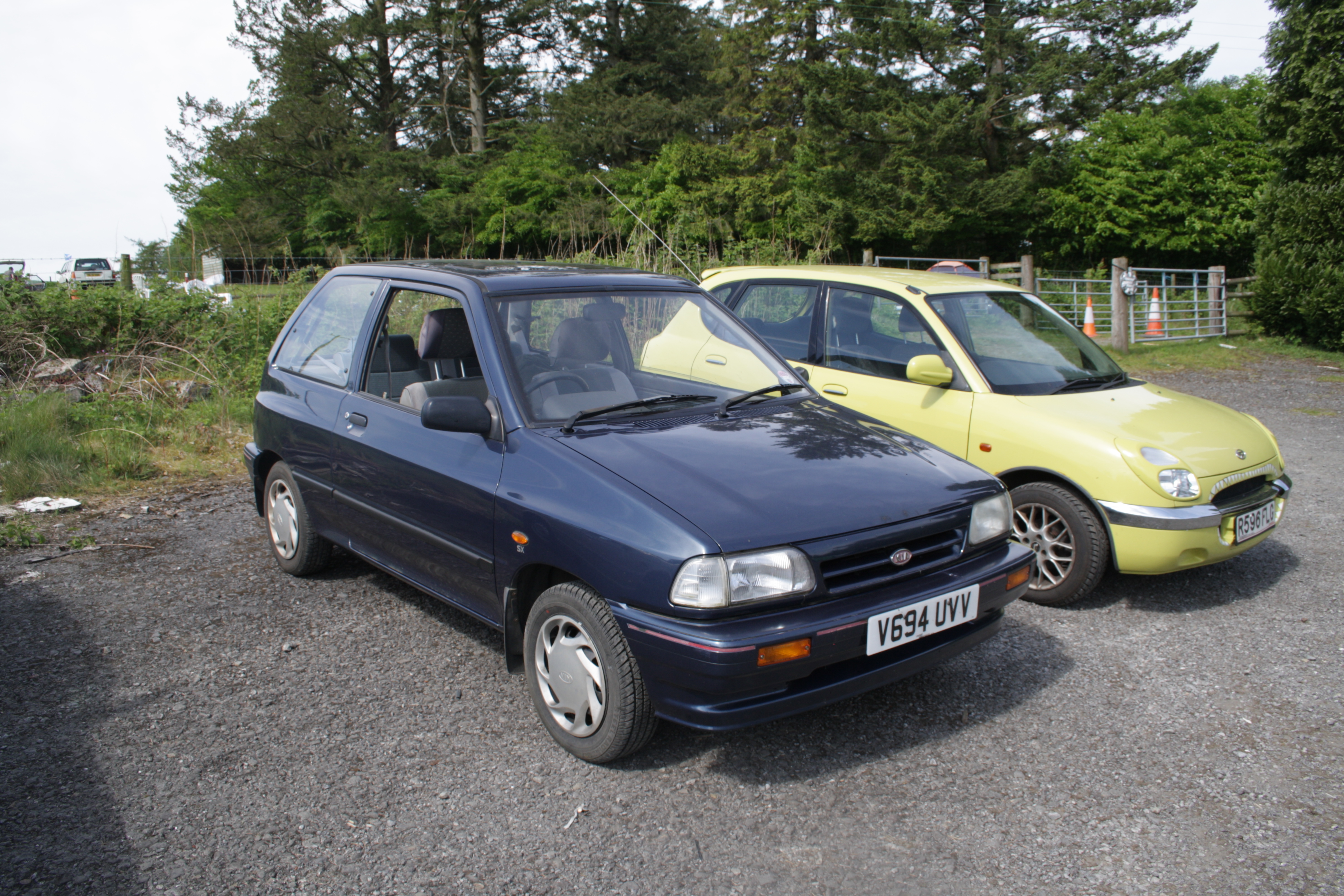
Prides were sold with jazzy white wall tyres, but it’s rare to see one so equipped today. Such is the state of the one I got to drive. To be honest, I wasn’t going to bother. Even me, the great lover of crap cars, considered the Pride to be as exciting as a ballpoint pen. Useful yes. Exciting, no. Besides, I already own a Daihatsu Sirion. Compared to that, most small cars seem utterly boring.

One of these little cars is brilliant

One of these little cars is brilliant

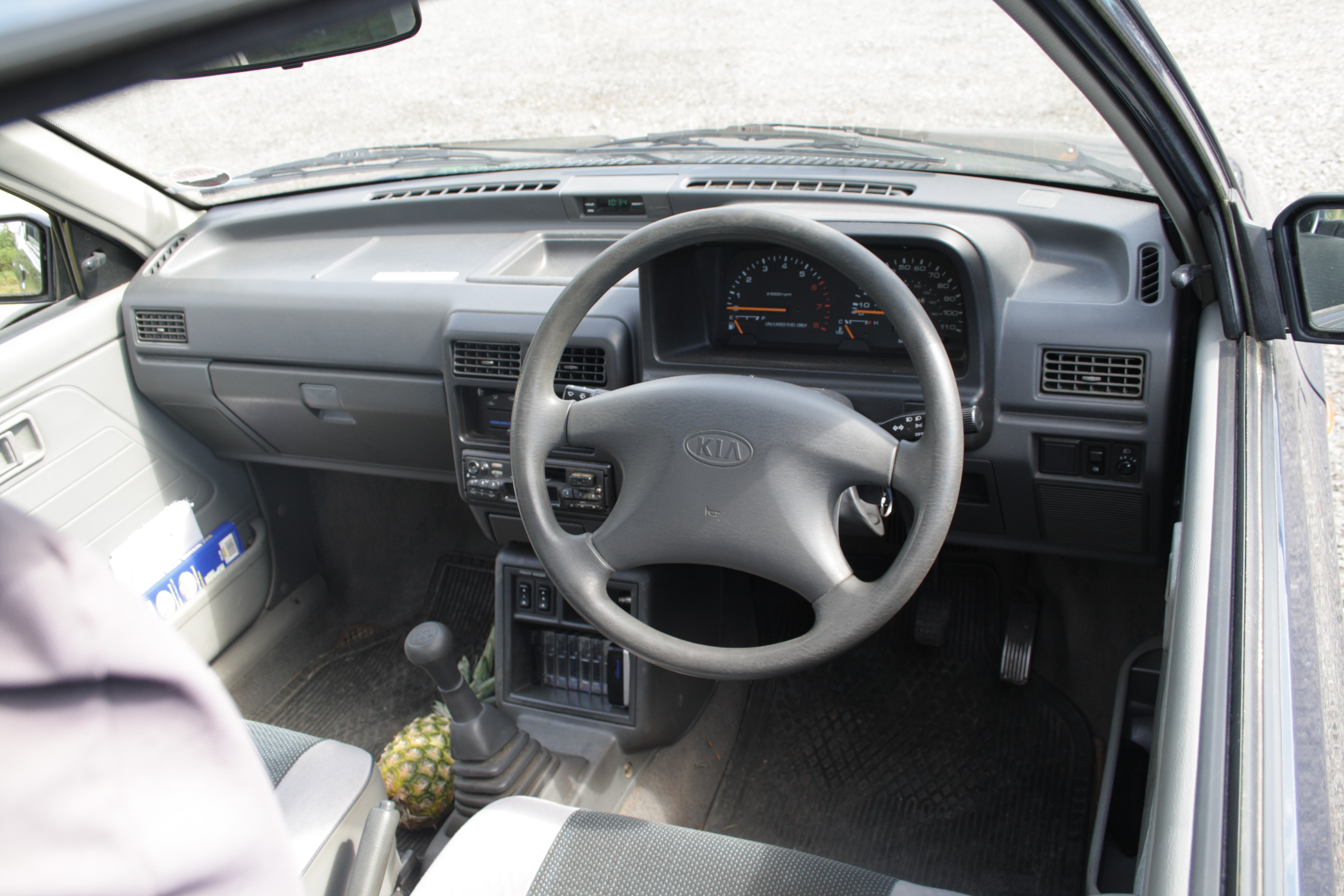
The owner cajoled me into having a go though. It seemed only polite to accept. After all, to be truly informed about your own favourites, you need to try the opposition. Clambering into the Pride at least allowed me to escape from the brain-numbingly dull looks. The door is huge, and it felt like I was opening the entire side of the car. That helps with the feeling of space inside, as does the width. It’s only 2 inches narrower than a Citroen BX. A huge glass area leaves it feeling rather bright inside, as does acres of light grey plastic.

Pride inside

Not exactly inspiring. Pineapple adds interest

It’s not very inspiring, though I must concede that the inside of the Sirion is not exactly interesting either. The Japanese seem good at dull and functional, though at least switchgear wasn’t too scattered about. Only the electric window switches (yeah, posh eh?) confuse, by being mounted near the passenger’s right knee on the centre console.

The engine fires up as swiftly and sweetly as you’d expect. All a bit ordinary, but it does work with no bother. So far, so underwhelming. The gearchange felt a bit rubbery, but I felt confident enough to head up my favoured test hill. It went really well! The 64bhp engine has a nice spread of torque, so (unlike my feeble Sirion) it picks up speed briskly without need for ear-bleeding revs. That’s good, as the engine hardly sounds nice. It’s not unpleasant, but I can’t really describe it as pleasant either. It’s just another mundane four-pot. They tend to sound like this.

Reaching bends, things didn’t fall apart either. There was less roll than I expected, the unassisted steering was really rather good and precise, and it seemed happy to grip the road well. Bumps didn’t unsettle it unduly either. I began to suspect that motoring scribes who had little good to say about the Pride were either unrealistic in their expectations, or hadn’t actually driven one at all and just guessed that its budget price meant it was hopeless.

I also found it comfortable and the gearing seemed tall enough that motorway driving wouldn’t be too much of a chore, though this is pure guesswork as our road test took place about two hours away from any motorway. The five-speed gearbox has a good spread of ratios though.

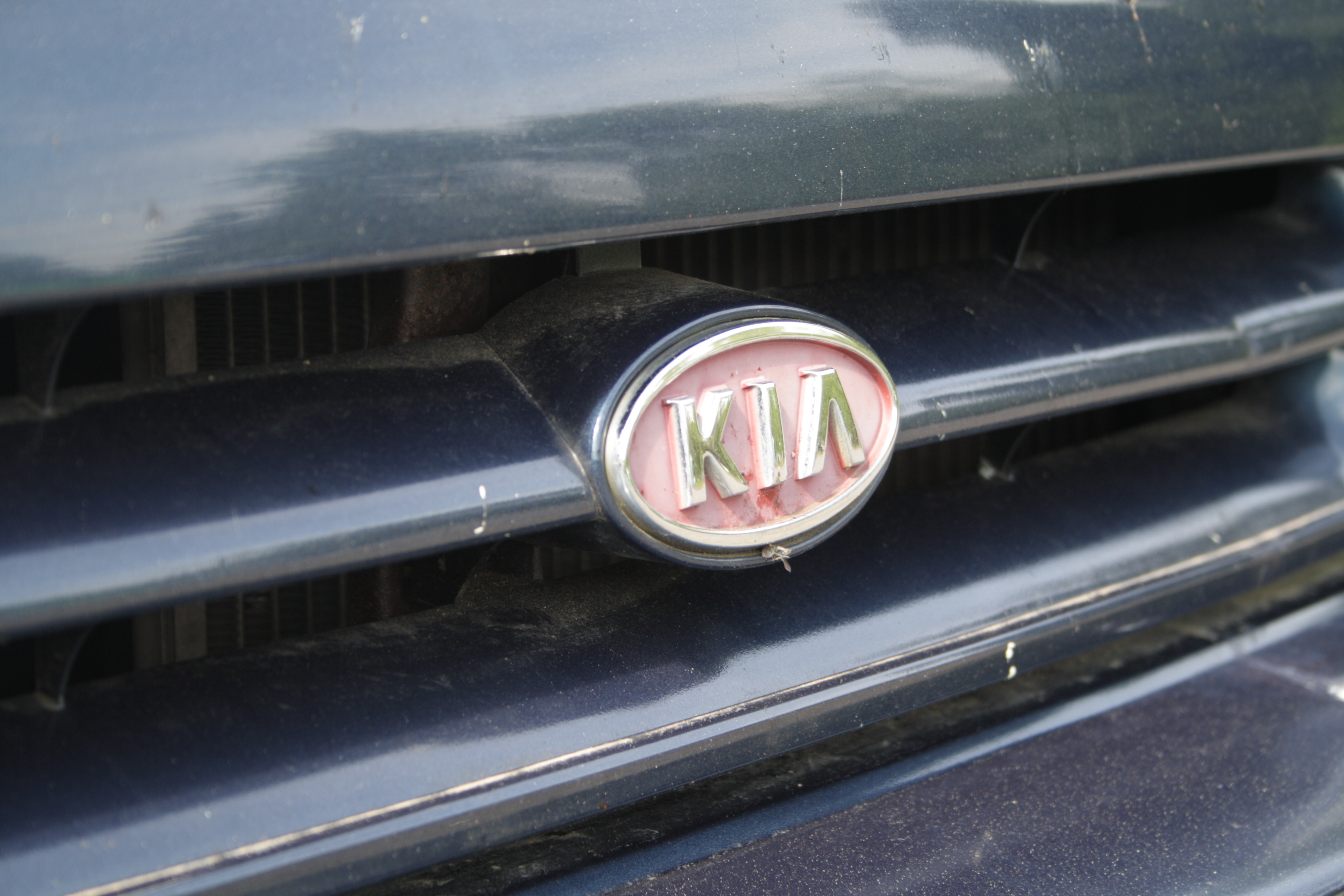
Kia is Korean for 'surprise.' Er, maybe.

Kia is Korean for ‘surprise.’ Er, maybe.

There you  have it then. Unsurprisingly, I found this unremarkable car quite pleasant. Isn’t it funny how actually, most 1980s/1990s cars can be described as pleasant? This one was purchased only a few weeks ago for the grand sum of £300 with an MOT until next year. That’s astonishing value really for a car that feels very competent and further proves that you really needn’t pay the earth for a good, working motor car. In many ways, it was much better than my Sirion. More spacious, more comfortable, quicker, more relaxing but, importantly, not as much fun. So, I’m happy to recommend the Kia Pride – but would always prefer something a bit more oddball myself.

Craptacular Road Test: Vauxhall Cavalier Mk3

Incredibly, it was 26 years ago that the third generation of Vauxhall Cavalier was launched. I remember it well. Permit me another Motor Show moment as I remember the 1988 gathering of new cars. Gone were the rigid, boxy lines of the Mk2 Cavalier. Instead, Vauxhall/Opel built on the public acceptance of the swoopy Sierra – that acceptance was a long time coming. The Cavalier was timed perfectly. I remember sitting in the Cavalier in 1988, feeling very impressed by the split/folding rear seat that was a feature even on the saloon. This ten-year old critic was impressed.

I loved the styling too, but it wasn’t until 1990 that I got my Cavalier experience – a relative got a bright red 1.6L as a company car. He probably doesn’t know this, but I tested the safety feature built into the electric windows one day. The theory was that if it encountered a hand on the way up, it’d stop before crushing the hand. Thankfully, it does! Because I tested it with my hand.

Not that the good point stopped at stupid-child-friendly windows. The Cavalier was one of few cars where you could carry out a clutch change without dropping the gearbox. A far cry from the palaver that faced the Sierra owner. It was entirely designed with fleet markets in mind. Yet I liked the growl that Vauxhall engines managed to deliver, even in 1.6 form.

I had to wait even longer than my LT moment to actually drive a Cavalier Mk3. The example I was faced with had typically crusty rear arches and was very evidently not in the first flush of youth.

Cavalier/Vectra Mk3

Desirable, isn’t it?

Incidentally. Here’s an anorak fact for you. The windscreen wipers were changed in 1991 for the simple reason that the original design didn’t easily allow you to change a wiper blade! The bonnet got in the way. Concealed wipers are all well and good for aerodynamics, but the revamped wipers were a lot easier to change. They haven’t parked properly in the above picture.

Clambering aboard the Cavalier was a true step back in time. I spent many, many hours pretending to drive my relative’s Mk3, so I was very familiar with the layout – if not all the extra toys and velour that the CD spec gets you. To be honest, it’s not a particularly thrilling place to sit. Lots of grey and black plastic and little inspiration.

Plasticky. Apols for the wonky wheel. The steering lock engaged

Plasticky. Apols for the wonky wheel. The steering lock engaged

This was the first time I’d moved the stubby gear lever and been able to drive off, so it was quite a moment. The mechanical action felt very familiar. The nose was aimed at a hill and away we went. The 2-litre engine is nice and punchy, with excellent torque characteristics. It sounds deep and gruff. Like Barry White doing a lion impression. It’s surprisingly appealing for a four-pot engine. As we powered around a series of bends, I was struck by how pleasant the Cavalier is to pilot. Hardly sports-car exciting, but grippy, composed and with enough power to sprint between corners. No wonder Ford felt they had to push the boat out with the Mondeo. General Motors had got a massive jump on the Blue Oval.

The seats were comfortable too, though I’d need a longer test to really ensure comfort. Vauxhall have a bit of a reputation for poor seating – a passenger experience in the back of a Zafira still carries painful memories.

Facelift model with extra trim between lights

One practical hatchback. Curves were astonishing in 1988

Overall though, the Cavalier more than lived up to expectations. It’s still very tempting to hunt down one of the excellent Isuzu-diesel powered versions, but even the petrols offer good pace and economy. It’s easy now to forget the impact of the curvy Cavalier back in 1988 but while corrosion has killed many, the Cav still makes a great cheap buy today and still drives very nicely. Not hugely exciting, but marvellously competent.

Craptacular Road Test: Volkswagen LT

I remember clambering into a Volkswagen LT at the NEC Motor Show, probably in 1990 when I was 12. I can’t really explain why, but this was always the Volkswagen van of choice for me. For a start, it didn’t have an engine in the load bay. This seemed sensible. It’s also enormous and even as a child, I felt like I was sitting in more of a truck than a van. I was also already horribly addicted to the six-cylinder growl these vans usually emitted. My hearing was tuned to listen out for the smooth bark of an LT on the move. I guess it says something about me when an LT interested me much more than any other Volkswagen on the stand that year, including the Corrado with its clever lifting rear spoiler. Welcome to my world.

Cor! Far cooler than a Type 2

Cor! Far cooler than a Type 2

Somehow, it took until 2014 for me to get the opportunity to drive one, thanks to my mate Mat. He heroically used the van to tow a Hyundai Stellar V8 (a car I really would like to road test one day, when it’s back on the road, hint, hint) all the way from Anglesey to my village. How convenient! For the purposes of the test, the Hyundai and car trailer were removed and are pictured purely for artistic licence.

Clambering aboard is a challenge, as it really is like climbing into a lorry cab. You sit high up, with a huge steering wheel in front of you and your knees perilously close to the very front of the vehicle. A burst of glow plugs and the six-pot engine fires into life. This is largely similar to the engine used in the Volvo 700/900 turbo diesels (and the 240 on other shores). This one was turbocharged, kicking out 127bhp@4700rpm and a meaty 203lb ft of torque at 2550rpm [EDIT sorry, only 95bhp and 150lb/ft – which explains a lot!]. The five-speed gearbox has a dog-leg first. It’s a very short gear that you don’t generally need on the flat. I pottered around the car park in second and got a feel for the vehicle. It felt enormous! This is seriously wide and it feels far more so than the later, Sprinter-based LT.

Edging out of the car park, I aimed it up a hill. This was a mistake. Was the throttle broken? Had I left the handbrake on? Had a joking friend reconnected the car trailer and Hyundai while I wasn’t looking? No, it really was this slow! The turbocharger takes an absolute age to wake up. It’s laggier than a water pipe in Iceland. Mind you, it does make a superb noise as it spools up. Then there’s a brief burst of excitement as the engine growls more menacingly and speed builds up. Problem is, you have to wave a lengthy gear lever around to try and get the next gear before the turbocharger slows down too much. This is challenging work! Catch it off boost and performance just disappears entirely. My friend’s heroic towing efforts from North Wales became all the more impressive. Apparently, he was reduced to first gear at one point.

Thankfully, the steering is rather pleasant, so you can focus on extracting the best from the engine. This LT is camper converted, and they were never particularly light to start with. What amazes me most is that you could specify one without the turbocharger! With less than 80bhp, how do they even move? Hills aside, you can amble along quite nicely. It feels composed and almost relaxing. The high-and-mighty driving position is very comfortable. On flatter terrain, the turbocharger woes are less extreme. It does sound magnificent too. Multi-cylinder diesels are ace!

Overall, I’d certainly far rather drive one of these to Scandinavia than the Citroen H van we actually used back in 2007. Yes, it is still slow, but the engine sounds nice without being too loud, and it seems comfortable and refined at 50mph rather than screaming flat out. It’s a shame most have rusted away. I still maintain that the LT is a far better van than the rear-engined types. This was definitely a test I enjoyed. Worth waiting for!

Craptacular Road Test: Volvo 850

It may not look it, but the Volvo 850 was a hugely important car for the Swedish firm. It changed the company’s fortunes entirely, yet still looks unmistakably like a Volvo should. It was a car that demonstrated that Volvo could do performance. 850 estates went racing in the British Touring Car Championship, while the later saloons actually won races and vied for the title. The 850 was actually launched in 1991, which scares me a bit as I see it as a modern car. UK sales began in 1993, with a range of engines available, all five-cylinder. That’s a good start.

The T5 and T5R were the headline makers. They had silly amounts of power and very short tyre life. I ended up driving the 2.5TDI automatic, which is probably my favourite version as power is unnecessary in my book – perhaps even undesirable. While petrol versions used a new, Volvo-designed engine, the diesels used a Volkswagen five-cylinder engine. One I’m very familiar with as it was also used in the Volkswagen LT van. In the Volvo, it develops 140bhp.

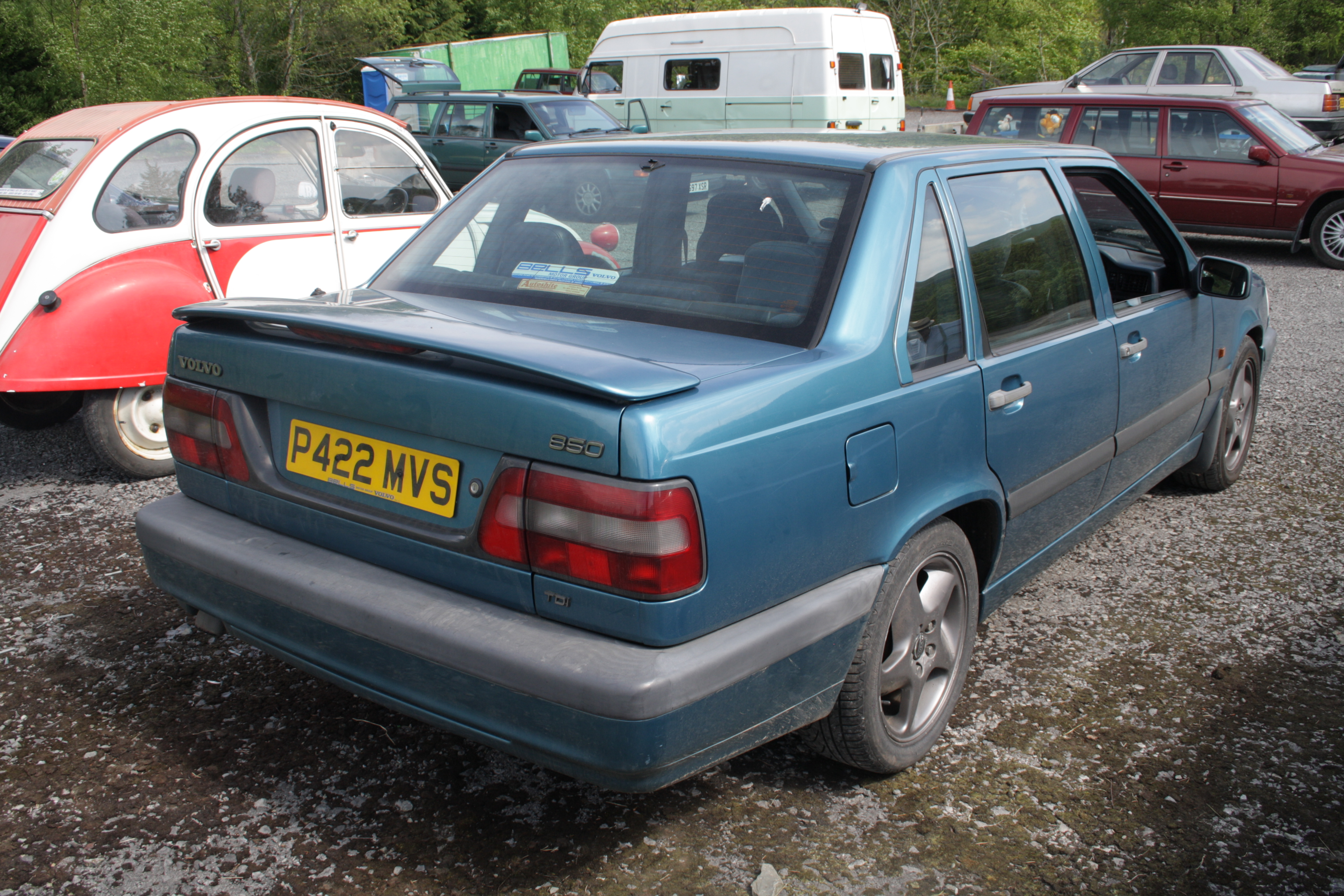
Volvo's game-changer. Nice colour

Volvo’s game-changer. Nice colour

This example uses the ZF automatic gearbox. I think the diesel/automatic combo is a really good one, when both engine and gearbox are strong. I once drove a Citroen C5 diesel auto to Paris and back. It was supremely relaxing, even around the French capital. This was starting to feel less of a Volvo 850 road test and more of a polite introduction at the start of a new relationship. Would I be inviting it home for coffee?

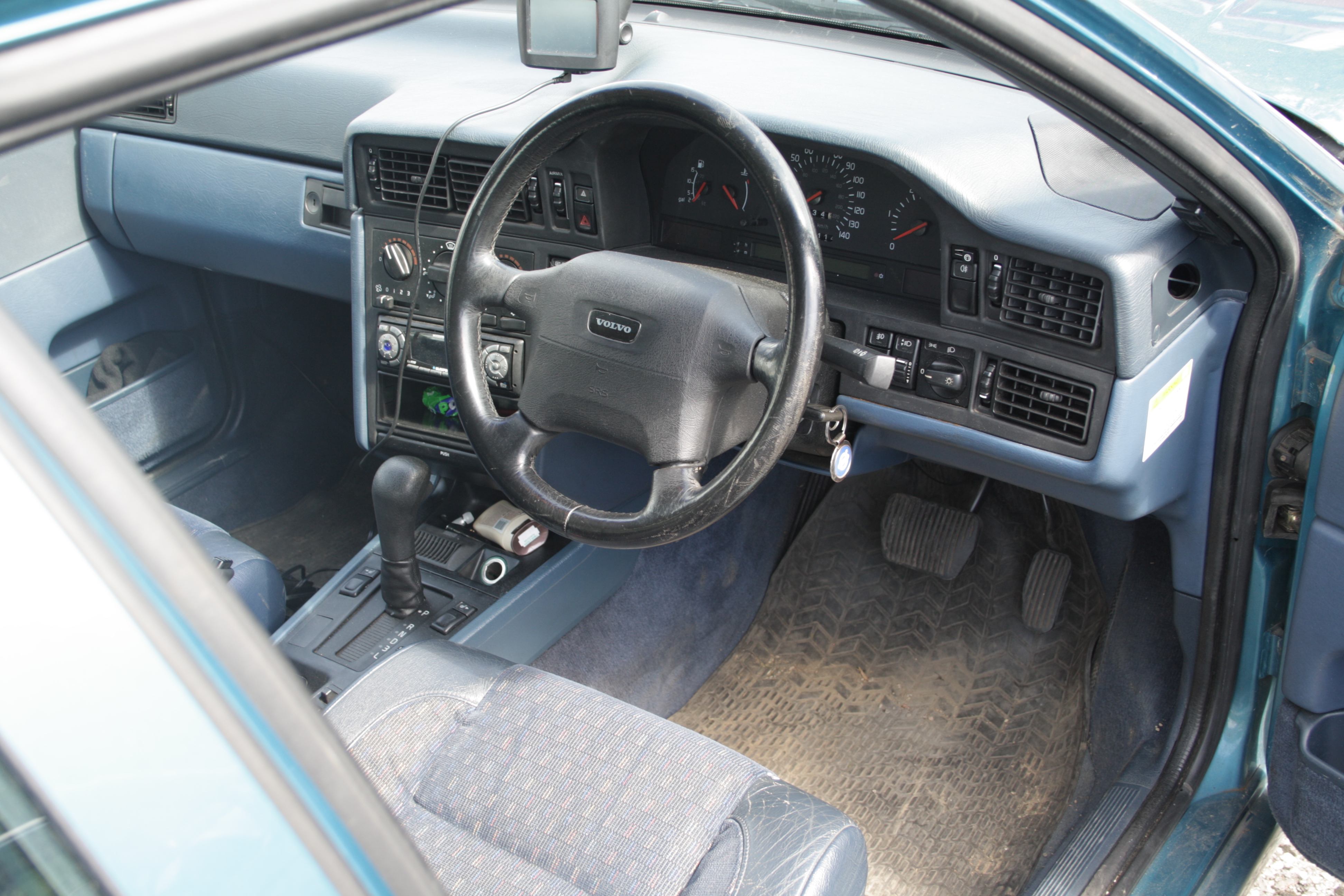
Clambering aboard started well. Comfortable seating is matched by a delicious amount of blue. As you’ll recall from my Land Rover Discovery and very blue Nissan Bluebird, I’m not averse to a bit of colour inside a car. Indeed I very much welcome it.

Very blue, surprisingly nice

Very blue, surprisingly nice

The engine fires up with a distinctive, off-beat clatter. One that’s very familiar from the minibus I drive. Pulling away is simply a case of slotting into D, releasing the handbrake and letting the torque ease you away. The engine growls in a quite delightful manner but the gearbox is a perfect match for it. It’s happy to use the bountiful low-down pulling power and doesn’t seem over-keen to kick-down. Perfect. Give it a boot full, and it certainly will drop a ratio, allowing the engine to warble as the revs rise. Turbo lag seemed remarkably non-existent and while performance certainly isn’t spectacular, it’s strong enough. The owner reported that it was simply effortless to drive down from Fife in it, and he was getting 48mpg. Remarkable.

The ride isn’t super smooth, but that’s compensated for by a composed feeling when cornering. The spirit of the car doesn’t really encourage all-out hooning, but the steering has a nice weight to it and is nicely direct. Bodyroll doesn’t seem to happen much either. It’s a very nice car to drive briskly even if it isn’t one for thrashing.

This is a late saloon - production ended in 1997

This is a late saloon – production ended in 1997

I was impressed. This felt like a car sitting poised and ready to eat up some miles. Even better, early ones now qualify for classic insurance! I’m finding it very hard to resist checking out the classifieds. Ok, I HAVE found it very hard to resist checking out the classifieds. Problem is, I’d have to sell my BX to afford a Volvo. Not sure that’s a leap I’m ready to make, but I did enjoy the Volvo very much. It’s a car that changed the public perception of Volvo, and very much for the better. The 440 and 480 hadn’t really had the market impact Volvo needed from its move to front-wheel drive. The 850 was the car that made the grade. Deservedly so. I thought it was rather marvellous. I’d better stock up on coffee.


Craptacular Road Test: Peugeot 504

I have a vague memory of travelling in a white, Peugeot 504 estate taxi back in the mid-1980s. My main memory is that I was upset that the driver wasn’t wearing a seatbelt. It may have been the first taxi journey I ever took, as a child of no more than eight years. I’ve not really been anywhere near a 504 since. It was time to make amends! And yes, I did wear my seatbelt.

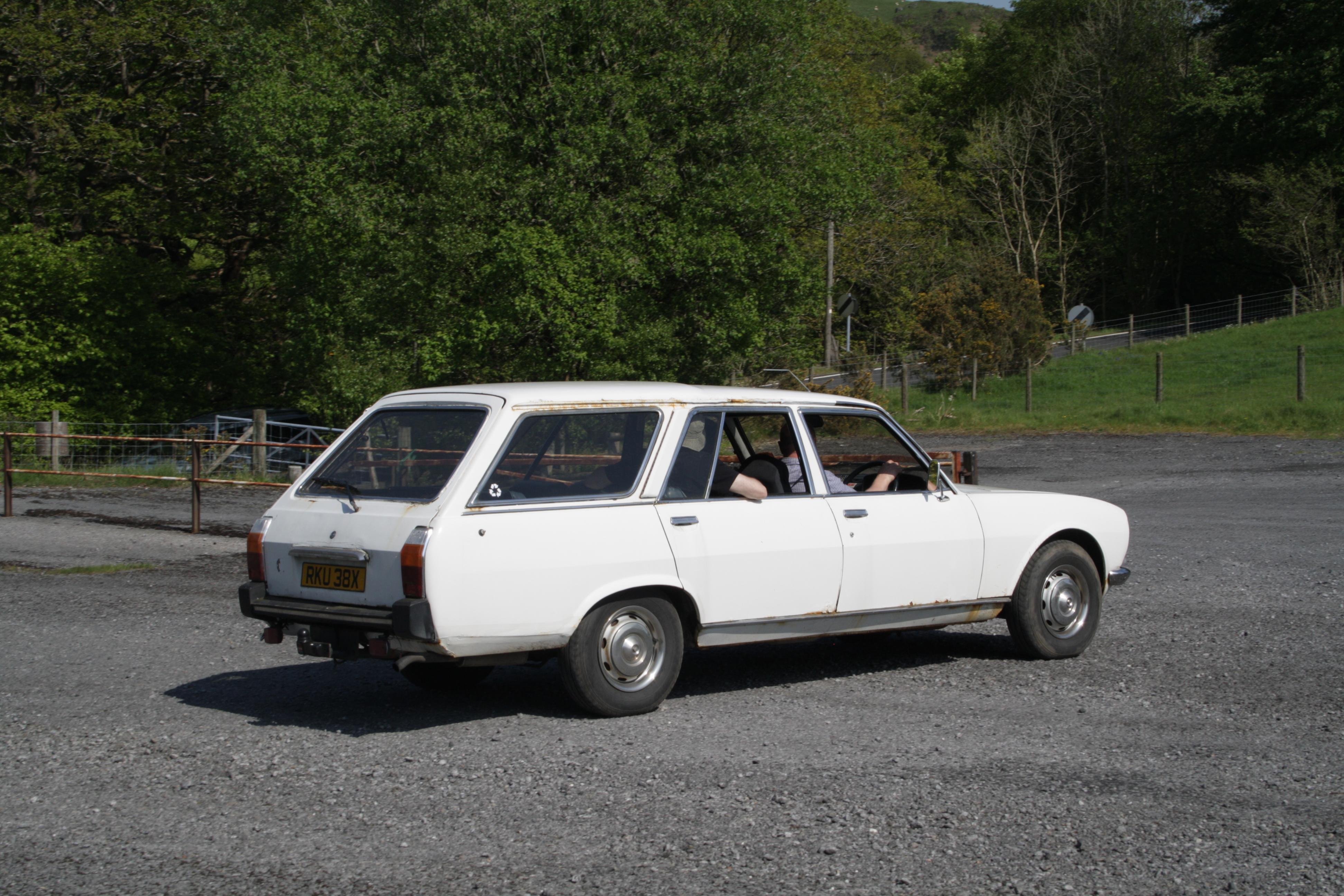
Peugeot 504 family estate diesel

Forget MPVs. The 504 does all you need

This particular example had, naturally, been used as a taxi on the island of Jersey. It came to the UK in January of this year, with crusty bodywork but sound mechanicals. It uses the Indenor 2.3-litre diesel that also ‘powered’ early Sierras and Granada Mk2s. It develops a whopping 71bhp at 4500rpm, and 99lb ft of torque at just 2500rpm. Fabulous.

I clambered aboard not really knowing what to expect. The 504 was legendary for its toughness, and it only went out of production in Nigeria a few years ago. It won the notoriously harsh Safari Rally in 1975 and the Moroccan Rally that same year and in 1976. Pretty impressive for a car that was hardly a ball of speed. The saloon had independent suspension all-round and could be specified with fuel injection, but the estate always used a tougher live axle, as did some povo-spec saloons. I guess I was expecting it to feel tough, rugged and a bit uncomfortable.

Settling in behind the wheel, comfort was the over-riding sensation. Big, soft seats are very typical of a French car of this era, as I know well from my Citroen exploits. Just think – a French estate of this era could be either a fantastically futuristic Citroen, or an entirely simple Peugeot. Either would seat up to eight passengers. The French did family cars in a big way!

Peugeot 504 estate rear

HUGE boot, lots of seats, surprising style

The engine fired noisily into life. This is a proper old school diesel. A manual control alters the injection pump timing to allow smoother cold starting. Barely any throttle, ease the clutch up and I was away. I went slogging straight up a steep hill, but revs were not the order of the day. I very soon found myself in top gear (four speeds) with the prodigious torque ensuring good progress with barely any fuss. Don’t get me wrong, this was hardly swift progress, but it was very relaxing. The ride is superb and I began to imagine driving great distances with no bother at all.

As long as speeds aren’t too high. The gearing is rather on the short side, and a fifth gear would have been very desirable. The real surprise came when bends were encountered though. The rack and pinion steering is power assisted and, rarely for the time, it’s absolutely wonderful! There’s just enough assistance, not too much. Feedback is dulled down, but the steering has enough weight to it to make you feel confident about driving briskly and is nicely direct. Yes, there’s some bodyroll but it feels totally secure and surprisingly nimble for such an enormous car. The clattering engine becomes a dull hum once you’re moving too. It’s much more pleasant than I expected – something echoed by all who drove the car. Good brakes (all-disc) just add to the pleasantness and while gear changes are rarely required, the lever has a nice, precise action. Not bad at all for a vehicle over 30 years old.

It has become very rare to see such a marvellous car in the UK. There are two reasons for that. One is that they rust like you wouldn’t believe. The other is that a great number have been exported to Africa. Really, very little can touch a 504 for robustness. It’s incredible what they’ll handle. What I found even more remarkable is that they’re incredibly nice to drive too.

Most 504s have a very hard life!


Craptacular road test: Lada Samara

I went to school with a girl whose father worked for Lada UK. I used to like visiting her house, because she was quite cute and, more importantly, because there would always be a Samara on the driveway. Usually with a bodykit and alloys. Not an entirely successful attempt to make the car appealing it must be said.

But I still liked the Samara. It looked like it could have been a major game changer for Lada, in the same way as the Favorit had been for Skoda (another favourite of mine). It never was. It always looked a bit too ungainly, unlike the Italian-styled Favorit. Build quality was never the best either and when other budget cars came over from South Korea and Malaysia, using proven Japanese underpinnings (Kia Pride, Hyundai Pony II, Proton) it sounded the death knell for Lada in the UK. Sales ceased in 1996.

Naturally, I’ve still always liked them, but have never had the opportunity to try one. That drought came to a spectacular end very recently, though the example I got to drive could not be described as the best I’ve ever seen. It was covered in bird muck, had an interesting selection of wheeltrims, had an exhaust leak and used a non-standard carburettor. Beggars can’t be choosers though. It was this Samara or nothing.

This Samara lives in Yorkshire, having been owned by a pair of brothers up that way since 2012. It’s a daily driver, and it shows! The carburettor developed many diaphragm faults and was replaced by a surprisingly similar one from a Peugeot 205 1.4. This Samara uses the larger 1.5-litre engine, allied to a five-speed gearbox and using front-wheel drive.

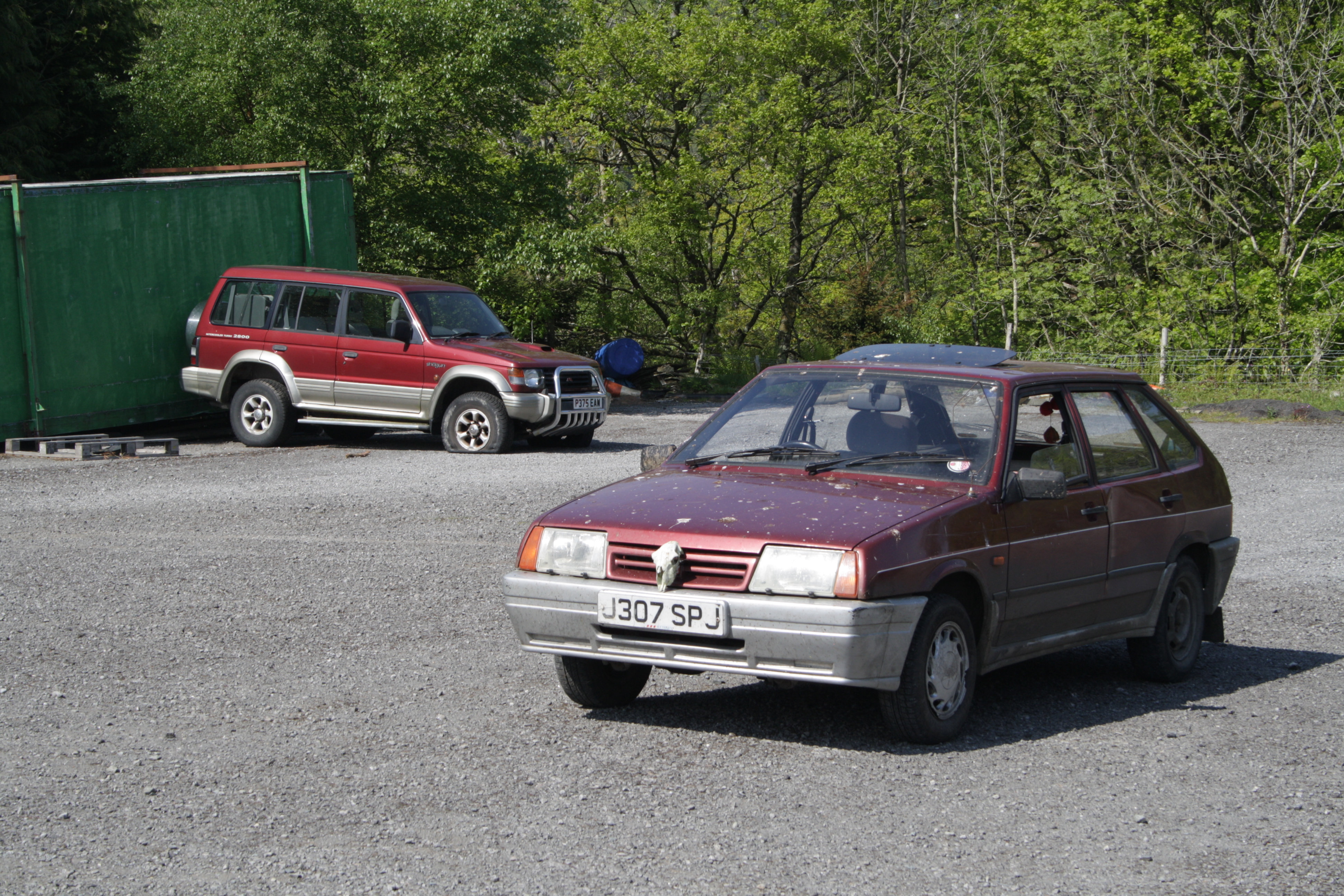
Lada Samara

Mitsubishi stole Lada’s paint idea

Someone on a walk found a sheep’s skull, so that was added to the car as a bonnet mascot. It slightly obscures the later grille design – the initial one was particularly odd-looking. Naturally, I quite liked that, but most people don’t, so the design was changed. I’m not sure it really helped sales though.

Inside, it had been stripped out. Not for racing, but so it could be slept in. The passenger seat had been replaced by a crate, to make the car long enough to accommodate a Yorkshireman.

The interior was not entirely perfect

The interior was not entirely perfect

Clambering aboard was hilarious. The driver’s seat was out of a Rover, and the sports steering wheel seemed utterly out of place. The door closed with not too horrific a noise though, shortly after a warning that third gear synchromesh wasn’t very effective, and nor were the brakes. Oh and it cuts out on left-hand bends or if driven gently, so it’s better to thrash it. Ok then!

The four-cylinder engine fired noisily into life, thanks to that leaking exhaust. I selected first, noting that the selector felt surprisingly good, and I headed off. The brakes really were awful, which is worrying as they were now apparently better than they were after the owner resorted to some in-car-park tinkering. Happily, I was about to drive it up a steep hill, so I didn’t need brakes anyway.

Putting my foot down, as ordered, I was amazed as the Lada verily roared up the hill with unseemly fury. I quickly snicked into second for more of the same, before gently slotting into third, then fourth. This was astonishing! I wasn’t expecting a car that went so well, and made such an entertaining noise as it did it. The driving position is odd, with the steering wheel really thrust out at your chest. But the steering itself feels great, and allowed me to push on in the bends – which is good as slowing down isn’t a strong point of this car.

Yes, there were various plasticky rattles, but it was hard to tell whether this was from the dashboard or the bread crate I was sitting next to. Yes, the car did cut out on left-hand bends. Momentum was your friend here. Just try to carry as much speed as you can and ease off the throttle. It was hilarious to be honest! The handling was surprisingly good, with not too much bodyroll and surprising grip from the cheap tyres.

On the way back down the hill, the car very quickly reached a speed best described as ‘around the speed limit.’ I managed to bleed speed off with careful use of the appalling brakes, and neat downshifting – double-declutching into third to avoid a crunch.

Not as crap as it looks. Or perhaps it is...

Not as crap as it looks. Or perhaps it is…

There was no doubting that this was a car you really had to drive, with foibles a-plenty. With actual working brakes though, it would be even more fun. It would stop ok (I wouldn’t have driven it on the road otherwise) but the pedal felt wooden and needed a really hard shove. Perhaps a weak or leaky servo. Everyone who drove it came back grinning though. You expected this car to be hopeless, and it resolutely wasn’t. I suspect a lot of people are now looking for a Samara to buy. I certainly wouldn’t rule one out!

In many ways, the Samara marks the end of the ‘crap’ budget car. The Favorit was refined by new parent Volkswagen into the Felicia, and Skoda is now a household name. Lada wasn’t so fortunate. When budget cars became older versions of current, good cars, the Samara was always going to be in trouble. That’s a real shame because as I discovered, budget cars can be an awful lot of fun, rather than just awful.

Pic courtesy of KruJoe on the Autoshite forum. Me enjoying the Samara while Elly the 2CV watches

Shitefest ’14 – the report

I’ve just had a very interesting weekend, amongst some of the rarest cars on UK roads. It made me realise that an open mind really is a very good thing!

I’d organised Shitefest ’14. This is the annual gathering of folk from the Autoshite forum. It is a superb forum where cars ranging from the 1960s to the early noughties are enjoyed. It doesn’t really matter what they are, there will be someone there who likes them and there’s the absolute opposite of snobbery. Sure, there is an in-joke that all Vauxhalls are rubbish, but this really is just an in-joke. Put strange people together, and strange things happen. Don’t ask about Pineapplists.

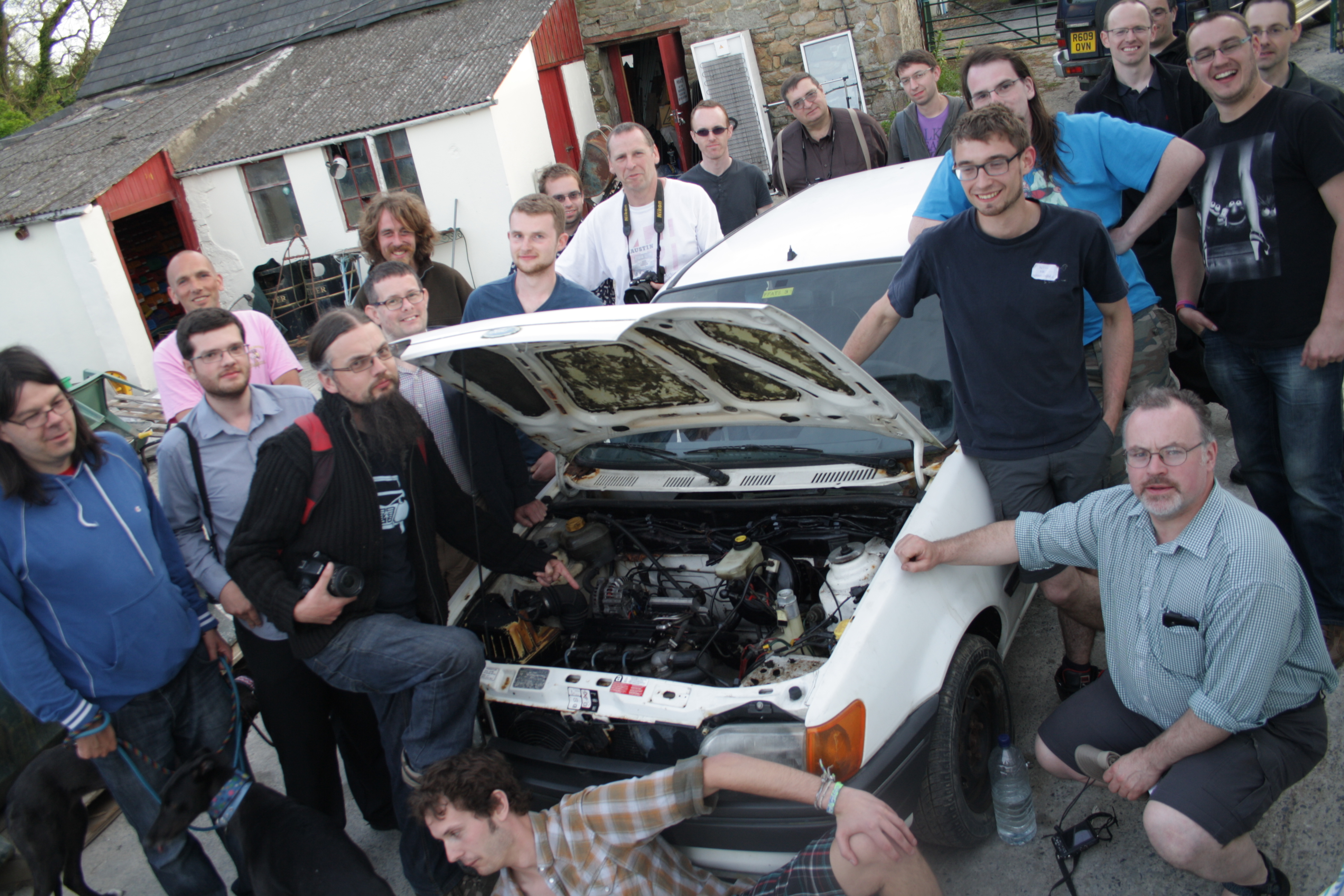
Anyway. I nervously awaited the hordes at a carefully selected site just a few minutes walk from home. This meant I could take all three cars. Lovely!

The ClassicHub fleet together at a show

The ClassicHub fleet together at a meet

Folk turned up and it became a truly magical weekend, aided by the Hafod Hotel whose site we used, and some incredible weather. On the Friday, cars included a large selection of Scottish Volvos, a delightful Fiat Panda Mk1, a Volkswagen Scirocco, a 1993 Cadillac Eldorado, more Volvos not from Scotland, a Freight-Rover Sherpa, a Triumph Acclaim and a Lancia Beta in disreputable condition as well as a fair few more. A pub quiz was enjoyed and then there was much nattering around a fire. Perfect.

On the Saturday, I planned nothing during the day. There really is no need to play everything to the hour. Just leave folk to their own devices. Some went out for the day, but most people opted to swap cars. Getting the most out of their ‘drive any car third party’ insurance cover, folk enjoyed the local roads in different machines. Autoshiters really are trusting as most of these runs were unaccompanied. I’m ashamed to admit that I wasn’t so trusting and sat in my cars when they were taken out. The Sirion did a few trips, a few people drove the 2CV around the car park and a few were treated to demonstration runs out on the road. A 2CV CAN be quick! But not uphill.

It was also a chance for me to try some other vehicles. This was hugely enjoyable. While I had great fun at the Heritage Motor Centre’s press day the other week, I get a buzz every time I clamber into a vehicle I’ve not driven before. It doesn’t matter if it’s a fiery sports car or a Vauxhall Cavalier Mk3 with rusty wheelarches – it’s a chance to put my perceptions to the test. You can look forward to individual road tests in the near future, but a Peugeot 504 diesel estate really won my heart – and I wasn’t alone.

On the Saturday evening, I led a scenic drive to Aberaeron for food, before we headed to the superbly quirky and enthusiastically run Internal Fire Museum of Power further down the Welsh coast.

Food

Chips to feed the Autoshite collective

This was the biggest challenge to be honest. The drive there was a good hour, leading a convoy of seven cars on a cross-country trip on Welsh roads. We got well away from major routes and saw spectacular sights – like many Fiat Multiplas and a shabby Peugeot 205. Then I had to get everyone fed pretty quickly (the New Celtic Restaurant did a great job with their take-out counter) and moving again to get to the museum.

We arrived only half an hour later than I’d planned – I really hadn’t factored in enough time for food – but it was well worth the wait. Thanks to the Arts Council, museums are encouraged to open at night on the weekend I’d chosen for a car rally. Arriving at 7:30pm was therefore no problem at all. It was a huge bonus to my planning for the weekend. Huge engines were running, and we were treated to an up-close introduction to the Orbital Two-Stroke Ford Fiesta that the museum usually has tucked away. Sadly, it wasn’t quite running (attempts had been made) but it was great to see such a rare car. To the best of my knowledge, there is only one other in the UK, at the Haynes Motor Museum.

Apologies for the poor Woollarding attempt

Apologies for the poor Woollarding attempt

Other highlights were the running of the Proteus Gas Turbine, which can apparently drink 40 litres of fuel in a minute! It made some people feel better about their ‘thirsty’ cars. We then headed back to the hotel, following a still-twisty but more straight-forward route that allowed us to get more of a crack on. Even the heavily laden 504 made good time. The reason for the rush? A Hyundai Stellar had arrived at site!

Very rare Hyundai Stellar

Very rare Hyundai Stellar

It’s a crap photo as I was over-excited and didn’t have a tripod. Sorry. It wasn’t just because it was a super-rare Stellar either. This one packs rather more of a punch by having a Rover V8 engine. It was a project started many, many years ago, when Stellars weren’t quite so rare. The Autoshite massive didn’t berate the owner for the non-original motor, but just applauded its magnificent noise! The car isn’t yet road legal and was actually still in Anglesey that afternoon having the exhaust custom made. It arrived being towed by a Volkswagen LT – in itself something of a rarity these days.

Sleep eventually happened, then we woke up and folk gently began to head home. Very gently. Some even had a cream tea first. I could tell you many more tales about the weekend, but that’s probably enough words for now. Suffice it to say that I’m very glad I organised it, very glad it was so well supported by local businesses, and so glad people came from miles away (385 miles in one case) just to stand around in a car park full of crap cars. It is so nice to have a meeting where cars aren’t judged, just enjoyed. Even the Kia Pride. Inspirational.