Victor Victor!

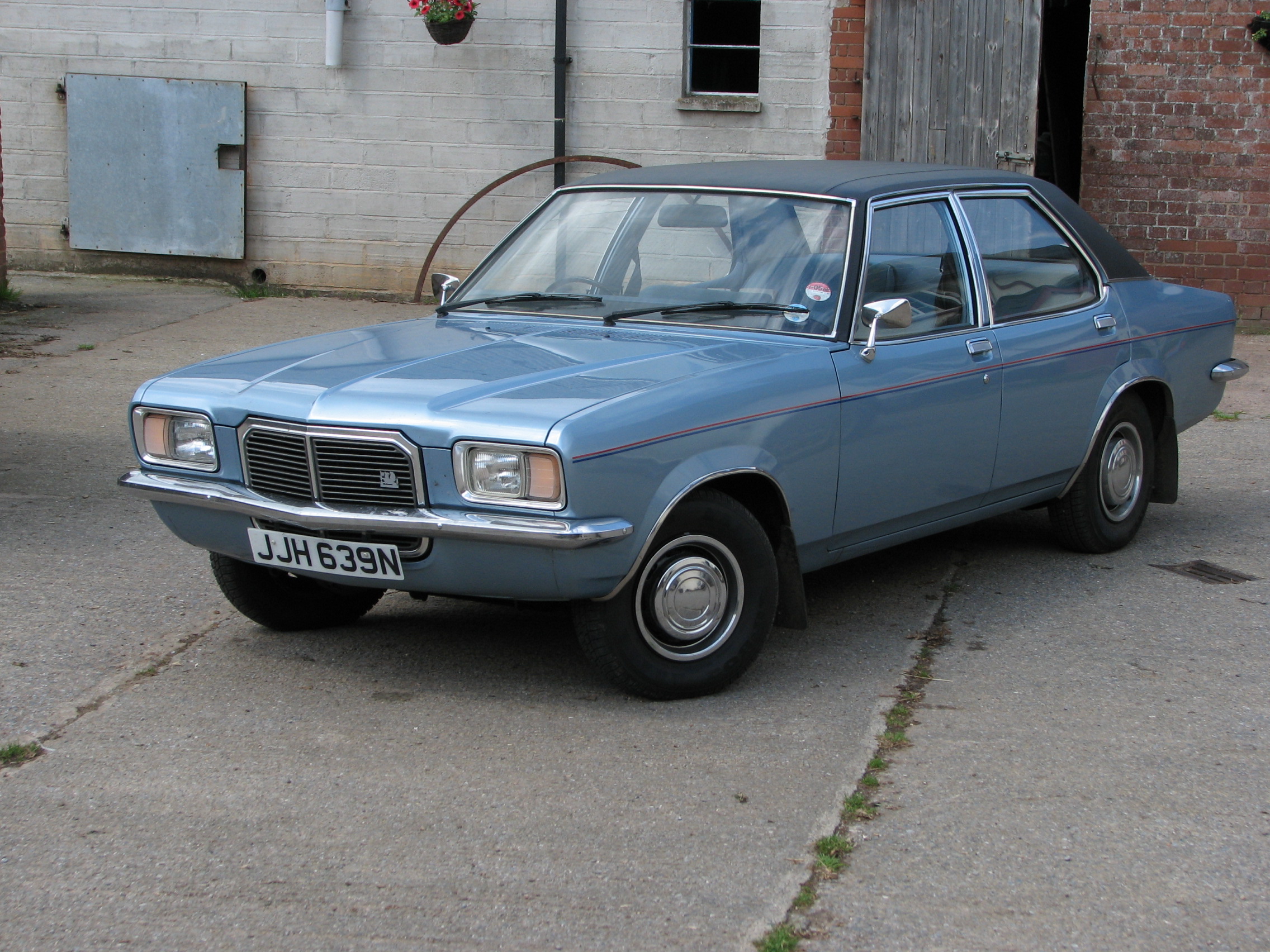
The Vauxhall Victor FE. A bit like a weak cup of tea

The Vauxhall Victor FE represents the last slice of hope for Vauxhall as an independent entity within General Motors. Sure, the basic structure was shared with the Opel Rekord, but Vauxhall still had an opportunity to style its own nose and use its own running gear.

Sadly, the nose they chose was frankly, a bit hideous – rescued only by the quad-lamp attractiveness of the hotter VX4/90. Sales were not a huge success – even when the ageing victor name was tossed aside for the much more exciting VX1800 and VX2300 – and it proved the final nail in the coffin of Vauxhall’s independence. Well, unless you include the Chevette, which was just an Opel Kadett with an ancient Viva engine stuffed in.

Compared to other European express arrivals during the 1970s, such as the formidable Citroën CX, Lancia’s wacky Gamma, Rover’s SD1, Ford’s Granada and the futuristic Princess, the Victor really did look a bit lame and very much of another, older era.

Still, an opportunity to take a 1975 Victor 2300S on a trip to Devon was not to be missed, especially when said car belonged to Vauxhall itself – part of the impressive Heritage Collection housed in Luton. Sadly, by this stage, the overdrive option had been removed. Did Vauxhall up the gearing to compensate? Well, no. They didn’t really.

But we jump ahead of ourselves. The Victor is sitting all shiny and beautiful on my driveway – let’s take a closer look.

With only 12,000 miles on the clock, it’s every bit as immaculate and tidy as you’d expect. Already, fear was starting to mount. I lived in East Anglia at the time and had to drive this beautiful machine to Devon and back – a round trip of some 500 miles. I may have said ‘eep’ when this struck my mind.

The metallic blue paintwork is rather fetching, allowing the eye to almost ignore the slab-like snout and rather feeble grille. Stepping inside was a wise move, with delightful seats finished in that fake cloth that was everywhere during the Seventies. Finished in blue, the seat trim is matched by blue wooly carpet smeared all over the centre console, why a slab of fablon fake-wood stretches across the dashboard.

At rest in Devon, during a 500 mile roadtrip

There’s plenty of space, front and rear, and the driver sits low, which gives a surprisingly sporty feel. Mind you, this is a 2300S which means there are twin-carburettors bolted to that familiar 2247cc four-cylinder engine. This unit is a touch raucous perhaps, but has oodles of grunt, making progress rather effortless. All of which shows up the low gearing even more alarmingly. Motorway progress is hard work, because the engine is spinning so frequently that any attempt at relaxation is met with the same success as trying to sleep upon a washing machine.

Head off the motorway, and things improve. The rack-and-pinion steering was not shared with the Rekord and is light and accurate, if a touch devoid of feel. The suspension is soft though, and this car doesn’t really beg you to enjoy the corners, rather it just eases you through them. The low gearing is a positive boon on twisty roads as due to the torquey engine, downchanges are rarely required. That’s a good thing as the long lever, angled towards the driver, is not particularly pleasant to use.

Yet the car made the 500 mile journey without issue and certainly without causing its driver to break out in a sweat. Ventilation is good and the weather was horrible – mind you, this was British summertime.

Overall then, this is a car that doesn’t excite, but at the same time is a very acceptable way to travel. It certainly doesn’t disgrace itself, but nor does it make the driver eager to head back outside for another drive once the destination has been reached. In other words, it’s like a cup of weak tea – does the job, but rather forgettable and a little disappointing.


Datsun 240Z Quick Guide

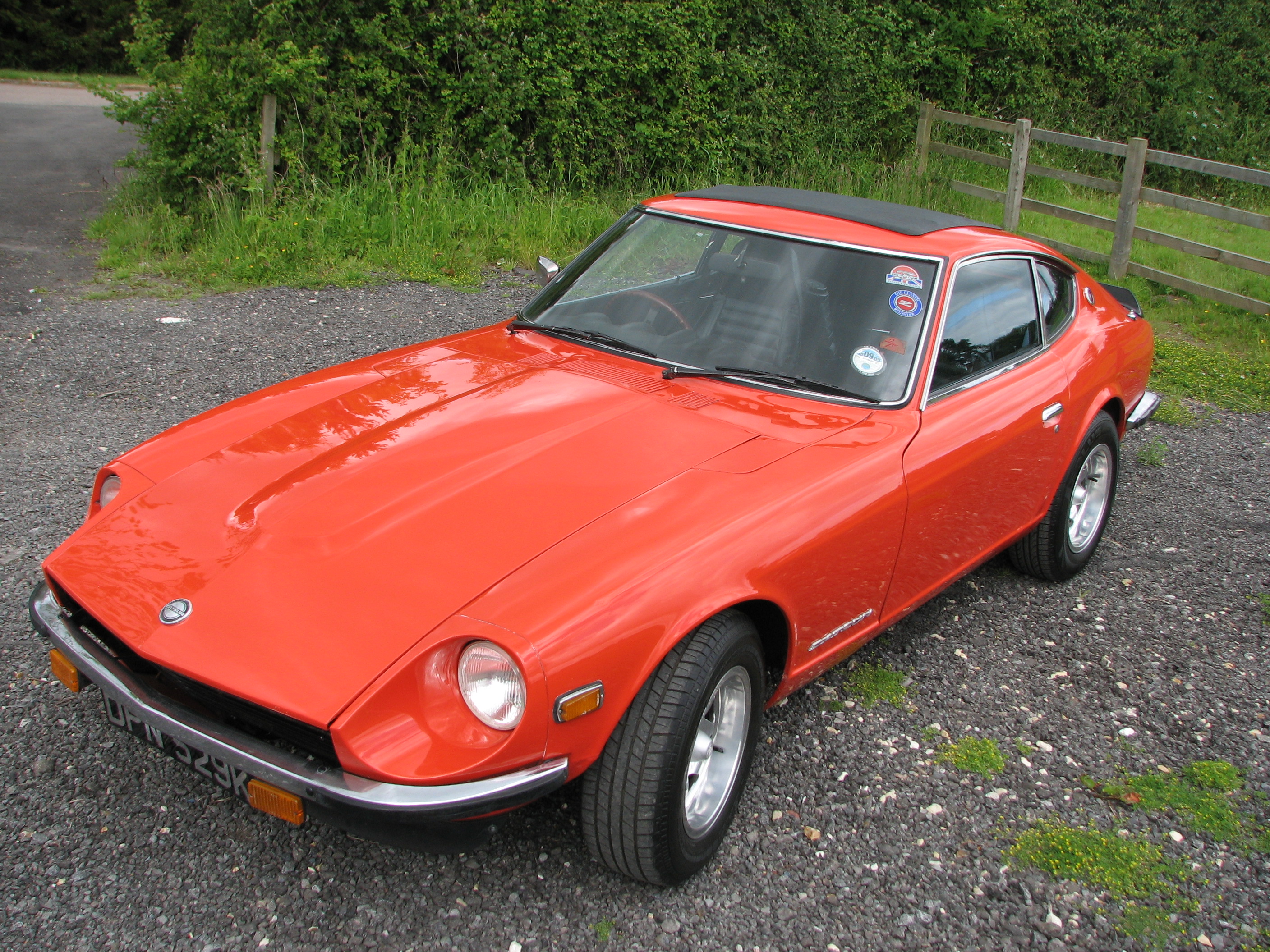
DATSUN 240Z QUICK GUIDE

Japanese, but with a Big Brit Bruiser feel - Datsun 240Z

The first Japanese sportscar to score international success and a Japanese take on the Big Healey format. Great fun to drive with a lusty six-cylinder engine and values have really started to take off. Watch for rot and see what the fuss is all about. Production ran from 1969 to 1973.

WHY YOU WANT ONE:

  • Wonderful driving experience – bellowing straight-six
  • An improving Oriental car club scene
  • Reliable and great for regular use
  • Easy to work on
  • Still rising in value

WHAT TO LOOK FOR

  • Corrosion wherever there is metalwork – some panels hard to find
  • Poor running – could hint at major problems
  • Market prefers genuine UK cars – check the history
  • Trim very hard to find
  • Noisy or crunchy gearboxes

RIVALS FOR YOUR AFFECTION

  • Austin-Healey 3000
  • MGC GT
  • Triumph TR6
  • Ford Capri

Lusty big-six sounds fabulous

Best sounding classic?

No, not which one has the best sounding engine – I’d argue strongly for the Triumph Stag there – but which one has the best name?

Is this the best sounding classic? Or is he blogging about something different?

Triumph Stag is certainly a contender – a successful and aggressive beast is what the name suggests. Much better than Maserati Bora for sure. Some are a bit more functional – the Bond Minicar was just that, the Triumph Roadster likewise. Not very exciting though eh?

I recently drove a Bentley Brooklands Turbo R Mulliner, but that’s all a bit of an unnecessary mouthful. It’s like they were trying to chuck in every English thing they could think of. They might as well have called it the Bentley Royal Family Blackpool Pleasure Beach. I’m quite pleased they didn’t though…

The Gordon-Keeble GK1 starts well, but they clearly ran out of inspiration. Others just lie. The Morris Minor 1000 ended up with 1098cc, the Citroën 2CV actually had 3CV by the 1970s. Mercedes-Benz on the other hand just confuse. A 220SE has 2.2-litres, a 300SE has 3-litres. But you can also get a 300SE with a monstrous 6.3-litre V8! They called this the 300SE 6.3. Obviously.

The French were never much into names. Renaults were generally numbers after the Fregate/Dauphine/Caravelle era, Peugeots stick with the number-0-number and Citroën at most pulled a few letters together. The Traction Avant merely started life as 7A and only the Ami, Mehari and Dyane broke theme right up to the Xantia of 1993. That’s the French out for a refusal.

I guess it’s hard to decide, so I’m going to pick two Rovers with identical engines – something that gave the Solihull fellows a few sleepless nights. I therefore crown the winners of this non-competition the Rover Three-Point-Five and Rover Three Thousand Five.

This is a Rover Three Point Five...

...whereas this is a Rover Three Thousand Five. Very different (in engineering if not name!)

Variations on a theme

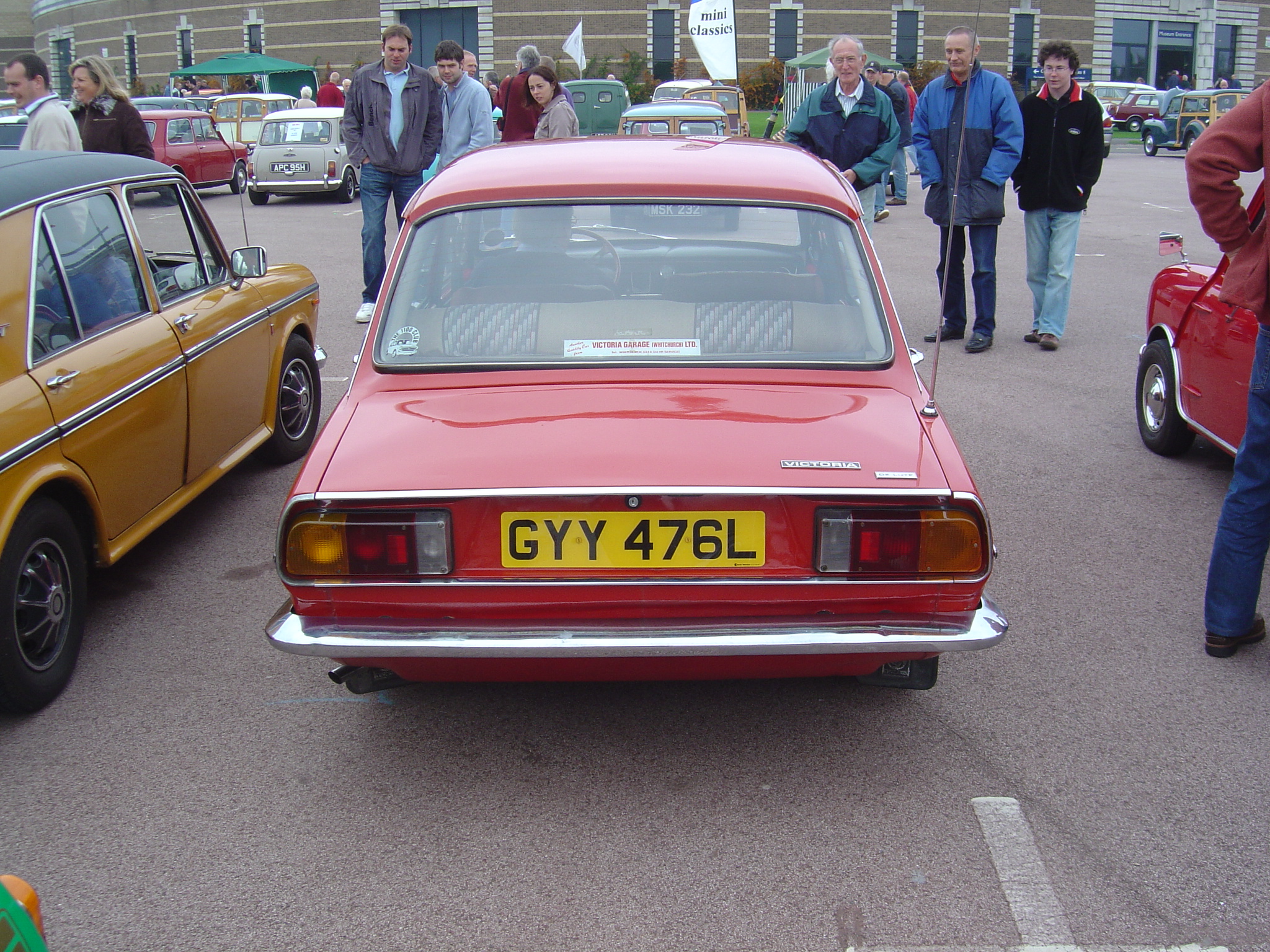
When is an Austin 1100 not an Austin 1100? When it’s an Austin Victoria!

When is an Austin 1100 not an Austin 1100?

If you think it looks a lot like a Triumph, then that’s no surprise, as Michelotti himself was responsible for the styling. In fact, the history of this car is a little unusual as it was built by Authi in Spain, but was based on a South African variant of the 1100. The Victoria was launched in 1972, when UK production was starting to run down. The most interesting aspect of the re-design is the addition of a boot to make the 1100 a proper saloon.

The Victoria sadly wasn’t a success, which is a shame as it’s rather an attractive little thing, with all the hoon-ability of the original but a larger dose of practicality. In fact, it was rather more attractive than the South African Apache, which had a rather unhappy snout.

From the rear, the design is even more clearly the work of Michelotti, being almost a scaled down version of the Triumph 2000 Mk2. Triumph can’t have been impressed and perhaps that’s why we weren’t treated to the Victoria in the UK.

Clearly Michelotti's work - very Triumph-like!

Let the ol’ girl go?

Is it time to bid farewell to the BX?

You are looking at possibly the best car in the world. It has the ride comfort of a Rolls-Royce, the practicality of a small van, the quirkiness of a true Citroën, easy motorway cruising yet also 50+mpg. It was stupidly cheap to buy, and despite what people believe, really quite simple.

And I’ve decided that I no longer want it. The problem is, I do rather tend to get bored of cars, and am always seeking something better – or at least different. Hence why I find myself wanting to get rid of probably the best car I’ve ever owned.

I bought the BX in September 2009, primarily to take part in the BXagon Rally – a drive around the circumference of France  to raise money for Cancer Research UK (hence the tiger stripes – well, you’ve got to look the part). It covered the 3500 with aplomb and I liked it so much that the car remained on the fleet, clocking up 20,000 miles in my ownership this week. That’s a total of 162,500, but you wouldn’t really know it. These cars eat up miles.

In that time, I’ve used it on my daily commute, towed car trailers with it, filled it with stuff when moving house, collected a new oven and a new washing machine, driven it around Scotland, Wales and the South West of England – as well as through parts of Belgium, Luxembourg, Switzerland and Spain on that epic trip around France.

It cost £266 to buy, and that included tax and MOT. I’ve since probably spent £1000 on upkeep – including a pair of brilliant Hankook tyres, a hydraulic flush, the odd pipe repair, a new rear axle arm bearing and basic servicing. That’s cheap motoring in anyone’s book.

So, it’s bloody good at everything, costs pennies to run and garners attention like nothing else. It is the curse of the car enthusiast with wide tastes that I now want to sell it. Yes, it’s good, but it’s not ‘something else’ anymore. £300 anyone? Then I’ll go and buy something completely impractical, that will cost a fortune to run. With a £300 budget. Should be fun!

Weight loss – not before time!

'Super light weight' VW still weighs more than a 2CV...

This is the Volkswagen XL1 – a concept that promises to deliver 133mpg. While that’s admittedly more impressive than the 45mpg of my 2CV, I love the that that this super-lightweight concept car still weights more – at 795kg – than my Tin Snail. Still, it’s a step in the right direction given how horrendously heavy cars have become.

Of course, the environmental credentials may well be suspect too, given the exotic raw materials required. Nice try Volkswagen, but I’ll keep it classic for now.

All aboard!

Daimler Fleetline ex-Swindon

A bus that I have driven. Not the first.

I’d hate for you to think that this Blog is dedicated to classic cars. My love of older vehicles runs far deeper than that.

For instance, I have driven the ex-Swindon Leyland Fleetline (following Daimler’s absorption into British Leyland) owned by renowned classic car writer Nick Larkin and pictured above..

I grew up in Birmingham, where Daimler Fleetlines and the later Leyland Atlanteans were an everyday part of my childhood. Their thundering Gardner 6LXB engines, the wonderful epicyclic gearchange and the crash of panels and cash machine every time they went over a bump were all experiences to savour. When these buses began to be replaced by MCW Metrobuses, the young Ian became frustrated – the driver no longer had to change gear!

Thankfully, Nick’s Fleetline retains its semi-automatic transmission, and I was very grateful to get an opportunity to pilot a Fleetline, albeit only around a field. The cabin is rather sparse, but the key instruments fall nicely to hand. A huge throttle pedal controls the rear-mounted engine and once moving, it’s easy to flick the lever into second – easing off the throttle for a smooth change. Power assisted steering makes light work of the bulk, and the turning circle is impressive given the length.

Air brakes need a delicate shove to bring things to a halt, but I thoroughly enjoyed the experience. Given that the bus is over 30 years old, and therefore can be driven on a car licence, I could have carried out a full road test – but I’m not sure Nick would have appreciated that…

Being a classic car writer

A lot of people ask me how to become a writer – after all, it looks like a pretty idyllic existence.
Firstly, that certainly is not always the case! Yes, driving wonderful cars and then writing about it is a nice way to spend your time, but you have to learn to deal with terrifying deadlines and you have to deliver – you can’t push back a print slot.
The most important aspect is to have a love of the written word. If you don’t like reading, you probably won’t enjoy writing – and it’s no fun doing something you don’t enjoy.
Practice also helps. You can’t just decide you want to be a writer, drop an email to an editor and be published. The best thing you can do is write for car clubs. I wrote regularly in 2CVGB News before deciding I fancied this as a career. It’s great practice as it gets you used to working to deadlines, and you start to think about how the reader will interpret what you are writing.
Next, I’m afraid you’ll have to start buying magazines. Immerse yourself in their language and style. Look at what they publish – it’s no good sending a detailed history of the Subaru Vivio to a prestige classic car magazine – they simply won’t be interested.
You’ll also have to learn to deal with rejection. If you’re lucky, you’ll receive a “thanks but no thanks” though it’s also possible you’ll get no answer at all – editors are very busy people.
Another option is to look out for staff jobs. The pay will be rubbish but suddenly, all that writing you’ve done for club magazine will turn into a portfolio to show off your skills…
Good luck!

Imp-ressive!

Ian reveals the Imp that won him over

Sometimes, you leap behind the wheel of a classic and quickly search for the door handle, wanting to escape as quickly as possible. Some classics are really not that pleasant to drive. Others take time to win you over – you need to travel at least 100 miles in most Citroëns before you get ‘it.’

The Imp was one of those classics that had me falling head over heels in love. Yes, I liked the Porsche 928 a great deal, and a day spent with a TVR Chimaera was utterly joyous, but then you expect a sports car to deliver. The downside is that they often have far too much power to use on the road – a 440bhp Lola T70 replica I once drove in the depths of winter was absolutely terrifying. And cold as it didn’t have a roof…

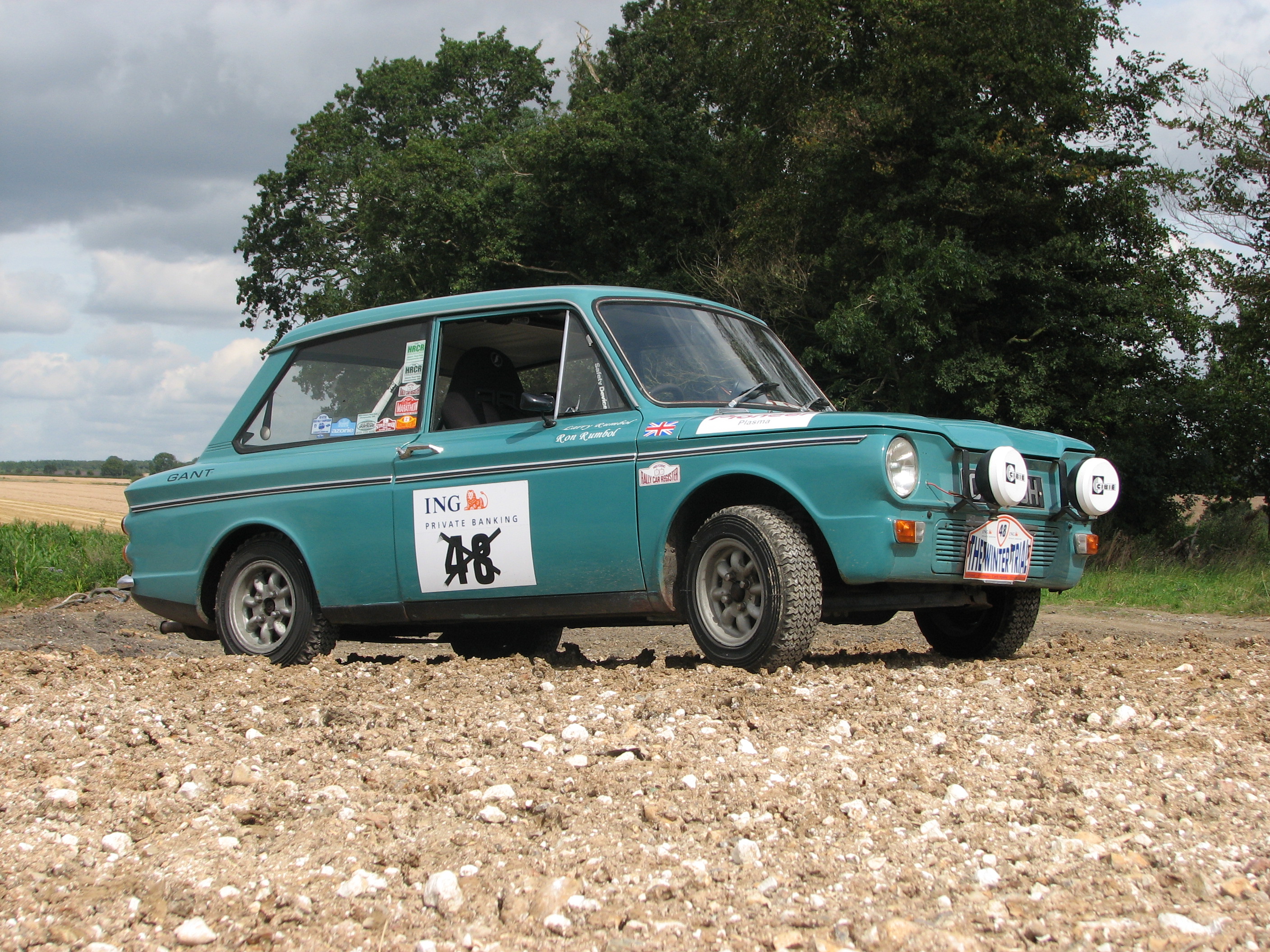
Where the Imp really delivered is that despite only a short time behind its tiny steering wheel, I could explore the perky engine on the public highway without risking the wrath of PC Plod. Sure, it had considerably more than a standard Imp, but we’re talking of only 39bhp to start with. Exact figures for this ‘hot’ Imp were not available, but I’d estimate it was somewhere around the 55bhp of the sporty Stiletto sibling. With my foot right down, the Coventry-Climax-inspired engine barked its desire to the world as we hurtled along – feeling much faster than the speedometer was telling me. Quick, communicative steering left me in no doubt about its cornering ability, and with that engine slung out at the back, once I’d steered into a bend, all I could do was balance the throttle to stop the pendulum effect from hurling me into the weeds.

Being a stripped out rally car, the experience was noisy but thoroughly dramatic, despite the lowly spec. The quick gearchange was a delight and time and again I’d ease off and drop a couple of cogs so I could begin the exciting rush of acceleration all over again. The ride was a revelation however – surprisingly comfortable, despite being firmed up over standard. Thankfully, it had not been lowered too much, in anticipation of forest rally stages.

Too soon, it was time to head back, but the car’s deed was done. I loved it. The Imp may have been something of a failed Mini rival when new, but right now? Sorry Mr Cooper but I’d rather take this cheeky little Imp.

Oil cooler hints at tuned-up engine

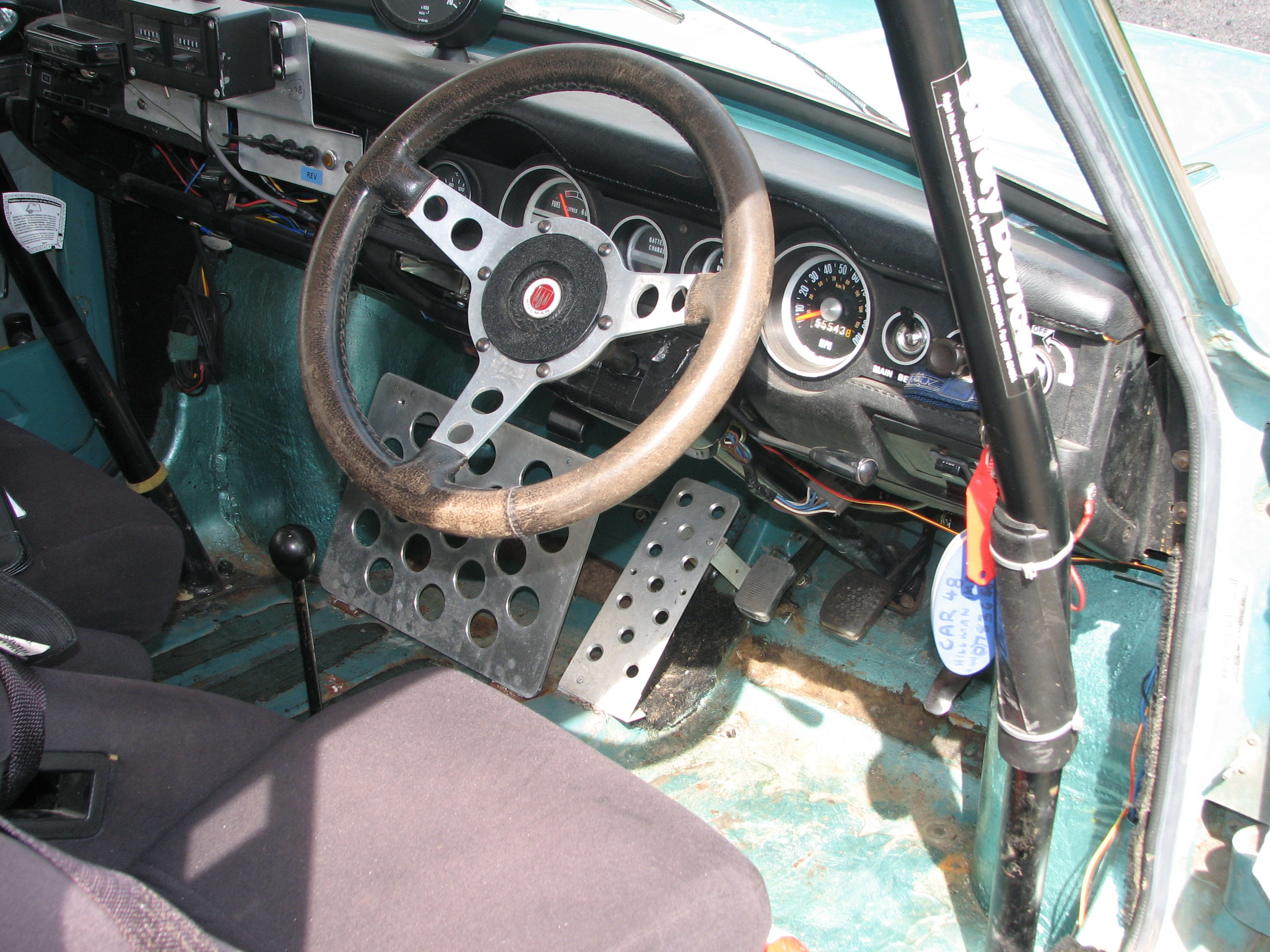
Rally spec clear to see here - note passenger foot rest


Vauxhall PA Cresta Quick Guide

VAUXHALL PA CRESTA/VELOX QUICK GUIDE

British Americana in extremis with dog-leg windscreen and obligatory tail fins. Lusty engines ensure performance is not a disgrace and these models have developed quite a following. Finding a rust-free example may be tricky, but very rewarding if you do. Velox was lower spec, with a few less thrills.

WHY YOU WANT ONE:

  • Classic American looks, built in Luton
  • Lusty engines offer modern-era performance
  • Seating for six
  • You can work on it yourself
  • Rare and eye-catching

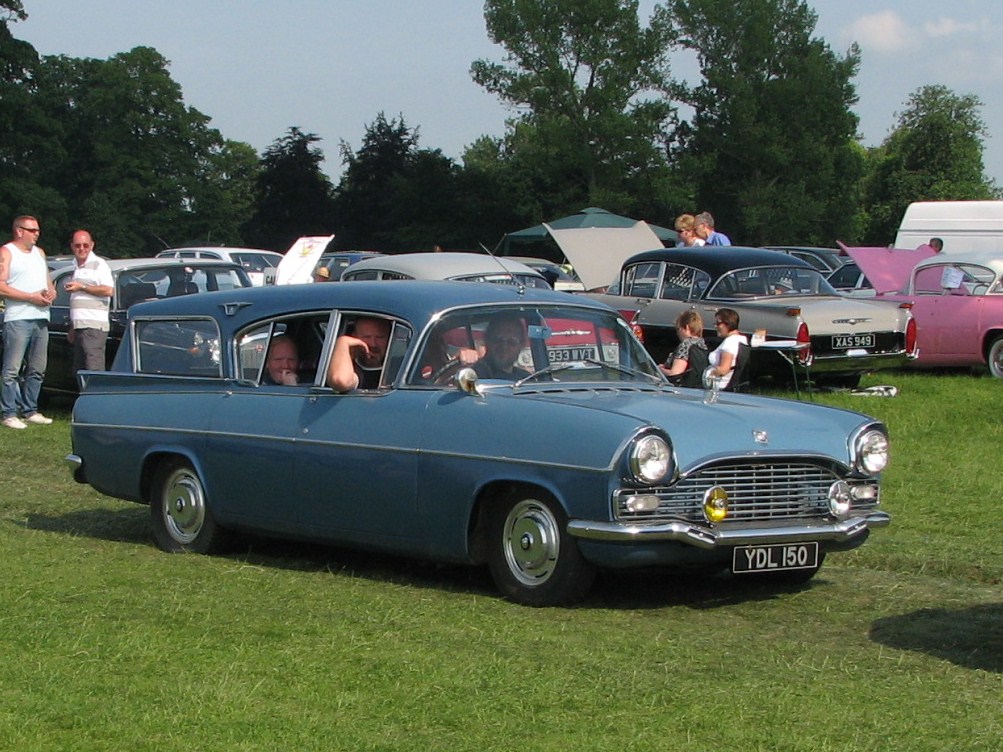
Rare Friary estate based on the Vauxhall PA Cresta

WHAT TO LOOK FOR

  • Rust. Panels hard to find and they really do rot!
  • Perished window seals which hasten the above
  • Engines that knock or produce blue smoke
  • Worn transmissions
  • Bodywork bodgery

RIVALS FOR YOUR AFFECTION

  • Ford Zephyr/Zodiac Mk2
  • Anything built in America in the Fifties
  • Humber Super Snipe
  • Austin Westminster

SPECIFICATION

  • Engine 2262cc 6-cylinder OHV
  • Power 78bhp
  • Top Speed 90mph
  • 0-60mph 18seconds
  • Economy 22-24mpg
  • Gearbox 3-speed manual