Road Test: Renault 16

I rate the Renault 16 as a better car than a Citroen DS in many ways. Like with the Renault 4, the firm took a shrewd look at Citroen’s offering and thought “we can do sis but betterrr.” Apols to French viewers. My accent is terrible.

They were certainly right with the 4, which went on to sell about 3 million more than the 2CV, even if you include all of the Citroen derivatives.  They got it right again with the 16 too – 1.8 million sold, compared to 1.4 million DSs. Oh, and that was in just 13 years, compared to the DSs 20-year lifespan.

Renault 16 TS

Renault 16. Only one sidelight working, because French.

A brief look at the facts demonstrates remarkable similarity. The gearbox is ahead of the engine, driving the front wheels. The engine is a water-cooled straight-four. The gearbox is controlled by a column change. The suspension is very soft, but the handling is good. There is LOADS of space (the Renault offering it in just 4.2 metres of length, compared to the 4.8 of the DS).

But crucially, the 16 had the hatchback that perhaps the D should always have had. That made it even more practical. It was also much more simple – Renault realising that torsion bars offered full independent springing without the complexity of the Citroen hydraulic kit. Sure, self-levelling suspension is notably absent, and a full load makes the 16 squat like a resting D, but for the vast majority of the time, this doesn’t matter in the slightest.

The Renault doesn’t have the space-age majesty of the D either – something which has helped the latter get recognised as a complete icon of the motoring age. The 16 falls more easily off the radar, not helped by being remarkably prone to rot – and not as good at hiding it as the base-unit construction DS! A pretty D could actually be rotten as a pear. A rotten 16 generally looks rotten!

16

Stylish and oh so practical!

I’ve only driven one 16 before, and I absolutely adored it. That was a manual, and I was amazed at how pleasant the change was. More recently, Shitefest allowed me to sample an automatic. Not for Renault the curious semi-automatic of the D (a full auto was a later option for Citroen).

Now, 1960s/1970s automatics tend to be rather inefficient things, and certainly if its performance you’re after, then look elsewhere. The Renault rather gently gathers pace, not helped by a gearbox keen to get to top gear as soon as possible. Fortunately, the 1565cc engine has good torque characteristics, so it’s happy to slog on. Press the throttle fully to the floor and it will kick down and pick up its skirts a little, but it’s better to take things easy.

Not that you have to slow down much for bends, as the car steers beautifully. There’s plenty of body roll, but no Citroen fan is worried by such exploits. It goes where to you point it – though I was warned that the tyres are of poor quality. I didn’t exactly have it on its doorhandles.

The ergonomics aren’t brilliant, with the control layout seemingly arrived at by handing them to several different people, and having a game of ‘pin the control on the donkey.’ It seems most of them missed, and one column stalk (for the wipers) simply sprouts straight from the dashboard instead.

I don’t care though. This is the first modern hatchback for the family. It deserves far more credit, especially in this, it’s 50th year. If I didn’t think it’d dissolve in an instant, I’d have one like a shot.

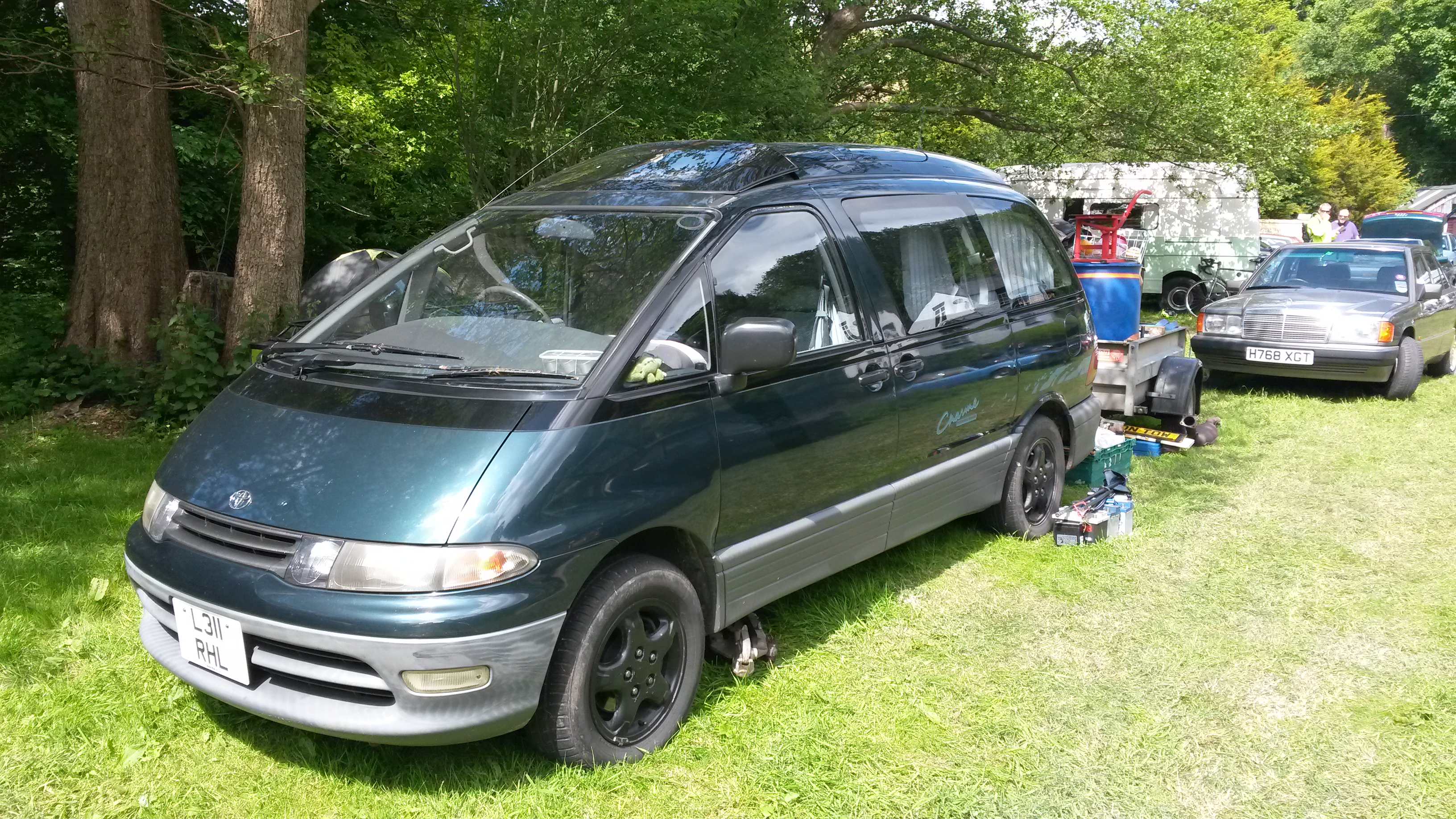
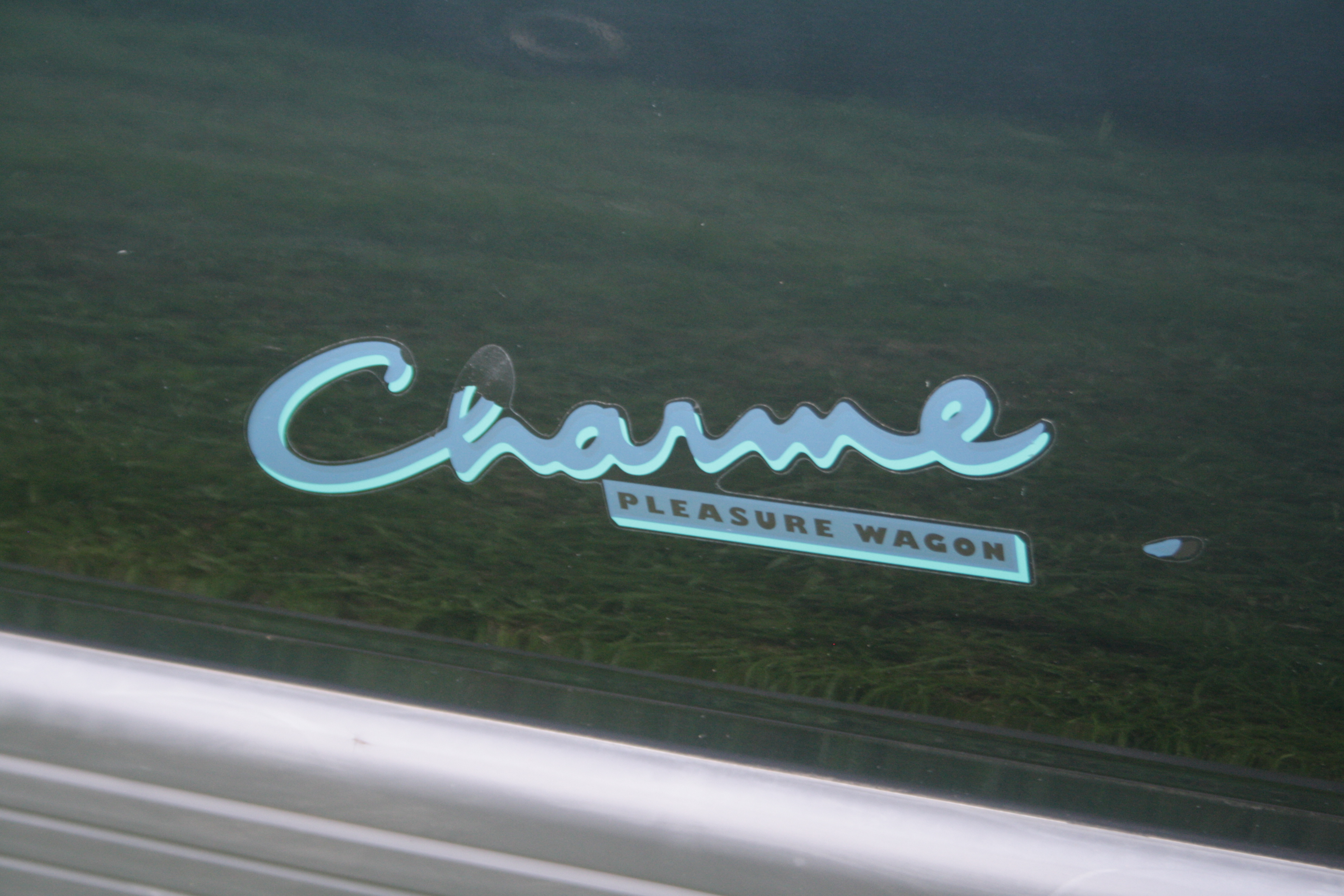
Road Test: Toyota Estima Lucida Charme Pleasure Wagon

Yes! The annual Shitefest has happened again, and I can bring you a whole ream of fresh crap car road tests. I’ll start with the one that has the longest name. The Toyota Estima Lucida Charme Pleasure Wagon – equipped with the Joyful Canopy no less.

Lucida

Japanese-spec Pleasure Wagon actually pleases

In the UK, you’ll recognise this as a Previa people carrier, though this Japanese import is slightly narrower and shorter, with different front and rear styling treatments. You still get an engine mounted beneath the front seats, a sliding door on the nearside only and seating for seven – or eight depending on spec.

Mechanically, the main differences from a Previa are that instead of a 2.4-litre petrol, there’s a 2.2-litre turbo diesel, allied to an automatic transmission in this case, with four-wheel drive. It’s not an engine with a great reputation – have a quick hunt on Ebay or Gumtree and you’ll find plenty for sale with blown head gaskets or even cracked cylinder heads. But is it any good to drive?

The answer is, surprisingly, yes! The high driving position and column gearchange immediately put me in mind of the Mitsubishi Delica. But, this is no off-roader. It’s ultimately too low. It’s bloody quick off the mark though, feeling far more sprightly than the Delica. That’s quite impressive given that it only has 101bhp and sure, the 0-60mph time of 14.5 seconds is not actually that brisk. It feels quick enough though, even if you leave the overdrive engaged – unusual for an auto but much fancied by Japanese manufacturers at this time.

See? I didn't make it up

See? I didn’t make it up

The ride is comfortable, but the steering is a little vague, and it all feels a bit wobbly if you try pushing on a bit. Take things easier and smooth your steering inputs, and you can drive briskly enough. Turn sharply though, and there’s a threat of sea-sickness from your rear passengers. I feel the Delica behaves more neatly, which is odd given how tall they look!

The ‘joyful canopy’ means a lot of glazing up top, with a huge sunroof to the rear. It all helps make it feel very airy inside and the driving position is very comfortable. It feels like a car you could drive for many hours. Overall, I clambered out of this car feeling much warmer towards it than when I had clambered in.

Whether they make a decent long-term motor, I can’t really say, though I will point out that while the Rover K-Series also has a reputation for head gasket failure, circumstances are certainly not improved by complete neglect. Just because it’s a Toyota doesn’t mean that you can get away with neglecting coolant changes and/or levels. I certainly wouldn’t rule one out.

Cactus proves a turn-off

Oh, the signs were so good. I love Citroens. I love adventurous styling. I positively adore three-cylinder engines. I’m definitely not averse to the pleasures of the turbocharger.

Yet when I got to test drive a Citroen C4 Cactus 1.2 Puretech Flair at the weekend, my over-riding emotion was that of disappointment. Yet again, Citroen had let me down.

Bold looks ruined by dreadful suspension

Bold looks ruined by dreadful suspension

You see, there is plenty to like. The external styling is bold, and the interior is very pleasant indeed. Yes, lots of plastic, but it is well styled and nicely textured. But as soon as I started to drive the Cactus, it all went horribly wrong.

For a start off, the steering is horribly light, and has a numbness to it which is quite staggering, even by modern standards. Then there’s the suspension. I think they forgot to add any. A Citroen should have a peachy ride. What had gone so wrong?

Sad to say but I’m sure the target market won’t care. Some people so blind to fashion that all that matters is the wrapper. That means that large alloy wheels will be specified, even though they’re hugely detrimental to ride comfort (the same is true of the Tesla Model S by the way – ignore the 21″ wheel option!). It also means that on-track road manners seem to matter more than every day comfort. The Cactus is certainly not alone in having these considerable downsides. MINI, I’m looking at you.

On top of this, the fabulously thrummy three-pot engine is so muted, that it doesn’t seem to have much fun left in it at all. Punchy, it certainly is – despite only 1.2-litres, 110bhp will whisk you to 60mph in just 9 seconds – but while the acceleration is good, it is somehow devoid of pleasure. Even though the back of the car squats noticeably under power. How does it do that yet remain so uncompliant over poor surfaces? To add to the misery, the seat bolsters are the hardest found in any car since the Peugeot 205 GTi, where they were seemingly hewn from granite.

Frankly, it’s all a bit frustrating. Do people not value comfort anymore? It’s not like it’s impossible to make a modern car ride and handle well – The Citroen C5 can manage it, even on coil springs. The Nissan LEAF is another outstandingly comfortable family hatchback.

Across a mildly rutted field, the Cactus was horrific. By comparison, a 1950s Citroen Bijou over the same field was as smooth as if it was on unruffled asphalt. Is this meant to be progress?

The French used to be the masters of ride AND handling. I really don’t understand how things have gone so wrong. Given the horrendous state of many of Britain’s roads, you would have thought a compliant suspension would be top of everyone’s lists when forking out over £17,000 on a car. Apparently not.

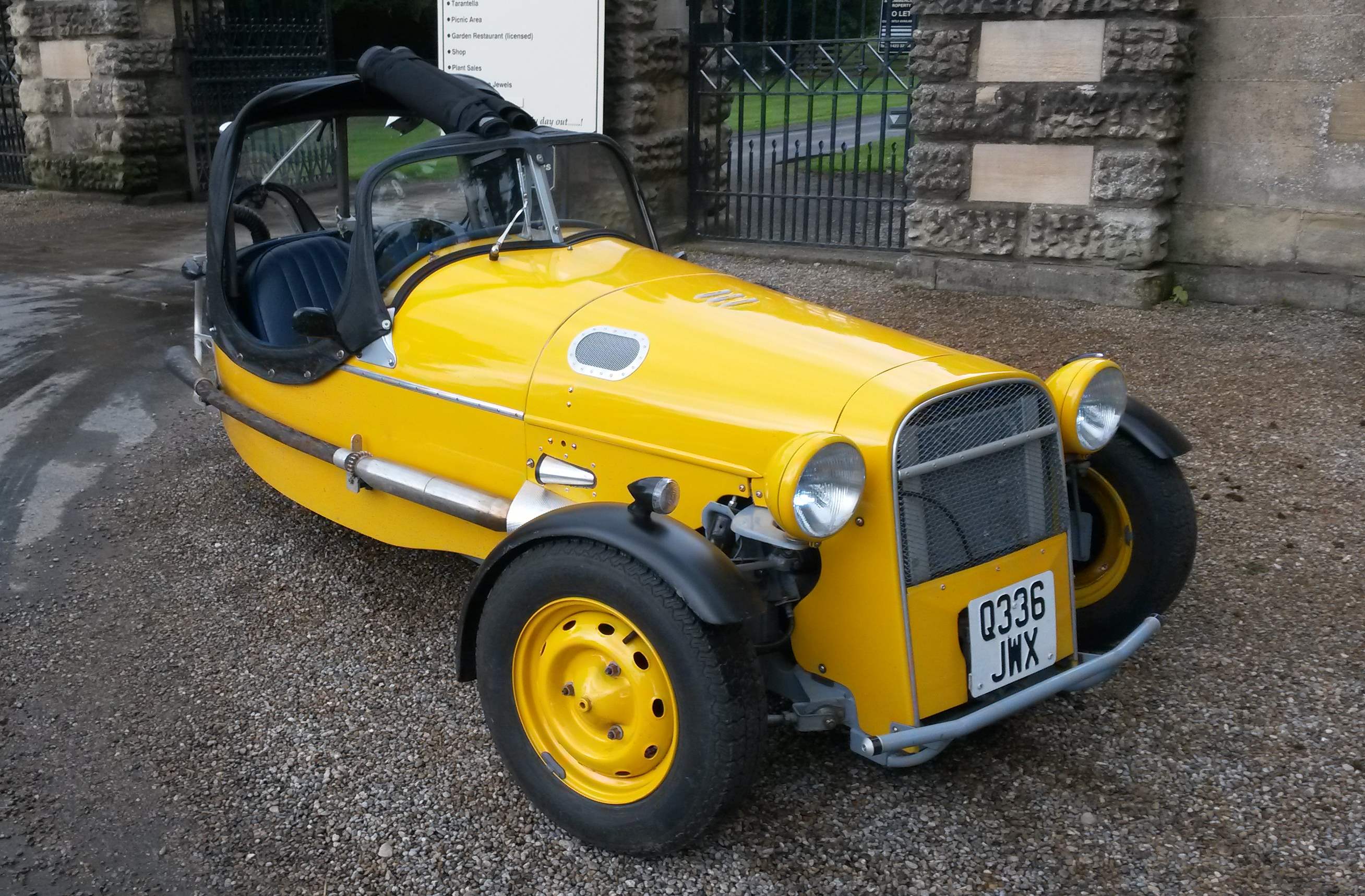
What on earth is that?! Driving a DRK

I get to drive a lot of cars, but this one was a true surprise. Especially as it is Renault-powered and I was at a Citroen event. What is it? It’s a DRK – a three-wheel component car which uses a Renault 4 (or in this case 6) drivetrain and front suspension.

That means that it looks (at a very quick glance) a bit like a Morgan 3-wheeler, but is in fact front-wheel drive. This one belongs to a nice chap called Dan Fletcher, who is well-known for liking his cars a bit different. And colourful. It must be said, despite its tiny dimensions, this is not a car you’ll miss in a hurry.

This is a DRK, and it's lots of fun!

This is a DRK, and it’s lots of fun!

DRK built cars in Cheshire, but not very many of them. 59 were produced between 1986 and 1998. Buyers got a very nicely finished kit car, but had to source their own mechanicals. Hopelessly rotten Renaults proved the perfect donors.

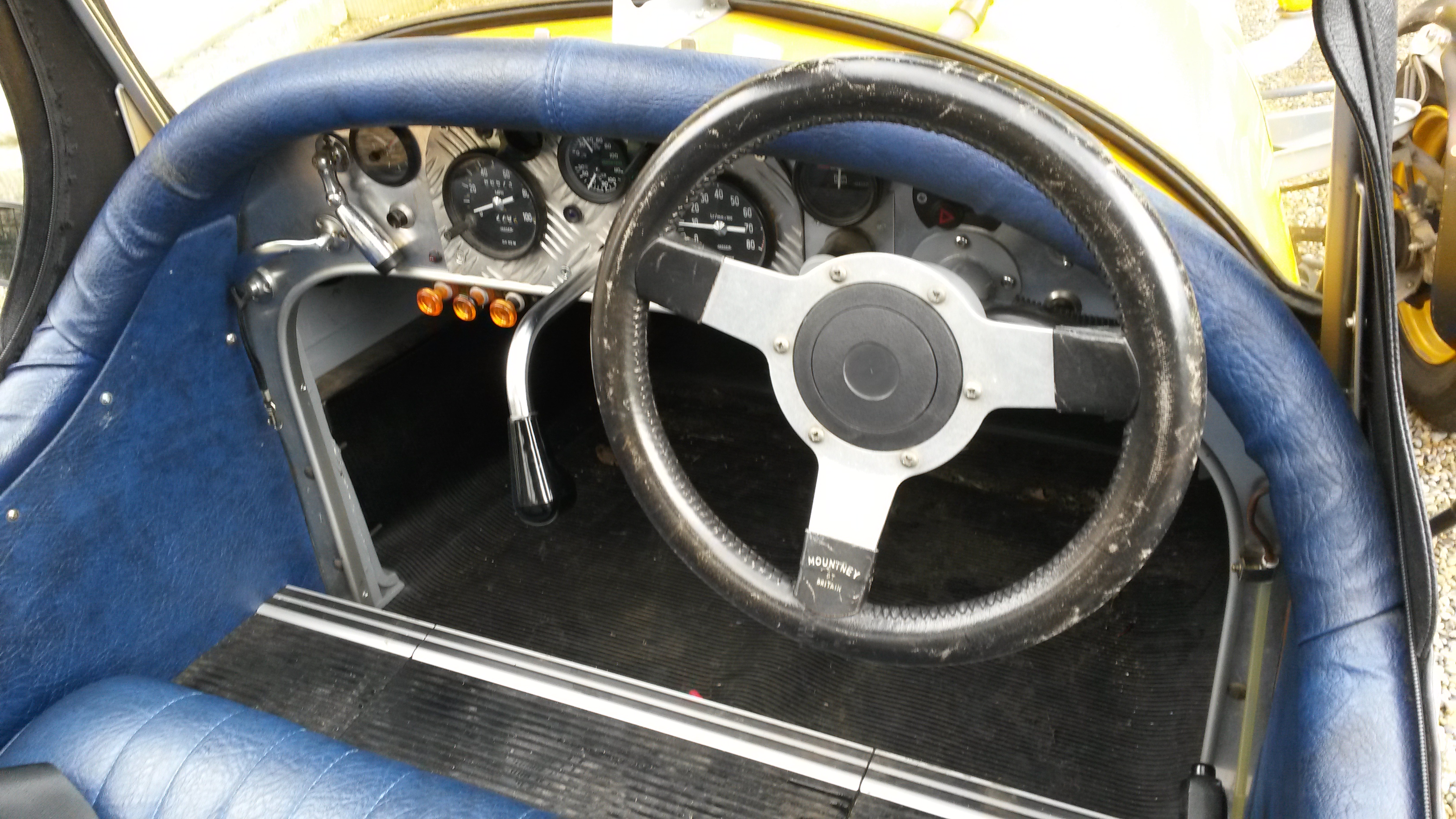
Clambering aboard is the first challenge. There’s a hot exhaust pipe to contend with and you have to slide one leg in, drop your backside onto the seat, then shuffle across so you can pull your other leg in. Once behind the wheel, the driving position is low and fairly comfortable – I found the throttle pedal was a bit too close for perfect points to be awarded.

Note upside-down Renault 6 gearlever. Very nicely finished inside.

Note upside-down Renault 6 gearlever. Very nicely finished inside.

The gear lever droops out of the dashboard like a Citroen Traction Avant, simply being the standard Renault 6 lever, but turned upside down. That means that the H pattern is reversed – first is forward and twisted towards the steering column. The handbrake is to the right, with a Dyane indicator switch squeezed between the wheel and the edge of the dashboard. There are other switches. I never did find out what they did.

To drive, there’s very little clue that there is only one wheel at the rear. It’s only when you hit potholes that you expected to straddle that you get a clue. The steering is deliciously direct with tons of feel, and you can watch the mudguards bob around with the wheels. You can even watch the driveshafts rotate. You certainly feel very exposed, even with the unusual rear canopy.

The engine, 1108cc in this case, pulls very strongly from low revs, but has a wonderful exhaust note as you keep your foot down. It isn’t ludicrously quick, but it is satisfyingly brisk. It doesn’t leave you really craving anymore, because being so exposed means you really do feel the rush of the breeze as you hurtle along. 60mph feels much faster than it does in say a Jaguar XJ6.

DRK rear

Canopy not standard fitment. Eye-catching! Needs a rear-gunner.

Turning into bends at speed, it feels remarkably stable. Having the engine so far back (behind the gearbox) must help here. There’s not too much weight slung out front and what weight there is sits very close to the front axle line.

The ride is perhaps a little bouncy, though I was testing the car over particularly undulating roads. The front suspension retains the torsion bars of the 6, which are probably used to a little more weight. The rear wheel uses a DRK radius arm with a telescopic damper/coil unit.

It has to be said though, it all feels very solid. That’s because these cars were very well built when new. You really did get a complete car bar the engine and gearbox. A steel chassis is mated with beautiful, aluminium panels, so it certainly isn’t a plastic-bodied lash-up.

I reached the end of my drive feeling like I’d want to spend a lot more time with this car. It’s about as practical as a paper cagoule, but if it’s fun your after, here’s a relatively unknown vehicle that can really deliver.

Brakes: How wasteful!

One of the biggest problems with electric vehicles is that they really highlight how wasteful ICE (internal combustion engine) cars are. When it comes to generating pointless heat, road vehicles are wonderful!

If you're going to have the future, have it fully electric

ICE versus Electric. Which one generates most waste when it comes to heat?

Take braking for instance. We just take it for granted that we press a pedal and the world gets less blurry. What we’re actually doing is taking the momentum we’ve built up with an inefficient petrol/diesel engine and converting it into heat. If you don’t believe me, drive down a long, steep hill with your foot constantly on the brake. Then have a good feel of your wheels. Careful – they may be VERY hot.

Then there’s the engine itself, which mostly turns fuel into heat. Great in the winter, because it keeps us cosy, but also great at warming the air around the vehicle. It’s what radiators are for.

Electric vehicles on the other hand tend to have regenerative brakes. The electric motor becomes a generator, recharging the batteries and providing a strong engine-braking feel. In a car such as the Nissan LEAF, pressing the brake pedal gently strengthens this effect, causing the vehicle to slow. Only if you really stamp on the pedal do the actual brakes kick in – which some folk reckon can cause the brakes to simply seize up through lack of use!

Sure, you don’t get something for nothing, and you’ll not put back into the battery what you took out accelerating, but it really does help extend range – as I recall all too well from our Nissan e-NV200 Roadtrip. To be honest, that regen was the difference between us making it home, and running out of juice in the middle of nowhere.

Eeek! It stopped predicting mileage at this point

Very low on juice in the Nissan e-NV200 Combi. Regenerative braking enabled us to get home.

But this still leaves me driving in ICE vehicles, realising how wasteful it is to brake. I haven’t driven an EV since November, but this feeling is very hard to shake!

It’s exactly the same feeling I get driving in traffic. Now this really is where the EV shines. Come to a stop, and all is silent and serene. While you’re not moving, or even when pottering along gently, you’re using barely any energy at all, while an ICE vehicle would still be turning its engine over at around 1000 times a minute.

As you may have noticed then, I’m still rather fired up about EVs. They’re still tantalisingly out of reach, though there are some great deals out there. I’ve seen brand new LEAFs offered on contract hire for as little as £150 a month for two years including battery hire. £3600 to hire a quite revolutionary vehicle for 24 months. That still doesn’t fit my meagre budget, but it must surely be tempting for a lot of people, especially if the household has a second car that can be used for mega-mile trips.

Anyway, here’s another chance to see my review of the Nissan e-NV200.

Technology takes away all of the fun

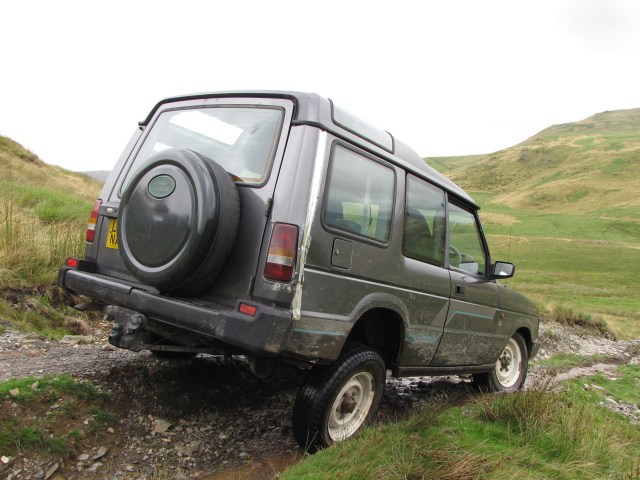
My Land Rover Discovery 200Tdi perfectly summed up how the 1980s/1990s was a peak time for the motor car. They had become very good at many things, but weren’t burdened by over-complexity. How different the current Discovery is! Packed with computers, with an engine that’s barely accessible for some jobs with the body still fitted to the chassis. Dare I say it, but the fun of off-roading has gone too.

Land Rover Discovery any good off road

Low tech is more fun. Computers are not required.

Now, that doesn’t mean that the current Discovery isn’t any good off road – far from it. It’s amazing what it can drag its heavy, shiny body through with barely any driver input. And there’s the crux of the problem. Where’s the fun if the vehicle is doing all of the work for you?

I absolutely loved testing my Discovery in off-road conditions. The long-travel suspension and lockable centre differential certainly helped when things got really difficult, but there was never any doubt that you still needed driver skill to cope with obstacles. I had to choose my line very carefully, and control the throttle input with hairline precision to avoid wheelspin and a loss of traction. I had to anticipate the terrain and take into account many variables, ensuring I was in the right gear at the right time. All challenging but great fun. I don’t really want a car where all I do is steer and let the computers sort it all out. I might as well play at driving on a computer game.

Mind you, it must be said that some off-roaders don’t seem to have much faith in their own skills. They bolt ever more kit to their 4x4s until they look like something out of Mad Max, then get annoyed when they get stuck. Especially if someone in say, a completely bog standard Land Rover Discovery (or even a Ford Maverick) gets through a section with no bother at all.

If all that gear is so necessary, why is that you can still see people having lots of fun in a near-standard Series One Land Rover at trials events?

No, you can keep your computers, snorkels, huge tyres and suspension lifts. When it comes to off-roading, I find you can have just as much fun in something older, simple and bog-standard – and stand a chance of fixing it if something breaks!

The Electric Roadtrip – Nissan e-NV200 Pt 2

Part Two – in which getting home seems impossible

In the previous post, we had rather nervously made it to Devon – 205 miles from home – in an electric van. It was our first experience of driving an electric vehicle long distance and while it hadn’t been without plus points, chilly toes and range anxiety were very real downsides.

After managing to find an angle that allowed me to thread a cable in through a window, I was able to charge the e-NV200 at my parents’ house. As the cable went in via a window, we obviously had to do this in daylight hours. We went for a delightful walk to Bideford, watched crap telly and chatted about the sort of things families chat about. My mother wasn’t overly interested in our electric experiences, but then she’s never quite shared my enthusiasm for motor vehicles and doesn’t drive.

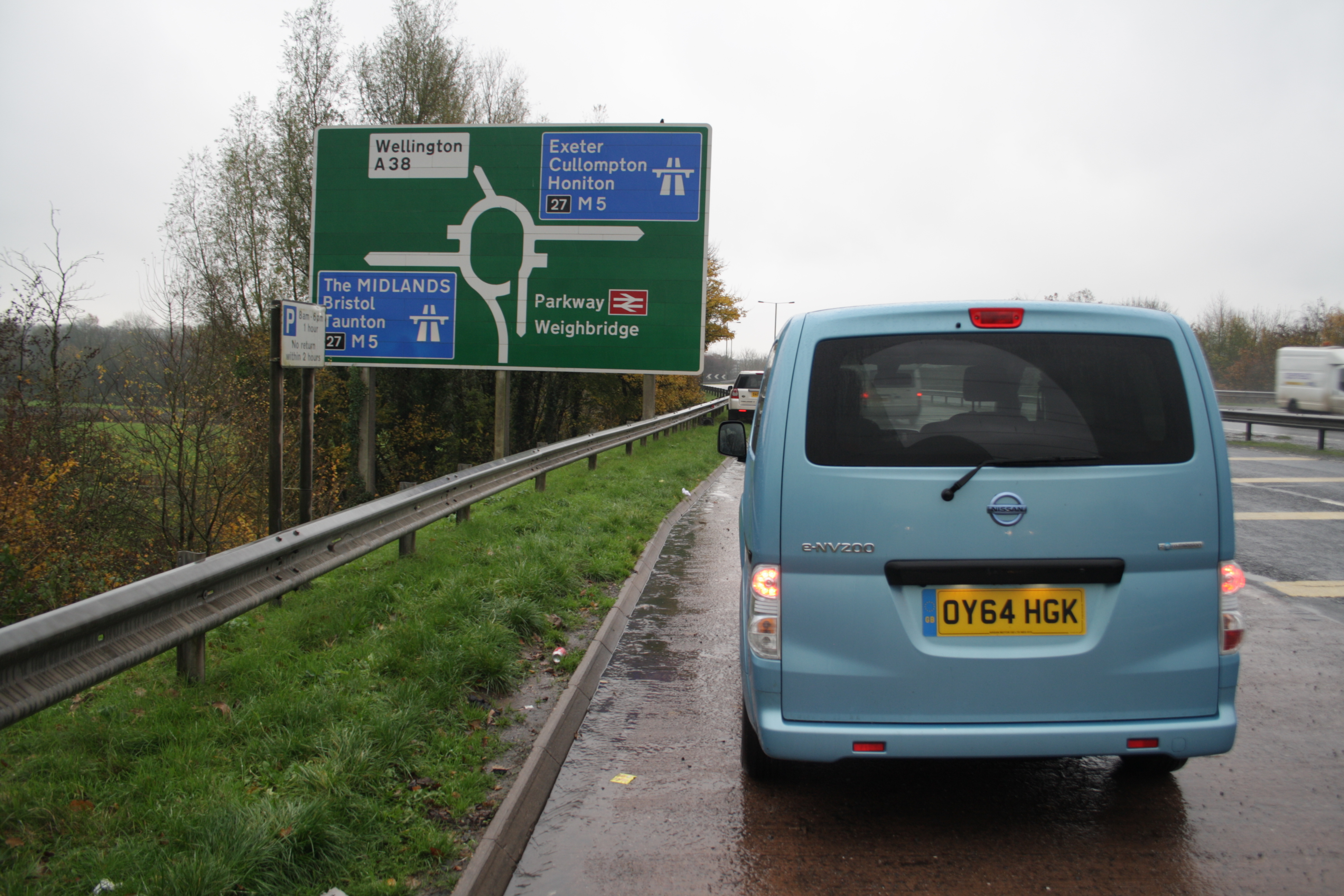
The time came to head back. I knew there was a steep downhill section towards Tiverton, so range anxiety wasn’t a huge factor this time. We even stopped for photos.
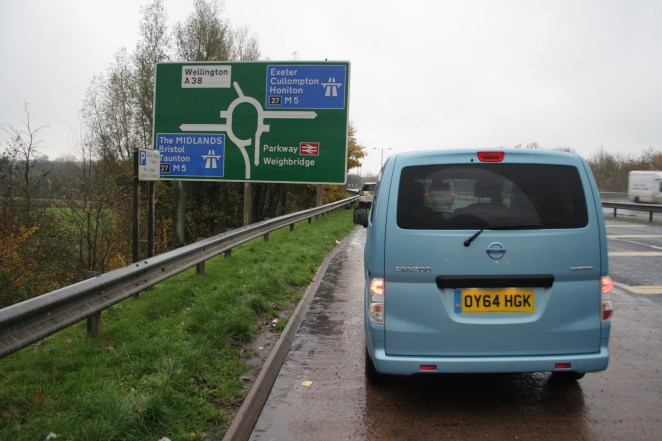
Devon electric van

Proof. We were in Devon. Not the prettiest bit, I’ll admit.

Actually, I’m going to divert from the narrative slightly here. Look at the picture above, and note how the rear wiper does a really good job of cleaning the wrong side of the rear window for right-hand drive. There’s a huge unswept area, right where you’d like to look. The van, with its split doors, is even worse – there’s only a rear wiper on the left-hand door! Sorry, but it bugged me.

Returning to our road trip, we took on more electricity at Sampford Peverell. The 43 miles we’d travelled left us with 14 miles remaining, though I must concede that I had taken the Combi up to 70mph on the dual carriageway to see what sort of a difference it made. The phrase OM NOM sums it up pretty well. We pushed on, charging again at Sedgemoor Services near Bristol. It was starting to get a bit boring to be honest.
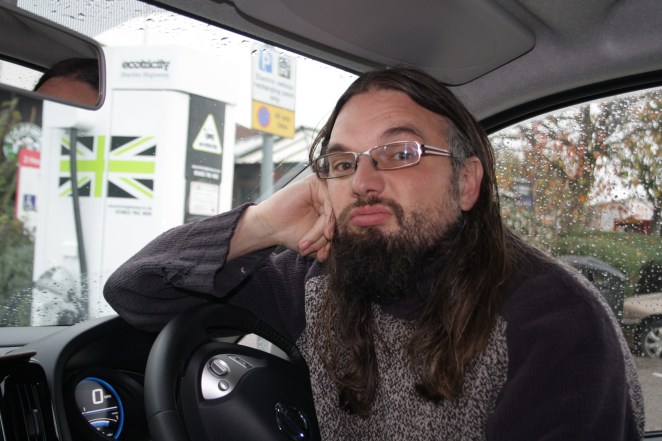
Another half-hour wait for charge. Boring!

Another half-hour wait for charge. Boring!

After nervously approaching the M4 bridge toll – the e-NV200 is counted as a car luckily – we turned into the rather pleasant Cardiff Gate Services for the second time on our trip. Yet again, we bumped into another LEAF owner! Again, we got there first so were able to plug straight in. It seems this charger gets a lot of use! Our fellow EV-pal this time was freelance journalist Nikki Gordon-Bloomfield, who runs Transport Evolved. She is quite the EV enthusiast and back in 2006, converted her Morris Minor to electric power. Shame I didn’t know that when we met as I could have picked up some tips for the electric 2CV I want to build one day…

A LEAF awaits its charge as the e-NV200 fills up

A LEAF awaits its charge as the e-NV200 fills up

Our 37-minute charge took the battery up from 13% to 87%. Frustratingly, the 77-mile range dropped almost immediately as we hit the motorway, to 68 miles. With 54 miles between charging stations, we were back to having chilly toes and playing with the trucks again as I aimed to keep our speed around 50mph. The weather got increasingly unpleasant, so wipers and lights had to be used, as well as bursts of air conditioning. This was not fun.

At Llanelli, we had only 10% battery remaining. We knew the next 61 miles would be tough, so we’d let it charge for as long as possible. To save herself from utter madness, Rachel began noticing how long it was taking. It’s easier to charge an empty battery, and much harder to charge one that’s almost full. You have to remember this, because the regenerative brakes are much less effective if the battery is over 90%. Getting from 10% to 62% took just 17 minutes, with 85% status arrived at after 28 minutes. But, after another six minutes, the charge had only gone up to 91% at which point the charger turned off. The Combi ambitiously predicted a range of 87 miles (or 78 with the heater on). Surely that’d be enough?

No, it wouldn’t. There are no more photos now, because our only aim was to get home. With us the wrong side of Lampeter, the Combi reckoned it had 22 miles of charge left. Home was still 24 miles away, with two VERY steep hills to climb. I was becoming so tense that I didn’t really need the backrest of the seat. I hate driving slowly, but began to treat 50mph as undesirably fast. The slightest downhill section left me battling whether to use momentum to gain speed, or to gently regenerate a little power. I mainly opted for the latter – just lifting the throttle to the point that one bar of regen was showing.

The fabulously-named Pontrhydfendigaid saw our first steep climb. I made sure there was no traffic behind us, then nervously kept the speed to just 20mph. This was apparently using four bars of power – far less than if I’d tried to tackle the hill at normal speed. We were now less than nine miles from home. Surely we were going to make it?

A downhill section allowed us some valuable regeneration, but battery life was now less than 10% with another climb to go. We ambled up it, with me nervously watching my mirror for approaching headlamps. We were travelling slowly enough to constitute a hazard, though it should be pointed out that heavily-laden lorries travel up this hill at about the same speed. Even my 2CV could go faster than this though, and our toes would be warmer!

After another couple of miles, the displays stopped predicting mileage or showing battery life. That means less than 6 miles remaining, and less than 7% battery life. And we still weren’t home. I became ever more grateful that nothing was coming up behind us, nor coming the other way and forcing us to give up our desperately required momentum.

But, we did make it. Just! If things had got really low, the van would have gone into ‘Turtle’ mode. This is your last chance – your must-take opportunity to find somewhere safe to park up. We can’t have avoided that by much but with serious hyper-miling, we had managed to drive 61 miles in the dark, in the depths of winter, in very hilly terrain. The relief was enormous!

So, conclusions. I didn’t set out to see if electric power can be compared with petrol power for a journey like this. Only a quick glance at the facts proves that it isn’t. I knew the range would be around 60 miles. I knew ‘filling up’ would take half an hour. What I hadn’t really accounted for was the range anxiety. It was seriously stressful! Not did I fully appreciate the impact charging and slow driving would have on time. A three-hour journey took six hours.

By deliberately choosing to stage this test in winter, I’d demonstrated another expected hurdle – heating. The e-NV200 lacks the clever heat pump technology of the LEAF, so keeping warm is very bad for range. I was disappointed that the windows misted up so readily though, so you have no alternative but to keep putting the heating on. Heated seats and steering wheels also do not keep your toes warm! I’d even worn thick socks.

So, there’s absolutely no surprise that electric vehicles are still not ideal if you’ve got serious mileage to cover. However, it is possible! That wasn’t true not so very long ago. It means that if you’re struggling to decide on an EV because you’re worried about that occasional long trip, you don’t need to. Just allow plenty of time!

I did find the impact on my usual driving style hugely upsetting. The thing is though, I now find I’m driving my own cars more gently. That desire to improve efficiency is addictive stuff actually. Sure, I still drive pretty quickly, but with a degree of smoothness I don’t think I possessed before this test commenced. It seems a little part of me is tuned into EV.

The Electric Roadtrip – Nissan e-NV200 Combi Pt1

Part One – Aberystwyth to Bideford, via Llanelli

I’ve driven quite a few electric cars, but I’ve never used one for a long journey before. With Nissan’s e-NV200 Combi on my driveway and an impending trip to Devon to see my parents, it seemed only right to ask the question – can you do a long journey in an electric car?

First step was to charge the e-NV200 overnight at home. This ensured I had 100% battery charge – important as from my home in rural mid-Wales, the nearest charger was 61 miles away in Llanelli. As my baseline testing had revealed a likely range of 50-60 miles, this was going to be interesting!

Second step was to plan the journey, while electricity gently tickled into the e-NV200 at the rate of 3kwh – about the same as an immersion heater. I decided we could make it to Llanelli, but noted contact details for Dinefwr Park near Llandeilo. They have a charger, just in case we were running short. From there, the M4 and M5 have no shortage of chargers, but I listed all the services and postcodes ready to enter into the sat nav. It would be important to know how far away each charger was on the way.

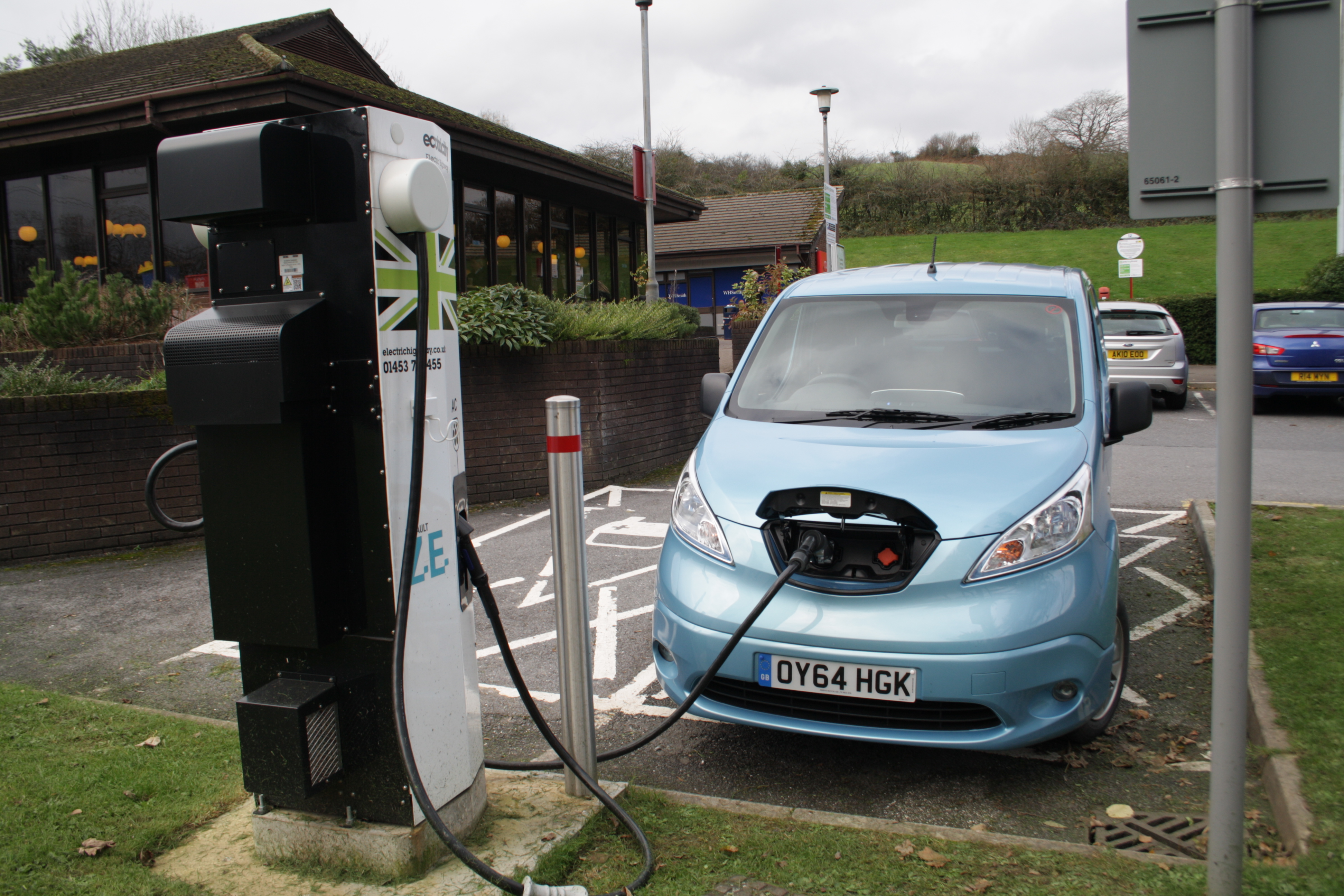
Charging took place overnight. I don’t know how long it took, as I was asleep. Ten hours is probably likely if the battery is in a low state of charge. We reckoned that the most a charge would cost us is £4.50. I made the most of being hooked up to the grid by telling the van to run the heater before we set off. You can do this by pressing a button on the fob, or programming it via the screen inside the e-NV200. With the Combi packed and warm, we unplugged, stashed the cable in the back and set off.

We live at quite an elevation, which was an advantage. Most of our route to Llanelli was downhill. There was a climb from Lampeter. This began to seriously eat into our range. With the heater off, the e-NV200 had been confidently predicting that we had 77 miles of range. That was dropping rapidly. Range anxiety began to kick in and I began to ‘hypermile’ – driving as gently and smoothly as possible, and trying not to use too much power going uphill. Our travelling speed dropped and tension levels rose. There’s a setting to restrict your speed, so I started to use this – setting it to prevent me exceeding 50mph. That’s handy and allows you to focus on the road, knowing you won’t accidentally go too fast, and inadvertently use too much power. Once the road opened up a bit, I switched to cruise control – still at 50mph, even on unrestricted dual carriageway.

We reached Llanelli with the battery at 20% and a range of 12-20 miles (former with the heater on, latter without). Not too bad. We fathomed out how the rapid charger worked and connected up. Within a minute of our arrival, a Nissan LEAF turned up and was frustrated to find that despite two parking places, the rapid charger could only charge one car at a time. They were forced to leave. Fighting over power already! In half an hour, the battery charge rose to 86%. We decided this was enough and pushed on.

Rapid charger

Our first ever rapid-charge. Very easy and no smell!

Choosing what speed to do was the next challenge. I decided 70mph was too much. Easily possible, but the blunt aerodynamics of the boxy e-NV200 were going to make that very unecomonical. I opted for 60mph and set the cruise. That was fast enough to keep us out of the way of the 56mph-limited trucks. Even so, some steep hills caused the range to drop rapidly. We thought the range of 80 miles would be sufficient to get the 54 miles to the next charger, but it was looking increasingly iffy. I reduced our road speed and began to get in the way of the trucks. I hoped that giving them a flash to pull back in as they overtook made up for us obstructing their progress.

There are services either side of Cardiff. We decided to stop at the first one, which is when I remembered that the charger was showing up as out of service on the Ecotricity charger map. We had a look anyway, and at no point did the charger tell us it wasn’t working. It just didn’t work! We nervously headed back out onto the motorway and were somewhat relieved to make it to the next services. By now, the gauge was refusing to tell us what mileage was left – meaning less than seven – and the battery charge was showing as just 8%. We’d taken to leaving the heating off to stretch the range. By now, it had already taken three hours to get this far – as long as it usually takes to get to my sister’s house near Tiverton. We plugged in and headed off in search of tea. EV fans often flag this up as a huge advantage. ‘Just plug in and go and grab a drink,’ they say. If we did that at every recharge, we’d be spending as much on tea as we normally would on petrol!

While we sipped our brew, another Nissan LEAF arrived! It seems these electric cars really are becoming more popular. This chap was happy to wait for us to charge, and told us that he has covered over 30,000 miles in his LEAF in a year. For some people, EVs really do make a lot of sense. He loved the EV life.

Eeek! It stopped predicting mileage at this point

Eeek! It stopped predicting mileage at this point

We charged to 87% and drove on. It had been a quirky adventure at first, but the gloss was rapidly falling off this trip. Nice as it was to have heated seats and a heated steering wheel, we were still cold! We’d put the heater on for a bit – essential to stop it misting up – but would then start worrying about the effect on range, so we’d turn it off and start feeling cold again. Then the Combi would mist up again, so we’d put the heater on for a bit. Then turn it off again. Not fun.

However, this trip wasn’t about discovering if electric was better than more traditional fuel. It didn’t take much planning to realise it really wasn’t. Instead, my aim was to see if such a journey was even possible. We arrived in Bideford a lot later that night (after a stop for a meal with family in Tiverton) in an electric car. We had driven over 200 miles in an electric car. Sure, petrol or diesel would have been much swifter, but we’d proved the point that you needn’t leave your EV at home if there’s distance to cover. There wasn’t much of a glow of satisfaction, but it was a start!

In part two, we head back to Wales, find ourselves 24 miles from home, with 22 miles of range and increasingly cold toes. Will we make it?!

The electric roadtrip – Nissan e-NV200

The major barrier to new electric car sales still remains range. Unless you can afford a Tesla, you’re stuck with a range of 124 miles at most (Kia Soul EV and Nissan Leaf). In reality, certainly from my own experience, 80 miles is the most you can expect in a hilly, rural area in the depths of winter.

I'll be undertaking a 410-mile roadtrip in one of these

I’ll be undertaking a 410-mile roadtrip in one of these

Despite this, I have decided to attempt a 410-mile roadtrip to Devon in an electric vehicle. This time, I’ll be using a Nissan e-NV200. Unlike the Leaf, which was electric from the very start, the e-NV200 is effectively a conversion. Nissan has placed Leaf running gear in its Spanish-built NV200 van. I’ll be testing the Combi version, which has rear seats and windows. It’ll be the most thorough road test of this vehicle conducted so far.

Nissan claims a range of 100 miles for the NV200. This is less than the Leaf for several reasons. First, it isn’t anywhere near as sleek, being a van. Secondly, it lacks the Leaf’s clever heatpump, so to keep warm, I’ll have to use more battery power. Or wear more jumpers. Thirdly, it weighs a good 100kg more than a Leaf, and that’s before you make use of the greater load space or 648-678kg payload (depending on model).

I’ll be conducting some tests on local roads for a day or two before we set off, to try and establish a likely benchmark mileage per charge. The charging infrastructure itself is already better than it was when I tested a Leaf last year, so I have high hopes that we’ll make it with no problems. It’s going to take a lot more planning, but I’m really looking forward to it. Stay tuned!