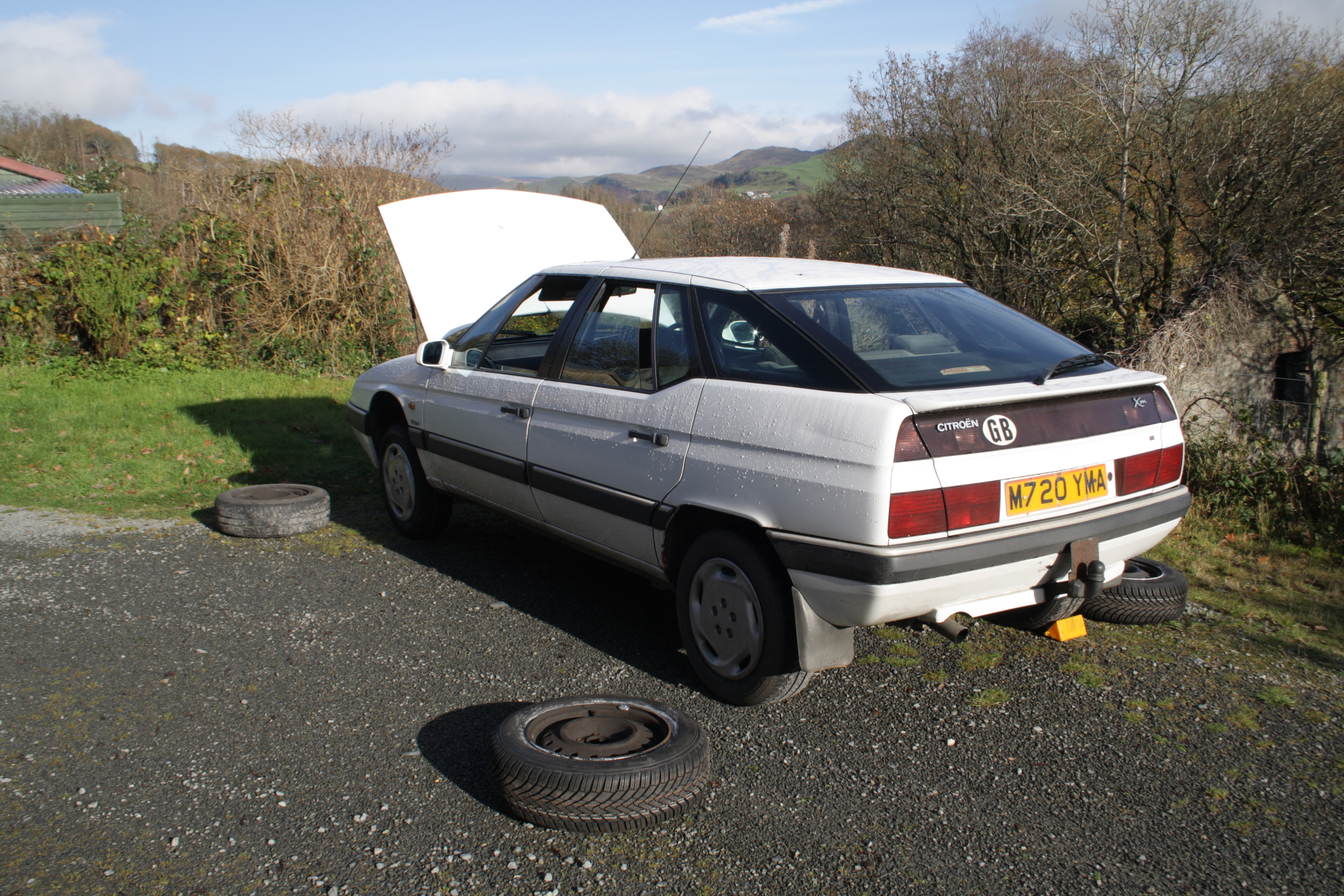
What YOU need to know about driving classic cars

This post isn’t aimed at those of us who regularly drive classic cars, but it is designed to help folk without classic experience. What is a classic car like to drive? Are they all horribly slow? Why do they take so long to pull away at junctions? What are those strange controls?

To make life easier, I’m focussing on Post-war classics – those made since 1945. Even then, controls aren’t always labelled in the same way, so for the classic novice, the interior of an elderly car can be a confusing place to sit. If it makes you feel better, classic fans often feel just as confused when clambering into a modern car, where there are more buttons on the steering wheel than the entire dashboard of many classics! Before you can start the engine, you generally need the control below.

If you own a modern car, you probably don't recognise this.

If you own a modern car, you probably don’t recognise this.

The choke control knob adjusts the mixture and throttle for a cold start. The logo on it shows a butterfly valve restricting air flow. Modern cars do this automatically, but most classics don’t and require user input. Knowing how much choke to use can be a bit of an art. It depends on ambient temperature, engine temperature and how long since the engine last ran. You also generally need to steadily reduce the choke as the engine warms. Again, this varies from car to car. A Citroen 2CV can generally run choke-free after less than a mile, but a classic Mini may take a few miles before you can shove the choke fully home. It sounds more complicated than it really is and for many, it’s like using a clutch. You just no longer really think about it.

Starting the engine can now proceed. You might need a bit of throttle, but you might not need any at all. You build a relationship with a classic car, and that means you have to discover what it needs. Some classics require you to turn a key, others have a starter button – a recent trend in moderns too.

We’d better talk about gearboxes before setting off. They can be rather clunky and some lack synchromesh on all gears. It’s something we take for granted these days, but synchromesh allows for smooth changes at all speeds. It effectively gets the gear cogs up to the required speed before they mesh, so there’s no crunch. Many post war classics lack synchromesh on first gear and some – Fiat 500s for instance – lack any synchromesh at all! Going up the gearbox, that’s not much of a problem. Going back down is more of a challenge though. For that reason, many classics need to come to a complete halt before first gear is selected. That’s why they can sometimes seem to linger at junctions. They’re not doing it just to annoy you! Experienced classic drivers learn a trick called double-declutching so that downchanges can be conducted on the move. It requires some skill and familiarity with the car. Don’t worry about it if you are a novice, but do note that you may need to come to a complete halt to select first without a crunch. A tip is to select second, then first when you have stopped as this will stop the gear cogs whirring and will allow a crunch-free change.

Steering is the next challenge. Power assistance is rare on classics, though some larger ones will have it. Where fitted, it’s often very light indeed. If it isn’t fitted, the steering will be very heavy at slow speeds, bordering on very heavy indeed at car park speeds. You’ll also notice that the steering gets heavier as your cornering speed increases. In classics, you often feel the speed you are travelling far more than in a modern. It can be hard work. The steering can be vague, especially if a steering box is used, which can make driving at speed very hard work. It’s one reason many classics prefer to travel at a gentler pace. The other is that older engines aren’t always happy to be driven hard.

Handling can be very different too. Skinnier tyres and different suspension designs mean many older vehicles just can’t be driven as quickly as a modern hatchback – certainly unless you are very skilled in how these vehicles handle on the limit. With classics, it’s often more about enjoying the journey than arriving in the quickest time possible. They’re not all bad – my 2CV can certainly corner very quickly, and so can classic Minis. Morris Minors on standard-width tyres are at something of a disadvantage though, and pushing one hard can be a scary introduction into the world of oversteer – where the back end pushes out and you go sidewards.
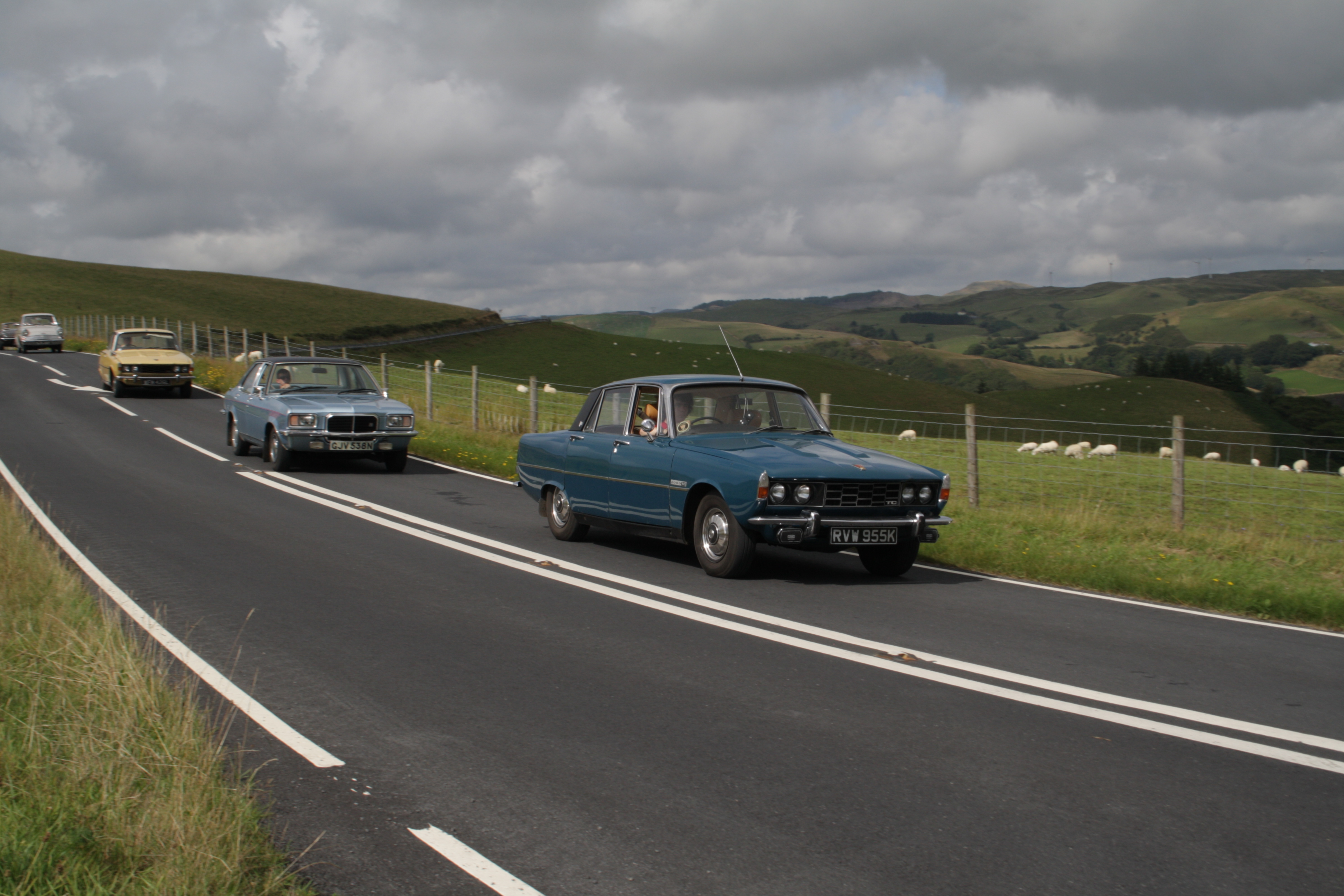
Driving classic cars can be challenging, but is huge fun!

Driving classic cars can be challenging, but is huge fun!

Then we come to brakes. They can be awful by modern standards. Even a 2CV, which has very powerful brakes, has a pedal that needs a good shove to get any braking effect. This is because it doesn’t have a brake servo. These use a vacuum created by the engine to boost the braking effect. It’s why many moderns require just a light touch on the middle pedal. That said, a Citroen DS has a rubber button on the floor which can produce very strong braking with the lightest of touches. Certainly, it’s a world away from other cars of 1955. The lack of braking is another reason why a classic owner may choose to drive comfortably below a posted speed limit. There’s no ABS either, so the old art of cadence braking may be required in an emergency. Again, I’ll leave Wikipedia to the details. Needless to say, it’s an art that has saved my skin on several situations!

If all this is making classic cars sound like a complete nightmare, then I apologise. However, some people do jump into older cars and are horrified by what they find! You have to set your expectation levels. Some older cars – Rover P6s, bigger Citroens for example – are truly exceptional to drive, but they still don’t behave like modern cars.

Triumph Herald is thoroughly charming and quite different too.

Triumph Herald is thoroughly charming and quite different too.

Nor do they all behave the same. There can be a vast difference in how older cars drive, even when you compare rivals at the time – such as the BMC 1100, Ford Escort Mk1 and Vauxhall Viva. Each has a far more distinctive character than rivals of today.

Above all else, older cars somehow feel more alive. They have personality. You have to learn how to get the best out of them and can’t just expect the car to do all the work. Journeys become a team game and the most tedious of journeys can be turned into something far more joyous. Then there’s the looks. Check out the Triumph Herald above. You rarely see a modern car that’s even half as bright and cheery. We seem to have gone back to the black and white days in fact – a sea of monochrome.

So, while some re-education might be needed for you to get the best out of a classic car, overall, it’s well worth the effort. But even if you don’t own a classic and never will, please show a little patience. Drivers of older cars are not deliberately trying to hold you up. It’s just that when you’re driving a nice old car, you learn that you don’t need to rush to have a good time.

Dilemma: The Hippy Petrolhead

As a hippy, I should dislike cars. Mind you, I should dislike meat too. I love both. It is a huge clash between my hippy ideals and the fact that I just love munching animals and driving around in fossil-fuel-munching motor cars.

But, with both, I try my best to reduce the impact of my activities. Some might frown upon my old clunkers and think that it would be better for the environment if I traded them in for new, more efficient cars. They’d be wrong. By continuing to use my older vehicles, I’m continuing to avoid the need for a new car to be produced. Also, neither of my cars contain the precious metals associated with catalytic converters and both can easily attain over 40mpg, so they’re pretty handy on the juice too.

My 2CV - perfect car for the hippy petrolhead?

My 2CV – perfect car for the hippy petrolhead?

“But some new cars can do 70mpg!” They may claim that this is the case, but in reality? Almost certainly rubbish. Too many people blindly accept manufacturers claims, but there are reports out there pointing out that what they claim is not always anything like reality. That goes for CO2 emissions too, which is annoying as these newer cars often have very cheap road tax based on numbers which may not actually be realistic. The BBC has even reported on how tests are manipulated. There’s also the small matter of modern diesels producing more nitrous oxide emissions than older ones – something that is leading folk like Boris Johnson to consider banning diesels outright for city centres.

So, I shall continue to use my old cars with a clear conscience. Sure, burning fossil fuels is still a bad thing, but my annual mileage is actually quite low, and the cars I own are really quite efficient.

I do my best with meat-eating too. Most of the meat we buy is from local farms. We can see some of the animals from our window. We know the animals are well cared for, and the food miles are very low. We’re collecting more beef this very weekend. I do worry about the emission problems with cows – they produce an awful lot of methane – but no-one locally appears to be farming ostrich. That’s a shame as they’re very tasty and have a cleaner exhaust than cows.

So, I eat animals with a clear conscience too. I know some don’t like it, but I do.

But this feeling of being pulled two ways is summed up very nicely with my thoughts on politics. Yes, this lengthy piece does have a point! You see, when it comes down to who’s policies I must like, The Green Party comes up trumps. It isn’t a party that ONLY thinks about environmental matters – there’s far more to them. They want to nationalise the railways, because they want to improve the service and don’t think private companies are inclined to do it. They’re really quite keen on keeping the NHS together and making it better. They also care very much more about disability rights and benefits than the heartless Tories – who just seem to see anyone who claims benefits as a scrounger. Maybe that would be easier to stomach if MPs hadn’t proved to be so good at scrounging themselves…

The problem stems from Transport. Clearly, The Green Party aren’t keen on cars. They want to reduce speed limits, cut new road building and encourage people to buy newer, cleaner cars. To a petrolhead, this seems like a massive attack on something I get a great deal of joy from. But, the hippy in me KNOWS something has to be done. Traffic levels are just ridiculous. There are an awful lot of places that I go out of my way to avoid. Like the South East, or most cities. Non-enthusiasts are horribly tied to their cars and I can see that this needs to change. The Greens at least know that public transport HAS to improve. For many, there’s simply no incentive to leave the car at home. For some, it’s not even realistic. The problem is, people will come out with excuse after excuse for why they must use a car, but the arguments often don’t stack up. The simple reason is that people like having a car. They like the flexibility and the lack of other public sharing your journey. Depressingly, an awful lot of people are so attached to their cars that they won’t undertake even short, entirely realistic journeys by foot. No wonder obesity is becoming an ever larger (ahem) problem.

But, I do struggle with a lot of Green transport policies. Any encouragement to get people to scrap perfectly good cars for ‘low emission’ ones fills me with dread. It’s the scrappage scheme all over again. A terrible, wasteful scurge on the world of motoring – though worse still in America where engines of scrappaged cars actually had to be ruined! They poured liquid in to deliberately kill the engines so they weren’t even any good as parts. Ludicrous!

I also really struggle with plans to reduce speed limits. The Greens would like to replace the 60mph rural speed limit with a 50mph one for reasons of safety and emissions. I agree that there are roads where this would be sensible, but as someone who loves driving, I like doing 60mph! I hate driving around Oxfordshire, where blanket 50mph speed limits exist on a lot of major trunk routes. Even in my 2CV this is boring!

The Greens also want to introduce 20mph zones on most urban roads. Again, for reasons of safety and emissions. I don’t agree with that either. Sure, in some places, this makes a lot of sense – Aberystwyth has introduced 20mph routes in its town centre and very sensible they are too. But ALL urban roads? It’d be awful. I’m surprised they don’t want us to go back to 4mph and a bloke with a red flag up front. Oh, and they’d like to start ramping up road tax too, to try and price us out of our cars.

I imagine that these plans have more to do with making driving unpleasant. There would be less time saving if cars couldn’t drive as quickly so maybe folk would use public transport instead. I can’t really see it as anything other than an attack on motorists.

But here’s the thing. Come the election, there’s still a pretty good chance that I’ll vote Green. No party delivers ALL that anyone wants and the chances of The Greens getting a majority are very remote indeed. Sure, I disagree with the transport side of things, but what is more important? Voting for a party that goes completely against the current system, one that would probably improve my life in many areas? Or vote against them just because I like my car so much?

Even as a petrolhead, voting based on my hobby rather than my overall life doesn’t seem right.

2015 Fleet Predictions – time to dream!

This is where I boldly state that I will try not to buy too much old tat this year, which inevitably proves not to be the case. However, having had a stable fleet since October, things are already looking promising.

Naturally, there may be trouble ahead. The XM needs an MOT this month, and the 2CV’s chances of passing one in April are entirely nil. In fact, just getting it the 800 miles required for her to hit 200,000 miles is proving a challenge. The other night, the headlights just stopped working. This was entertaining for my wife who was driving at the time. I rushed out in the XM to (completely fail to) assist. My wife then followed me back home with only the sidelights working, though the 2CV’s headlights suddenly started working again after a mile or so. At which point, the XM’s lights dipped and a warning light flickered on – relay woes.

Headlamp woes afflict final push for 200,000 miles.

Headlamp woes afflict final push for 200,000 miles. One fell apart. New one now fitted.

I changed the 2CV’s headlamp switch, though I couldn’t find much wrong with the old one bar a bit of wear. One of the old headlamps fell apart when I removed it though. Rusty! I managed to dig a spare out of the mess I call a parts stash.

I’ve cleaned up the XM’s relays too, dropping one in the engine bay never to be seen again. DOH! I’ve also had another go at sealing the dodgy sunroof. Few things are more depressing than a car with a water leak above your head. It’s a pain, as I really like the XM and (famous last words) I see absolutely no reason to get rid of it.

My plans for the 2CV mainly involve trying to find a better body. I will either replace my 2CV’s rotten body with another or may use the good bits of my 2CV to restore another. This is likely to take time, so I can get back to predictions.

There are only two cars I currently desire, and both use a 2CV chassis. The Dyane and the Ami 6. Let’s start with the Ami, as it is the most absurd.

J'adore the Citroen Ami 6. Bonkers.

J’adore the Citroen Ami 6. Bonkers.

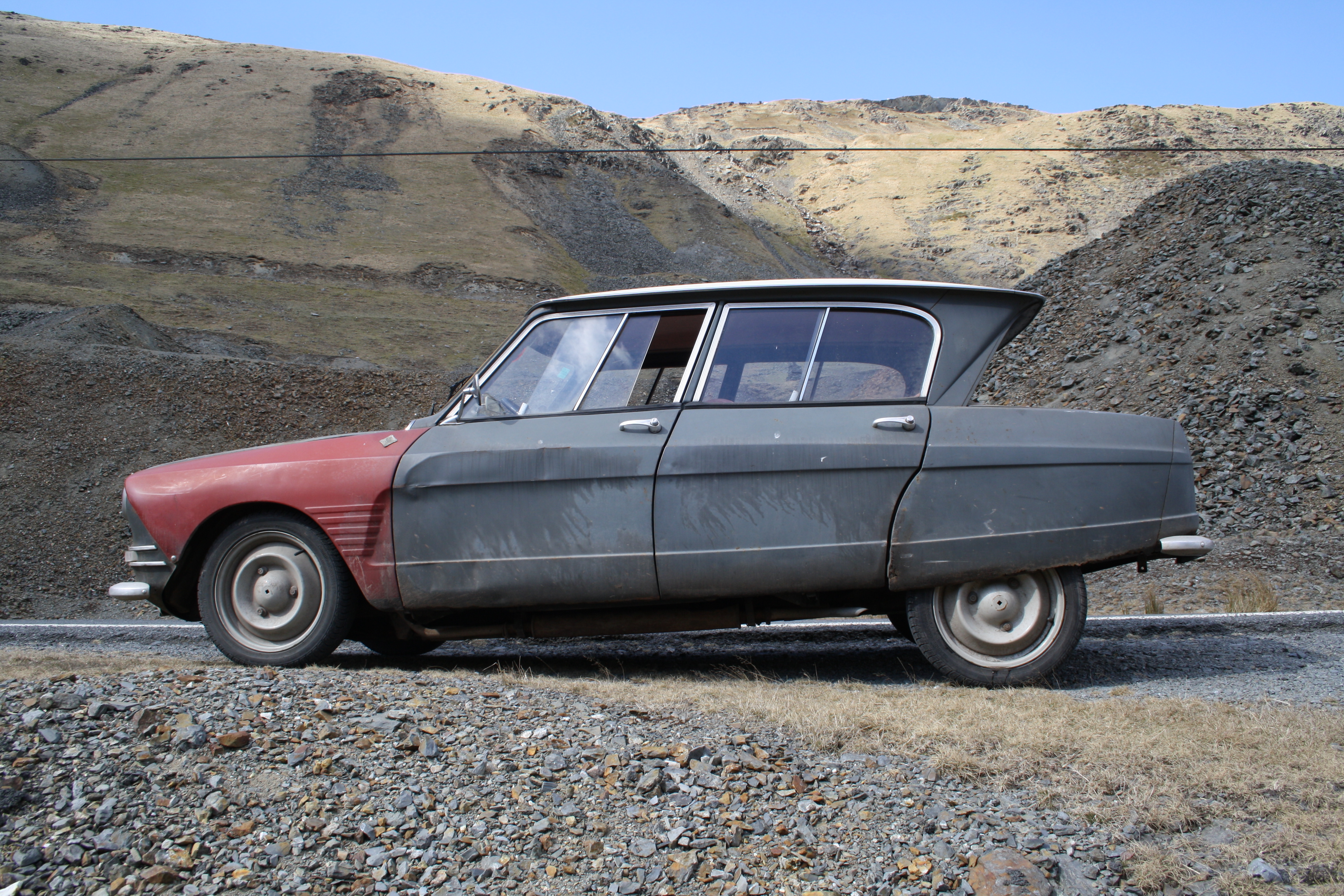
The reason why I want to own one is surely apparent. They’re utterly gorgeous in a very, very odd way! Intended to fill the chasm between 2CV and DS, the Ami used the former’s running gear (albeit with a larger 602cc engine) and some trim from the latter to create a huge success story. In France. The rest of the world just couldn’t cope with the looks and only a handful of right-hand drive Ami 6s were produced. The later Ami 8 had wider appeal, but I’m not so keen on the toned-down looks.

The one pictured was loaned to me by Pete Sparrow. I was absolutely bowled over by how much fun this car was to drive! It has a lightly-breathed-on 602cc engine from a later 2CV but almost more fun than how it goes is the shocked reaction of folk as you drive past. It’s the ultimate WTF-Wagon. There are still plenty of them for sale in France, so I do have dreams of going for a holiday and coming back with a little Ami. It’s a plan that requires more money than I currently have, but I’m hoping for developments on that front.

An alternative to the screaming ridiculousness of an Ami is the Dyane. Intended as a 2CV replacement, the Dyane never quite had the charm of its stablemate, though 1.4-million were sold between 1968 and 1983 – not bad going. The Dyane has better aerodynamics, doors that don’t flap at motorway speeds, a useful tailgate and more internal space. My third A-Series Citroen was a Dyane and we clocked up 14,000 miles together in just one year.

A colourful Dyane I met a few years back.

A colourful Dyane I met a few years back.

I really like Dyanes. They’re enormously practical and just as much fun to drive as 2CVs. There’s a decent chance of finding a right-hand drive one too, as they actually did sell reasonably well in the UK. Again, no chance of buying one just yet due to funds, but definitely on my radar.

The thing is though, I’ve owned Dyanes before. Much as I love them, I’ve never owned an Ami, and I am always drawn towards new experiences. On the downside, an Ami is going to be left-hand drive, which does cause some issues. Not insurmountable though and I don’t recall having any bother with the one I borrowed.

So, there you have it. I’m boldly predicting that I will own a Dyane or Ami this year, and maybe even start the 2CV’s resurrection if I have any money left. Watch me now flog everything and buy a Perodua Kenari or something.

2014 Fleet Review

It is traditional at this time to avoid doing any proper, in-depth reporting, but instead to create a lazy, half-arsed ‘the year that was’ piece. I am something of a traditionalist, so shall not break with tradition.

So, here begins the ClassicHub Fleet of 2014 Review. It shouldn’t take long, as it has been one of the quietest years ever for my fleet. Only four new vehicles have graced my driveway, and typically, only one of those has made it to the end of 2014.

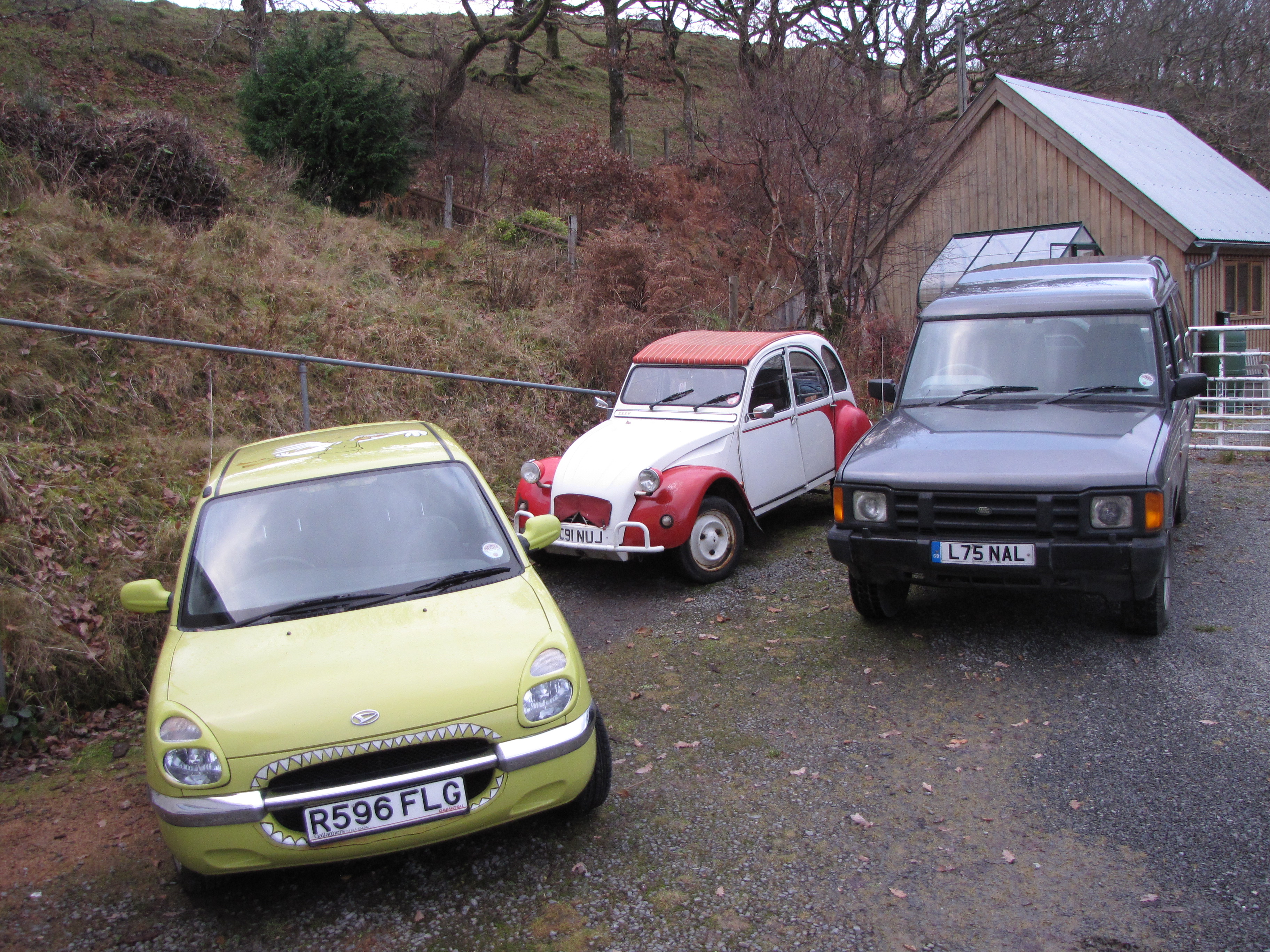
The year began with two absolute favourites from 2013 still here, as well as the 2CV I have owned since 2000.

The fleet. Not as good as it looks...

These are a few of my favourite things. All rotten.

It was a fleet that pleased me mightily. The Discovery and 2CV had both cost me £450 to buy, the Sirion just £370. The downside was that all three were hideously rotten, though appreciation meant the 2CV was still worth much more than the £450 I had paid for it almost 14 years ago. The Daihatsu was surprisingly good for blezzing around the country – this time last year, we were up in the very north of Scotland with it. I liked it very much for its wacky charm, thrumming three-pot engine and sheer chuckability.

The Discovery was a vehicle I’d wanted to own since it was launched back in 1989. Naturally, I couldn’t afford a very good one, but I liked it a great deal nonetheless. Sadly though, 2014 was a very meagre year for income, and the sad truth was that I just couldn’t justify the necessary upkeep it required. I don’t actually need to own a 4×4 and I also began to tire of the associations that are part of owning one. Too many people give 4×4 owners a bad name. I was fed up with being tarred with that brush.

It was the first vehicle to fall back in March, when I exchanged it for yet another BX and some cash. I hadn’t chosen to buy another BX, it had rather presented itself as an option. It was a car I’d known for some years, as I’m friends with the then current owner. I had also seen it pass through several owners on the Autoshite forum. It was a nice motor, but sadly all it seemed to do was remind me that I’ve rather had enough of BXs. They’re great cars, superb at times, but it had got to the stage where all I saw was the annoyances. The lack of grunt from the non-turbo diesel engine, the flimsy trim and the annoying single wiper. I sold it to yet another Autoshite forum member. It would reappear in my life later on…

Power not included

Could this be the last BX I ever own?

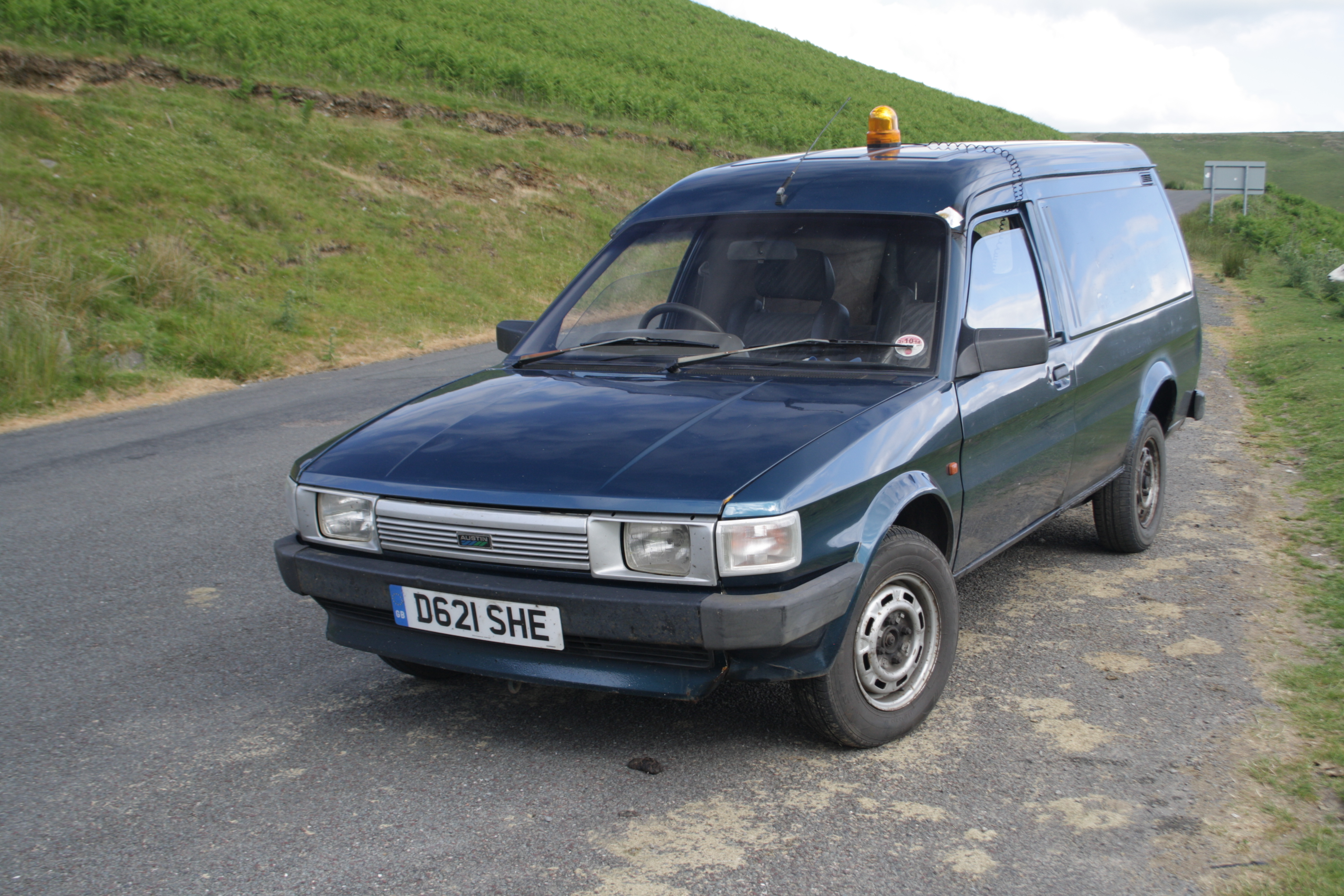
In the meantime, I had to face up to the fact that the Sirion was not going to pass another MOT, due to the perilous state of its underside. I was starting to tire with the expense of keeping it going. Yes, it rarely went wrong, but options for spare parts were slim and often expensive, as the main dealer was the only source. I did the only obvious thing and swapped it and £250 for a shambolic Maestro van.

Maestro van! Crap but loveable. I think

Maestro van! Not as dreadful as you might expect.

This was a bit of a surprise to be honest. I’d owned a Maestro 1.3 previously and didn’t find much to like. For some reason, I liked the van a lot more. The A-Series engine was willing enough, with the sort of low-down grunt that the Sirion entirely lacked. Yet it was also more relaxing at speed. In fact, the only downsides were crap visibility, a shed load of noise and rock hard springing – not too dissimilar to the Sirion in that respect. I loved how low-tech it all was – just a distributor, carburettor and overhead valves.

But I soon tired of the lack of refinement. I sold it via Retro-Rides and delivered it to Birmingham for the new owner. The plan was that I was going to drive home in the Rover 600 I was planning to purchase. But it was a dreadful old shed, being sold by a particularly dodgy brand of salesmen in Coventry. I actually beat a hasty retreat and began to wonder how I would get home. Salvation came in the form of a Rover 416SLi R8 spotted on Facebook. The collection antics were amusing, but it was a good, if slightly unexciting steed.

A quality purchase and no mistake! I think

My £300 Rover was a colourful machine. Until my wife got hold of it…

My wife soon set about removing the stickers and I joined in. It had been used for a banger rally but the Rover cleaned up really rather well. There was a fine-looking car under all that colour. I clocked up quite a few miles in it, but this was not love. I wanted a 600. Or a Citroen XM. I wasn’t going to be happy until I owned one of either.

So, the Rover was sold, and I met the new owner at Birmingham International, just as I had with the Maestro van only a few months previously. He drove off to Cambridgeshire in his new steed, and I went to buy one of the best vehicles I’ve ever owned. As a plot twist, I got transported there in the BX estate I’d owned earlier this year. Thanks Andy!

In 1989 and 1990, you could buy either of these brand new!

Happy Fleet. I’ve got a happy fleet!

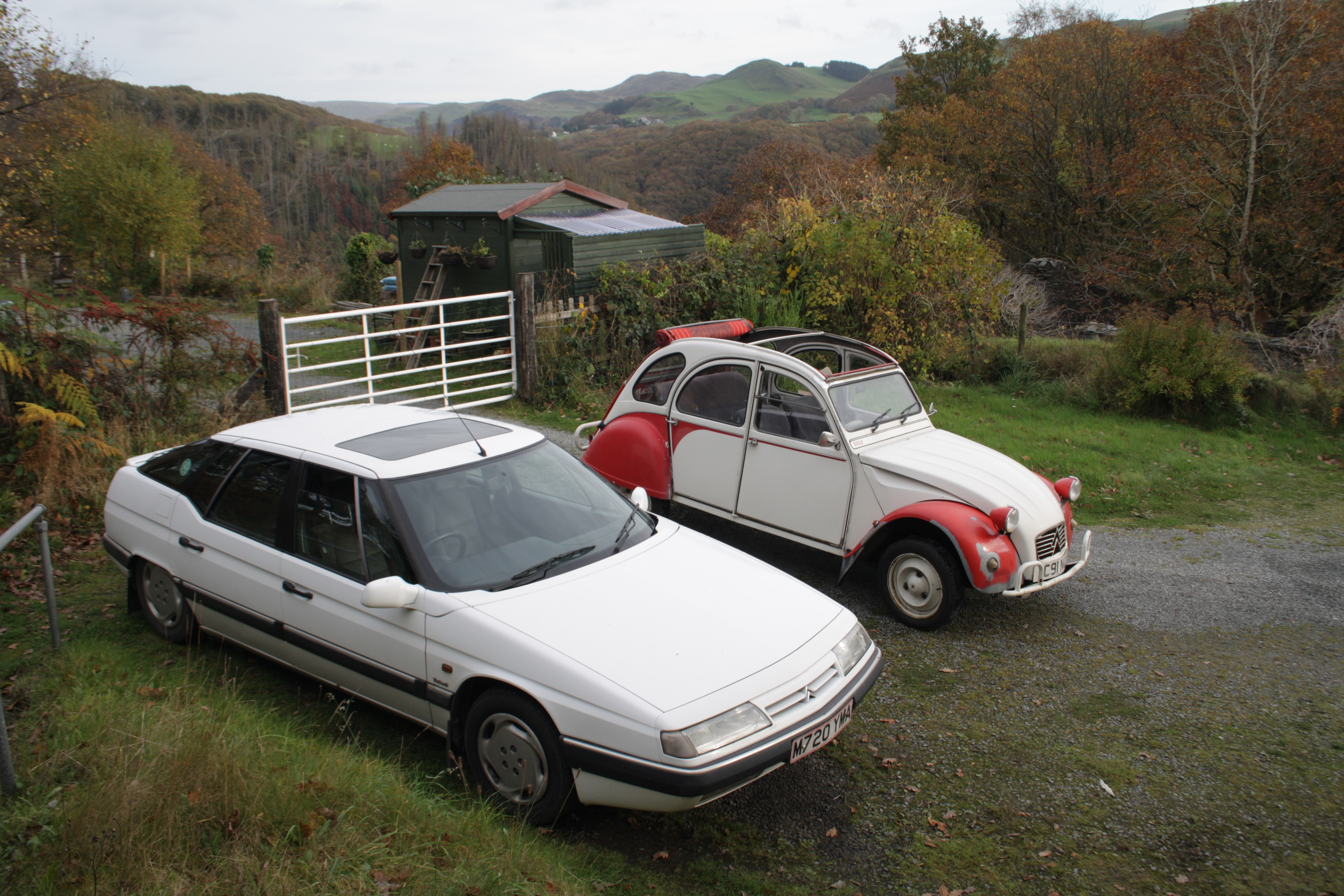
£375 saw me the owner of a car I’d spent most of 2014 lusting after, which I blame entirely on Practical Classics. You see, they’d asked me if I could bring an XM to a photoshoot at Rockingham Raceway. My trusty Citroen contacts delivered the goods and I found myself swapping my 2CV for a very nice 2.1-litre Turbo Diesel XM. I’m afraid I rather fell head-over-heels for the thing, and spent many months plotting how I could own one. Given my tiny budget, it was looking pretty much impossible, but a Twitter contact came good. The right car was located at the right price. Brilliant! It has been everything I’d hoped too. You can find endless praise for it on ClassicHub. Sure, it has needed some work, but I’d expected that of any XM I could have bought. I’m still thrilled.

And so the year ends with my two-car fleet on a high. 2015 is going to be a real struggle though. The 2CV is badly rotten and I’m still undecided about what to do about it. There’s also a massive, massive urge to own a Citroen Ami 6 that may need to be addressed. How long the XM will remain on the fleet is anyone’s guess too, but I can honestly say that I see no reason to replace it at the moment. MOT time soon. How will I feel after that?

Thanks for your support during 2014. This Blog is effectively an overspill for what won’t fit in the motoring publications I write for. I do appreciate support and comments. It will be interesting to see what 2015 will bring my way.

The art of cheap motoring: The Reality

One reason people give for buying a new car is that they are less hassle. Well, if they don’t break down (and modern cars still do that or the AA/RAC would be out of business) that might be true. After all, service intervals can be over 20,000 miles or two years now. By comparison, my 2CV needs greasing every 1000 miles, minor service every 3000 including an oil change.

Pete Sparrow instructs Ian on track rod end removal

Older cars do need more looking after, but is that really a bad thing? Find a good garage and it shouldn’t be a pain.

But the XM has an interval of 10,000 miles, so it’s not so far off a modern. It’s pretty cheap to look after as well – I can easily change the oil and filter myself. And that’s the reality of older cars. The cheapest way to run them is to do as much work on them yourselves as you can. I only tend to farm out welding or jobs that require specialist knowledge or tools.

As for reliability, well the 2CV has occasionally required a little roadside tinkering, but she has very, very infrequently failed to get me to my destination. In the past 80,000 miles, it has only happened once, when the fan sheared and I thought it wiser to get a tow home than risk cooking the engine. Once, the alternator seized and the engine wouldn’t turn. I was in a traffic jam so I just pushed my car along at the same walking pace that the traffic was moving at and wasn’t even late for the business meeting I was heading for. Both times, it was my own fault for not having tools with me. Otherwise, I would have been able to carry out a repair and drive home.

In fact, on one occasion (alternator yet again – I stopped buying second-hand ones at this point) I had to remove the alternator entirely and was still able to drive 15 miles to my then-girlfriend’s house. Try doing that with a modern!

It’s dangerous to think it, but it doesn’t seem worth paying for breakdown cover when I haven’t used it at all since 2007 – and that was when the Citroen H van I was driving suffered catastrophic windscreen failure. In Germany. A trip on which we made a van designed in 1947 for pottering around French towns drive 3100 miles to Sweden and back. We suffered no mechanical issues at all.

My way of doing things is to buy cheap, but actually spend money looking after a car. Take the XM for example. I bought it for £375, which was ludicrously cheap. By the end of the year, I’ll probably have spent that again. Lease a modern and all your servicing may be included, so it appears to be free. It isn’t though – it’s just bundled into the monthly figure. I’d rather pay skilled specialists to work on my cars that greedy dealers.

Essential party preparation. Rear brake overhaul

Roadside tinkering is occasionally required.

It is true that running old bangers can require me to spend some of my time fettling. I fully accept that some people really can’t be bothered with that, which is why a relationship with a friendly garage is a good idea. Someone you trust to do the jobs you can’t and who doesn’t charge a main dealer’s extortionate rates. That said, out in the countryside, you may find a main dealer that still knows what customer service is. They do exist apparently, but they are increasingly rare! I will also concede that running older cars is easier if you have some idea of what could go wrong. What does that warning light really mean? Is that knocking noise something to investigate later or should you stop immediately?

Naturally, as cars age, bits do wear out. But it’s amazing what you can learn by taking an interest. A lot of garages don’t mind spending the time to tell you what’s going on and that’s all useful information for next time.

For me, bangernonics is about looking after a cheap motor. Yes, it may cost a few hundred pounds for a full service and cambelt change, but if the cambelt fails, the car is as good as scrap really. So, change the oil, check the brakes and remember to ignore whether a job is ‘worth’ doing. Ignore the value of the car. If you like it, it’s worth paying to keep it on the road.

I mention this because of the amount of people who seem to scrap a low-value car because it needs £300 of work for an MOT. Think about it. Could you go out and get another car for £300? Possibly, but what sort of condition is it going to be in? The reality is that these people spend much more than £300 on a new car. Where’s the sense in that?!

1955 Austin Westminster

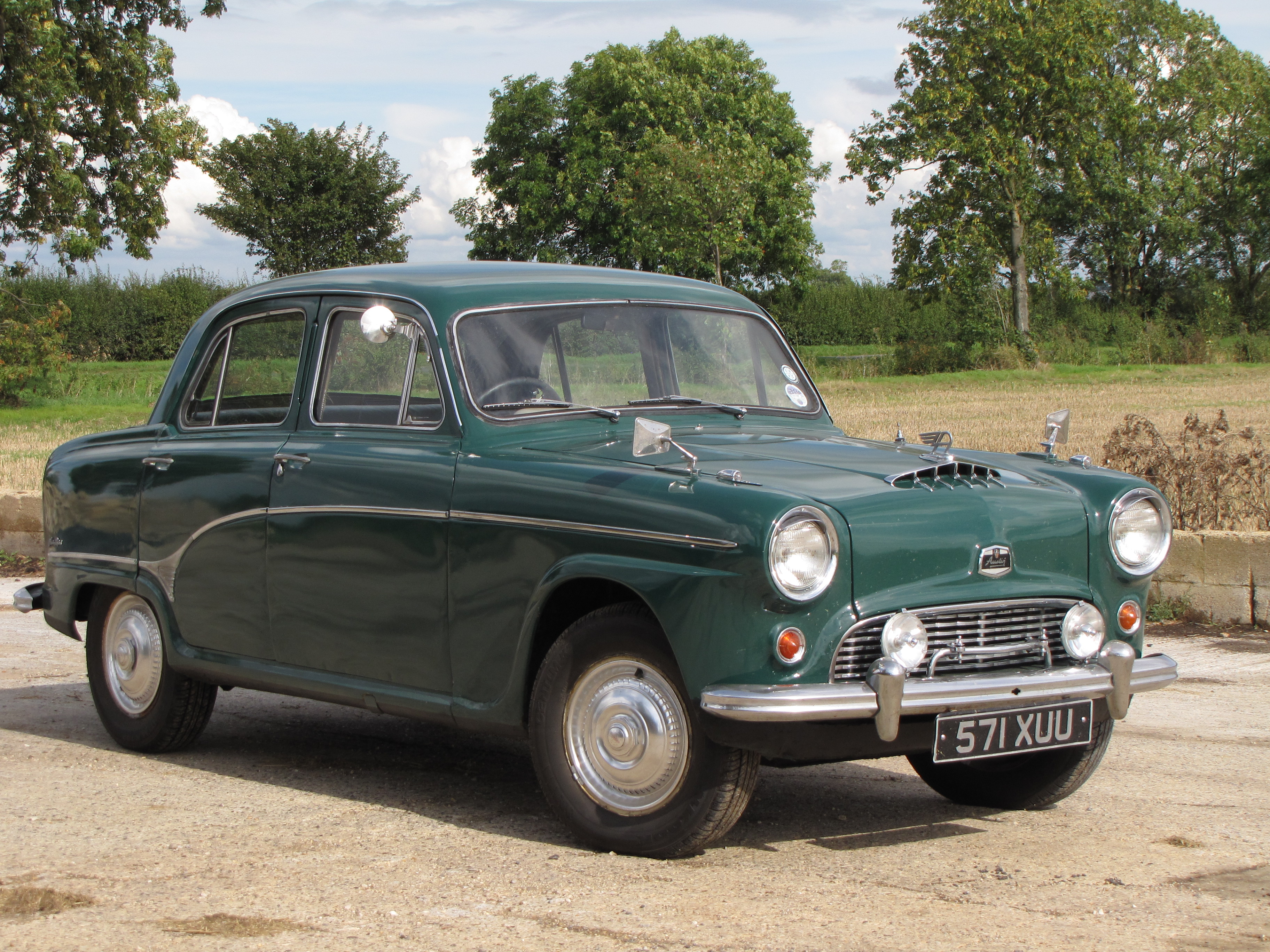
One of the most expensive vehicles I’ve ever bought – a £2200 Austin Wesminster A90. It was ace.

Personally, I regard paying for servicing and upkeep far more enjoyable than either invisible depreciation – which appears to be losing money for absolutely no gain – or paying interest – which just keeps wealthy people even wealthier. It also seems to be that I spend far, far less on looking after my cars than I’d lose by either of those methods if I bought something newer.

Sure, it’d be interesting to see if I still owned cheap cars if I had more funds to my name, but the truth is that even when I was earning good money, I think the most I ever paid for a car was £2200 – a 1955 Austin Westminster. I just don’t understand why people pay more.

The art of cheap motoring: Buying

I find it utterly terrifying how much people spend on cars. I have petrolhead tastes, yet I somehow manage to avoid spending thousands upon thousands of pounds on cars every year. Ok, so this is largely because I don’t have that sort of money to throw around, but even if I did, would I really buy new? No. It simply costs far too much and makes no sense at all.

Think about it. The cliché is true that a car loses value the moment you drive it home from the dealership. So, you’ve got a ‘new’ numberplate. That novelty lasts a mere six months these days. Think about it again though. Even if you buy using cash, simply driving the car home is the equivalent of holding thousands of pounds in the air and setting fire to it.

A lot of people use finance. This is absolute lunacy. There are tempting deals like “drive a brand new Fiat 500 for just £8 per day!” Sure, that’s cheaper than hiring one anywhere else, but imagine that. £8 every day. For years. Even if you don’t drive it, that’s another £8 gone. £2920 a year for something that isn’t yours. If you instead paid £8 into a savings account every day, you’d have £720 after just three months – and that could buy you a decent car outright. It’s true. I do it all of the time. Often much less than that to be honest!

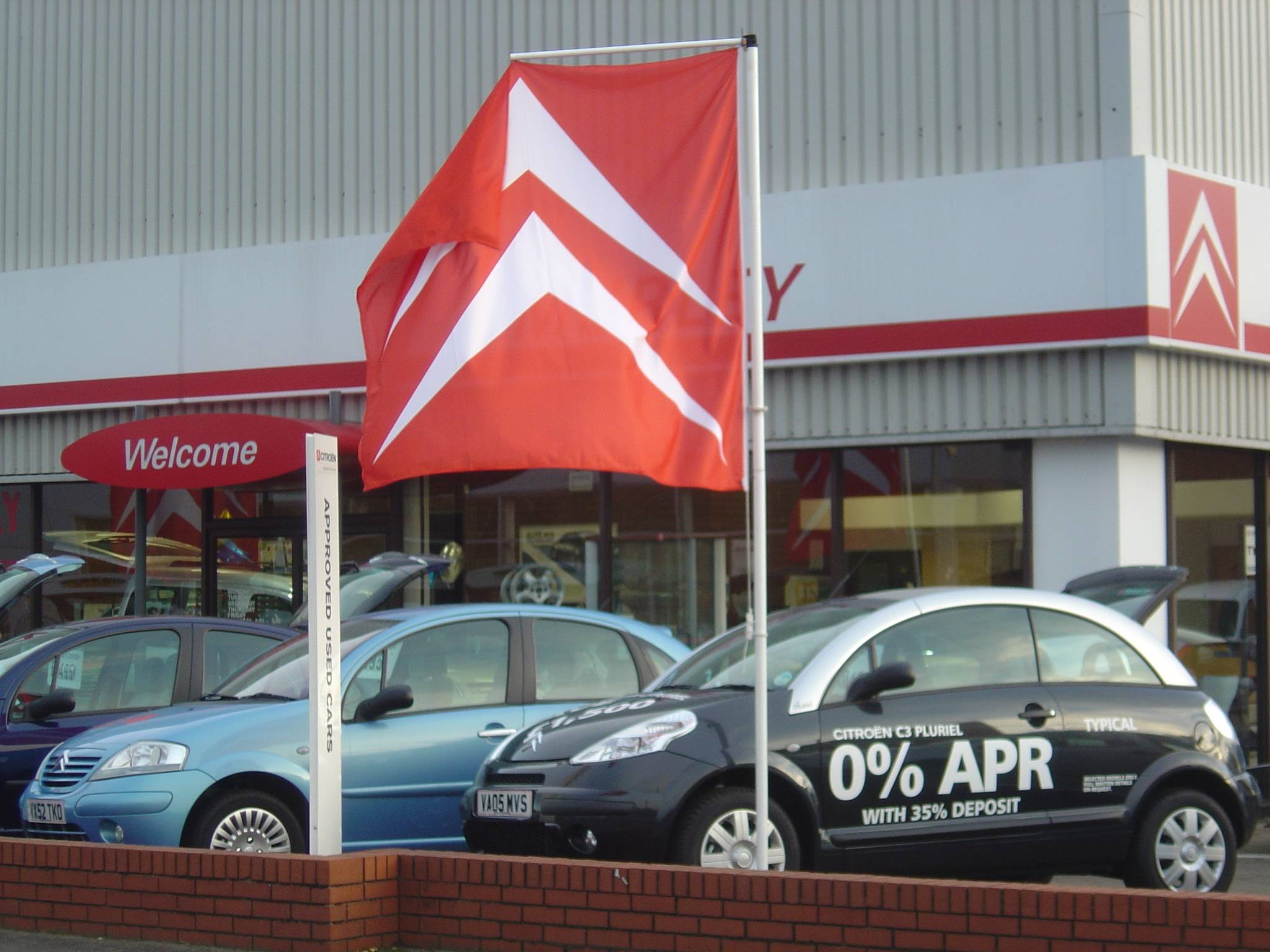
Even 0% deals will cost you big time. Finance is not the way to do motoring

Even 0% deals will cost you big time. Finance is not the way to do motoring

PCP deals seem even worse. They tempt you in with a low monthly figure, but the APR can be horrendous. Again, you’re burning up thousands of pounds in a manner that pleases no-one other than bankers. You’re making bankers happy. Stop it! Note that if a deposit is required, you may lose that amount – 35% of the car’s market price in the pictured example – should the car get written off.

Both the above leave you open to nasty charges when the car goes back too. The slightest bit of damage will see you pay hundreds, if not thousands to have the car put back to good condition.

So, what is the alternative? Well, head to a site like Gumtree and do a search on cars below £1000. You’ll be STAGGERED at what is available. Yes, there’s a lot of dross out there, so you need to engage Hunt Mode. Ignore stuff that’s clearly filthy, has questionable modifications or where the advert is written in text speak. Even in this price range, there are cars out there with full service history. These are what you seek. You might want a diesel, but think again – the savings you’re making by not spending thousands of pounds on a car means running costs are not everything.

Do a bit of homework too. Google your prospective purchase’s make and model. What sort of thing comes up? With Rovers, things like Head Gasket Failure send buyers running for the hills, but that only affects some engines. Similarly, not all Rovers advertised with a Honda or BMW engine actually have one…

This near-immaculate Nissan Bluebird cost just £400!

This near-immaculate, 36k mile Nissan Bluebird cost just £400!

A neat trick is to head to Ebay and search for the Make and Model followed by Spares or Repairs. This way, you’ll quickly discover that imported Japanese diesels – such as the Toyota Lumina (Previa in the UK) or Town Ace – are often for sale with failed head gaskets or cracked cylinder heads. Ford Pumas readily fail MOTs because they ‘need a bit of welding.’ This usually means the sills and rear arches have fallen apart.

I’ve often purchased cars for less than £500 that have been in surprisingly good condition. Even if problems develop and work is needed, there’s room to budget on a few hundred pounds for repairs. Forget about owning something stylish. Style can be roughly translated as ‘gullible people willing to pay far more than something is worth.’ BMW have exploited this with the MINI, Fiat expertly with the Fiat 500 (a cute Ford Ka) and Volkswagen with the Beetle – which is just a hopelessly impractical Skoda Octavia in a posh frock.

You want the sort of car that elderly folk tuck away in the garage and use for pottering about – yet service religiously. So, you’re talking Hondas, Rovers and increasingly these days, Hyundais and Kias. Personally, I’d opt for something older than 15 years old, purely because they tend to be more DIY friendly, or require less specialist kit at your local garage. Vet the owner as much as the car itself.

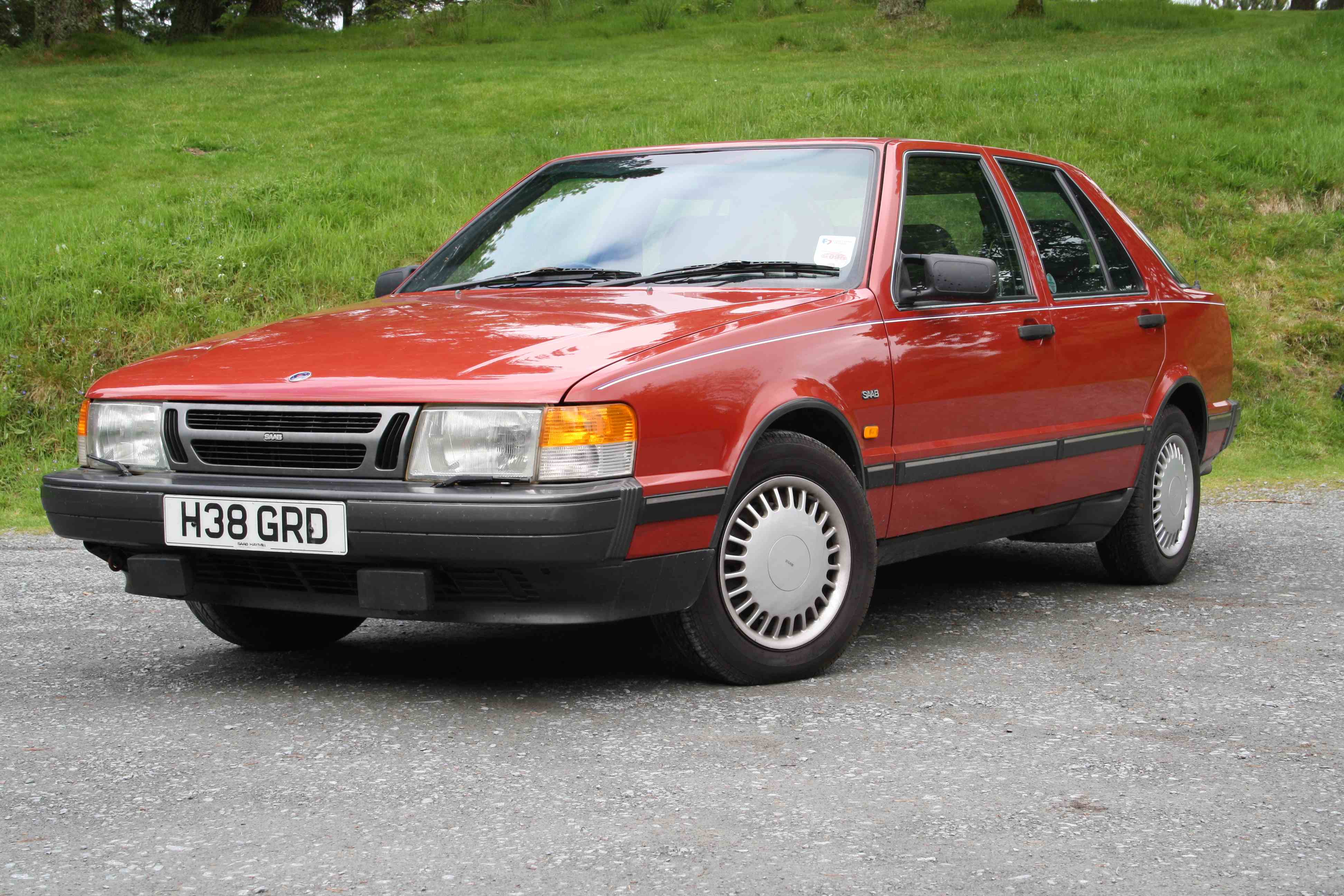
I actually overpaid for this Saab - £595 was still too much!

I actually overpaid for this Saab – £595 was still too much!

It doesn’t really matter if you don’t much like the car you’ve bought when you get it home. Just put it up for sale again and enjoy the fact that even if you gave the car away free, you’d lose only a few hundred pounds, not thousands. Old cars. They make a lot of sense! In the next Blog, I’ll give some hints and tips on how to RUN old bangers. I actually try to look after them. True Bangernomics this is not.

XM: Why I love it so much

I haven’t quite owned the XM for two months yet, but I have already covered 2000 miles in it. That’s hardly surprising as I’ve already driven it to Nottinghamshire, Cambridgeshire (twice), Herefordshire and Birmingham, as well as using it a lot locally.

XM clocks

Low-rev power the secret to the XM’s success. Rarely needs to go beyond 2000rpm!

There’s a reason for all of that use. I love it! 2CVs aside, I’m struggling to think of a car that has so exceeded my expectations – and it cost less than £400. Insanity. It just goes to show how messed up car values really are. Marvellous Italian styling, wonderful engineering – including adaptive suspension and 50mpg. Astonishing.

What I have truly come to love about the XM is how relaxing it is to drive. The reason for that lies with its 2.1-litre turbo diesel engine. It’s a 12-valve adaptation of the Peugeot XUD engine, which entered production in 1982. That’s two inlet valves and one exhaust valve per cylinder, allied to a Mitsubishi turbo charger. It’s that turbocharger that is the key to my happiness here. I’ve owned turbocharged XUDs before – a Peugeot 306 and two BXs – and what frustrates is how late the turbo cuts in. It gives a realistic power band between 2000 and 4000 rpm. You wait for it to kick in, things get blurry and then the power is gone.

XM pauses during its busy two months

YMA pauses during its busy two months, here in Digbeth, Birmingham

The XUD 11 (to give it its correct designation) behaves very differently. It pulls strongly from just 1500rpm, and doesn’t seem to suffer much lag. Even off boost, it pulls well enough, so I find that I can spend much of my time below 2000rpm. It drives in a very similar manner to a non-turbo XUD, but with the ability to accelerate uphill! I find it odd to look at press criticism of the XM when it was current. There was always a complaint that the turbo diesel wasn’t quick enough. Really? Who was finding it too sluggish?

Ok, so the competition was moving on, but really, the 2.1 has plenty of power for on-road use. Sadly, Citroen had to respond and they cobbled together a 2.5-litre turbo diesel with 136bhp. It was pretty much unique to the XM, being a development of a van engine. It has two radiators and lots of other quirks. Personally, I’ll stick to the sheer simplicity of the 2.1. Being pre-EPIC, it even has a proper, mechanical Bosch fuel pump rather than the electronically-controlled Lucas effort. In my experience, simple is often the best way. it’s also the reason I love the low spec of my XM. No climate control, no warning panel flashing up incorrect error messages. It truly is marvellous.

Of course, comfortable, composed suspension and keen handling certainly help. That means you can conserve momentum by cornering briskly. This avoids excessive braking and having to downshift. Add in comfortable seats and it is like wafting around in a comfy sofa.

This week, I hope to revisit Sparrow Automotive so we can get the sills painted following recent work, swap out a strut top and perhaps change the rear brake pads. There’s going to be quite a bill, but with this car, it feels entirely worth it.

Citroen XM – Winter driving

Winter can be a time to fall out with a car. I used to get very seriously fed up with Citroen BXs, because the doors always seem to freeze shut, and I once had the lock mechanism freeze up sufficiently to stop the door closing once I finally got it open! The heater fans were never much cop either, and the single wiper a constant source of annoyance.

Winter is very much here now and so far, the XM is doing itself proud.

Frosty Citroens. Brrrr!

This morning, there was a particularly severe frost. Remote central locking unlocked the car nice and easily, and the door opened without problem. I started the car and put the heater on. Tip: while I set it to maximum heat, I only selected a gentle fan speed. Too fast and the engine, especially a diesel, will struggle to warm up at all. I left it running and returned to my breakfast.

Within a few minutes, the car was ice-free, fully demisted and ready to go. It was a pleasure once out on the road too, and I became grateful for the ContiWinterContact TS850 tyres it now wears. I will be giving them a thorough test in the coming weeks. Especially if we get some snow.

One concern I do have is about the windscreen washer bottle. I’ve strengthened the mixture, but the fluid can still freeze. Given that the washer bottle is tucked away in the wheelarch, there’s not much chance that engine heat will thaw it out. As the wipers come on with the washers, this could be a frustration I haven’t yet discovered! In the 2CV, the manual pump freezes up, so that’s my first clue that all is not well. The bottle sits right above the engine, with a heater tube wrapped around it.  It de-ices quite nicely.

Mind you, as I discovered three times yesterday, the 2CV itself does not de-ice anywhere near as swiftly as the BX! Swings and roundabouts.

Citroen XM – oooh, rust!

The Citroen XM has a pretty good rust reputation. That means it gets really quite rusty after 20 years rather than 10. Mine is almost 20. I bought it knowing it’d need some tickling with a welder but here’s the thing I stupidly still haven’t learnt. If you spot a bit of rust on inspection, you’ll find a lot more once you start prodding!

The rear of the offside sill I knew about when I bought the car, as I put my finger through it. The rot around the offside strut top I discovered when fitting new tyres. Just as picking at a bit of wallpaper in your lounge can suddenly turn into a complete redecorating job, so it follows that picking at a bit of loose underseal will result in a major welding session.

Floor rot

Yikes! Cleaning the underseal off reveals issues.

As Pete of Sparrow Automotive desperately tried to weld up the XM, I was rushing ahead to clean up the sections that we’d found to be a bit soft. The XM is very well protected by underseal – thick rubbery stuff that does a very good job of keeping it solid. The problem comes if that gets breached. Then, water soaks in behind it and rots out the metal completely out of sight. Any flaky underseal I saw got removed and thankfully, most of it hid only solid metal. That was certainly the case in the nearside front wheelarch, where all I found was surface rust. I’d acted just in time. I should thank Pete really though – he thought it’d be a good idea to strip the wheelarch liner out on the nearside and have a look. After all, the nearside is usually worse than the offside. Not on this car!

Surprisingly solid! Cleaned up, primed and undersealed

Surprisingly solid! Cleaned up, primed and undersealed

It was apparently that I’d caught quite a lot of rot just in the nick of time. How brilliant it was to be doing this job with a two-post lift though! Some of the repairs were properly tricky, with Pete having to form carefully shaped repair pieces. It’s amazing what a time-thief this sort of work is. Even when the welding was completed, we then had to wait for the zinc primer to dry before being able to underseal the repaired and cleaned sections.

That's better! Welded, seam-sealed, primed and undersealed

That’s better! Welded, seam-sealed, primed and undersealed

While Pete went off for a well deserved dinner, I slopped Waxoyl over any other vulnerable looking bits – like the front subframe and rear suspension. The underseal took ages to dry, but we were then finally able to refit plastic trim and ducts – as visible above – for the hydraulic pipes. They were also treated to a coat of grease while we were at it.

Somehow, this all managed to take 11 hours! It was a long day, and then I had to drive another 1hr 45 minutes to get home. I slept soundly last night!

I’m glad to have got this work done though. I like the XM very much, so I can now use it through the winter with a lot more confidence. There are still jobs to do though – the sills still need stonechipping and then painting. We never did find time to change the strut top either – necessary as the rubber has delaminated quite badly. Again, on the offside.

A tough day, but a day well spent. Many thanks to Sparrow Automotive.

Still amazed by winter tyres

Two years ago, I boldly sold my 4×4 as winter approached, even though I live in the hills of rural Wales. The reason? I was putting my faith in winter tyres. People still ask me: “Are winter tyres any good?” That winter, I discovered the answer.

Tellingly, I had to help rescue my old 4×4 because it had got stuck in snow that was drifting up to 4ft in places. This is the thing – if the snow is really bad, folk around here either jump in a tractor, or simply stay at home until the roads are cleared. I didn’t use my car for that rescue. There are limits, even with winter tyres!

What really impressed me that winter though, was the very-real benefits winter tyres provided. That was a set of Riken Snowtime tyres purchased part-worn from a friend. They’d barely been used in reality. I fitted them to my Citroen BX turbo diesel. Now, it must be said, winter tyres are not truly magical. Floor the throttle, and the car will still lose grip in snowy conditions. Similarly, if you go flying into a bend, rubber can’t save you if there’s a lot of snow on the ground. You have to respect the conditions.

However, what REALLY impresses with winter tyres is stopping power. Summer tyres really struggle in low temperatures. The compound becomes too hard, so the tyre struggles to get any grip. That means you’ll either lock the wheels or the ABS will cut in. Either way, your stopping distances will be vastly increased compared to clear tarmac.

With winter tyres, I was finding that I could stop nearly as well as on a dry road! The difference was simply staggering. Sure, sheet ice was still an issue – only studded tyres will find grip there – but even on compacted snow, the car felt planted unless you were really silly with it. At one point, I parked on a slope, got out of my car, and almost fell over! I hadn’t realised how slippy the road surface was.

So, given a chance to put Continental’s plaudit-attracting ContiWinterContact TS850 tyres to the test on my Citroen XM, I leapt at the opportunity.

Winter tyres Citroen XM

XM awaits fitment of its winter tyres – grippy!

I’m wary of letting tyre monkeys loose on hydraulic Citroens, so a local garage fitted the tyres to a spare set of rims and I fitted the wheels myself. It also allowed me to check the brakes over – rear pads needed soon. If you have the storage space, another set of wheels is the easiest solution. Then you can simply swap back when spring arrives. Some keep winter tyres on all year round, but motorway miles will quickly wear out the softer compound of a winter tyres on warmer days, so I’ll be changing back.

There are two main changes to a winter tyre to make it more grippy. One is the compound – it’s softer. You don’t have to be a huge Formula 1 fan to know that a softer compound gives more grip. As with the summer motorway scenario, softer tyres will also wear more quickly when pushed hard in hot conditions. The other change is sipes – cuts in the tread blocks themselves that make it easier for the tyre to collect snow. If you’ve built a snowman, you’ll know that snow sticks very well to snow!

Tyre sipes

Extra sipes for extra traction

So, are winter tyres really all good? Well, there are some downsides. One is that you need to fork out for a full set of tyres. I’d be very wary about only putting winter tyres on one end of the vehicle. At £50-60 per tyre for these ContiWinterContact TS850s according to The Internet, that’s a fair chunk of cash. However, chances are, you’re taking off a set of summer tyres that still have grip left. Store them well (indoors, away from UV light) and you can put them on again next year. So, chances are you won’t need to buy any more tyres for a while. You do need storage space, but some tyre suppliers offer to store your summer tyres over winter – and vice versa. Have a natter with them.

In use, winter tyres do tend to be a little noisier, but it’s not that noticeable. In theory, they are also less good at hard cornering, as the softer compound makes the tyre less stable. Having driven rather frenetically on winter tyres in a variety of cars, I can’t say this seems to be a real issue.

Naturally, I haven’t had chance to put the Continentals through their paces yet, but stay tuned. Once winter properly descends, I’ll be able to see just how good they are. Incidentally, winter tyres can deliver benefits whenever temperatures drop below 7 degrees centigrade. Don’t make the mistake of thinking they’re only good in snow. They are winter tyres, not snow tyres!