Tiny Road Test: Skoda Rapid 135RiC

I’ve always liked the rear-engined Skodas, but the one I bought back in 1998 turned out to be a bit of a dog. It put me off them for a while. Driving one for a friend’s wedding earlier this year was the first time I’d been in one for a goodly while. When said friend offered me the chance to spend a few days with his Rapid RiC, well I could hardly refuse could I?

The RiC was the last of the line. In fact, this car is the very last car off the line – H35 URB was first owned by Lord Strathcarron, who was a keen Skoda fan. It has a certificate stating it is the last rear-engined coupe built. As saloon production ended before the Rapid (with the Favorit taking over), that seems to make it the last rear-engined Skoda built. That’s quite remarkable.

Skudtastic

A very significant Skoda – the last rear-engined one built

I’ll start with a downside. I don’t actually like the Rapid’s shape. It looks all awkward from this front angle – the roofline just isn’t quite right. It does look better from the rear view, but I maintain that an Estelle is actually a better looking, better proportioned vehicle. However, you can’t see the outside when you’re inside, so I quickly hopped aboard. Here, the most striking thing is the wheelarch intrusion. It forces the pedals over almost as much as in a Citroen AX. Amusingly, the throttle pedal is an ‘organ pedal’ type. Adjusting to how the pedals behave takes a while – the middle one seems to do nothing at all for the first few inches of travel.

The gearchange is amusing too. There’s no point looking at it to tell which gear you’re in as it cants well over to the left even when in fifth. The lever has a massive travel too. It reminded me of driving a Volvo B10M coach. I can see why folk fit quick-change gear levers. Get moving though, and it’s all rather jolly. These later Skodas were very much better than earlier incarnations, with posh semi-trailing arm suspension calming down any sidewards tendencies. I found I could really hustle the thing along quickly. The steering is unassisted – it doesn’t need it with the engine at the back – and feels very good, if a little vague around the dead-ahead. The engine is fairly lusty too, despite having less than 60bhp. It’s enough power, but it does mean you need to try and carry speed in the bends, as it isn’t overly quick to regain lost momentum.

I’m used to a Citroen 2CV, so this technique of basically not slowing down is second nature. I’m not used to doing it in a car with a rather iffy reputation for handling on the limit though. I needn’t have worried. It corners very securely indeed. In fact, you barely notice that the engine is slung out back at all.

Interior still has Communist vibes. With the decadence of Western stereo

Interior still has Communist vibes. With the decadence of a Western stereo

I did like it a lot overall. You can still feel those Communist vibes, but mixed with greater excitement from the post-communist Czechoslovakia that existed when this car was built. I mean, it has fuel injection! That really wasn’t very common in budget circles in 1990 – the year that Citroen finally stopped making 2CVs. Allied with electronic ignition, it makes it turn-key reliable hot or cold. So this is a reliable car too. It can do the boring stuff, but it’s still very different to drive. Very competent, but very characterful. Volkswagen may have secured Skoda’s future, but German ownership is yet to produce anything quite so interesting.
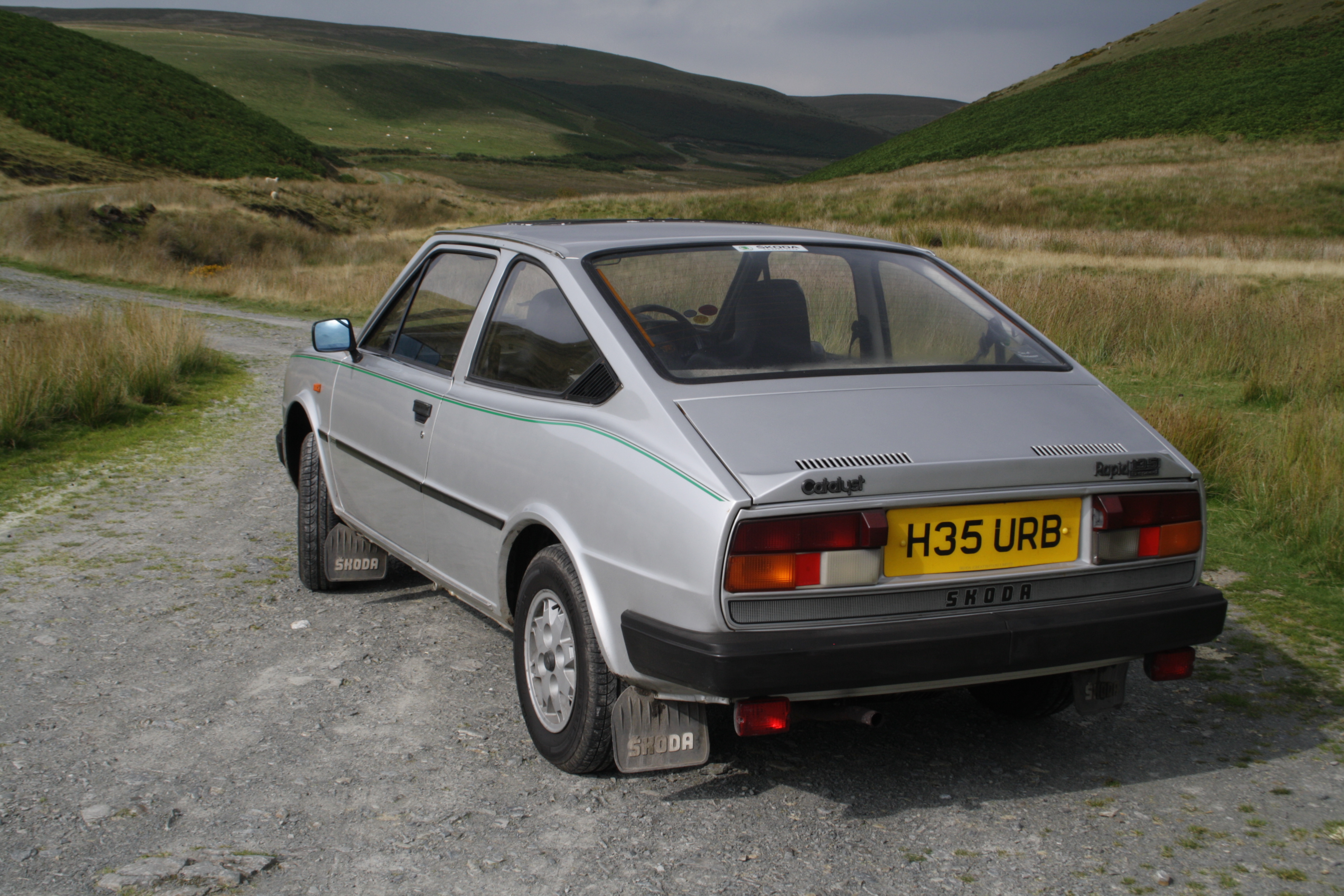
Definitely its best angle. Sleek.
Definitely its best angle. Sleek.

Craptacular road test: Lada Samara

I went to school with a girl whose father worked for Lada UK. I used to like visiting her house, because she was quite cute and, more importantly, because there would always be a Samara on the driveway. Usually with a bodykit and alloys. Not an entirely successful attempt to make the car appealing it must be said.

But I still liked the Samara. It looked like it could have been a major game changer for Lada, in the same way as the Favorit had been for Skoda (another favourite of mine). It never was. It always looked a bit too ungainly, unlike the Italian-styled Favorit. Build quality was never the best either and when other budget cars came over from South Korea and Malaysia, using proven Japanese underpinnings (Kia Pride, Hyundai Pony II, Proton) it sounded the death knell for Lada in the UK. Sales ceased in 1996.

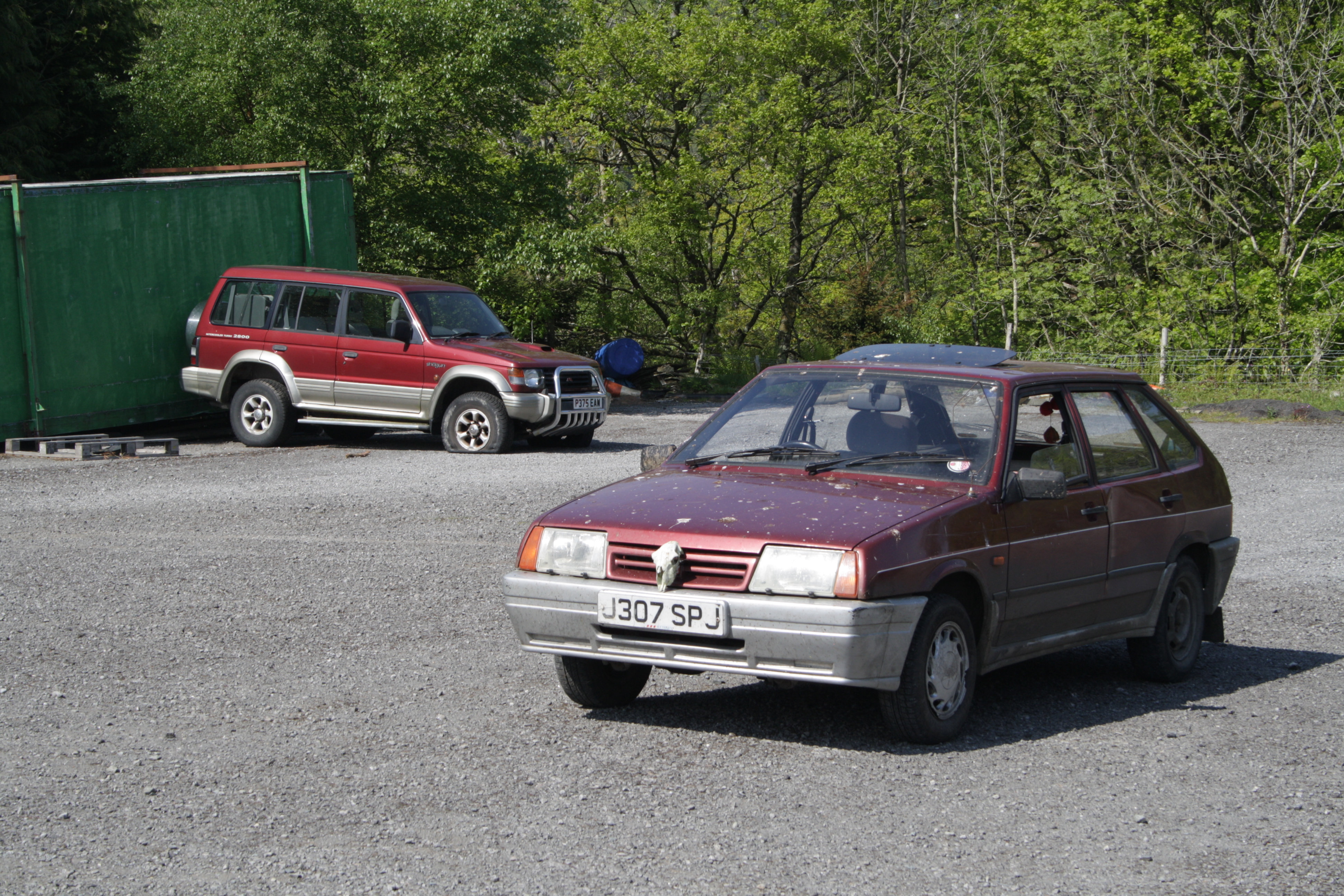
Naturally, I’ve still always liked them, but have never had the opportunity to try one. That drought came to a spectacular end very recently, though the example I got to drive could not be described as the best I’ve ever seen. It was covered in bird muck, had an interesting selection of wheeltrims, had an exhaust leak and used a non-standard carburettor. Beggars can’t be choosers though. It was this Samara or nothing.

This Samara lives in Yorkshire, having been owned by a pair of brothers up that way since 2012. It’s a daily driver, and it shows! The carburettor developed many diaphragm faults and was replaced by a surprisingly similar one from a Peugeot 205 1.4. This Samara uses the larger 1.5-litre engine, allied to a five-speed gearbox and using front-wheel drive.

Lada Samara

Mitsubishi stole Lada’s paint idea

Someone on a walk found a sheep’s skull, so that was added to the car as a bonnet mascot. It slightly obscures the later grille design – the initial one was particularly odd-looking. Naturally, I quite liked that, but most people don’t, so the design was changed. I’m not sure it really helped sales though.

Inside, it had been stripped out. Not for racing, but so it could be slept in. The passenger seat had been replaced by a crate, to make the car long enough to accommodate a Yorkshireman.

The interior was not entirely perfect

The interior was not entirely perfect

Clambering aboard was hilarious. The driver’s seat was out of a Rover, and the sports steering wheel seemed utterly out of place. The door closed with not too horrific a noise though, shortly after a warning that third gear synchromesh wasn’t very effective, and nor were the brakes. Oh and it cuts out on left-hand bends or if driven gently, so it’s better to thrash it. Ok then!

The four-cylinder engine fired noisily into life, thanks to that leaking exhaust. I selected first, noting that the selector felt surprisingly good, and I headed off. The brakes really were awful, which is worrying as they were now apparently better than they were after the owner resorted to some in-car-park tinkering. Happily, I was about to drive it up a steep hill, so I didn’t need brakes anyway.

Putting my foot down, as ordered, I was amazed as the Lada verily roared up the hill with unseemly fury. I quickly snicked into second for more of the same, before gently slotting into third, then fourth. This was astonishing! I wasn’t expecting a car that went so well, and made such an entertaining noise as it did it. The driving position is odd, with the steering wheel really thrust out at your chest. But the steering itself feels great, and allowed me to push on in the bends – which is good as slowing down isn’t a strong point of this car.

Yes, there were various plasticky rattles, but it was hard to tell whether this was from the dashboard or the bread crate I was sitting next to. Yes, the car did cut out on left-hand bends. Momentum was your friend here. Just try to carry as much speed as you can and ease off the throttle. It was hilarious to be honest! The handling was surprisingly good, with not too much bodyroll and surprising grip from the cheap tyres.

On the way back down the hill, the car very quickly reached a speed best described as ‘around the speed limit.’ I managed to bleed speed off with careful use of the appalling brakes, and neat downshifting – double-declutching into third to avoid a crunch.

Not as crap as it looks. Or perhaps it is...

Not as crap as it looks. Or perhaps it is…

There was no doubting that this was a car you really had to drive, with foibles a-plenty. With actual working brakes though, it would be even more fun. It would stop ok (I wouldn’t have driven it on the road otherwise) but the pedal felt wooden and needed a really hard shove. Perhaps a weak or leaky servo. Everyone who drove it came back grinning though. You expected this car to be hopeless, and it resolutely wasn’t. I suspect a lot of people are now looking for a Samara to buy. I certainly wouldn’t rule one out!

In many ways, the Samara marks the end of the ‘crap’ budget car. The Favorit was refined by new parent Volkswagen into the Felicia, and Skoda is now a household name. Lada wasn’t so fortunate. When budget cars became older versions of current, good cars, the Samara was always going to be in trouble. That’s a real shame because as I discovered, budget cars can be an awful lot of fun, rather than just awful.

Pic courtesy of KruJoe on the Autoshite forum. Me enjoying the Samara while Elly the 2CV watches